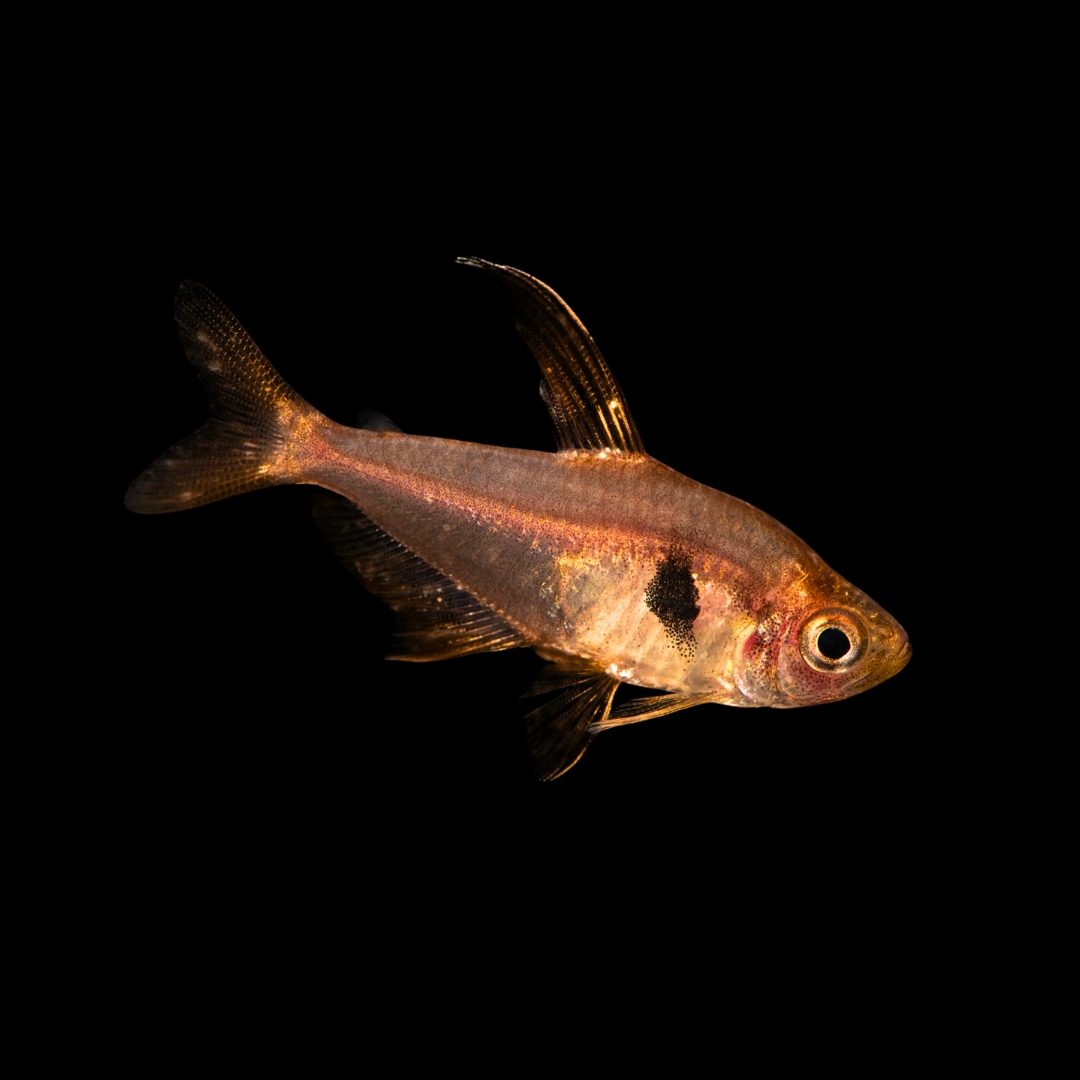
レッドファントムテトラは、南米オリノコ川流域に分布する小型のカラシンです。透明感のある赤い体色と、体側に入る黒い斑紋、そしてオスがヒレを大きく広げて見せるフィンスプレッディングが大きな魅力です。水草の緑と赤い体色の対比が美しく、性格も温和なため、日本の水草レイアウト水槽でも古くから親しまれてきました。近年の分類研究では、長く使われてきたHyphessobrycon sweglesiから、Megalamphodus sweglesiとして扱う体系が提示され、主要データベースにも反映が進んでいます。ただし、国内流通や古い飼育資料では旧名も使われているため、新旧の学名を知っておくと情報を探しやすくなります。The Red Phantom Tetra is a small characin from the Orinoco River basin in South America. It is admired for its translucent red body, dark humeral spot, and the impressive fin-spreading displays performed by males. Its red coloration contrasts beautifully with aquatic plants, and its peaceful nature has made it a long-standing favorite in planted aquariums in Japan. Recent taxonomic work has proposed the use of Megalamphodus sweglesi again, and this treatment is increasingly reflected in major databases. However, Hyphessobrycon sweglesi remains common in older aquarium literature and trade usage, so both names are useful for aquarium reference.
基本情報 / Basic Information
学名 / Scientific Name
Megalamphodus sweglesi。シノニムおよび国内流通で現在もよく見られる表記は. A synonym and still commonly used trade name is Hyphessobrycon sweglesi。
通称 / Common Name
レッドファントムテトラ、レッドファントム、レッドファントム・ルブラRed Phantom Tetra, Red Phantom, Red Phantom Tetra “Rubra”
分類 / Family
カラシン目、アメリカテトラ科、メガランフォドゥス亜科。旧分類や国内流通ではカラシン科、ハイフェソブリコン属として扱われることもあります。分類体系は資料によって更新状況が異なるため、購入時は旧名も確認すると確実です。Order Characiformes, family Acestrorhamphidae, subfamily Megalamphodinae. In older classifications and aquarium trade usage, it may still appear under Characidae and Hyphessobrycon. Because databases and shop labels may update at different speeds, checking the former name is also useful.
英名 / English Name
Red Phantom Tetra
分布 / Distribution
南米のコロンビアおよびベネズエラにまたがるオリノコ川流域。細かな産地名は資料により差がありますが、オリノコ水系の支流、植物の多い流れの緩やかな場所、透明な水からタンニンを含む褐色の水まで、複数の環境で記録されています。The Orinoco River basin of Colombia and Venezuela. Exact locality details vary among references, but the species is associated with tributaries of the Orinoco system, often in vegetated, slower-moving habitats ranging from clear water to tannin-stained water.
最大体長 / Max Size
標準体長で約3.2cm、観賞魚として尾鰭まで含めて見ると約4cm前後です。資料によっては4〜5cm程度と表記されることもありますが、一般的には小型テトラとして扱います。About 3.2 cm standard length, or roughly 4 cm when viewed as an aquarium fish including the caudal fin. Some aquarium references give around 4–5 cm, but it is generally treated as a small tetra.
寿命 / Lifespan
一般的には3〜5年程度。水質の急変を避け、群れで落ち着かせて飼うことで長期飼育しやすくなります。Usually around 3–5 years. Stable water conditions and group keeping help maintain long-term health.
飼育環境 / Aquarium Environment
水槽サイズ / Tank Size
最低でも45cm規格水槽以上で飼育可能ですが、本種らしい群泳とフィンスプレッディングを楽しむなら60cm規格水槽、約54〜60L以上がおすすめです。20匹以上で余裕を持って泳がせる場合は90cm規格水槽が理想的です。A 45 cm standard tank can keep a small group, but a 60 cm standard tank of about 54–60 L or larger is recommended to enjoy schooling and fin-spreading behavior. For groups of 20 or more, a 90 cm standard tank is ideal.
水温 / Temperature
20〜28℃の範囲で飼育例があります。日常飼育では23〜26℃前後が扱いやすく、繁殖を狙う場合は26℃前後に安定させると産卵のきっかけになることがあります。Kept successfully across roughly 20–28°C. Around 23–26°C is practical for daily care, while stable conditions around 26°C may help trigger spawning in a breeding setup.
水質 / Water Quality
弱酸性〜中性の軟水を好みます。目安はpH5.5〜7.5、硬度は軟水〜中硬水程度です。ワイルド個体や赤みの強いタイプを落ち着かせるには、ソイル、流木、マジックリーフ、ヤシャブシの実などを使い、タンニンを含む弱酸性寄りの水に整えると効果的です。ただし、急にpHを下げるのではなく、時間をかけて安定させることが大切です。Prefers soft, slightly acidic to neutral water. A practical range is pH 5.5–7.5 with soft to moderately hard water. For wild or strongly red individuals, soil substrate, driftwood, Indian almond leaves, and alder cones can help create tannin-rich, slightly acidic conditions. Avoid sudden pH drops; stability is more important than chasing a number.
レイアウト / Layout
水草をよく植え、前面や中央には泳ぐための空間を残すレイアウトが適しています。原産地では水草や岸辺の植物、落ち葉の周辺を利用するため、流木や落ち葉を加えた自然感のあるレイアウトとも相性がよい魚です。暗めの底床と落ち着いた照明にすると赤い発色がより引き立ちます。A planted layout with open swimming space in the front or middle is suitable. In nature, the species uses aquatic vegetation, marginal plants, and leaf litter as shelter, so driftwood and botanicals suit it well. A darker substrate and subdued lighting often make the red coloration appear richer.
注意点 / Precautions
単独や少数では臆病になり、色が抜けやすくなります。最低でも8〜10匹以上の群れで飼育してください。導入直後は輸送疲れや水質差によるストレスを受けやすいため、水合わせを丁寧に行い、最初の数日は強い照明や過剰な給餌を避けます。When kept singly or in very small numbers, the fish may become timid and lose color. Keep at least 8–10 individuals. Newly imported fish can be stressed by transport and water changes, so acclimate carefully and avoid strong lighting or heavy feeding during the first few days.
餌と給餌 / Feeding
餌の種類 / Diet
雑食性です。細かい顆粒飼料やフレークフードを主食に、冷凍アカムシ、ブラインシュリンプ、ミジンコなどを副食として与えると状態が上がります。赤い発色を重視する場合は、アスタキサンチンやカロテノイドを含む色揚げ用飼料も有効です。Omnivorous. Fine granules and flake foods work well as staples, supplemented with frozen bloodworms, brine shrimp, and daphnia. Color-enhancing foods containing astaxanthin or other carotenoids can help maintain red pigmentation.
給餌のポイント / Feeding Tips
口が小さいため、粒が大きい餌は細かく砕いて与えます。1日1〜2回、数分で食べ切れる量を目安にしてください。混泳水槽では上層魚に餌を取られやすいことがあるため、沈下する細粒タイプを併用すると群れ全体に餌が行き渡りやすくなります。Because the mouth is small, crush larger foods before feeding. Feed once or twice daily, only as much as the fish can finish within a few minutes. In community tanks, fine sinking foods help ensure the whole group receives food rather than losing it to surface-feeding tank mates.
性格と混泳 / Temperament and Tank Mates
性格 / Temperament
非常に温和で、同種間の小競り合いもヒレを広げて見せ合う儀式的な行動にとどまることがほとんどです。十分な匹数で飼うと落ち着き、オス同士のフィンスプレッディングが観察しやすくなります。Very peaceful. Most interactions among males are ritualized displays rather than damaging fights. Keeping a good-sized group makes them more confident and increases the chance of observing fin-spreading displays.
混泳の相性 / Compatibility
ネオンテトラ、カージナルテトラ、ラミーノーズテトラ、ハチェットフィッシュ、小型コリドラス、オトシンクルス、アピストグラマなど、温和で同程度の水質を好む魚と好相性です。ヤマトヌマエビや小型の淡水エビとも概ね混泳できますが、極小の稚エビは食べられる可能性があります。大型魚や気の荒い魚、ヒレをかじる魚との混泳は避けてください。Compatible with peaceful fish that prefer similar water, such as neon tetras, cardinal tetras, rummy-nose tetras, hatchetfish, small Corydoras, Otocinclus, and Apistogramma. It generally coexists with Amano shrimp and small freshwater shrimp, although tiny shrimplets may be eaten. Avoid large, aggressive, or fin-nipping species.
病気と対策 / Diseases and Prevention
かかりやすい病気 / Common Diseases
白点病、尾ぐされ病、エロモナス症、輸送後のスレ傷に伴う細菌感染に注意します。ワイルド個体では導入直後に体力を落としていることがあり、環境変化に伴う拒食や色抜けが見られる場合があります。Watch for ich, fin rot, Aeromonas-related infections, and bacterial problems following transport-related abrasions. Wild individuals may be weakened after import and can show appetite loss or faded coloration during acclimation.
対策と予防 / Prevention
急激な水質変化を避け、定期的な換水と過密の回避を徹底します。新規導入魚は可能であれば別水槽で数日から2週間程度観察し、餌食いや呼吸、ヒレの傷みを確認してから本水槽へ移します。薬浴が必要な場合は、カラシン類が薬剤に敏感なことを考慮し、規定量を守って慎重に行います。Avoid sudden water changes, maintain regular partial water changes, and prevent overcrowding. If possible, observe new arrivals in a separate tank for several days to two weeks, checking feeding, respiration, and fin condition before introducing them to the main aquarium. If medication is needed, use it carefully because small characins can be sensitive to treatments.
増やし方(繁殖) / Breeding
雌雄の判別 / Sexing
成熟したオスは体がややスリムで、背鰭や尻鰭が伸び、発情時には赤みと黒い模様が強く出ます。メスは腹部がふっくらし、抱卵すると透明感のある体越しに卵の影が見えることがあります。若魚では判別が難しいため、複数匹を育てながら自然にペアを得る方法が現実的です。Mature males are usually slimmer, with more extended dorsal and anal fins and stronger red and black coloration during display. Females are fuller-bodied, and gravid females may show eggs through the translucent body. Juveniles are difficult to sex, so raising a group is the most practical way to obtain pairs.
繁殖形態 / Reproduction
卵を水草や底面付近にばらまく卵散布型です。親は卵や稚魚を守らず、産卵後に食卵することがあるため、繁殖を狙う場合は専用の産卵水槽を用意します。An egg-scattering species that releases eggs among plants or near the bottom. The parents do not guard eggs or fry and may eat the eggs, so a separate breeding tank is recommended.
繁殖のポイント / Breeding Tips
産卵水槽にはウィローモスなどの細かい水草、産卵モップ、または底面メッシュを入れ、卵が親の口に届きにくい構造にします。水温は26〜28℃、照明は弱めが適しています。産卵後は親を速やかに取り出します。稚魚は非常に小さく、初期にはインフゾリアやゾウリムシなどの微小な餌が必要です。数日から1週間ほど成長したら、孵化直後のブラインシュリンプやマイクロワームへ徐々に切り替えます。Use fine plants such as Java moss, spawning mops, or a bottom mesh so eggs fall out of the parents’ reach. A temperature of 26–28°C and subdued lighting are suitable. Remove the adults immediately after spawning. The fry are extremely small and need microscopic foods such as infusoria or Paramecium at first. After several days to about a week, gradually transition them to newly hatched brine shrimp or microworms.
雑学と豆知識 / Trivia and Fun Facts
1. 学名に刻まれた観賞魚流通の歴史 / 1. A trade history preserved in the scientific name
種小名のsweglesiは、アメリカの熱帯魚流通業者カイル・スウェグルス氏にちなむ献名です。新種の発見というと研究者だけの仕事のように思われがちですが、南米から世界の水槽へ魚を届けてきた採集者や輸入業者のネットワークも、魚類学の発展に深く関わってきました。レッドファントムテトラの名には、観賞魚趣味と分類学が互いに影響し合ってきた時代の記憶が残されています。The specific name sweglesi honors Kyle Swegles, a tropical fish dealer in the United States. Although species discovery is often imagined as the work of scientists alone, networks of collectors, exporters, and aquarium traders also played an important role in revealing South American fish diversity. The name of the Red Phantom Tetra preserves a piece of history where aquarium culture and taxonomy were closely connected.
2. HyphessobryconからMegalamphodusへ / 2. From Hyphessobrycon back to Megalamphodus
本種は長くHyphessobrycon sweglesiとして流通してきましたが、2024年に発表された超保存配列を用いた大規模な系統解析では、カラシン類の分類体系が大きく見直されました。その流れの中で、レッドファントムテトラはMegalamphodus sweglesiとして扱う見解が示されています。日本のショップ名札では旧名が残ることも多いため、両方の学名を知っておくと店頭で探す際にも役立ちます。This species was long traded as Hyphessobrycon sweglesi, but a 2024 phylogenomic study using ultraconserved elements proposed major changes in characin classification. Within that framework, and in databases that have adopted it, the Red Phantom Tetra is treated as Megalamphodus sweglesi. Because the older name remains common on aquarium shop labels, knowing both scientific names is useful when looking for this fish.
3. ルブラは別種ではなく、環境が磨いた深紅の表現 / 3. Rubra is not a separate species, but a deep-red expression shaped by environment
日本で人気のレッドファントム・ルブラは、通常個体よりも濃い深紅を示すタイプとして扱われます。現時点では、一般的な図鑑・流通上の扱いとしては独立した種名ではなく、地域差や採集環境、成熟状態、飼育環境によって現れる色彩タイプとして理解するのが安全です。濃いタンニンを含む水、落ち葉の多い岸辺、弱酸性の軟水といった自然環境が、赤い色素の見え方に関わっている可能性があります。水槽内でその赤を保つには、環境の落ち着きとカロテノイドを含む餌の継続が大切です。The popular Rubra type is valued in Japan for its especially deep red coloration. At present, it is safest to understand it in aquarium terms as a color or locality-associated form rather than as a separately established species name. Tannin-rich water, leaf-littered margins, maturity, and stable soft acidic conditions may influence how strongly the red pigmentation is expressed. In aquariums, calm conditions and carotenoid-rich foods help maintain this coloration.
4. フィンスプレッディングは小さな魚の平和的な勝負 / 4. Fin-spreading is a peaceful contest among small fish
オス同士が向かい合い、背鰭や尻鰭をいっぱいに広げる姿は、レッドファントムテトラの見どころです。この行動は単なる喧嘩ではなく、相手を傷つけずに自分の大きさや状態を見せる儀式化された競争と考えられます。小型魚にとってヒレの損傷は命取りになりかねません。そのため、実際に噛み合うよりも、色とヒレで競うほうが生存上の利点があったのでしょう。水槽の中で見られる一瞬の美しいディスプレイには、野生で生き残るための進化の知恵が隠れています。One of the highlights of this species is the sight of males facing each other with dorsal and anal fins fully spread. This is not simply fighting, but a ritualized contest that allows fish to display size and condition without serious injury. For a small fish, damaged fins can be dangerous in the wild. Competing through color and posture rather than biting likely offered a survival advantage. The brief display seen in an aquarium is therefore a glimpse of an evolutionary strategy shaped by life in nature.
5. 日本の水道水と相性がよいが、発色にはひと工夫 / 5. Suitable for Japanese tap water, but color benefits from refinement
日本の水道水は地域差こそありますが、比較的軟水の地域が多く、レッドファントムテトラの飼育には向いています。ただし、本種が本来の赤みを見せるには、単に生かすだけでなく、安心して群れられる数、水草や流木による隠れ場所、弱酸性寄りに安定した水質が重要です。つまり、レッドファントムテトラは丈夫で飼いやすい魚でありながら、環境を丁寧に作るほど表情を変えて応えてくれる魚でもあります。Japanese tap water varies by region, but many areas provide relatively soft water, making this species generally suitable for domestic aquariums in Japan. However, bringing out its best red coloration requires more than basic survival. A comfortable group size, shelter from plants and driftwood, and stable slightly acidic water all matter. The Red Phantom Tetra is therefore both an easy-to-keep fish and a species that rewards careful aquascaping with richer expression.
まとめ / Conclusion
レッドファントムテトラは、温和で混泳しやすく、水草水槽との相性も非常によい小型カラシンです。60cm規格水槽以上で8〜10匹以上の群れを作り、弱酸性寄りの清潔な軟水、落ち着いたレイアウト、細かく食べやすい餌を用意すれば、本種らしい赤い体色と優雅なフィンスプレッディングを楽しめます。The Red Phantom Tetra is a peaceful small characin that is highly compatible with planted community aquariums. In a 60 cm standard tank or larger, a group of at least 8–10 individuals, clean slightly acidic soft water, a calm layout, and appropriately sized foods will allow its red coloration and elegant fin-spreading behavior to shine.
ブリード個体は入手しやすく初心者にも扱いやすい一方、ワイルド個体やルブラタイプは深紅の発色という特別な魅力を持ちます。分類学的にも近年あらためて注目されている魚であり、飼育のしやすさ、観察の面白さ、学術的な背景の奥深さを兼ね備えた、まさにアクアリウム図鑑にふさわしい一種です。Captive-bred fish are widely available and beginner-friendly, while wild and Rubra-type individuals offer the special appeal of deep crimson coloration. With recent taxonomic attention, accessible husbandry, fascinating behavior, and a rich scientific background, this species is a worthy entry in any aquarium encyclopedia.
Froese, R. & Pauly, D. eds. FishBase. “Megalamphodus sweglesi, Red phantom tetra”.https://www.fishbase.se/summary/10659現行の分類、分布、最大標準体長、食性、群れでの飼育、推奨水槽サイズなどの基礎情報確認に使用。
Melo, B. F. et al. 2024. Phylogenomics of Characidae, a hyper-diverse Neotropical freshwater fish lineage, with a phylogenetic classification including four families. Zoological Journal of the Linnean Society.https://academic.oup.com/zoolinnean/article-abstract/202/1/zlae101/7748269旧カラシン科の再編、Acestrorhamphidae、Megalamphodinae、Megalamphodusの扱いに関する分類学的背景の確認に使用。
Géry, J. 1961. Three new South-American characids. Tropical Fish Hobbyist 9(9): 26–46.本種の原記載に関する基礎文献。書誌情報はEschmeyer’s Catalog of Fishesおよび関連データベースで確認。
Weitzman, S. H. & Palmer, L. 1997. A new species of Hyphessobrycon from the Neblina region of Venezuela and Brazil, with comments on the putative “rosy tetra clade”. Ichthyological Exploration of Freshwaters 7(3–4): 209–242.https://fishbase.se/references/FBRefSummary.php?ID=13676ロージーテトラ・クレードおよび旧Hyphessobrycon周辺の分類史を理解するための参照文献。



 アイのアクアグッズ案内バクテリアって、結局なんなんだ? タマスとアイのボトル探究ロック好きのカバ・タマスが初登場。サイクル、ベストバイオ、バイコムのボトルから、菌の役割と保存の工夫、二本組の歴史をアイと探ります。記事はコチラ →
 アイのアクアグッズ案内水槽のコケ掃除|道具の選び方とお掃除生体の得意・不得意道具の特徴や使い方、選ぶときのポイントをアイが紹介します。記事はコチラ →



コメント