

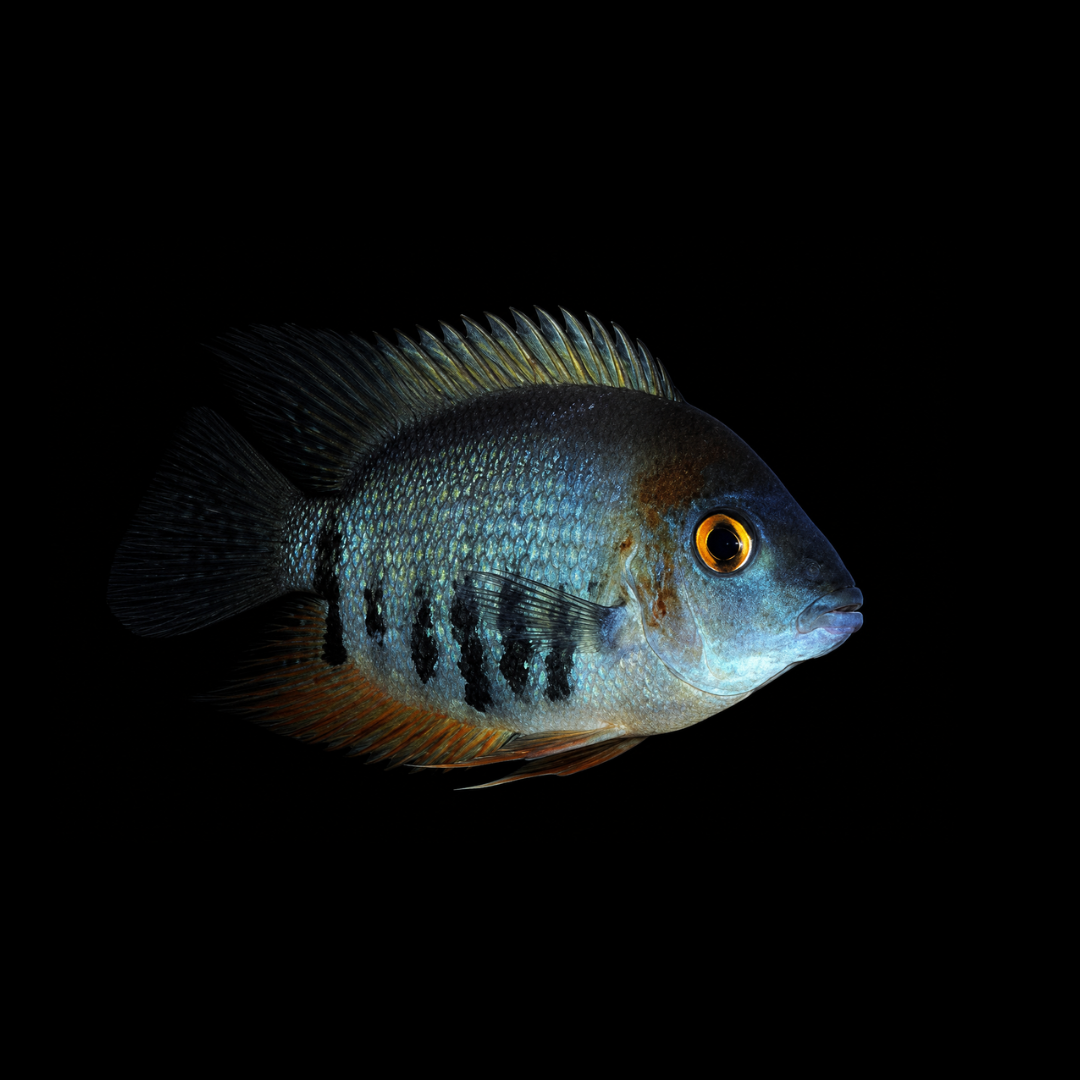
解説 / Description
「ターコイズセベラム」は観賞魚の流通名で、一般には現在有効種として扱われている Heros efasciatus と結び付けられます。ただし流通名は分類学上の種名ではないため、販売名だけで野生由来の系統や種を厳密に断定することはできません。H. efasciatus は南米のアマゾン川流域に分布する側扁したシクリッドで、丸みのある体型と青緑からオリーブ色を帯びる体色、成長に伴って変化する縦帯や斑紋が魅力です。飼育下では丈夫な部類に入りますが、中型以上へ育つこと、縄張り行動が強まる時期があること、給餌量に応じて水を汚しやすいことを考え、十分な遊泳空間と安定した濾過環境を整えて飼育します。 “Turquoise Severum” is an aquarium trade name commonly associated with Heros efasciatus, which is currently recognized as a valid species. Because a trade name is not a taxonomic identification, the exact species or wild lineage of a fish cannot always be determined from its sales name alone. H. efasciatus is a laterally compressed Amazonian cichlid valued for its rounded body, olive-to-turquoise coloration, and vertical bars and markings that change with age. It is generally hardy in captivity, but good long-term care still requires adequate swimming space, stable filtration, and allowance for stronger territorial behavior at certain stages.
基本情報 / Basic Information
| 学名 / Scientific Name | Heros efasciatus (ターコイズ/グリーンセベラムと結び付けられることが多い種) (commonly associated with Turquoise/Green Severum in the aquarium trade) |
|---|---|
| 通称 / Common Name | ターコイズセベラム、グリーンセベラム、セベラムTurquoise Severum, Green Severum, Severum |
| 分類 / Family | キクラ目(Cichliformes)・シクリッド科(Cichlidae)・シクリッド亜科(Cichlinae)・ヘロス属(Heros)Order Cichliformes, family Cichlidae, subfamily Cichlinae, genus Heros |
| 英名 / English Name | Turquoise Severum / Green Severum |
| 分布 / Distribution | 南米のアマゾン川流域に分布し、ブラジル、ペルー、コロンビア、エクアドル、ボリビアから記録されています。野生では氾濫域などの止水的な環境や、河岸植生の発達した場所で採集例があります。The species occurs in the Amazon River basin of South America and has been recorded from Brazil, Peru, Colombia, Ecuador, and Bolivia. In the wild it has been collected in lentic or seasonally flooded habitats and along well-vegetated river margins. |
| 最大体長 / Max Size | 標準体長で約17cmの記録があります。全長はこれより長くなるため、飼育設備は20cm前後の魚を想定して選びます。Published records reach about 17 cm standard length. Total length is greater than standard length, so aquarium planning should allow for a fish of roughly 20 cm overall. |
| 寿命 / Lifespan | 種として確立した最大寿命のデータは乏しく、年数を一律に示すのは困難です。短期飼育を前提にせず、長期間維持できる設備と飼育計画を整えます。Reliable species-specific maximum-lifespan data are limited, so a single fixed lifespan is difficult to state. Plan for long-term maintenance rather than treating the fish as a short-term aquarium resident. |
飼育環境 / Aquarium Environment
| 水槽サイズ / Tank Size | 単独飼育でも90cm規格水槽(90×45×45cm、約180L)以上を最低限の目安とし、成魚のペアや混泳では120cm規格水槽(120×45×45cm、約240L)以上を選ぶと、縄張りと逃げ場を確保しやすくなります。水槽の高さだけでなく、遊泳面積となる幅と奥行きを重視します。For a single adult, a 90 cm standard aquarium (90 × 45 × 45 cm, about 180 L) is a practical minimum reference. For an adult pair or community setup, a 120 cm standard aquarium (120 × 45 × 45 cm, about 240 L) or larger provides more room for territories and retreats. Floor area and swimming space matter more than height alone. |
|---|---|
| 水温 / Temperature | 24〜30℃を飼育上の目安とし、急な変動を避けます。野生個体の調査では24〜32℃の範囲が示されていますが、水槽では上限まで常用するより安定性を優先します。 Use about 24–30°C as a practical aquarium range and avoid rapid fluctuations. Field references report 24–32°C, but in captivity stability is more important than routinely maintaining the upper extreme. |
| 水質 / Water Quality | 弱酸性から中性付近の安定した水を目安にします。H. efasciatus は野外調査でpH7前後の環境からも記録され、飼育試験でもpH6.7前後・中程度の硬度で維持されているため、本種全体を「強い酸性の超軟水が必須」と考える必要はありません。アンモニアと亜硝酸を蓄積させず、十分な濾過と定期換水で硝酸塩の上昇も抑えます。水質を急変させないことが最も重要です。Aim for stable water from mildly acidic to around neutral. H. efasciatus has been recorded in field studies around pH 7 and has also been maintained experimentally near pH 6.7 at moderate hardness, so strongly acidic, ultra-soft water should not be treated as a universal requirement for this species. Prevent ammonia and nitrite accumulation, control nitrate with adequate filtration and regular water changes, and above all avoid sudden changes in water chemistry. |
| レイアウト / Layout | 底床を掘り返して自分で地形を変える習性があるため、角のない細かな砂を使うと扱いやすくなります。流木や岩で視線を遮る構造を作り、同種間の争いが起きた際に逃げ込める空間を複数設けます。水草は掘り返しや食害を受けやすいため、アヌビアス類やミクロソリウム類など、流木や岩へ活着させられる丈夫な陰性水草が向いています。Because Severums dig and rearrange the substrate, fine, smooth sand is practical. Use driftwood and rocks to create visual barriers and multiple retreat areas so fish can avoid one another during territorial disputes. Rooted plants may be uprooted or eaten, so robust epiphytes such as Anubias and Microsorum attached to wood or rock are better choices. |
| 注意点 / Precautions | 幼魚の大きさだけで判断せず、成魚の体格を前提に設備を選びます。強健な魚でも、過密飼育やアンモニア・亜硝酸の発生、急激な水質変化は体調不良につながります。購入時は体表だけでなく、遊泳姿勢、背骨の不自然な湾曲、各鰭の状態も確認します。また、観賞魚は種類を問わず自然環境へ放流せず、最後まで責任を持って管理します。Choose the aquarium for the adult fish rather than for its juvenile size. Even a hardy cichlid can be harmed by overcrowding, ammonia or nitrite exposure, and abrupt water-quality changes. When selecting a fish, inspect not only the skin but also swimming posture, abnormal spinal curvature, and fin condition. Aquarium fish should never be released into natural waterways. |
餌と給餌 / Feeding
| 餌の種類 / Diet | 雑食性に対応した品質のよいシクリッド用人工飼料を主食にし、植物質を含む製品を選びます。補助的に小型甲殻類や水生無脊椎動物を原料とする餌、食べやすく処理した植物質を組み合わせます。発色用成分はあくまで補助とし、栄養の偏りを作らないことを優先します。Use a high-quality omnivorous cichlid food as the staple and choose a formulation that includes plant material. Supplement it with foods based on small crustaceans or other aquatic invertebrates and with suitably prepared plant matter. Color-enhancing ingredients should remain secondary to an overall balanced diet. |
|---|---|
| 給餌のポイント / Feeding Tips | 野生下では雑食性で、特に氾濫期には果実を多く利用することが報告されています。そのため、動物性の餌だけに偏らせず、人工飼料を中心に植物質と動物質を組み合わせます。食べ切れる量を与え、残餌を放置しないことで、消化への負担と水質悪化の両方を抑えます。Wild H. efasciatus is omnivorous and has been reported to rely heavily on fruit during flooded periods. In captivity, avoid an animal-only diet and combine plant and animal components around a prepared-food staple. Feed only what the fish can finish and remove leftovers to reduce both digestive stress and deterioration of water quality. |
性格と混泳 / Temperament and Tank Mates
| 性格 / Temperament | シクリッドとしては比較的落ち着いている個体が多いものの、性格には個体差があります。同種間では成長に伴って順位や縄張りをめぐる争いが起こり、ペア形成後や繁殖時には防衛性が明確に強まります。Many individuals are comparatively calm for cichlids, but temperament varies between fish. As they mature, conspecifics may dispute rank and territory, and established pairs become distinctly more defensive during breeding. |
|---|---|
| 混泳の相性 / Compatibility | 十分な水槽容積があり、極端に攻撃的でない同程度の体格の魚であれば混泳候補になります。ただし、相性は個体差と水槽条件に左右されるため、常に退避できる場所を用意します。口に入るほど小さな魚や小型の甲殻類は捕食される可能性があり、繁殖中のペアは普段より広い範囲を防衛するため注意が必要です。With sufficient space, similarly sized fish that are not extremely aggressive can be considered as tank mates. Compatibility still depends on individual temperament and aquarium layout, so provide retreats at all times. Fish small enough to swallow and small crustaceans may be preyed upon, and a breeding pair may defend a much larger area than usual. |
病気と対策 / Diseases and Prevention
| かかりやすい病気 / Common Diseases | 本種だけに特定の病気が高頻度で発生すると示すデータは限られています。シクリッド類では、頭部や側線の感覚孔周辺に陥没や組織侵食が生じる「頭部穴あき病」と呼ばれる症状群が知られていますが、原因は一つに確定しておらず、感染、栄養、環境など複数の要因が検討されています。このほか、一般的な観賞魚と同様に、白点病などの外部寄生や細菌性疾患にも注意します。Evidence that this species is uniquely prone to a particular disease is limited. Cichlids can develop a syndrome commonly called hole-in-the-head disease, in which pits or erosions appear around sensory pores of the head and lateral line, but its cause has not been reduced to a single confirmed factor; infectious, nutritional, and environmental mechanisms have all been investigated. As with other aquarium fish, external parasites such as white spot disease and bacterial infections also require attention. |
|---|---|
| 対策と予防 / Prevention | 予防の基本は、適正な飼育密度、安定した水温と水質、アンモニア・亜硝酸を生じさせない濾過、定期換水、偏りの少ない給餌です。新しい魚は可能であれば別容器で状態を観察してから導入します。食欲低下、呼吸の異常、体表の損傷、白い点状病変、頭部の侵食などが続く場合は、水質を確認したうえで安易に薬剤を重ねず、観賞魚を診療できる獣医師へ相談します。Prevention rests on appropriate stocking density, stable temperature and water chemistry, filtration that prevents ammonia and nitrite accumulation, regular water changes, and a balanced diet. When possible, observe new fish separately before introduction. If loss of appetite, abnormal respiration, skin damage, white spots, or persistent head erosion develops, check water quality first and avoid stacking medications without diagnosis; consult a veterinarian experienced with ornamental fish when needed. |
増やし方(繁殖) / Breeding
| 雌雄の判別 / Sexing | 外見だけでの雌雄判別は確実ではありません。繁殖を狙う場合は複数の幼魚を育て、成長後に自然に形成される相性のよいペアを見極める方法が実用的です。External sexing is not fully reliable. For breeding, a practical approach is to raise several juveniles and identify a compatible pair that forms naturally as the fish mature. |
|---|---|
| 繁殖形態 / Reproduction | 体外受精を行う基質産卵型です。ペアは平らな岩や根などの表面を産卵場所として利用し、卵と孵化後の仔魚を両親で保護します。平らな石や根に最大1,000個ほどの卵を産む例が知られています。This is an externally fertilizing substrate spawner. Pairs use flat stones, roots, or similar surfaces as spawning sites, and both parents guard the eggs and larvae. Clutches of up to about 1,000 eggs on flat stones or roots have been reported. |
| 繁殖のポイント / Breeding Tips | 落ち着いて産卵できる平らな面と、ペアが他魚から距離を取れる十分な縄張りを用意します。親魚が卵と仔魚を守る行動は強く、混泳水槽では他魚への攻撃が増えることがあります。自由遊泳を始めた稚魚には、口に入る大きさの微細な餌を切らさず与え、成長に合わせて孵化したてのブラインシュリンプ幼生などへ移行します。Provide a suitable flat spawning surface and enough territory for the pair to remain separated from other fish. Parental defense of eggs and larvae can be strong, and aggression toward tank mates often increases in a community aquarium. Once the fry become free-swimming, offer appropriately small foods consistently and move to items such as newly hatched brine shrimp nauplii as the fry grow. |
雑学と豆知識 / Trivia and Fun Facts
| 1. 「セベラム」という名前に隠れた長い分類史 / 1. The long taxonomic history behind the name “Severum” | ヘロス属は、かつて広い意味でシクラソマ属にまとめられていた南米シクリッドの再検討を経て整理されてきました。さらに、オリノコ川水系の口内保育を行う個体群は長く Heros severus と考えられていましたが、2015年に Heros liberifer として新種記載され、H. severus との区別が改めて示されました。一方、H. efasciatus は現在も有効種として扱われています。ただし「ターコイズセベラム」や「セベラム」は流通名であり、その名前だけから学名を機械的に決めるのは適切ではありません。馴染み深い呼び名ほど、学術上の種名とは分けて考えることが大切です。The genus Heros has been reshaped through revisions of South American cichlids that were once grouped broadly within Cichlasoma. A mouthbrooding Orinoco population was also long regarded as Heros severus, but in 2015 it was formally described as Heros liberifer and distinguished again from H. severus. Meanwhile, H. efasciatus remains a valid species. Names such as “Turquoise Severum” and “Severum,” however, are trade names, so they should not be treated as automatic taxonomic identifications. Familiar aquarium names and scientific species names need to be considered separately. |
|---|---|
| 2. 青緑色の輝きは「色素」だけではない / 2. The turquoise sheen is not produced by pigment alone | 魚の体色は、皮膚の色素細胞に含まれる色素だけでなく、光を反射する細胞や飼料由来のカロテノイドなど、複数の要素によって見え方が変わります。H. efasciatus のゴールデン系統を用いた2024年の飼育試験では、ルテインを含むマリーゴールド抽出物とカンタキサンチン製剤が、それぞれ異なる方向に体色を変化させました。また抗酸化指標にも変化が確認されています。これは発色成分を多く与えればよいという意味ではなく、体色が栄養や生理状態の影響を受けることを示す一例です。Fish coloration is influenced by several mechanisms, including pigments within skin chromatophores, light-reflecting cells, and dietary carotenoids. In a 2024 feeding trial using a golden strain of H. efasciatus, lutein-rich marigold extract and a canthaxanthin product shifted body-color measurements in different directions and also affected antioxidant indicators. This does not mean that more color supplement is always better; rather, it illustrates that visible coloration is influenced by nutrition and physiology. |
| 3. 雨季には果実を多く利用する / 3. Fruit becomes important during the flooded season | H. efasciatus は雑食性ですが、野生では特に森林が冠水する時期に果実を多く利用することが報告されています。アマゾンの氾濫域では、水位の上昇によって普段は陸上にある植生へ魚が入り込めるようになり、季節によって利用できる餌資源そのものが変化します。水槽で植物質を含む餌を組み合わせる考え方は、このような自然下の幅広い食性を理解すると分かりやすくなります。果実を食べること自体は確認されていますが、H. efasciatus が種子散布者として森林更新を担うとまでは実証されていないため、果実食性と種子散布は分けて考える必要があります。H. efasciatus is omnivorous, but wild fish have been reported to rely heavily on fruit particularly when forests are flooded. In Amazonian floodplains, rising water gives fishes access to vegetation that is normally terrestrial, so the available food resources change with the season. This natural dietary breadth helps explain why plant material is useful in a varied captive diet. Frugivory is documented, but a direct role of H. efasciatus as a seed disperser responsible for forest regeneration has not been demonstrated, so the two claims should be kept separate. |
| 4. 「貧者のディスカス」と呼ばれた理由 / 4. Why Severums were nicknamed the “poor man’s discus” | セベラム類は、丸みのある側扁した体型から、古い観賞魚文化の中でディスカスと比較されてきました。「貧者のディスカス」という呼び方もその延長にある俗称ですが、現在では魚そのものの価値を表す名称というより、外見の似た二つのシクリッドを対比した歴史的な愛称として理解する方が自然です。飼育下では、人が近づくことを給餌の合図として学習し、前面へ寄ってくる個体も見られます。これは特定の人の顔を識別できると断定するものではありませんが、飼育者にとって日々の反応を楽しみやすい魚であることは、セベラムの人気を支える魅力の一つです。Because of their rounded, laterally compressed shape, severums have often been compared with discus in older aquarium culture. The nickname “poor man’s discus” belongs to that history and is better understood as a traditional comparison than as a statement of the fish’s value. In captivity, individuals can learn to associate an approaching person with feeding and may come to the front of the aquarium. That behavior should not be overstated as proof of individual human-face recognition, but it does make severums engaging fish to observe over time. |
| 5. 丈夫な魚ほど、最後まで飼える設備を / 5. A hardy fish still needs lifelong planning | 丈夫で餌付きやすい魚は、飼育開始時には扱いやすく感じられます。しかし、成長後の体格や縄張り性まで考えると、長く維持できる水槽と濾過設備を最初から見通しておくことが重要です。飼育を続けられなくなった場合も、自然へ放すことはせず、譲渡先など管理下での方法を選びます。飼いやすさとは、小さな水槽でいつまでも飼えるという意味ではありません。A hardy fish that accepts food readily can seem easy when young, but its adult size and territorial behavior still require long-term planning for aquarium space and filtration. If continued care becomes impossible, do not release the fish into the wild; seek a transfer to another responsible keeper or another managed solution. “Hardy” does not mean suitable for permanent confinement in a small aquarium. |
まとめ / Conclusion
ターコイズセベラムとして親しまれる Heros efasciatus は、丸みのある体型と成長に伴って変化する色彩を楽しめる南米シクリッドです。丈夫さは魅力の一つですが、成魚の体格と縄張り行動を考えれば、90cm規格水槽以上の遊泳空間を確保し、ペアや混泳ではさらに余裕のある水槽を用意することが安定飼育につながります。水質は極端な数値を追うより、十分な濾過と定期換水によって急変を避けることが大切です。 Heros efasciatus, commonly kept under the Turquoise Severum name, is a South American cichlid appreciated for its rounded form and coloration that changes with age. Hardiness is one of its attractions, but the adult body size and territorial behavior still call for at least a 90 cm standard aquarium, with more room for pairs or community setups. Rather than chasing extreme water parameters, stable filtration, regular water changes, and avoidance of abrupt changes are the foundations of reliable care.
野生では氾濫期に果実を多く利用する雑食性を示し、繁殖時には両親が卵や仔魚を守ります。こうした性質を踏まえて、植物質も含む偏りの少ない餌、逃げ場のあるレイアウト、落ち着いた環境を整えると、本来の行動を観察しやすくなります。流通名と学名の違いにも目を向けながら、一匹ごとの成長と性格に合わせて飼育環境を調整していくことが、この魚と長く付き合うための基本になります。 In the wild, this species is an omnivore that relies heavily on fruit during flooded periods, and during breeding both parents guard their eggs and larvae. A balanced diet that includes plant material, a layout with retreats, and a calm, stable environment make these natural tendencies easier to observe in captivity. Keeping the distinction between trade names and scientific names in mind, and adjusting the aquarium to the growth and temperament of each fish, provides the best basis for long-term care.

気になる道具や飼い方を見つけてみませんか?
 アイのアクアグッズ案内アフリカンシクリッドの飼育用品|水槽・ろ過・底砂・岩組み・餌の選び方道具の特徴や使い方、選ぶときのポイントをアイが紹介します。記事はコチラ →
 アイのアクアグッズ案内ローチの仲間に合わせる飼育用品|クーリー・流水性・ボーシャの水槽と底砂道具の特徴や使い方、選ぶときのポイントをアイが紹介します。記事はコチラ →
 アイのアクアグッズ案内金魚を長く楽しむ飼育用品|水槽・フィルター・エアレーション・水換え道具の特徴や使い方、選ぶときのポイントをアイが紹介します。記事はコチラ →
 アイのアクアグッズ案内水槽用浄水器の選び方|水換えを楽にするタイプとROの違い道具の特徴や使い方、選ぶときのポイントをアイが紹介します。記事はコチラ →
さまざまな飼育テーマをご紹介。リンク先の記事には広告・商品紹介が含まれます。
案内・紹介記事一覧へ →分布マップ
Heros efasciatus は南米のアマゾン川流域に分布し、ブラジル、ペルー、コロンビア、エクアドル、ボリビアから記録されています。以下の地図では、その分布地域を含むアマゾン川流域を概略的に表示しています。
※この地図は記事に記載された分布地域をもとにした概略表示です。マーカーは分布域を把握しやすくするために設定した代表地点であり、実際の採集地点や個体の確認地点を示すものではありません。
参考文献
- California Academy of Sciences. Eschmeyer’s Catalog of Fishes: Heros efasciatus Heckel, 1840.
- Staeck, W. & Schindler, I. (2015). Description of a new Heros species (Teleostei, Cichlidae) from the Rio Orinoco drainage and notes on Heros severus Heckel, 1840. Bulletin of Fish Biology, 15(1/2), 121–136.
- Froese, R. & Pauly, D. (eds.). FishBase: Heros efasciatus.
- Stawikowski, R. & Werner, U. (1998). Die Buntbarsche Amerikas, Band 1. Verlag Eugen Ulmer, Stuttgart.
- Eiras, B. J. C. F., Veras, G. C., Alves, A. X. & da Costa, R. M. (2019). Effect of artificial seawater and feeding frequency on the larval culture of freshwater Amazonian ornamental fish banded cichlid Heros severus (Heckel, 1840) and angelfish Pterophyllum scalare (Schultze, 1823). Spanish Journal of Agricultural Research, 17(2), e0604. DOI: 10.5424/sjar/2019172-14645.
- de Sousa, J. A., Bazilio, D. B. B., da Costa, R. A. A. M., Brabo, M. F., Campelo, D. A. V., Nunes, Z. M. P. & Veras, G. C. (2021). Protein requirement in the diet of Heros severus (Heckel, 1840): An Amazonian ornamental fish. Journal of the World Aquaculture Society, 52, 482–495. DOI: 10.1111/jwas.12764.
- Petty, B. D., Francis-Floyd, R. & Yanong, R. P. E. Management of Aquarium Fish. Merck Veterinary Manual.
- Amesberger-Freitag, A., Tichy, A., El-Matbouli, M. & Lewisch, E. (2019). Hole-in-the-head disease in discus fish, Symphysodon (Heckel, 1840): Is it a consequence of a dietary Ca/P imbalance? Journal of Fish Diseases, 42(8), 1133–1142. DOI: 10.1111/jfd.13023.
- Rahmati-Holasoo, H., Isfahani, F., Rostami, A., Vajhi, A., Ebrahimzadeh Mousavi, H. A. & Sattari, M. (2016). Skeletal deformities in banded cichlid (Heros severus): clinical and radiographic diagnosis. Iranian Journal of Aquatic Animal Health, 2(1), 73–79. DOI: 10.18869/acadpub.ijaah.2.1.73.
- U.S. Geological Survey, Nonindigenous Aquatic Species. Banded Cichlid (Heros severus) Species Profile.




コメント