

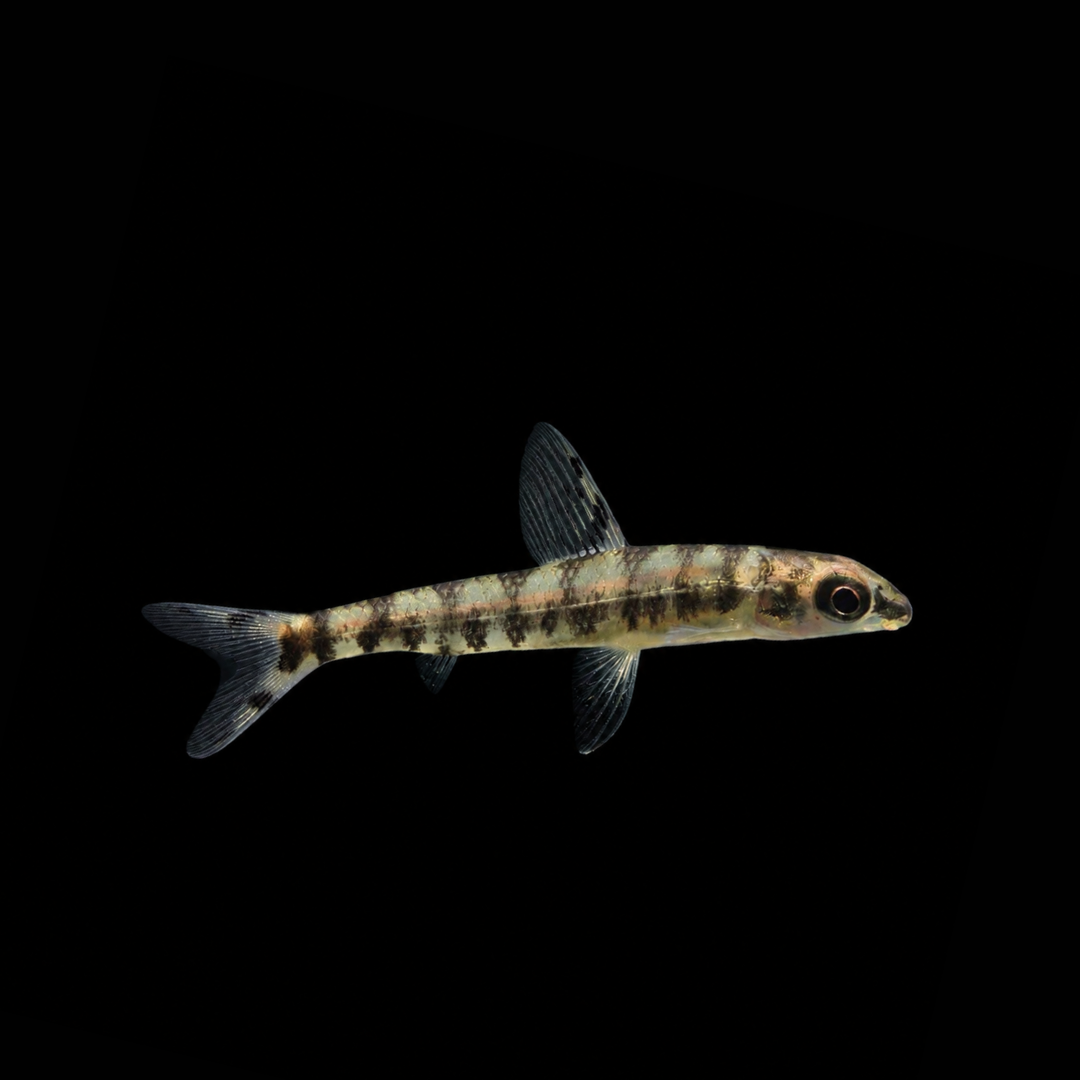
解説 / Description
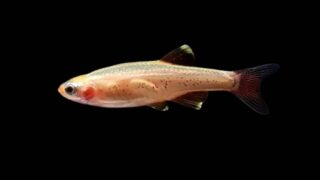
スレンダーアフリカンダータテトラは、アフリカ西部から中部の河川に分布する小型のカラシン目魚類です。水槽内では中層を泳ぎ続ける一般的なテトラとは異なり、底砂、石、流木の上に静止し、餌や周囲の変化に反応して短い距離を素早く移動します。この「止まる」と「走る」を繰り返す姿が、ダータテトラらしい最大の魅力です。 The Slender African Darter Tetra is a small characiform fish distributed in rivers of western to central Africa. Unlike many familiar tetras that swim continuously in midwater, it often rests on sand, stones, or driftwood and then makes quick short dashes in response to food or movement. This repeated pattern of stillness and sudden motion is the defining appeal of a darter-type fish.
日本の観賞魚流通では「スレンダーアフリカンダータテトラ」「アフリカンダータテトラ」などの名前で扱われ、ギニア便や西アフリカ便として入荷する個体が特に知られます。同じナノカラックス属にはよく似た種が多く、便名や販売名だけで完全に同定できるとは限りません。そのため、図鑑情報としては学名、産地表記、体型、斑紋、入荷状態を合わせて見ることが大切です。 In the Japanese aquarium trade, it is sold under names such as Slender African Darter Tetra or African Darter Tetra, and specimens imported as Guinea or West African shipments are especially familiar to enthusiasts. The genus Nannocharax contains several similar-looking species, so shipment names and trade names alone do not always guarantee identification. For reference purposes, the scientific name, locality label, body shape, pattern, and condition should be considered together.
基本情報 / Basic Information
| 学名 / Scientific Name | Nannocharax fasciatus Günther, 1867 |
|---|---|
| 通称 / Common Name | スレンダーアフリカンダータテトラ、アフリカンダータテトラ、ギニア産アフリカンダータテトラSlender African Darter Tetra, African Darter Tetra, Guinea African Darter Tetra |
| 分類 / Family | カラシン目 ディスティコドゥス科 ナノカラックス属Order Characiformes, family Distichodontidae, genus Nannocharax |
| 英名 / English Name | African Striped Darter, African Darter Tetra, Slender African Darter Tetra |
| 分布 / Distribution | アフリカ西部から中部。セネガルからカメルーンにかけての河川、チャド湖盆地、カメルーンのDja川・Bumba川を含む中部コンゴ川流域などから知られます。FishBaseではギニアのFatala川、Konkouré川、Great Scarcies川(Kolenté川)なども記録地として挙げられています。Western to central Africa. It is known from rivers between Senegal and Cameroon, the Lake Chad basin, and parts of the middle Congo River basin including the Dja and Bumba rivers in Cameroon. FishBase also lists records from the Fatala River, Konkouré River, and Great Scarcies River, also known as the Kolenté River, in the Guinea region. |
| 最大体長 / Max Size | 標準体長で約6.6cm、全長では最大約7.8cmの記録があります。観賞魚としては全長4〜6cm前後の個体が多く見られます。Recorded at about 6.6 cm standard length, with a maximum total length record of about 7.8 cm. Aquarium specimens are often encountered at around 4–6 cm total length. |
| 寿命 / Lifespan | 本種単独の明確な飼育下寿命データは多くありません。安定した環境では小型カラシン類の目安として3〜5年程度を見込み、状態よく維持できればさらに長く付き合える可能性があります。Reliable aquarium lifespan data specifically for this species are limited. As a practical estimate for a small characiform, 3–5 years can be expected under stable conditions, with the possibility of longer maintenance when the fish is kept in excellent condition. |
飼育環境 / Aquarium Environment
| 水槽サイズ / Tank Size | 少数であれば45cm規格水槽から飼育できますが、同種を6匹前後で落ち着かせて飼うなら60cm規格水槽以上が扱いやすいです。背の高さよりも底面積を重視し、石や流木の間に複数の休み場を作れる水槽が向いています。A 45 cm standard aquarium can work for a small number of fish, but a 60 cm standard aquarium or larger is easier for a settled group of around six. Footprint matters more than height, and the layout should allow several resting spots among stones and driftwood. |
|---|---|
| 水温 / Temperature | 22〜27℃が基準になります。日常管理では24〜26℃前後に安定させると扱いやすく、導入時や換水時の急変は避けます。 A basic range of 22–27°C is suitable. For routine care, keeping the tank stable at around 24–26°C is easy to manage, and sudden changes during introduction or water changes should be avoided. |
| 水質 / Water Quality | 目安はpH6.0〜7.5、弱酸性から中性です。極端な硬水よりも軟水から中程度の硬度が向きます。導入直後は水質差に配慮して時間をかけて水合わせを行い、硝酸塩が蓄積しないように生物ろ過と定期換水を重視します。A practical target is pH 6.0–7.5, from slightly acidic to neutral. Soft to moderately hard water is preferable to very hard water. Newly imported fish should be acclimated slowly when water conditions differ, and biological filtration plus regular water changes are important to prevent nitrate buildup. |
| レイアウト / Layout | 底床は角のない細かな砂を使い、丸みのある石、流木、落ち葉、アヌビアスやボルビティスなどの活着系水草を組み合わせると落ち着きます。腹部やヒレを底面に近づけて休むため、尖った砂利や汚れが溜まりやすい底床は避けます。水流は強い直撃ではなく、底層に酸素を含んだ緩やかな流れが届く程度が理想です。Use fine rounded sand, and combine smooth stones, driftwood, leaf litter, and attached plants such as Anubias or Bolbitis. Because the fish rests close to the bottom, sharp gravel and substrates that trap dirt easily should be avoided. Flow should not blast the fish directly; a gentle oxygen-rich current reaching the lower layer is ideal. |
| 注意点 / Precautions | 輸入直後の個体は痩せやすく、餌への反応、呼吸、腹部の傷みをよく観察します。底層で生活するため、残餌、底床の汚れ、溶存酸素不足が体調不良につながりやすい魚です。導入初期は照明をやや控えめにし、隠れ場所を多く用意すると警戒心が和らぎます。Recently imported specimens can be thin, so feeding response, respiration, and the condition of the belly should be checked carefully. As a bottom-oriented fish, it is vulnerable to uneaten food, dirty substrate, and low dissolved oxygen. During the initial period, subdued lighting and plenty of cover help reduce stress. |
餌と給餌 / Feeding
| 餌の種類 / Diet | 自然下では小型の水生無脊椎動物を食べることが知られ、飼育下でも動物性の餌を好みます。冷凍アカムシ、冷凍ミジンコ、ブラインシュリンプ、イトメなどをよく利用でき、慣れた個体は沈下性の小型顆粒フードや底棲魚用フードにも反応します。In the wild, it is known to feed on small aquatic invertebrates, and in aquaria it usually prefers animal-based foods. Frozen bloodworms, frozen daphnia, brine shrimp, and tubifex can be used, and settled specimens often accept small sinking granules or foods made for bottom-dwelling fish. |
|---|---|
| 給餌のポイント / Feeding Tips | 導入直後は人工飼料に反応しないことがあるため、まずは冷凍餌や活餌で体力を戻します。底に届いた餌を拾う魚なので、動きの速い中層魚と混泳する場合は餌が奪われやすくなります。スポイトで底面近くへ餌を落とす、消灯前後に与える、沈下性フードを併用するなどの工夫が有効です。Newly imported fish may not immediately accept prepared foods, so frozen or live foods are useful for rebuilding condition. Because this fish feeds on items that reach the bottom, fast midwater tank mates may outcompete it. Target-feeding near the substrate with a pipette, feeding around lights-out, and using sinking foods are all helpful methods. |
性格と混泳 / Temperament and Tank Mates
| 性格 / Temperament | 性格は温和で、他魚を積極的に攻撃するタイプではありません。生活圏は主に下層で、胸ビレや腹ビレを支えにして止まり、短い距離を素早く移動します。単独や少数では隠れがちになることがあるため、可能であれば同種を複数匹で飼うと行動を観察しやすくなります。It is generally peaceful and does not actively attack other fish. Its activity is centered in the lower layer, where it rests by bracing with the pectoral and pelvic fins and moves in short rapid bursts. Single fish or very small groups may hide more often, so keeping several together makes their behavior easier to observe. |
|---|---|
| 混泳の相性 / Compatibility | 混泳相手は、温和で口が大きすぎず、餌を独占しにくい小型魚が向きます。小型カラシン、ラスボラ類、穏やかな小型コイ科、性格の強すぎない底棲魚などが候補になります。大型魚、肉食性の強い魚、ヒレをかじる魚、底面で激しく競合する魚との混泳は避けます。同種間では小競り合いが見られることがありますが、石や流木で視線を切ると落ち着きやすくなります。Suitable tank mates are peaceful small fish that do not have overly large mouths and do not monopolize food. Small characins, rasboras, gentle small cyprinids, and mild bottom-dwelling species can be considered. Avoid large fish, strongly predatory species, fin-nippers, and fish that compete aggressively on the bottom. Minor squabbles may occur among conspecifics, but visual barriers made with stones and driftwood help reduce tension. |
病気と対策 / Diseases and Prevention
| かかりやすい病気 / Common Diseases | 本種だけに特有の病気は多く知られていません。輸入魚としては白点病、外部寄生虫、細菌性のヒレの傷み、痩せ、腹部の荒れに注意します。底面に接する時間が長いため、汚れた底床では腹部やヒレに炎症が出やすくなります。There are few diseases known to be unique to this species. As an imported fish, it should be watched for ich, external parasites, bacterial fin damage, emaciation, and irritation of the belly. Because it spends much time in contact with the substrate, dirty bottom conditions can easily lead to inflammation of the belly or fins. |
|---|---|
| 対策と予防 / Prevention | 予防の基本は、導入時の丁寧な水合わせ、隔離水槽での観察、低い硝酸塩濃度、清潔な底床、十分な溶存酸素です。薬浴を行う場合は小型魚であることを考慮し、急な高濃度処理を避けて慎重に行います。残餌を長く放置しないことも、底棲傾向の強い本種では特に重要です。Prevention depends on careful acclimation, observation in a quarantine tank, low nitrate levels, clean substrate, and sufficient dissolved oxygen. If medication is needed, treat carefully and avoid sudden high-dose exposure because this is a small fish. Prompt removal of uneaten food is especially important for a species that lives close to the bottom. |
増やし方(繁殖) / Breeding
| 雌雄の判別 / Sexing | 通常時の雌雄判別は容易ではありません。成熟したメスは抱卵時に腹部がふっくらし、オスは状態が上がると体色のコントラストやヒレの赤みが強まることがあります。ナノカラックス属の一部では繁殖期のオスに接触器官や繁殖結節が報告されており、成熟状態を判断する手がかりになる可能性があります。Sexing is not easy under ordinary conditions. Mature females may become fuller-bodied when carrying eggs, while males may show stronger contrast and more reddish coloration in the fins when in breeding condition. Contact organs or breeding tubercles have been reported in some Nannocharax, and these may provide clues to maturity in breeding males. |
|---|---|
| 繁殖形態 / Reproduction | 水槽内での繁殖情報は限られており、詳細な繁殖形態を断定するには注意が必要です。小型カラシン目魚類としては、親が卵を守らないばらまき型の産卵を想定した管理が現実的です。卵の捕食が起こり得るため、繁殖を狙う場合は産卵床を多く入れた別水槽を用意し、産卵後に親魚を離す方法が基本になります。Aquarium breeding information is limited, so its detailed reproductive behavior should not be stated too definitively. As a small characiform fish, it is practical to manage it as a likely egg-scattering species without parental care. Because adults may eat the eggs, a separate breeding tank with abundant spawning material and removal of the adults after spawning is the safest approach. |
| 繁殖のポイント / Breeding Tips | 繁殖を試みる場合は、よく太らせた複数個体を用意し、弱酸性で硬度の低い清潔な水、26〜28℃前後のやや高めの水温、モスや産卵モップを底面近くに入れた別水槽を使います。稚魚は非常に小さい可能性があるため、初期飼料としてインフゾリアやワムシを準備し、成長に合わせてブラインシュリンプ幼生へ移行します。確立した繁殖法としてではなく、近縁小型カラシンの繁殖管理を応用する考え方です。For a breeding attempt, prepare a well-conditioned group, clean soft slightly acidic water, a slightly elevated temperature of around 26–28°C, and a separate tank with moss or spawning mops placed near the bottom. The fry may be very small, so infusoria or rotifers should be prepared as first foods before gradually moving to newly hatched brine shrimp. This should be treated as an applied approach based on related small characiforms rather than a fully established breeding method for the species. |
雑学と豆知識 / Trivia and Fun Facts
| 1. 「ダータ」と呼ばれる理由 / 1. Why It Is Called a Darter | 本種の魅力は、泳ぎ続ける魚ではなく「待ち、見つけ、走る」魚であることにあります。底面でじっと構え、次の瞬間に短い距離を矢のように移動する行動は、流れのある河川底で無駄なエネルギーを使わずに餌を探す生活とよく合っています。水槽内でも、派手に泳ぐ美しさではなく、静止した体の向きや小さな視線の変化に面白さが表れます。The appeal of this fish lies in the fact that it waits, detects, and dashes rather than swimming constantly. Resting on the bottom and then suddenly moving a short distance fits a life spent searching for food efficiently in flowing river habitats. In the aquarium, its beauty is not found in constant motion, but in the direction of its resting posture and the small changes that precede each movement. |
|---|---|
| 2. 南米のダータテトラとの収斂進化 / 2. Convergent Evolution with South American Darters | アフリカのナノカラックス類と、南米のCharacidiumなどのダータテトラ類は、近縁というわけではありません。それでも、細長い体、底面での静止、胸ビレを支えにした姿勢などがよく似ています。これは、流れのある底層という似た環境が、別々の大陸の魚に似た形と行動をもたらした例として理解できます。水槽で本種を観察することは、小さな魚の姿を通して環境と進化の関係を眺めることにもつながります。African Nannocharax and South American darters such as Characidium are not close relatives. Even so, they share a slender body, bottom-resting behavior, and a posture supported by the pectoral fins. This can be understood as a case in which similar flowing-bottom habitats produced similar forms and behaviors on separate continents. Observing this fish in an aquarium offers a small window into the relationship between environment and evolution. |
| 3. 下あごを使う珍しい吸引摂餌 / 3. Unusual Suction Feeding with the Lower Jaw | 多くの魚の吸い込み食いでは、上あご側の骨が前へ動く仕組みが重要になります。一方、Nannocharax fasciatusでは上あご側の動きが制限され、下あごの中にある下顎内関節が下あごの突出に関わることが研究で示されています。底面の餌に向かって下向きに吸い込む生活では、この仕組みが小さな無脊椎動物を捕らえる助けになっていると考えられます。In many fishes, suction feeding depends heavily on forward movement of the upper jaw bones. In Nannocharax fasciatus, however, upper-jaw movement is limited, and research has shown that an intramandibular joint within the lower jaw contributes to lower-jaw protrusion. For a fish that feeds downward toward prey on the bottom, this mechanism is thought to help capture small invertebrates. |
| 4. 小さな体に見られる流水適応 / 4. Stream Adaptations in a Small Body | ナノカラックス類には、底層で流れに耐えるための工夫が見られます。胸ビレや腹ビレを底面に添える姿勢、浮き上がりすぎずに休む行動、必要な時だけ短く走る動きは、流れのある場所で生活する小型魚にとって理にかなっています。飼育下では強い水流を直接当てる必要はありませんが、よく酸素を含んだ清潔な水と、魚が体を預けられる滑らかな底面を用意すると本来の姿が出やすくなります。Nannocharax show several traits suited to holding position near the bottom in flowing water. Bracing with the pectoral and pelvic fins, resting without floating too high, and making only short quick movements all make sense for a small fish living in current. In the aquarium, a strong direct current is unnecessary, but clean oxygen-rich water and a smooth bottom where the fish can rest securely help bring out its natural behavior. |
| 5. 「ギニア便」と「コンゴ便」の見方 / 5. How to Read “Guinea” and “Congo” Shipment Names | 日本の観賞魚流通では、アフリカ産の小型カラシンが「ギニア便」「コンゴ便」のような入荷名で紹介されることがあります。ギニア便のスレンダーアフリカンダータテトラはNannocharax fasciatusとして販売される例があり、細身の体型や繊細な模様が好まれます。一方で、アフリカンダータテトラという広い販売名にはNannocharax sp.や別種名で扱われる個体も含まれるため、購入時は販売名だけでなく、学名表記、産地、写真、状態を合わせて確認すると安心です。In the Japanese aquarium trade, small African characiforms may be introduced under shipment names such as “Guinea” or “Congo.” Guinea-shipment Slender African Darter Tetras are sometimes sold as Nannocharax fasciatus and are appreciated for their slim body and fine patterning. At the same time, the broader trade name African Darter Tetra can include Nannocharax sp. or other species, so it is safer to check not only the trade name but also the scientific label, locality, photographs, and condition. |
| 6. 学名に込められた「小さな帯模様」 / 6. A Name Suggesting a Small Banded Fish | 属名Nannocharaxのうち、Nannoは「小さい」を意味する語に由来し、charaxはカラシン類の学名にしばしば見られる古い魚名に由来します。種小名fasciatusは「帯のある」という意味で、体側の斑紋や縞模様を連想させる名前です。派手な発色で目を引く魚ではありませんが、名前を知ってから眺めると、細かな模様が本種の個性としてより印象に残ります。In the genus name Nannocharax, Nanno is derived from a word meaning small, while charax is an old fish name often seen in characiform taxonomy. The species name fasciatus means banded, referring to the patterned markings along the body. This is not a fish that relies on brilliant coloration, but once the meaning of the name is known, its fine pattern becomes an even more memorable part of its identity. |
まとめ / Conclusion
スレンダーアフリカンダータテトラは、群泳の華やかさで見せる魚ではなく、底層での静かな動きと一瞬の突進で魅力を伝える魚です。細身の体、繊細な斑紋、底面に身を寄せる姿には、アフリカ河川の流れに適応してきた小型魚らしい機能美があります。 The Slender African Darter Tetra is not a fish that displays itself through flashy schooling, but one that reveals its charm through quiet bottom-dwelling behavior and sudden bursts of movement. Its slender body, delicate markings, and close contact with the substrate show the functional beauty of a small fish adapted to African river habitats.
飼育では、清潔な底床、安定した弱酸性から中性の水、十分な酸素、底まで届く給餌が重要になります。環境に慣れた個体は、止まる、向きを変える、餌へ走るという小さな行動の中に多くの見どころを見せてくれます。水槽の下層に落ち着いた奥行きを加え、観察するほど味わいが深まるアフリカ産小型カラシンです。 For aquarium care, clean substrate, stable slightly acidic to neutral water, sufficient oxygen, and feeding that reliably reaches the bottom are important. Once settled, the fish offers many points of interest through small actions such as resting, changing direction, and dashing toward food. It is a small African characiform that adds quiet depth to the lower layer of the aquarium and becomes more rewarding the more closely it is observed.

気になる道具や飼い方を見つけてみませんか?
 アイのアクアグッズ案内コリドラスのもふもふ時間を楽しむ|餌・底砂・お掃除用品の選び方コリドラスのもふもふする食事風景を楽しむために。沈む餌2種類の違い、口元に配慮した底砂、食べ残しを回収する道具を、アクアグッズナビゲーターのアイが紹介します。記事はコチラ →
 アイのアクアグッズ案内ショップで見かけるカラフルなバケツ。いったい何が入ってる?道具の特徴や使い方、選ぶときのポイントをアイが紹介します。記事はコチラ →
 アイのアクアグッズ案内アフリカンシクリッドの飼育用品|水槽・ろ過・底砂・岩組み・餌の選び方道具の特徴や使い方、選ぶときのポイントをアイが紹介します。記事はコチラ →
 アイのアクアグッズ案内水槽用浄水器の選び方|水換えを楽にするタイプとROの違い道具の特徴や使い方、選ぶときのポイントをアイが紹介します。記事はコチラ →
さまざまな飼育テーマをご紹介。リンク先の記事には広告・商品紹介が含まれます。
案内・紹介記事一覧へ →分布マップ
スレンダーアフリカンダータテトラは、アフリカ西部から中部にかけて知られ、セネガルからカメルーン周辺の河川、チャド湖盆地、カメルーンのDja川・Bumba川を含む中部コンゴ川流域、ギニアのFatala川・Konkouré川・Great Scarcies川周辺などが分布情報として挙げられます。
この地図は、分布欄の内容をもとにした分布イメージ用の概略表示です。実際の採集地点や厳密な生息範囲を示すものではありません。
参考文献
スレンダーアフリカンダータテトラ(Nannocharax fasciatus)の分類、分布、生息環境、飼育条件、繁殖に関わる形態、病気や導入時の注意点を支える資料に限定して選定しています。店舗販売ページ、通販ページ、個人ブログ、まとめサイトは含めていません。
-
分類・学名Fricke, R., Eschmeyer, W. N. & van der Laan, R. (eds). 2026. Eschmeyer’s Catalog of Fishes: Species by genus, Nannocharax fasciatus.
学名、記載者、原記載、タイプ標本、現行名、科、広域分布の確認に使用。
https://researcharchive.calacademy.org/research/ichthyology/catalog/fishcatget.asp?spid=4214 -
原記載・同物異名GBIF Secretariat. Nannocharax fasciatus Günther, 1867, GBIF Backbone Taxonomy / Catalogue of Life.
受け入れ名、英名、同物異名(Nannocharax gobioides、Nannocharax seyboldi)、原記載文献の確認に使用。
https://www.gbif.org/taxon/45MBJ -
分布・水質・体長Froese, R. & Pauly, D. (eds). FishBase. Nannocharax fasciatus Günther, 1867.
分布、水温、pH、硬度、最大体長、食性、IUCN評価、観賞魚利用の確認に使用。
https://www.fishbase.se/summary/Nannocharax-fasciatus -
西アフリカ魚類相Lévêque, C., Paugy, D. & Teugels, G. G. (eds). 1990. Faune des poissons d’eaux douces et saumâtres de l’Afrique de l’Ouest / The Fresh and Brackish Water Fishes of West Africa. Musée Royal de l’Afrique Centrale, Tervuren & ORSTOM.
西アフリカ産淡水魚の分類、地域分布、同定の背景資料として使用。
https://agris.fao.org/search/en/providers/122535/records/65de11190f3e94b9e5ca385f -
摂餌形態・IMJMartinez, C. M., Mazon, R. M. M. & Stiassny, M. L. J. 2024. Suction Feeding Turned on Its Head: A Functional Novelty Facilitates Lower Jaw Protrusion. Integrative and Comparative Biology, 64(3):729–741.
下顎内関節、下顎突出、底生餌への吸引摂餌、形態機能学的な説明の根拠として使用。
https://doi.org/10.1093/icb/icae097 -
接触器官・繁殖結節Vari, R. P. & Ferraris, C. J. Jr. 2004. A new species of Nannocharax (Characiformes: Distichodontidae) from Cameroon, with the description of contact organs and breeding tubercles in the genus. Proceedings of the Biological Society of Washington, 117(4):551–563.
ナノカラックス属における接触器官、繁殖結節、繁殖期の二次性徴に関する説明の根拠として使用。
https://biostor.org/reference/81368 -
同属種の識別・隠れた多様性Bragança, P. H. N., Smith, T. G., Vreven, E. J. W. M. N. & Chakona, A. 2020. Integrative taxonomy reveals hidden diversity in the southern African darters genus Nannocharax Günther 1867 (Characiformes: Distichodontidae). Journal of Fish Biology, 97(6):1713–1723.
ナノカラックス属で外見の似た集団に隠れた多様性があること、流通名だけでの同定に注意が必要であることの補助資料として使用。
https://doi.org/10.1111/jfb.14535 -
流水環境への適応Katemo Manda, B., Snoeks, J., Decru, E., Brecko, J. & Vreven, E. J. W. M. N. 2023. Revision of Nannocharax luapulae Boulenger, 1915 (Characiformes: Distichodontidae) from the Upper Congo basin: evidence for a species pair. Journal of Fish Biology, 103(3):557–573.
同属種に見られる形態差、識別、流水・底質とヒレ周辺構造の関係を説明する補助資料として使用。
https://doi.org/10.1111/jfb.15400 -
水質管理・病気予防MSD Veterinary Manual. Environmental Diseases of Aquatic Animals in Aquatic Systems.
アンモニア、亜硝酸、硝酸塩、溶存酸素、pHなど、閉鎖水槽での水質悪化と魚の健康リスクを説明する根拠として使用。
https://www.msdvetmanual.com/exotic-and-laboratory-animals/aquatic-systems/environmental-diseases-of-aquatic-animals-in-aquatic-systems -
導入・隔離MSD Veterinary Manual. Routine Health Care of Fish.
新規導入魚の隔離、感染症の持ち込み防止、導入初期の観察に関する注意点の根拠として使用。
https://www.msdvetmanual.com/all-other-pets/fish/routine-health-care-of-fish -
魚類繁殖一般FAO. Natural propagation of finfish. In: Manual of Fish Culture.
産卵場所の水質、酸素、餌、卵や仔魚を守る環境条件など、繁殖管理の一般論を補助的に支える資料として使用。本種の水槽内繁殖については公開情報が限られるため、本文では断定を避ける前提で参照。
https://www.fao.org/4/ac742e/AC742E03.htm
飼育条件の補足:本種だけを対象とした飼育下繁殖の詳細な記録は限られています。繁殖に関する説明には同属魚の知見を含むため、本種で確立した繁殖手順とは区別して参考にしてください。




コメント