

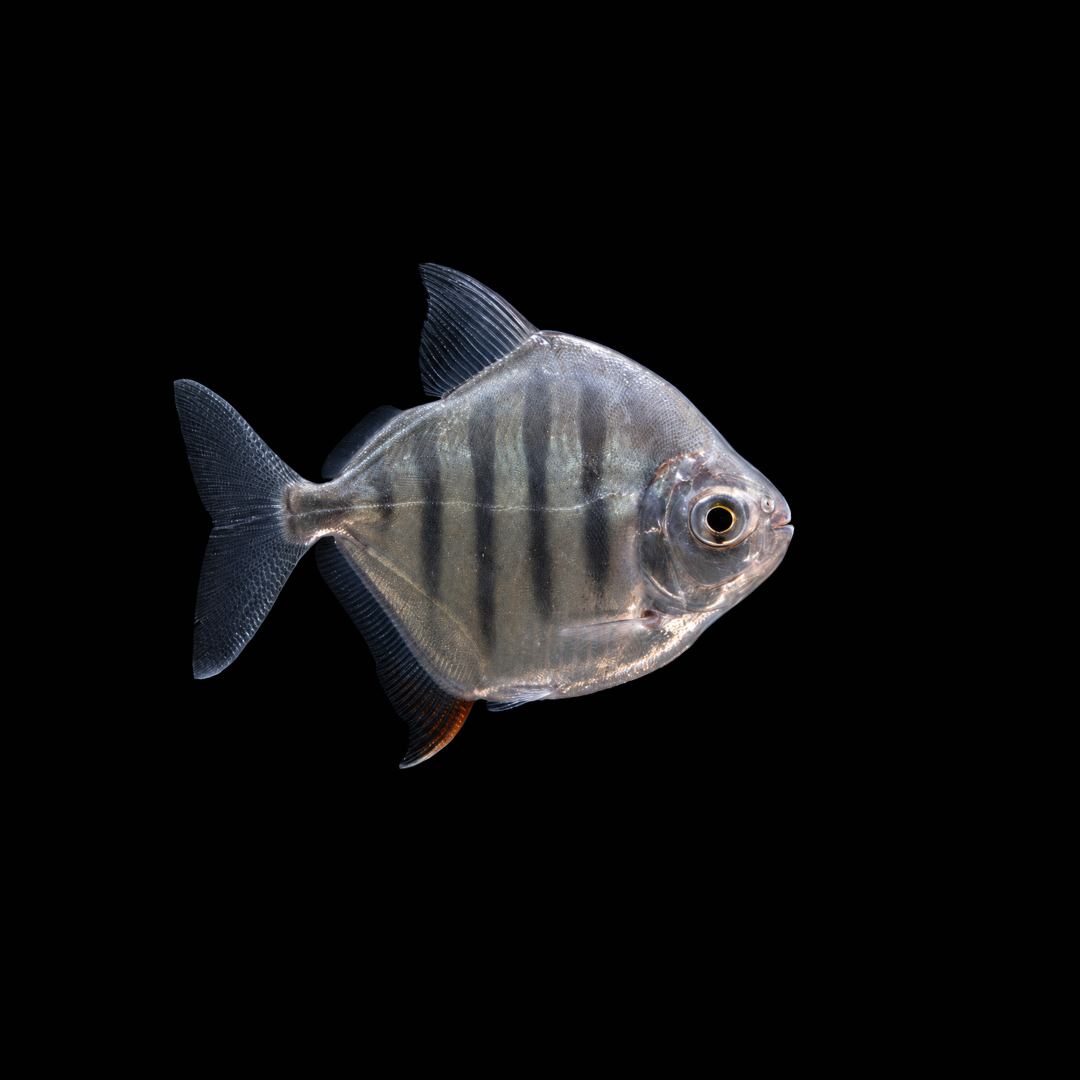
解説 / Description
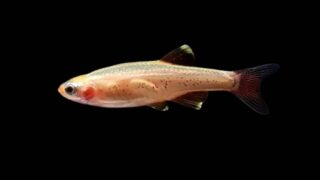
タイガーメチニスは、銀色に輝く円盤状の体と、体側に入る黒い縦縞が目を引く南米産のシルバーダラー類です。学名はMetynnis fasciatusとされ、英語圏ではTiger Silver DollarやBanded Silver Dollarの名で流通します。ピラニアやパクーの仲間を含むセルラサルムス科に分類されますが、性格は比較的温和で、食性も植物質を中心とした雑食性です。分類や最大体長については資料によって扱いに差があるため、飼育では「縞模様を持つ中型のメチニス類」として、十分な遊泳空間と安定した水質を用意することが大切です。 Tiger Metynnis is a South American silver dollar-type fish known for its shiny, disc-shaped silver body and dark vertical bands. It is generally referred to by the scientific name Metynnis fasciatus and is sold in English-speaking markets as the Tiger Silver Dollar or Banded Silver Dollar. Although it belongs to the family Serrasalmidae, which also includes piranhas and pacus, it is usually peaceful and strongly plant-oriented in its diet. Because taxonomy and maximum size are treated differently among sources, it is best kept as a medium-sized striped Metynnis that needs generous swimming space and stable water quality.
基本情報 / Basic Information
| 学名 / Scientific Name | Metynnis fasciatus |
|---|---|
| 通称 / Common Name | タイガーメチニス、タイガーシルバーダラー、バンデッドシルバーダラー、ストライプドシルバーダラーTiger Metynnis, Tiger Silver Dollar, Banded Silver Dollar, Striped Silver Dollar |
| 分類 / Family | カラシン目 セルラサルムス科 メチニス属。古い資料ではカラシン科として扱われることもありますが、現在の主要なデータベースではセルラサルムス科として掲載されています。Order Characiformes, family Serrasalmidae, genus Metynnis. Some older references may place related fishes under Characidae, but major current databases list this fish in Serrasalmidae. |
| 英名 / English Name | Tiger Silver Dollar, Banded Silver Dollar, Striped Silver Dollar |
| 分布 / Distribution | 確認しやすい学術・流通資料では、ブラジルの中部アマゾン流域、特にカピウル川水系が主な産地として示されています。国内流通ではリオ・カッピン、リオ・ダス・モルテス、グァマ川、アラグアイア川などの産地名で扱われる例がありますが、これらは流通名や近縁タイプを含む可能性があるため、厳密な自然分布としては慎重に見る必要があります。Readily checkable scientific and trade sources most consistently point to Brazil, especially the Rio Capiuru basin in the middle Amazon drainage. In the Japanese trade, locality names such as Rio Capim, Rio das Mortes, Rio Guamá, and Rio Araguaia may be used, but these should be treated cautiously because trade names may include related forms or locality-based variants. |
| 最大体長 / Max Size | 資料によって差があり、学術データベースでは5.8cm SLの記録、観賞魚資料では最大16.5cm前後の表記が見られます。飼育上は10cmを超える可能性のある中型シルバーダラー類として扱い、余裕のある水槽を用意します。30cm級まで大型化するという表記は、より大型の近縁種との混同を含む可能性があります。Reported size varies by source: scientific databases list a record of 5.8 cm standard length, while aquarium references may give a maximum of about 16.5 cm. In practice, keep it as a medium-sized silver dollar that may exceed 10 cm and provide ample space. Claims of 30 cm-class size likely reflect confusion with larger related species. |
| 寿命 / Lifespan | 飼育下では8〜10年前後を目安にできます。実際の寿命は水槽サイズ、水質、餌の内容、混泳相手から受けるストレスによって変わります。A practical aquarium estimate is around 8–10 years. Actual lifespan depends on tank size, water quality, diet, and stress from tank mates. |
飼育環境 / Aquarium Environment
| 水槽サイズ / Tank Size | 幼魚期は60cm規格水槽でも一時的に飼育できますが、よく泳ぎ、群れで落ち着く魚です。成魚を複数匹で維持するなら90cm規格水槽以上を最低ラインとし、6匹以上の群泳や大型魚との混泳では120cm規格水槽から150cmクラス、300L以上の水量を目安にすると安定しやすくなります。Juveniles can be kept temporarily in a standard 60 cm tank, but this is an active schooling fish. For several adults, a standard 90 cm tank should be treated as the minimum. For a group of six or more, or when kept with larger tank mates, a 120–150 cm class aquarium with 300 L or more is a more stable target. |
|---|---|
| 水温 / Temperature | 23〜28℃。水温の急変に弱いため、日本の冬期はヒーターとサーモスタットで安定させます。 23–28°C. Avoid sudden temperature changes; in winter, use a heater and thermostat to keep the temperature stable. |
| 水質 / Water Quality | 弱酸性から中性の軟水を好みます。目安はpH 5.5〜7.5、硬度は軟水から中程度です。日本の水道水はカルキ抜きを行えば適応しやすい場合が多いものの、餌をよく食べるため硝酸塩がたまりやすくなります。硝酸塩はできるだけ低く保ち、目安として50mg/Lを超えないように定期的な換水を行います。It prefers soft, slightly acidic to neutral water. A practical range is pH 5.5–7.5 with soft to moderately hard water. Dechlorinated Japanese tap water is often usable, but heavy feeding can lead to nitrate buildup. Keep nitrate as low as practical and aim to prevent it from exceeding about 50 mg/L through regular water changes. |
| レイアウト / Layout | 中層から上層を泳ぐため、前面と中央には広い遊泳スペースを残します。流木や石を入れる場合は、角の鋭いものを避け、丸みのある素材を選びます。水草は食害を受けやすく、柔らかい種類は長く維持しにくいです。緑を入れたい場合は、アヌビアスやミクロソリウムのような硬い葉の水草を活着させるか、人工水草を使うと管理しやすくなります。Leave broad open swimming space in the front and middle areas because the fish uses the mid to upper water column. If wood or stones are used, avoid sharp edges and choose rounded materials. Soft aquatic plants are likely to be eaten. For greenery, attach tougher plants such as Anubias or Java fern to hardscape, or use realistic artificial plants. |
| 注意点 / Precautions | 臆病で驚きやすく、急な照明の点灯、人の動き、水換え時の振動などで突進することがあります。飛び出しを防ぐため、隙間のない頑丈なフタは必須です。単独では不安定になりやすいため、できるだけ同種を6匹以上で飼育します。濾過は外部式フィルターの複数運用やオーバーフロー濾過など、排泄量に見合う余裕のある構成が向いています。This fish is timid and easily startled by sudden lighting, movement near the tank, or vibration during maintenance. A tight, sturdy lid is essential to prevent jumping. Because it can become nervous when kept alone, a group of six or more is preferable. Filtration should be generous, such as multiple canister filters or an overflow system, to match its waste production. |
餌と給餌 / Feeding
| 餌の種類 / Diet | 植物質を中心とした雑食性です。主食にはスピルリナ配合フード、植物質の多いフレークやペレット、アルジーウェーハーが向いています。副食として、軽く茹でたホウレンソウ、ズッキーニ、キュウリ、エンドウ豆なども利用できます。動物性の餌は冷凍赤虫、ブラインシュリンプ、イサザアミなどを補助的に与える程度にします。A strongly plant-oriented omnivore. Suitable staples include spirulina-based foods, vegetable-rich flakes or pellets, and algae wafers. Lightly blanched spinach, zucchini, cucumber, and peas can be used as supplementary foods. Animal-based foods such as frozen bloodworms, brine shrimp, and mysis-type foods should be used mainly as occasional supplements. |
|---|---|
| 給餌のポイント / Feeding Tips | 食欲が強く、与えればよく食べますが、高タンパクな肉食魚用フードだけに偏ると肥満や消化不良の原因になります。少量を1日1〜2回、数分で食べ切る量に調整し、植物質を日常的に入れることを意識します。大型魚との混泳水槽では餌の奪い合いが起きやすいため、全体に餌が行き渡るように投入位置や粒サイズを調整します。It has a strong appetite and feeds readily, but a diet based only on high-protein carnivore foods may contribute to obesity or digestive problems. Offer small portions once or twice daily, only as much as the fish can finish within a few minutes, and include plant matter regularly. In large-fish community tanks, adjust feeding points and pellet size so that all fish receive food without excessive competition. |
性格と混泳 / Temperament and Tank Mates
| 性格 / Temperament | 同種で群れを作る温和な魚です。自分から他魚を強く攻撃することは少ない一方、臆病な面があり、落ち着ける環境と同種の存在が重要です。活発に泳ぐため、水槽に動きと明るさを加えてくれます。A peaceful schooling fish. It rarely attacks other fish aggressively, but it can be nervous, so a calm environment and the presence of its own kind are important. Its active swimming adds movement and brightness to the aquarium. |
|---|---|
| 混泳の相性 / Compatibility | アロワナ、ダトニオ、大型シクリッド、ポリプテルスなどの大型魚水槽で、ディザーフィッシュとして使われることがあります。体高があるため飲み込まれにくく、中層を泳ぐことで水槽全体に安心感を与える役割が期待できます。ただし、口に入る小型魚との混泳は避けます。攻撃性の強い魚や執拗に追い回す魚と組み合わせる場合は、逃げ場と水槽サイズに十分な余裕が必要です。It is often used as a dither fish in aquariums with arowanas, datnoids, large cichlids, bichirs, and similar species. Its deep body makes it difficult for many tank mates to swallow, and its midwater activity can help create a more secure atmosphere. Avoid keeping it with fish small enough to be eaten. When combined with aggressive or persistent tank mates, provide ample space and safe areas. |
病気と対策 / Diseases and Prevention
| かかりやすい病気 / Common Diseases | 導入直後や水温が不安定な時期には白点病に注意します。驚いて突進した際の擦り傷、眼球や体表の打撲、水質悪化による肌荒れ、尾ぐされ、消化不良も起こることがあります。植物質が不足し、高タンパク食に偏ると内臓に負担がかかりやすくなります。Watch for ich after introduction or during periods of unstable temperature. Scrapes, eye or body injuries from sudden dashes, skin irritation from poor water quality, fin rot, and digestive problems may also occur. A diet lacking plant matter and overly biased toward high-protein foods can strain the internal organs. |
|---|---|
| 対策と予防 / Prevention | 水温を安定させ、硝酸塩をためすぎないよう定期的に換水します。新しく迎えた個体は、可能であればトリートメント期間を設け、急な水質変化を避けて慎重に水合わせします。レイアウトは鋭利な素材を避け、フタを確実に閉めます。餌は植物質を中心にし、動物性餌は補助として使うバランスが大切です。Keep temperature stable and perform regular water changes to prevent excessive nitrate accumulation. Quarantine new fish when possible and acclimate them carefully to avoid sudden water-quality changes. Avoid sharp decorations and keep the lid securely closed. A plant-centered diet with animal foods used as supplements is the safest long-term approach. |
増やし方(繁殖) / Breeding
| 雌雄の判別 / Sexing | 成熟したオスは尻ビレがやや長くなり、前方へ湾曲した三日月状に見えやすく、繁殖期には赤やオレンジの発色が強まることがあります。メスは尻ビレの縁が比較的まっすぐで短く、抱卵時には腹部がふっくらします。Mature males usually have a slightly longer, forward-curving, crescent-shaped anal fin and may show stronger red or orange coloration when in breeding condition. Females tend to have a shorter, straighter anal-fin edge and become fuller-bodied when carrying eggs. |
|---|---|
| 繁殖形態 / Reproduction | 卵を水中にばらまく散卵型です。親魚が卵や稚魚を守る行動は基本的に見られません。産卵数や孵化までの時間は近縁種や飼育条件によって幅がありますが、良好な条件では数日で孵化するとされます。An egg-scattering species. The parents do not normally guard eggs or fry. Egg number and incubation time vary by related form and aquarium conditions, but hatching is generally expected within a few days under good conditions. |
| 繁殖のポイント / Breeding Tips | 家庭水槽での繁殖はやや難しく、広い専用水槽を用意できると管理しやすくなります。弱酸性で軟らかい水、水温26〜28℃前後、薄暗い照明、ウィローモスや産卵モップなどの産卵床を用意し、幼魚期から群れで育てて自然にペアができるのを待つ方法が現実的です。産卵後は卵の食害を避けるため親魚を隔離し、稚魚は自由遊泳後にインフゾリアからブラインシュリンプ幼生へ移行して育てます。Breeding in a home aquarium is somewhat difficult, and a spacious dedicated breeding tank makes management easier. Use soft, acidic water, a temperature around 26–28°C, dim lighting, and spawning media such as Java moss or spawning mops. Raising a group from juveniles and allowing pairs to form naturally is a practical method. After spawning, remove the adults to reduce egg loss. Once fry become free-swimming, begin with infusoria and gradually move to newly hatched brine shrimp. |
雑学と豆知識 / Trivia and Fun Facts
| 1. 学名に残る小さな骨格の手がかり / 1. A Small Skeletal Clue in the Name | Metynnisという属名は、古代ギリシャ語のmetaと、鋤の刃を意味するhynnisに由来すると説明されます。これは背ビレの前にある小さな棘に着目した名前です。観賞魚として見ると、まず銀色の丸い体と縞模様に目を奪われますが、分類学の世界では、体の奥に隠れた骨格の特徴が名前の由来になることがあります。種小名fasciatusは帯模様のあるという意味で、こちらは本種の外見的な印象を素直に表しています。The genus name Metynnis is explained as deriving from the ancient Greek meta and hynnis, the latter referring to a ploughshare. It alludes to the small spine in front of the dorsal fin. Aquarists may first notice the round silver body and stripes, but taxonomy often gives importance to hidden skeletal characters. The species name fasciatus means banded, directly reflecting the fish’s external appearance. |
|---|---|
| 2. ピラニアに近いが、暮らし方は大きく違う / 2. Close to Piranhas, but Different in Lifestyle | タイガーメチニスは、ピラニアやパクーを含むセルラサルムス科に分類されます。しかし、一般的なピラニアの印象とは異なり、水草、藻類、果実、種子など植物質をよく利用する魚です。近い仲間の中に肉食へ寄った種と植物食へ寄った種が並ぶことは、南米の淡水魚が多様な環境に合わせて食性を広げてきたことを感じさせます。水槽内でもこの背景を意識し、植物質の餌をきちんと与えることで、本来の性質に寄り添った飼育に近づきます。Tiger Metynnis belongs to Serrasalmidae, a family that includes piranhas and pacus. Unlike the common image of piranhas, however, it makes strong use of plant matter such as aquatic plants, algae, fruits, and seeds. The presence of both carnivore-leaning and plant-leaning species within the same family shows how South American freshwater fishes diversified their diets. In the aquarium, providing regular plant-based foods helps reflect this natural background. |
| 3. 分類には慎重さが必要な魚 / 3. A Fish That Requires Taxonomic Caution | 本種はMetynnis fasciatusとして扱われますが、過去には近縁種Metynnis hypsauchenの幼魚期の色彩変異ではないかと見られたこともあります。記載に用いられた標本が失われたとされること、若い個体の縞模様だけでは判断が難しいことが、その背景にあります。現在も観賞魚としてはタイガーメチニスの名で定着していますが、産地名付きの個体や近縁種との関係を見るときは、名前だけで断定せず、模様、体型、成長後の特徴を合わせて確認する姿勢が大切です。This fish is treated as Metynnis fasciatus, but it has historically been considered by some to represent a juvenile color form of the related Metynnis hypsauchen. This caution comes from the reported loss of the type specimen and the difficulty of judging identity from juvenile striping alone. In the aquarium trade, the name Tiger Metynnis is well established, but locality-labeled individuals and related forms should be assessed carefully by pattern, body shape, and adult characteristics rather than by name alone. |
| 4. 日本の大型魚水槽で頼られる理由 / 4. Why It Is Valued in Japanese Large-Fish Aquariums | 日本の大型魚飼育では、アロワナやダトニオ、ポリプテルスのような主役魚を落ち着かせるため、よく泳ぐ温和な魚が重宝されます。タイガーメチニスは体高があり、口に入りにくい形をしているうえ、中層を群れで泳ぐため、水槽の中に安全な雰囲気を作りやすい魚です。水槽の主役を奪うというより、主役魚の警戒心を和らげ、全体の動きと奥行きを整える名脇役として魅力を発揮します。In Japanese large-fish aquariums, peaceful active swimmers are valued because they can help calm display fish such as arowanas, datnoids, and bichirs. Tiger Metynnis has a deep body that is not easily swallowed and swims in groups through the middle water layers, helping create a sense of safety. Rather than taking over the display, it works as a supporting fish that reduces nervousness and gives the aquarium more movement and depth. |
| 5. 産地名を楽しむときの見方 / 5. How to Approach Locality Names | 国内流通では、リオ・カッピン、リオ・ダス・モルテス、グァマ川、アラグアイア川などの産地名で紹介されることがあります。こうした表記は、縞の入り方や体型、ヒレの雰囲気の違いを楽しむ手がかりになります。一方で、観賞魚の流通名は学術的な自然分布や厳密な分類と必ず一致するとは限りません。産地名は魅力を深める情報として楽しみながらも、販売店の説明、個体の写真、成長後の特徴を合わせて見ると、より納得して選べます。In Japan, fish may be offered with locality names such as Rio Capim, Rio das Mortes, Rio Guamá, or Rio Araguaia. These names can help aquarists appreciate differences in banding, body shape, and fin appearance. At the same time, aquarium trade names do not always match strict scientific distribution or taxonomy. Treat locality labels as useful context, and compare the seller’s explanation, individual photographs, and adult traits when choosing fish. |
まとめ / Conclusion
タイガーメチニスは、銀色の体に走る縦縞、群れで泳ぐ落ち着いた動き、そして大型魚水槽での扱いやすさを併せ持つシルバーダラー類です。丈夫で温和な印象のある魚ですが、よく泳ぎ、よく食べ、驚くと突進する性質があります。広い水槽、余裕のある濾過、植物質を中心にした餌、確実なフタの設置が、長く安定して付き合うための基本になります。 Tiger Metynnis is a silver dollar-type fish that combines vertical bands on a silver body, calm schooling movement, and practical value in large-fish aquariums. It may appear hardy and peaceful, but it swims actively, eats heavily, and can dash when startled. A spacious tank, strong filtration, a plant-based diet, and a secure lid are the foundation for long-term success.
分類や産地の扱いにはまだ慎重に見るべき点がありますが、その不確かさも含めて、本種は南米カラシンの奥深さを伝えてくれる魚です。主役魚を引き立てる混泳相手としても、縞模様やロカリティの違いを味わう観賞魚としても、水槽に静かな迫力と知的な楽しみをもたらしてくれます。 Although its taxonomy and locality labels should be approached with some caution, that very complexity helps reveal the depth of South American characins. Whether kept as a dither fish that brings out the confidence of larger tank mates or appreciated for its stripes and locality-based variation, it adds quiet impact and intellectual interest to the aquarium.

気になる道具や飼い方を見つけてみませんか?
 アイのアクアグッズ案内水草用ソイルの選び方|土・砂の違いとおすすめ商品道具の特徴や使い方、選ぶときのポイントをアイが紹介します。記事はコチラ →
 アイのアクアグッズ案内バルブの仲間に合わせる飼育用品|チェリーバルブ・スマトラ・中型種の水槽とろ過道具の特徴や使い方、選ぶときのポイントをアイが紹介します。記事はコチラ →
 アイのアクアグッズ案内お魚を撮ったのに、ボクが写ってる! スマホで楽しむ水槽撮影と便利な道具道具の特徴や使い方、選ぶときのポイントをアイが紹介します。記事はコチラ →
 アイのアクアグッズ案内水槽フィルターの選び方|外掛け・外部・上部から小型オーバーフローまで道具の特徴や使い方、選ぶときのポイントをアイが紹介します。記事はコチラ →
さまざまな飼育テーマをご紹介。リンク先の記事には広告・商品紹介が含まれます。
案内・紹介記事一覧へ →分布マップ
タイガーメチニスは、ブラジルの中部アマゾン流域、とくにカピウル川水系が主な産地として示されます。この地図では、分布イメージをつかむための概略代表地点を表示しています。
Google Earthで開く注記:この地図のプロットは、記事内の分布欄をもとにした概略代表地点です。実際の採集地点や厳密な生息範囲を示すものではありません。国内流通で見られる産地名には、流通名や近縁タイプが含まれる可能性があります。
参考文献・参照資料
タイガーメチニス(Metynnis fasciatus)の分類・分布を確認する資料と、近縁種との比較や観賞魚全般の健康管理を確認する資料を、用途を分けて掲載しています。
-
分類・学名・分布
Fricke, R., Eschmeyer, W. N. & van der Laan, R. (eds.). Eschmeyer’s Catalog of Fishes: Metynnis(M. fasciatus項). California Academy of Sciences.
Eschmeyer’s Catalog of Fishes:Metynnis属
タイガーメチニスの学名 Metynnis fasciatus Ahl, 1931、有効名としての扱い、原記載・模式産地と分布を確認するための資料です。 -
本種の基礎情報・分布
Froese, R. & Pauly, D. (eds.). FishBase: Metynnis fasciatus Ahl, 1931.
FishBase:Metynnis fasciatus
本種の分類、淡水性・熱帯性の生息環境、ブラジルのCapiuru川流域の分布を確認するために参照しています。掲載されている体長記録は、飼育下での成魚の最大サイズを保証するものではありません。 -
Metynnis属の分類史・近縁種との比較
Pavanelli, C. S., Ota, R. P. & Petry, P. (2009). New species of Metynnis Cope, 1878 (Characiformes: Characidae) from the rio Paraguay basin, Mato Grosso State, Brazil. Neotropical Ichthyology, 7(2).
論文:Metynnis属の新種と分類上の比較
Metynnis cuiabaを記載した論文です。本種 M. fasciatusとM. hypsauchenの過去の混同や、同属魚の識別・分類史を整理するための比較資料として参照しています。本種固有の飼育条件や飼育下繁殖を示す資料ではありません。 -
病気予防・ストレス管理一般
Francis-Floyd, R. Stress: Its Role in Fish Disease. University of Florida IFAS Extension, FA005.
UF/IFAS:魚のストレスと病気
低酸素、水質・水温の変化、栄養、過密、取り扱いなどのストレスと魚病の関係を確認するための一般資料です。タイガーメチニス固有の疾病や飼育数値を示すものではありません。 -
水質・導入時の健康管理一般
MSD Veterinary Manual. Management of Aquarium Fish.
MSD Veterinary Manual:観賞魚の飼育管理
水質、ろ過、導入時の隔離・観察など、観賞魚全般の健康管理を確認するための資料です。本種固有の水質範囲や最低水槽サイズの根拠とは区別して参照しています。
最終確認日:2026年10月7日。本種固有の飼育・繁殖情報と、近縁種や観賞魚全般の情報は区別が必要です。上記資料だけで、本文中のすべての飼育数値や繁殖条件が裏付けられるわけではありません。




コメント