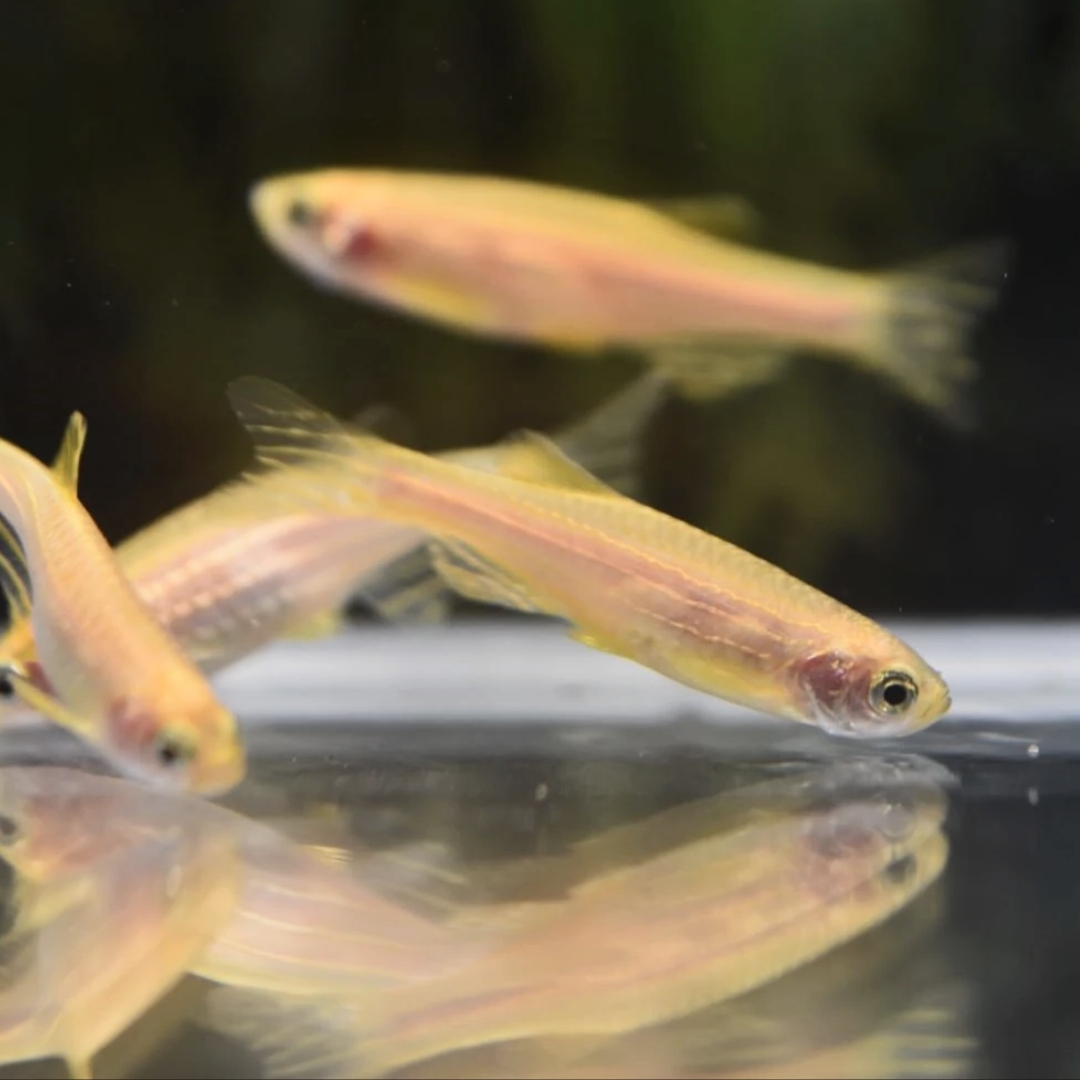
ゴールデンゼブラダニオは、ゼブラダニオから作出・固定された明るい黄褐色の改良品種です。原種のゼブラダニオが持つ黒い縞模様の印象がやわらぎ、透明感のある黄金色の体色が水草水槽や明るいレイアウトによく映えます。非常に丈夫で餌付きもよく、活発に群れで泳ぐため、初めて小型熱帯魚を飼う方にも扱いやすい魚です。The Golden Zebra Danio is a bright yellowish-golden color morph developed from the zebrafish, Danio rerio. Its dark stripes are softened compared with the wild type, giving it a translucent golden appearance that stands out beautifully in planted or brightly lit aquariums. It is hardy, active, easy to feed, and especially attractive when kept in a group.
基本情報 / Basic Information
学名 / Scientific Name
Danio rerio
通称 / Common Name
ゴールデンゼブラダニオ、ゴールデンダニオ、ゼブラダニオ・ゴールデンタイプGolden Zebra Danio, Golden Danio, Golden Zebrafish
分類 / Family
コイ目 ダニオ科 ダニオ属(資料によってはコイ科ダニオ亜科として扱われることもあります)Order Cypriniformes, Family Danionidae, Genus Danio; some references treat danios within Cyprinidae as Danioninae.
英名 / English Name
Golden Zebra Danio / Golden Zebrafish
分布 / Distribution
ゴールデンタイプは飼育下で維持される色彩変異・改良品種です。原種のゼブラダニオはパキスタン、インド、バングラデシュ、ネパール、ミャンマーなど南アジア周辺の淡水域に分布し、ブータンからも報告があります。The golden form is a captive-maintained color morph. The wild-type zebrafish is native to freshwater habitats around South Asia, including Pakistan, India, Bangladesh, Nepal, and Myanmar, with reports from Bhutan.
最大体長 / Max Size
約4〜5cmAbout 4–5 cm
寿命 / Lifespan
一般的には約3〜5年。飼育環境や栄養状態がよい場合は、より長く維持できることもあります。Usually around 3–5 years, though well-maintained individuals may live longer.
飼育環境 / Aquarium Environment
水槽サイズ / Tank Size
最低でも30cm規格水槽程度から飼育できますが、活発に泳ぐため、可能であれば45cm規格水槽以上、余裕を持つなら60cm規格水槽がおすすめです。水量だけでなく横方向の遊泳スペースを重視すると、本種らしい群泳が見られます。It can be kept from around a standard 30 cm aquarium, but because it is a very active swimmer, a 45 cm or preferably a standard 60 cm tank is recommended. Horizontal swimming space is more important than height.
水温 / Temperature
20〜26℃前後が扱いやすい範囲です。ゼブラダニオは比較的広い水温に順応しますが、長期飼育では高温側に寄せすぎず、急激な水温変化を避けることが大切です。一般的な熱帯魚水槽では24〜26℃前後に安定させると管理しやすくなります。A practical aquarium range is about 20–26°C. Zebrafish tolerate a relatively broad temperature range, but long-term care is best managed without keeping them excessively warm and without sudden temperature changes. In a typical tropical community aquarium, around 24–26°C is easy to maintain.
水質 / Water Quality
中性付近を中心に、弱酸性から弱アルカリ性まで比較的広く順応します。目安はpH6.5〜7.5前後、許容範囲としてはpH6.0〜8.0程度を意識すると扱いやすいです。日本の一般的な水道水にもよく適応しますが、カルキ抜きと定期的な換水は必ず行います。It adapts well around neutral water and tolerates a range from mildly acidic to mildly alkaline conditions. Around pH 6.5–7.5 is a practical target, while roughly pH 6.0–8.0 is often tolerated. It usually adapts well to typical tap water, but dechlorination and regular water changes are essential.
レイアウト / Layout
水草や流木で落ち着ける場所を作りつつ、中央から前面には広い遊泳スペースを残します。水面付近まで活発に動くため、浮草を使う場合は覆いすぎないようにします。驚いたときに飛び出すことがあるため、フタの設置は重要です。Provide plants and driftwood for shelter while leaving open swimming space in the middle and front of the tank. If floating plants are used, avoid covering the entire surface. A tight-fitting lid is important because this species can jump when startled.
注意点 / Precautions
単独や少数では落ち着きにくく、臆病になったり同種間の小競り合いが目立つことがあります。最低でも6匹程度、可能であれば10匹前後の群れで飼育すると、本来の活発さと安心感が出やすくなります。ロングフィンタイプはヒレが傷つきやすいため、強すぎる水流や鋭い飾りには注意します。Single fish or very small groups may become nervous, and minor chasing can become more noticeable. Keep at least six, and ideally around ten or more, to bring out natural schooling behavior. Long-fin forms need extra care because their fins can be damaged by strong current or sharp decorations.
餌と給餌 / Feeding
餌の種類 / Diet
人工飼料への餌付きは非常によく、フレークフードや小粒の顆粒フードを主食にできます。冷凍アカムシ、ブラインシュリンプ、ミジンコなどの動物質の餌を適度に組み合わせると、体格や繁殖状態を整えやすくなります。口が小さいため、大きな餌は細かくして与えると安心です。It readily accepts prepared foods such as flakes and fine granules. Supplementing with frozen bloodworms, brine shrimp, or daphnia helps support body condition and breeding readiness. Because its mouth is small, larger foods should be crushed or cut into suitable pieces.
給餌のポイント / Feeding Tips
表層から中層でよく食べるため、沈みにくい餌やゆっくり沈む餌が扱いやすいです。食欲が強い一方で、水質悪化を招く食べ残しには注意します。1〜2分で食べ切れる量を1日1〜2回ほど与えると管理しやすいです。Because it feeds mainly near the surface and midwater, floating or slowly sinking foods are easy to use. It is an eager feeder, but leftover food can quickly degrade water quality. Feed once or twice daily in amounts that are consumed within one to two minutes.
性格と混泳 / Temperament and Tank Mates
性格 / Temperament
活発でよく泳ぐ群泳性の小型魚です。性格はおおむね温和ですが、同種間では軽い追いかけ合いをすることがあります。十分な匹数で飼うと行動が分散し、目立ったトラブルになりにくいです。It is an active, schooling small fish. Its temperament is generally peaceful, though mild chasing may occur among conspecifics. Keeping a proper group helps disperse this behavior and reduces stress.
混泳の相性 / Compatibility
同程度の大きさで、極端に大人しすぎない小型魚との混泳に向きます。小型ラスボラ、他の小型ダニオ、コリドラス、小型ローチ類などとは合わせやすいです。一方で、動きの遅い魚やヒレの長い魚、口に入るサイズの稚魚、攻撃的な中大型魚との混泳は避けた方が無難です。It is suitable for community aquariums with similarly sized, reasonably active small fish. Small rasboras, other small danios, Corydoras, and small loaches are often good companions. Avoid slow-moving fish, delicate long-finned species, tiny fry, and aggressive medium to large fish.
病気と対策 / Diseases and Prevention
かかりやすい病気 / Common Diseases
丈夫な魚ですが、白点病、尾ぐされ病、水カビ、ベルベット病など一般的な小型熱帯魚の病気には注意が必要です。また、長期飼育では加齢や栄養状態の偏り、過密飼育、成長期の環境不良、遺伝的な要因などが重なり、背曲がりが目立つ個体が出ることがあります。It is hardy, but it can still be affected by common aquarium diseases such as ich, fin rot, fungal infections, and velvet disease. Spinal curvature may appear during long-term care, especially when aging, nutritional imbalance, crowding, poor conditions during growth, or genetic factors are involved.
対策と予防 / Prevention
急な水温変化、過密飼育、ろ過不足、餌の与えすぎを避けることが基本です。新しく導入した個体は状態をよく観察し、可能であれば本水槽へ入れる前に別容器で様子を見ます。背曲がりは一度進むと元に戻りにくいため、特に成長期は栄養バランスと十分な遊泳スペースを意識することが大切です。Prevention is based on avoiding sudden temperature changes, overcrowding, insufficient filtration, and overfeeding. Newly introduced fish should be observed carefully, ideally in a separate holding tank before being added to the main aquarium. Since spinal curvature is difficult to reverse once developed, balanced nutrition and adequate swimming space are especially important during growth.
増やし方(繁殖) / Breeding
雌雄の判別 / Sexing
成熟したオスは比較的スリムで、発色が濃く見えることがあります。メスは腹部がふっくらし、抱卵すると丸みがより目立ちます。複数匹を見比べると判別しやすい魚です。Mature males are usually slimmer and may show stronger coloration. Females have a fuller belly, especially when carrying eggs. Sexing becomes easier when several individuals can be compared.
繁殖形態 / Reproduction
卵生で、親が卵を保護しないばらまき型の産卵を行います。産卵床や水草の茂み、底面付近に卵を落としますが、親魚が卵を食べてしまうため、繁殖を狙う場合は採卵対策が必要です。It is an egg-scattering species with no parental care. Eggs are released among plants or near the bottom, but the adults may eat them, so egg protection is necessary for intentional breeding.
繁殖のポイント / Breeding Tips
繁殖用水槽の底にビー玉や目の細かいネットを設置し、卵が親魚の口に届かない場所へ落ちるようにします。産卵後は親魚を取り出し、清潔な水と弱いエアレーションで卵を管理します。水温にもよりますが、卵はおおむね2〜3日で孵化します。孵化直後はヨークサックを吸収するまで給餌せず、自由遊泳を始めてからインフゾリア、微粉末フード、ブラインシュリンプ幼生などへ段階的に移行します。Use marbles or fine mesh on the bottom of a breeding tank so eggs fall out of reach of the adults. After spawning, remove the adults and keep the eggs in clean, gently aerated water. Depending on temperature, eggs usually hatch in about two to three days. Newly hatched fry do not need food until the yolk sac is absorbed; once free-swimming, begin with infusoria or very fine fry food and gradually move to newly hatched brine shrimp.
雑学と豆知識 / Trivia and Fun Facts
1. ゴールデンの正体は「別種」ではなく色彩変異 / 1. The golden form is a color morph, not a separate species
ゴールデンゼブラダニオは、自然界に独立した別種として存在する魚ではなく、ゼブラダニオの体色変異を飼育下で維持している系統です。黒色のメラニンが少なく見えることで、地色の黄色味が前面に出ます。アルビノのように目まで赤く透けるタイプとは異なり、黒い目を保つ点も見分けるうえで大切です。The Golden Zebra Danio is not a separate wild species, but a captive-maintained color morph of Danio rerio. Reduced visible melanin allows the yellowish ground color to stand out. Unlike albino forms, it retains dark eyes, which is an important distinction.
2. ゼブラダニオは研究の世界でも有名な魚 / 2. Zebrafish are famous in scientific research
ゼブラダニオは観賞魚としてだけでなく、発生生物学、遺伝学、毒性試験、創薬研究などで広く使われるモデル生物です。小型で繁殖しやすく、卵が体外で発生するため観察しやすいことから、研究室でも長く重宝されてきました。水槽の中で群れて泳ぐ小さな魚が、実は生命科学の発展を支えてきた存在でもあるという点は、本種ならではの面白さです。Zebrafish are not only aquarium fish but also major model organisms in developmental biology, genetics, toxicity testing, and drug research. Their small size, ease of breeding, and externally developing eggs make them highly useful in laboratories. The same little fish seen schooling in aquariums has contributed greatly to modern life science.
3. ゴールデン変異と色素の遺伝学 / 3. The genetics behind the golden coloration
ゴールデン系統の明るい体色は、メラニンをつくる細胞小器官であるメラノソームの形成や成熟に関わる遺伝的変化と関係しています。研究上よく知られるgolden変異では、slc24a5、別名nckx5という遺伝子が重要な役割を果たすことが示されています。この発見は魚の体色だけでなく、脊椎動物に共通する色素形成の仕組みを考えるうえでも大きな手がかりになっています。The bright coloration of the golden strain is associated with genetic changes affecting melanosomes, the organelles involved in melanin production. In the well-known research golden mutant, the slc24a5 gene, also known as nckx5, has been shown to play an important role. This discovery has helped clarify not only fish coloration, but also broader mechanisms of pigmentation shared among vertebrates.
4. レオパードダニオが教えてくれる分類の難しさ / 4. Leopard Danios show how difficult classification can be
ゼブラダニオの仲間では、縞模様ではなく斑点模様を持つレオパードダニオが独立種名で扱われた時期がありました。しかし、ゼブラダニオと交雑できることや行動・体格の近さから、現在ではゼブラダニオの模様変異として扱われることが一般的です。模様だけで魚の正体を判断することの難しさを示す、アクアリウム史の興味深い例といえます。The Leopard Danio, with spots instead of stripes, was once treated under a separate species name. Because it can interbreed with zebrafish and is similar in behavior and body form, it is now generally regarded as a pattern variant of Danio rerio. It is an interesting example of how body pattern alone can be misleading in fish identification.
5. 不自然な蛍光色の個体には注意 / 5. Be cautious with unnaturally fluorescent fish
ゴールデンゼブラダニオは通常の色彩変異として流通する魚ですが、ゼブラダニオの仲間には海外で遺伝子組換えにより蛍光色を発する観賞魚も存在します。日本では、未承認の遺伝子組換え生物を環境中で使用する可能性のある形で輸入・販売・飼養することは、カルタヘナ法に基づく規制の対象になります。不自然に強い蛍光色をしたダニオ類を見かけた場合は、通常の改良品種と安易に判断しないことが重要です。観賞魚を楽しむうえでも、不要になった生体を野外へ放流しないことは必ず守るべき基本です。Golden Zebra Danios are ordinary color morphs, but genetically modified fluorescent zebrafish are sold in some countries. In Japan, importing, selling, or keeping unapproved genetically modified organisms in a manner that could lead to environmental use is subject to regulation under the Cartagena Act. Unnaturally intense fluorescent danios should not be casually assumed to be ordinary varieties. As with all aquarium animals, unwanted fish must never be released into the wild.
まとめ / Conclusion
ゴールデンゼブラダニオは、丈夫で飼いやすく、群れで泳ぐ姿も美しい小型熱帯魚です。30cm規格水槽からでも飼育は可能ですが、本来の活発さを楽しむなら45cm規格水槽以上、できれば60cm規格水槽で複数匹を泳がせると魅力が引き立ちます。餌付きがよく水質への適応力も高いため、基本を守れば初心者にもおすすめしやすい魚です。The Golden Zebra Danio is a hardy, easy-to-keep small tropical fish with beautiful schooling behavior. It can be kept in a standard 30 cm aquarium, but its active nature is best appreciated in a 45 cm or preferably 60 cm tank with a proper group. Its strong appetite and adaptability make it a good choice for beginners when basic care is maintained.
一方で、安価で流通量が多い魚だからこそ、過密飼育や飛び出し、成長期の栄養不足には注意が必要です。また、ゼブラダニオは研究生物としても重要な背景を持ち、色彩変異や遺伝学の話題にもつながる奥深い存在です。通常のゴールデンタイプと、法規制の対象になり得る遺伝子組換えの蛍光個体は別の問題として整理しながら、小さな命を最後まで大切に扱う姿勢が求められます。Because it is inexpensive and widely available, it is especially important not to overlook proper stocking density, jump prevention, and balanced nutrition during growth. Zebrafish also have an important background as research organisms, linking this aquarium variety to broader topics in pigmentation and genetics. Ordinary golden color morphs and genetically modified fluorescent fish should be understood as separate issues, while every individual fish should be cared for responsibly throughout its life.



 アイのアクアグッズ案内金魚を長く楽しむ飼育用品|水槽・フィルター・エアレーション・水換え道具の特徴や使い方、選ぶときのポイントをアイが紹介します。記事はコチラ →
 アイのアクアグッズ案内エーハイム、安いのと高いのは何が違う? コタロウと見比べる外部フィルター道具の特徴や使い方、選ぶときのポイントをアイが紹介します。記事はコチラ →



コメント