
解説 / Description
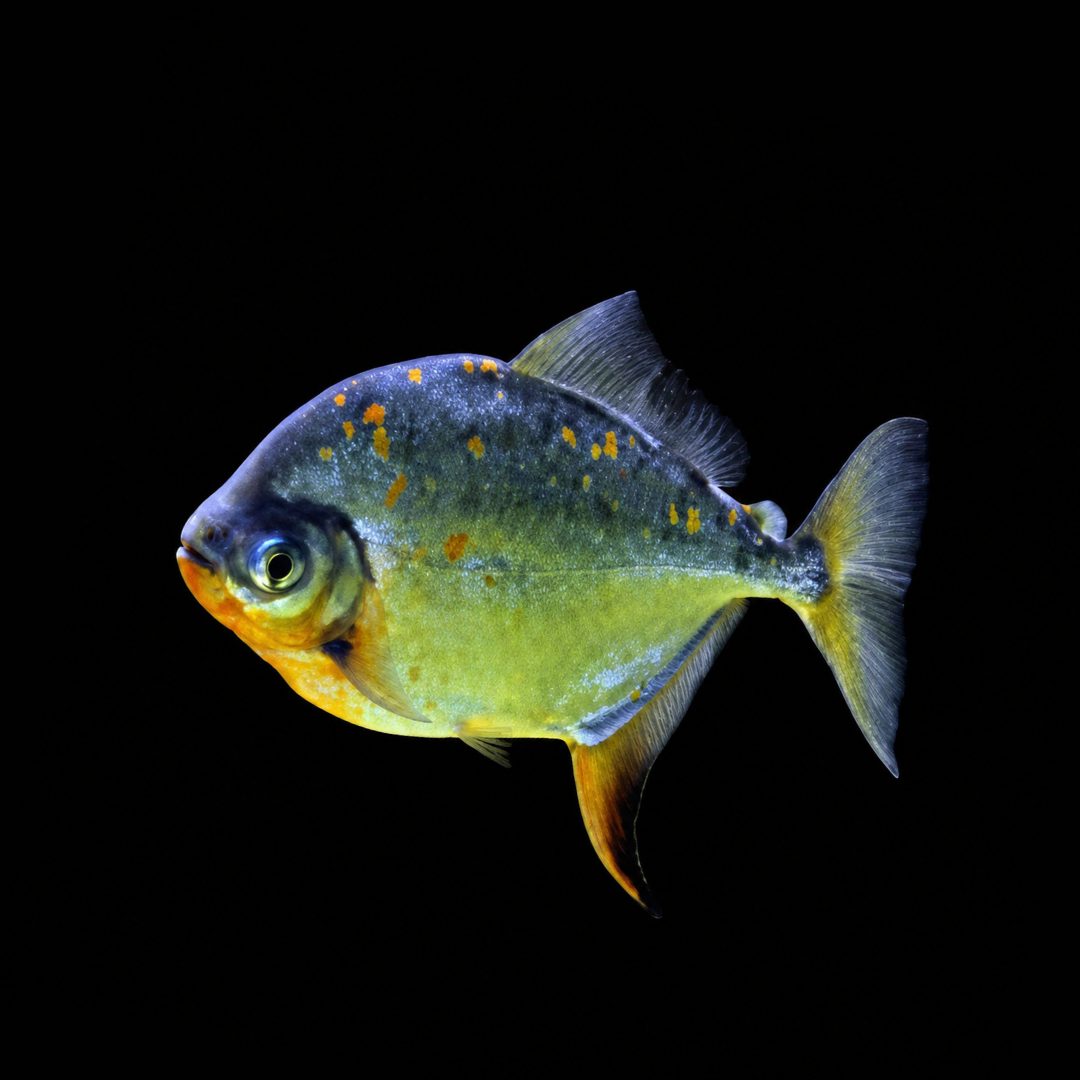
レッドフックメチニスは、南米の大河川にすむパクー類の一種です。学名はMyloplus rubripinnisで、銀色に輝く円盤状の体と、赤く染まる鎌のような尻鰭が印象的です。ピラニアに近いセラサルムス科の魚ですが、性質は比較的おだやかで、主に植物質の餌を利用する方向へ適応しています。大型水槽で群れをつくって泳ぐ姿は迫力があり、南米魚らしい力強さと美しさを同時に楽しめる魚です。 The redhook metynnis is a pacu-type fish from large South American river systems. Its scientific name is Myloplus rubripinnis, and it is known for a bright silvery, disk-shaped body and a vivid red, hook-shaped anal fin. Although it belongs to the piranha-and-pacu family Serrasalmidae, it is generally peaceful and is adapted mainly to plant-based foods. In a spacious aquarium, a group of these fish creates an impressive display with the strength and elegance typical of South American fishes.
基本情報 / Basic Information
| 学名 / Scientific Name | Myloplus rubripinnis (Müller & Troschel, 1844) |
|---|---|
| 通称 / Common Name | レッドフックメチニス、ミロプルス・ルブリピンニス、レッドフックシルバーダラーRedhook metynnis, redhook silver dollar, redhook pacu |
| 分類 / Family | カラシン目 セラサルムス科 Myleinae亜科Order Characiformes, family Serrasalmidae, subfamily Myleinae |
| 英名 / English Name | Redhook metynnis / Redhook silver dollar / Redhook pacu |
| 分布 / Distribution | 南米北部から東部にかけて分布し、アマゾン川流域、オリノコ川流域、ギアナ高地周辺の河川系などに生息します。原産国としてはブラジル、ペルー、コロンビア、ベネズエラ、スリナム、ガイアナなどが知られています。It is distributed across northern and eastern South America, including the Amazon and Orinoco basins and river systems around the Guiana Shield. Native-range countries include Brazil, Peru, Colombia, Venezuela, Suriname, Guyana, and neighboring regions. |
| 最大体長 / Max Size | 飼育下では30cm前後を目安にします。大型個体では40cm前後に達する可能性があり、全長41.5cmの記録も知られています。In aquariums, around 30 cm is a practical expectation. Large individuals may approach about 40 cm, and a total length of 41.5 cm has been reported. |
| 寿命 / Lifespan | 正確な寿命データは限られますが、大型水槽で安定して飼育すれば10年前後、条件がよければそれ以上の長期飼育も期待できます。Precise lifespan data are limited, but with a stable large aquarium, about 10 years is a reasonable expectation, and longer-term keeping may be possible under good conditions. |
飼育環境 / Aquarium Environment
| 水槽サイズ / Tank Size | 幼魚期は90cm規格水槽で一時的に管理できますが、成長が早く、成魚では横幅と奥行きのある水槽が必要です。成魚を5〜6匹以上で群泳させる場合は、150cm×60cm×60cm程度、約540L以上を最低ラインと考えます。余裕を持って泳がせるなら、180cm水槽以上がより安心です。Juveniles can be kept temporarily in a standard 90 cm tank, but they grow quickly and need a tank with generous length and depth as adults. For a group of five to six or more adults, about 150 × 60 × 60 cm, roughly 540 L, should be considered the minimum. A 180 cm tank or larger is preferable for a more comfortable long-term display. |
|---|---|
| 水温 / Temperature | 23〜27℃を目安に安定させます。急な水温変化は白点病や体調不良につながりやすいため、ヒーターと水温計で日常的に確認します。 Keep the temperature stable at about 23–27°C. Sudden temperature changes can lead to ich or general stress, so use a reliable heater and thermometer. |
| 水質 / Water Quality | 弱酸性〜中性の水を好み、pH5.0〜7.0前後、硬度は低めから中程度までを目安にします。大食漢で排泄量も多いため、強力な外部式フィルターやオーバーフロー濾過を用い、硝酸塩が蓄積しすぎないよう定期的に水換えを行います。Slightly acidic to neutral water is suitable, around pH 5.0–7.0, with low to moderate hardness. Because this species eats heavily and produces a lot of waste, strong canister filtration or overflow filtration and regular water changes are important to prevent excessive nitrate accumulation. |
| レイアウト / Layout | 遊泳スペースを広く確保し、角の丸い流木や滑らかな石を控えめに配置します。薄暗い照明、水面の陰、落ち着いたブラックウォーター風の環境がよく合います。水草は食べられやすいため、植栽レイアウトには向きません。試す場合はアヌビアスやミクロソリウムなど硬い葉の活着性水草を少量にとどめ、必要に応じて人工水草を使います。Provide a large open swimming area with only a modest amount of smooth driftwood or rounded stones. Subdued lighting, surface shade, and a calm blackwater-style atmosphere suit this fish well. Most live aquatic plants are likely to be eaten, so planted layouts are not ideal. If plants are used, try only small amounts of tough attached plants such as Anubias or Java fern, or use artificial plants when needed. |
| 注意点 / Precautions | 神経質で驚きやすく、急に走ってガラス面や蓋に衝突することがあります。飛び出し防止のため、隙間のない頑丈な蓋を必ず設置します。また、硬い植物質をかじるための強い歯と顎を持つため、メンテナンス時は口元に指を近づけないよう注意してください。This is a skittish fish that may bolt suddenly and collide with glass or tank covers. A tight, sturdy lid is essential to prevent jumping. It has powerful jaws and teeth for biting tough plant material, so keep fingers away from the mouth during maintenance. |
餌と給餌 / Feeding
| 餌の種類 / Diet | 植物性の人工飼料を主食にします。スピルリナ配合フード、植物性沈下性ペレット、プレコ用アルジーウェーハーなどが使いやすい餌です。副食として、湯通ししたホウレンソウ、ズッキーニ、キュウリ、殻をむいたエンドウ豆なども与えられます。赤虫、ブラインシュリンプ、クリルなどの動物性餌は、少量を補助的に与える程度にとどめます。Use plant-rich prepared foods as the staple diet, such as spirulina foods, vegetable sinking pellets, and algae wafers for plecos. Blanched spinach, zucchini, cucumber, and shelled peas can be offered as supplements. Animal-based foods such as bloodworms, brine shrimp, and krill should be used only sparingly. |
|---|---|
| 給餌のポイント / Feeding Tips | 1日1〜2回、数分で食べ切れる量を与えます。野菜類は水を汚しやすいため、食べ残しは早めに取り出します。動物性タンパク質に偏らせると肥満や内臓への負担につながる可能性があるため、植物質を中心にした給餌を継続することが大切です。Feed once or twice daily, offering only what can be eaten within a few minutes. Remove leftover vegetables promptly because they can foul the water. A diet too rich in animal protein may increase the risk of obesity and internal stress, so keep plant matter at the center of the feeding plan. |
性格と混泳 / Temperament and Tank Mates
| 性格 / Temperament | 基本的にはおだやかで、群れで行動する性質が強い魚です。単独や少数では警戒心が強くなり、物陰から出にくくなったり、突然パニックを起こしたりすることがあります。導入する場合は、できるだけ5〜6匹以上のまとまった数で飼育します。It is generally peaceful and strongly gregarious. If kept alone or in too small a group, it may become nervous, hide frequently, or panic suddenly. When possible, keep it in a group of at least five to six individuals. |
|---|---|
| 混泳の相性 / Compatibility | 口に入らないサイズで、性質がおだやかな魚との混泳に向きます。大型プレコ、ドラス類、やや大型のコリドラスやブロキス、セベラム、ゲオファーガス、温和な大型カラシンなどが候補になります。ネオンテトラのような小型魚や、追い回しの強い攻撃的な魚は避けます。It is suitable for community setups with peaceful fish too large to be swallowed. Good candidates include large plecos, doradid catfish, larger Corydoras or Brochis, severums, Geophagus, and peaceful large characins. Avoid small fish such as neon tetras and aggressive fish that chase or harass tank mates. |
病気と対策 / Diseases and Prevention
| かかりやすい病気 / Common Diseases | 白点病、外部寄生虫、擦れ傷からの細菌感染、水質悪化による肌荒れなど、一般的な熱帯魚の病気に注意します。特に本種は驚いて走りやすいため、吻端の傷や目のダメージが問題になることがあります。Watch for common tropical fish problems such as ich, external parasites, bacterial infections following abrasions, and skin irritation caused by poor water quality. Because this species may bolt when startled, injuries to the snout and eyes can also be an issue. |
|---|---|
| 対策と予防 / Prevention | 導入時は検疫を行い、急な水温変化や水質悪化を避けます。水槽内には鋭利な石や尖った流木を入れず、照明を控えめにして落ち着ける陰を作ります。ろ過能力を高め、定期的な水換えと残餌の除去を徹底することが、病気の予防につながります。Quarantine new fish and avoid sudden changes in temperature or water quality. Do not use sharp stones or pointed driftwood, and provide subdued lighting with shaded areas. Strong filtration, regular water changes, and prompt removal of uneaten food are the best preventive measures. |
増やし方(繁殖) / Breeding
| 雌雄の判別 / Sexing | 成熟個体では尻鰭の形状が手がかりになります。雌は赤いフック状の尻鰭が目立ち、雄は二葉状の尻鰭を持つとされます。ただし若魚では判別が難しく、個体差や成長段階によって見え方も変わります。In mature fish, the shape of the anal fin provides an important clue. Females show the conspicuous red hook-shaped anal fin, while males are described as having a bilobed anal fin. Juveniles can be difficult to sex, and the appearance varies with growth stage and individual condition. |
|---|---|
| 繁殖形態 / Reproduction | 卵生です。雌のフック状の尻鰭は、底床を掘るための鋤のように働くとされ、雄は二葉状の尻鰭を雌のフックに寄り添わせ、卵の近くで放精すると説明されています。この特徴的な産卵行動は、レッドフックメチニスを語るうえで重要な生態情報です。It is an egg-laying species. The female’s hook-shaped anal fin is described as working like a small plough in the substrate, while the male places his bilobed anal fin close to the female’s hook and fertilizes the eggs nearby. This unusual spawning behavior is one of the most important biological features of the redhook metynnis. |
| 繁殖のポイント / Breeding Tips | 家庭用水槽での繁殖は確立された方法がなく、一般飼育者にとっては非常に難しい魚です。趣味家による成功報告はありますが、再現性のある標準的な繁殖手順としてはまだ広く整理されていません。挑戦する場合は、十分な水量、長期飼育された成熟個体、安定した水質、植物質中心の栄養状態、卵を隠せる底床や落ち着いた環境が重要になります。There is no established method for breeding this species in ordinary home aquariums, and it should be regarded as very difficult. Hobbyist success reports exist, but they have not yet become a widely repeatable standard procedure. Any attempt should focus on ample water volume, long-term mature fish, stable water quality, a plant-rich diet, and a calm setup with substrate or sheltered areas where eggs can be deposited. |
雑学と豆知識 / Trivia and Fun Facts
| 1. 現在の学名と過去の分類 / 1. Current name and past classifications | レッドフックメチニスは1844年にMyletes rubripinnisとして記載され、その後の整理を経て、現在はMyloplus rubripinnisとして扱われています。パクー類は外見や歯の特徴が近い種も多く、分類が長く揺れてきたグループです。水槽では「赤いフックのある銀色の魚」として親しまれますが、その背景には南米淡水魚分類の複雑な歴史があります。The redhook metynnis was described in 1844 as Myletes rubripinnis and is now treated as Myloplus rubripinnis. Pacu-type fishes include many similar-looking species with related dental adaptations, so their classification has long been complex. In aquariums it may be familiar as a silvery fish with a red hook, but behind that familiar appearance lies a detailed taxonomic history. |
|---|---|
| 2. 森と川をつなぐ植物食性 / 2. Plant feeding that connects forest and river | 原産地では、水辺に覆いかぶさる植物の近くや、流れの比較的ゆるやかな場所を利用するとされています。雨季に森が水没する地域では、パクー類が落下した果実や植物質を食べ、種子の移動に関わることがあります。レッドフックメチニスも、単に水槽内で野菜をかじる魚というだけでなく、南米の川と森のつながりを感じさせる存在です。In its native range, it is associated with calmer areas of main rivers where vegetation hangs over the banks. In seasonally flooded forests, pacu-type fishes may eat fallen fruits and plant material and can contribute to seed movement. The redhook metynnis is therefore not just a vegetable-eating aquarium fish, but a species that hints at the close relationship between South American rivers and forests. |
| 3. 赤いフックは飾りだけではない / 3. The red hook is more than decoration | 名前の由来になった赤い尻鰭は、見た目の美しさだけでなく繁殖行動にも関わると説明されています。雌のフック状の鰭は底床を掘るように使われ、雄の二葉状の尻鰭は雌に寄り添う構造を持つとされます。華やかな外見が、繁殖のための機能と結びついている点は、本種の大きな魅力です。The red anal fin that gives the fish its name is not simply ornamental. It is described as being involved in spawning, with the female’s hook-shaped fin used to work into the substrate and the male’s bilobed fin positioned close to the female. The link between a striking appearance and a reproductive function is one of this species’ most fascinating traits. |
| 4. 黒い帯を持つ近縁グループとの違い / 4. Difference from black-barred relatives | 日本の流通では、黒い帯や斑紋を持つパクー類が「ブラックベリー」や「ブラックバンド」系の名前で扱われることがあります。これらはMyloplus schomburgkiiや、2024年に整理されたMyloplus sauron、Myloplus aylanなどの系統が関わるグループです。一方、レッドフックメチニスの魅力は、黒い縦帯を持たない銀色の体と赤いフックの対比にあります。購入時は流通名だけで判断せず、体側の黒い帯の有無を確認すると安心です。In the Japanese aquarium trade, pacu-type fishes with black bars or markings may be sold under names such as “blackberry” or “black-barred” types. These are associated with groups such as Myloplus schomburgkii and the species Myloplus sauron and Myloplus aylan, clarified in 2024. By contrast, the appeal of the redhook metynnis lies in the contrast between a clean silvery body without a vertical black bar and the red hook. When purchasing, check the flank pattern rather than relying only on the trade name. |
| 5. 産地による見え方の違い / 5. Locality-based variation in appearance | 国内市場では、コロンビアやペルーなどから入る個体、東南アジアで養殖された個体、スリナム産として扱われる個体などが見られます。なかでもスリナム産は、吻がやや長く、鰭の赤や黒い縁取りが濃く見える個体がいるとして、愛好家の間で特別視されることがあります。ただし流通名や産地名は販売時の情報に左右されるため、購入時は信頼できる販売元で個体そのものの状態を確認することが大切です。In the domestic market, individuals may appear as imports from Colombia or Peru, farmed fish from Southeast Asia, or fish sold as Suriname-origin stock. Suriname fish are sometimes especially valued by hobbyists because some individuals show a slightly longer snout and stronger red or dark fin edging. However, trade names and locality labels depend on supplier information, so it is important to buy from a reliable source and evaluate the fish itself. |
| 6. 強い歯と終生飼育の責任 / 6. Strong teeth and lifelong responsibility | 本種の歯は植物をかじるための穏やかな道具に見えるかもしれませんが、硬い餌を砕けるほど強く、人の指を傷つける可能性もあります。また、成長すると大きな水槽と群れでの管理が必要になるため、迎える前に成魚まで飼い切れる環境を考えることが重要です。飼いきれなくなった個体を野外へ放すことは、地域の生態系にも生体自身にも大きな負担をかける行為です。Its teeth may look like peaceful tools for grazing plants, but they are strong enough to crush tough foods and can injure fingers. Because the fish grows large and needs group management in a spacious aquarium, long-term planning is essential before purchase. Releasing an unwanted fish outdoors can harm local ecosystems and is also harmful to the fish itself. |
まとめ / Conclusion
レッドフックメチニスは、銀色の体に赤いフックを添えた姿が美しく、大型水槽で群泳させることで本来の魅力が引き立つ南米魚です。おだやかな性格を持ちながらも、力強い遊泳、しっかりした歯、植物質を好む食性など、パクー類らしい個性を備えています。 The redhook metynnis is a South American fish whose silvery body and red hook-shaped fin become especially attractive when kept as a group in a large aquarium. Although generally peaceful, it has the strong swimming ability, powerful teeth, and plant-focused diet that give pacu-type fishes their distinctive character.
長期飼育には、十分な水量、強いろ過、落ち着いたレイアウト、植物質を中心にした給餌、そして群れで安心して泳げる空間が欠かせません。条件を整えた水槽では、レッドフックメチニスは単なる銀色の群泳魚にとどまらず、南米の川と森のつながりまで感じさせてくれる存在になります。 Long-term success requires ample water volume, strong filtration, a calm layout, a plant-based feeding plan, and enough space for a secure group to swim. In the right aquarium, the redhook metynnis is more than a silvery schooling fish; it becomes a living reminder of the connection between South American rivers and forests.
気になる道具や飼い方を見つけてみませんか?
 アイのアクアグッズ案内ローチの仲間に合わせる飼育用品|クーリー・流水性・ボーシャの水槽と底砂道具の特徴や使い方、選ぶときのポイントをアイが紹介します。記事はコチラ →
 アイのアクアグッズ案内水草用ライトの選び方|緑の絨毯と赤い水草を楽しむ照明・植栽用品道具の特徴や使い方、選ぶときのポイントをアイが紹介します。記事はコチラ →
 アイのアクアグッズ案内水槽のエアーポンプの選び方|水深・音・泡で選ぶおすすめ用品道具の特徴や使い方、選ぶときのポイントをアイが紹介します。記事はコチラ →
 アイのアクアグッズ案内マジックリーフ物語|一枚の葉がアクアリウム用品になるまで道具の特徴や使い方、選ぶときのポイントをアイが紹介します。記事はコチラ →
さまざまな飼育テーマをご紹介。リンク先の記事には広告・商品紹介が含まれます。
案内・紹介記事一覧へ →分布マップ
レッドフックメチニスは、南米北部から東部にかけて分布し、アマゾン川流域、オリノコ川流域、ギアナ高地周辺の河川系などに生息するとされています。地図では、その分布イメージを概略の代表地点と円で示しています。
この地図は分布欄の内容をもとにした概略プロットです。実際の採集地点や厳密な生息範囲を示すものではありません。
参考文献・参照資料
本項目では、レッドフックメチニス(Myloplus rubripinnis)の記事内容のうち、分類、分布、生息環境、飼育条件、繁殖、病気や注意点を支える資料に絞って掲載しています。店舗、通販ページ、個人ブログ、まとめサイトは除外し、学術誌、公的機関、国際的な生物多様性データベース、魚病・水産系の教育機関資料を優先しました。
-
分類・学名
Fricke, R., Eschmeyer, W. N. & van der Laan, R. (eds.). Eschmeyer’s Catalog of Fishes: Myloplus rubripinnis. California Academy of Sciences.
https://researcharchive.calacademy.org/research/ichthyology/catalog/fishcatget.asp?spid=4087
現在有効な学名、命名者表記、分類上の位置づけを確認するための基礎資料です。 -
分布・水質・生態・繁殖
Froese, R. & Pauly, D. (eds.). FishBase: Myloplus rubripinnis (Müller & Troschel, 1844).
https://www.fishbase.se/FieldGuide/FieldGuideSummary.php?c_code=604&genusname=Myloplus&speciesname=rubripinnis
最大体長、pH、硬度、アマゾン・オリノコ・ギアナ高地周辺の分布、群れで生活する性質、植物質の食性、強い歯、飼育下繁殖に関する注意書きの確認に用いています。 -
分布・外来リスク・病気・注意点
U.S. Fish and Wildlife Service. (2020). Ecological Risk Screening Summary: Redhook Myleus (Myloplus rubripinnis).
https://www.fws.gov/sites/default/files/documents/Ecological-Risk-Screening-Summary-Redhook-Myleus.pdf
原産地、観賞魚流通、米国での放流由来とみられる記録、気候適合性、寄生虫宿主記録、報告対象疾病の確認、歯による負傷リスクの裏付けに用いています。 -
分類史・形態識別
Jégu, M., Hubert, N. & Belmont-Jégu, E. (2004). Réhabilitation de Myloplus asterias (Müller & Troschel, 1844), espèce-type de Myloplus Gill, 1896 et validation du genre Myloplus Gill (Characidae: Serrasalminae). Cybium, 28(2), 119–157.
https://horizon.documentation.ird.fr/exl-doc/pleins_textes/divers19-10/010036728.pdf
Myloplus属の扱い、M. rubripinnisと近縁種の形態比較、臼歯状の歯や属診断に関わる情報を確認するための中心資料です。 -
分類上の注意・近縁種識別
Ota, R. P., Machado, V. N., Andrade, M. C., Collins, R. A., Farias, I. P. & Hrbek, T. (2020). Integrative taxonomy reveals a new species of pacu (Characiformes: Serrasalmidae: Myloplus) from the Brazilian Amazon. Neotropical Ichthyology, 18(1), e190112.
https://doi.org/10.1590/1982-0224-20190112
Myloplus属が分類上難しいグループであること、M. asteriasやM. rubripinnis周辺の識別、黒いラインを持つ近縁種との整理に関する補助資料です。 -
ブラックバンド系との識別
Machado, V. N., Pereira, T. N. A., Ota, R. P., Collins, R. A., Andrade, M. C., Garcia-Ayala, J. R., Jégu, M., Farias, I. P. & Hrbek, T. (2024). Integrative taxonomy of the black-barred disk pacus (Characiformes: Serrasalmidae), including the redescription of Myloplus schomburgkii and the description of two new species. Neotropical Ichthyology, 22(2), e230095.
https://doi.org/10.1590/1982-0224-2023-0095
黒い縦帯を持つM. schomburgkii群、M. sauron、M. aylanの扱いを確認し、レッドフックメチニスとの混同を避けるための資料です。 -
シノニム・分布データ補強
GBIF Secretariat. Myloplus rubripinnis (Müller & Troschel, 1844). Global Biodiversity Information Facility.
https://www.gbif.org/taxon/4547Q
シノニム、分類データベース上の扱い、標本・観察記録に基づく分布情報を補強するために参照しています。 -
生息環境・種子散布の背景
Anderson, J. T., Saldaña Rojas, J. & Flecker, A. S. (2009). High-quality seed dispersal by fruit-eating fishes in Amazonian floodplain habitats. Oecologia, 161, 279–290.
https://pubmed.ncbi.nlm.nih.gov/19466459/
本種単独の飼育条件ではなく、果実食性・植物食性魚類がアマゾン氾濫原で果実や種子散布に関わるという生態背景の補強資料です。 -
病気予防・飼育管理一般
Francis-Floyd, R. Stress: Its Role in Fish Disease. University of Florida IFAS Extension, FA005.
https://ask.ifas.ufl.edu/publication/FA005
水質、栄養、衛生管理、ストレス低減が魚病予防の基本になることを支える資料です。レッドフックメチニス固有の病気ではなく、大型熱帯魚の飼育管理全般の根拠として参照しています。
最終確認日:2026年7月2日。流通名や飼育経験に由来する情報は変動しやすいため、分類・分布・疾病・外来リスクについては上記のような更新性のあるデータベースや公的資料を優先して確認しています。
コメント