

解説 / Description
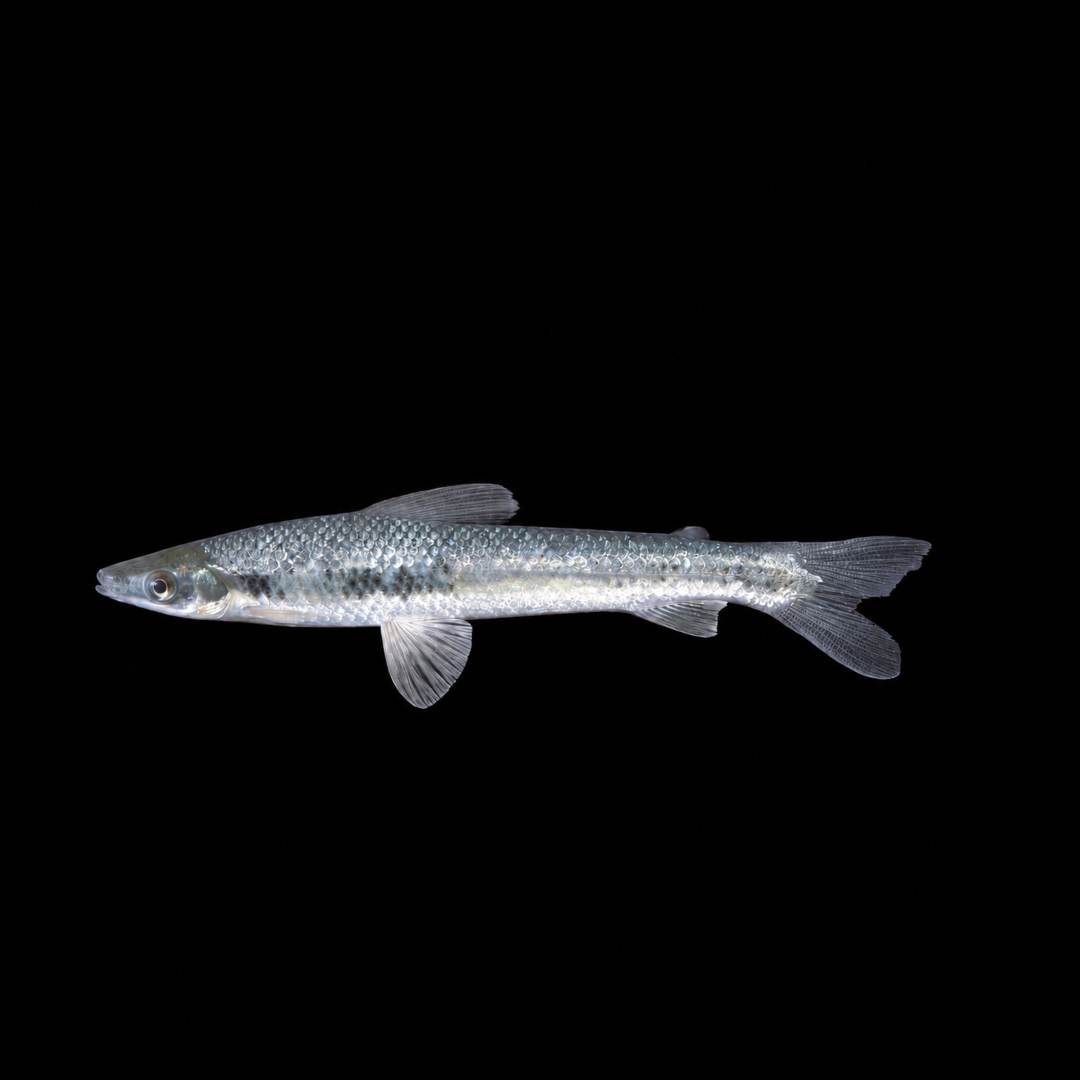
リシオダス・ミクロレピスは、南米アマゾン川流域に分布するアノストムス科の中大型カラシンです。細長い流線型の体と、成長に伴って変化する体側模様が印象的で、幼魚では横帯が目立ち、成長すると暗色斑が落ち着いた雰囲気をつくります。自然下では水生植物や藻類、植物片などを利用する植物食傾向の強い魚として知られ、発達した歯と消化管はその食性をよく反映しています。 Rhytiodus microlepis is a medium to large anostomid characin distributed in the Amazon River basin of South America. It has a slender, streamlined body and a side pattern that changes with growth: juveniles often show distinct vertical bars, while older fish develop more subdued dark lateral markings. In nature, it is known as a strongly herbivorous fish that uses aquatic plants, algae, and plant fragments, and its developed teeth and digestive tract reflect this diet.
日本の観賞魚市場では大量流通する魚ではなく、南米便で不定期に入荷するワイルド個体が中心です。飼育では広い遊泳空間、安定した水質、植物質を意識した給餌が重要になります。水草を食べる可能性が高いため、水草レイアウトの主役として楽しむ魚ではなく、川砂や流木を中心にしたシンプルな大型水槽で、アマゾン産カラシンらしいしなやかな泳ぎを観察するタイプの魚です。 In the Japanese aquarium trade, this species is not commonly mass-produced or continuously available; it is mainly seen as wild-caught specimens imported irregularly with South American shipments. In aquaria, it requires ample swimming space, stable water quality, and a feeding plan that emphasizes vegetable matter. Because it may eat live aquatic plants, it is better suited to a simple large aquarium with sand and driftwood than to a planted display tank, allowing aquarists to appreciate its graceful Amazonian characin-like movement.
基本情報 / Basic Information
| 学名 / Scientific Name | Rhytiodus microlepis Kner, 1858 |
|---|---|
| 通称 / Common Name | リシオダス・ミクロレピス、リチオダス・ミクロレピス、アラクの一種Rhytiodus microlepis, aracu-type anostomid |
| 分類 / Family | カラシン目 アノストムス科 リシオダス属Order Characiformes, family Anostomidae, genus Rhytiodus |
| 英名 / English Name | Rhytiodus microlepis, aracu |
| 分布 / Distribution | ブラジル、ペルー、エクアドル、コロンビア、ボリビアなどを含むアマゾン川流域。記載上のタイプ産地はブラジルのマナウスとされています。Amazon River basin, including Brazil, Peru, Ecuador, Colombia, and Bolivia. The type locality is recorded as Manaus, Brazil. |
| 最大体長 / Max Size | 公表データでは標準体長で最大約33.2cm。水槽内でも30cm級に育つ可能性を前提に、余裕のある設備を用意します。Published records give a maximum of about 33.2 cm standard length. In aquaria, it should be planned for as a fish that may approach the 30 cm class. |
| 寿命 / Lifespan | 本種だけを対象にした信頼できる寿命データは限られます。中大型カラシンとしては長期飼育を前提にし、数年で飼い切る魚ではなく、状態よく維持できれば10年前後以上の飼育も視野に入ります。Reliable species-specific lifespan data are limited. As a medium to large characin, it should be treated as a long-term commitment rather than a short-lived display fish; with good care, a lifespan around a decade or more is a realistic planning assumption. |
飼育環境 / Aquarium Environment
| 水槽サイズ / Tank Size | 幼魚期は90cm規格水槽でも管理できますが、終生飼育では最低でも120cm規格水槽、理想的には150cm以上の水槽を推奨します。体長だけでなく遊泳力も考慮し、奥行きとろ過能力にも余裕を持たせます。Juveniles can be managed in a standard 90 cm tank for a period, but long-term care should use at least a standard 120 cm tank, ideally 150 cm or larger. Consider not only body size but also swimming activity, tank depth, and filtration capacity. |
|---|---|
| 水温 / Temperature | 24〜28℃を目安に安定させます。高水温では酸欠や水質悪化の影響を受けやすくなるため、30℃前後が続く環境ではエアレーションと水流を強め、過密飼育を避けます。 Keep the water stable at around 24–28°C. When temperatures approach or exceed 30°C for extended periods, increase aeration and circulation and avoid overcrowding, as oxygen depletion and water-quality problems become more likely. |
| 水質 / Water Quality | 弱酸性〜中性の軟水から中程度の水を目安にします。ワイルド個体は急な水質変化に弱いことがあるため、pHや硬度を極端に振るよりも、清潔で安定した水を維持することを優先します。Aim for soft to moderately soft water from slightly acidic to neutral. Wild-caught individuals may react poorly to sudden changes, so stable, clean water is more important than forcing extreme pH or hardness values. |
| レイアウト / Layout | 角の少ない川砂や細かな砂利を薄く敷き、流木を組んで落ち着ける場所を作ります。よく泳ぐ魚なので、中央には広い遊泳スペースを残します。水草は食害される可能性が高く、観賞用の水草レイアウトには不向きです。Use smooth river sand or fine gravel, with driftwood arranged to provide secure resting areas. Leave a broad open space in the center for swimming. Live plants are likely to be eaten or damaged, so this species is not well suited to planted aquascapes. |
| 注意点 / Precautions | 植物質をよく食べ、排泄量も多くなりやすいため、ろ過不足には注意が必要です。導入直後は臆病に振る舞うことがあるので、強い照明を避け、隠れ場所を用意し、数日は落ち着いて観察します。網で追い回す、急に水質を変える、気の荒い魚と同居させると拒食につながることがあります。Because it eats a substantial amount of vegetable matter and may produce a high waste load, insufficient filtration is a major risk. Newly imported fish may be shy at first, so avoid harsh lighting, provide shelter, and observe calmly for the first few days. Chasing with a net, abrupt water changes, or housing with aggressive tank mates can trigger refusal to feed. |
餌と給餌 / Feeding
| 餌の種類 / Diet | 主食は植物性タブレット、プレコ用フード、藻類を含む沈下性人工飼料などを中心にします。補助的に、冷凍赤虫、冷凍ブラインシュリンプ、乾燥クリル、小さく切った小松菜やレタスなどを使えます。動物性の餌だけに偏らせず、植物質を定期的に与えることが大切です。Base the diet on vegetable tablets, pleco foods, and sinking prepared foods containing algae or plant material. Frozen bloodworms, frozen brine shrimp, dried krill, and small pieces of blanched leafy vegetables such as komatsuna or lettuce can be used as supplements. Avoid relying only on animal-based foods; regular vegetable matter is important. |
|---|---|
| 給餌のポイント / Feeding Tips | 小さな若魚から導入すると人工飼料に慣れやすい傾向があります。大きめのワイルド個体は、最初から人工飼料を食べないことがあるため、冷凍餌や匂いの強い餌で反応を見ながら、少しずつ植物性の人工飼料へ移行します。食べ残しは水を汚しやすいため、少量を複数回に分け、食べる量を確認しながら調整します。Smaller juveniles tend to adapt more easily to prepared foods. Larger wild-caught individuals may not accept pellets immediately, so start by observing their response to frozen or strongly scented foods, then gradually transition them to vegetable-based prepared diets. Uneaten food can quickly pollute the water, so offer modest portions and adjust based on actual feeding response. |
性格と混泳 / Temperament and Tank Mates
| 性格 / Temperament | 攻撃的な魚ではありませんが、導入直後は神経質に見えることがあります。環境に慣れると中層から底層をよく泳ぎ、落ち着いた大型カラシンらしい存在感を見せます。強く追い回したり、落ち着けない環境に置いたりすると、痩せや拒食につながりやすい点に注意します。It is not typically an aggressive fish, but newly introduced individuals can appear nervous. Once settled, it swims actively through the mid to lower levels and shows the calm presence typical of larger characins. Stress from chasing or an unsettled environment can lead to weight loss or refusal to feed. |
|---|---|
| 混泳の相性 / Compatibility | 同程度の大きさで温和な中大型カラシン、穏やかなシクリッド、大きめのナマズ類などが候補になります。口に入る小型魚や小型の底物は避けます。また、縄張り意識が強い大型シクリッドや、体をつつく魚、素早く餌を独占する魚との混泳ではストレスや餌不足が起こりやすくなります。Suitable tank mates include similarly sized, peaceful medium to large characins, calm cichlids, and larger catfishes. Avoid small fish or small bottom dwellers that could fit in its mouth. Territorial large cichlids, fin-nipping species, or very fast feeders that monopolize food can cause stress or feeding problems. |
病気と対策 / Diseases and Prevention
| かかりやすい病気 / Common Diseases | 本種にだけ特有の病気として広く知られるものは多くありません。実際の飼育では、輸入直後の痩せ、拒食、白点病、水質悪化に伴う肌荒れやヒレの傷み、ワイルド個体に由来する内部寄生虫のリスクに注意します。There are few widely recognized diseases unique to this species. In aquarium care, pay attention to post-import weight loss, refusal to feed, ich, skin or fin damage associated with poor water quality, and the possibility of internal parasites in wild-caught specimens. |
|---|---|
| 対策と予防 / Prevention | 導入時は可能な限り検疫期間を設け、呼吸、体表、糞、腹のへこみ、餌への反応を確認します。水換えは一度に大きく変えすぎず、強いろ過と十分な酸素を保ちます。痩せが進む場合や寄生虫が疑われる場合は、自己判断で薬を連用せず、観賞魚に詳しい専門店や獣医師に相談します。When possible, quarantine new arrivals and check respiration, body surface, feces, belly condition, and feeding response. Avoid overly drastic water changes while maintaining strong filtration and sufficient oxygen. If weight loss progresses or parasites are suspected, do not repeatedly medicate by guesswork; consult an experienced aquarium shop or a veterinarian familiar with ornamental fish. |
増やし方(繁殖) / Breeding
| 雌雄の判別 / Sexing | 外見だけで確実に雌雄を判別する方法は、観賞魚飼育の範囲では確立されていません。成熟個体では体型や腹部の張りに差が出る可能性はありますが、単独の個体から判断するのは困難です。A reliable external method for sexing this species is not established in ordinary aquarium practice. Mature fish may show differences in body form or abdominal fullness, but judging a single individual is difficult. |
|---|---|
| 繁殖形態 / Reproduction | 野生下では植物の茂る場所でペア産卵するとされます。ただし、アマゾン川流域の水位変動や広い移動環境が関係する魚であり、水槽内繁殖の安定した手順は一般的に共有されていません。In the wild, it is reported to spawn in pairs among densely grown vegetation. However, as a fish associated with the seasonal dynamics and broad habitats of the Amazon basin, stable aquarium-breeding methods are not commonly available. |
| 繁殖のポイント / Breeding Tips | 家庭水槽での繁殖は難しい部類です。長期飼育で成熟させること、大型水槽で複数個体を健康に維持すること、雨季を思わせる水換えや水流の変化を慎重に与えることが考えられますが、確立した繁殖法として紹介できる段階ではありません。Breeding in home aquaria should be considered difficult. Long-term conditioning, maintaining several healthy adults in a large tank, and cautiously simulating seasonal changes through water changes and flow may be relevant, but this should not be presented as an established breeding method. |
雑学と豆知識 / Trivia and Fun Facts
| 1. 名前に刻まれた特徴 / 1. Features Reflected in the Name | 属名の Rhytiodus は、ギリシャ語由来の「しわ」と「歯」を組み合わせた名前とされます。種小名の microlepis は「小さな鱗」を意味し、本種の細かな鱗をよく表しています。見た目には細長い体型がまず目に入りますが、名前をたどると、歯や鱗といったより細部の特徴に注目して記載された魚であることが分かります。The genus name Rhytiodus is derived from Greek roots associated with “wrinkle” and “tooth.” The species name microlepis means “small-scaled,” reflecting the fish’s fine scales. Its slender body is the first feature most aquarists notice, but the name points to finer anatomical details such as teeth and scales. |
|---|---|
| 2. 植物食に向いた体のつくり / 2. A Body Adapted to Herbivory | 本種は、アマゾンの氾濫原湖などにすむ植物食性の魚として研究されています。消化管の形態と組織化学的な観察から、食道の粘液分泌や味蕾、発達した腸などが、植物質を扱う生活に適応していることが示されています。水槽内で植物性の餌を軽視しないほうがよい理由は、単なる好みではなく、このような体のつくりにもあります。This species has been studied as an herbivorous fish from Amazonian floodplain lakes. Morphological and histochemical observations of the digestive tract indicate adaptations such as secretory cells, taste buds in the esophagus, and a developed intestine for processing plant material. The need for vegetable matter in aquaria is therefore not just a feeding preference; it is connected to the fish’s anatomy. |
| 3. 稚魚から成魚への変化 / 3. Changes from Larva to Juvenile | 近年の初期発生研究では、アマゾン川本流と氾濫原で採集された仔稚魚をもとに、体長の成長、色素の増加、横帯の出現、筋節数などが整理されています。幼魚期の横帯は観賞魚としての魅力にもつながりますが、研究の場では、似た魚が多いアマゾン水系で初期生活史の個体を識別するための手がかりにもなります。Recent studies of early development have described growth, increasing pigmentation, the appearance of transverse bands, and myomere counts in larvae and juveniles collected from the Amazon River channel and floodplain. The juvenile bars are attractive in aquaria, but they also help researchers identify early life stages among the many similar fishes of the Amazon basin. |
| 4. 似た種との扱い / 4. Similar Species and Taxonomic Caution | Rhytiodus 属には似た外見の種が含まれ、観賞魚流通では同属種との識別が難しい場合があります。近年の分子系統研究では、Rhytiodus 属の単系統性や Schizodon 属との近縁性が支持される一方で、属内の一部名義種については再検討の余地も示されています。入荷名だけに頼らず、体型、鱗、模様、産地情報を合わせて見ることが大切です。The genus Rhytiodus includes similar-looking fishes, and distinguishing species in the aquarium trade can be difficult. Recent molecular work supports the monophyly of Rhytiodus and its close relationship with Schizodon, while also suggesting that some nominal species within the genus may need further review. Import names should therefore be considered alongside body shape, scales, markings, and locality information. |
| 5. 同じ「ミクロレピス」でも別の魚 / 5. Same Species Epithet, Different Fish | microlepis という種小名は「小さな鱗」を意味する一般的な形態表現なので、まったく別の魚にも使われます。たとえばアフリカのタンガニーカ湖にすむ Perissodus microlepis は、他魚の鱗を食べることで知られるシクリッドです。一方、南米産の Rhytiodus microlepis は植物食傾向の強いアノストムス科魚類で、両者は分類も生態も大きく異なります。The epithet microlepis means “small-scaled” and is a general descriptive term, so it appears in the names of unrelated fishes. For example, Perissodus microlepis from Lake Tanganyika is a cichlid known for scale-eating behavior. South American Rhytiodus microlepis, however, is a strongly herbivorous anostomid, and the two fishes differ greatly in both classification and ecology. |
まとめ / Conclusion
リシオダス・ミクロレピスは、派手な色彩で目を引く魚というより、細長い体つき、ゆったりとした泳ぎ、植物食に適応した独特の生態で魅力を深めていくアマゾン産カラシンです。幼魚期の模様から成魚の落ち着いた姿へと変わっていく過程には、長く飼い込む魚ならではの楽しさがあります。 Rhytiodus microlepis is not a fish that relies on vivid color alone. Its appeal grows through its slender form, graceful swimming, and distinctive herbivorous adaptations. Watching it change from a patterned juvenile into a calmer adult is one of the rewards of keeping it over the long term.
一方で、十分な水槽サイズ、強いろ過、植物質を含む餌、慎重な混泳相手の選定が欠かせません。水草を美しく保つ水槽よりも、広い泳ぎ場と安定した水を用意した大型水槽でこそ、本種の自然な姿が引き立ちます。設備と時間をかけて向き合える飼育者にとって、リシオダス・ミクロレピスはアマゾンの水辺を感じさせる、静かで奥行きのある存在になるでしょう。 At the same time, it requires adequate tank size, strong filtration, food that includes vegetable matter, and carefully selected tank mates. Rather than a planted aquascape, it is at its best in a spacious large aquarium with open swimming room and stable water. For aquarists prepared to provide the right equipment and time, Rhytiodus microlepis can become a quiet, deeply engaging presence that evokes the waterways of the Amazon.

気になる道具や飼い方を見つけてみませんか?
 アイのアクアグッズ案内海水魚初心者の必需品|水槽・人工海水・比重計・水質検査道具の特徴や使い方、選ぶときのポイントをアイが紹介します。記事はコチラ →
 アイのアクアグッズ案内水草用ライトの選び方|緑の絨毯と赤い水草を楽しむ照明・植栽用品道具の特徴や使い方、選ぶときのポイントをアイが紹介します。記事はコチラ →
 アイのアクアグッズ案内テトラミンって、こんなにあるの? アイとコタロウのごはん探究旅道具の特徴や使い方、選ぶときのポイントをアイが紹介します。記事はコチラ →
 アイのアクアグッズ案内旅行中、お魚のごはんはどうする? 自動給餌器・使える餌・スマート水槽の選び方旅行中の魚の餌やりを助ける自動給餌器を、アイとコタロウが紹介。時間指定、おかわり給餌、対応するフレークや顆粒、設置台、スマホ管理、一体型水槽、留守番フードまで、使いどころと選び方を案内します。記事はコチラ →
さまざまな飼育テーマをご紹介。リンク先の記事には広告・商品紹介が含まれます。
案内・紹介記事一覧へ →分布マップ
リシオダス・ミクロレピスは、ブラジル、ペルー、エクアドル、コロンビア、ボリビアなどを含むアマゾン川流域に分布するとされます。この地図では、分布イメージとしてタイプ産地とされるブラジル・マナウス周辺を概略代表地点として示しています。
Google Earthで開くこのマップは分布欄の情報をもとにした概略プロットです。実際の採集地点や厳密な生息範囲を示すものではありません。
参考文献・参照資料
本一覧は、リシオダス・ミクロレピスの分類、分布、生息環境、食性、繁殖、寄生虫・病気への注意点を確認するために参照した資料です。店舗、通販ページ、個人ブログ、まとめサイトは除外し、学術論文、公的・専門データベース、博物館系データベースを中心に選定しています。
飼育条件については、本種を対象にした家庭水槽での長期飼育実験が限られるため、最大体長、自然分布、生息環境、食性、消化管の特徴、寄生虫研究をもとに、飼育上の目安として整理しています。
-
Fricke, R., Eschmeyer, W. N. & van der Laan, R. Eschmeyer’s Catalog of Fishes: Rhytiodus microlepis.
California Academy of Sciences. Online version, updated 10 Jun 2026. 参照ページ
分類 記載情報 分布 淡水魚である根拠 -
Froese, R. & Pauly, D. (eds.). FishBase: Rhytiodus microlepis Kner, 1858.
FishBase species summary. Accessed 1 Jul 2026. 参照ページ
最大体長 分布 生息層 繁殖情報 飼育条件の目安 -
Ortega, H. & Vari, R. P. (1986). Annotated checklist of the freshwater fishes of Peru.
Smithsonian Contributions to Zoology, 437, 1–25. DOI: 10.5479/si.00810282.437 DOI
ペルーでの記録 分布補強 淡水魚相 -
Sidlauskas, B. L., Melo, B. F., Birindelli, J. L. O., Burns, M. D., Frable, B. W., Hoekzema, K., Dillman, C. B., Sabaj, M. H. & Oliveira, C. Molecular phylogenetics, a new classification, and a new genus of the Neotropical fish family Anostomidae.
Neotropical Ichthyology. 参照ページ
アノストムス科の系統 Rhytiodus属の位置づけ 分類学的背景 -
Santos, G. M. (1980). Aspectos de sistemática e morfologia de Schizodon fasciatus, Rhytiodus microlepis e Rhytiodus argenteofuscus do Lago Janauacá, Amazonas.
Acta Amazonica, 10(3), 635–649. DOI: 10.1590/1809-43921980103635 DOI
形態 幼魚と成魚の模様 近縁種との比較 -
Santos, G. M. (1981). Estudos de alimentação e hábitos alimentares de Schizodon fasciatus, Rhytiodus microlepis e Rhytiodus argenteofuscus do Lago Janauacá-AM.
Acta Amazonica, 11(2), 267–283. DOI: 10.1590/1809-43921981112267 DOI
食性 植物食傾向 給餌内容の根拠 -
Santos, G. M. (1980). Estudo da reprodução e hábitos reprodutivos de Schizodon fasciatus, Rhytiodus microlepis e Rhytiodus argenteofuscus do Lago Janauacá.
Acta Amazonica, 10(2), 391–400. DOI: 10.1590/1809-43921980102391 DOI
野生下の繁殖 成熟 水槽繁殖を断定しない根拠 -
Santos, D. C., Oliveira, L. S., Silva-Cajado, F. K. S. et al. (2024). Early ontogeny of the freshwater fish Rhytiodus microlepis (Characiformes, Anostomidae) from the Amazon basin.
Journal of Fish Biology, 104(5), 1339–1349. DOI: 10.1111/jfb.15659 DOI
仔稚魚 発生段階 成長に伴う模様の変化 -
de Matos, L. V., de Oliveira, M. I. B., de Oliveira Malta, J. C. & da Silva, G. S. (2021). Digestive tube of an herbivorous fish (Rhytiodus microlepis) from the Amazonian floodplain lakes: A morphological and histochemical study.
Anatomia, Histologia, Embryologia, 50(6), 897–907. DOI: 10.1111/ahe.12733 DOI
消化管 植物食への適応 給餌・水草食害の注意 -
de Matos, L. V., de Oliveira, M. I. B., Farias, R. A. C. & de Oliveira Malta, J. C. (2026). Structure of intestinal helminths in Rhytiodus microlepis (Characiformes: Anostomidae): Distribution, histopathology and relationships with seasonal dynamics of an Amazonian floodplain lake.
Journal of Fish Diseases, e70115. DOI: 10.1111/jfd.70115 DOI
寄生虫 病理組織 ワイルド個体導入時の注意
最終確認日:2026年7月1日。分類データベースや保全評価は更新されることがあるため、公開前に各リンク先の最新版を確認することを推奨します。




コメント