

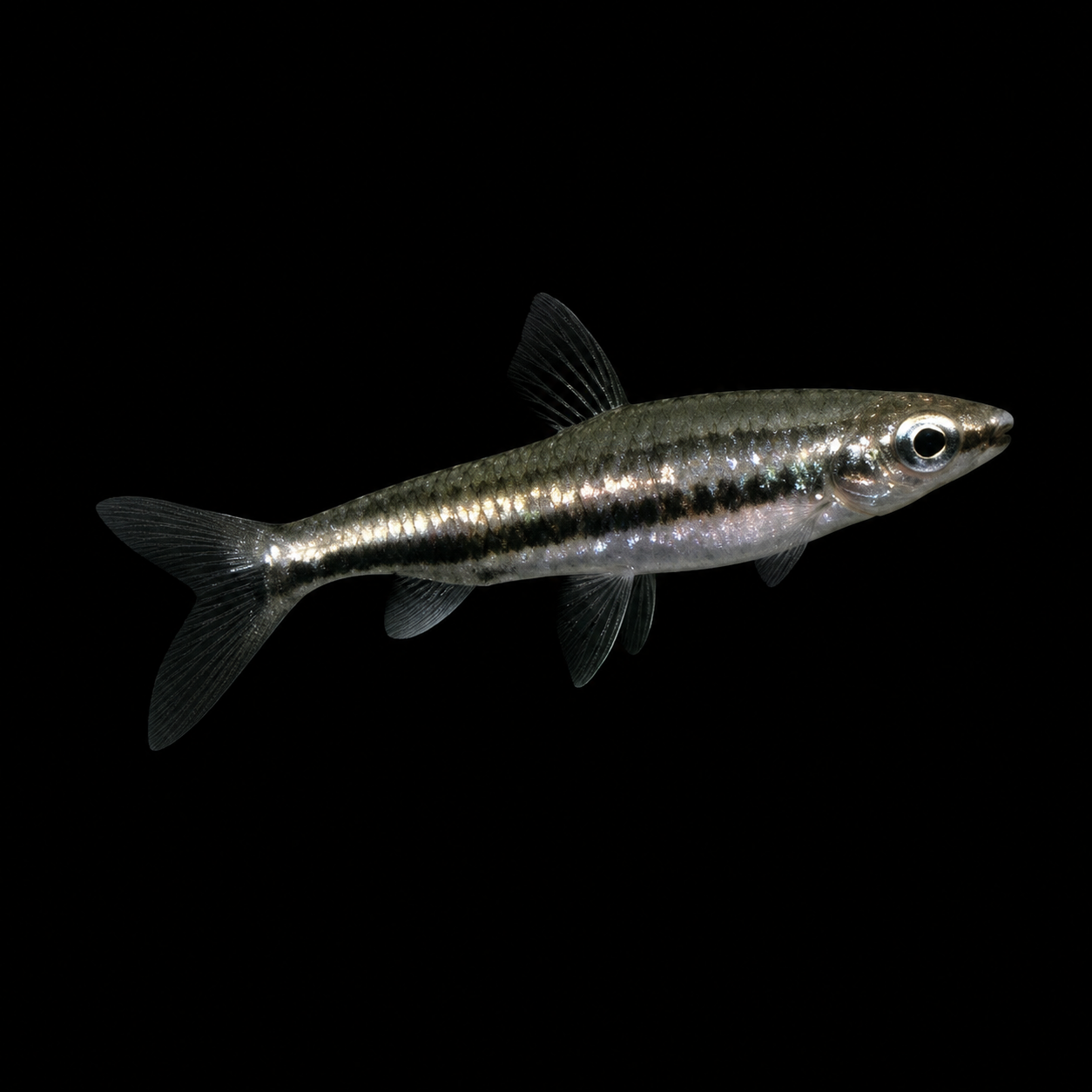
解説 / Description
ナノストムス・マリリナエは、南米の軟水域にすむ小型のペンシルフィッシュです。体側の黒いラインと、その上にほのかに浮かぶ緑がかった金属光沢から、英名ではGreenstripe pencilfishとも呼ばれます。強い赤や派手な模様で目立つ魚ではありませんが、落ち着いた水草水槽やブラックウォーター風の水景では、群れで静かに漂う姿がとても上品に映ります。 Nannostomus marilynae is a small pencilfish from soft-water habitats in South America. It is known as the Greenstripe pencilfish because of the dark lateral stripe and the subtle greenish metallic sheen above it. It is not a boldly colored fish, but in a calm planted or blackwater-style aquarium, its quiet shoaling behavior gives the aquascape a refined presence.
基本情報 / Basic Information
| 学名 / Scientific Name | Nannostomus marilynae Weitzman & Cobb, 1975 |
|---|---|
| 通称 / Common Name | ナノストムス・マリリナエ、マリリンズ・ペンシルフィッシュ、グリーンストライプペンシルMarilyn’s pencilfish, Greenstripe pencilfish |
| 分類 / Family | カラシン目 レビアシナ科 ナノストムス属Order Characiformes, family Lebiasinidae, genus Nannostomus |
| 英名 / English Name | Greenstripe pencilfish, Marilyn’s pencilfish |
| 分布 / Distribution | 南米。確認しやすい資料ではブラジルのネグロ川流域とコロンビアのビチャダ川流域が中心として扱われます。ビチャダ川はオリノコ水系に属するため、広い意味ではオリノコ水系に関連する種として紹介されることもあります。South America. Reliable summary sources primarily list the Rio Negro basin in Brazil and the Rio Vichada basin in Colombia. Because the Rio Vichada belongs to the Orinoco drainage, the species is sometimes discussed in connection with the wider Orinoco system. |
| 最大体長 / Max Size | 最大で約5cm。一般的な飼育個体では3〜4cm前後で見られることが多い小型種です。Up to about 5 cm. Aquarium specimens are often seen at around 3 to 4 cm. |
| 寿命 / Lifespan | 明確な長期飼育データは多くありませんが、近縁の小型ペンシルフィッシュと同様に、安定した飼育下では3〜5年程度をひとつの目安にできます。Published aquarium lifespan data are limited, but as with similar small pencilfishes, about 3 to 5 years can be used as a practical estimate under stable care. |
飼育環境 / Aquarium Environment
| 水槽サイズ / Tank Size | 最低でも45cm規格水槽程度、できれば60cm規格水槽以上がおすすめです。6匹以上、理想的には10匹前後の群れにすると落ち着きやすく、オス同士の小競り合いも分散されます。A 45 cm standard aquarium is a practical minimum, while a 60 cm standard tank or larger is preferable. Keep at least six individuals, ideally around ten, so the group feels secure and male displays are spread out. |
|---|---|
| 水温 / Temperature | 24〜26℃を中心に管理すると安定しやすいです。飼育では24〜28℃程度の範囲で扱われますが、急な温度変化は白点病などのきっかけになりやすいため避けます。 Management around 24 to 26°C is a stable target. In aquariums, about 24 to 28°C is commonly used, but sudden temperature changes should be avoided because they can trigger stress and disease such as ich. |
| 水質 / Water Quality | 弱酸性の軟水を好みます。目安はpH 5.5〜6.5、硬度は低めです。ブラックウォーターの魚として極端に低いpH環境が語られることもありますが、水槽では急激な酸性化よりも、軟水寄りで清潔に安定させることを優先します。Soft, slightly acidic water is preferred. A practical target is about pH 5.5 to 6.5 with low hardness. Although very acidic blackwater conditions are sometimes discussed for this type of fish, aquarium care should prioritize clean, stable soft water rather than rapid acidification. |
| レイアウト / Layout | 暗めの底床、流木、枯葉、水草、浮き草を組み合わせ、強すぎない照明で落ち着いた環境を作ります。開けすぎた水景よりも、視線を遮る場所や隠れられる場所がある方が前面に出やすくなります。Use a darker substrate, driftwood, leaf litter, aquatic plants, and floating plants under subdued lighting. This species is more likely to come forward when the layout offers cover and broken lines of sight rather than being completely open. |
| 注意点 / Precautions | 小型で臆病なため、強い水流や活発すぎる混泳魚は避けます。驚くと飛び出すことがあるので、フタは必須です。導入直後は痩せやすいため、各個体に餌が届いているかをよく観察してください。Because it is small and shy, avoid strong current and overly active tank mates. A tight-fitting lid is essential because startled fish may jump. Newly introduced specimens can lose weight easily, so confirm that each fish is receiving food. |
餌と給餌 / Feeding
| 餌の種類 / Diet | 微細な顆粒フード、細かく砕いたフレーク、ブラインシュリンプの幼生、ミジンコ、冷凍コペポーダ、マイクロワームなどが向いています。口が非常に小さいため、赤虫などは小型個体には大きすぎることがあり、与える場合も細かくして様子を見ます。Suitable foods include fine granules, crushed flakes, newly hatched brine shrimp, daphnia, frozen copepods, and microworms. Because the mouth is very small, bloodworms and similar foods may be too large for smaller specimens and should be offered only in suitably small pieces if used. |
|---|---|
| 給餌のポイント / Feeding Tips | 一度に多く与えるより、少量を複数回に分ける方が向いています。混泳水槽では餌取りの速い魚に負けやすいため、水流に乗せて広く散らす、スポイトで静かな場所へ届けるなどの工夫をすると安心です。Small, frequent feedings are better than one large meal. In community aquariums, faster fish may outcompete them, so distribute food widely in the current or use a pipette to deliver food to quieter areas. |
性格と混泳 / Temperament and Tank Mates
| 性格 / Temperament | 非常に温和で、他魚を積極的に攻撃することはほとんどありません。群れの中ではオス同士が軽く張り合うことがありますが、十分な数と隠れ場所があれば大きな問題にはなりにくいです。Very peaceful and rarely aggressive toward other fish. Males may display and spar mildly within the group, but serious problems are unlikely when the group is large enough and cover is available. |
|---|---|
| 混泳の相性 / Compatibility | 小型カラシン、小型ラスボラ、ボララス、コリドラス、オトシンクルス、小型ロリカリア類など、穏やかな魚と相性がよいです。アピストグラマなどのドワーフシクリッド水槽では、上層から中層を泳ぐディザーフィッシュとしても扱いやすい候補です。ただし、どんな稚魚も絶対に食べないわけではないため、繁殖水槽では状況に応じて隔離を考えます。Good tank mates include small characins, small rasboras, Boraras species, Corydoras, Otocinclus, and small loricariids. In dwarf cichlid aquariums such as Apistogramma setups, it can be a useful upper-to-midwater dither fish. However, no small fish should be assumed completely fry-safe, so separate breeding setups may still be needed depending on the situation. |
病気と対策 / Diseases and Prevention
| かかりやすい病気 / Common Diseases | 水温変化や輸送ストレスによる白点病、餌不足による痩せ、悪化した水質による尾ぐされや水カビに注意します。特定の病気に極端に弱い魚というより、環境変化とストレスに反応しやすい小型種として管理すると分かりやすいです。Watch for ich after temperature swings or transport stress, weight loss from insufficient feeding, and fin rot or fungal issues when water quality declines. It is best managed as a small fish that reacts quickly to stress and environmental instability. |
|---|---|
| 対策と予防 / Prevention | 水温とpHを急変させず、少量の定期換水で有機物をため込まないことが基本です。新しく迎えた個体は可能であれば検疫し、導入時は時間をかけて水合わせを行います。薬浴を行う場合は、軟水・弱酸性水槽では魚が刺激を受けやすいことがあるため、使用量と観察を慎重にします。Keep temperature and pH stable, and perform small regular water changes to prevent organic buildup. Quarantine new fish when possible and acclimate them slowly. If medication is needed, dose carefully and observe closely, as soft acidic aquariums can sometimes make fish more sensitive. |
増やし方(繁殖) / Breeding
| 雌雄の判別 / Sexing | 成熟したオスはメスより細身で、体側のラインや色彩のコントラストが強く出る傾向があります。オスの尻ビレは前方の軟条がわずかに伸長・肥厚します。メスは腹部がふっくらしやすく、抱卵時には丸みが目立ちます。Mature males tend to be slimmer and show stronger contrast in the body stripes and colors. The front rays of the male anal fin are slightly extended and thickened. Females are rounder, especially when carrying eggs. |
|---|---|
| 繁殖形態 / Reproduction | ばらまき型の産卵を行う卵生魚です。細かい水草や産卵モップ、ビー玉の隙間などに卵が落ちるようにすると親魚の食卵を減らせます。親魚は卵を守らず、放置すると食べてしまうことがあるため、産卵後はすぐに隔離します。This is an egg-scattering species. Fine-leaved plants, spawning mops, or marbles can help eggs fall out of reach and reduce egg predation. The adults do not guard the eggs and may eat them, so they should be removed immediately after spawning. |
| 繁殖のポイント / Breeding Tips | 繁殖は難しめです。親魚を微細な生餌や冷凍餌で十分に仕上げ、軟水で薄暗い小型繁殖水槽にペアで導入します。孵化日数や産卵数は水温や親魚の状態で変わります。自由遊泳直後の稚魚は非常に小さいため、最初はインフゾリア、ゾウリムシ、ワムシなどから始め、成長に合わせてマイクロワームや沸かしたてのブラインシュリンプへ移行します。Breeding is challenging. Condition adults well with very small live or frozen foods, then introduce a pair to a dim, soft-water breeding tank. Hatching time and egg numbers vary with temperature and parental condition. Newly free-swimming fry are very small, so start with infusoria, paramecia, or rotifers, then move on to microworms and newly hatched brine shrimp as they grow. |
雑学と豆知識 / Trivia and Fun Facts
| 1. 小さな口を意味する属名 / 1. A Genus Name Meaning Small Mouth | Nannostomusという属名は、「小さい」と「口」に由来する名前です。その名の通り、ナノストムス・マリリナエはとても小さな口を持ち、自然界では微小な甲殻類や昆虫の幼生、植物や流木の表面に付く微生物を少しずつついばむように食べていると考えられます。水槽内で細かい餌を必要とする理由も、この体のつくりとよく結びついています。The genus name Nannostomus refers to a small mouth. True to that name, Nannostomus marilynae has a very small mouth and is thought to feed on tiny crustaceans, insect larvae, and microorganisms growing on plants and wood in nature. This anatomy explains why finely sized foods are so important in the aquarium. |
|---|---|
| 2. 種小名に込められた献名 / 2. A Species Name Given in Honor | marilynaeという種小名は、レビアシナ科やカラシン類の研究に関わったマリリン・ゾーナー・ワイツマンに献名されたものです。小さく繊細なペンシルフィッシュに、研究者への敬意が静かに刻まれている点は、この魚の控えめな美しさによく似合っています。The species name marilynae honors Marilyn Sohner Weitzman, who worked on lebiasinid and characin fishes. It is a fitting name for such a delicate fish, quietly linking its aquarium charm to the history of ichthyological research. |
| 3. 半世紀越しに見直された魚 / 3. A Fish Reconsidered After Half a Century | 本種にあたる標本は1925年にブラジルのネグロ川で採集されていましたが、当初は別種と考えられていました。その後、ワイツマンとコブによるナノストムス属の再検討を経て、1975年に新種として正式に記載されます。水槽の中では目立ちすぎないこの魚にも、長い分類学の物語が隠れています。Specimens belonging to this species had been collected from the Rio Negro in Brazil as early as 1925, but they were initially regarded as another species. After Weitzman and Cobb reexamined the genus Nannostomus, it was formally described as a new species in 1975. Even this understated aquarium fish carries a long taxonomic story. |
| 4. 夜になると模様が変わる / 4. A Different Pattern at Night | ナノストムス属の多くは、昼と夜で体色パターンが変化します。マリリナエでも日中の水平ラインが弱まり、暗い時間帯には斜めの帯模様が見えることがあります。この変化は明るさだけでなく体内リズムにも関わると考えられており、消灯後の水槽では昼とは違う表情をのぞかせます。Many Nannostomus species change their color pattern between day and night. In N. marilynae, the daytime horizontal stripes may fade and oblique bands can appear in darker hours. This change is thought to be linked not only to light but also to internal biological rhythms, giving the fish a different appearance after lights out. |
| 5. 日本では「混じり」から出会うことがある / 5. Sometimes Encountered as Bycatch in the Trade | ナノストムス・マリリナエは、単独種として安定して大量入荷する魚ではなく、カージナルテトラなど南米便の小型魚に混じって入ることがあるとされています。そのため、販売名や同定が揺れやすく、見つけた時には状態や体型、脂ビレの有無、尻ビレの形、体側のラインを落ち着いて確認したい魚です。偶然の出会いが、珍しい小型カラシンを探す楽しさにつながります。Nannostomus marilynae is not usually a species imported in large, stable, species-only shipments; it is reported to appear as bycatch with small South American fish such as cardinal tetras. As a result, trade names and identifications can be inconsistent, so it is worth calmly checking condition, body form, the presence of an adipose fin, anal-fin shape, and lateral stripes. That chance encounter is part of the appeal of searching for unusual small characins. |
まとめ / Conclusion
ナノストムス・マリリナエは、派手な色彩で水槽の主役を奪う魚ではありません。けれども、暗めの底床、流木、浮き草の影、やわらかな照明がそろった水景では、体側の緑の反射がふっと浮かび上がり、南米の小さな魚らしい繊細な美しさを見せてくれます。 Nannostomus marilynae is not a fish that takes over the aquarium with vivid color. Yet in a scene with dark substrate, driftwood, floating-plant shade, and gentle lighting, the green reflection along its side appears softly and reveals the delicate beauty of a small South American fish.
安定した軟水、穏やかな混泳相手、細かな餌、そして群れで過ごせる余裕を整えるほど、この魚は少しずつ前に出てきます。水槽の前で静かに眺めていると、細いラインの揺らぎやオス同士の控えめなやり取りに気づきます。大きな主張はしなくても、長く飼うほど水景の中で欠かせない存在になっていくペンシルフィッシュです。 With stable soft water, gentle tank mates, suitably small foods, and enough companions to form a group, this fish gradually becomes more confident. Quiet observation reveals the shimmer of its fine lines and the restrained interactions between males. It may not be a showy centerpiece, but the longer it is kept, the more it becomes an essential part of the aquascape.

気になる道具や飼い方を見つけてみませんか?
 アイのアクアグッズ案内マジックリーフ物語|一枚の葉がアクアリウム用品になるまで道具の特徴や使い方、選ぶときのポイントをアイが紹介します。記事はコチラ →
 アイのアクアグッズ案内水槽のコケ掃除|道具の選び方とお掃除生体の得意・不得意道具の特徴や使い方、選ぶときのポイントをアイが紹介します。記事はコチラ →
 アイのアクアグッズ案内お魚を撮ったのに、ボクが写ってる! スマホで楽しむ水槽撮影と便利な道具道具の特徴や使い方、選ぶときのポイントをアイが紹介します。記事はコチラ →
 アイのアクアグッズ案内エーハイムはおもちゃから始まった? 小さな噴水から水槽へ、アイとコタロウの探訪道具の特徴や使い方、選ぶときのポイントをアイが紹介します。記事はコチラ →
さまざまな飼育テーマをご紹介。リンク先の記事には広告・商品紹介が含まれます。
案内・紹介記事一覧へ →分布マップ
ナノストムス・マリリナエは、南米のブラジル・ネグロ川流域と、コロンビア・ビチャダ川流域を中心に知られる小型ペンシルフィッシュです。この地図では、記事内の分布情報をもとに概略イメージとして代表地点を示しています。
このマップのプロットは、分布イメージを伝えるための概略代表地点です。実際の採集地点や厳密な生息範囲を示すものではありません。
参考文献・根拠資料
本リストは、ナノストムス・マリリナエの分類、分布、生息環境、飼育条件、繁殖、病気や注意点を支える資料に絞って選定しています。店舗・通販ページ、個人ブログ、一般的なまとめサイトは採用していません。
-
Weitzman, S. H. & Cobb, J. S. (1975). A Revision of the South American Fishes of the Genus Nannostomus Günther (Family Lebiasinidae). Smithsonian Contributions to Zoology, No. 186.
支える内容:原記載、分類、属の再整理、タイプ産地、形態的識別点、雄の尻ビレ形状、昼夜で変わる体色パターン。
-
Weitzman, M. & Weitzman, S. H. (2003). Lebiasinidae (Pencil fishes). In R. E. Reis, S. O. Kullander & C. J. Ferraris, Jr. (eds.), Check List of the Freshwater Fishes of South and Central America, pp. 241–251. EDIPUCRS.
支える内容:南米・中米淡水魚のチェックリストにおけるレビアシナ科・ナノストムス属の分類上の位置づけ、分布情報の補強。
-
Froese, R. & Pauly, D. (eds.). FishBase: Nannostomus marilynae Weitzman & Cobb, 1975.
支える内容:学名、分類、英名、分布、最大体長、水温・pH・硬度の目安、淡水性・遊泳層、IUCNレッドリスト評価への参照。
-
Salvador, G. N. (2023). Nannostomus marilynae. The IUCN Red List of Threatened Species 2023: e.T164532841A164532898.
支える内容:保全状況を「軽度懸念(LC)」として扱う根拠。販売・飼育記事内では、野生個体の流通を推奨する根拠ではなく、現時点の絶滅リスク評価として参照します。
-
Xu, W., Tai, J., He, K. & Liu, H. (2024). Complete Mitochondrial Genomes of Nannostomus Pencilfish: Genome Characterization and Phylogenetic Analysis. Animals, 14(11), 1598.
支える内容:ナノストムス属の分子系統・ミトコンドリアゲノム情報。記事内で現代的な分類研究や系統的背景に触れる場合の補助資料です。
-
Weitzman, S. H. & Weitzman, M. J. (2002). Breeding Coral Red Pencilfish and Other Pencilfishes. Tropical Fish Hobbyist.
支える内容:ペンシルフィッシュ類の繁殖を扱う専門記事。種特異的な繁殖データが限られるため、卵を食べやすい小型卵生魚としての採卵管理、微細な初期飼料、親魚分離などの記述は補助的に参照します。
-
MSD Veterinary Manual. Environmental Diseases of Aquatic Animals in Aquatic Systems.
支える内容:アンモニア、亜硝酸、溶存酸素、pH変動など、水質由来の不調・死亡リスク。弱酸性軟水を好む小型魚であっても、急変や濾過不全を避けるべき理由の根拠として参照します。
-
Francis-Floyd, R. & Yanong, R. P. E. University of Florida IFAS Extension. Ichthyophthirius multifiliis (White Spot) Infections in Fish.
支える内容:白点病の侵入経路、発症時の対応、導入魚・水草・器具の隔離や衛生管理。輸入個体や混じり流通個体を扱う際の注意点を補強します。
補足:飼育条件のうち、水槽サイズ、群泳数、レイアウトの細部は、原産地の環境・体サイズ・行動特性から導いた実践的な推奨です。本種を対象とした飼育実験で確立された条件ではありません。飼育では、弱酸性の軟水を安定して保ち、穏やかな水流と隠れ場所を用意して、環境の急変を避けることを基本にしてください。




コメント