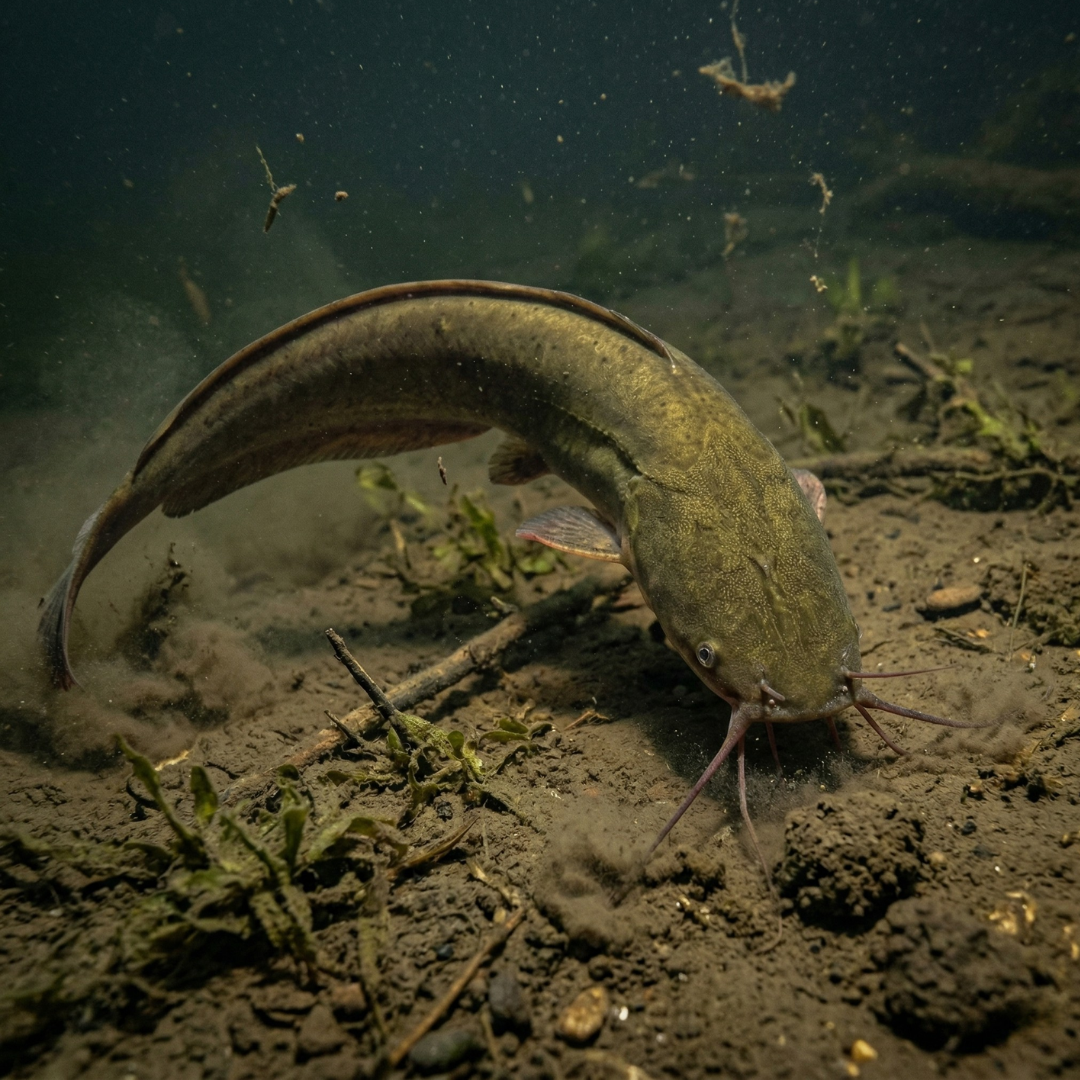
アフリカンクララは、アフリカ大陸全域の河川や湿地に広く生息する大型のナマズです。その最大の特徴は、驚異的なまでの環境適応能力にあります。鰓(えら)の一部が変化した副呼吸器を持つことで、酸素の乏しい泥沼でも空気呼吸を行い生き延びることができ、さらには湿った陸上を這って移動する「ウォーキング・キャットフィッシュ」としても知られています。観賞魚としては、その圧倒的な存在感と野性味溢れる姿から大型魚愛好家の間で親しまれていますが、1メートルを優に超える巨体へと成長するため、飼育には相応の覚悟と巨大な設備が必要となる、まさに「モンスターフィッシュ」の代表格といえる存在です。The African Sharptooth Catfish is a large catfish widely distributed in rivers and wetlands across the African continent. Its most remarkable feature is its extraordinary environmental adaptability. Equipped with a suprabranchial organ derived from the gills, it can perform air-breathing to survive in oxygen-depleted mudflats and is famously known as a “walking catfish” for its ability to move across damp land. While popular among monster fish enthusiasts for its overwhelming presence and wild appearance, it requires significant commitment and massive facilities as it easily exceeds one meter in length, making it a true representative of the “monster fish” category.
基本情報 / Basic Information
学名 / Scientific Name
Clarias gariepinus
通称 / Common Name
アフリカンクララ、アフリカン・シャープトゥース・キャットフィッシュAfrican Sharptooth Catfish, North African Catfish
アフリカ大陸全域、中近東(シリア、トルコなど)Throughout Africa and parts of the Middle East (Syria, Turkey, etc.)
最大体長 / Max Size
約1.7メートル(体重60キログラム以上に達することもある)Approximately 1.7 meters (can reach over 60 kg)
寿命 / Lifespan
約15年(良好な環境下)Approximately 15 years under favorable conditions
飼育環境 / Aquarium Environment
水槽サイズ / Tank Size
最低でも200cm以上の特注水槽や、FRP製の大型水槽が必要です。At least a custom tank of 200cm or larger, or a large FRP tank, is required.
水温 / Temperature
20度から30度(成長の最適温度は28度から30度。8度から35度まで生存可能)20 to 30 degrees Celsius (Optimum growth at 28-30 degrees; can survive between 8-35 degrees)
水質 / Water Quality
pH 6.5から8.0、硬度(dH)5から28。非常に幅広い水質に適応します。pH 6.5 to 8.0, Hardness (dH) 5 to 28. Adapts to a very wide range of water conditions.
レイアウト / Layout
ベアタンクが推奨されます。空気呼吸のため、水面とフタの間に十分な空間を空け、脱走防止の頑丈なフタが必須です。Bare bottom tanks are recommended. Ensure enough space between the water surface and the lid for air breathing, and a heavy-duty lid to prevent escape.
注意点 / Precautions
驚異的なジャンプ力と、陸上を移動する能力を持つため、わずかな隙間からも脱走します。フタはボルト固定等の重装備が必要です。Possesses incredible jumping and land-moving abilities; can escape through tiny gaps. Lids must be bolted down or heavily weighted.
餌と給餌 / Feeding
餌の種類 / Diet
貪欲な雑食性。小魚、エビ、昆虫、人工飼料(沈下性タブレット)、鶏肉など何でも食べます。Voracious omnivore. Consumes small fish, shrimp, insects, sinking pellets, chicken, and almost anything else.
給餌のポイント / Feeding Tips
成長が極めて早いため、バランス良く給餌します。排泄量が多いため、強力な濾過システムと頻繁な換水が不可欠です。Grows extremely fast, so feed a balanced diet. High waste output necessitates a powerful filtration system and frequent water changes.
性格と混泳 / Temperament and Tank Mates
性格 / Temperament
非常に攻撃的で、口に入るサイズのものはすべて捕食します。同種間でも激しく争うことがあります。Extremely aggressive; will prey on anything that fits in its mouth. Intraspecific aggression can also be severe.
混泳の相性 / Compatibility
基本的に単独飼育が推奨されます。混泳させる場合は、本種よりも大きく、さらに気の強い魚種に限られます。Solitary housing is generally recommended. If co-housed, only with fish larger and more aggressive than itself.
病気と対策 / Diseases and Prevention
かかりやすい病気 / Common Diseases
エロモナス感染症、水カビ病、外部寄生虫(コスティアなど)。過密飼育では「クラックヘッド(頭部割れ)」も見られます。Aeromonas infections, Saprolegnia (water mold), external parasites (Costia, etc.). “Crackhead” syndrome can occur in overcrowded conditions.
対策と予防 / Prevention
徹底した換水と清掃。初期症状には塩水浴や市販の魚用薬での薬浴が有効ですが、皮膚に鱗がないため薬量は慎重に調節します。Maintain thorough water changes and cleanliness. Salt baths or medication work for early stages, but adjust doses carefully as they are scaleless.
増やし方(繁殖) / Breeding
雌雄の判別 / Sexing
オスは生殖突起が目立ち、メスは産卵期に腹部が大きく膨らみます。Males have prominent genital papillae; females’ abdomens swell significantly during the spawning season.
繁殖形態 / Reproduction
卵生。オスが水草などを利用して営巣(ネスト作り)を行い、メスを誘って産卵させます。Egg-layers. Males build nests using aquatic plants to entice females to spawn.
繁殖のポイント / Breeding Tips
オスは卵や稚魚が泳ぎ出すまで献身的に守る「良き父親」の顔を見せます。飼育下での自然繁殖は空間的な制約から困難です。Males are “good fathers,” devotedly guarding eggs and fry until they can swim. Natural breeding in captivity is difficult due to space constraints.
雑学と豆知識 / Trivia and Fun Facts
1. 名前が物語る驚異の生命力 / 1. A Name Reflecting Incredible Vitality
属名の「Clarias」はギリシャ語で「活発な」を意味する言葉に由来しています。これは本種が水から出されても死なず、自力で這い回るほど強靭であることを象徴しています。種小名の「gariepinus」は、基準産地である南アフリカのオレンジ川を指す現地の呼び名「ガリエプ川」から取られました。The genus name “Clarias” comes from the Greek word for “lively,” symbolizing its toughness to survive and crawl even out of water. The species name “gariepinus” is derived from the “Gariep River,” the local name for the Orange River in South Africa where it was first described.
2. 陸上を「歩く」メカニズム / 2. The Mechanism of “Walking” on Land
彼らは単に跳ねるだけでなく、胸鰭にある強靭な棘を地面に突き立て、体をヘビのようにくねらせることで計画的に前進します。さらに「副呼吸器」によって大気中の酸素を直接取り込めるため、湿気があれば数時間から数十時間も陸上で活動可能です。雨の夜、新たな餌場を求めて草原を渡り歩く姿は、まさに進化の神秘を感じさせます。They don’t just flop; they use strong pectoral spines as anchors and wriggle their bodies like snakes to move forward. Combined with their air-breathing “suprabranchial organ,” they can remain active on land for hours as long as it’s damp, migrating across grasslands on rainy nights in search of new feeding grounds.
3. 知的な集団狩猟と電気のシグナル / 3. Intelligent Pack Hunting and Electric Signals
ナマズといえば単独行動のイメージが強いですが、本種は時として複数の個体で群れを作り、小魚を追い詰めて捕食する「パック・ハンティング」を行うことが知られています。また、同種間でのコミュニケーションとして微弱な電気信号を発していることも科学的に確認されており、非常に社会性・知性の高い魚であることがわかっています。While catfishes are often seen as solitary, this species is known to form groups for “pack hunting,” cornering schools of small fish. Scientific studies also confirm they emit weak electric signals for communication, revealing a surprisingly social and intelligent nature.
4. アジアの環境問題と「ハイブリッド」の影 / 4. Asian Environmental Issues and the Shadow of Hybrids
東南アジアでは、成長の早いアフリカンクララと在来種を交配させた「ハイブリッド・キャットフィッシュ」が食用として盛んに養殖されています。しかし、これが自然界へ流出したことで在来種の遺伝子プールを汚染し、純粋な在来種が絶滅の危機に瀕するという深刻な生態系破壊を引き起こしています。日本においても、その強靭さゆえに放流は絶対に行ってはいけない種の一つです。In Southeast Asia, “hybrid catfishes” bred from African Clarias and native species are widely farmed for food. However, escapes into the wild have led to genetic pollution, pushing pure native species toward extinction. Due to its extreme hardiness, it is a species that must absolutely never be released into the wild in Japan.
まとめ / Conclusion
アフリカンクララは、その規格外の巨体と驚異的な生命力によって、観賞魚としても養殖資源としても世界中で注目される存在です。陸を歩き、空気を吸い、時には集団で狩りをするというその生態は、私たちが抱く「魚」の常識を次々と塗り替えてくれます。しかし、その強さは同時に、一度自然界へ放たれれば既存の生態系を壊滅させかねない危険性も秘めています。The African Sharptooth Catfish is a globally significant species, both as a monster fish and an aquaculture resource, due to its massive size and incredible vitality. Its behavior—walking on land, breathing air, and hunting in packs—shatters our common perception of “fish.” However, this strength also means it poses a grave danger to local ecosystems if ever released into the wild.
もしあなたがこの「生ける伝説」を家族として迎えるのであれば、彼らが終生を過ごすための広大な水域と、絶対に脱走を許さない鉄壁の管理を用意してください。そのとき初めて、アフリカンクララはあなたの水槽の中で、太古から続く進化のドラマを存分に見せてくれることでしょう。If you choose to welcome this “living legend” as a family member, you must provide a vast aquatic environment and impenetrable security to prevent escape. Only then will the African Sharptooth Catfish fully reveal the ancient drama of evolution within your aquarium.
FAO (Food and Agriculture Organization of the United Nations). Cultured Aquatic Species Information Programme: Clarias gariepinus (Burchell, 1822). Fisheries and Aquaculture Division.
FishBase. Clarias gariepinus (Burchell, 1822): North African catfish. (Accessed 2024).
Teugels, G. G. (1986). A systematic revision of the African species of the genus Clarias (Pisces; Clariidae). Annales du Musee Royal de l’Afrique Centrale, 247, 1-199.
CABI (Centre for Agriculture and Bioscience International). Clarias gariepinus (North African catfish) [Invasive Species Compendium].
OIE (World Organisation for Animal Health). Manual of Diagnostic Tests for Aquatic Animals: Epizootic Ulcerative Syndrome (EUS).
IUCN Red List of Threatened Species. Clarias gariepinus.
Janssen, J. (1987). Species of the genus Clarias (Clariidae) from Africa: Terminal report. FAO project.



 アイのアクアグッズ案内ダニオの仲間に合わせる飼育用品|ゼブラダニオから超小型種まで水槽・ろ過・餌を選ぶ道具の特徴や使い方、選ぶときのポイントをアイが紹介します。記事はコチラ →
 アイのアクアグッズ案内ショップで見かけるカラフルなバケツ。いったい何が入ってる?道具の特徴や使い方、選ぶときのポイントをアイが紹介します。記事はコチラ →



コメント