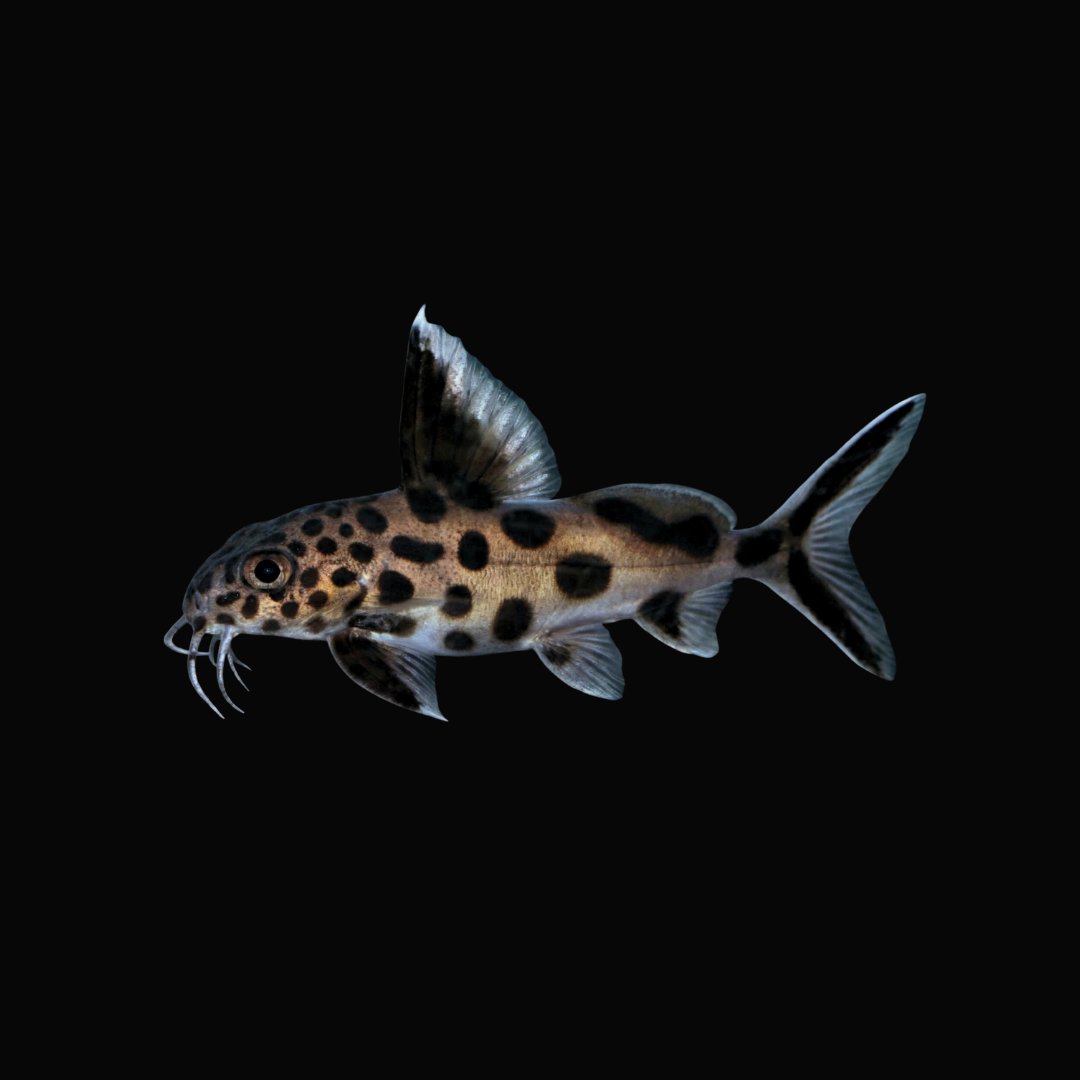
シノドンティス・ムルティプンクタータスは、アフリカのタンガニイカ湖にのみ生息するナマズの一種です。美しいゴールデンベージュの体に不規則な黒い水玉模様を散りばめた姿から、観賞魚として高い人気を誇ります。最大の特徴は、マウスブルーディングを行うシクリッドに自らの卵を預けて育てさせる「托卵(たくらん)」という特異な生態です。現在確認されている脊椎動物において、絶対的種間托卵を行う魚類は本種のみとされており、生物学的にも極めて貴重な存在です。水槽内では活発に遊泳し、愛嬌のある姿を見せてくれるため、アフリカンシクリッド水槽のスカベンジャー(掃除役)としても、また進化のドラマを体現する存在としても、多くの愛好家に親しまれています。Synodontis multipunctatus is a species of catfish endemic to Lake Tanganyika, Africa. It is highly popular in the aquarium hobby due to its attractive golden-beige body adorned with irregular black polka dots. Its most remarkable trait is obligate brood parasitism, where it entrusts its eggs to be raised by mouthbrooding cichlids. As the only fish known to exhibit this behavior among vertebrates, it holds significant biological importance. In the aquarium, they are active swimmers and charming displays, often serving as excellent scavengers for African cichlid tanks and living examples of evolutionary complexity.
基本情報 / Basic Information
学名 / Scientific Name
Synodontis multipunctatus
通称 / Common Name
ムルティ、カッコウ・ナマズMulti, Cuckoo Catfish
分類 / Family
ナマズ目サカサナマズ科Mochokidae (Order Siluriformes)
英名 / English Name
Cuckoo Catfish, Cuckoo Squeaker
分布 / Distribution
アフリカ:タンガニイカ湖固有種Endemic to Lake Tanganyika, Africa
最大体長 / Max Size
約28cm(飼育下では15〜20cm程度に収まることが多い)Approx. 28cm (Typically 15-20cm in captivity)
寿命 / Lifespan
15年以上15 years or more
飼育環境 / Aquarium Environment
水槽サイズ / Tank Size
90cm規格水槽(約150L)以上を推奨します。理想は120cmワイド水槽(約240L以上)です。Recommended: 90cm standard tank (approx. 150L) or larger. Ideal: 120cm wide tank (240L+).
サンゴ砂を敷き、岩組みで多数の隠れ家を作ります。活発に泳ぐため広い遊泳スペースも確保してください。Use coral sand and create numerous hiding spots with rocks while ensuring ample open swimming space.
注意点 / Precautions
日本の軟水環境では、浸透圧不全や水質悪化からくる腹部の膨張(俗称:Bloat)のリスクが高まります。ミネラル添加による水質調整が不可欠です。In soft-water regions like Japan, there is a higher risk of abdominal swelling (commonly known as “Bloat”) caused by osmotic imbalance. Water hardening is essential.
餌と給餌 / Feeding
餌の種類 / Diet
雑食性。沈下性の人工飼料をベースに、イサザアミや赤虫を副食として与えます。Omnivorous. Sinking pellets as a staple, with Mysis shrimp or bloodworms as supplements.
給餌のポイント / Feeding Tips
赤虫の与えすぎは消化不良に繋がる可能性があるため控えめに。植物質(茹でたエンドウ豆など)を混ぜることで健康を維持しやすくなります。Limit bloodworms to prevent indigestion. Including plant matter like blanched peas helps maintain health.
性格と混泳 / Temperament and Tank Mates
性格 / Temperament
温和ですが、口に入るサイズの魚は捕食対象となります。3〜5匹以上のグループで飼育すると落ち着きやすくなります。Peaceful but will eat fish small enough to fit in its mouth. Keeping them in groups of 3-5 or more encourages natural behavior.
混泳の相性 / Compatibility
タンガニイカ湖やマラウイ湖産の同サイズ以上のシクリッドが最適なタンクメイトとなります。Best kept with African cichlids of similar or larger size from Lakes Tanganyika or Malawi.
病気と対策 / Diseases and Prevention
かかりやすい病気 / Common Diseases
消化管疾患や浸透圧不全に起因する腹部の膨張(俗称:Bloat)。Abdominal swelling caused by digestive or osmotic issues (commonly known as “Bloat”).
対策と予防 / Prevention
高硬度・高アルカリ性を維持し、硝酸塩の蓄積を防ぐ定期的な換水を行ってください。急激な水質変化は避ける必要があります。Maintain high hardness and alkalinity. Perform regular water changes to prevent nitrate buildup, avoiding sudden parameter shifts.
増やし方(繁殖) / Breeding
雌雄の判別 / Sexing
外見での判別は困難なため、生殖孔の形状を確認する必要があります。External sexing is difficult; checking the genital papilla is required.
繁殖形態 / Reproduction
托卵(マウスブルーディングを行うシクリッドの口内に卵を紛れ込ませる)。Brood parasitism (slipping eggs into the mouths of mouthbrooding cichlids).
繁殖のポイント / Breeding Tips
マラウイ湖産の種など、托卵ナマズとの共生歴のない種群の一部をホストとして用意すると、防衛行動が弱いため成功率が高まります。Using host species from Lake Malawi that lack a co-evolutionary history with brood parasites can increase success rates due to weaker defense responses.
雑学と豆知識 / Trivia and Fun Facts
1. 近年の系統解析による分類の統合1. Taxonomic integration based on recent phylogenetic analysis
2020年代後半の最新の系統解析により、これまで別種とされてきたS. grandiopsなどは、S. multipunctatus系統内の個体変異や地理的変異に過ぎない可能性が高いことが示されました。現在では多くの研究者がこれらをS. multipunctatusのシノニム(同一種)として扱っています。Recent phylogenetic analyses in the late 2020s suggest that previously separate species like S. grandiops are likely individual or geographical variations within the S. multipunctatus lineage. Many researchers now treat S. grandiops as a synonym of S. multipunctatus.
2. スクィーカー:音を発する驚愕応答2. Squeakers: A startle response through sound
本種が発する「ギーギー」という音は、胸鰭の棘を肩の骨(肩帯)に擦り合わせる摩擦音(ストリダレーション)です。これは外敵を驚かせる「驚愕応答」として機能している可能性が指摘されており、天敵から逃れるための進化的な適応の一つと考えられています。The “squeaking” sound produced by this species is a stridulation sound created by rubbing its pectoral spines against the shoulder girdle. It is pointed out as a possible “startle response” to deter predators, representing a unique evolutionary adaptation.
3. 宿主の習性を突いた再侵入の可能性3. The potential for re-entry via host behavior
近年の観察では、口から吐き出された卵や稚魚が再び口内に収容されるケースが確認されています。これは本種の稚魚が、ホストである母魚の「迷子回収本能」を巧みに利用して再び口内に戻る、いわば再侵入の可能性があると指摘されており、托卵戦略の奥深さを示唆しています。Recent observations suggest cases where eggs or fry expelled by a host are taken back into the mouth. It is pointed out that fry may skillfully exploit the host mother’s instinct for retrieving lost offspring to re-enter the mouth, a behavior suggesting an even more complex parasitic strategy.
まとめ / Conclusion
シノドンティス・ムルティプンクタータスは、その独特な外見と、脊椎動物では極めて稀な「托卵」という生態を持つ魅力的なナマズです。水質調整が必要な日本の飼育環境においては、適切な硬度とアルカリ性を維持することが長期飼育の鍵となります。Synodontis multipunctatus is a fascinating catfish with a unique appearance and a rare “brood parasitism” ecology. In Japan’s soft-water environment, maintaining appropriate hardness and alkalinity is the key to successful long-term care.
近年の系統解析や生態観察により、その正体や驚くべき適応戦略が次々と明らかになりつつあります。単なる掃除役としてだけでなく、タンガニイカ湖が育んだ進化の結晶として、本種とのアクアリウムライフをじっくりと楽しんでみてはいかがでしょうか。Recent phylogenetic analyses and ecological observations continue to shed light on their true identity and remarkable survival strategies. Beyond being a simple scavenger, this species is a gem of evolution from Lake Tanganyika, inviting you to explore the depths of the hobby.
Englmaier, G. K., et al. (2024). Phylogeny and species diversity of Lake Tanganyika Synodontis (Siluriformes: Mochokidae). Zoological Journal of the Linnean Society.(最新の系統解析およびシノニムの統合に関する研究)
Wright, J. J. and Page, L. M. (2006). Taxonomic revision of Lake Tanganyikan Synodontis (Siluriformes: Mochokidae). Zootaxa.(シノドンティス属の形態学的分類に関する基礎資料)
Reichard, M., et al. (2018). The Evolution of Cuckoo Brood Parasitism in Fishes. Nature Communications.(托卵行動の進化生態学に関する研究)
Cohen, M., et al. (2019). Cuckoo catfish babies exploit host parental care to re-enter the safe haven of the mouth. Biology Letters.(孵化後の稚魚による宿主口内への再侵入に関する観察記録)
Boulenger, G. A. (1898). Report on the fishes recently obtained by Mr. J. E. S. Moore in Lake Tanganyika. Proceedings of the Zoological Society of London.(本種の原記載に関する歴史的資料)
Blažek, R., et al. (2018). Success of cuckoo catfish brood parasitism reflects the coevolutionary history with its host. Science Advances.(宿主シクリッドとの共進化、および防衛行動に関する実験データ)



 アイのアクアグッズ案内水草用ライトの選び方|緑の絨毯と赤い水草を楽しむ照明・植栽用品道具の特徴や使い方、選ぶときのポイントをアイが紹介します。記事はコチラ →
 アイのアクアグッズ案内水槽の流木の選び方|枝・マングローブ・アク抜きとおすすめ商品水槽に小さな森を作る流木。枝流木やマングローブという名前の違いから、魚の隠れ家、水草の取り付け、浮く・水が茶色くなるときの準備まで、アイとコタロウが商品とともに案内します。記事はコチラ →
 アイのアクアグッズ案内水槽のコケ掃除|道具の選び方とお掃除生体の得意・不得意道具の特徴や使い方、選ぶときのポイントをアイが紹介します。記事はコチラ →
 アイのアクアグッズ案内ショップで見かけるカラフルなバケツ。いったい何が入ってる?道具の特徴や使い方、選ぶときのポイントをアイが紹介します。記事はコチラ →



コメント