

解説 / Description
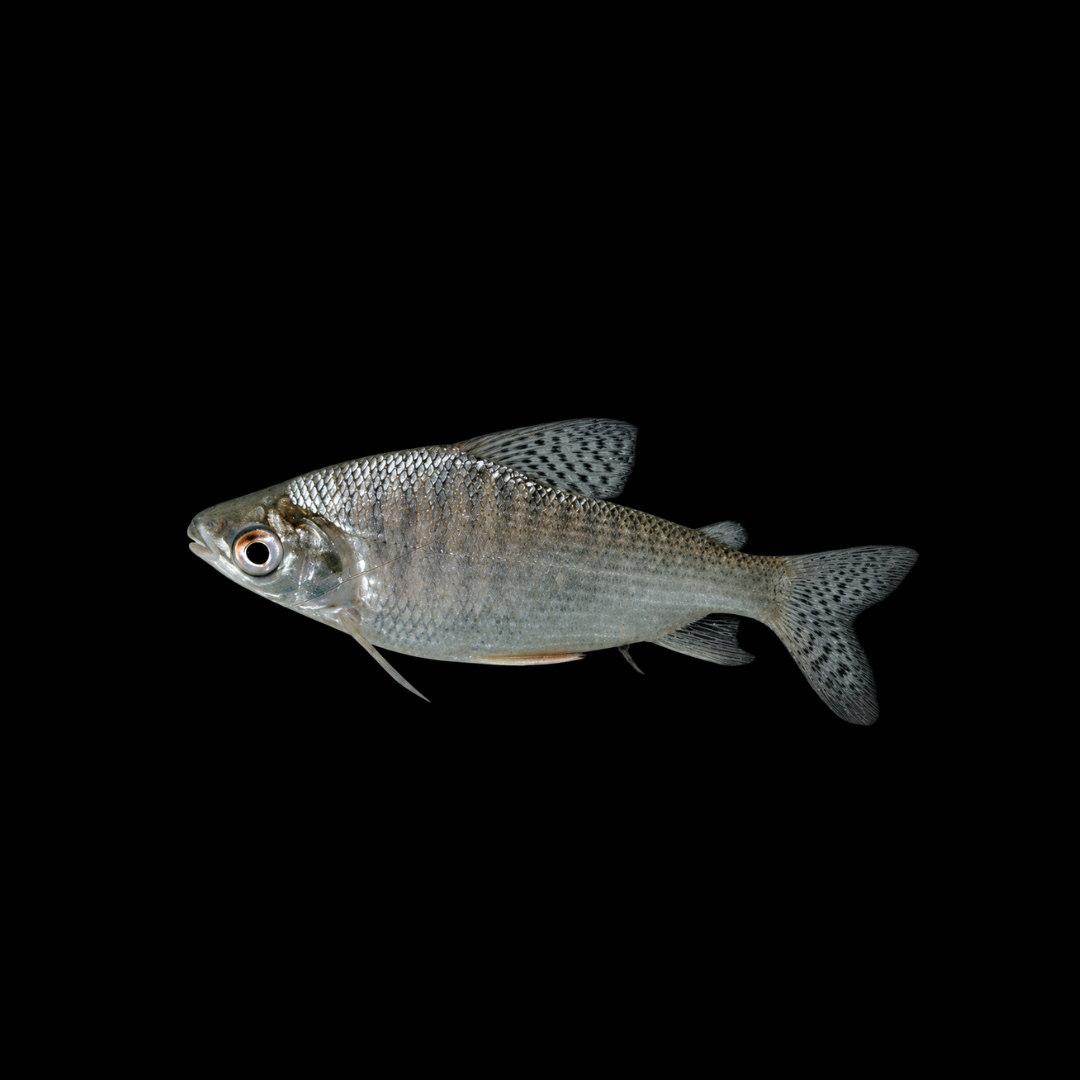
グリーンプロキロダスは、南米の大河川に生息するプロキロダス科のカラシンです。日本の観賞魚市場では、主に Prochilodus nigricans を中心とした流通名として使われますが、産地や同定が明確でない Prochilodus sp. が同じ名前で扱われることもあります。そのため、購入時には流通名だけで種や産地を断定せず、入荷便、採集地、個体の体型などをあわせて確認する姿勢が大切です。 The Green Prochilodus is a prochilodontid characiform fish from the great river systems of South America. In the Japanese aquarium trade, the name is used mainly for Prochilodus nigricans, but unidentified or locality-based Prochilodus sp. specimens may also be sold under the same trade name. For that reason, the trade name alone should not be treated as a definitive identification; import route, locality information, and body shape should also be considered.
幼魚は緑がかった銀色の体に黒い横縞や細かな斑点が入り、成長すると落ち着いた銀灰色の体色へ変化します。肉厚で吸盤状に見える唇を使って、ガラス面、流木、石の表面に付着した藻類やバイオフィルムをこそげ取るように食べるため、大型魚水槽ではお掃除役の魚として評価されることがあります。ただし、単なるコケ取り要員として導入する魚ではありません。大きく成長し、よく泳ぎ、植物質を中心とした餌を必要とするため、長期飼育では十分な水槽サイズと混泳計画が欠かせません。 Juveniles show a greenish silver body with dark bars and fine spotting, while adults gradually become calmer, silvery-gray fish with a heavier impression. Their thick, sucker-like lips are used to scrape algae and biofilm from glass, driftwood, and stones, so they are sometimes valued as cleaning fish in large aquariums. However, this species should not be introduced merely as an algae eater. It grows large, swims actively, and requires a plant-centered diet, so long-term care depends on adequate tank size and careful tank mate planning.
基本情報 / Basic Information
| 学名 / Scientific Name | Prochilodus nigricans Spix & Agassiz, 1829、Prochilodus sp. |
|---|---|
| 通称 / Common Name | グリーンプロキロダス、ブラックプロキロダス、レッドフィングリーンプロキロダスGreen Prochilodus, Black Prochilodus, Red-fin Green Prochilodus |
| 分類 / Family | カラシン目 プロキロダス科 プロキロダス属Order Characiformes, family Prochilodontidae, genus Prochilodus |
| 英名 / English Name | Black prochilodus |
| 分布 / Distribution | Prochilodus nigricans は、南米のアマゾン川流域とトカンチンス川流域を中心に知られる淡水魚です。日本の流通ではコロンビア便やブラジル便として入荷する個体が見られ、まれに産地名を付けた Prochilodus sp. として扱われる個体もあります。観賞魚名としてのグリーンプロキロダスは、学術上の単一名と完全には一致しない場合があります。Prochilodus nigricans is a freshwater fish known mainly from the Amazon and Tocantins river basins in South America. In the Japanese aquarium trade, specimens are often imported through Colombian or Brazilian shipments, and some locality-based Prochilodus sp. may also appear. As an aquarium trade name, Green Prochilodus does not always correspond perfectly to a single scientific identity. |
| 最大体長 / Max Size | 自然下では標準体長で50cm前後に達する記録があります。水槽内でも30cmを超えることがあるため、中型魚ではなく大型魚として扱います。In the wild, records approach around 50 cm standard length. Even in aquariums it can exceed 30 cm, so it should be treated as a large fish rather than a medium-sized community fish. |
| 寿命 / Lifespan | 正確な飼育下寿命は個体や環境で差があります。大型カラシンとして長期飼育の対象になり、十分な水量、安定した水質、適切な餌を維持できれば10年前後からそれ以上の飼育を目指せます。Exact captive lifespan varies by individual and husbandry conditions. As a large characiform, it is a long-term aquarium fish, and with sufficient water volume, stable water quality, and appropriate feeding, a lifespan around 10 years or longer may be achievable. |
飼育環境 / Aquarium Environment
| 水槽サイズ / Tank Size | 終生飼育を考える場合、最低でも90cm規格水槽を目安にし、理想的には120cm以上の大型水槽を用意します。よく泳ぐ魚なので、成長後は水量だけでなく奥行きと遊泳距離も重要です。120cmワイド水槽以上であれば、混泳魚との距離も取りやすくなります。For lifelong care, a standard 90 cm aquarium should be considered the minimum, while a tank of 120 cm or larger is ideal. This is an active swimmer, so adult care requires not only water volume but also depth and swimming distance. A wide 120 cm tank or larger setup also makes it easier to maintain space between tank mates. |
|---|---|
| 水温 / Temperature | 24〜28℃前後を中心に管理します。短時間の変動よりも、急な水温変化を避けて安定させることが重要です。 Keep the temperature around 24–28°C. Stability is more important than chasing an exact number, and sudden temperature changes should be avoided. |
| 水質 / Water Quality | 弱酸性から中性を目安にし、pH6.0〜7.5前後で安定させます。極端にアルカリ性へ傾ける環境は避けます。よく食べ、よく排泄する魚なので、強力な濾過、十分な水流、定期的な換水を組み合わせて、水質の悪化を防ぎます。Aim for slightly acidic to neutral water, roughly around pH 6.0–7.5, and keep it stable. Strongly alkaline conditions should be avoided. Because this fish eats and produces waste actively, strong filtration, adequate water movement, and regular water changes are important for preventing water quality decline. |
| レイアウト / Layout | ベアタンク、または流木と丸みのある石を中心にしたシンプルなレイアウトが扱いやすいです。硬い素材の表面を舐め取る行動が見られるため、鋭利な石や角のある装飾品は避けます。水草は食害されやすく、本格的な水草水槽には向きません。入れる場合はアヌビアスやミクロソリウムのような硬い葉の種類、または人工水草が現実的です。A bare-bottom setup or a simple layout using driftwood and smooth stones is easy to manage. Since the fish grazes hard surfaces, sharp stones and angular decorations should be avoided. Plants are often damaged by grazing, so this species is not suited to a true planted aquarium. If plants are used, tough-leaved species such as Anubias or Java fern, or artificial plants, are more realistic choices. |
| 注意点 / Precautions | 驚いた時に勢いよく泳ぎ出し、飛び出すことがあります。フタは隙間のないものを使い、配管まわりの開口部もふさぎます。体が大きくなると、移動時に暴れて鱗や体表を傷めやすくなります。網で強引にすくうより、大きな容器で水ごと移す方法のほうが安全です。When startled, it may burst forward and jump, so a tight-fitting lid is essential, including around pipe openings. Large individuals can thrash during handling and damage their scales or skin. Moving the fish with water in a large container is safer than forcing it into a net. |
餌と給餌 / Feeding
| 餌の種類 / Diet | 植物質を中心に、プレコ用の植物性タブレット、スピルリナ入りフレーク、沈下性の草食魚用人工飼料、茹でたホウレンソウやズッキーニなどを与えます。水槽面、流木、石に付着した藻類やバイオフィルムもよく舐め取ります。慣れると肉食魚用の人工飼料も食べますが、動物性の高タンパク・高脂質な餌を主食にするのは避けます。Offer mainly vegetable-based foods such as algae wafers for plecos, spirulina flakes, sinking herbivore pellets, and blanched spinach or zucchini. It will also graze on algae and biofilm from glass, driftwood, and stones. Once acclimated, it may accept carnivore pellets, but high-protein, high-fat animal-based foods should not become the staple diet. |
|---|---|
| 給餌のポイント / Feeding Tips | 自然下では底泥や付着物を長い時間かけてついばむ魚です。一度に大量の餌を与えるより、少量を分けて与えるほうが体に合っています。大型魚水槽の残り餌を食べることもありますが、残飯処理だけに頼ると栄養の偏りや消化不良につながります。植物質を主軸にした専用の給餌を必ず行います。In nature, this fish spends long periods grazing sediment and attached organic matter. Smaller, divided feedings suit it better than one large meal. It may eat leftover food in large fish tanks, but relying on leftovers can lead to nutritional imbalance or digestive problems. It should receive its own plant-centered diet. |
性格と混泳 / Temperament and Tank Mates
| 性格 / Temperament | 基本的には温和で、同じ遊泳層を激しく攻撃するタイプではありません。一方で、よく泳ぎ、餌への反応も強いため、小さすぎる魚や臆病な魚には圧迫感を与えることがあります。同種間では力関係が出ることがあり、少数での複数飼育では追い回しが起こる場合があります。It is generally peaceful and is not usually an aggressive fish toward tank mates in the same swimming area. However, it is active and responds strongly to food, which can intimidate very small or timid fish. Hierarchy can develop among conspecifics, and small groups may lead to chasing. |
|---|---|
| 混泳の相性 / Compatibility | アロワナ、大型シクリッド、大型カラシンなど、サイズが近く、遊泳力のある魚との混泳に向いています。ただし、ポリプテルス、淡水エイ、大型の底棲魚、動きの遅い魚など、体表を舐められやすい魚との混泳は避けます。粘膜をこすられると相手の魚が弱ることがあるためです。また、グリーンプロキロダスを複数入れる場合は、単独飼育にするか、十分な水槽サイズでまとまった数を入れて力関係を分散させる方法を検討します。It is suited to tank mates of similar size and swimming ability, such as arowanas, large cichlids, and other large characins. However, it should not be kept with fish that are easily rasped on the body surface, such as bichirs, freshwater rays, large bottom-dwelling fish, or slow-moving species. Damage to the mucus coat can weaken those tank mates. If multiple Green Prochilodus are kept, choose either single keeping or a sufficiently large tank with enough individuals to disperse aggression. |
病気と対策 / Diseases and Prevention
| かかりやすい病気 / Common Diseases | 丈夫な魚ですが、導入直後の水温差や水質差、輸送中のスレ傷があると白点病や細菌性の二次感染を起こすことがあります。鱗が剥がれた部分や体表の傷は悪化しやすいため、導入初期と移動後は特に観察が必要です。It is generally hardy, but temperature or water quality differences after introduction and abrasions from transport can trigger white spot disease or secondary bacterial infections. Areas with lost scales or skin damage can worsen, so careful observation is especially important after introduction or relocation. |
|---|---|
| 対策と予防 / Prevention | 導入時は水合わせを丁寧に行い、清浄で安定した水を維持します。白点病が出た場合は、換水で病原体密度を下げ、マラカイトグリーン系またはメチレンブルー系の魚病薬を用います。状況によっては0.5%前後の塩浴を併用し、浸透圧調整の負担を軽くします。大型個体を移動する時は、網でこすらないことが最も大切な予防になります。Acclimate new fish carefully and maintain clean, stable water. If white spot disease appears, reduce pathogen load with water changes and use a malachite green or methylene blue-based fish medication. Depending on the situation, a salt bath of around 0.5% may help reduce osmotic stress. For large individuals, avoiding net abrasion during handling is one of the most important preventive measures. |
増やし方(繁殖) / Breeding
| 雌雄の判別 / Sexing | 通常の飼育下では、外見だけで雌雄を判別するのは困難です。自然下ではメスが大きくなる傾向があるとされるものの、個体差や成長差と重なります。近縁のプロキロダス類では繁殖期のオスに音を出すための筋肉発達が報告されていますが、一般的な観賞魚飼育で使える判別方法ではありません。Sexing by external appearance is difficult under normal aquarium conditions. Females may tend to become larger in nature, but this overlaps with individual and growth variation. In related prochilodontids, breeding males have been reported to develop muscles involved in sound production, but this is not a practical sexing method for ordinary aquarium keeping. |
|---|---|
| 繁殖形態 / Reproduction | 自然界では雨季の水位上昇に合わせて回遊し、開けた水域で集団産卵するばらまき型の魚です。親魚は卵や仔魚を保護しません。卵は半浮遊性で、孵化した仔魚は流れに乗って下流の氾濫原やラグーンへ運ばれます。In nature, it migrates as water levels rise during the rainy season and spawns in groups in open water. It is an egg-scattering fish with no parental care. The eggs are semi-buoyant, and the larvae drift downstream toward floodplains and lagoons. |
| 繁殖のポイント / Breeding Tips | 家庭用水槽で自然繁殖を狙うのは極めて困難です。繁殖には、長距離回遊、水位変化、強い流れ、雨季に伴う環境変化といった大規模な刺激が関係します。養殖や研究の場ではホルモン処理による人工採卵・人工授精が行われることがありますが、観賞魚飼育では繁殖よりも、広い水槽で健康的に長期育成することを目標にするのが現実的です。Natural breeding in a home aquarium is extremely difficult. Reproduction is associated with large-scale triggers such as long-distance migration, water level changes, strong current, and rainy-season environmental shifts. In aquaculture and research settings, hormone-induced spawning and artificial fertilization may be used, but in aquarium keeping, healthy long-term care in a spacious tank is the realistic goal. |
雑学と豆知識 / Trivia and Fun Facts
| 1. 流通名と学名は必ずしも一対一ではない / 1. A Trade Name Is Not Always a One-to-One Scientific Name | グリーンプロキロダスという名前は、日本の観賞魚流通で使われる便利な呼び名です。中心になるのは Prochilodus nigricans ですが、南米から入荷するプロキロダス類には、産地名や外見の違いをもとに Prochilodus sp. として扱われる個体もあります。南米の河川魚は流域ごとに変異が大きく、近年の研究でも、広く同じ種と考えられてきた魚の中に遺伝的に異なる系統が含まれる可能性が示されています。流通名の奥には、南米淡水魚らしい多様性の複雑さがあります。Green Prochilodus is a useful aquarium trade name in Japan. The main species behind the name is Prochilodus nigricans, but some South American prochilodontids are sold as Prochilodus sp. based on locality or appearance. River fishes from South America can vary significantly by drainage, and recent research suggests that fishes once treated as a single widespread species may include genetically distinct lineages. Behind the trade name lies the complexity typical of South American freshwater fish diversity. |
|---|---|
| 2. 泥を食べる魚が川の栄養を動かす / 2. A Mud-Feeding Fish That Moves River Nutrients | 本種の仲間は、底泥に含まれるデトリタス、藻類、バイオフィルムなどを利用する泥食性の魚として知られています。泥を食べるというと地味に聞こえますが、川底に沈んだ有機物を魚の体へ変え、それを大型ナマズやドラードのような捕食者へつなぐ重要な役割があります。水槽のガラス面を舐める動きは、自然界で川底の物質循環に関わる行動の延長として見ることができます。Members of this group are known as mud-feeding fish that use detritus, algae, and biofilm from bottom sediments. Feeding on mud may sound modest, but it converts organic material from the riverbed into fish biomass, which then supports predators such as large catfish and dorado. The grazing behavior seen on aquarium glass can be understood as an extension of the role these fishes play in natural nutrient cycling. |
| 3. ピラセマと呼ばれる季節回遊 / 3. Seasonal Migration Known as Pirasema | 南米の大河川では、雨季の水位上昇に合わせて多くの魚が上流へ移動します。この現象はピラセマと呼ばれ、プロキロダス類の生活史を語るうえで欠かせない要素です。成魚は本流へ移動して産卵し、卵や仔魚は流れに乗って下流の氾濫原へ運ばれます。家庭用水槽でこの壮大な移動を再現することはできませんが、よく泳ぐ性質を理解して、余裕のある水槽を用意する理由にはなります。In South American river systems, many fishes move upstream as water levels rise during the rainy season. This phenomenon, known as pirasema, is central to the life history of prochilodontids. Adults move into main river channels to spawn, and eggs and larvae drift downstream toward floodplain habitats. This migration cannot be recreated in a home aquarium, but understanding it explains why a spacious tank is so important. |
| 4. 近縁種では音によるコミュニケーションも知られる / 4. Sound Communication Is Known in Related Species | プロキロダス類の近縁種では、繁殖期のオスが浮袋周辺の筋肉を使って低いパルス音を出すことが報告されています。濁った河川では視界が限られるため、音は仲間の存在や繁殖場所を知る手がかりになると考えられています。グリーンプロキロダスそのものについて水槽内でその音を確認できるわけではありませんが、この仲間が視覚だけに頼らない感覚世界を持つことを示す興味深い知見です。In related prochilodontids, breeding males have been reported to produce low pulse sounds using muscles around the swim bladder. In turbid rivers where visibility is limited, sound is thought to help fish detect conspecifics or locate spawning areas. This does not mean that the sound can be easily confirmed from Green Prochilodus in an aquarium, but it is an intriguing reminder that these fishes live in a sensory world that is not based on vision alone. |
| 5. 原産地では重要な食用魚でもある / 5. An Important Food Fish in Its Native Range | 日本では観賞魚として扱われるグリーンプロキロダスですが、南米ではプロキロダス類が重要な食用魚として利用されています。現地名は地域や近縁種によって重なることがあり、ひとつの日本語の流通名だけでは食文化上の呼び名を正確に置き換えられません。川で大量に漁獲され、人々の食卓に上る魚であることを知ると、水槽内の一匹にも原産地の暮らしや漁業とのつながりが見えてきます。In Japan, the Green Prochilodus is kept as an ornamental fish, but prochilodontids are important food fishes in South America. Local names can overlap among regions and related species, so a single Japanese trade name cannot perfectly represent every cultural name used in its native range. Knowing that these fishes are harvested and eaten locally adds another layer of context to a single aquarium specimen. |
| 6. 回遊魚だからこそ環境変化の影響を受ける / 6. A Migratory Fish Sensitive to Environmental Change | 回遊魚にとって、川がつながっていることは生活史そのものに関わります。ダムなどによる河川の分断は、産卵場所や成育場所へ移動する魚に大きな影響を与えます。また、底泥に触れながら餌を取る魚は、環境中の汚染物質の影響を受ける可能性もあります。観賞魚としての姿だけでなく、南米の河川環境と結びついた魚として見ることで、本種の背景はより立体的になります。For migratory fish, river connectivity is part of the life cycle itself. River fragmentation by dams can strongly affect fish that need to move between spawning and nursery habitats. Fish that feed in close contact with bottom sediments may also be exposed to environmental contaminants. Looking beyond its aquarium role and seeing it as a fish tied to South American river environments gives this species a deeper context. |
まとめ / Conclusion
グリーンプロキロダスは、幼魚期の明るい斑紋から成魚の銀灰色の重厚感まで、成長による変化を長く楽しめる南米産の大型カラシンです。水槽内では藻類やバイオフィルムを舐め取る行動が目立ちますが、その魅力はお掃除役という実用面だけにとどまりません。泥や付着物を利用する食性、季節回遊に支えられた生活史、原産地での食用魚としての側面が重なり、南米河川の生態と人の暮らしを映す存在でもあります。 The Green Prochilodus is a large South American characiform whose appeal changes over time, from the bright patterning of juveniles to the solid silvery-gray presence of adults. In the aquarium, its habit of grazing algae and biofilm is conspicuous, but its value is not limited to its practical role as a cleaning fish. Its diet based on sediment and attached organic matter, its migratory life history, and its role as a food fish in its native range all connect it to the ecology and human life of South American rivers.
健康に育てるには、大型水槽、安定した水質、飛び出しを防ぐフタ、植物質を中心にした餌、そして体表を舐められやすい魚を避けた混泳計画が重要です。これらの条件が整った水槽では、グリーンプロキロダスは単なる脇役ではなく、ゆったりと泳ぎながら水槽全体に南米河川魚らしい奥行きを与える一匹になります。 To keep it healthy, a large aquarium, stable water quality, a secure lid, a plant-centered diet, and a tank mate plan that avoids fish vulnerable to body rasping are essential. In an aquarium where these conditions are met, the Green Prochilodus is not merely a supporting fish; it becomes a distinctive presence that brings the depth of South American river life into the tank.
気になる道具や飼い方を見つけてみませんか?
 アイのアクアグッズ案内コケを食べるコイの仲間に合わせる飼育用品|フライングフォックス・アルジイーター・ガラ道具の特徴や使い方、選ぶときのポイントをアイが紹介します。記事はコチラ →
 アイのアクアグッズ案内マジックリーフ物語|一枚の葉がアクアリウム用品になるまで道具の特徴や使い方、選ぶときのポイントをアイが紹介します。記事はコチラ →
 アイのアクアグッズ案内水槽フィルターの選び方|外掛け・外部・上部から小型オーバーフローまで道具の特徴や使い方、選ぶときのポイントをアイが紹介します。記事はコチラ →
 アイのアクアグッズ案内水槽用浄水器の選び方|水換えを楽にするタイプとROの違い道具の特徴や使い方、選ぶときのポイントをアイが紹介します。記事はコチラ →
さまざまな飼育テーマをご紹介。リンク先の記事には広告・商品紹介が含まれます。
案内・紹介記事一覧へ →分布マップ
グリーンプロキロダスは、南米のアマゾン川流域とトカンチンス川流域を中心に知られる淡水魚です。この地図では、分布イメージを示すために南米北部の概略代表地点をプロットしています。
このマーカーは、記事中の分布情報をもとにした分布イメージ用の概略代表地点です。実際の採集地点や厳密な生息範囲を示すものではありません。
参考文献
この記事の分類、分布、生息環境、飼育条件、繁殖、病気や取り扱い上の注意点を支える資料として、学術論文、公的・専門機関データベース、大学エクステンション、獣医学系資料を中心に選定しました。店舗、通販サイト、個人ブログ、まとめサイト、一般的な販売ページは除外しています。水槽サイズや混泳判断など、観賞魚飼育の実務的な推奨については、最大体長・遊泳性・食性・水質管理の知見をもとに安全側で整理しています。
分類・学名・分布・基本生態
-
Fricke, R., Eschmeyer, W. N. & van der Laan, R. (eds). Eschmeyer’s Catalog of Fishes. California Academy of Sciences.
使用箇所:Prochilodus nigricans の有効名、命名者、分類上の位置づけ、同物異名の確認。 -
Froese, R. & Pauly, D. (eds). FishBase: Prochilodus nigricans, Black prochilodus.
使用箇所:カラシン目プロキロダス科という分類、アマゾン川・トカンチンス川流域を中心とする分布、淡水・底中層・回遊性、最大体長、商業漁業・養殖・観賞魚利用の確認。 -
Castro, R. M. C. & Vari, R. P. (2004). Detritivores of the South American fish family Prochilodontidae (Teleostei: Ostariophysi: Characiformes): A phylogenetic and revisionary study. Smithsonian Contributions to Zoology, 622.
使用箇所:プロキロダス科の分類学的整理、プロキロダス類の形態、唇・口部構造、デトリタスや付着物を利用する食性の背景。
生息環境・食性・回遊・繁殖
-
Silva, E. A. & Stewart, D. J. (2017). Reproduction, feeding and migration patterns of Prochilodus nigricans (Characiformes: Prochilodontidae) in northeastern Ecuador. Neotropical Ichthyology, 15(3), e160171.
使用箇所:エクアドル・アマゾンにおける生息環境、摂食、季節回遊、産卵期、卵・仔魚の下流分散、稚魚の回遊に関する記述。 -
Bayley, P. B., Castello, L., Batista, V. S. & Fabré, N. N. (2018). Response of Prochilodus nigricans to flood pulse variation in the central Amazon. Royal Society Open Science, 5, 172232.
使用箇所:中央アマゾンにおける氾濫原環境、水位変動、成長・資源動態、河川の季節変化に強く影響される魚であることの補強。 -
Souza da Silva Cajado, F. K. et al. (2022). Early development of Prochilodus nigricans Spix & Agassiz 1829 (Characiformes: Prochilodontidae) in captivity. Aquaculture Research, 53(12), 4540–4555.
使用箇所:飼育下で得られた卵・仔魚・稚魚の初期発生、卵の性質、孵化時間、人工繁殖に関する記述。
飼育条件・水質管理・取り扱い
-
Crosby, T. C., Hill, J. E., Martinez, C. V., Watson, C. A., Pouder, D. B. & Yanong, R. P. E. On-Farm Transport of Ornamental Fish. University of Florida IFAS Extension, FA119.
使用箇所:導入時の水合わせ、温度差・pH差・溶存酸素・アンモニア・亜硝酸などの水質管理、輸送や移動によるストレスとスレ傷への注意。 -
Viegas, R. M. et al. (2020). Eugenol as an efficient anesthetic for neotropical fish Prochilodus nigricans (Teleostei, Prochilodontidae). Arquivo Brasileiro de Medicina Veterinária e Zootecnia, 72(5), 1813–1820.
使用箇所:大型個体を移動・計測する際の鎮静、オイゲノールを用いた取り扱いストレス軽減に関する記述。
病気・予防・塩浴に関する補助資料
-
Merck Veterinary Manual. Parasitic Diseases of Fish.
使用箇所:淡水魚の白点病の原因生物 Ichthyophthirius multifiliis、感染経路、症状、診断、処置の基本に関する記述。 -
Francis-Floyd, R. The Use of Salt in Aquaculture. University of Florida IFAS Extension, VM 86.
使用箇所:淡水魚における塩の使用、外部原虫対策、粘膜保護、浸透圧調整、取り扱い・輸送時のストレス軽減に関する補助的説明。




コメント