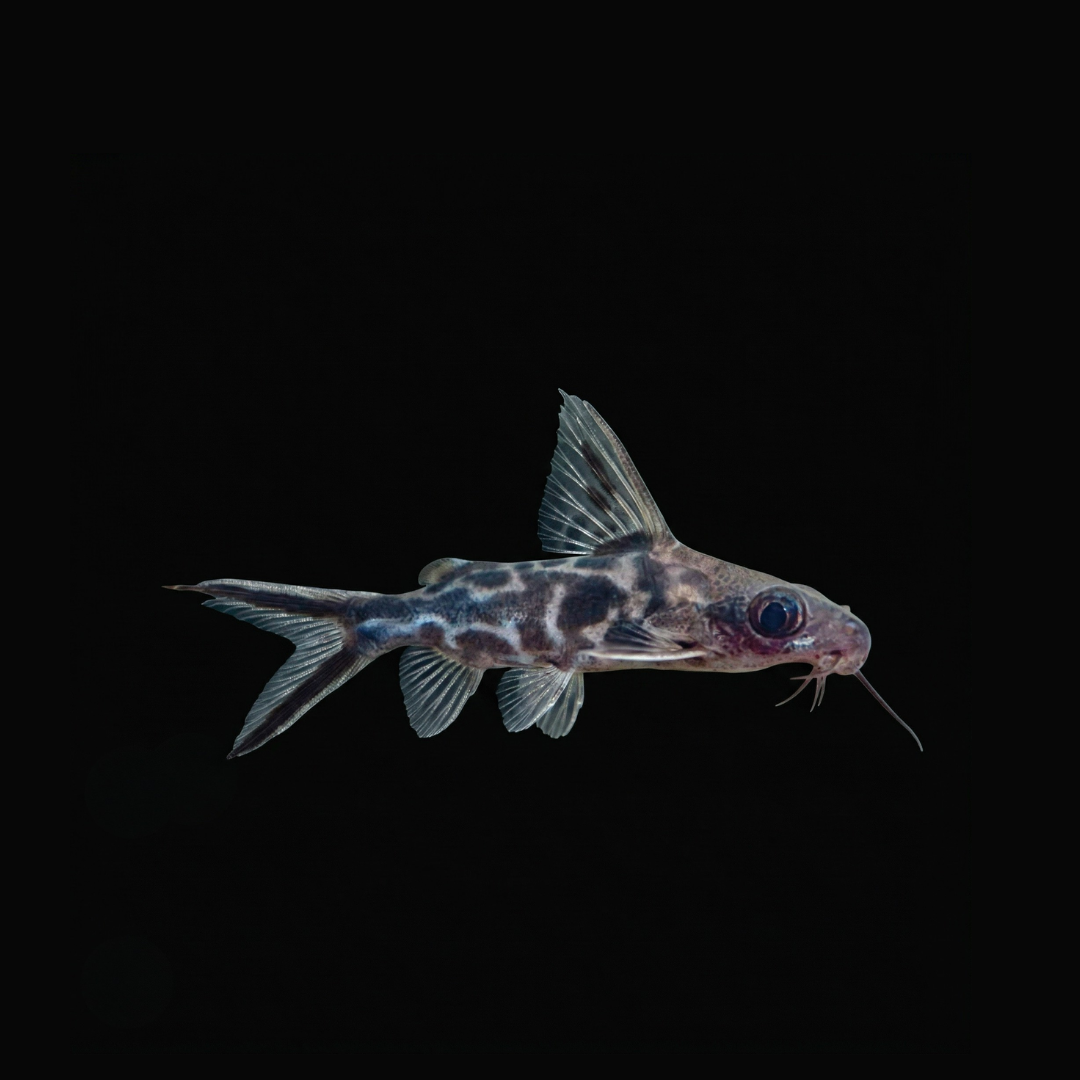
シノドンティス・プレウロプスは、アフリカのコンゴ川流域に深く根ざした、非常に個性的で魅力的なナマズです。最大の特徴は、何といってもその名の通り顔の側面に突出した巨大な瞳でしょう。この大きな眼は、光の届きにくい深場や夜間の活動において優れた視覚を提供します。また、下向きに強く湾曲した口先は、岩肌に付着した藻類や微生物を効率よく削り取るための高度な進化の証です。幼魚の頃は銀灰色の体に鮮やかな斑点模様が入り、観賞価値が非常に高いですが、成長とともに落ち着いた茶褐色のカモフラージュ色へと変化し、野性味あふれる堂々とした姿へと変貌を遂げます。Synodontis pleurops is a highly distinctive and fascinating catfish deeply rooted in the Congo River basin of Africa. Its most striking feature, as its name suggests, is the enormous eyes protruding from the sides of its head. These large eyes provide excellent vision in deep waters where light is scarce and during nocturnal activities. Furthermore, the snout, which curves sharply downward, is evidence of an advanced evolutionary adaptation for efficiently scraping algae and microorganisms off rock surfaces. While juveniles possess striking spots on a silver-gray body, making them highly attractive for aquariums, they transition into a calm brownish camouflage color as they mature, taking on a majestic and wild appearance.
基本情報 / Basic Information
学名 / Scientific Name
Synodontis pleurops
通称 / Common Name
シノドンティス・プレウロプスBig Eyed Synodontis
分類 / Family
ナマズ目サカサナマズ科シノドンティス属Mochokidae, Synodontis genus
英名 / English Name
Big Eyed Synodontis, Congo squeaker
分布 / Distribution
アフリカ:コンゴ川流域(中流から上流域)Africa: Congo River basin (Middle to Upper reaches)
最大体長 / Max Size
約23cm(野生下では最大32.5cmの記録あり)Approx. 23cm (Records of up to 32.5cm in the wild)
寿命 / Lifespan
5年〜8年以上5 to 8 years or more
飼育環境 / Aquarium Environment
水槽サイズ / Tank Size
若魚で110L(60cm規格水槽以上)、成魚や複数飼育では170L(90cm規格水槽以上)を推奨Recommended 110L (60cm standard tank or larger) for juveniles; 170L (90cm standard or larger) for adults or community groups.
水温 / Temperature
22度〜26度(高水温には弱いため、夏場の冷却対策が重要)22 to 26 degrees Celsius (Vulnerable to high temperatures; summer cooling is essential).
水質 / Water Quality
pH 6.0〜7.0(弱酸性から中性)、軟水から中硬水pH 6.0 to 7.0 (Weakly acidic to neutral), Soft to moderately hard water.
レイアウト / Layout
細かい砂を底に敷き、流木や岩で多くの隠れ家を作る。薄暗い照明が理想的。Use fine sand for the substrate and provide plenty of hiding spots with driftwood and rocks. Dim lighting is ideal.
注意点 / Precautions
非常に神経質な面があるため、落ち着ける暗がりを必ず用意してください。Since they are very skittish, be sure to provide dark areas where they can feel secure.
餌と給餌 / Feeding
餌の種類 / Diet
雑食性。沈下性ペレット、冷凍赤虫、茹でたエンドウ豆やキュウリなどの植物質。Omnivorous. Sinking pellets, frozen bloodworms, and vegetable matter such as boiled peas or cucumber.
給餌のポイント / Feeding Tips
野生では藻類への依存度が高いため、植物性の餌を定期的に与えることが健康維持の秘訣です。In the wild, they rely heavily on algae; providing plant-based food regularly is the key to maintaining their health.
性格と混泳 / Temperament and Tank Mates
性格 / Temperament
基本的におとなしいが、臆病で物陰に隠れることを好む。Generally peaceful but timid, preferring to hide in the shadows.
混泳の相性 / Compatibility
温和な中型魚(コンゴテトラなど)と好相性。攻撃的なシクリッドなどは避ける。Good compatibility with peaceful medium-sized fish (e.g., Congo Tetras). Avoid aggressive cichlids.
病気と対策 / Diseases and Prevention
かかりやすい病気 / Common Diseases
白点病、皮膚の細菌感染。Ich (White spot disease) and bacterial skin infections.
対策と予防 / Prevention
急激な水温変化を避け、底床を清潔に保つこと。薬品には敏感なため、規定量より薄めから使用する。Avoid sudden temperature changes and keep the substrate clean. Be cautious with medications as they are sensitive; start with lower dosages.
増やし方(繁殖) / Breeding
雌雄の判別 / Sexing
外見では困難。生殖突起を確認する専門的な手法(ベンティング)が必要。Difficult by appearance. Requires professional venting to check genital papillae.
繁殖形態 / Reproduction
卵生。自然界では増水期にペアで産卵を行う。Oviparous. In nature, pairs spawn during the rainy season’s rising waters.
繁殖のポイント / Breeding Tips
家庭用水槽での自然繁殖は極めて稀。流通個体の多くはホルモン剤を用いた商業繁殖によるものです。Natural breeding in home aquariums is extremely rare. Most available specimens are from commercial breeding using hormones.
雑学と豆知識 / Trivia and Fun Facts
1. 学名の由来と「大きな眼」の秘密 / 1. Origin of Scientific Name and the Secret of “Big Eyes”
種小名の「pleurops」は、ギリシャ語で「側面の眼」を意味します。その名の通り、頭部の横に張り出した巨大な眼球は、上方から下方まで広い視野を確保するための進化です。これは光の届かない濁った水域や夜間の活動において、捕食者の接近をいち早く察知し、餌を探し当てるために非常に役立っています。The specific epithet “pleurops” means “side eyes” in Greek. As the name implies, the huge eyeballs protruding from the sides of the head are an evolutionary adaptation to ensure a wide field of vision from above to below. This is extremely useful for detecting approaching predators and finding food in murky waters or during nighttime activities where light is scarce.
2. 特殊な「S字型」の歯を持つクリーナー / 2. A Cleaner with Unique “S-shaped” Teeth
プレウロプスの下顎には、アルファベットの「S」の字のように湾曲した可動式の歯が密集しています。これは岩の表面に生えた微細な藻類をスクレーパーのように掻き取るための、驚くべき機械的利点を持った構造です。野生下では、頭を下にして岩にしがみつき、この特殊な歯を使ってバイオフィルムを削り取る「お掃除役」としての側面も持っています。The lower jaw of Synodontis pleurops is densely packed with movable teeth curved like the letter “S.” This structure provides an incredible mechanical advantage, acting like a scraper to strip away microscopic algae from rock surfaces. In the wild, they act as “cleaners,” clinging to rocks with their heads down and using these specialized teeth to scrape off biofilms.
3. 「コンゴ・スクィーカー」鳴き声の正体 / 3. The Identity of the “Congo Squeaker”
このナマズには、水から出された時などに「ギーギー」と鳴く特徴があり、そこから「スクィーカー(鳴くもの)」という別名がつきました。これは喉で鳴いているのではなく、胸ビレの太い骨(棘条)を肩の骨の溝にこすり合わせて出す「摩擦音」です。仲間同士のコミュニケーションや、敵への威嚇に使われていると考えられています。This catfish has a characteristic of making a “squeaking” sound when taken out of water, earning it the nickname “squeaker.” This is not a vocalization from the throat but a “stridulation” produced by rubbing the thick spines of the pectoral fins against the grooves of the shoulder bones. It is thought to be used for communication between members of the same species or as a threat to enemies.
4. 逆さまに泳ぐのは「特技」であって「常態」ではない? / 4. Is Upside-Down Swimming a “Special Skill” or “Normal”?
サカサナマズ科に属するため、常に逆さまに泳ぐと思われがちですが、プレウロプスは基本的には腹を下にして泳ぎます。しかし、流木の裏や岩の隙間にある餌を食べる時には、器用に体を反転させて「逆さ泳ぎ」を見せることがあります。常に逆さまの近縁種とは違い、必要に応じて姿勢を変える高度な遊泳技術の持ち主なのです。Because it belongs to the Mochokidae family, people often assume it always swims upside down. However, Synodontis pleurops primarily swims with its belly down. Nevertheless, when eating food behind driftwood or in rock crevices, it can skillfully flip its body to swim upside down. Unlike its relatives that are always inverted, it is a master of advanced swimming techniques that change posture as needed.
まとめ / Conclusion
シノドンティス・プレウロプスは、その圧倒的な存在感を放つ大きな瞳と、コンゴ川の厳しい自然を生き抜くために進化した特殊な形態を持つ、まさに「生きた芸術品」です。一見すると地味な色彩に見えるかもしれませんが、成熟した個体が流木の影から大きな眼を覗かせる姿には、他の魚にはない独特の知性と野性味が感じられます。Synodontis pleurops is truly a “living work of art,” with its overwhelming presence reflected in its large eyes and a specialized morphology evolved to survive the harsh nature of the Congo River. While its colors may seem understated at first glance, a mature individual peering out from the shadows of driftwood with its large eyes exudes a unique intelligence and wildness not found in other fish.
飼育においては、日本の四季に合わせた厳密な水温管理と、落ち着けるレイアウト、そして植物質を意識した給餌が長期飼育の鍵となります。このコンゴの至宝を大切に育て上げることで、あなたのアクアリウムはより深みのある、豊かな生態系へと近づくことでしょう。In captivity, strict temperature management according to Japan’s seasons, a secure layout, and a diet rich in plant matter are the keys to long-term success. By carefully nurturing this treasure from the Congo, your aquarium will move closer to becoming a deeper and richer ecosystem.



 アイのアクアグッズ案内テトラミンって、こんなにあるの? アイとコタロウのごはん探究旅道具の特徴や使い方、選ぶときのポイントをアイが紹介します。記事はコチラ →
 アイのアクアグッズ案内水槽の流木の選び方|枝・マングローブ・アク抜きとおすすめ商品水槽に小さな森を作る流木。枝流木やマングローブという名前の違いから、魚の隠れ家、水草の取り付け、浮く・水が茶色くなるときの準備まで、アイとコタロウが商品とともに案内します。記事はコチラ →
 アイのアクアグッズ案内カルキ抜き・水質調整剤の選び方|水換えと水槽の種類に合わせて選ぶ道具の特徴や使い方、選ぶときのポイントをアイが紹介します。記事はコチラ →
 アイのアクアグッズ案内そのごはん、泳いでる! 卵から始めるブラインシュリンプの孵化と道具選び道具の特徴や使い方、選ぶときのポイントをアイが紹介します。記事はコチラ →



コメント