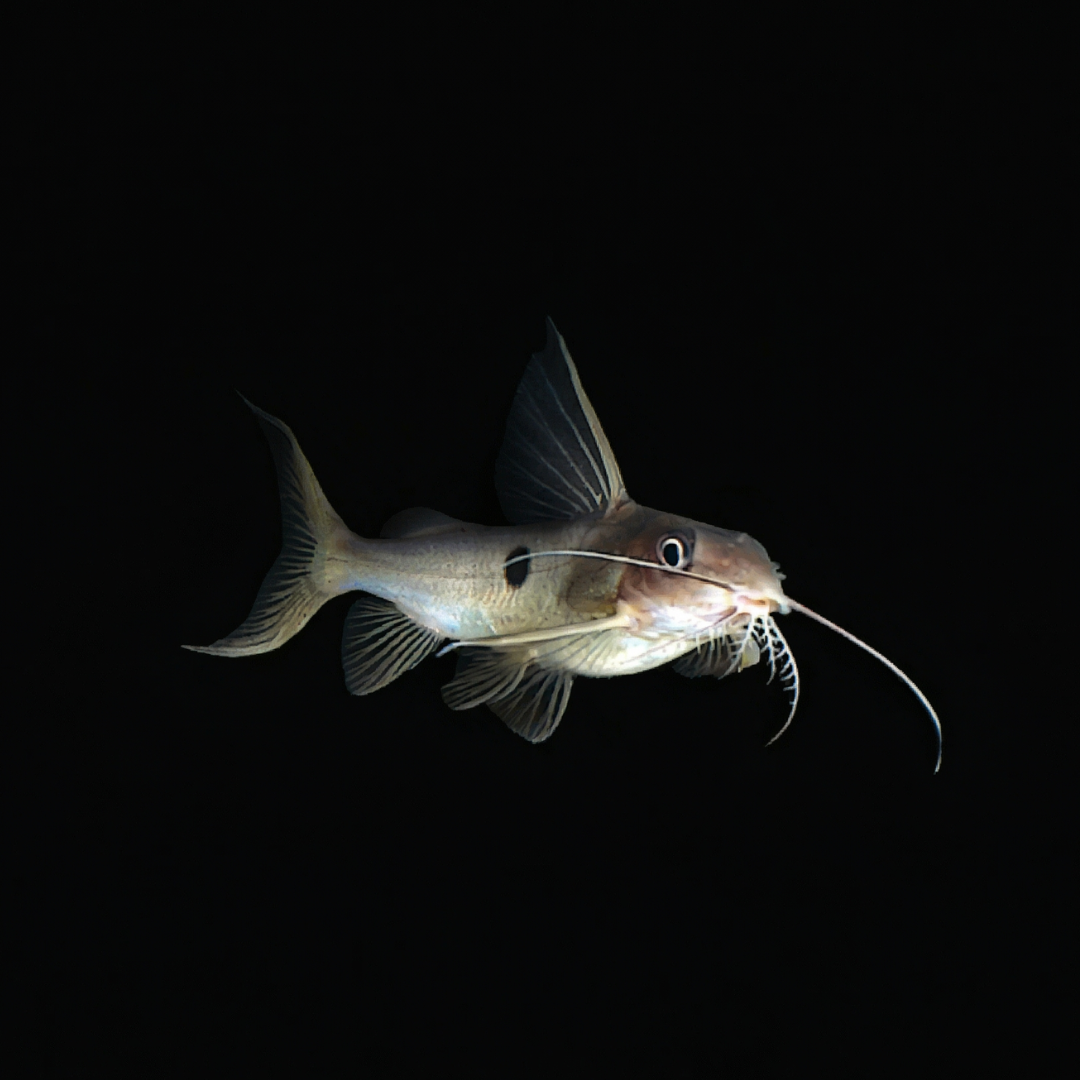
シノドンティス・ノタータスは、アフリカのコンゴ川流域に広く生息する、シノドンティス属の中でも非常に個性的で魅力あふれるナマズの仲間です。最大の特徴は、シルバーグレーの体側に浮かぶくっきりとした黒い斑点です。英名でワン・スポット・シノドンティスと呼ばれるように、通常は1つの斑点を持ちますが、個体によっては複数の斑点を持つものや無斑のものも存在し、そのバリエーションの豊かさがコレクター心をくすぐります。多くのシノドンティスが夜行性であるのに対し、本種は日中も活発に泳ぎ回る傾向があり、水槽内でもその姿を存分に楽しむことができます。健康な個体はエラ蓋の周りに美しい黄金色の光沢を放ち、大型水槽の底層を彩る存在として、日本のアクアリストの間でも古くから愛されています。Synodontis notatus is a highly distinctive and charismatic catfish widely distributed throughout the Congo River basin in Africa. Its most prominent feature is the bold black spots set against a silver-gray body. As the common name “One-spot Synodontis” suggests, individuals typically possess a single spot, though genetic diversity results in some having multiple spots or none at all, making them a favorite among collectors. Unlike many Synodontis species that are strictly nocturnal, this species is notably diurnal, frequently active during daylight hours. Healthy specimens exhibit a beautiful golden sheen around the operculum, making them a long-standing favorite for the lower levels of large display tanks among Japanese aquarists.
アフリカ:コンゴ川流域(コンゴ民主共和国、コンゴ共和国など)Africa: Congo River basin (DR Congo, Republic of the Congo)
最大体長 / Max Size
約25cmから26.5cmApprox. 25 cm to 26.5 cm
寿命 / Lifespan
約8年から12年(飼育下)Approx. 8 to 12 years in captivity
飼育環境 / Aquarium Environment
水槽サイズ / Tank Size
120cm規格水槽(約240L)以上を推奨Recommended: 120cm standard tank (approx. 240L) or larger
水温 / Temperature
22℃から26℃22°C to 26°C (72°F to 79°F)
水質 / Water Quality
pH 6.0から7.5(弱酸性から中性)、軟水から中硬水pH 6.0 to 7.5 (slightly acidic to neutral), soft to medium-hard water
レイアウト / Layout
繊細なヒゲを傷つけないよう角のない細かい砂(田砂など)を敷き、流木や岩、塩ビ管などで複数の隠れ家を用意してください。Use fine, smooth sand to protect delicate barbels. Provide multiple hiding spots using driftwood, rocks, or PVC pipes.
注意点 / Precautions
大食漢で水を汚しやすいため、強力な濾過フィルターが必要です。また、胸鰭の棘が非常に鋭いため、取り扱いには注意してください。Requires strong filtration due to high waste production. Use caution when handling as the pectoral spines are extremely sharp.
餌と給餌 / Feeding
餌の種類 / Diet
雑食性。ナマズ用沈下性タブレット、冷凍アカムシ、クリル、さらに茹でたほうれん草などの植物質もバランスよく与えます。Omnivorous. Provide sinking pellets for catfish, frozen bloodworms, krill, and supplementary vegetable matter such as blanched spinach.
給餌のポイント / Feeding Tips
基本的には日中も食べますが、消灯後や夕方に与えるとより活発に摂食します。植物質の餌は消化を助け、健康維持に重要です。While active during the day, they feed most vigorously at dusk or after lights out. Vegetable matter is vital for digestion and long-term health.
性格と混泳 / Temperament and Tank Mates
性格 / Temperament
他種に対しては比較的温和ですが、同種や近縁のシノドンティスに対しては強い縄張り意識を持ちます。Generally peaceful toward other species, but highly territorial toward its own kind and closely related Synodontis species.
混泳の相性 / Compatibility
中・大型のカラシンやアフリカン・シクリッド、ポリプテルスなどの古代魚と好相性です。口に入る小型魚やエビは捕食されます。Compatible with medium-to-large characins, African cichlids, and ancient fish like Polypterus. Small fish and shrimp will be eaten.
病気と対策 / Diseases and Prevention
かかりやすい病気 / Common Diseases
白点病、尾腐れ病、水質悪化による皮膚の荒れ。Ich (White spot disease), fin rot, and skin irritation due to poor water quality.
対策と予防 / Prevention
週に一度の定期的な水換えで清潔な水質を保ち、水温を安定させることが最大の予防です。導入時のpHショックにも注意しましょう。Maintain clean water with weekly water changes and keep the temperature stable. Avoid pH shock during acclimation.
増やし方(繁殖) / Breeding
雌雄の判別 / Sexing
成魚では雌のほうが腹部がふっくらと丸みを帯びます。正確には生殖乳頭の形状で判別しますが、若魚での判別は困難です。Adult females have rounder bellies. Accurate sexing requires examination of genital papillae, which is difficult in juveniles.
繁殖形態 / Reproduction
卵生。自然界では雨季の増水に合わせて産卵行動を行う「卵ばらまき型」と考えられています。Oviparous. In nature, they are believed to be egg scatterers that spawn during the rainy season’s rising water levels.
繁殖のポイント / Breeding Tips
飼育下での自然繁殖例は極めて稀です。国内流通個体はほぼ野生採集個体であり、広い環境と水温・水位の変化が必要とされます。Natural breeding in home aquaria is extremely rare. Most available specimens are wild-caught, and spawning likely requires large environments with seasonal shifts.
雑学と豆知識 / Trivia and Fun Facts
1. 「ワン・スポット」という名の矛盾 / 1. The Paradox of the “One-spot” Name
学名のnotatusは「印のある」という意味で、英名のOne-spotは体側の黒い斑点に由来します。しかし面白いことに、この斑点は必ずしも1つではありません。遺伝的な多様性が高く、斑点が2つ、3つ、あるいは10個以上並ぶ個体もいれば、全く斑点がない個体も存在します。かつては斑点の数で別種や亜種とされたこともありましたが、現在ではすべて同じノタータスの個体差であると整理されています。The scientific name “notatus” means “marked,” referring to the black spots on its body. Interestingly, this fish doesn’t always have just one spot despite its common name. High genetic polymorphism means some individuals have two, three, or even over ten spots, while others are spotless. Historically, these variations led to classification as separate species or subspecies, but they are now all recognized as individual variations within Synodontis notatus.
2. 車のブレーキと同じ仕組み?「鳴くナマズ」の秘密 / 2. The Secret of the “Squeaking Catfish”: Like Car Brakes
シノドンティスは英語でSqueakers(鳴くもの)と呼ばれます。これは身を守る際などに「ギィギィ」と大きな音を出すためです。この音は、胸鰭の付け根にある突起を関節の溝に力強くこすりつけて発生させています。生物音響学の研究では、この摩擦の仕組みは「走行中の車のホイールにブレーキパッドが押し付けられた時に出る摩擦音」と物理的に全く同じ原理であると説明されており、自然界の驚くべき進化を感じさせます。Synodontis are often called “Squeakers” because they produce loud creaking sounds when threatened. This noise is generated by rubbing the base of the pectoral spine against a groove in the shoulder girdle. Bioacoustical research compares this mechanism to the friction of a car’s brake pads against a wheel—a remarkable evolutionary feat for underwater communication and defense.
3. 網の使用は厳禁!鋭い棘の防御システム / 3. Strictly No Nets: The Sharp Spine Defense System
本種の背鰭と胸鰭の棘には、鋭いノコギリのような逆向きのトゲ(鋸歯)が備わっています。一度網で掬ってしまうと、このトゲが網の目に深く絡まり、魚がパニックを起こして棘を直角にロックしてしまいます。無理に外そうとすると魚が致命傷を負ったり、飼育者の手に刺さって激痛を伴う化膿を引き起こす危険があります。移動の際は必ずプラケースなどを使用し、水ごと掬うようにしましょう。The pectoral and dorsal spines of this species feature sharp, backward-facing serrations. If caught in a fish net, these serrations snag deeply, causing the fish to panic and lock its spines into place. Attempting to untangle them can lead to fatal injuries for the fish or painful, infected puncture wounds for the keeper. Always use a plastic container to scoop them up along with water.
4. ナマズ界の「お掃除役」としての実力 / 4. Prowess as an “Utility Fish” in the Catfish World
アクアリウムにおいて、本種は大型魚の食べ残しを処理する「お掃除役」として非常に優秀です。下顎にあるS字型に曲がった特殊な歯は、流木や底床の隙間に入り込んだ餌を削り取るように食べるのに適しています。しかし、単なる掃除役としてだけでなく、定期的にプレコ用のタブレットや野菜を与えて、食物繊維を補給してあげることが長期飼育のコツです。In aquariums, this species excels as a “utility fish,” scavenging leftover food from larger tank mates. Its specialized, S-shaped lower teeth are perfect for rasping food out of crevices in driftwood or substrate. However, they should not be treated solely as scavengers; providing high-fiber treats like algae wafers or vegetables is key to their longevity.
まとめ / Conclusion
シノドンティス・ノタータスは、その強健な性質と、1つとして同じ配置のない斑点模様の美しさから、中・大型水槽のタンクメイトとして最高級の魅力を備えた魚です。日中も元気に泳ぎ回るその姿は、水槽の底層に活気を与えてくれます。With its hardy nature and beautiful spot patterns—no two of which are exactly alike—Synodontis notatus is a top-tier choice for medium-to-large display tanks. Its energetic swimming during the day brings a dynamic presence to the lower levels of the aquarium.
適切にメンテナンスされた120cm以上の規格水槽であれば、10年近くにわたって良きパートナーとなってくれるでしょう。鋭い棘にさえ注意すれば、これほど飼いやすく、かつ観察のしがいがあるアフリカ産ナマズは他にいません。ぜひ、あなただけのお気に入りの模様を持つ個体を探してみてください。In a well-maintained 120cm standard tank, this fish will be a steadfast companion for nearly a decade. As long as you respect their sharp spines, few African catfish are as rewarding and easy to keep. We encourage you to find an individual with a pattern that speaks uniquely to you.
Vaillant, L. L. (1893). Contribution à l’étude de la faune ichthyologique du Congo. Bulletin de la Société philomathique de Paris, 8(5), 13-16.(本種の原記載論文)
Parmentier, E., et al. (2010). Sound production in Synodontis notatus (Mochokidae). Journal of Experimental Biology, 213(8).(生物音響学・摩擦発音に関する研究)
Poll, M. (1971). Révision des Synodontis africains (Famille Mochocidae). Annales du Musée Royal de l’Afrique Centrale, 191, 1-497.(分類学的再編の基礎資料)



 アイのアクアグッズ案内水槽用ヒーターの選び方|固定式・温度調節式と、水量に合うW数の考え方水槽の魚は冬に寒くない? アイとコタロウが水温計から固定式・温度調節式・分離式ヒーターまで比較。水量と室温に合うW数、設置場所、水換えや交換の注意点を、国内メーカーの商品とともに紹介します。記事はコチラ →
 アイのアクアグッズ案内水換え・底砂掃除の道具の選び方|砂利・砂・ソイルに合うクリーナーとポンプ道具の特徴や使い方、選ぶときのポイントをアイが紹介します。記事はコチラ →
 アイのアクアグッズ案内水草水槽のCO₂添加|3つの方式の選び方とおすすめ用品道具の特徴や使い方、選ぶときのポイントをアイが紹介します。記事はコチラ →
 アイのアクアグッズ案内お魚を撮ったのに、ボクが写ってる! スマホで楽しむ水槽撮影と便利な道具道具の特徴や使い方、選ぶときのポイントをアイが紹介します。記事はコチラ →




コメント