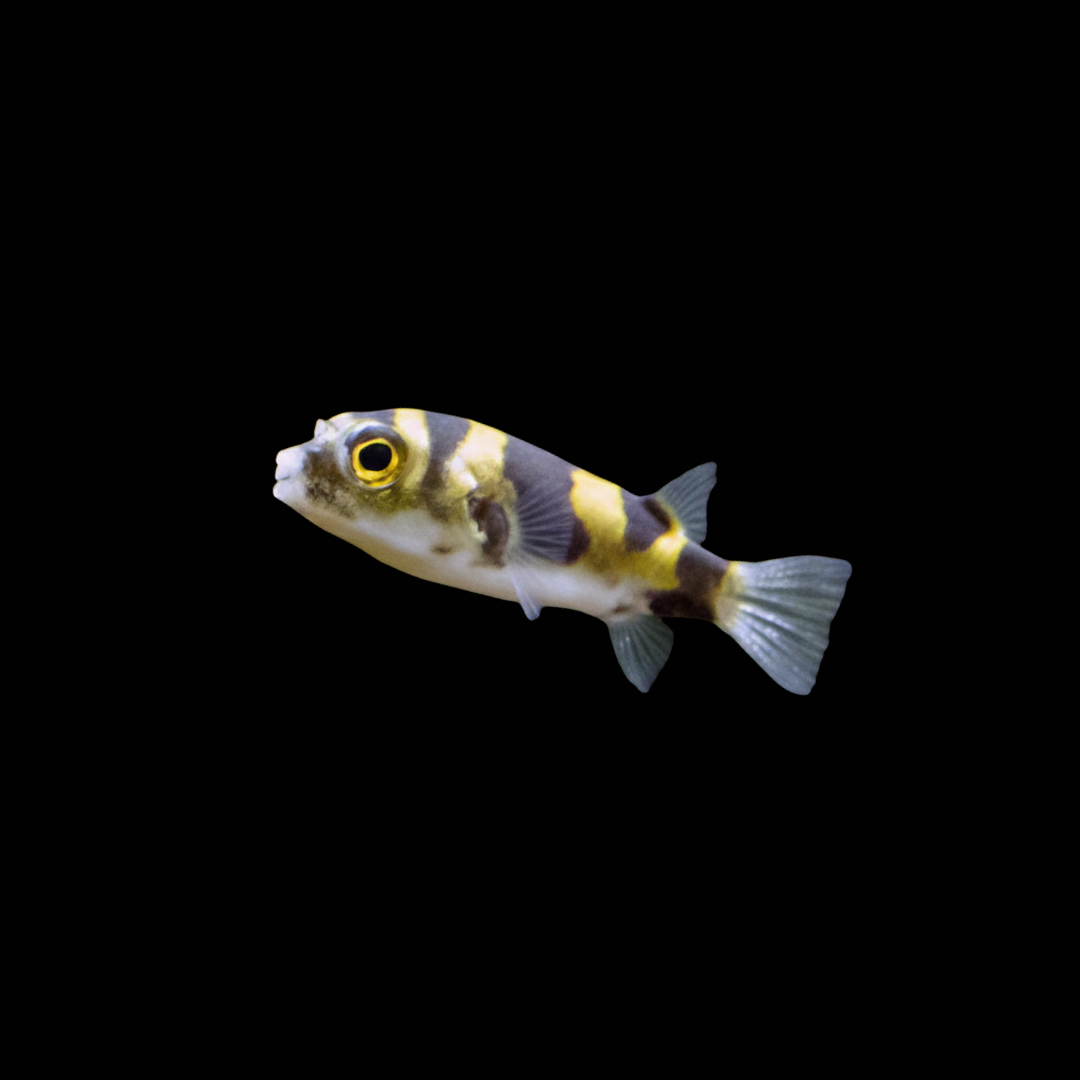
南米淡水フグは、南アメリカ大陸のアマゾン川水系などに生息する、完全な純淡水性のフグです。ミツバチのような可愛らしい縞模様と、白いお腹が特徴的な小型種で、観賞魚として世界中で愛されています。フグの仲間としては珍しく、活発に泳ぎ回り、仲間同士で群れを作って生活する社会性を持っています。非常に知能が高く、飼い主の顔を覚えて水槽の前面で愛嬌たっぷりに餌をねだる姿は、多くの飼育者を虜にしています。ただし、汽水環境ではなく軟水の純淡水を好む点や、生涯伸び続ける歯の定期的なメンテナンスが必要である点など、飼育には正しい専門知識が求められる奥深い熱帯魚です。The South American Puffer (Colomesus asellus) is a true freshwater pufferfish native to the Amazon River basin in South America. Known for its bee-like stripes and white belly, this small species is a popular ornamental fish worldwide. Unusually for pufferfish, it is highly active and highly social, naturally forming shoals. They are very intelligent, recognizing their owners and begging for food at the front of the tank. However, keeping them requires specialized knowledge, as they need pure, soft freshwater (not brackish water) and require regular dental maintenance due to their continuously growing teeth.
基本情報 / Basic Information
学名 / Scientific Name
Colomesus asellus
通称 / Common Name
南米淡水フグ、アマゾンパファー、ペルーパファーAmazon puffer, Peruvian puffer, South American Puffer (SAP)
分類 / Family
フグ目フグ科Tetraodontiformes, Tetraodontidae
英名 / English Name
Amazon puffer
分布 / Distribution
南アメリカ大陸(アマゾン川、エセキボ川、オリノコ川の各水系)South America (Amazon, Essequibo, and Orinoco river basins)
最大体長 / Max Size
約7〜8cm(野生環境下での最大記録は約12.8cm)About 7-8 cm in captivity (up to 12.8 cm in the wild)
寿命 / Lifespan
8〜10年8 to 10 years
飼育環境 / Aquarium Environment
水槽サイズ / Tank Size
60cm規格水槽(約65リットル)以上を強く推奨。非常によく泳ぎ回り、群れでの飼育が基本となるため、ゆとりのある遊泳空間が必要です。A standard 60cm tank (approx. 65 liters) or larger is highly recommended. Because they are active swimmers and should be kept in groups, ample swimming space is essential.
水温 / Temperature
25〜28度程度(常に清潔で温かい環境を保つこと)25 – 28 degrees Celsius (maintain a clean and warm environment)
水質 / Water Quality
軟水かつ弱酸性から中性。純淡水魚であるため、塩分の添加(汽水環境)は厳禁です。Soft, slightly acidic to neutral water. As true freshwater fish, the addition of salt (brackish conditions) is strictly prohibited.
レイアウト / Layout
バリスネリアなどの背の高い水草を背景に密植し、視覚的な遮蔽物を設けることで好奇心を刺激します。底生フグが好む土管などの隠れ家はあまり意味をなしません。また、溶存酸素量の高い河川環境を再現するため、強力なフィルターによる水流と十分なエアレーションが必須です。Plant tall aquatic plants like Vallisneria densely in the background to create visual barriers and stimulate their curiosity. Caves or typical hiding spots are largely ignored. Strong filtration providing good water flow and heavy aeration are essential to replicate their oxygen-rich riverine habitat.
注意点 / Precautions
活発なため水槽からの飛び出し事故が非常に多いです。隙間のない頑丈な蓋を必ず設置してください。また、鱗を持たないため白点病などの寄生虫や水質悪化、薬品に対して極めて敏感です。脅威を感じると空気を吸い込んで体を膨らませますが、水槽内で人為的に膨らませる行為は致命的なストレスとなるため絶対に避けてください。They are prone to jumping out of the tank due to their high activity levels; a tight-fitting, sturdy lid is mandatory. Lacking scales, they are extremely sensitive to parasites like Ich, poor water quality, and medications. Never deliberately provoke them to inflate, as swallowing air or stress can be fatal.
餌と給餌 / Feeding
餌の種類 / Diet
生きたイトミミズ、冷凍アカムシ、ミジンコなどを好みますが、歯を摩耗させるためにサカマキガイやラムズホーンなどの巻貝、フリーズドライのクリル(オキアミ)といった硬い餌を定期的に与える必要があります。They prefer live blackworms, frozen bloodworms, and daphnia. However, they must be regularly fed hard, crunchy foods like bladder snails, ramshorn snails, or freeze-dried krill to wear down their continuously growing teeth.
給餌のポイント / Feeding Tips
人工飼料(ペレット)には餌付きにくく、偏食しがちです。最も注意すべきは、柔らかい餌ばかりを与え続けると歯が伸びすぎて口が開かなくなり、餓死してしまう点です。栄養バランスに加え、物理的な「硬さ」を考慮した給餌メニューを組むことが命綱となります。They are often picky eaters and may resist artificial pellets. Crucially, a diet of only soft foods will lead to overgrown teeth, preventing them from eating and eventually causing starvation. A feeding regimen that incorporates physical “crunch” alongside nutritional balance is vital.
性格と混泳 / Temperament and Tank Mates
性格 / Temperament
日中を通して休むことなく泳ぎ回る、非常に活発な性格です。フグ科としては極めて例外的に、完全な群れを形成して生活する高い社会性を持ちます。視覚的な認知能力が高く、飼い主にとてもよく懐きます。They are extremely active “busy cruisers,” swimming constantly throughout the day. Unusually for pufferfish, they possess high social intelligence and live in complete shoals. They have excellent visual recognition and bond closely with their owners.
混泳の相性 / Compatibility
本種同士の複数飼育を強く推奨します。最低6匹以上、理想は8〜12匹の群れで飼育すると、自然界のような協調的な群泳が観察できます。他種との混泳は、特有の好奇心からヒレをかじる傾向があるため注意が必要です。混泳させる場合は、同サイズで泳ぎの速いテトラ類などを選びます。動きの遅い魚やヒレの長い魚、そして水槽の掃除役となるエビや巻貝は捕食対象となるため混泳できません。南米淡水フグだけの専用水槽を作ることが最も確実で安全です。Keeping them in conspecific groups is highly recommended. A shoal of at least 6, ideally 8-12, encourages natural, cooperative behavior. Caution is needed with other species, as their curiosity leads to exploratory fin-nipping. If mixed, choose fast-swimming tetras of similar size. Slow-moving, long-finned fish, and cleanup crews like shrimp or snails will be preyed upon. A species-only aquarium is the safest and most rewarding approach.
病気と対策 / Diseases and Prevention
かかりやすい病気 / Common Diseases
白点病などの外部寄生虫感染にかかりやすいです。また、病気というより物理的な障害として、歯の過長症(伸びすぎ)が最も頻繁に発生する深刻な問題です。環境面では、重金属などの水質汚染に対して非常に脆弱です。They are highly susceptible to external parasitic infections like Ich. The most frequent and serious issue is a physical one: overgrown teeth (odontoma). Environmentally, they are extremely vulnerable to water pollution, particularly heavy metals.
対策と予防 / Prevention
多くのフグ治療で用いられる「塩水浴(塩の添加)」は、本種にとっては浸透圧調整機能に致命的な負荷を与え寿命を縮めるため、絶対に行わないでください。常に清潔な軟水を維持することが最大の予防です。歯が伸びすぎてしまった場合は、安全のために魚用麻酔薬を使用し、ニッパーなどで外科的に歯を切り落とす「トリミング」という専門的な処置が必要になります。Never use “salt baths,” a common treatment for other puffers, as it places a fatal strain on their osmoregulation and shortens their lifespan. Maintaining pristine soft water is the best prevention. If teeth become overgrown, specialized surgical trimming using fish anesthetics and clippers is required to ensure the fish’s safety.
増やし方(繁殖) / Breeding
繁殖形態 / Reproduction
一般的な淡水フグが親魚による卵の保護を行うのに対し、本種は増水期に集団で産卵し、卵の世話を一切しない「多産・浮遊型」の戦略をとります。孵化した小さな仔魚は、川の流れに乗って餌の豊富な氾濫原へと流されながら成長します。Unlike common freshwater puffers that guard their eggs, this species adopts a pelagic broadcast spawning strategy. They spawn in large groups during the flood season and do not care for the eggs. The newly hatched, tiny larvae are carried by the current into nutrient-rich floodplains to grow.
繁殖のポイント / Breeding Tips
長距離を回遊する生態と、浮遊性の仔魚を育てるための初期餌料の確保が難しいため、一般的な家庭の水槽環境下での自然繁殖は事実上不可能とされています。そのため、現在流通している個体はすべて野生採集されたものです。Due to their migratory ecology and the difficulty of providing initial food for the pelagic larvae, natural breeding in a typical home aquarium is considered virtually impossible. Therefore, all specimens currently in the trade are wild-caught.
雑学と豆知識 / Trivia and Fun Facts
1. テトロドトキシンを持たないフグ / 1. A Puffer Without Tetrodotoxin
フグといえば猛毒のテトロドトキシンを思い浮かべますが、アマゾン川の野生の南米淡水フグを調査した結果、この毒はほとんど検出されませんでした。代わりに彼らが持っているのは、サキシトキシンという麻痺性の貝毒です。もちろん人間が食べるのは大変危険ですが、毒は体内に蓄積されているため、水槽の掃除や水換えなどの通常のお世話で人間が中毒になる心配はありません。ペットとして安心して接することができます。While pufferfish are famous for the deadly tetrodotoxin, studies on wild Amazon puffers revealed almost none. Instead, they accumulate a paralytic shellfish toxin called saxitoxin. While eating them would be fatal, the toxin is stored internally, meaning there is zero risk of poisoning to humans during normal aquarium maintenance. They are perfectly safe pets to interact with.
2. アマゾンの鼓動に合わせて旅をする回遊魚 / 2. Migrants Moving to the Pulse of the Amazon
彼らはただ川底にじっとしている魚ではありません。アマゾン川の季節的な増水と渇水、いわゆる「洪水パルス」に合わせて数千キロもの距離を移動する壮大な回遊魚なのです。雨季になって森が水没すると、彼らは広大な氾濫原へと泳ぎ出し、豊富な餌を食べて急成長します。水槽内で彼らが休むことなく泳ぎ続けるのは、この野生の回遊本能が脈々と受け継がれているからなのかもしれません。They are not just sedentary bottom-dwellers. They are magnificent migratory fish that travel thousands of kilometers in sync with the Amazon River’s seasonal “flood pulse.” When the rains submerge the forests, they swim into the vast floodplains to gorge on abundant food and grow rapidly. Their restless swimming in the aquarium is likely a manifestation of this deeply ingrained migratory instinct.
3. 獣医学的ケア:小さなフグの歯科手術 / 3. Veterinary Care: Dental Surgery for Tiny Puffers
南米淡水フグを飼育する上で避けて通れないのが、伸び続ける歯のケアです。自然界で貝などを噛み砕くことで削れる歯ですが、水槽内ではどうしても伸びすぎてしまいます。そのため、数ヶ月から1年に一度、魚用の麻酔薬(クローブオイルなど)で眠らせ、キューティクルニッパーなどを使って丁寧に歯を切り落とすという、まるで小さな歯科手術のような作業が必要になります。これは彼らの命を繋ぐ大切なメンテナンスです。An unavoidable aspect of keeping these puffers is managing their ever-growing teeth. In the wild, eating hard shells wears them down, but in captivity, they inevitably overgrow. Consequently, every few months to a year, a delicate procedure akin to miniature dental surgery is required: the fish is sedated with fish anesthetics (like clove oil), and the teeth are carefully trimmed using cuticle nippers. This is vital maintenance to save their lives.
4. 水族館での快挙!世界初の人工繁殖成功 / 4. Aquarium Triumph! World’s First Artificial Breeding
長らく水槽内での繁殖は不可能とされてきましたが、日本の大阪にある生きているミュージアム「NIFREL(ニフレル)」が歴史的な快挙を成し遂げました。ホルモン剤を用いて親魚を成熟させ、人工授精を行うという高度な技術により、2023年に世界で初めて繁殖に成功し、立派な若魚へと育て上げたのです。この成功は、将来的に自然の生態系を守りつつ、養殖された元気なフグたちが私たちの水槽にやってくる未来への大きな第一歩となりました。While captive breeding was long deemed impossible, “NIFREL,” a living museum in Osaka, Japan, achieved a historic breakthrough. By using hormones to induce maturation in adult fish and performing artificial insemination, they successfully bred and raised them to juvenile stage for the first time in the world in 2023. This monumental success is a major step towards a future where sustainably captive-bred puffers, protecting natural ecosystems, can be available for our aquariums.
まとめ / Conclusion
南米淡水フグは、美しい縞模様と愛嬌のある仕草で私たちを癒してくれる、非常に魅力的な熱帯魚です。彼らが見せる仲間同士の群泳や、飼い主を見つめて餌をねだる賢い行動は、単なる観賞魚という枠を超え、まるでコンパニオンアニマルのような深い絆を感じさせてくれます。The South American Puffer is an incredibly charming tropical fish that soothes us with its beautiful stripes and endearing gestures. Their cooperative shoaling behavior and their intelligent habit of recognizing their owners and begging for food transcend the boundaries of mere ornamental fish, fostering a deep bond akin to that with a companion animal.
しかし、その愛らしさの裏には、純淡水環境の維持や、麻酔を用いた歯の定期的なトリミングといった、専門的で少しハードルの高いお世話が必要です。「汽水が必要」といった誤った情報に惑わされず、彼らの本当の生態を理解し、正しい知識と愛情を持ってお迎えすることが何よりも大切です。適切な環境さえ整えれば、彼らは10年近くもあなたの素晴らしいパートナーとして水槽の中で輝き続けてくれることでしょう。However, behind this charm lies the need for specialized and somewhat demanding care, such as maintaining a pure freshwater environment and performing regular dental trimming under anesthesia. It is paramount not to be misled by false information like “they need brackish water,” but to truly understand their ecology and welcome them with correct knowledge and love. With the right environment, they will continue to shine as your wonderful aquatic partners for nearly a decade.
Müller, J. P., & Troschel, F. H. (1849). Fische. In: Reisen in Britisch-Guiana in den Jahren 1840-1844.
Amaral, C. R., et al. (2013). Reassessment of the freshwater pufferfish Colomesus asellus (Tetraodontiformes: Tetraodontidae). (Colomesus tocantinensisに関する分類学的再評価)
Fricke, R., Eschmeyer, W. N. & Van der Laan, R. (eds). Eschmeyer’s Catalog of Fishes: Genera, Species, References.
Froese, R. and D. Pauly. Editors. FishBase.
Oliveira, J. S., et al. (2006). Toxicity of the freshwater puffer fish Colomesus asellus and its relationship to the diet. (サキシトキシン等の毒性プロファイルに関する研究)



 アイのアクアグッズ案内水草の肥料の選び方|底床用・液肥・メネデールの使い分け道具の特徴や使い方、選ぶときのポイントをアイが紹介します。記事はコチラ →
 アイのアクアグッズ案内水草用ライトの選び方|緑の絨毯と赤い水草を楽しむ照明・植栽用品道具の特徴や使い方、選ぶときのポイントをアイが紹介します。記事はコチラ →




コメント