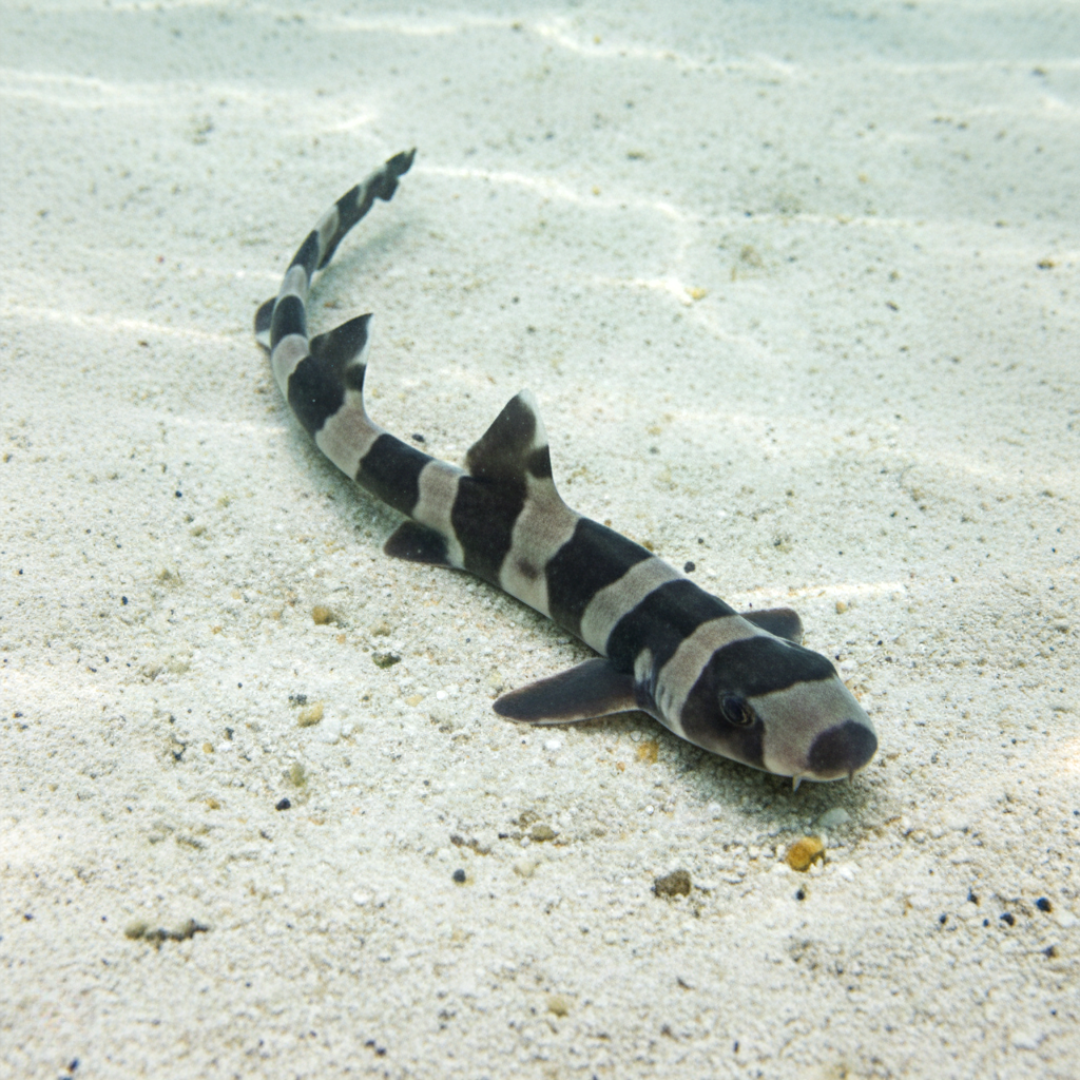
彼らは海底を泳ぐだけでなく、発達した胸ビレを使って岩場を器用に「歩く」姿が愛らしく、世界中の水族館やアクアリストから親しまれています。非常に強靭な生命力を持ち、サメの中では飼育しやすい部類に入りますが、1メートルを超える大型種であるため、飼育には相応の覚悟と設備が必要です。The Brownbanded bamboo shark (Chiloscyllium punctatum) is a bottom-dwelling shark found in warm waters ranging from southern Japan to northern Australia. One of their most striking features is the dramatic change in appearance as they grow. Juveniles display distinct black and white bands, resembling bamboo (hence the name “Bamboo Shark”), while adults lose these patterns and develop a solid brownish color.
Known for their ability to “walk” along the seabed using their developed pectoral fins, they are a favorite among public aquariums and hobbyists worldwide. While they are incredibly hardy and considered one of the easier sharks to keep, they grow to over a meter in length, requiring significant commitment and large facilities.
西太平洋、インド洋(日本南部〜オーストラリア北部)Indo-West Pacific (Southern Japan to Northern Australia)
最大体長 / Max Size
約100cm〜130cmApprox. 100cm – 130cm (3.3 – 4.3 ft)
寿命 / Lifespan
飼育下で20年以上(長寿)20+ years in captivity
飼育環境 / Aquarium Environment
水槽サイズ / Tank Size
【幼魚】90cm規格水槽(約150L)でも一時的に可 【成魚】120cmワイド水槽(奥行60cm以上)、理想は180cm水槽(約500L〜)または総水量680L以上を推奨。底面積の広さが重要です。Juveniles: 150L (40 gal) temporarily. Adults: 680L (180 gal) minimum, ideally larger with a wide footprint.
水温 / Temperature
24〜28℃
水質 / Water Quality
pH 8.0〜8.4、比重 1.023〜1.026。高い濾過能力(プロテインスキマー必須)が求められます。pH 8.0-8.4, SG 1.023-1.026. High filtration capacity (Protein Skimmer) is essential.
レイアウト / Layout
腹部を守るため、細かいサンゴ砂を厚めに敷くことが必須です。隠れ家となる岩組みは、崩れないよう強固に固定してください。Fine coral sand is essential to protect their belly. Secure rock structures firmly to create hiding caves.
注意点 / Precautions
飛び出し事故が多いため、重石をした蓋やボルト止めの蓋が必須です。また、銅イオンに弱いため、魚病薬の使用には注意が必要です。Secure lids are mandatory to prevent jumping. Highly sensitive to copper; avoid copper-based medications.
餌と給餌 / Feeding
餌の種類 / Diet
肉食性です。イカの切り身、殻付きエビ、アサリ、小魚(ワカサギなど)を与えます。Carnivorous. Squid, shrimp (with shell), clams, and small fish (smelt).
給餌のポイント / Feeding Tips
栄養の偏りを防ぐため、必ずサメ用のビタミン剤やヨウ素を添加してください(甲状腺腫の予防)。幼魚は毎日、成魚は週3〜4回が目安です。Use shark vitamins and iodine supplements to prevent goiter. Feed juveniles daily; adults 3-4 times a week.
性格と混泳 / Temperament and Tank Mates
性格 / Temperament
サメの中では極めて温厚で、人間を襲うことはありません。日中は岩陰で休み、夜間に活発になります。Extremely docile and poses no threat to humans. Rests in caves during the day and becomes active at night.
混泳の相性 / Compatibility
口に入らないサイズの大型魚(ヤッコ、ハギ、ハタなど)とは混泳可能です。口に入る小魚や甲殻類(エビ・カニ)は捕食対象となるため混泳できません。Compatible with large fish (Angelfish, Tangs, Groupers) that don’t fit in their mouth. Small fish and crustaceans will be eaten.
病気と対策 / Diseases and Prevention
かかりやすい病気 / Common Diseases
ヨウ素欠乏による甲状腺腫(喉の腫れ)や、底砂がない環境での腹部の擦れ・細菌感染が多く見られます。Goiter (iodine deficiency) and bacterial infections from rubbing against bare tank bottoms.
対策と予防 / Prevention
適切な底砂を敷くこと、餌にビタミンとヨウ素を添加することで予防可能です。Prevent by providing a sandy substrate and supplementing their diet with vitamins and iodine.
増やし方(繁殖) / Breeding
繁殖形態 / Reproduction
卵生です。「人魚の財布」と呼ばれる丈夫な殻に入った卵を産みます。孵化まで約3〜5ヶ月かかります。Oviparous (egg-laying). Females lay eggs in tough cases known as “mermaid’s purses.” Hatching takes 3-5 months.
繁殖のポイント / Breeding Tips
非常に多産で、適切な環境では頻繁に産卵します。卵での流通もあり、家庭での孵化も楽しめます。Prolific breeders in captivity. Eggs are often available for purchase and can be hatched in home aquariums.
雑学と豆知識 / Trivia and Fun Facts
1. 驚異の低酸素耐性 / 1. Hypoxia Tolerance
イヌザメは、干潮時のタイドプール(潮だまり)に取り残されても生き延びるため、極めて高い低酸素耐性を持っています。研究によると、水から出た状態でも最大12時間生存できた記録があり、一時的に血液の性状を変えたり、脳の代謝を調整したりして過酷な環境を耐え抜きます。Adaptable to tide pools, they have extreme hypoxia tolerance. Studies show they can survive out of water for up to 12 hours by altering their blood properties and brain metabolism.
2. 陸上を「歩く」メカニズム / 2. Walking Mechanics
彼らの胸ビレと腹ビレは筋肉質で柔軟性が高く、まるで四足動物のように交互に動かして海底を這うことができます。この動きは、脊椎動物が海から陸へ進出した進化の過程を解き明かすヒントとして、バイオメカニクスの分野でも注目されています。Their muscular, flexible fins allow them to “walk” on the seabed with an alternating gait, offering insights into how vertebrates might have first transitioned from water to land.
イヌザメのメスは、一度の交尾で得た精子を体内で最長45ヶ月(約4年)も生きたまま貯蔵し、受精卵を産み続けることができます。さらに、オスと一度も接触していないメスが単独で子を産む「単為生殖(処女懐胎)」も確認されており、種の存続にかける執念とも言える生存戦略を持っています。Females can store sperm for up to 45 months after mating. Furthermore, “parthenogenesis” (virgin birth) has been confirmed, where isolated females produce offspring without any male contact.
まとめ / Conclusion
イヌザメは、その愛らしい仕草と強靭な生命力で、私たちに多くの驚きを与えてくれる素晴らしい魚です。しかし、20年以上生きる長寿命と、1メートルを超える巨体を受け入れるためには、大型水槽の用意と終生飼育への固い決意が不可欠です。With their charming behavior and incredible resilience, Brownbanded bamboo sharks are truly fascinating. However, keeping them requires a massive tank and a firm commitment to care for a 1-meter creature that can live for over 20 years.
太古から続く彼らの「生きるための知恵」を間近で観察できることは、アクアリストにとって何よりの特権と言えるでしょう。万全の準備を整えて、このたくましいサメとの長い付き合いを楽しんでください。Observing their ancient survival strategies up close is a privilege for any aquarist. With proper preparation, you can enjoy a long and rewarding relationship with these robust sharks.
Sharks of the World: An Annotated and Illustrated Catalogue of Shark Species Known to Date. Vol. 2.
Compagno, L.J.V. (2001). FAO Species Catalogue for Fishery Purposes. No. 1, Vol. 2. Rome, FAO.
※FAOによるサメ類の包括的カタログ。分類の基礎資料
Aquarium Sharks & Rays: An Essential Guide to Their Selection, Keeping, and Natural History.
Michael, S.W. (2001). Microcosm/T.F.H. Publications, Neptune City, NJ.
※アクアリウムにおけるサメ・エイ飼育の専門書
Switch from sexual to parthenogenetic reproduction in a zebra shark.
Dudgeon, C.L., Coulton, L., Bone, R., Ovenden, J.R. & Thomas, S. (2017). Scientific Reports, 7:40537.
※近縁種ゼブラシャークにおける単為生殖への切り替わりに関する研究
Physiological responses to hypoxia in the epaulette shark and the brownbanded bamboo shark.
Gervais, C.R., Nay, T.J., Renshaw, G., Johansen, J.L., Steffensen, J.F. & Rummer, J.L. (2016). Journal of Experimental Biology, 219, 2262-2270.
※イヌザメおよびエパウレットシャークの低酸素耐性に関する生理学的比較研究
Long-term sperm storage in the brownbanded bamboo shark Chiloscyllium punctatum.
Bernal, M.A., Sina, N.L., Leger, C. & Rocha, R.J. (2015). Journal of Fish Biology, 86(3), 1171-1176.
※Steinhart Aquariumにおける45ヶ月間の精子貯蔵記録
The IUCN Red List of Threatened Species 2021: e.T41791A161303882.
Dudgeon, C.L., Bennett, M.B. & Kyne, P.M. (2021). Chiloscyllium punctatum.
※IUCNレッドリストによる保全状況の評価



 アイのアクアグッズ案内カルキ抜き・水質調整剤の選び方|水換えと水槽の種類に合わせて選ぶ道具の特徴や使い方、選ぶときのポイントをアイが紹介します。記事はコチラ →
 アイのアクアグッズ案内コードもホースもないのに酸素が出る? アイとコタロウのオキシデーター探訪道具の特徴や使い方、選ぶときのポイントをアイが紹介します。記事はコチラ →



コメント