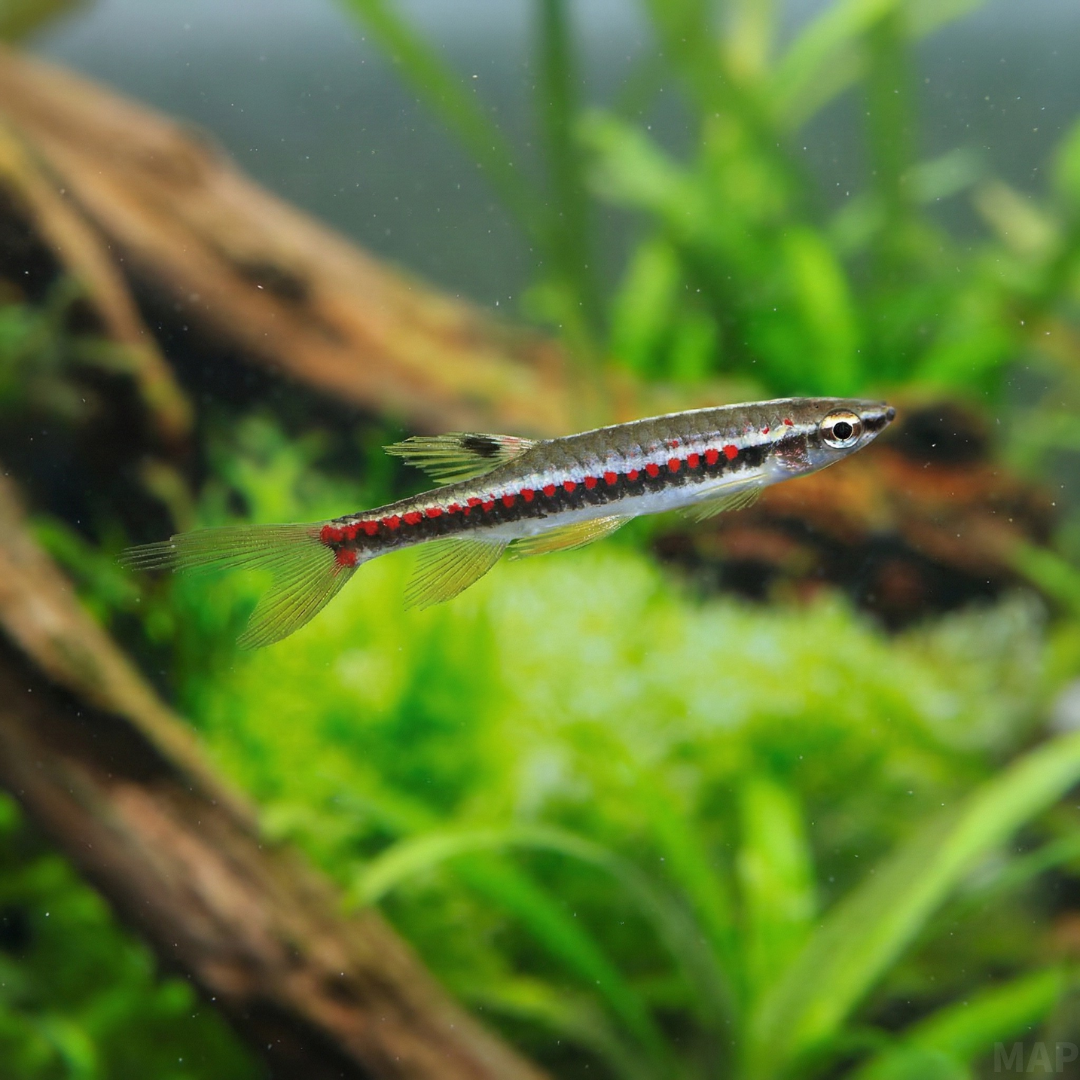
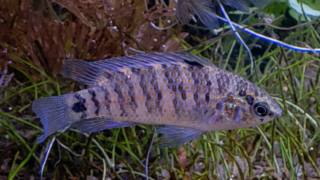
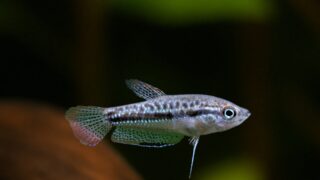
コペラ・カーロレピスは、南米アマゾン川流域に生息するレビアシナ科の小型カラシンです。体側に並ぶ規則的な赤色のスポットと、吻端から尾柄まで走る明瞭な黒色の縦条が織りなす美しいコントラストが特徴です。かつては「コペラ・アイゲンマニー」や「コペラ・ナッテレリー」という名称で流通し混同されてきましたが、近年の研究により別種であることが明確になりました。水面付近を遊泳することを好み、落ち着いた環境で飼い込むと、オスはヒレを伸長させ、深い赤みを発色します。派手さはありませんが、熱帯雨林の奥深さを感じさせる「いぶし銀」の魅力を持つ名魚です。Copella callolepis is a small characin of the family Lebiasinidae, native to the Amazon River basin. It is characterized by the beautiful contrast of regular red spots lining its sides and a distinct black longitudinal band running from the snout to the caudal peduncle. Historically, it was often confused with and sold under the names “Copella eigenmanni” or “Copella nattereri,” but recent studies have clarified it as a distinct species. They prefer swimming near the water surface, and when kept in a calm environment, males will extend their fins and develop a deep red coloration. While not flashy, this fish possesses a refined beauty reminiscent of the depths of the rainforest.
アマゾン川流域(ペルー:ウカヤリ川、ナナイ川、プトゥマヨ川 / ブラジル:アマゾン本流、マデイラ川など)Amazon River basin (Peru: Rio Ucayali, Rio Nanay, Rio Putumayo / Brazil: Rio Solimões, Rio Madeira, etc.)
最大体長 / Max Size
約4.0cm~4.5cmApprox. 4.0cm – 4.5cm
寿命 / Lifespan
約2年~3年(推測)Approx. 2-3 years (estimated)
飼育環境 / Aquarium Environment
水槽サイズ / Tank Size
30cmキューブ水槽(約25L)以上、推奨は60cm規格水槽(約60L)30cm cube tank (approx. 25L) or larger; 60cm standard tank (approx. 60L) recommended.
水温 / Temperature
21°C – 28°C (Optimum: 24°C – 26°C)
水質 / Water Quality
弱酸性~中性(pH 6.0~6.5推奨)。軟水。ブラックウォーターを好む。Slightly acidic to neutral (pH 6.0-6.5 recommended). Soft water. Blackwater is preferred.
レイアウト / Layout
水流を弱めに設定し、ミクロソリウムやアヌビアスなどの陰性水草を密植します。水面付近を好むため、浮き草を入れると落ち着きます。飛び出し事故が非常に多いため、隙間のない蓋が必須です。Set a gentle water flow and plant densely with shade-tolerant plants like Microsorum or Anubias. Floating plants help them feel secure as they prefer the surface area. A tight-fitting lid is mandatory due to their high jumping ability.
注意点 / Precautions
驚異的なジャンプ力を持つため、飛び出し防止対策が最重要です。また、導入直後の水質変化にはやや敏感です。Prevention of jumping out is the most critical aspect. They are also somewhat sensitive to water quality changes immediately after introduction.
餌と給餌 / Feeding
餌の種類 / Diet
浮上性の人工飼料、ブラインシュリンプ、冷凍ミジンコなど。Floating artificial feed, brine shrimp, frozen daphnia, etc.
給餌のポイント / Feeding Tips
上向きの口をしているため、水面に浮く餌を好みます。沈んだ餌は食べにくいことがあるため、少しずつ与えてください。繁殖を狙う場合は、ブラインシュリンプなどを多めに与えて栄養をつけさせます。With their upturned mouths, they prefer food floating on the surface. They may struggle with sinking food, so feed small amounts at a time. For breeding, condition them with plenty of brine shrimp.
性格と混泳 / Temperament and Tank Mates
性格 / Temperament
非常に温和です。オス同士でフィンスプレッディング(ヒレを広げての威嚇)をすることがありますが、激しく傷つけ合うことは稀です。Very peaceful. Males may display fin spreading behavior towards each other, but serious injury is rare.
混泳の相性 / Compatibility
小型カラシン(ネオンテトラ等)、ペンシルフィッシュ、オトシンクルス、コリドラス、アピストグラマなどとの混泳に適しています。サイズが異なる大型魚や、活発すぎる魚との混泳は避けてください。Suitable for tank mates like small characins (e.g., Neon Tetra), pencilfish, Otocinclus, Corydoras, and Apistogramma. Avoid large fish or overly active species that might outcompete them for food.
病気と対策 / Diseases and Prevention
かかりやすい病気 / Common Diseases
特にかかりやすい特定の病気はありませんが、水質悪化による白点病やカラムナリス症には注意が必要です。No specific diseases, but susceptible to Ich and Columnaris due to poor water quality.
対策と予防 / Prevention
現地のようなブラックウォーター(マジックリーフなどでタンニンを溶出した水)で飼育すると、pHが安定し殺菌効果も期待できるため、病気の予防に効果的です。Keeping them in blackwater (water with tannins from almond leaves, etc.) mimics their natural habitat, stabilizes pH, and offers antibacterial benefits, effectively preventing diseases.
増やし方(繁殖) / Breeding
繁殖形態 / Reproduction
水中産卵型です。水没した水草の葉などに粘着性の卵を産み付けます。Submerged spawning. They lay adhesive eggs on submerged plant leaves.
繁殖のポイント / Breeding Tips
近縁種のコペラ・アーノルディとは異なり、水上の葉へジャンプして産卵することはありません。産卵後、オスが卵に水を送る(ファニング)などして保護します。稚魚は非常に小さいため、初期飼料にはインフゾリアなどが必要です。Unlike the related Copella arnoldi, they do not jump to spawn on leaves above water. After spawning, the male guards the eggs, fanning them with his fins. The fry are tiny and require infusoria as initial food.
雑学と豆知識 / Trivia and Fun Facts
1. 「アイゲンマニー」という名の亡霊 / 1. The Ghost of “Eigenmanni”
日本のアクアリウム市場では、本種が長年「コペラ・アイゲンマニー(C. eigenmanni)」や「ナッテレリー(C. nattereri)」という名前で流通し、混乱が生じていました。しかし近年の研究で、本物のアイゲンマニーは黒いラインが尾まで達しないこと、ナッテレリーは赤いスポットに黒い縁取り(馬蹄形)があることで明確に区別されました。現在ショップで見かける「アイゲンマニー」の多くは、実はこのカーロレピスである可能性が高いのです。In the Japanese aquarium market, this species was long confused with “C. eigenmanni” or “C. nattereri”. However, recent studies clarified that true C. eigenmanni lacks a full-length black line, and C. nattereri has black borders around its red spots. Many fish sold as “Eigenmanni” today are actually Copella callolepis.
2. 飛ばないコペラの選択 / 2. The Copella That Doesn’t Jump
コペラ属といえば、水上の葉にジャンプして産卵する「スプラッシング・テトラ(C. arnoldi)」が有名ですが、本種カーロレピスはそのような行動をとりません。水中の葉に卵を産み、オスが献身的に世話をする道を選びました。興味深いことに、両者の精子の形状には細胞レベルでの違い(Type IとType II)があり、進化の過程で繁殖戦略が大きく分岐したことを物語っています。英名に「Splashing」と入っていますが、実際にはスプラッシュしない種なのです。While the genus Copella is famous for the “Splashing Tetra” (C. arnoldi) that jumps to spawn on leaves above water, C. callolepis does not exhibit this behavior. It chose to spawn on submerged leaves with devoted paternal care. Interestingly, the sperm morphology differs between the two (Type I vs Type II), indicating a deep evolutionary divergence in breeding strategies. Despite the common name, they do not actually splash.
3. 究極の美、ナナイ川のブラックウォーター / 3. Beauty of Nanay River Blackwater
本種の生息地の一つ、ペルーのナナイ川は、タンニンが溶け込んだ美しいブラックウォーターで知られています。現地ではpH 4.6という強い酸性を示すこともあります。水槽内でもマジックリーフなどを使って茶色く色づいた弱酸性の水を作ると、オスの赤いスポットと黒いラインが際立ち、息をのむような美しさを見せてくれます。この「現地環境の再現」こそが、本種飼育の醍醐味と言えるでしょう。One of their habitats, the Rio Nanay in Peru, is known for its beautiful blackwater rich in tannins, sometimes reaching a highly acidic pH of 4.6. Recreating this slightly acidic, tea-colored water in an aquarium using almond leaves allows the male’s red spots and black lines to stand out vividly. Replicating this natural environment is the true pleasure of keeping this species.
まとめ / Conclusion
コペラ・カーロレピスは、分類の混乱や誤った通称に翻弄されてきた歴史を持ちますが、その実態は、水中での懸命な子育てと、シックな美しさを兼ね備えた素晴らしい観賞魚です。派手な熱帯魚とは一線を画す、野趣あふれる彼らの姿は、水草が生い茂る静かな水槽でこそ真価を発揮します。Copella callolepis has a history of taxonomic confusion and misleading common names, but in reality, it is a magnificent aquarium fish that combines devoted underwater parenting with a chic beauty. Their wild, understated elegance, distinct from flashy tropical fish, truly shines in a quiet, densely planted tank.
「アイゲンマニー」として売られていた魚が、実はこのカーロレピスかもしれません。正しい知識を持って彼らを迎え入れ、アマゾンの小川を再現した環境でその生態を観察することは、アクアリストにとって最高の贅沢となるでしょう。The fish sold as “Eigenmanni” might actually be this Callolepis. Welcoming them with the correct knowledge and observing their behavior in an environment that mimics an Amazonian stream is the ultimate luxury for an aquarist.

 アイのアクアグッズ案内ダニオの仲間に合わせる飼育用品|ゼブラダニオから超小型種まで水槽・ろ過・餌を選ぶ道具の特徴や使い方、選ぶときのポイントをアイが紹介します。記事はコチラ →
 アイのアクアグッズ案内グッピー・プラティ・モーリーを親子で楽しむ飼育用品|水槽・稚魚保護・ろ過・餌・水草道具の特徴や使い方、選ぶときのポイントをアイが紹介します。記事はコチラ →
 アイのアクアグッズ案内そのごはん、泳いでる! 卵から始めるブラインシュリンプの孵化と道具選び道具の特徴や使い方、選ぶときのポイントをアイが紹介します。記事はコチラ →
 アイのアクアグッズ案内水槽のろ材の選び方|ウール・リング・活性炭の違いとおすすめ商品フィルターの中の綿や石は何をしている? アイとコタロウが、ウール・スポンジ・セラミック・焼結ガラス・活性炭・ゼオライトを比較。機種との相性、入れ方、洗い方と交換まで商品とともに紹介します。記事はコチラ →
コメント