

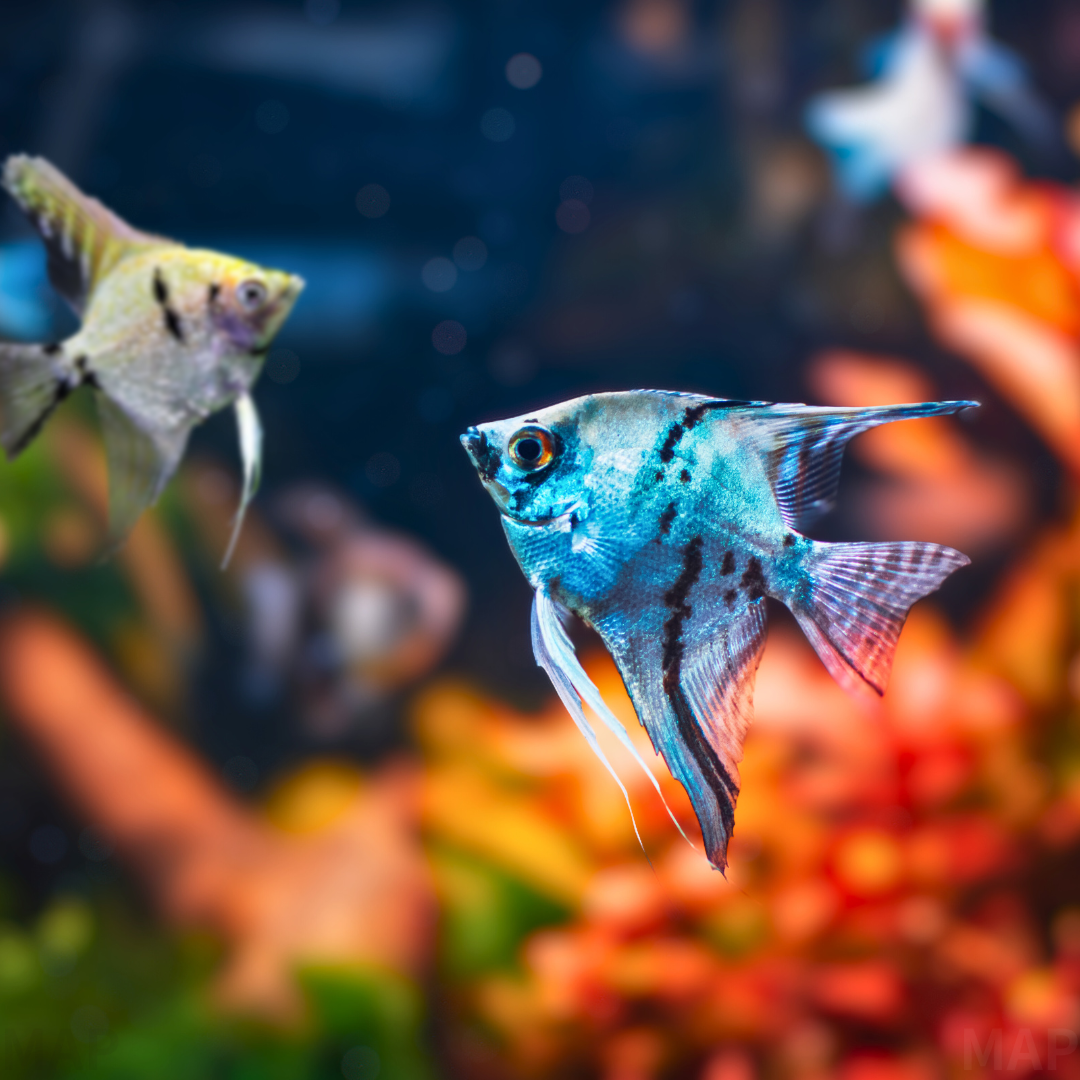
解説 / Description
エンゼルフィッシュは、極端に側扁した円盤状の体躯と、長く伸長した三角形の背鰭および臀鰭が作り出す優雅なシルエットから、長年にわたり「水槽の王様」として世界中のアクアリストに愛されてきた南米原産のシクリッドです。日本国内のペットショップで一般的に「ミックスエンゼルフィッシュ」という名称で流通しているのは、野生の色彩を失った単なる雑種ではありません。これらはプテロフィルム・スカラレ種を基盤とし、数十年におよぶ人為的な選択交配によって、ダーク、マーブル、ゴールド、ブラッシングなど多種多様な遺伝的突然変異が複雑に組み合わされた、歴史と魅力が詰まった飼育下で改良された系統です。東南アジアでの大規模養殖や国内ブリーダーの努力により、現在では非常に強健で日本の水質にも適応しやすく、初心者から上級者まで幅広い層に親しまれています。 Angelfish are South American cichlids that have been loved by aquarists worldwide for many years as the “Kings of the Aquarium,” thanks to their elegant silhouette created by an extremely laterally compressed discoid body and elongated, triangular dorsal and anal fins. The fish commonly distributed under the name “Mixed Angelfish” in Japanese pet shops are not simply hybrids that have lost their wild colors. Based primarily on Pterophyllum scalare, they are domesticated lineages packed with history and charm, created through decades of selective breeding that intricately combined various genetic mutations such as Dark, Marble, Gold, and Blushing. Thanks to large-scale aquaculture in Southeast Asia and the efforts of domestic breeders, they are now very robust, easily adaptable to Japanese water conditions, and enjoyed by everyone from beginners to advanced hobbyists.
基本情報 / Basic Information
| 学名 / Scientific Name | Pterophyllum scalare var. (およびその交雑種) |
|---|---|
| 通称 / Common Name | ミックスエンゼルフィッシュ、ミックスエンゼルMixed Angelfish, Freshwater Angelfish |
| 分類 / Family | シクリッド科 プテロフィルム属Cichlidae, Pterophyllum |
| 英名 / English Name | Mixed Angelfish |
| 分布 / Distribution | 原種は南米大陸のアマゾン川流域(ペルー、コロンビア、ブラジル)、オリノコ川流域、ギアナ高地などに広く分布します。販売されているミックスエンゼルの大部分は東南アジアなどで養殖されたブリード個体です。Wild species are widely distributed in the Amazon River basin (Peru, Colombia, Brazil), Orinoco River basin, and Guiana Shield in South America. Most Mixed Angelfish sold are captive-bred in Southeast Asia and other regions. |
| 最大体長 / Max Size | 体長は約15センチメートルですが、上下のヒレが長く伸びるため、体高は20センチメートル以上に達します。The body length is about 15 cm, but due to the long upper and lower fins, the body height can reach over 20 cm. |
| 寿命 / Lifespan | 平均して8年から12年。理想的な環境下では最長で15年ほど生きる長寿な魚です。Average of 8 to 12 years. Under ideal conditions, they are long-lived fish that can survive up to 15 years. |
飼育環境 / Aquarium Environment
| 水槽サイズ / Tank Size | 成魚のペアを飼育する場合、体高が高くなる特性を考慮し、最低でも60cm規格ハイタイプ水槽(水量約75リットル)が必要です。自然界のように6匹程度の群れでコミュニティ飼育を行う場合は、120cm規格水槽(水量約400リットル)以上の大型水槽が理想的です。To keep an adult pair, considering their tall body profile, a minimum of a 60cm standard high-type tank (approx. 75 liters) is required. For a community setup with a small school of about 6 fish, a large tank such as a 120cm standard tank (approx. 400 liters) or larger is ideal. |
|---|---|
| 水温 / Temperature | 24度から30度の範囲で生存可能ですが、成長と代謝を促進するためには25度から29度が最適です。繁殖を促す際は28度から29度に設定します。 They can survive in the range of 24 to 30 degrees Celsius, but 25 to 29 degrees is optimal to promote growth and metabolism. When inducing breeding, set the temperature to 28 to 29 degrees. |
| 水質 / Water Quality | pH6.0から8.0の広範な水質に適応しますが、理想はpH6.8から7.8の弱酸性から中性です。日本の一般的な水道水(軟水から中硬水)をカルキ抜きして使用すれば問題なく飼育できます。They adapt to a wide range of pH from 6.0 to 8.0, but the ideal is slightly acidic to neutral at pH 6.8 to 7.8. They can be easily kept using general Japanese tap water (soft to medium-hard water) treated with a dechlorinator. |
| レイアウト / Layout | 底砂で餌を探す習性があるため、口先を傷つけない細目から中目の角が丸い砂利を使用します。アマゾンソードなど大型の葉を持つ水草や垂直に立てた流木を配置すると、野生環境である水没した木の根の代わりとなり、魚に安心感を与えます。Since they have a habit of searching for food in the substrate, use fine to medium-grained gravel with rounded edges to avoid injuring their mouths. Placing large-leaved plants like Amazon swords and vertically positioned driftwood mimics their wild habitat of submerged tree roots, providing a sense of security. |
| 注意点 / Precautions | 側扁した体型は強い水流に逆らって泳ぐのに適していないため、スポンジフィルターなどで穏やかな水流を心がけてください。過密飼育はアンモニアの蓄積による水質悪化を招くため厳禁です。週に1回の10パーセント、または隔週での25パーセント程度の換水を行い、清浄な環境を維持しましょう。Their laterally compressed bodies are not suited for swimming against strong currents, so maintain a gentle flow using a sponge filter or similar equipment. Overcrowding is strictly prohibited as it leads to water deterioration due to ammonia accumulation. Maintain a clean environment by performing a 10 percent water change weekly or a 25 percent change bi-weekly. |
餌と給餌 / Feeding
| 餌の種類 / Diet | 本来は小魚や昆虫などを捕食する雑食寄りの肉食魚です。フレークや顆粒状の人工飼料にもよく餌付きますが、美しい体色や健康維持のために、冷凍アカムシ、冷凍ミジンコ、ブラインシュリンプなどの高タンパクな生餌や冷凍飼料を日常的に組み合わせて与えることが重要です。They are basically omnivorous but lean towards a carnivorous diet, naturally preying on small fish and insects. They readily accept artificial flake or granular food, but for vibrant colors and health maintenance, it is important to regularly incorporate high-protein live or frozen foods such as frozen bloodworms, daphnia, and brine shrimp. |
|---|---|
| 給餌のポイント / Feeding Tips | 成魚には1日1回から2回、数分以内に完全に食べきれる量を与えます。骨格や内臓を形成する重要な時期である幼魚(2センチから3センチ程度)には、1日3回から5回のこまめな給餌が必要です。食べ残しは致命的な水質悪化に直結するため、与えすぎには十分注意してください。Feed adults once or twice a day in amounts they can completely consume within a few minutes. Juveniles (about 2 to 3 cm), which are in a critical stage of skeletal and organ development, require frequent feeding 3 to 5 times a day. Be very careful not to overfeed, as uneaten food directly leads to fatal water deterioration. |
性格と混泳 / Temperament and Tank Mates
| 性格 / Temperament | 優雅な名前と姿をしていますが、シクリッド科特有の強い縄張り意識を持っています。通常時は比較的温和ですが、発情期や繁殖期に入ったペアは非常に排他的になり、他の魚を執拗に追い回すことがあります。また、待ち伏せ型の捕食者としての本能も持ち合わせています。Despite their elegant name and appearance, they possess a strong territorial instinct typical of cichlids. They are generally peaceful, but pairs entering the breeding or mating season become highly exclusive and may relentlessly chase other fish. They also retain their instincts as ambush predators. |
|---|---|
| 混泳の相性 / Compatibility | エンゼルフィッシュの口に入らないサイズの中型魚(少し育ったコンゴテトラなどのカラシン、ラスボラ、中型グラミー)や、生活層の異なるコリドラス、中型プレコとの混泳が適しています。口に入るネオンテトラの幼魚やエビ類は捕食されてしまうため混泳できません。また、スマトラなどのヒレをかじる習性のある魚(フィンニッパー)との混泳は、エンゼルの美しいヒレがボロボロになり致命的なストレスとなるため絶対に避けてください。Medium-sized fish that cannot fit into the Angelfish’s mouth (such as slightly grown characins like Congo tetras, rasboras, and medium gouramis), or bottom-dwellers like Corydoras and medium plecos are suitable tank mates. Small tetras like Neons or shrimp will be preyed upon and cannot be kept together. Also, strictly avoid keeping them with fin-nippers like Tiger Barbs, as this will result in the Angelfish’s beautiful fins being shredded, causing fatal stress. |
病気と対策 / Diseases and Prevention
| かかりやすい病気 / Common Diseases | 急激な水温低下による「白点病」、水質悪化やヒレの傷から細菌感染する「尾腐れ病(ヒレ腐れ病)」、エロモナス菌などが原因で腹部が膨らむ「松かさ病(腹水症)」などに注意が必要です。また、寄生虫による「エラ病」にかかると、片方のエラを閉じたり水面で鼻上げ行動をしたりします。Watch out for “Ich (White Spot Disease)” caused by sudden temperature drops, “Fin Rot” resulting from bacterial infection due to poor water quality or fin injuries, and “Dropsy” characterized by a swollen abdomen often caused by Aeromonas bacteria. Additionally, if infected with gill flukes (“Gill Disease”), they may keep one gill closed or gasp for air at the water surface. |
|---|---|
| 対策と予防 / Prevention | 病気予防の基本は、日々の水質管理と過密飼育を避けることによるストレス因子の排除です。白点病には水温上昇とメチレンブルーなどの薬浴、細菌感染には換水とオキソリン酸系抗菌剤による隔離治療を行います。日本の専門家の間では、厄介なエラ病の駆除に対して隔離水槽でのホルマリン浴やトリクロルホンを含む魚病薬の使用が伝統的に行われていますが、薬害リスクがあるため慎重な管理が求められます。The basics of disease prevention are daily water quality management and eliminating stress factors by avoiding overcrowding. Treat Ich by raising the temperature and using medications like methylene blue; treat bacterial infections with water changes and quarantine treatments using oxolinic acid-based antibiotics. Among Japanese experts, formalin baths or medications containing trichlorfon in a quarantine tank are traditionally used to eradicate troublesome gill flukes, but careful management is required due to the risk of chemical toxicity. |
増やし方(繁殖) / Breeding
| 雌雄の判別 / Sexing | 成熟前の雌雄判別は極めて困難です。成長に伴いオスは額がわずかに隆起し、メスは腹部が丸みを帯びる傾向がありますが確実ではありません。産卵直前に生殖孔から突出する「輸卵管」の形で判別するのが唯一の確実な方法であり、メスは太く円柱状、オスは細く尖っています。Sexing before maturity is extremely difficult. As they grow, males tend to develop a slight nuchal hump on their forehead, and females develop a rounder abdomen, but this is not certain. The only reliable method is to observe the shape of the breeding papilla that protrudes just before spawning: females have a thick, cylindrical papilla, while males have a thin, pointed one. |
|---|---|
| 繁殖形態 / Reproduction | 若魚の群れを飼育していると、自然に強固な一夫一婦制のペアが形成されます。繁殖期になると、ペアは水草の広い葉やスレート板などの垂直な平面を口で掃除し、そこに数十から数百個の粘着性のある卵を産み付けます。親魚はヒレで卵に新鮮な水を送り、カビた卵を取り除くという高度な育児本能を見せます。When keeping a group of young fish, they naturally form strong monogamous pairs. During the breeding season, the pair cleans a vertical surface, such as a broad plant leaf or a slate piece, with their mouths and deposits dozens to hundreds of adhesive eggs there. The parents exhibit advanced brood care instincts by fanning the eggs with their fins to provide fresh water and removing fungused eggs. |
| 繁殖のポイント / Breeding Tips | 水温を28度から29度に上げ、高タンパクな生餌を十分に与えることが繁殖の引き金となります。累代繁殖されたミックスエンゼルの中には、ストレスを感じると自ら産んだ卵を食べてしまうペアも多いため、産卵直後に卵を産卵床ごと別の水槽に移して人工孵化させる方法が一般的です。稚魚が泳ぎ始めたら、初期飼料として湧かしたてのブラインシュリンプを与え、底面の掃除を毎日丁寧に行います。Raising the water temperature to 28-29 degrees and providing plenty of high-protein live food triggers breeding. Since many pairs of domesticated Mixed Angelfish may eat their own eggs when stressed, it is common practice to move the eggs along with the spawning substrate to a separate tank for artificial incubation immediately after spawning. Once the fry start free-swimming, feed them newly hatched brine shrimp as their initial diet and carefully clean the tank bottom daily. |
雑学と豆知識 / Trivia and Fun Facts
| 1. 学名と分類の混乱の歴史 / 1. History of Scientific Names and Classification Confusion | エンゼルフィッシュが科学の世界に初めて登場したのは19世紀初頭のことです。1823年にブラジルで採取された標本をもとに「Zeus scalaris」と名付けられましたが、その後別の学者が古い標本を見て「Platax scalaris」と名付けるなど、分類の混乱が続きました。現在の属名「Pterophyllum(葉のような鰭)」が確立したのは1840年のことです。種小名の「scalare(スカラレ)」は、背鰭の形が階段に似ていることに由来しています。Angelfish first appeared in the scientific world in the early 19th century. Based on specimens collected in Brazil in 1823, it was named “Zeus scalaris,” but classification confusion ensued as other scholars examined old specimens and named it “Platax scalaris.” The current genus name “Pterophyllum” (meaning leaf-like fins) was established in 1840. The specific name “scalare” originates from the dorsal fin’s resemblance to a stairway. |
|---|---|
| 2. 驚きの価格!水槽の王様の初期の歴史 / 2. Astounding Prices! Early History of the King of the Aquarium | 1910年代にヨーロッパから米国へと渡ったエンゼルフィッシュは、その異様でありながらも優雅な姿から瞬く間に「水槽の王様」と称賛されました。しかし当時は飼育が極めて難しく、1920年代のアメリカでは新品の自動車が800ドルほどで買える時代に、なんとエンゼルフィッシュ1匹が75ドルという破格の値段で取引されることもありました。輸送技術が未熟だったため、生きた魚を飼うよりもホルマリン漬けの標本を飾る愛好家の方が多かったという逸話も残っています。数多くのブリーダーの努力のおかげで、私たちは今、この美しい魚を手軽に楽しめるのです。Introduced from Europe to the US in the 1910s, Angelfish were instantly praised as the “Kings of the Aquarium” due to their unusual yet elegant appearance. However, keeping them was extremely difficult at the time. In the 1920s in America, when a new car cost about $800, a single Angelfish could be traded for an astonishing $75. Due to poor transportation techniques, there is an anecdote that more hobbyists displayed formalin-preserved specimens than kept live fish. Thanks to the efforts of countless breeders, we can now easily enjoy these beautiful fish. |
| 3. ジョアン・ノートン博士と遺伝学の系譜 / 3. Dr. Joanne Norton and the Genealogy of Genetics | お店で見る多様な模様のミックスエンゼルは、自然界には存在しない突然変異の結晶です。この複雑な遺伝の仕組みを解明したのが、アメリカのジョアン・ノートン博士でした。彼女の研究により、体を黒くする「ダーク遺伝子」、大理石模様を作る「マーブル遺伝子」、縞模様を消す「ストライプレス遺伝子」、ヒレを長くする「ベールテール遺伝子」などがメンデルの法則に従って遺伝することが証明されました。これらがパズルのように組み合わさることで、トリカラーやブラックレースなど、無数の美しいバリエーションが生み出され続けています。The diverse patterns of Mixed Angelfish seen in stores are the culmination of mutations that do not exist in the wild. It was American Dr. Joanne Norton who unraveled this complex genetic mechanism. Her research proved that genes such as the “Dark gene” that turns the body black, the “Marble gene” that creates marbled patterns, the “Stripeless gene” that erases stripes, and the “Veiltail gene” that elongates fins are inherited according to Mendel’s laws. By combining these like puzzle pieces, countless beautiful variations, such as Tricolors and Black Laces, continue to be created. |
| 4. 日本独自の流通事情とC2C市場の台頭 / 4. Japan’s Unique Distribution and the Rise of the C2C Market | 日本のショップでワンコイン程度の安価で販売されているミックスエンゼル。その安さの秘密は、東南アジアの温暖な気候を利用した大規模養殖にあります。様々な遺伝子を持つ親魚を広大な池で自然交配させ、模様ごとに選別する手間を省いて「ミックス」として輸入することでコストを抑えているのです。さらに近年日本では、個人のブリーダーが自宅で繁殖させた健康な個体を、地域密着型の掲示板やオークションを通じて直接譲渡する取引(C2C)も盛んです。過酷な空輸ストレスを経験していない国内繁殖個体は生命力が強く、ユニークな模様も多いため、アクアリウムの新しい楽しみ方として定着しています。Mixed Angelfish are sold at very low prices, often around a single coin, in Japanese shops. The secret to this low cost lies in large-scale aquaculture taking advantage of Southeast Asia’s warm climate. Parent fish with various genes are naturally bred in vast ponds, and by importing them as a “mix” without the labor of sorting by pattern, costs are kept down. Furthermore, in recent years in Japan, direct transactions (C2C) where individual breeders hand over healthy fish bred at home through local bulletin boards and auctions have become popular. Domestic-bred individuals, which have not experienced severe air transport stress, are highly resilient and often feature unique patterns, establishing a new way to enjoy aquariums. |
まとめ / Conclusion
ミックスエンゼルフィッシュは、アマゾンの複雑な自然環境を生き抜くために獲得した特異な体型と、先人たちによる長い品種改良の歴史が融合して生まれた、観賞魚の最高傑作の一つです。安価で入手しやすい一方で、その背景には深い遺伝学のロマンが隠されています。 The Mixed Angelfish is one of the greatest masterpieces of ornamental fish, created by the fusion of a unique body shape acquired to survive the complex natural environment of the Amazon and a long history of selective breeding by our predecessors. While they are inexpensive and easily accessible, a deep romance of genetics is hidden behind them.
成長を見越した適切な水槽の準備と、日々の丁寧な水質管理を怠らなければ、彼らは何年にもわたってその洗練された流麗なシルエットで私たちの目を楽しませてくれます。ぜひ、一見無秩序に見えるミックスエンゼルの模様から遺伝のパズルを読み解き、豊かなアクアリウムライフを構築してみてください。 If proper tank preparation anticipating their growth and careful daily water quality management are not neglected, they will delight our eyes with their refined, flowing silhouettes for many years to come. By all means, try deciphering the genetic puzzle from the seemingly chaotic patterns of Mixed Angelfish and build a rich aquarium life.

気になる道具や飼い方を見つけてみませんか?
 アイのアクアグッズ案内グッピー・プラティ・モーリーを親子で楽しむ飼育用品|水槽・稚魚保護・ろ過・餌・水草道具の特徴や使い方、選ぶときのポイントをアイが紹介します。記事はコチラ →
 アイのアクアグッズ案内旅行中、お魚のごはんはどうする? 自動給餌器・使える餌・スマート水槽の選び方旅行中の魚の餌やりを助ける自動給餌器を、アイとコタロウが紹介。時間指定、おかわり給餌、対応するフレークや顆粒、設置台、スマホ管理、一体型水槽、留守番フードまで、使いどころと選び方を案内します。記事はコチラ →
さまざまな飼育テーマをご紹介。リンク先の記事には広告・商品紹介が含まれます。
案内・紹介記事一覧へ →▶ 記事の生体をAMAZONで買う ▶ 記事の生体をYahooで買う
📚参考文献・データ出典
本記事の作成にあたり、以下の文献およびデータベースを参照・引用しています。
-
Norton, J. (1982-1994). Angelfish Genetics (Series of articles). Freshwater And Marine Aquarium (FAMA) magazine.
(ミックスエンゼルフィッシュの遺伝学メカニズムおよび突然変異に関する基礎研究) -
Burgess, W. E. (1976). The Angelfish. T.F.H. Publications.
(プテロフィルム属の分類学的な歴史と、初期の観賞魚市場における流通史) -
Axelrod, H. R., et al. (1992). Aquariology: The Science of Fish Health Management. Tetra Press.
(熱帯魚の病理学、エラ病や細菌感染症などの治療アプローチに関する基本情報) -
Froese, R. and D. Pauly. Editors. FishBase. Pterophyllum scalare (Schultze, 1823) Freshwater angelfish.
(野生個体群の分布域、最大体長、推奨される水質パラメータなどの生態データ) -
月刊アクアライフ編集部. エンゼルフィッシュ関連特集記事. 株式会社エムピージェー.
(日本国内における流通事情、C2C市場の動向、および日本の水質に合わせた飼育ノウハウ)





コメント