

解説 / Description
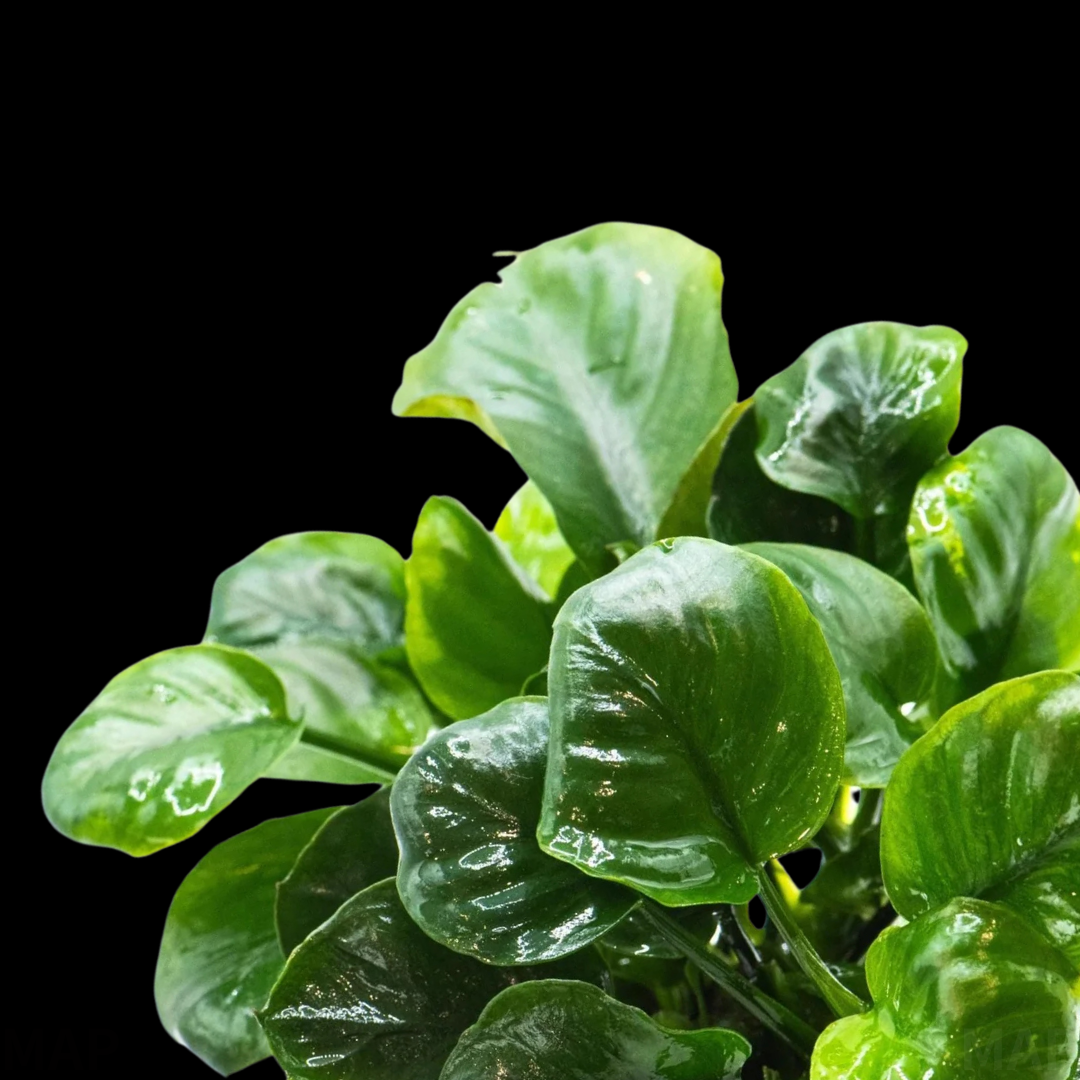
アヌビアス・ナナ・コインリーフは、その名の通り「コイン」のように丸みを帯びた可愛らしい葉を持つ、アヌビアス・ナナの栽培品種です。西アフリカに自生する原種から、水草生産ファームでの組織培養(メリステム培養)の過程で出現した突然変異個体を選別し、固定化したものです。深い暗緑色の葉と、放射状に広がる長めの葉柄が特徴で、水景に柔らかなテクスチャを与えてくれます。非常に強健で、光量が少ない環境やCO2を添加しない環境でも枯れることがほとんどなく、初心者から上級者まで幅広く愛される、アクアリウム界のロングセラー植物といえるでしょう。 Anubias barteri var. nana ‘Coin Leaf’ is a cultivar of Anubias nana characterized by its charming, coin-like rounded leaves. It was developed by selecting and stabilizing a mutation that appeared during the tissue culture process of the original West African species. It features deep dark green leaves and relatively long petioles that spread radially, providing a soft texture to aquascapes. It is an extremely hardy plant that thrives even in low-light and non-CO2 environments, making it a staple in the aquarium hobby for both beginners and experts alike.
基本情報 / Basic Information
| 学名 / Scientific Name | Anubias barteri var. nana ‘Coin Leaf’ |
|---|---|
| 通称 / Common Name | アヌビアス・ナナ・コインリーフAnubias Nana Coin Leaf |
| 分類 / Family | サトイモ科アヌビアス属Araceae, Genus Anubias |
| 分布 / Distribution | 改良品種(原種は西アフリカ原産)Cultivar (Original species native to West Africa) |
| 育成難易度 / Difficulty | 容易(入門種として最適)Easy (Ideal for beginners) |
育成環境 / Cultivation Environment
| 光量 / Light | 弱光〜中光(30cm規格水槽で5W〜10W程度でも育成可能)Low to Moderate (Can grow even with 5W-10W in a 30cm standard tank) |
|---|---|
| CO2添加 / CO2 Injection | 不要(添加することで成長が促進される)Not required (Addition promotes faster growth) |
| 水質 / Water Quality | 弱酸性〜弱アルカリ性(pH 5.0〜9.0)、硬度は軟水〜硬水まで幅広く適応Slightly acidic to slightly alkaline (pH 5.0-9.0), adapts to a wide range of hardness from soft to hard water. |
| 底床 / Substrate | ソイル、砂、砂利、または流木や石への着生Soil, sand, gravel, or attached to driftwood and rocks. |
レイアウト / Layout
| 配置 / Positioning | 中景(流木や岩に固定して使用)Midground (Used fixed to driftwood or rocks) |
|---|---|
| 注意点 / Precautions | 根茎を完全に砂に埋めないこと。埋めると根茎が腐る原因となります。Do not fully bury the rhizome in the substrate. Burying it can cause the rhizome to rot. |
増やし方(トリミング) / Propagation & Trimming
| 増やし方 / Propagation | 株分け(根茎をカッターやハサミで切り分けて増やします)Rhizome division (Split the rhizome using a cutter or scissors) |
|---|---|
| トリミング / Trimming | 古くなった葉やコケの付いた葉を根元からカットします。Cut off old or algae-covered leaves from the base. |
病気と対策(コケなど) / Pests & Algae
| かかりやすい病気 / Common Issues | 斑点状のコケ(緑藻)、黒髭苔、低温時の凍害Green spot algae, black brush algae, and chilling injury during low temperatures. |
|---|---|
| 対策と予防 / Prevention | 成長が遅いためコケが付きやすいです。高光量を避け、ヤマトヌマエビなどのお掃除役を導入してください。水温は20度以上を維持してください。Due to its slow growth, it is prone to algae. Avoid excessive light, introduce cleaning crew like Yamato Numabi (Amano shrimp), and maintain water temperature above 20 degrees Celsius. |
雑学と豆知識 / Trivia and Fun Facts
| 1. 名前は冥界の神に由来する / 1. Named After a God of the Underworld | 属名の「アヌビアス」は、古代エジプト神話の冥界の神「アヌビス」に由来します。これは、アヌビアスが熱帯雨林の奥深く、樹冠によって太陽光が遮られた極めて薄暗い場所にひっそりと自生する様子を、日の当たらない冥界になぞらえたものです。西アフリカの現地では、その強靭な生命力から伝統的な治癒体系の中で扱われることもありました。The genus name “Anubias” is derived from “Anubis,” the ancient Egyptian god of the afterlife. This naming reflects the plant’s ecological trait of growing quietly in extremely shaded areas of deep tropical rainforests, likened to the sunless underworld. In its native West Africa, it has sometimes been integrated into traditional healing systems due to its robust vitality. |
|---|---|
| 2. 激流に耐える「渓流植物」としての適応 / 2. Adaptation as a Rheophyte Against Swift Currents | アヌビアスは生態学的に「渓流植物(Rheophyte)」に分類されます。雨季の増水による激しい水流や物理的ストレスに耐えるため、太く強靭な「根茎」と、岩や流木にしっかりと固着する強力な根を発達させました。非常に厚い革質の葉は、水流による損傷を防ぐだけでなく、草食性の魚からの食害を避けるための強力な防御機構でもあります。Anubias is ecologically classified as a “Rheophyte.” To withstand intense water currents and physical stress during rainy season floods, it developed thick, sturdy “rhizomes” and powerful roots that grip tightly onto rocks and driftwood. Its exceptionally thick, leathery leaves not only prevent damage from water flow but also serve as a strong defense mechanism against herbivorous fish. |
| 3. 品種改良の代償と「低温への弱さ」 / 3. The Cost of Cultivation: Vulnerability to Cold | 近年のメタボロミクス解析により、コインリーフは原種に近い系統と比較して低温に弱いことが証明されています。10度程度の低温に晒されると、細胞膜が損傷し、深刻な凍傷を引き起こします。これは、丸い葉という観賞価値を追求した人為的な選抜の過程で、寒さに対抗するための生化学的な防御システムの一部が失われた可能性を示唆しています。冬場の輸送や管理には、他のアヌビアス以上に注意が必要です。Recent metabolomics analysis has proven that ‘Coin Leaf’ is more susceptible to low temperatures compared to strains closer to the original species. Exposure to temperatures around 10 degrees Celsius causes cell membrane damage and severe chilling injury. This suggests that during the artificial selection process for its round leaves, parts of the biochemical defense system against cold may have been lost. Extra care is needed during winter transport and management. |
| 4. 水質を浄化する「環境修復」のポテンシャル / 4. Potential for Phytoremediation to Purify Water | アヌビアス・バーテリーは、水中の重金属(カドミウムや鉛など)を効率的に吸収し、葉や茎に蓄積する「ファイトレメディエーション(植物による環境浄化)」の能力が高いことが知られています。また、二酸化炭素濃度の上昇による水の酸性化を約25%も緩和するバッファー効果も確認されており、単なる観賞用植物の枠を超え、水域の環境を守るツールとしての可能性も秘めています。Anubias barteri is known for its high capacity in “phytoremediation,” efficiently absorbing heavy metals (such as cadmium and lead) from water and accumulating them in its tissues. It has also been confirmed to have a buffering effect that mitigates water acidification caused by rising CO2 levels by approximately 25%, showing potential beyond ornamental use as a tool for environmental protection. |
まとめ / Conclusion
アヌビアス・ナナ・コインリーフは、初心者向けの丈夫な水草というだけでなく、古代神話にまで遡る名前の由来や、過酷な激流環境で進化してきた驚くべき適応力を持つ植物です。その丸い葉は、60cm規格水槽から小型の30cmキューブ水槽まで、どんな水景にも優しさと幾何学的な美しさを添えてくれます。 Anubias barteri var. nana ‘Coin Leaf’ is not just a hardy plant for beginners; it is a botanical wonder with a name rooted in ancient mythology and an incredible adaptability evolved in harsh, swift currents. Its round leaves add a sense of gentleness and geometric beauty to any aquascape, from 60cm standard tanks to small 30cm cube tanks.
育成のコツは「いじりすぎないこと」と「光を当てすぎないこと」です。ゆっくりと時間をかけて展開する一枚一枚の葉を愛でながら、西アフリカの密林の奥深くに思いを馳せてみてはいかがでしょうか。強健な性質を活かしつつ、低温にだけは注意して、長く美しい姿を楽しんでください。 The key to cultivation is not to over-manage and to avoid excessive light. While admiring each leaf that unfurls slowly over time, you can imagine the deep jungles of West Africa. Enjoy its long-lasting beauty by leveraging its hardy nature, while being particularly mindful of cold temperatures.

気になる道具や飼い方を見つけてみませんか?
 アイのアクアグッズ案内水槽のコケ掃除|道具の選び方とお掃除生体の得意・不得意道具の特徴や使い方、選ぶときのポイントをアイが紹介します。記事はコチラ →
 アイのアクアグッズ案内ショップで見かけるカラフルなバケツ。いったい何が入ってる?道具の特徴や使い方、選ぶときのポイントをアイが紹介します。記事はコチラ →
さまざまな飼育テーマをご紹介。リンク先の記事には広告・商品紹介が含まれます。
案内・紹介記事一覧へ →参考文献 / References
古典・系統分類学的文献
- Crusio, W. 1979. A revision of Anubias Schott (Araceae). Mededelingen Landbouwhogeschool Wageningen 79(14): 1–48.
- Schott, H. W. 1857. Aroideae Maximilianae. Carl Gerold’s Sohn, Wien.
- Engler, A. 1899. Beiträge zur Kenntnis der Araceae IX. Botanische Jahrbücher für Systematik, Pflanzengeschichte und Pflanzengeographie 26: 502-572. (Anubias nana 原記載を含む体系的研究)
現代・科学的研究論文
- Ke, Y., et al. 2021. The complete chloroplast genome of Anubias barteri var. nana (Araceae). Mitochondrial DNA Part B 6(11): 3169-3171. doi:10.1080/23802359.2021.1983058.
- Yuan, Z., et al. 2023. Integrated metabolomic and transcriptomic analysis reveals the mechanism of cold tolerance in Anubias barteri. Frontiers in Plant Science 14: 1152046. doi:10.3389/fpls.2023.1152046. (コインリーフの低温感受性に関する解析)
- Öztürk, M., et al. 2025. Jania rubens and Cystoseira barbata extracts as biostimulants for in vitro propagation of Anubias barteri var. nana. Journal of Applied Phycology. (組織培養への海藻抽出物利用に関する研究)
- Fokeng, R. M., et al. 2022. Phytoremediation of heavy metals by Anubias barteri in the Nange stream, Buea, Cameroon. Environmental Science and Pollution Research 29: 34567–34580. doi:10.1007/s11356-022-19876-5.
- Larsen, T., et al. 2024. Biological buffering of freshwater acidification by Anubias barteri in experimental models. Journal of Freshwater Ecology 39(1): 2345-2360.




コメント