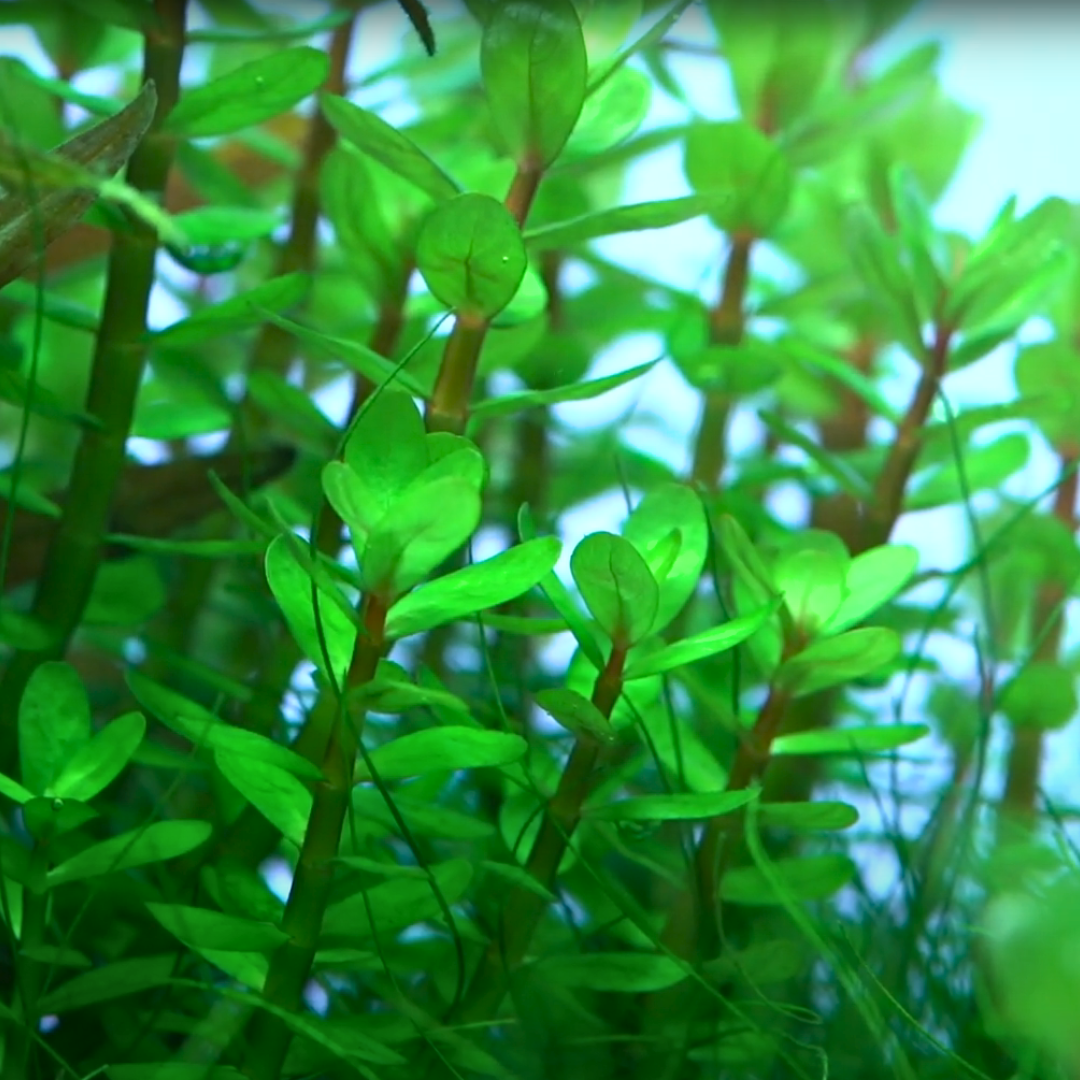
ロタラ・ボンサイは、太く肉厚な直立する茎に、小さく丸い葉が密集して展開する独特の草姿を持つ水草です。アクアリウムにおける流通名として定着しており、その規律正しい成長形態は小型水槽から大型レイアウトの中景まで幅広く重宝されます。成長速度は環境によって大きく左右され、栄養条件が整った高テクノロジー環境下では非常に旺盛な成長を見せることもあるため、定期的な観察とトリミング管理が重要です。基本的に強い直立性を持ち、盆栽のように整然とした茂みを形成するのが最大の魅力です。Rotala indica ‘Bonsai’ is an aquatic plant with a unique appearance characterized by thick, succulent, strictly upright stems and densely packed small rounded leaves. Established as a common trade name, its disciplined growth habit is highly valued in various layouts, from nano tanks to the midground of larger displays. The growth rate varies significantly depending on the environment; under optimal, high-tech conditions, it can grow quite vigorously, requiring regular observation and trimming. Its greatest charm lies in its strong verticality, creating orderly bushes reminiscent of a Japanese Bonsai.
基本情報 / Basic Information
学名 / Scientific Name
Rotala indica ‘Bonsai’
通称 / Common Name
ロタラ・ボンサイ(流通名)、ロタラ・インディカRotala ‘Bonsai’ (Trade name), Indian toothcup
分類 / Family
ミソハギ科キカシグサ属Lythraceae, Rotala
分布 / Distribution
東南アジア(栽培品種または地域変種とされる)Southeast Asia (Considered a cultivar or regional variant)
育成難易度 / Difficulty
中程度(導入時の環境適応に注意が必要)Moderate (Requires care during initial adaptation)
育成環境 / Cultivation Environment
光量 / Light
中〜高光量(0.5W/L以上)。光が不足すると茎が細くなり徒長しやすくなります。高光量下では節間が詰まり、頂芽が濃いオレンジからピンク色に発色します。Medium to High (0.5W/L or more). Insufficient light causes stems to thin and stretch. Under strong light, nodes become compact, and the tips develop deep orange to pink hues.
CO2添加 / CO2 Injection
必須。20〜30mg/Lの添加により、健康で肉厚な茎と美しい葉の密集を維持できます。添加がない場合、成長が著しく停滞します。Essential. Adding 20-30 mg/L helps maintain thick, healthy stems and dense foliage. Growth significantly stalls without CO2 injection.
水質 / Water Quality
弱酸性〜中性(pH 5.0-7.5)、軟水〜中硬水(GH 2-10)。立ち上げ初期の高アンモニア環境には非常に敏感であるため、安定した水質での導入が推奨されます。Slightly acidic to neutral (pH 5.0-7.5), soft to medium-hard water (GH 2-10). Highly sensitive to high ammonia levels in early setups; introduction to stable water is recommended.
底床 / Substrate
栄養系アクアソイル。根からの栄養吸収が主体であるため、底床内の栄養バランスが育成の鍵となります。Nutrient-rich aqua soil. As root uptake is primary, nutrient balance within the substrate is key to successful cultivation.
レイアウト / Layout
配置 / Positioning
前景のアクセント、または中景から後景。小型水槽では前景のポイントとして、大型水槽では中景から後景の整然とした茂みとして機能します。Foreground accent, or midground to background. Functions as a focal point in the foreground of small tanks, or as orderly bushes in the midground to background of larger displays.
注意点 / Precautions
強い直立性を持ちますが、トリミングを繰り返すことで密度を高めることができます。匍匐性は環境により限定的であるため、配置設計には注意が必要です。Has a strong upright habit, but density can be increased through repeated trimming. Since its creeping tendency is limited by the environment, careful placement planning is necessary.
増やし方(トリミング) / Propagation & Trimming
増やし方 / Propagation
差し戻し。トリミングした健康な頂芽をソイルに植え直すことで増殖可能です。導入初期は特に組織が脆いため、ピンセットでの取り扱いには慎重さが求められます。Head cuttings. Can be propagated by replanting healthy trimmed tips into the soil. Tissues are fragile during initial adaptation, requiring careful handling with tweezers.
トリミング / Trimming
節のすぐ上でカットします。カット部分から複数の新芽が展開しますが、成長が早まる時期には頻繁なメンテナンスが必要になる場合があります。Cut just above a node. Multiple new shoots will emerge from the cut area, but frequent maintenance may be needed when growth accelerates.
病気と対策(コケなど) / Pests & Algae
かかりやすい病気 / Common Issues
導入初期の溶け。アンモニア濃度が高い未完成の水槽や、急激な水質変化(pHショック等)によって下葉から溶け落ちることがあります。Melting after introduction. Can melt from lower leaves due to high ammonia levels in uncycled tanks or sudden water parameter changes (e.g., pH shock).
対策と予防 / Prevention
濾過が十分に機能している水槽へ導入してください。また、成長が停滞すると葉面に頑固なコケが付着しやすいため、液肥の過剰添加を避け、適度な換水を行います。Introduce only to tanks with fully functional biological filtration. Avoid over-fertilization and perform regular water changes to prevent algae buildup when growth is slow.
雑学と豆知識 / Trivia and Fun Facts
1. 流通名とキカシグサとの関係 / 1. Trade Names and the Link to R. indica
かつてアクアリウムではロタラ・ロトンディフォリアが誤ってR. indicaと呼ばれていました。一方、Flowgrowは「Ammannia sp. Bonsai」として流通した植物を真のRotala indicaと説明し、TropicaはRotala indica ‘Bonsai’という名称を用いています。ボンサイは流通名として扱われます。Rotala rotundifolia was historically misidentified as R. indica in the aquarium trade. Flowgrow identifies the plant formerly sold as ‘Ammannia sp. Bonsai’ as true Rotala indica, and Tropica uses the name Rotala indica ‘Bonsai’. Bonsai is used as a trade name.
この流通名は、その直立し密集する姿が盆栽を連想させることから名付けられました。一般的な有茎草と異なり、脇芽を出しつつも垂直方向への意識が強いため、限られた空間内で形状を維持しやすい性質があります。このため、日本の住宅事情に合わせた小型のナノ水槽レイアウトにおいて、その造形美が非常に高く評価されています。The trade name was inspired by its upright, dense appearance reminiscent of a Japanese Bonsai tree. Unlike many stem plants, it has a strong vertical habit even when branching, making it easy to maintain shape in confined spaces. This aesthetic quality is highly prized in Japan’s popular nano-tank aquascaping scene.
3. 組織培養による増殖 / 3. Tissue Culture Propagation
本種は組織培養でも増殖されます。例えばTropicaの1・2・Grow!は、メーカーが巻貝・コケ・農薬を含まないと説明する培養カップです。この説明は同製品についてのもので、全ての流通株の品質や育成成功を保証するものではありません。植栽前には培養ゲルを洗い流して株を小分けにします。This plant is also propagated through tissue culture. Tropica describes its 1-2-Grow! cups as free from snails, algae and pesticides. This description applies to that product range and does not guarantee the quality of all plants in trade or successful cultivation. Rinse off the culture gel and divide the plants before planting.
4. 窒素制限の功罪:発色とリスクの天秤 / 4. Pros and Cons of Nitrate Limitation: Color vs. Risk
一部の上級テクニックとして、窒素濃度を下げることで赤みを強調する手法がありますが、本種においては注意が必要です。ロタラ・ロトンディフォリア等に比べて赤色が飽和しにくく、実際には濃いオレンジからピンク色の発色に留まるのが一般的です。極端な窒素制限は成長を停止させ、深刻な下葉の脱落(溶け)を招く危険があるため、強く推奨される手法ではありません。While some advanced aquarists lower nitrate levels to enhance redness, caution is needed with this species. Its color rarely reaches deep red, usually staying within dark orange to pink hues. Extreme nitrate limitation risks stalling growth and causing severe leaf loss (melting), so it is not a widely recommended method for this plant.
まとめ / Conclusion
ロタラ・ボンサイは、流通名の歴史的な背景も含め、非常に奥深い魅力を持つ水草です。整然とした直立美を維持するためには、高光量と安定したCO2添加、そして底床からの栄養供給という基本を忠実に守ることが求められます。Rotala indica ‘Bonsai’ is an incredibly intriguing aquatic plant, given the history of its trade names. To maintain its orderly vertical beauty, one must faithfully follow the basics: strong lighting, stable CO2 injection, and a rich supply of nutrients from the substrate.
導入初期の繊細さや、条件による成長速度の変化など、一筋縄ではいかない側面もありますが、適切な管理下で見せる緻密な茂みは、他の水草では得られない特別な満足感を与えてくれます。学術的な背景を理解しつつ、この「水中の盆栽」を美しく育て上げてください。While it can be challenging due to its initial fragility and varied growth rates, the dense bushes it forms under proper care provide a unique satisfaction. We hope you enjoy cultivating this underwater Bonsai while appreciating its complex scientific and horticultural background.




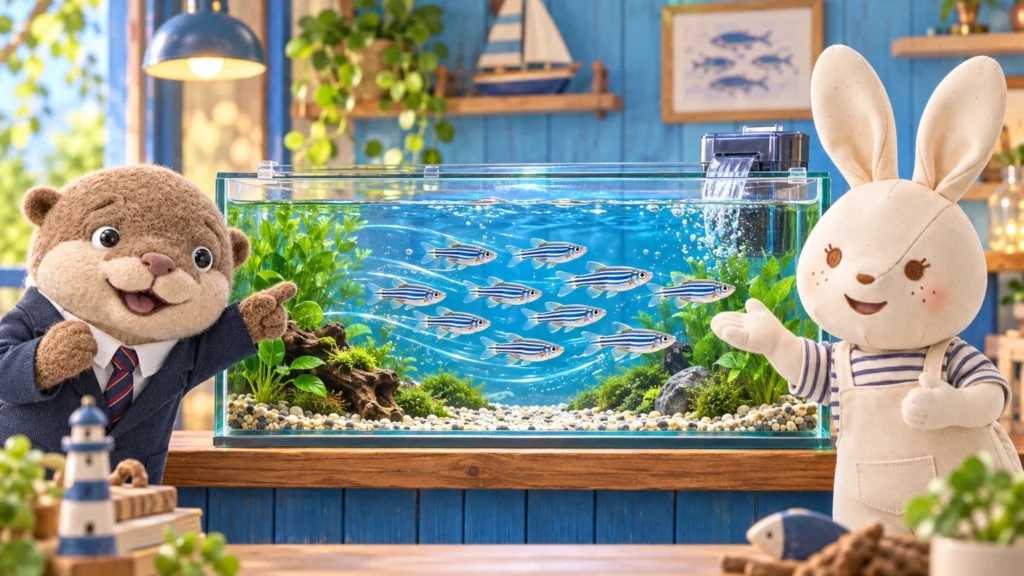 アイのアクアグッズ案内ダニオの仲間に合わせる飼育用品|ゼブラダニオから超小型種まで水槽・ろ過・餌を選ぶ道具の特徴や使い方、選ぶときのポイントをアイが紹介します。記事はコチラ →
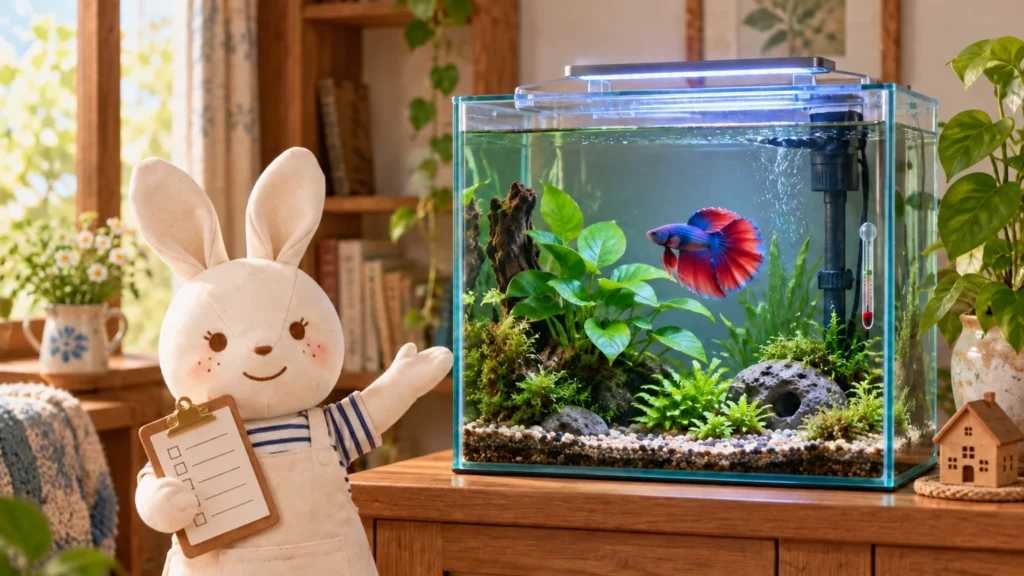 アイのアクアグッズ案内ベタの一匹飼いを楽しむ|水槽・ヒーター・ふた・フィルターの選び方ベタの一匹飼いに向く水槽容量、ふたと空気層、ヒーターと水温計、弱い水流のフィルターを、コタロウとアイの会話で分かりやすく解説します。記事はコチラ →



コメント