

▶ 記事の生体をAMAZONで買う ▶ 記事の生体をYahooで買う
解説 / Description
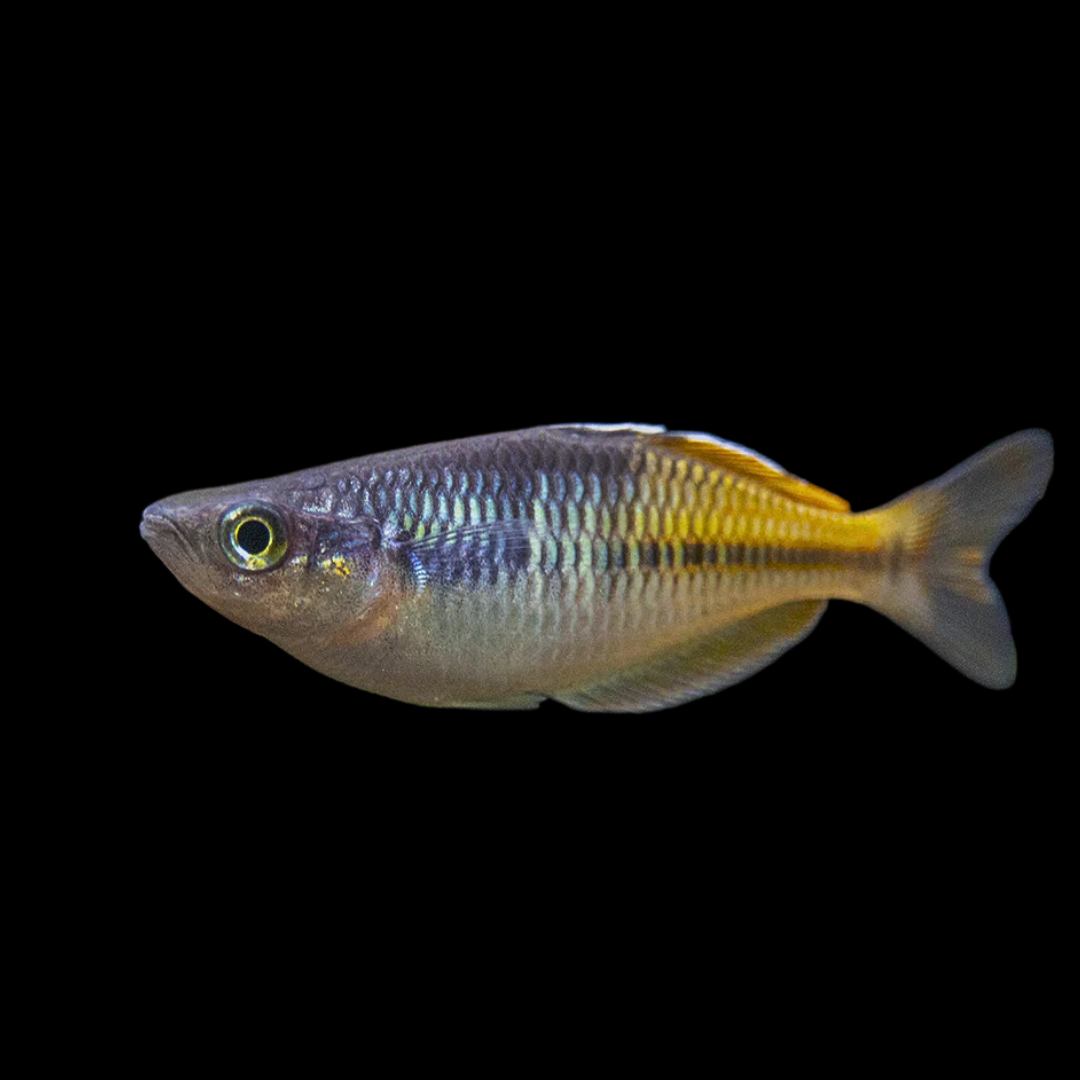
ハーフオレンジ・レインボーは、インドネシアの西パプアに分布するレインボーフィッシュの仲間です。学名は Melanotaenia boesemani で、成熟したオスは前半身が青灰色、後半身が鮮やかなオレンジ色から黄色に染まる、非常に印象的な姿になります。若魚のうちは地味に見えることも多い魚ですが、十分な遊泳スペース、安定した弱アルカリ性の水質、良質な餌、群れでの飼育を整えることで、本来の美しさが少しずつ引き出されていく魚です。 Boeseman’s rainbowfish is a rainbowfish species native to West Papua, Indonesia. Its scientific name is Melanotaenia boesemani. Mature males develop a striking appearance, with a bluish-gray front half and a vivid orange to yellow rear half. Juveniles often look rather plain, but their true beauty gradually appears when they are kept in a spacious aquarium, stable slightly alkaline water, a well-balanced diet, and a proper group.
基本情報 / Basic Information
| 学名 / Scientific Name | Melanotaenia boesemani |
|---|---|
| 通称 / Common Name | ハーフオレンジ・レインボー、メラノタエニア・ブセマニ、ボエセマニ・レインボーBoeseman’s rainbowfish, Boesemani rainbowfish, bicolor rainbowfish |
| 分類 / Family | トウゴロウイワシ目 メラノタエニア科 メラノタエニア属Order Atheriniformes, family Melanotaeniidae, genus Melanotaenia |
| 英名 / English Name | Boeseman’s Rainbowfish |
| 分布 / Distribution | インドネシア西パプアのヴォーゲルコップ半島周辺。アジャマル湖群やアイティンジョ湖周辺に分布する固有種として知られています。Known from the Vogelkop Peninsula region of West Papua, Indonesia, especially the Ayamaru Lakes system and nearby Lake Aitinjo area. |
| 最大体長 / Max Size | 約10〜12cm。メスはオスよりやや小さく、8cm前後でまとまることが多い魚です。About 10-12 cm. Females are usually smaller and often remain around 8 cm. |
| 寿命 / Lifespan | おおよそ5年前後。安定した水質と十分な遊泳スペースを確保できれば、比較的長く楽しめる種類です。Usually around 5 years. With stable water conditions and enough swimming space, it can be enjoyed for a relatively long time. |
飼育環境 / Aquarium Environment
| 水槽サイズ / Tank Size | 活発に泳ぐ魚のため、成魚の群れでは90cm規格水槽以上を推奨します。理想的には120cm規格水槽や120cmワイド水槽など、横方向にしっかり泳げる環境を用意しておくと扱いやすくなります。A 90 cm standard aquarium or larger is recommended for an adult group. Ideally, a 120 cm standard or wider aquarium should be used to provide long open swimming space. |
|---|---|
| 水温 / Temperature | 25〜28℃前後が目安です。高水温が続く環境では酸欠や水質悪化が起こりやすくなるため、十分なろ過とエアレーションを確保することが大切です。 Around 25-28°C. In warmer conditions, maintain strong filtration and aeration to prevent oxygen shortage and water quality problems. |
| 水質 / Water Quality | 中性から弱アルカリ性を好む魚です。目安はpH7.0〜8.0前後で、やや硬度のある水が向いています。日本の軟水環境では、サンゴ砂を少量使う、ミネラルを補うなど、水質を安定させる工夫が有効な場合があります。Neutral to slightly alkaline water is preferred. A pH of about 7.0-8.0 and moderately hard water are suitable. In very soft tap water, small amounts of coral sand or mineral supplementation may help stabilize conditions. |
| レイアウト / Layout | 前面から中央に広い遊泳スペースを残し、後景や側面にバリスネリア、マツモ、丈夫な有茎草などを配置すると落ち着きやすくなります。暗めの底砂やバックスクリーンを使うと体色のコントラストも引き立つため、観賞面でも相性のよいレイアウトです。Leave open swimming space in the front and center, while placing plants such as Vallisneria, hornwort, or hardy stem plants along the back and sides. A darker substrate or background can enhance the contrast of the fish’s colors. |
| 注意点 / Precautions | 単独や少数で飼うと臆病になり、発色や行動が落ちやすくなります。6匹以上、できれば10匹前後の群れで飼育すると、本来の泳ぎやディスプレイ行動を観察しやすくなります。輸入直後の若魚は色が出ていないことも多いため、購入後すぐに成魚の発色を期待しすぎないことも大切です。When kept alone or in too small a group, this species may become shy and show poorer coloration and activity. A group of at least 6, ideally around 10 individuals, helps bring out natural swimming and display behavior. Newly imported juveniles are often not fully colored, so mature coloration should not be expected immediately after purchase. |
餌と給餌 / Feeding
| 餌の種類 / Diet | 雑食性で、人工飼料を中心に飼育できます。フレーク、顆粒フード、色揚げ用フードを基本に、冷凍アカムシ、ブラインシュリンプ、ミジンコなどを組み合わせると栄養の偏りを抑えやすくなります。This omnivorous species can be maintained mainly on prepared foods. Flakes, granules, color-enhancing foods, frozen bloodworms, brine shrimp, and daphnia can be offered in combination. |
|---|---|
| 給餌のポイント / Feeding Tips | 後半身のオレンジ色や赤みは、餌に含まれるカロテノイドなどの栄養状態に影響されます。高品質な人工飼料を基本に、動物質の餌を定期的に加えることで、体格と発色を維持しやすくなります。ただし食べ残しは水質悪化につながるため、数分で食べ切れる量を守ることが重要です。The orange to reddish color on the rear half is influenced by nutrition, including carotenoids in the diet. A high-quality prepared food should form the base, with protein-rich foods offered regularly to support body condition and coloration. Avoid overfeeding, as uneaten food can quickly affect water quality. |
性格と混泳 / Temperament and Tank Mates
| 性格 / Temperament | 基本的には温和で、群れで活発に泳ぐ魚です。成熟したオス同士はヒレを広げて張り合うことがありますが、十分な匹数とスペースがあれば深刻な争いにはなりにくいタイプです。Generally peaceful and active in groups. Mature males may display to each other with spread fins, but serious fighting is uncommon when enough individuals and space are provided. |
|---|---|
| 混泳の相性 / Compatibility | 同程度のサイズで、遊泳力があり、極端に気の荒くない魚との混泳に向いています。中型カラシン、バルブ、コリドラス、大型のラスボラ、ほかの温和なレインボーフィッシュなどが候補になります。小さすぎる魚や、長いヒレをつつく魚、非常に臆病な魚との組み合わせは避けたほうが無難です。Suitable tank mates include similarly sized, active, non-aggressive fish such as medium characins, barbs, Corydoras, larger rasboras, and other peaceful rainbowfish. Very small fish, fin-nipping species, and extremely shy fish are not ideal companions. |
病気と対策 / Diseases and Prevention
| かかりやすい病気 / Common Diseases | 白点病、尾ぐされ病、水質悪化に伴う肌荒れやヒレの傷みなど、一般的な熱帯魚の病気に注意が必要です。輸入直後や導入直後は体力が落ちていることがあるため、しばらくはこまめに状態を観察してください。Watch for common tropical fish diseases such as white spot disease, fin rot, skin irritation, and fin damage related to poor water quality. Newly imported or recently introduced fish should be observed carefully, as they may be weakened by transport stress. |
|---|---|
| 対策と予防 / Prevention | 予防の基本は、過密を避け、安定したろ過と定期的な換水を続けることです。弱アルカリ性寄りの水質を保ち、急変させないようにしながら、導入時は水合わせを丁寧に行います。新しく迎えた個体は可能であれば隔離観察し、痩せやヒレの傷みがないか確認してから本水槽へ合流させると安心です。Prevention is based on avoiding overcrowding, maintaining stable filtration, and performing regular water changes. Keep water parameters stable and slightly alkaline, and acclimate new fish carefully. Quarantine and observation are recommended before adding new individuals to the main aquarium. |
増やし方(繁殖) / Breeding
| 雌雄の判別 / Sexing | 成熟したオスは体高が高く、背ビレや尻ビレが伸び、前半身の青灰色と後半身のオレンジ色がはっきり出ます。メスはやや小さく、銀色から黄みを帯びた控えめな体色で、体高も低めです。Mature males are deeper-bodied, have longer dorsal and anal fins, and show a clear bluish-gray front half and orange rear half. Females are usually smaller, lower-bodied, and more subdued in silver to yellowish tones. |
|---|---|
| 繁殖形態 / Reproduction | 水草や産卵用モップに粘着性の卵を産みつけるタイプです。早朝にオスが体色を強め、ヒレを広げてメスへディスプレイする行動が見られることがあります。An egg-scattering species that lays adhesive eggs among plants or spawning mops. Males often intensify their coloration and display with spread fins in the early morning. |
| 繁殖のポイント / Breeding Tips | 繁殖を狙う場合は、産卵用モップや細かい水草を入れ、産みつけられた卵を別水槽へ移す方法が安全です。親魚は卵や稚魚を食べることがあるため、自然繁殖を期待する場合は、稚魚が隠れられるほどの水草の茂みを用意する必要があります。ふ化後の稚魚は小さいので、初期飼料にはインフゾリアなど微細な餌を用意しておくと安心です。For breeding, provide spawning mops or fine-leaved plants and move the eggs to a separate rearing tank. Adults may eat eggs and fry, so dense plant cover is necessary if attempting natural rearing. The fry are very small after hatching and require tiny first foods such as infusoria. |
雑学と豆知識 / Trivia and Fun Facts
| 1. 名前に残された発見の歴史 / 1. A name that preserves its discovery history | 種小名の boesemani は、オランダの魚類学者マリヌス・ブーセマン博士に由来します。本種は1950年代に採集されていたものの、正式な記載は1980年まで待つことになりました。その後、観賞魚として紹介されると、青とオレンジが半分ずつ分かれたような独特の色彩で、一気に人気を集める存在となりました。The species name boesemani honors Dutch ichthyologist Dr. Marinus Boeseman. Although specimens had been collected in the 1950s, the species was not formally described until 1980. Once introduced to the aquarium hobby, its half-blue, half-orange appearance quickly made it a highly popular species. |
|---|---|
| 2. 青は色素ではなく構造色 / 2. The blue is structural, not a blue pigment | 前半身の青灰色は、単純な青い色素だけで作られているわけではありません。皮膚の中にある虹色素胞が光を反射し、金属光沢を帯びた青みとして見えると考えられています。一方、後半身のオレンジ色や赤みは餌に含まれる色素成分の影響を受けやすく、飼育環境と栄養状態の差が発色に表れやすい魚です。The bluish-gray front half is not simply produced by a blue pigment. It is thought to result largely from iridophores in the skin reflecting light and creating a metallic blue sheen. In contrast, the orange and reddish rear coloration is more strongly affected by dietary pigments, so husbandry and nutrition can make a visible difference. |
| 3. 野生個体群は危機的な立場にある / 3. Wild populations are under serious pressure | ハーフオレンジ・レインボーは観賞魚として広く流通していますが、野生での分布域は限られています。過去の過剰採集や外来魚の影響、水草帯の減少などにより、自然下の個体群は保全上の注意が必要な存在とされています。現在流通する個体の多くは養殖由来であり、野生個体群への負荷を減らす意味でも、健全なブリード個体の流通は重要です。Although common in the aquarium trade, Boeseman’s rainbowfish has a very limited natural range. Past overcollection, introduced fish, and the loss of aquatic vegetation have placed wild populations under conservation concern. Most fish in trade today are farm-bred, and healthy captive production is important for reducing pressure on wild populations. |
| 4. 若魚が地味でも失敗とは限らない / 4. Plain juveniles are not necessarily poor-quality fish | 店頭で見かける若い個体は、成魚のような鮮やかな色がまだ出ていないことがあります。これは未成熟であることや輸送ストレスの影響が大きく、必ずしも質が悪いという意味ではありません。落ち着いた群れの中で育て、広い水槽と良質な餌を与えることで、数か月から1年ほどかけて本来の色合いが出てくることがあります。Juveniles seen in shops often lack the brilliant adult coloration. This is often due to immaturity and transport stress, and does not necessarily mean they are poor-quality fish. With a settled group, a spacious aquarium, and a good diet, their true coloration may develop over several months to a year. |
まとめ / Conclusion
ハーフオレンジ・レインボーは、成熟したオスの青灰色とオレンジ色のコントラストが大きな魅力の中型熱帯魚です。丈夫な魚として扱われることもありますが、本来の美しさを楽しむには、広い水槽、群れでの飼育、安定した弱アルカリ性寄りの水質、栄養価の高い餌をそろえることが大切です。 Boeseman’s rainbowfish is a medium-sized tropical fish admired for the striking contrast of bluish-gray and orange in mature males. Although often considered hardy, its true beauty is best appreciated in a spacious aquarium, a proper group, stable slightly alkaline water, and a nutritious diet.
購入時に若魚が地味に見えても、時間をかけて育てることで印象が大きく変わる魚です。流通個体の多くは養殖個体ですが、原産地の野生個体群は限られた環境に依存しています。その背景を知ったうえで、長く大切に飼い込む意識を持ちたい種類です。 Even if juveniles look plain at purchase, their appearance can change dramatically as they mature. Most fish in trade are captive-bred, but wild populations depend on a restricted natural habitat. Understanding this background helps aquarists keep the species with greater care and appreciation.

気になる道具や飼い方を見つけてみませんか?
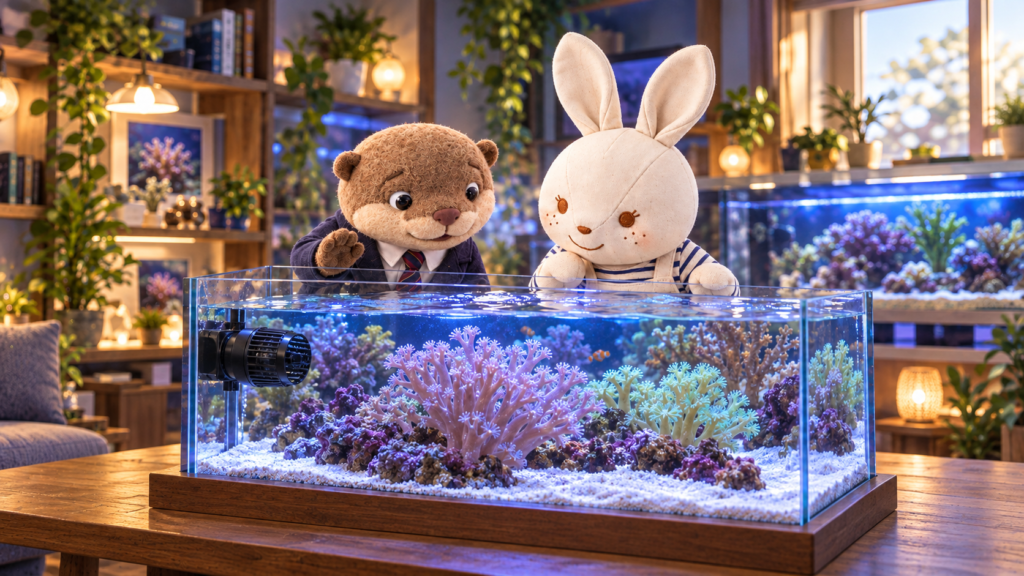 アイのアクアグッズ案内水槽の中に波がある!? コタロウと探る、サンゴがゆらゆら揺れる秘密道具の特徴や使い方、選ぶときのポイントをアイが紹介します。記事はコチラ →
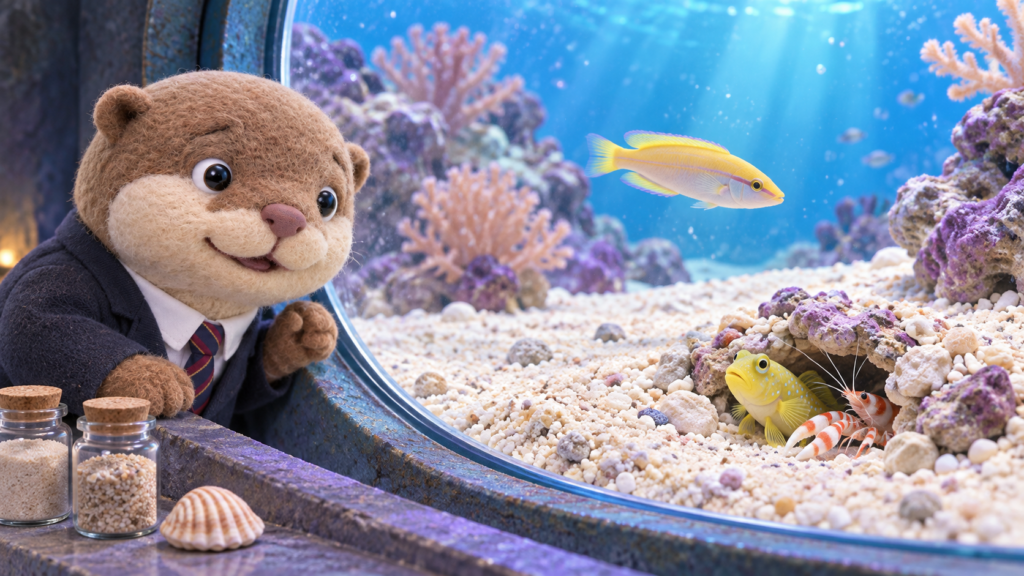 アイのアクアグッズ案内海水魚の底砂の選び方|サンゴ砂・ライブサンドとおすすめ商品道具の特徴や使い方、選ぶときのポイントをアイが紹介します。記事はコチラ →
さまざまな飼育テーマをご紹介。リンク先の記事には広告・商品紹介が含まれます。
案内・紹介記事一覧へ →▶ 記事の生体をAMAZONで買う ▶ 記事の生体をYahooで買う
参考文献・参照資料
本記事では、ハーフオレンジ・レインボー(Melanotaenia boesemani)の分類、分布、形態、飼育環境、繁殖、保全状況について、以下の資料を参考にしています。
-
Froese, R. and Pauly, D. (eds.). FishBase. Melanotaenia boesemani, Boeseman’s rainbowfish. 分類、分布、最大体長、水質、群れでの飼育、IUCN評価の確認に参照。
https://fishbase.se/Summary/Melanotaenia-boesemani -
Allen, G. R. and Cross, N. J. (1980). Descriptions of five new rainbowfishes (Melanotaeniidae) from New Guinea. Records of the Western Australian Museum, 8(3): 377-396. 本種の原記載、形態的特徴、雌雄差、体色、採集地の確認に参照。
https://museum.wa.gov.au/sites/default/files/DESCRIPTION%20OF%20FIVE%20NEW%20RAINBOWFISHES%20%28MELANOTAENIIDAE%29%20FROM%20NEW%20GUINEA.pdf -
Allen, G. R. and Kadarusman. (2020). Melanotaenia boesemani. The IUCN Red List of Threatened Species 2020: e.T13058A147682045. 野生個体群の保全状況、絶滅危惧評価、生息地への圧力に関する確認に参照。
https://www.iucnredlist.org/species/13058/147682045 -
Nugraha, M. F. I., Pouyaud, L., Carman, O., Avarre, J.-C., Widyastuti, Y., Kadarusman, Slembrouck, J., Paradis, E. and Sudarto. (2015). Genetic diversity of Boeseman’s Rainbowfish Melanotaenia boesemani reared in Indonesian farms compared to endangered natural populations. Tropical Conservation Science, 8(3): 796-812. 養殖個体群、アジャマル湖・ウテル湖系統、遺伝的多様性、保全上の背景に参照。
https://bioone.org/journals/tropical-conservation-science/volume-8/issue-3/194008291500800315/Genetic-diversity-of-Boesemans-Rainbowfish-Melanotaenia-boesemani-reared-in-Indonesian/10.1177/194008291500800315.full -
Seriously Fish. Melanotaenia boesemani. 飼育水温、pH、硬度、遊泳スペース、混泳、繁殖など、アクアリウムでの実用的な飼育情報の確認に参照。
https://www.seriouslyfish.com/species/melanotaenia-boesemani/ -
Parichy, D. M. (2021). Evolution of pigment cells and patterns: recent insights from teleost fishes. Current Opinion in Genetics & Development, 69: 88–96. DOI: 10.1016/j.gde.2021.02.006. 魚類の色素胞、虹色素胞、黄色素胞、赤色素胞、構造色と色素色の基礎的理解に参照。
https://pmc.ncbi.nlm.nih.gov/articles/PMC8364858/




コメント