

解説 / Description
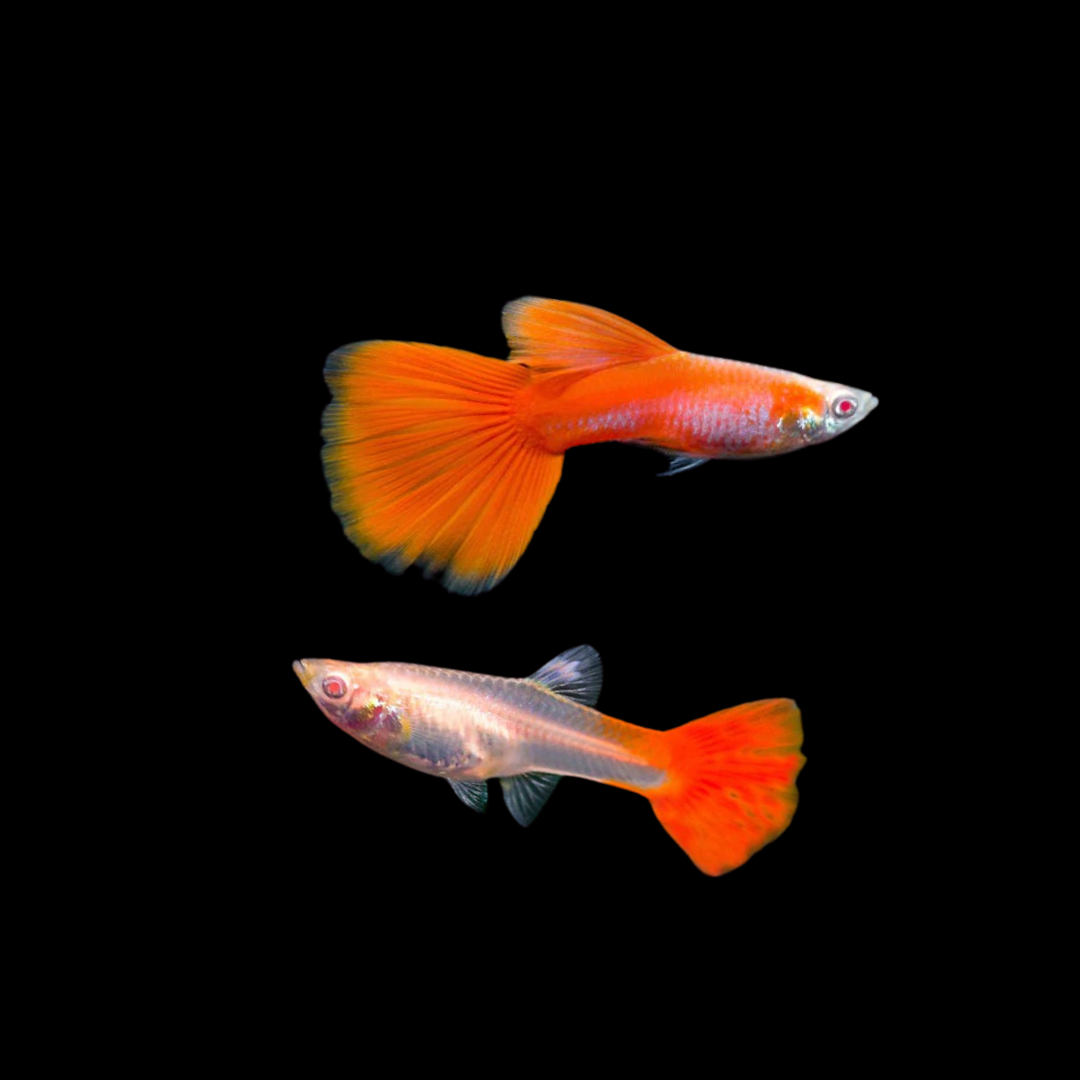
RREAフルレッドグッピーは、グッピーの改良品種の中でも、赤い瞳と全身に広がる赤い発色が印象的な品種です。RREAはリアルレッドアイアルビノを指し、黒色色素がほとんど見えないことで、通常のフルレッドよりも明るく透明感のある赤に見えやすい点が魅力です。とくに雄は尾びれや背びれまで赤く染まり、状態よく育つと小型魚とは思えない存在感を見せます。 The RREA Full Red Guppy is a selectively bred guppy variety known for its red eyes and extensive red coloration across the body. RREA stands for Real Red Eye Albino, and the lack of visible black pigment gives the fish a bright, translucent red appearance compared with many normal full red strains. Males are especially striking, with red coloration extending into the dorsal and caudal fins when kept in good condition.
一方で、アルビノ系統らしい繊細さもあり、急な水質変化や輸送ストレスにはやや注意が必要です。飼育そのものはグッピーの基本に沿えば難しすぎる魚ではありませんが、美しい赤を維持し、繁殖で形を崩さないためには、水質の安定、栄養管理、親魚の選別を丁寧に行うことが大切です。 At the same time, this variety can be somewhat delicate, as is often seen in albino strains, and it should be protected from sudden water quality changes and transport stress. It is not a particularly difficult fish when basic guppy care is followed, but maintaining its red coloration and stable breeding quality requires careful water management, balanced feeding, and selective breeding.
基本情報 / Basic Information
| 学名 / Scientific Name | Poecilia reticulata |
|---|---|
| 通称 / Common Name | RREAフルレッドグッピー、リアルレッドアイアルビノ・フルレッド、アルビノフルレッドグッピーRREA Full Red Guppy, Real Red Eye Albino Full Red Guppy, Albino Full Red Guppy |
| 分類 / Family | カダヤシ目 カダヤシ科 グッピー属Order Cyprinodontiformes, family Poeciliidae, genus Poecilia |
| 英名 / English Name | RREA Full Red Guppy |
| 分布 / Distribution | 原種のグッピーは南米北部からカリブ海周辺に分布します。RREAフルレッドグッピーは野生分布を持たない改良品種で、国内外のブリーダーによって維持・繁殖されています。The wild guppy is native to northern South America and parts of the Caribbean region. The RREA Full Red Guppy is a selectively bred aquarium strain with no natural wild distribution, maintained by breeders in Japan and overseas. |
| 最大体長 / Max Size | 雄は約3〜4cm、雌は約5〜6cm。雌のほうが大きく、丸みのある体型になります。Males usually reach about 3–4 cm, while females may reach about 5–6 cm and have a larger, rounder body. |
| 寿命 / Lifespan | おおよそ1.5〜3年。高水温で代謝が上がり続ける環境では寿命が短くなりやすいため、安定した水温管理が重要です。Approximately 1.5–3 years. Lifespan may be shortened in consistently high-temperature conditions, so stable temperature management is important. |
飼育環境 / Aquarium Environment
| 水槽サイズ / Tank Size | ペアやトリオでの飼育なら30cm規格水槽でも可能ですが、水質の安定や稚魚の育成まで考えるなら45cm規格水槽以上、余裕を持つなら60cm規格水槽が扱いやすいです。繁殖を続ける場合は、親魚用、稚魚用、選別用の水槽を分けられると管理しやすくなります。A 30 cm standard tank can be used for a pair or trio, but a 45 cm standard tank or larger is easier for stable water quality and fry raising. A 60 cm standard tank offers more room and stability. If breeding is continued, separate tanks for adults, fry, and selection make management much easier. |
|---|---|
| 水温 / Temperature | 23〜26℃前後が目安です。急な低水温は白点病などのきっかけになりやすく、高水温の長期維持は代謝を上げすぎるため、年間を通して安定させることが大切です。 Around 23–26°C is recommended. Sudden drops in temperature can trigger diseases such as ich, while long-term high temperatures may over-accelerate metabolism, so year-round stability is important. |
| 水質 / Water Quality | 中性付近から弱アルカリ性寄りの安定した水を好みます。目安はpH6.8〜7.8程度です。極端に酸性へ傾く環境は不向きで、ソイルを使う場合はpHの下がりすぎに注意が必要です。大磯砂やサンゴ砂を少量使い、急なpH低下を抑える方法もあります。Stable water from near-neutral to slightly alkaline is preferred, around pH 6.8–7.8. Strongly acidic conditions are unsuitable, and active soil substrates should be used with caution because they may lower pH too much. Crushed coral or similar buffering materials may be used in small amounts to prevent sudden pH drops. |
| レイアウト / Layout | 強い水流を避け、泳ぎやすい空間を確保したレイアウトが向いています。水草や浮草を入れると稚魚の隠れ場所になり、親魚のストレス軽減にも役立ちます。繁殖を重視する場合は、スポンジフィルターを中心にしたシンプルな水槽が管理しやすいです。A layout with gentle water flow and open swimming space is suitable. Aquatic plants or floating plants provide shelter for fry and reduce stress for adults. For breeding-focused setups, a simple tank using a sponge filter is often the easiest to manage. |
| 注意点 / Precautions | RREA系統は視力や環境変化への耐性が通常体色の個体より弱く見えることがあります。導入時は水合わせを丁寧に行い、購入直後の個体は既存水槽へすぐ入れず、できれば隔離水槽で状態を確認してから合流させると安心です。国産グッピーと外国産グッピーは病原体への耐性や持ち込みリスクが異なるため、安易な混泳は避けることが重要です。RREA strains may appear more sensitive to environmental changes and may not feed as quickly as normal-eyed guppies. Acclimation should be done carefully, and newly purchased fish should ideally be observed in a quarantine tank before being introduced to an established aquarium. Domestic and imported guppies may differ in disease exposure and tolerance, so mixing them without quarantine should be avoided. |
餌と給餌 / Feeding
| 餌の種類 / Diet | 雑食性で、グッピー用のフレークフード、細かい顆粒飼料、冷凍赤虫、ブラインシュリンプ、ミジンコなどを食べます。赤い発色を維持したい場合は、アスタキサンチンやスピルリナなどを含む色揚げ用飼料を補助的に使うと効果が期待できます。This omnivorous fish accepts guppy flakes, fine granules, frozen bloodworms, brine shrimp, and daphnia. To support red coloration, color-enhancing foods containing ingredients such as astaxanthin or spirulina can be used as part of a balanced diet. |
|---|---|
| 給餌のポイント / Feeding Tips | 1日1〜2回、数分で食べきれる量を与えます。アルビノ系統は餌への反応がやや遅い個体もいるため、餌を独占する個体がいないか観察しながら与えると安心です。食べ残しは水質悪化につながるため、赤を濃くしたいからといって過剰に与えないことが大切です。Feed once or twice a day, offering only what the fish can finish within a few minutes. Some albino individuals may respond more slowly to food, so observe whether weaker fish are getting enough. Avoid overfeeding, even when trying to enhance coloration, because leftovers quickly degrade water quality. |
性格と混泳 / Temperament and Tank Mates
| 性格 / Temperament | 基本的には温和で、人にもよく慣れる飼いやすい小型魚です。雄同士は多少追い合うことがありますが、十分なスペースと雌の数を確保すれば大きな問題になりにくいです。尾びれが大きい個体は強い水流や荒い混泳相手に弱いため、落ち着いた環境で飼うと本来の美しさを引き出しやすくなります。It is generally peaceful and easy to keep. Males may chase each other occasionally, but this is usually manageable when enough space and females are provided. Individuals with large fins are vulnerable to strong currents and boisterous tank mates, so a calm environment helps bring out their best appearance. |
|---|---|
| 混泳の相性 / Compatibility | 同じく温和な小型魚や小型のコリドラス、オトシンクルス類などとは混泳しやすいです。ただし、ヒレをかじる魚、気性の荒い魚、大型魚との混泳は避けます。グッピー同士でも、国産系統と外国産系統を混ぜる場合は病気の持ち込みリスクがあるため、必ず隔離期間を設けて状態を確認することが必要です。It can be kept with other peaceful small fish, small Corydoras, and Otocinclus-type catfish. Avoid fin-nipping fish, aggressive species, and larger predators. Even when mixing guppies, domestic and imported strains should be quarantined and observed before being housed together because disease exposure may differ. |
病気と対策 / Diseases and Prevention
| かかりやすい病気 / Common Diseases | 白点病、尾ぐされ病、カラムナリス症、水カビ病、痩せ、体表の白濁などに注意します。グッピーでは輸入個体を中心に、テトラヒメナなどの原虫が関わる症状が問題になることもあります。とくに導入直後、急な水温変化、水質悪化、過密飼育のタイミングで体調を崩しやすいです。Watch for ich, fin rot, columnaris-like infections, fungal infections, wasting, and cloudy patches on the body surface. In guppies, protozoan-related problems such as Tetrahymena infections may also occur, especially in imported fish. Newly introduced fish, sudden temperature changes, poor water quality, and overcrowding are common triggers. |
|---|---|
| 対策と予防 / Prevention | 最も重要なのは、病気を持ち込まないことです。新しい個体は隔離して観察し、元気さ、食欲、ヒレの開き、体表の異常を確認してから合流させます。普段は水温を安定させ、過密を避け、食べ残しを出さない給餌を心がけます。症状が出た場合は早めに隔離し、水換え、塩水浴、観賞魚用薬の使用を症状に合わせて検討しますが、薬剤は必ず製品の用法用量を守って使うことが大切です。The most important prevention is avoiding disease introduction. New fish should be quarantined and observed for activity, appetite, fin condition, and body surface abnormalities before being mixed with existing stock. Maintain stable temperature, avoid overcrowding, and prevent leftover food. If symptoms appear, isolate the fish early and consider water changes, salt baths, or aquarium medications depending on the symptoms, always following product instructions carefully. |
増やし方(繁殖) / Breeding
| 雌雄の判別 / Sexing | 雄は雌より小型で、尾びれや背びれが大きく発色も鮮やかです。尻びれは交接器であるゴノポディウムに変化しています。雌は雄より大きく、腹部に丸みがあり、RREA個体では妊娠斑が黒ではなく橙色から赤みを帯びて見えることがあります。Males are smaller, more colorful, and have larger fins. The anal fin is modified into a gonopodium. Females are larger with a rounder abdomen, and in RREA individuals the gravid area may appear orange or reddish rather than black. |
|---|---|
| 繁殖形態 / Reproduction | 卵胎生です。体内受精を行い、卵ではなく泳げる状態の稚魚を産みます。環境が整うと約1か月前後の周期で出産し、若い雌では少数、成熟した雌では数十匹の稚魚を産むことがあります。It is a livebearer. Fertilization occurs internally, and females give birth to free-swimming fry rather than laying eggs. Under good conditions, births may occur roughly every month, with young females producing smaller broods and mature females producing several dozen fry. |
| 繁殖のポイント / Breeding Tips | RREAは劣性形質として扱われるため、RREA同士の交配ではRREAの子が得られやすいです。ただし、近親交配を重ねると体質の弱さや奇形、繁殖力の低下が出ることがあるため、血統の管理が重要です。フルレッドの赤を維持するには、雄の発色だけでなく、雌の体型、尾びれの形、体に入る赤み、背びれの根元や体側に出る不要なシミをよく見て親魚を選ぶ必要があります。リボンタイプでは雄の交接器が伸びて繁殖に使いにくいことが多いため、非リボン雄とリボン雌を組み合わせる方法が一般的です。RREA is generally treated as a recessive trait, so breeding RREA individuals together tends to produce RREA offspring. However, repeated close inbreeding may lead to weaker constitution, deformities, or reduced fertility, so bloodline management is important. To maintain the Full Red quality, select not only strongly colored males but also females with good body shape, caudal form, reddish body coloration, and minimal unwanted marks near the dorsal base or body sides. In ribbon types, males often have elongated gonopodia and may be difficult to use for breeding, so non-ribbon males are commonly paired with ribbon females. |
雑学と豆知識 / Trivia and Fun Facts
| 1. RREAとは何を意味するのか / 1. What RREA Means | RREAはリアルレッドアイアルビノの略称として使われ、赤く透けるような瞳を持つアルビノ系統を指します。グッピーの体色は、黒、赤、黄、虹色など複数の色素胞によって作られますが、RREAでは黒色色素が強く抑えられるため、赤い色素が濁りにくく、透明感のある赤として見えます。つまりRREAフルレッドの美しさは、単に赤い色素が多いだけではなく、黒が抜けることで赤が前面に現れるところにあります。RREA is commonly used as an abbreviation for Real Red Eye Albino, referring to albino guppies with clear reddish eyes. Guppy coloration is produced by several pigment cells, including black, red, yellow, and iridescent cells. In RREA fish, black pigment is strongly reduced, allowing red pigments to appear brighter and less muddy. The beauty of the RREA Full Red Guppy therefore comes not only from red pigment, but also from the absence of black that lets the red stand out. |
|---|---|
| 2. フルレッドは単純な一遺伝子品種ではない / 2. Full Red Is Not a Simple Single-Gene Trait | フルレッドという表現は、体全体を赤く見せる複数の要素が積み重なって成立していると考えられます。雄の赤い尾びれだけでなく、体側、頭部、背びれ、雌に残る赤みまで見て選別されてきたため、実際の育種では一つの遺伝子だけで説明しきれない部分があります。特に雌の選別は重要で、見た目が地味な雌の中に、次世代の赤さや体型を左右する情報が隠れていることがあります。The Full Red appearance is thought to result from multiple factors working together to produce red coloration across the body. Breeders select not only for a red male tail, but also for body color, head color, dorsal color, and the red expression carried by females. For that reason, it cannot be explained by a single gene in practical breeding. Female selection is especially important because a plain-looking female may carry traits that strongly influence the color and body quality of the next generation. |
| 3. 国産グッピーで重視される隔離管理 / 3. Why Quarantine Matters in Domestic Guppies | 日本のグッピー飼育では、国産系統と外国産系統を安易に混ぜないという考え方が古くから重視されています。これは産地の優劣というより、育ってきた環境や接してきた病原体が異なるためです。国内で大切に維持されてきた系統は、見た目の美しさだけでなく、病気を持ち込まない管理そのものが価値になります。RREAフルレッドのような繊細な品種では、導入前の隔離と観察が、品種の美しさを守る第一歩になります。In Japanese guppy keeping, it has long been considered important not to mix domestic and imported guppies casually. This is not simply a matter of origin or brand value; it reflects differences in rearing environments and disease exposure. For carefully maintained domestic strains, disease control itself becomes part of their value. In a delicate variety such as the RREA Full Red Guppy, quarantine and observation before introduction are the first steps in protecting the strain’s beauty. |
| 4. 赤を育てる餌の考え方 / 4. Feeding for Red Coloration | 赤い魚を赤く育てるには、遺伝だけでなく餌の影響も無視できません。魚は赤や黄色に関わるカロテノイドを体内で十分に作れないため、餌から取り込む必要があります。アスタキサンチンやスピルリナを含む餌は、体色の維持に役立つとされますが、餌だけで血統以上の赤を作れるわけではありません。良い血統、安定した水質、適切な栄養がそろったときに、RREAフルレッドらしい鮮やかさが引き出されます。Raising a red fish to show strong red coloration depends not only on genetics but also on diet. Fish cannot produce sufficient carotenoids, which contribute to red and yellow colors, and must obtain them from food. Foods containing astaxanthin or spirulina can help maintain coloration, but food alone cannot create color beyond the genetic potential of the strain. The vivid appearance of the RREA Full Red Guppy is best expressed when good bloodline quality, stable water, and proper nutrition come together. |
まとめ / Conclusion
RREAフルレッドグッピーは、赤い瞳と全身の赤い発色を楽しめる、非常に観賞価値の高い改良グッピーです。小型で温和なため飼育しやすい一方、アルビノ系統らしい繊細さがあり、水質の急変、過密、病気の持ち込みには注意が必要です。 The RREA Full Red Guppy is a highly attractive selectively bred guppy admired for its red eyes and full-body red coloration. It is small and peaceful, making it easy to keep, but its albino background can make it somewhat delicate, so sudden water changes, overcrowding, and disease introduction should be avoided.
美しい赤を長く維持するには、安定した水温と水質、食べ残しを出さない給餌、導入時の隔離、そして繁殖時の丁寧な親魚選びが重要です。単に赤い魚として見るだけでなく、血統管理によって作り上げられてきた品種として向き合うと、RREAフルレッドグッピーの魅力をより深く楽しめます。 To maintain its beautiful red coloration, stable temperature and water quality, careful feeding, quarantine for new fish, and thoughtful parent selection during breeding are all important. When viewed not only as a red fish but also as a strain shaped through careful bloodline management, the RREA Full Red Guppy becomes even more rewarding to keep and appreciate.

気になる道具や飼い方を見つけてみませんか?
 アイのアクアグッズ案内お魚を撮ったのに、ボクが写ってる! スマホで楽しむ水槽撮影と便利な道具道具の特徴や使い方、選ぶときのポイントをアイが紹介します。記事はコチラ →
 アイのアクアグッズ案内水草用ライトの選び方|緑の絨毯と赤い水草を楽しむ照明・植栽用品道具の特徴や使い方、選ぶときのポイントをアイが紹介します。記事はコチラ →
さまざまな飼育テーマをご紹介。リンク先の記事には広告・商品紹介が含まれます。
案内・紹介記事一覧へ →参考文献
この記事では、グッピーの分類・分布・繁殖生態、改良品種に関わる体色や赤目形質、飼育管理、疾病対策に関する記述の確認に、以下の資料を参考にしています。
- Froese, R. and Pauly, D. Editors. FishBase. Poecilia reticulata, Guppy. 分類、分布、生息環境、基本的な生態情報の確認に参照。
- CABI Digital Library. Poecilia reticulata (guppy). 原産地、世界的な移入状況、分布情報の確認に参照。
- United States Geological Survey, Nonindigenous Aquatic Species Database. Guppy (Poecilia reticulata) Species Profile. 原産範囲、導入地域、生息環境に関する補足確認に参照。
- Fernando, A. A. and Phang, V. P. E. 1985. Culture of the guppy, Poecilia reticulata, in Singapore. Aquaculture. グッピーの養殖・繁殖管理、水質範囲、雌雄分離や育成管理の背景確認に参照。
- Sato, A., et al. 2021. Male coloration affects female gestation period and timing of fertilization in the guppy Poecilia reticulata. PLOS ONE. グッピーが卵胎生で体内受精を行うこと、雄の色彩が繁殖行動に関わることの確認に参照。
- Dor, L., et al. 2019. Mapping of the Sex Determining Region on Linkage Group 12 of Guppy (Poecilia reticulata). G3: Genes, Genomes, Genetics. グッピーの性決定、性染色体、色彩やヒレ形質の遺伝的背景に関する確認に参照。
- Chang, Y., et al. 2024. Identification of Candidate Genes for Red-Eyed (Albinism) Phenotype in Guppies. グッピーの赤目・アルビノ表現型に関わる候補遺伝子の情報確認に参照。
- Dick, C., et al. 2018. The developmental and genetic trajectory of coloration in the guppy (Poecilia reticulata). Evolution & Development. グッピーの色彩形成と遺伝的背景の確認に参照。
- Gupta, S. K., et al. 2016. Carotenoids and Pigmentation in Ornamental Fish. Journal of Aquaculture & Marine Biology. 観賞魚の体色維持におけるカロテノイド、アスタキサンチンなどの役割確認に参照。
- Declercq, A. M., et al. 2013. Columnaris disease in fish: a review with emphasis on bacterium-host interactions. Veterinary Research. カラムナリス病の原因菌、症状、環境ストレスとの関係の確認に参照。
- Imai, S., et al. 2000. Some Biological Characteristics of Tetrahymena corlissi Isolated from Guppy in Thailand. Fish Pathology. グッピーにおけるテトラヒメナ感染、症状、病原体の特徴確認に参照。
- Sharon, G., et al. 2015. Controlled infection of Poecilia reticulata Peters (guppy) with Tetrahymena sp.. Journal of Fish Diseases. テトラヒメナがグッピーに感染し、商業的な養殖・流通上の問題となることの確認に参照。
注:RREAフルレッドグッピーは改良品種名であり、品種そのものの歴史や国内流通に関する情報は、学術文献だけでなくブリーダー文化や流通上の慣習にも依存します。そのため、本ブロックでは店舗・販売ページを避け、学名、生態、体色遺伝、疾病、飼育管理の根拠として利用しやすい資料を中心に選定しています。




コメント