

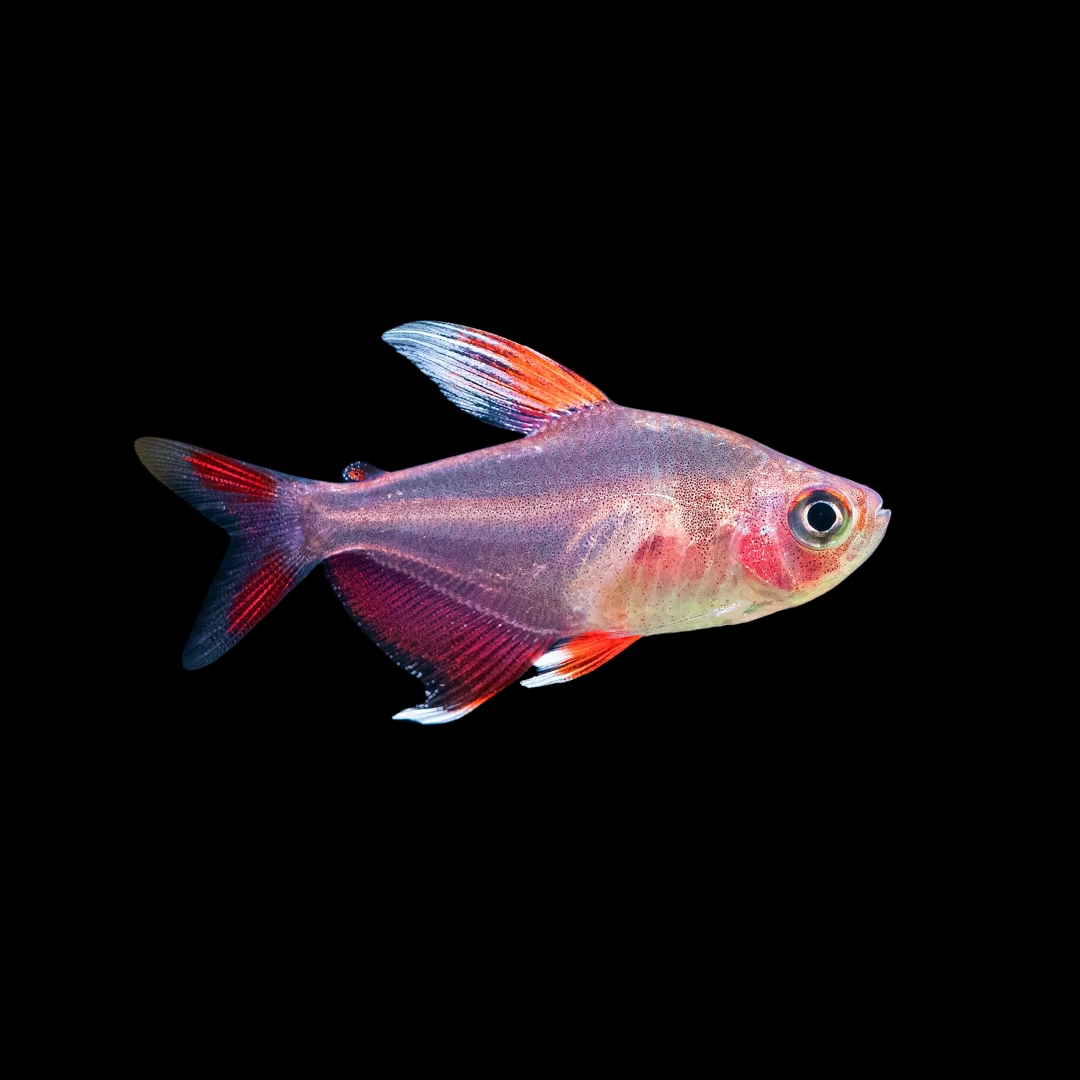
解説 / Description
ホワイトフィン・ロージーテトラは、淡いバラ色の体と、背鰭・腹鰭・尻鰭に入る白い縁取りが美しい小型カラシンです。日本のアクアリウム流通では、長く Hyphessobrycon rosaceus “White Fin” や Hyphessobrycon “ornatus White Fin” に近い名前で扱われてきましたが、近年の分類整理では原種ロージーテトラを Megalamphodus rosaceus とする扱いも示されています。本記事では、国内流通名として定着しているホワイトフィン・ロージーテトラという呼称を用いながら、学術名の変化も補足して紹介します。 The White Fin Rosy Tetra is a small characin admired for its pale rosy body and clean white edging on the dorsal, pelvic, and anal fins. In the Japanese aquarium trade it has long been handled under names close to Hyphessobrycon rosaceus “White Fin” or Hyphessobrycon “ornatus White Fin,” while recent taxonomic treatments may place the wild Rosy Tetra as Megalamphodus rosaceus. This article uses the established Japanese trade name while also noting the taxonomic update.
基本情報 / Basic Information
| 学名 / Scientific Name | Megalamphodus rosaceus (Durbin, 1909) の改良品種として扱われることがあります。アクアリウム流通では Hyphessobrycon rosaceus “White Fin” や Hyphessobrycon “ornatus White Fin” の表記も広く見られます。 |
|---|---|
| 通称 / Common Name | ホワイトフィン・ロージーテトラ、ホワイトフィンロージー、ロージーテトラ・ホワイトフィンWhite Fin Rosy Tetra, Whitefin Rosy Tetra, White Fin Rosy |
| 分類 / Family | カラシン目。従来の観賞魚文脈ではカラシン科 ハイフェソブリコン属として扱われることが多い一方、近年の分類では Acestrorhamphidae メガランフォドゥス属として整理される場合があります。図鑑や販売名では旧来のハイフェソブリコン表記が残ることも珍しくありません。Order Characiformes. In aquarium contexts it has traditionally been treated as a member of Characidae, genus Hyphessobrycon, while recent taxonomy may place the Rosy Tetra in the family Acestrorhamphidae, genus Megalamphodus. Older Hyphessobrycon-based names are still common in aquarium guides and trade labels. |
| 英名 / English Name | White Fin Rosy Tetra |
| 分布 / Distribution | 改良品種そのものに自然分布はありません。原種ロージーテトラは南米北部、主にガイアナおよびスリナム周辺のエセキボ川、コランタイン川、スリナム川水系などに分布するとされます。日本国内で流通するホワイトフィン個体は、野生採集魚ではなく養殖個体として扱われるのが一般的です。This cultivated form has no natural distribution. The wild Rosy Tetra is reported from northern South America, especially the Essequibo, Corantyne, and Suriname River basins around Guyana and Suriname. White Fin individuals sold in Japan are generally treated as farm-bred aquarium fish rather than wild-caught fish. |
| 最大体長 / Max Size | 約4〜5cm。成熟したオスはヒレが伸びるため、実際の体長以上に存在感があります。About 4–5 cm. Mature males can appear more imposing than their body length suggests because of their extended fins. |
| 寿命 / Lifespan | 一般的には約3〜5年。清潔で安定した水質、過密を避けた飼育、偏りの少ない給餌によって長期飼育が期待できます。Generally about 3–5 years. Clean, stable water, avoiding overcrowding, and a varied diet help support long-term care. |
飼育環境 / Aquarium Environment
| 水槽サイズ / Tank Size | 6匹以上の群れで飼育するなら45cm規格水槽以上が目安です。群泳とオス同士のフィンスプレッディングを楽しむなら、60cm規格水槽、約54L以上で8〜10匹ほどを飼うと安定しやすくなります。より大きな群れや水草レイアウトの主役にする場合は、90cm規格水槽以上が適しています。For a group of six or more, a standard 45 cm aquarium or larger is a practical minimum. To enjoy schooling and male fin-spreading displays, a standard 60 cm aquarium of about 54 L or larger with 8–10 individuals is recommended. Larger groups or aquascapes where the fish are the main feature are better suited to standard 90 cm aquariums or larger. |
|---|---|
| 水温 / Temperature | 22〜28℃。日常管理では24〜26℃前後で安定させると扱いやすくなります。 22–28°C. For everyday care, keeping the temperature stable around 24–26°C is practical and safe. |
| 水質 / Water Quality | 弱酸性〜中性、pH5.5〜7.5程度を目安にします。幅広い水質に順応しますが、色を引き出したい場合は弱酸性寄りの軟水が向いています。日本の一般的な水道水でも飼育しやすい魚ですが、急激なpH変化は避けてください。ソイル、流木、マジックリーフ、ヤシャブシの実などは、落ち着いた水質と陰影のある雰囲気づくりに役立ちます。Aim for slightly acidic to neutral water, around pH 5.5–7.5. It adapts to a fairly broad range, but slightly acidic soft water is helpful for good coloration. It is generally manageable in typical Japanese tap water, but sudden pH changes should be avoided. Aquarium soil, driftwood, Indian almond leaves, and alder cones can help create calm water conditions and a shaded natural atmosphere. |
| レイアウト / Layout | 水草を多めに植え、流木や陰性水草で隠れ場所と陰影を作るレイアウトがよく似合います。ミクロソリウム、クリプトコリネ、アヌビアスなどの落ち着いた水草と相性がよく、水面に浮き草を浮かべて光をやわらげると、魚が安心しやすくなります。中央には遊泳スペースを残すと、群泳とディスプレイ行動を観察しやすくなります。A planted layout with driftwood, shaded areas, and plenty of shelter suits this fish very well. Java fern, Cryptocoryne, and Anubias are excellent choices, and floating plants can soften the light and help the fish feel secure. Leaving open swimming space in the center makes schooling and display behavior easier to observe. |
| 注意点 / Precautions | 水質悪化、導入直後の不安定な環境、過密飼育には注意が必要です。立ち上げ直後の水槽ではなく、生物ろ過が安定した水槽に導入しましょう。強すぎる照明や逃げ場の少ないレイアウトでは、体色が薄くなったり劣位個体がストレスを受けたりすることがあります。定期的な水換えを行い、清潔な水を保つことが大切です。Poor water quality, unstable newly set up aquariums, and overcrowding should be avoided. Introduce the fish only after biological filtration is mature. Excessively bright lighting or layouts with few refuges may cause faded coloration or stress in subordinate fish. Regular water changes are important for maintaining clean, stable water. |
餌と給餌 / Feeding
| 餌の種類 / Diet | 雑食性で、細粒タイプの人工飼料、フレークフード、冷凍アカムシ、ブラインシュリンプ、ミジンコ、モイナなどをよく食べます。主食は栄養バランスのよい人工飼料とし、発色や繁殖を意識する場合は、冷凍餌や小型の甲殻類系の餌を補助的に与えるとよいでしょう。It is omnivorous and readily accepts fine granules, flake foods, frozen bloodworms, brine shrimp, daphnia, and Moina. A balanced prepared food should be the staple, while frozen foods and small crustacean-based foods can be used as supplements to support coloration and breeding condition. |
|---|---|
| 給餌のポイント / Feeding Tips | 1日1〜2回、数分で食べきれる量を与えます。食べ残しは水質悪化の原因になるため、与えすぎには注意しましょう。赤やオレンジの発色を引き出したい場合は、カロテノイドを含む餌を取り入れると効果が期待できます。繁殖を狙う場合は、親魚に冷凍アカムシやブラインシュリンプなどを少量ずつ複数回与え、体力をつけてから産卵槽に移します。Feed once or twice daily, offering only what the fish can finish within a few minutes. Uneaten food can quickly reduce water quality, so avoid overfeeding. Foods containing carotenoids may help enhance red and orange tones. For breeding, condition the adults with small, frequent feedings of nutritious foods such as frozen bloodworms and brine shrimp before moving them to a spawning tank. |
性格と混泳 / Temperament and Tank Mates
| 性格 / Temperament | 温和で協調性のある小型魚です。オス同士はヒレを大きく広げて見せ合うフィンスプレッディングを行いますが、多くの場合は儀式的な誇示行動で、相手を深く傷つけるような争いには発展しにくい魚です。群れで飼うことで落ち着きやすくなり、本来の行動も引き出されます。It is a peaceful and sociable small fish. Males display to one another by spreading their fins, but this is usually ritualized behavior and rarely becomes seriously damaging aggression. Keeping them in a group helps them feel secure and encourages natural behavior. |
|---|---|
| 混泳の相性 / Compatibility | ネオンテトラ、カージナルテトラ、ラミーノーズテトラ、ラスボラ類、コリドラス、オトシンクルス、温和なアピストグラマやラムレジィなどと相性がよいです。コリドラスやオトシンクルスは生活層が異なるため特に合わせやすい相手です。一方で、口が大きく本種を捕食できる魚、気性の荒いシクリッド、大型魚、泳ぎの速すぎる魚との混泳は避けてください。Good tank mates include neon tetras, cardinal tetras, rummy-nose tetras, small rasboras, Corydoras, Otocinclus, and peaceful dwarf cichlids such as Apistogramma and German blue rams. Corydoras and Otocinclus are especially compatible because they occupy different areas of the aquarium. Avoid large-mouthed predators, aggressive cichlids, large fish, and overly boisterous fast swimmers. |
病気と対策 / Diseases and Prevention
| かかりやすい病気 / Common Diseases | 白点病、尾ぐされ病、カラムナリス症、外部寄生虫による体表異常など、小型カラシンで一般的に見られる病気に注意します。水質悪化や慢性的なストレスが続くと、体表の色つやや鱗の見え方に異常が出ることがあります。普段の発色、ヒレの開き、泳ぎ方をよく観察しておくと、早期発見につながります。Watch for common small-characin diseases such as ich, fin rot, columnaris, and external parasite-related skin problems. Poor water quality or chronic stress can affect the sheen of the body and the appearance of the scales. Regular observation of color, fin posture, and swimming behavior helps with early detection. |
|---|---|
| 対策と予防 / Prevention | 最も大切なのは、安定した水質とストレスの少ない環境です。新規導入時は水合わせを丁寧に行い、可能であればトリートメント水槽で数日観察します。ろ過が未成熟な水槽への導入、過密飼育、急激な水温やpHの変化は避けましょう。異常が見られた場合は早めに隔離し、症状に合った薬浴や水質改善を行います。Stable water quality and a low-stress environment are the best prevention. Acclimate new fish carefully and, if possible, observe them in a quarantine tank for several days. Avoid immature filtration, overcrowding, and sudden changes in temperature or pH. If symptoms appear, isolate affected fish early and respond with appropriate treatment and water-quality improvement. |
増やし方(繁殖) / Breeding
| 雌雄の判別 / Sexing | オスは体つきがややスレンダーで、背鰭や尻鰭が伸びやすく、発情時には色が濃くなります。メスは全体に丸みがあり、成熟して抱卵すると腹部がふっくらします。ヒレの白い縁取りは雌雄ともに見られますが、オスの方がヒレを広げたときの見応えが大きくなります。Males are generally slimmer, with more extended dorsal and anal fins, and their colors intensify during courtship. Females are rounder overall, and mature females become noticeably fuller in the abdomen when carrying eggs. Both sexes show white fin edging, but males are more impressive when displaying their fins. |
|---|---|
| 繁殖形態 / Reproduction | ばら撒き型の産卵を行います。親魚は卵や稚魚を保護せず、むしろ食べてしまうことがあるため、繁殖を狙う場合は専用の産卵槽を用意します。ウィローモスや産卵ネットを使い、卵が親魚の口の届きにくい場所へ落ちるようにします。It is an egg-scattering species. The parents do not provide care and may eat eggs or fry, so a dedicated spawning tank is recommended. Java moss or a spawning grid can be used so that eggs fall out of the adults’ reach. |
| 繁殖のポイント / Breeding Tips | 繁殖難易度は中〜やや難しめです。色のよいオスと、腹部がふくらんだメスを選び、高栄養の餌でしっかりコンディションを整えます。弱酸性寄りの軟水、暗めの照明、落ち着いた環境を用意し、夕方にペアまたは小グループを入れると翌朝に産卵することがあります。産卵後はすぐに親を戻します。卵はおよそ2〜3日で孵化し、自由遊泳を始めた直後はインフゾリアのような微小な餌が必要です。成長に合わせて孵化直後のブラインシュリンプへ移行します。Breeding is moderate to somewhat difficult. Select a vividly colored male and a full-bodied female, then condition them well with nutritious foods. Prepare a calm, dimly lit spawning tank with soft, slightly acidic water. Introducing a pair or small group in the evening may lead to spawning the next morning. Remove the adults immediately after spawning. The eggs usually hatch in about 2–3 days, and newly free-swimming fry need microscopic foods such as infusoria before transitioning to newly hatched brine shrimp. |
雑学と豆知識 / Trivia and Fun Facts
| 1. 学名が揺れ動く、ロージーテトラの現在地 / 1. A species name in motion | ロージーテトラの仲間を調べると、Hyphessobrycon、Megalamphodus、さらに古い文献や流通名に由来する別名が入り混じって登場します。これは単なる表記ゆれではなく、南米小型カラシン類の分類そのものが、形態観察から分子系統解析へと大きく更新されているためです。ショップの名札ではハイフェソブリコンのままでも、最新の分類表では別属に移されていることがあります。小さな一匹のテトラを通じて、魚類分類学が今も動き続けていることを感じられるのは、この仲間の面白さのひとつです。Researching Rosy Tetras reveals a mixture of names such as Hyphessobrycon, Megalamphodus, and older names from literature and trade usage. This is not simply inconsistent spelling; it reflects the ongoing revision of South American small-characin taxonomy as studies move from morphology alone to molecular phylogenetics. A shop label may still use Hyphessobrycon even when a current checklist places the species in another genus. Through this small tetra, we can see that fish taxonomy is still actively changing. |
|---|---|
| 2. ロージーテトラとオルネートテトラのよく似た物語 / 2. The intertwined story of Rosy and Ornate Tetras | ロージーテトラの仲間は、体色や体型がよく似ているため、古くから市場でも研究上でも混同されてきました。特にロージーテトラとオルネートテトラは近い印象を持つ魚として扱われ、販売名にもその影響が残ることがあります。肩口の斑紋、腹鰭や背鰭の形、成熟したオスのヒレの伸び方など、細かな部分を観察すると違いが見えてきますが、幼魚や状態の整っていない個体では判別が難しいこともあります。ホワイトフィンという白いヒレの表現は、鑑賞上の個性を強めると同時に、流通上も印象に残りやすい特徴になりました。Members of the Rosy Tetra group have long been confused in both the aquarium trade and scientific discussions because their body colors and shapes are very similar. Rosy and Ornate Tetras in particular have often been perceived as closely resembling one another, and this history can still be seen in trade names. Differences may appear in shoulder markings, pelvic and dorsal fin shape, and mature male fin development, but juveniles or poorly conditioned individuals can be difficult to identify. The White Fin expression strengthens the fish’s visual identity and makes it more memorable in the aquarium trade. |
| 3. 白いヒレをめぐるブリーディング史 / 3. The breeding story behind the white fins | ホワイトフィン・ロージーテトラは、野生にそのまま存在する魚ではなく、人の手による選択的育種で固定された改良品種として扱われます。欧州の観賞魚業者による情報では、ドイツのブリーダーであるギュンネル氏が関わった品種として紹介され、1997年のシンガポールのアクアラマで新しい改良品種として評価されたとされています。白いヒレの特徴を選抜固定した品種ですが、作出に関わる詳しい遺伝的背景には不明な点があり、黒色素が完全になくなったとは限りません。The White Fin Rosy Tetra is treated as a cultivated form fixed through selective breeding rather than a fish found unchanged in nature. European ornamental-fish trade information describes it as a form associated with the German breeder Günnel and notes recognition at Aquarama Singapore in 1997 as a new breeding form. It is a selected form emphasizing white fins, but its detailed genetic background is not fully clear, and this does not necessarily mean that all black pigment has been eliminated. |
| 4. ブラックウォーターの雰囲気が教えてくれる飼育のヒント / 4. What a blackwater-like atmosphere teaches us | 原種ロージーテトラの分布は、資料によって表現に幅がありますが、北部南米の流れが穏やかで水草や岸辺の植物が多い水域と結びつけて語られます。落ち葉や流木がつくる茶褐色の水、木陰のようなやわらかな光、身を隠せる水草の茂みを水槽に取り入れると、本種は落ち着きやすくなります。大切なのは、無理に極端なブラックウォーターを作ることではなく、急変の少ない弱酸性寄りの水質と、安心できる陰影を整えることです。Descriptions of the wild Rosy Tetra’s habitat vary among sources, but it is generally associated with calm northern South American waters rich in aquatic or marginal vegetation. Brownish water influenced by leaves and driftwood, soft shade, and planted refuges can help this fish feel secure in the aquarium. The key is not to force an extreme blackwater setup, but to provide stable slightly acidic conditions and shaded areas where the fish can relax. |
| 5. フィンスプレッディングという小さな舞台 / 5. Fin-spreading as a miniature stage performance | 本種の魅力は体色だけではありません。状態のよいオス同士が向かい合い、背鰭や尻鰭をいっぱいに広げるフィンスプレッディングは、小さな水槽の中で繰り広げられる優雅な舞台のようです。これは相手を傷つけるためというより、自分の大きさや美しさを見せる儀式的な行動として観察されます。十分な群れと遊泳スペース、そして水草の茂みによる逃げ場があると、この行動は魚に過度な負担をかけにくく、飼育者にとっても本種らしさを感じられる特別な瞬間になります。The appeal of this species is not limited to color. When well-conditioned males face one another and spread their dorsal and anal fins to their fullest, the display resembles a graceful performance on a tiny aquatic stage. This behavior is generally ritualized, showing size and beauty rather than causing serious injury. With a proper group, enough swimming space, and planted refuges, fin-spreading can be observed without placing excessive stress on the fish, becoming one of the most memorable moments in keeping this species. |
| 6. 日本で親しまれる理由 / 6. Why it is popular in Japan | ホワイトフィン・ロージーテトラが日本で親しまれている背景には、美しさだけでなく、飼いやすさと入手しやすさがあります。養殖個体として流通することが多いため、野生採集魚に比べて入荷状態が安定しやすく、群れでそろえやすい点も魅力です。60cm規格水槽にまとまった数を泳がせると、ネオンテトラよりも体高のあるシルエットがほどよい存在感を生み、派手すぎず、しかし確かに目を引く主役として水景を引き締めてくれます。The White Fin Rosy Tetra is popular in Japan not only because it is beautiful, but also because it is easy to keep and relatively easy to obtain. Since it is commonly traded as a farm-bred fish, shipments are generally more stable than many wild-caught species, and it is easier to assemble a group of similar individuals. A group in a standard 60 cm aquarium creates a calm but noticeable presence, stronger in silhouette than smaller tetras such as neon tetras, and works well as a refined centerpiece for an aquascape. |
まとめ / Conclusion
ホワイトフィン・ロージーテトラは、バラ色の体と白いヒレの対比が美しい、完成度の高い小型カラシンです。分類面では、国内流通でおなじみのハイフェソブリコン表記と、近年のメガランフォドゥス表記が併存するため、両方の名前を知っておくと情報を探しやすくなります。飼育面では温和で混泳しやすく、日本の一般的な水道水にも比較的よく適応します。 The White Fin Rosy Tetra is a refined small characin admired for the contrast between its rosy body and white fins. Taxonomically, familiar Hyphessobrycon-based trade names coexist with more recent Megalamphodus-based treatments, so understanding both helps avoid confusion. In aquarium care, it is peaceful, suitable for community tanks, and generally adapts well to typical Japanese tap water.
群れで泳ぐ姿、オス同士のフィンスプレッディング、そして水草の緑に映える白いヒレは、本種ならではの大きな魅力です。安定した水質、十分な遊泳スペース、バランスのよい給餌を心がければ、長く美しい姿を楽しめるでしょう。水草水槽の主役にも、落ち着いた混泳水槽の彩りにもふさわしい、世代を超えて愛される定番種です。 Its schooling, male fin-spreading displays, and white fins shining against green aquatic plants are among its greatest charms. With stable water quality, adequate swimming space, and balanced feeding, it can be enjoyed in beautiful condition for years. It is a classic aquarium fish suited both as the centerpiece of a planted tank and as a graceful accent in a peaceful community aquarium.

気になる道具や飼い方を見つけてみませんか?
 アイのアクアグッズ案内水草用ソイルの選び方|土・砂の違いとおすすめ商品道具の特徴や使い方、選ぶときのポイントをアイが紹介します。記事はコチラ →
 アイのアクアグッズ案内ダニオの仲間に合わせる飼育用品|ゼブラダニオから超小型種まで水槽・ろ過・餌を選ぶ道具の特徴や使い方、選ぶときのポイントをアイが紹介します。記事はコチラ →
さまざまな飼育テーマをご紹介。リンク先の記事には広告・商品紹介が含まれます。
案内・紹介記事一覧へ →参考文献・参照データ
本記事では、分類、分布、原記載、ロージーテトラ系統群、一般的な飼育条件を確認するため、以下の資料を参照しました。販売価格や在庫情報を主目的とする店舗系ページは除外しています。
- Fricke, R., Eschmeyer, W. N. & Van der Laan, R. eds. Eschmeyer’s Catalog of Fishes: Hyphessobrycon rosaceus Durbin, 1909. California Academy of Sciences. 参照ページを開く 学名、原記載、タイプ産地、シノニム確認の基礎資料として参照。
- Froese, R. & Pauly, D. eds. FishBase: Megalamphodus rosaceus, Rosy tetra. 参照ページを開く 最大体長、卵生であること、IUCN評価、観賞魚としての利用など、基本生物情報の確認に使用。
- Melo, B. F. et al. 2024. Phylogenomics of Characidae, a hyper-diverse Neotropical freshwater fish lineage, with a phylogenetic classification including four families (Teleostei: Characiformes). Zoological Journal of the Linnean Society. 参照ページを開く 旧来の Characidae 周辺分類、Acestrorhamphidae などを含む近年の分類整理を確認するために参照。
- Weitzman, S. H. & Palmer, L. 1997. A new species of Hyphessobrycon (Teleostei: Characidae) from the Neblina region of Venezuela and Brazil, with comments on the putative “rosy tetra clade”. Ichthyological Exploration of Freshwaters 7(3): 209–242. 参照ページを開く ロージーテトラ・クレードという考え方と近縁群の整理に関する主要文献として参照。
- Paz, F. P. C. et al. 2014. DNA Barcodes of Rosy Tetras and Allied Species (Characiformes: Characidae: Hyphessobrycon) from the Brazilian Amazon Basin. PLOS ONE 9(5): e98603. 参照ページを開く ロージーテトラ類および近縁種の分子系統・識別の難しさを補足する資料として参照。
- Seriously Fish. Hyphessobrycon rosaceus – Rosy Tetra. 参照ページを開く 水槽サイズ、水質、群れでの飼育、混泳、繁殖など、飼育条件の照合に使用。
補足:ホワイトフィン個体の作出者やアクアラマ受賞歴については、観賞魚業者系の情報に依存する部分が大きいため、店舗系・販売系ページを除外する方針に合わせ、この参考文献ブロックには採用していません。





コメント