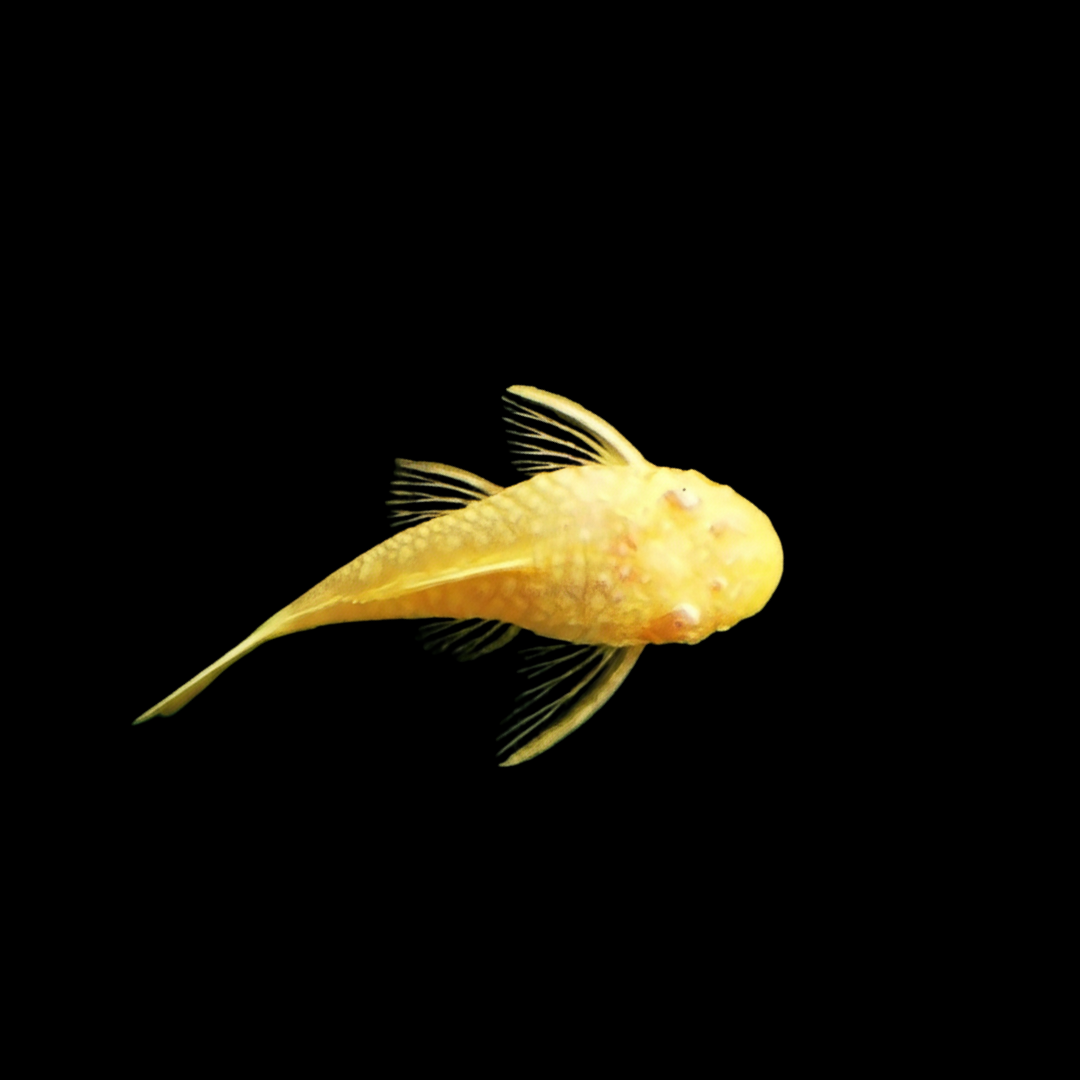
アルビノブッシープレコは、ブッシープレコとして流通するアンキストルス属魚類のアルビノ系改良品種です。淡いクリーム色から黄色みを帯びた体色、赤みのある眼、そしてオスの吻部に発達するブラシ状の触手が大きな魅力です。一般的な大型プレコに比べて成長サイズが控えめで、温和な性格を持つため、日本の60cm規格水槽を中心とした小・中型水槽でも親しまれています。The Albino Bristlenose Pleco is an albino ornamental strain of bristlenose catfish commonly traded within the genus Ancistrus. Its pale cream to yellowish body, reddish eyes, and the brush-like tentacles that develop on mature males make it especially attractive. Compared with many large plecos, it remains relatively compact and is generally peaceful, making it popular for small to medium aquariums such as standard 60 cm tanks in Japan.
ナマズ目 ロリカリア科 ヒポストムス亜科 アンキストルス族 アンキストルス属Order Siluriformes, family Loricariidae, subfamily Hypostominae, tribe Ancistrini, genus Ancistrus
英名 / English Name
Albino Bristlenose Pleco
分布 / Distribution
原種となるアンキストルス属は南米から中米南部の淡水域に広く分布します。現在日本で流通するアルビノ個体の多くは、野生採集個体ではなく、長年の水槽内繁殖により固定された養殖個体です。Wild Ancistrus species are distributed across freshwater habitats of South America and southern Central America. Most albino individuals traded in Japan are captive-bred ornamental strains rather than wild-caught fish.
最大体長 / Max Size
一般に約10〜15cm。販売名に「ミニ」と付いていても、成魚では10cm前後以上に成長する点に注意が必要です。Usually about 10–15 cm. Even when sold as “mini,” juveniles can grow to around 10 cm or more as adults.
寿命 / Lifespan
飼育環境が安定していれば5〜10年程度が目安です。良好な環境ではさらに長生きする例もあります。Typically around 5–10 years in stable aquarium conditions, with some individuals living longer under excellent care.
飼育環境 / Aquarium Environment
水槽サイズ / Tank Size
単独または少数飼育なら45cm規格水槽以上が目安ですが、成魚の体格、糞の量、混泳を考えると60cm規格水槽以上が扱いやすいです。複数のオスを入れる場合は、さらに広い水槽と十分な隠れ家が必要です。A standard 45 cm tank can work for a single or small number of fish, but a standard 60 cm tank or larger is easier to manage considering adult size, waste production, and tank mates. Multiple males require more space and plenty of shelters.
水温 / Temperature
22〜30℃の範囲に適応しますが、日常管理では25〜28℃前後が扱いやすいです。急な水温変化は白点病や体調不良のきっかけになるため避けます。They tolerate roughly 22–30°C, but 25–28°C is a practical everyday range. Sudden temperature swings should be avoided because they can trigger stress and diseases such as ich.
水質 / Water Quality
弱酸性〜中性付近、目安としてpH6.5〜7.5程度で飼育しやすい魚です。日本の一般的な水道水をカルキ抜きし、急変を避けながら定期的に換水すれば安定しやすいです。They are easy to keep in slightly acidic to neutral water, roughly pH 6.5–7.5. Dechlorinated tap water is usually suitable when water changes are regular and sudden parameter shifts are avoided.
レイアウト / Layout
流木、石、プレコ用土管、シェルターを組み合わせ、暗く落ち着ける場所を用意します。流木は餌そのものというより、表面のバイオフィルムを舐め取る場所、隠れ家、消化管の動きを助ける繊維質の供給源として役立つと考えるとよいでしょう。Use driftwood, stones, pleco caves, and other shelters to provide dark resting places. Driftwood is best understood not as a complete food source, but as a grazing surface for biofilm, a shelter, and a source of rough fiber that may support gut function.
注意点 / Precautions
植物質の餌をよく食べ、体格のわりに糞が多いため、濾過は強めにします。底面に汚れがたまりやすいので、換水時には底床の掃除も行います。アルビノ個体は体色が明るいため、強い照明下では落ち着かないことがあり、陰になる場所を作ると安心しやすいです。They eat a lot of plant-based food and produce a surprising amount of waste, so strong filtration is recommended. Debris tends to accumulate on the bottom, so clean the substrate during water changes. Albino individuals may feel exposed under strong lighting, so shaded areas help them settle.
餌と給餌 / Feeding
餌の種類 / Diet
主食はスピルリナや植物質を含む沈下性のプレコ用タブレット、藻類食魚向けの沈下性フードが適しています。副食として、軽く湯通ししたズッキーニ、キュウリ、ホウレンソウなどを少量与えることもできます。動物質の餌は好みますが、与えすぎると肥満や消化不良の原因になるため控えめにします。Sinking pleco tablets and algae-grazer foods containing spirulina or plant matter are suitable staples. Small amounts of blanched zucchini, cucumber, or spinach can be offered as supplements. They may accept animal-based foods, but these should be limited to avoid digestive problems and excess fat.
給餌のポイント / Feeding Tips
「水槽のコケだけで十分」と考えず、人工飼料を必ず補助します。夜行性が強いので、照明を消した後に沈下性フードを与えると食べやすくなります。野菜類は水を汚しやすいため、12〜24時間以内を目安に残りを回収してください。Do not assume that aquarium algae alone is enough; provide prepared foods regularly. Because they are largely nocturnal, feeding sinking foods after lights out often works well. Remove uneaten vegetables within about 12–24 hours to prevent water quality deterioration.
性格と混泳 / Temperament and Tank Mates
性格 / Temperament
基本的には温和で、普段は流木やガラス面、底面をゆっくり移動しながら過ごします。ただし、成長したオスはシェルターや餌場に対して縄張り意識を見せることがあります。They are generally peaceful and spend much of their time grazing on driftwood, glass, and the bottom. Mature males may become territorial around caves and feeding areas.
混泳の相性 / Compatibility
カージナルテトラ、ラスボラ、小型レインボーフィッシュなど、遊泳層の異なる温和な魚と相性がよいです。同じ底もの同士でも混泳は可能ですが、コリドラスや他のプレコと餌場が重なるため、餌が行き渡るようにします。大型魚、気性の荒い魚、ひれをかじる魚との混泳は避けた方が無難です。They mix well with peaceful midwater fish such as cardinal tetras, rasboras, and small rainbowfish. Bottom-dwelling tank mates can also work, but food competition with Corydoras or other plecos should be managed. Avoid large aggressive fish or fin-nipping species.
病気と対策 / Diseases and Prevention
かかりやすい病気 / Common Diseases
白点病、エロモナス症、外傷からの二次感染、餌の偏りや水質悪化に伴う膨満などに注意します。丈夫な魚ではありますが、水質悪化と急変には弱く、底床の汚れが病気の引き金になることがあります。Watch for ich, bacterial infections such as Aeromonas-related problems, secondary infections from injuries, and bloating associated with poor diet or water quality. They are hardy, but deteriorating or rapidly changing water conditions can still cause illness.
対策と予防 / Prevention
予防の基本は、安定した水質、強めの濾過、底面清掃、栄養バランスのよい給餌です。薬浴を行う場合、ナマズ類やプレコ類は薬剤に敏感なことがあるため、製品の注意書きを確認し、隔離水槽で低めの濃度から慎重に行います。特にマラカイトグリーンや色素系薬剤は、水草や濾材への影響も含めて注意が必要です。Prevention depends on stable water quality, strong filtration, bottom cleaning, and a balanced diet. When medication is necessary, remember that catfishes and plecos can be sensitive to some treatments; check product instructions and treat cautiously in a separate hospital tank, often starting at a reduced concentration. Extra care is needed with malachite green and dye-based medications because they can affect plants and filter media as well.
増やし方(繁殖) / Breeding
雌雄の判別 / Sexing
成熟したオスは吻部から頭部にかけてブラシ状の触手が発達します。メスにも口先の縁に短い突起が出ることはありますが、頭部全体に密生することは少なく、オスほど目立ちません。Mature males develop prominent bristle-like tentacles over the snout and head. Females may have short bristles along the snout margin, but they are usually much less developed and do not cover the head like those of males.
繁殖形態 / Reproduction
洞窟産卵型です。メスがシェルター内に卵を産み付けた後、オスが卵に水流を送り、無精卵を取り除きながら孵化まで守ります。孵化直後の稚魚はヨークサックを吸収してから餌を食べ始めます。They are cave spawners. After the female lays eggs inside a cave, the male guards them, fans them with water, and removes infertile eggs. Newly hatched fry begin feeding only after absorbing their yolk sacs.
繁殖のポイント / Breeding Tips
成熟したペア、オスが占有しやすいプレコ用土管、安定した水質がそろうと繁殖しやすくなります。やや冷たい水での換水が雨季の刺激となり、産卵のきっかけになることがあります。稚魚は餓死と水質悪化に弱いため、砕いたプレコフードなどを少量ずつ与え、底面を清潔に保ちます。Breeding becomes easier with a mature pair, a suitable pleco cave for the male, and stable water quality. A water change with slightly cooler water may simulate rainy-season conditions and trigger spawning. Fry are vulnerable to starvation and poor water quality, so offer finely crushed pleco food in small amounts and keep the bottom clean.
雑学と豆知識 / Trivia and Fun Facts
1. 「ミニ」は種類名ではなく販売サイズのことが多い / 1. “Mini” usually describes sale size, not a separate species
日本では「アルビノミニブッシープレコ」という名前で幼魚がよく販売されます。しかし、この「ミニ」は生物学的に小型の別種を示す名称ではなく、販売時の小さなサイズを表している場合がほとんどです。購入時に3〜5cmほどでも、適切に育てれば成魚サイズまで成長します。小さくて可愛い時期だけを見て選ぶのではなく、成魚の大きさ、寿命、糞の量まで見越して迎えることが大切です。In Japan, juveniles are often sold as “Albino Mini Bristlenose Plecos.” In most cases, “mini” refers to the small sale size rather than a biologically distinct dwarf species. Even a 3–5 cm juvenile can grow to adult size under proper care, so plan for its adult length, lifespan, and waste production before purchase.
2. オスの触手は「稚魚に見せかける」ために発達した可能性がある / 2. Male bristles may mimic fry
アンキストルス属のオスに見られるブラシ状の触手は、単なる飾りではありません。研究では、巣穴を守るオスの顔周りの触手が、暗い巣内で動く稚魚の姿に似て見え、メスに「このオスはすでに子育てに成功している」と感じさせる信号として働いた可能性が提案されています。これは「稚魚擬態」と呼ばれる仮説で、ブッシープレコの不思議な顔つきに進化的な物語を与えてくれます。The brush-like tentacles on male Ancistrus are not merely decorative. Researchers have proposed that they may resemble the appearance of fry moving inside a dark cave, signaling to females that the male is already caring for young. This “larval mimicry” hypothesis gives an evolutionary story to the distinctive face of bristlenose plecos.
3. 流木は「主食」ではなく、環境と消化を支える存在 / 3. Driftwood supports the environment and digestion, but is not a complete staple food
プレコが流木をかじる姿から「木を栄養源にしている」と説明されることがありますが、ロリカリア科魚類の研究では、木材そのものを高効率に消化して主なエネルギー源にしているとは言い切れないことが示されています。アルビノブッシープレコにとって流木は、表面のバイオフィルムを舐め取る場所であり、隠れ家であり、消化管の動きを助ける繊維質を得る補助的な存在です。だからこそ、流木を入れつつも、主食として植物質の人工飼料を与える必要があります。Because plecos rasp driftwood, they are sometimes described as feeding on wood itself. Studies on loricariid catfishes suggest that wood is not efficiently digested as a main energy source. For Albino Bristlenose Plecos, driftwood is better viewed as a grazing surface for biofilm, a shelter, and a supplementary source of rough fiber. Prepared plant-based foods should still be provided as the main diet.
4. 低酸素への強さには、胃を使った補助的な空気呼吸が関係する / 4. Their hypoxia tolerance is linked to accessory air breathing through the stomach
ブッシープレコの仲間は、低酸素環境に置かれると水面で空気を飲み込み、血管が発達した胃を使って補助的に酸素を取り込むことが知られています。近年の研究では、この行動は稚魚のごく小さな段階から完全に備わっているわけではなく、体長が一定以上になってから明確に見られることが報告されています。ただし、これは酸欠にしてよいという意味ではありません。水槽では十分な濾過とエアレーションを保つことが基本です。Bristlenose plecos can gulp air at the surface under hypoxic conditions and use a highly vascularized stomach for accessory oxygen uptake. Recent research indicates that this behavior is not fully developed in the smallest juveniles and becomes clear only after they reach a certain size. This does not mean they should be kept in low-oxygen water; good filtration and aeration remain essential.
5. アルビノ、スーパーレッド、ブルーアイ系は同じ仕組みとは限らない / 5. Albino, Super Red, and Blue-Eyed strains do not necessarily share the same genetic basis
流通名が似ていても、色彩変異の仕組みは同じとは限りません。アルビノはメラニン色素の欠損が関係する系統として扱われますが、スーパーレッドは赤みの強い個体を選抜して固定した改良品種、ブルーアイゴールデン系は別の由来や流通上の混同を含むことがあります。観賞魚として楽しむ分には美しさを重視して問題ありませんが、繁殖や系統維持を目的にする場合は、販売名だけでなく親魚の由来を確認することが重要です。Similar trade names do not always mean the same genetic mechanism. Albino strains are associated with reduced melanin, while Super Red strains are generally selected for strong red-orange coloration, and Blue-Eyed Golden lines may involve different origins or trade-name confusion. For display keeping, appearance may be enough, but breeders should check parental lineage rather than relying only on trade names.
6. 性決定に関する研究は興味深いが、種や系統で一括りにしない / 6. Sex-chromosome research is fascinating, but should not be overgeneralized
アンキストルス属では、X0型を含むさまざまな性染色体システムが報告されており、魚類の性決定の多様性を考えるうえで興味深いグループです。ただし、現在流通するアルビノブッシープレコは水槽内で維持されてきた複合的な改良・交雑系統である可能性が高く、属全体の研究結果をそのまますべての流通個体に当てはめるのは慎重であるべきです。Various sex-chromosome systems, including X0-type systems, have been reported within Ancistrus, making the genus interesting for studying sex determination in fishes. However, the albino bristlenose plecos traded today are likely complex captive-bred or hybrid aquarium lines, so findings from the genus should not be applied uncritically to every commercial strain.
まとめ / Conclusion
アルビノブッシープレコは、温和で丈夫、さらに小型水槽にも導入しやすい人気のプレコです。コケ取り役として知られますが、健康に長く飼うためには、流木、隠れ家、強めの濾過、植物質を中心とした人工飼料が欠かせません。The Albino Bristlenose Pleco is a popular pleco because it is peaceful, hardy, and relatively manageable in smaller aquariums. Although it is known as an algae grazer, long-term success requires driftwood, shelters, strong filtration, and a plant-based prepared diet.
「ミニ」という販売名に惑わされず、成魚サイズや寿命まで見越して迎えれば、長く付き合える魅力的な水槽の住人になります。繁殖も比較的狙いやすく、オスの育児行動や独特の触手など、観察するほど奥深さを感じられる魚です。Do not be misled by the trade label “mini”; plan for adult size and lifespan from the start. With proper care, this fish becomes a long-lived and fascinating aquarium resident, and its breeding behavior, paternal care, and distinctive male bristles make it especially rewarding to observe.
分類・分布・最大サイズの基礎情報:
Froese, R. and Pauly, D. (eds.). FishBase. Ancistrus cirrhosus species summary. FishBase は魚類の分類、分布、生息環境、最大体長などを確認するための国際的な魚類データベースで、本記事ではロリカリア科、淡水底生魚、南米パラナ川流域、最大サイズの記述を確認する資料として使用しています。
FishBase: Ancistrus cirrhosus
分類学上の有効名・シノニム確認:
Fricke, R., Eschmeyer, W. N. and Van der Laan, R. (eds.). Eschmeyer’s Catalog of Fishes. California Academy of Sciences. Ancistrus cirrhosus の有効名、原記載、分類上の位置づけ、分布情報を確認するために参照しています。
Eschmeyer’s Catalog of Fishes: Ancistrus cirrhosus
吻部触手・繁殖行動・父性保護:
Sabaj, M. H., Armbruster, J. W. and Page, L. M. (1999). Spawning in Ancistrus (Siluriformes: Loricariidae) with comments on the evolution of snout tentacles as a novel reproductive strategy: larval mimicry. Ichthyological Exploration of Freshwaters, 10(3), 217–229. オスの吻部触手、洞窟産卵、卵・仔魚の保護、稚魚擬態仮説を支える主要文献として参照しています。
Semantic Scholar: Spawning in Ancistrus
性染色体・遺伝的多様性に関する補足:
Nirchio, M. et al. (2023). Occurrence of Sex Chromosomes in Fish of the Genus Ancistrus with a New Description of Multiple Sex Chromosomes in Ancistrus clementinae. Genes, 14(2), 306. Ancistrus 属では性染色体系が多様であることを確認し、記事内でX0型などを過度に一般化しないための根拠として参照しています。
PMC: Occurrence of Sex Chromosomes in Fish of the Genus Ancistrus
胃を用いた補助的空気呼吸・低酸素適応:
Crowder, L. W. and Dzialowski, E. M. (2024). Development of facultative air breathing in bristlenose plecos (Ancistrus cirrhosus). Environmental Biology of Fishes, 107, 867–876. 低酸素時の空気嚥下、消化管を用いた補助呼吸、成長段階による空気呼吸行動の発達を確認するための資料として参照しています。記事内では、酸欠に強い可能性があっても、飼育下で酸素管理や濾過を省略してよいという意味ではないように表現を調整しています。
NASA ADS: Development of facultative air breathing in bristlenose plecos
食性・流木摂取・セルロース消化の限界:
German, D. P. and Bittong, R. A. (2009). Digestive enzyme activities and gastrointestinal fermentation in wood-eating catfishes. Journal of Comparative Physiology B, 179, 1025–1042. プレコ類が木材そのものを高効率の主栄養源として利用しているとは言い切れないこと、木材や付着物の摂取を栄養・消化の文脈で慎重に扱うための根拠として参照しています。
PMC: Inside the guts of wood-eating catfishes
観賞魚の疾病・寄生虫対策:
Merck Veterinary Manual. Parasitic Diseases of Fish. 白点病などの外部寄生虫、診断、治療、薬剤使用時の注意を確認するための獣医学系資料として参照しています。記事内では、病気の自己判断や安易な全量投薬を避け、隔離・観察・水質改善を優先する説明の根拠としています。
Merck Veterinary Manual: Parasitic Diseases of Fish
マラカイトグリーン等の薬剤リスク:
Sudová, E. et al. (2007). Negative effects of malachite green and possibilities of its replacement in the treatment of fish eggs and fish: a review. Veterinarni Medicina, 52(12), 527–539. マラカイトグリーンの有効性と毒性・残留性・安全性上の問題を整理したレビューとして参照しています。記事内の「薬浴は慎重に行う」「薬剤の規定量を機械的に使わず、対象魚の感受性と製品説明を確認する」という注意喚起を支える資料です。
Veterinarni Medicina: Negative effects of malachite green



 アイのアクアグッズ案内金魚を長く楽しむ飼育用品|水槽・フィルター・エアレーション・水換え道具の特徴や使い方、選ぶときのポイントをアイが紹介します。記事はコチラ →
 アイのアクアグッズ案内ダニオの仲間に合わせる飼育用品|ゼブラダニオから超小型種まで水槽・ろ過・餌を選ぶ道具の特徴や使い方、選ぶときのポイントをアイが紹介します。記事はコチラ →




コメント