

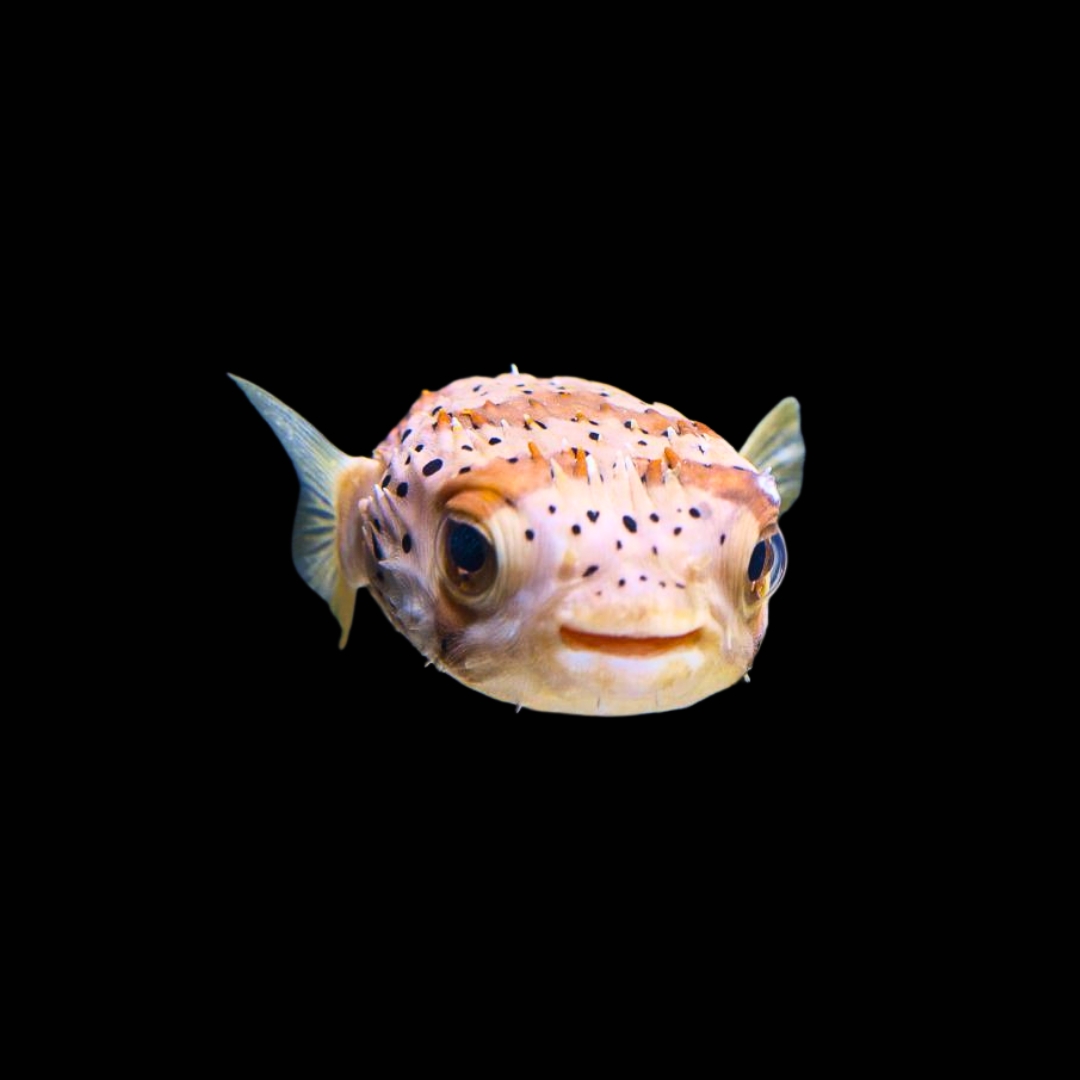
解説 / Description
ハリセンボンは、丸い体、寝かせたり立てたりできる鋭い棘、そして貝類や甲殻類を砕くための強い嘴状の歯が印象的な海水魚です。人に慣れやすく、給餌時に前面へ寄ってくる愛嬌のある姿から観賞魚として人気があります。一方で、成長するとかなり大きくなり、硬い餌による歯の摩耗、強いろ過、導入時の検疫が欠かせません。小型水槽やサンゴ・甲殻類を楽しむリーフタンク向きではなく、魚中心の大型海水水槽でじっくり飼う魚と考えるのが安全です。 The long-spine porcupinefish is a charismatic marine fish known for its rounded body, movable spines, and strong beak-like teeth used to crush hard-shelled prey. It often becomes responsive to its keeper and is popular in marine aquaria. However, it grows large, needs strong filtration, regular hard-shelled foods to manage tooth growth, and careful quarantine when introduced. It is best treated as a fish for a spacious fish-only marine aquarium rather than for small tanks or reef displays with corals and crustaceans.
基本情報 / Basic Information
| 学名 / Scientific Name | Diodon holocanthus |
|---|---|
| 通称 / Common Name | ハリセンボン、アバサー、ポーキュパインフィッシュLong-spine porcupinefish, porcupine puffer, balloonfish |
| 分類 / Family | フグ目 ハリセンボン科 ハリセンボン属Order Tetraodontiformes, family Diodontidae, genus Diodon |
| 英名 / English Name | Long-spine Porcupinefish |
| 分布 / Distribution | 大西洋・インド洋・太平洋の熱帯から温帯域。主にサンゴ礁、岩礁、砂底を含む浅海域で見られます。日本近海にも黒潮などに乗って現れることがあります。Tropical to warm-temperate waters of the Atlantic, Indian, and Pacific Oceans. It is mainly associated with reefs, rocky areas, and sandy coastal habitats, and may also appear around Japan via warm currents. |
| 最大体長 / Max Size | おおむね最大50cm前後。流通個体は小さくても、終生飼育では大型化を前提にします。Up to around 50 cm. Even small imported juveniles should be planned for as large adult fish. |
| 寿命 / Lifespan | 野外での正確な寿命は情報が限られます。飼育下では環境が安定すれば数年以上の長期飼育が期待できますが、導入初期の状態と水質管理で大きく左右されます。Reliable wild lifespan data are limited. In aquaria, long-term care over several years is possible when water quality, diet, and quarantine are managed well. |
飼育環境 / Aquarium Environment
| 水槽サイズ / Tank Size | 幼魚でも将来を見越して90cm規格水槽以上、成魚の終生飼育では120cmワイド水槽以上、できれば150cm級以上の余裕ある魚中心水槽が望ましいです。よく泳ぎ、排泄量も多いため、水量とろ過能力を十分に確保します。Juveniles should be started with future growth in mind, ideally in at least a 90 cm standard tank. For long-term adult care, a 120 cm wide tank or larger, preferably a 150 cm class fish-only system, is recommended. Strong filtration and generous water volume are important because the fish is active and produces considerable waste. |
|---|---|
| 水温 / Temperature | 通常飼育では24〜27℃前後を目安に安定させます。病気対策として急な高温化・低温化を行うと魚体へ負担がかかるため、治療目的の温度操作は隔離水槽で慎重に検討します。 Maintain a stable temperature around 24–27°C for normal care. Sudden temperature changes, whether warmer or cooler, can stress the fish, so any therapeutic temperature adjustment should be considered carefully in quarantine. |
| 水質 / Water Quality | 一般的な海水魚水槽の範囲を保ちます。比重は1.020〜1.025前後、pHは8.1〜8.4前後を目安に、アンモニア・亜硝酸は検出されない状態を維持します。導入時は輸送水と飼育水の比重差が大きい場合があるため、点滴法などでゆっくり水合わせを行います。Keep within typical marine aquarium parameters: specific gravity around 1.020–1.025, pH around 8.1–8.4, and undetectable ammonia and nitrite. Because shipping water may differ greatly in salinity from the aquarium, slow acclimation such as drip acclimation is recommended. |
| レイアウト / Layout | 遊泳スペースを広く取り、ライブロックやシェルターは体を擦って傷つけないよう安定して配置します。驚いたときに膨らむことがあるため、狭すぎる隙間や鋭利な飾りは避けます。Provide open swimming space and secure rockwork or shelters so the fish does not scrape itself. Avoid narrow gaps and sharp decorations, as the fish may inflate when startled. |
| 注意点 / Precautions | サンゴ、エビ、カニ、巻貝などは食べられる可能性が高く、リーフタンクには不向きです。膨らませる行動は魚にとってストレス反応なので、観察目的で刺激して膨らませることは避けます。空気を吸い込むと戻しにくいことがあるため、移動時はできるだけ水中で扱います。It may eat corals, shrimp, crabs, and snails, so it is not suitable for reef tanks. Inflation is a stress response and should never be induced for display. During handling, keep the fish underwater whenever possible, as swallowed air can be difficult to expel. |
餌と給餌 / Feeding
| 餌の種類 / Diet | 自然下では貝類、ウニ、カニ類など硬い殻をもつ底生動物を食べます。飼育下では殻付きアサリ、エビ、イカ、魚肉、海水魚用人工飼料などを組み合わせ、栄養が偏らないようにします。In the wild it feeds on hard-shelled benthic animals such as mollusks, sea urchins, and crabs. In aquaria, offer a varied diet such as shell-on clams, shrimp, squid, fish flesh, and quality marine fish pellets. |
|---|---|
| 給餌のポイント / Feeding Tips | 嘴状の歯は伸び続けるため、柔らかい餌だけでは過長を起こすことがあります。殻付きの餌を定期的に与え、自然に歯を摩耗させることが大切です。食欲旺盛でも与えすぎは水質悪化につながるため、食べ残しは早めに取り除きます。Its beak-like teeth continue to grow, so a diet of only soft foods can lead to overgrown teeth. Regular hard-shelled foods help wear the teeth naturally. Remove leftovers promptly, as overfeeding quickly degrades water quality. |
性格と混泳 / Temperament and Tank Mates
| 性格 / Temperament | 比較的おっとりした印象を受けることが多く、人にも慣れやすい魚です。ただし、強い歯を持つ肉食性の大型魚であり、空腹時や相性が悪い相手には噛みつくことがあります。It often appears calm and can become keeper-responsive, but it is still a large carnivorous fish with powerful teeth and may bite unsuitable tank mates, especially when hungry or stressed. |
|---|---|
| 混泳の相性 / Compatibility | 同程度以上のサイズで、攻撃性が強すぎない丈夫な魚との魚中心水槽が向いています。小型魚、細長い魚、甲殻類、貝類、サンゴとの混泳は避けます。大型ヤッコ、ハギ、ベラ類などでも個体差があるため、導入順と観察が重要です。Best kept in a fish-only system with robust tank mates of similar or larger size that are not overly aggressive. Avoid small fish, slender fish, crustaceans, mollusks, and corals. Even with large angelfish, tangs, or wrasses, compatibility varies by individual, so careful observation is essential. |
病気と対策 / Diseases and Prevention
| かかりやすい病気 / Common Diseases | 導入直後のストレスに伴う海水性白点病、外部寄生虫、細菌感染、擦れ傷、歯の伸びすぎによる摂餌不良に注意します。特に輸送直後は体力が落ちていることがあるため、メイン水槽へすぐ入れない判断が大切です。Watch for marine ich, external parasites, bacterial infections, abrasions, and feeding difficulty from overgrown teeth. Newly imported fish may be weakened by transport stress, so immediate placement into the display tank is risky. |
|---|---|
| 対策と予防 / Prevention | 1〜2週間以上の隔離・検疫、水温と比重の安定、十分なろ過、過密を避けることが基本です。白点病対策では、紫外線殺菌灯は水中を漂う病原体の低減に役立つ場合がありますが、単独で治療を完結させるものではありません。銅系薬剤や低比重治療は隔離水槽で行う方法で、サンゴ・エビ・カニ・貝類がいる水槽では使えません。濃度管理や比重管理を誤ると魚にも危険なため、試薬や屈折計を使い、製品表示や専門家の指示に従います。Core prevention includes quarantine for at least one to two weeks, stable temperature and salinity, strong filtration, and avoiding overcrowding. UV sterilizers may help reduce free-swimming pathogens but should not be treated as a complete cure. Copper medications and hyposalinity are quarantine-tank methods and are unsafe for aquaria containing corals, shrimp, crabs, or snails. Incorrect dosing or salinity management can harm the fish, so use proper test kits or a refractometer and follow product or expert guidance. |
増やし方(繁殖) / Breeding
| 雌雄の判別 / Sexing | 外見だけで雌雄を安定して見分けることは難しいとされています。繁殖期の腹部の膨らみや行動差が手がかりになる場合がありますが、一般飼育では確実な判別は困難です。Reliable visual sexing is difficult. Seasonal abdominal swelling or behavioral differences may provide clues, but dependable sexing is generally not practical for hobbyists. |
|---|---|
| 繁殖形態 / Reproduction | 卵を水中へ放出する産卵形態です。自然下では外洋性の要素を伴うと考えられ、家庭水槽での繁殖は現実的ではありません。It is an egg-scattering marine spawner. Reproduction is thought to involve pelagic elements in nature, making home-aquarium breeding impractical. |
| 繁殖のポイント / Breeding Tips | 一般家庭での繁殖は目標にせず、健康維持を優先します。水族館などの管理環境では人工繁殖や採卵に関する報告がありますが、親魚の成熟、採卵、仔魚育成、餌料管理まで高度な設備と技術が必要です。For home aquaria, focus on long-term health rather than breeding. Artificial propagation and egg collection have been reported in public-aquarium settings, but they require mature broodstock, specialized larval-rearing methods, and advanced food management. |
雑学と豆知識 / Trivia and Fun Facts
| 1. 「千本」ではなく、棘は身を守るための装備 / 1. Not literally a thousand spines | ハリセンボンという名前は、たくさんの針を持つ姿を印象的に表したものです。実際の棘の数は個体や数え方で変わり、名前の通り千本あるわけではありません。普段は棘を寝かせ、危険を感じると体をふくらませて棘を目立たせることで、捕食者に飲み込まれにくくします。The Japanese name suggests “a thousand needles,” but the number is symbolic rather than literal and varies by individual and counting method. The fish normally keeps its spines laid down, then inflates its body when threatened, making the spines more prominent and the body harder for predators to swallow. |
|---|---|
| 2. フグ科とは歯のつくりが違う / 2. Its teeth differ from true puffers | ハリセンボン科はフグ目の仲間ですが、一般的なフグ科とは歯のつくりが異なります。ハリセンボンの上下の歯はそれぞれ癒合して、硬い餌を割るための強い嘴のような形になります。この特徴が、飼育下で殻付きの餌を必要とする理由にもつながっています。Porcupinefish belong to the order Tetraodontiformes, but their dental structure differs from that of many true puffers. The teeth of each jaw are fused into a strong beak used to crush hard prey, which is also why hard-shelled foods are important in captivity. |
| 3. 沖縄では「アバサー」として知られる / 3. Known as “abasa” in Okinawa | 沖縄ではハリセンボン類が「アバサー」と呼ばれ、郷土料理として知られています。ただし、食用利用は地域の慣習や行政上の扱い、魚種・部位の確認が関わる分野です。本記事では観賞魚としての情報を主目的とし、家庭で内臓まで調理できるといった断定的な案内は避けます。In Okinawa, porcupinefish are known as “abasa” and are associated with local cuisine. However, food use depends on local practice, regulatory treatment, species identification, and edible-part rules. This article focuses on aquarium care and avoids recommending home preparation of internal organs. |
| 4. フグ提灯と魔除けのイメージ / 4. Puffer lanterns and protective symbolism | 日本の沿岸地域では、ふくらんだ姿を生かしたフグ提灯や剥製が土産物・民芸品として扱われてきました。鋭い棘を逆立てる姿は、災いを寄せ付けない象徴として語られることもあります。観賞魚としてのハリセンボンの魅力は、生物としての不思議さだけでなく、人の暮らしや文化に入り込んできた歴史にもあります。In parts of coastal Japan, inflated puffer or porcupinefish specimens have been made into lantern-like folk crafts and souvenirs. Their defensive, spiny appearance has also been linked with protective symbolism. The appeal of porcupinefish lies not only in their biology but also in their long cultural presence. |
| 5. 飼育で大切なのは「かわいさ」よりも大型魚としての準備 / 5. Prepare for a large fish, not just a cute one | 販売時の幼魚は丸くて愛らしく、つい小さな水槽で飼えそうに見えます。しかし、ハリセンボンは成長、排泄量、食性、歯の管理まで含めて考えるべき大型海水魚です。長く付き合うほど個性を見せてくれる魚だからこそ、最初から大きな水槽と検疫環境を用意することが成功の近道です。Juveniles are endearing and may look manageable in small tanks, but porcupinefish must be planned for as large marine fish with significant waste production, specialized feeding needs, and dental care. Because they can become very personable over time, preparing a spacious tank and quarantine setup from the start is the best path to success. |
まとめ / Conclusion
ハリセンボンは、棘、膨張行動、強い嘴状の歯という分かりやすい特徴を持つ、たいへん魅力的な海水魚です。人に慣れやすい一方で、成魚サイズ、排泄量、食性、歯の伸びすぎを考えると、初心者向けの小型海水魚ではありません。 The long-spine porcupinefish is a fascinating marine fish with distinctive spines, inflation behavior, and a strong beak-like mouth. It can become very responsive to its keeper, but its adult size, waste production, diet, and tooth growth mean it is not a beginner-friendly small marine fish.
飼育を成功させるには、大型水槽、安定した海水環境、導入時の隔離・検疫、硬い餌を含むバランスのよい給餌が鍵になります。リーフタンク向きではありませんが、魚中心の広い水槽で丁寧に飼えば、ハリセンボンならではの表情豊かな魅力をじっくり楽しめます。 Successful care depends on a spacious aquarium, stable marine conditions, proper quarantine, and a balanced diet that includes hard-shelled foods. It is not a reef-tank fish, but in a well-planned fish-only aquarium it can become a memorable and expressive centerpiece.

気になる道具や飼い方を見つけてみませんか?
 アイのアクアグッズ案内おとひめ物語|養殖生まれの餌を、わが家の魚に合う一粒へ道具の特徴や使い方、選ぶときのポイントをアイが紹介します。記事はコチラ →
 アイのアクアグッズ案内ラスボラ・ボララスの群泳を楽しむ飼育用品|水槽・ろ過・ヒーター・餌・水草道具の特徴や使い方、選ぶときのポイントをアイが紹介します。記事はコチラ →
さまざまな飼育テーマをご紹介。リンク先の記事には広告・商品紹介が含まれます。
案内・紹介記事一覧へ →参考文献・参照資料
この記事では、店舗・通販サイト・個人ブログ・まとめサイトではなく、分類データベース、国際的な魚類データベース、大学の魚病解説など、内容確認に使いやすい一次・準一次資料を中心に参照しています。
-
FishBase: Diodon holocanthus, Longspined porcupinefish
分類、学名、英名、最大体長、分布、生息水深、生息環境、食性、観賞魚としての流通区分、推定適水温の確認に使用しました。ハリセンボンの記事全体の基礎情報を支える中核資料です。
-
IUCN Red List: Diodon holocanthus
本種の保全状況、広域分布、野生下での生息状況を補足確認するための資料です。分布域や自然環境に関する記述を過度に狭く書かないための確認元として選定しました。
-
California Academy of Sciences: Eschmeyer’s Catalog of Fishes
学名、命名者、分類上の位置づけ、シノニム確認に用いる魚類分類の標準的データベースです。記事中の学名表記や分類表記の裏取り用として選定しました。
-
World Register of Marine Species: Diodon holocanthus
海産生物の学名・分類の照合に使う国際データベースです。FishBaseやCatalog of Fishesとあわせて、分類名の整合性確認に使用する資料として選定しました。
-
FAO: The Living Marine Resources of the Western Central Pacific, Vol. 6
ハリセンボン科を含む西部中部太平洋の魚類識別ガイドです。形態、分類、食性、生息環境、分布の記述を確認するための基礎資料として選定しました。
-
University of Florida IFAS Extension: Cryptocaryon irritans Infections (Marine White Spot Disease) in Fish
海水性白点病の原因生物、症状、生活環、隔離、銅系薬剤、低比重処理、治療期間、検疫の注意点を確認するための魚病資料です。記事中の病気と対策、導入時の注意点を支える資料として選定しました。
-
University of Florida IFAS Extension: The Use of Copper for Treatment of Marine Aquarium Fish
海水魚への銅治療は濃度測定と隔離環境が前提になるため、記事では安易な本水槽投薬を避ける注意書きの根拠として参照候補にしました。
-
FishBase Manual: The AQUARIUM Table
FishBase上の観賞魚関連項目の見方を確認するための補助資料です。飼育条件そのものを断定する資料ではなく、FishBase内の観賞魚データを読む際の補助として扱います。
飼育条件の補足:必要な水槽サイズや混泳の相性、餌付けの進み方は、魚の大きさと状態、設備によって変わります。記載した条件だけで判断せず、成長や採餌の様子を見ながら調整してください。




コメント