

解説 / Description
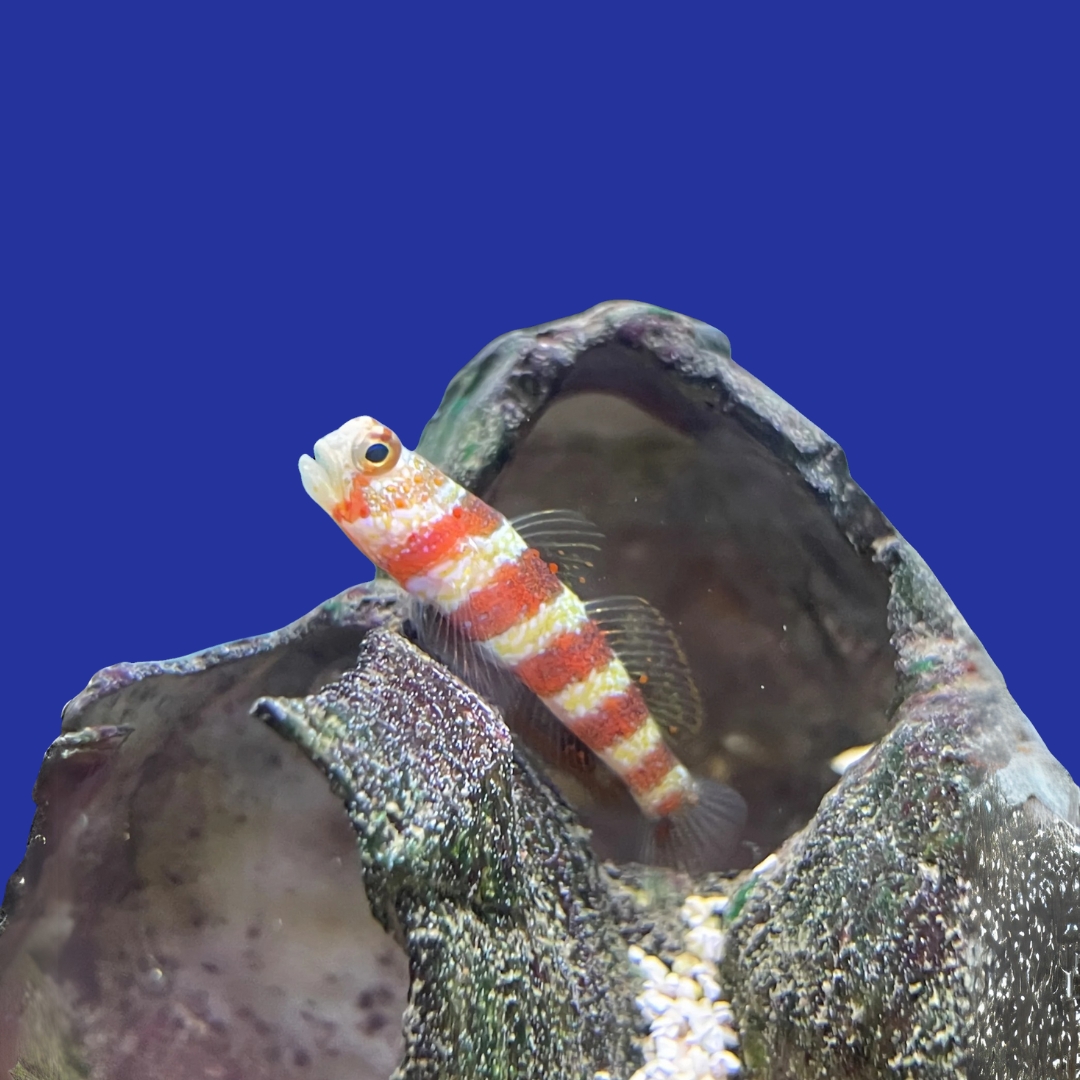
クビアカハゼは、淡い体色に赤褐色の横帯が入る小型の共生ハゼです。英名では Burgundy Shrimpgoby や Gorgeous Prawn-Goby などと呼ばれ、サンゴ礁周辺の砂地やガレ場でテッポウエビ類と巣穴を共有します。水槽内でも、ハゼが周囲を見張り、エビが底砂を運んで巣穴を整える様子を観察できることが大きな魅力です。飼育そのものは極端に難しい魚ではありませんが、長期飼育では底砂の構造、飛び出し防止、巣穴付近へ餌を届ける工夫が重要になります。 Amblyeleotris wheeleri is a small shrimp-goby with reddish-brown bars on a pale body. It is known in English as the Burgundy Shrimpgoby or Gorgeous Prawn-Goby, and it shares burrows with alpheid pistol shrimps in sandy and rubble areas around coral reefs. In aquaria, its greatest appeal is watching the goby keep watch while the shrimp moves sand and maintains the burrow. It is not usually considered an extremely difficult marine fish, but long-term success depends on suitable substrate structure, a secure lid, and careful feeding near the burrow.
基本情報 / Basic Information
| 学名 / Scientific Name | Amblyeleotris wheeleri |
|---|---|
| 通称 / Common Name | クビアカハゼ、共生ハゼ、ホイーラーズシュリンプゴビーBurgundy Shrimpgoby, Gorgeous Prawn-Goby, Redbarred Shrimp Goby, Wheeler’s Shrimp Goby |
| 分類 / Family | ハゼ目ハゼ科ハゼ亜科ダテハゼ属Order Gobiiformes, family Gobiidae, subfamily Gobiinae, genus Amblyeleotris |
| 英名 / English Name | Burgundy Shrimpgoby / Gorgeous Prawn-Goby / Redbarred Shrimp Goby / Wheeler’s Shrimp Goby |
| 分布 / Distribution | インド太平洋に広く分布し、東アフリカからフィジー、北は日本南部、南はグレートバリアリーフ周辺まで記録されています。主な生息環境はサンゴ礁周辺の砂地、砂礫底、ガレ場で、水深5〜40mの範囲から知られます。日本では南日本の黒潮の影響を受ける海域で見られる種として扱うのが安全です。It is widely distributed in the Indo-Pacific, from East Africa to Fiji, north to southern Japan and south to the Great Barrier Reef. It is known from sandy slopes, sand-rubble bottoms, and rubble areas around coral reefs at depths of about 5 to 40 m. In Japan, it is best described as a species associated with Kuroshio-influenced waters of southern Japan. |
| 最大体長 / Max Size | 最大で約10cm。観賞魚として見かける個体は4〜7cm前後の若い個体や小型個体が多いです。Up to about 10 cm standard length. Aquarium specimens are often younger or smaller individuals of around 4 to 7 cm. |
| 寿命 / Lifespan | 飼育下の目安は約3〜5年です。ただし本種単独で厳密に示された寿命データは多くないため、安定した水質、適切な底床、十分な給餌によって長期飼育を目指す項目として考えるとよいでしょう。A practical aquarium guideline is about 3 to 5 years. However, precise lifespan data specifically for this species are not abundant, so this should be treated as a husbandry guideline rather than a fixed biological limit. |
飼育環境 / Aquarium Environment
| 水槽サイズ / Tank Size | 単独またはテッポウエビとのペアなら、45cm規格水槽程度から飼育候補になります。経験者であれば30cmキューブ水槽などの小型水槽で管理されることもありますが、水量が少ないほど水温と比重が変動しやすいため、初めてなら45cm規格水槽以上が安心です。複数の共生ハゼを扱う場合は縄張りの衝突を避けるため、90cm規格水槽以上を推奨します。For a single fish or a goby-shrimp pair, a 45 cm standard aquarium is a practical starting point. Experienced aquarists may keep them in smaller tanks such as 30 cm cubes, but small water volumes are less stable in temperature and salinity, so beginners are safer with 45 cm or larger tanks. For multiple shrimp-gobies, a 90 cm standard aquarium or larger is recommended to reduce territorial conflict. |
|---|---|
| 水温 / Temperature | 飼育では23〜26℃を目安に安定させます。野外記録ではより広い水温帯にも見られますが、水槽では急変を避けることが最優先です。夏場は水槽用クーラーやファン、冬場はヒーターで管理します。 In aquaria, keep the temperature stable at around 23 to 26°C. The species is associated with a broader warm-water range in nature, but in aquaria avoiding sudden change is the priority. Use a chiller or cooling fan in summer and a heater in winter. |
| 水質 / Water Quality | 一般的な海水魚飼育の範囲として、比重1.020〜1.025、pH8.1〜8.4を目安にします。蒸発で比重が上がりやすいため、比重計または屈折計で確認し、塩素を中和した淡水で足し水します。食べ残しが底に残りやすい環境なので、底床を荒らしすぎない範囲で清潔に保ちます。As a general marine aquarium range, aim for specific gravity 1.020 to 1.025 and pH 8.1 to 8.4. Because evaporation raises salinity, monitor with a hydrometer or refractometer and top off with dechlorinated freshwater. Since leftover food can accumulate around the bottom, keep the substrate clean without disturbing the burrow excessively. |
| レイアウト / Layout | 底床にはサンゴ砂を使い、細目から小粒の砂に粗いサンゴ片や貝殻片を一部混ぜると、テッポウエビが巣穴を作りやすくなります。砂の厚みは最低4cm、理想は5〜6cm程度です。ライブロックは砂の上に不安定に置かず、水槽底面で支えるように配置して、エビの掘削による崩落を防ぎます。Use aragonite coral sand. Mixing fine to small grains with some coarser coral rubble or shell fragments helps the pistol shrimp construct a burrow. The sand bed should be at least 4 cm deep, ideally around 5 to 6 cm. Place live rock securely so it is supported by the tank bottom rather than balanced on sand, preventing collapse when the shrimp digs. |
| 注意点 / Precautions | 飛び出し事故には特に注意します。驚いたときや夜間に水面へ突進することがあるため、ガラスフタやジャンプガードで隙間をしっかり塞ぎます。リーフタンクではテッポウエビが砂を移動させるため、底面付近のサンゴが埋もれないよう、サンゴは中層から上部へ固定して配置します。Jumping is a major risk. The fish may dart upward when startled or at night, so cover all gaps with a glass lid or mesh jump guard. In reef tanks, pistol shrimps move sand extensively; secure corals in the middle to upper rockwork so bottom-placed corals are not buried. |
餌と給餌 / Feeding
| 餌の種類 / Diet | 自然下では小型底生動物や動物プランクトンなどを食べると考えられます。飼育下では冷凍ブラインシュリンプ、冷凍イサザアミ、細かい海水魚用人工飼料、沈下性ペレットなどを与えます。輸入直後や痩せた個体は、まず冷凍餌で食いを確認してから人工飼料へ慣らすと安心です。In nature it is expected to feed on small benthic invertebrates and zooplankton. In aquaria, offer frozen brine shrimp, frozen mysid-type foods commonly sold in Japan as isaza-ami, finely sized marine prepared foods, and sinking pellets. For newly imported or thin individuals, confirm feeding with frozen foods before gradually introducing prepared diets. |
|---|---|
| 給餌のポイント / Feeding Tips | 巣穴から遠くまで餌を追わないため、スポイトやピペットで巣穴の入り口付近へ餌を届けるターゲットフィーディングが有効です。中層を泳ぐ魚と混泳している場合は、餌が底へ届く前に食べ尽くされないよう注意します。少量を1日1〜2回与え、食べ残しが底床に溜まらないよう調整します。Because it rarely chases food far from the burrow, target feeding near the burrow entrance with a pipette or feeding tube is very effective. In tanks with active midwater fish, ensure food is not consumed before it reaches the goby. Feed small amounts once or twice daily and adjust to prevent leftovers from accumulating in the substrate. |
性格と混泳 / Temperament and Tank Mates
| 性格 / Temperament | 基本的には温和で臆病です。巣穴の周辺を生活圏とし、危険を感じるとすぐに巣穴へ退避します。テッポウエビと一緒に飼うと、本来の警戒行動や巣穴前での定位が観察しやすくなります。Generally peaceful and shy. It lives close to its burrow and quickly retreats when threatened. Keeping it with a compatible pistol shrimp makes its natural sentinel behavior and burrow-side posture easier to observe. |
|---|---|
| 混泳の相性 / Compatibility | 小型テンジクダイ類、おとなしいハナダイ類、小型ヤッコなど、攻撃性が強すぎない魚と相性が良いです。大型肉食魚、気の荒い大型スズメダイ、活発すぎて餌を独占する魚との混泳は避けます。同種や同属の共生ハゼを複数入れる場合は縄張り争いが起こりやすいため、十分な底面積と複数の巣穴候補が必要です。Suitable tank mates include small cardinalfish, peaceful anthias, and smaller angelfish that are not overly aggressive. Avoid large predatory fish, aggressive large damselfish, and fish so active that they monopolize food. Multiple conspecific or closely related shrimp-gobies may fight over bottom territories, so they require ample floor space and multiple burrow sites. |
病気と対策 / Diseases and Prevention
| かかりやすい病気 / Common Diseases | 輸入直後や環境変化の直後は、海水魚の白点病、スレ傷からの二次感染、痩せに注意が必要です。水質悪化、急な比重変化、輸送疲れが重なると体調を崩しやすくなります。After import or sudden environmental change, watch for marine ich, secondary infections from abrasions, and emaciation. Poor water quality, rapid salinity shifts, and shipping stress can weaken the fish. |
|---|---|
| 対策と予防 / Prevention | 購入時は痩せ、呼吸の荒さ、体表の白点や傷を確認します。導入時は点滴法で慎重に水合わせを行い、可能であれば隔離水槽で状態を見てから本水槽へ移します。安定した比重とpH、清潔な底床、食べ残しの管理が予防の基本です。When purchasing, check for thinness, rapid breathing, white spots, and body damage. Acclimate slowly with the drip method, and quarantine when possible before adding to the display tank. Stable salinity and pH, clean substrate, and control of uneaten food are the foundation of prevention. |
増やし方(繁殖) / Breeding
| 雌雄の判別 / Sexing | 外見での雌雄判別は非常に難しいです。成熟個体では体格差や求愛行動が手がかりになることがありますが、普段の観察だけで確実に判断するのは困難です。Sexing by appearance is very difficult. In mature fish, body size differences or courtship behavior may provide clues, but reliable sexing from ordinary observation is difficult. |
|---|---|
| 繁殖形態 / Reproduction | 近縁の共生ハゼ類と同様に、巣穴内や小石の裏側などに沈性卵を産むタイプと考えられます。産卵後は親魚が巣穴内で卵を守り、孵化後の仔魚は浮遊生活へ移ると考えられます。Like related shrimp-gobies, it is thought to lay demersal eggs inside the burrow or on the underside of small stones. The parents are expected to guard the eggs in the burrow, and the larvae likely enter a planktonic phase after hatching. |
| 繁殖のポイント / Breeding Tips | 水槽内でペア形成や産卵が起こる可能性はありますが、仔魚の育成は高難度です。孵化直後の仔魚は非常に小さいと考えられ、初期餌料として微小なコペポーダ幼生などを安定供給する必要があります。弱い水流の専用育成水槽、餌料生物の培養、水質維持が必要になるため、一般家庭での安定した完全繁殖はまだ難しい分野です。Pairing and spawning may occur in aquaria, but larval rearing is highly challenging. Newly hatched larvae are expected to be very small, requiring stable supplies of tiny foods such as copepod nauplii. A gentle dedicated larval tank, live-food culture, and precise water-quality management are needed, so consistent full captive breeding remains difficult for home aquarists. |
雑学と豆知識 / Trivia and Fun Facts
| 1. 名前に残された魚類学者への敬意 / 1. A Name Honoring an Ichthyologist | 種小名の wheeleri は、イギリスの魚類学者 Alwynne Cooper Wheeler に献名されたものです。本種は Polunin と Lubbock によって記載され、現在は Amblyeleotris wheeleri として扱われています。小さなハゼの名前には、標本を集め、比べ、海の生き物の関係を少しずつ解き明かしてきた研究者たちの歴史も刻まれています。The species name wheeleri honors the British ichthyologist Alwynne Cooper Wheeler. The species was described by Polunin and Lubbock and is currently treated as Amblyeleotris wheeleri. Behind the name of this small goby lies the history of researchers who collected, compared, and gradually clarified relationships among marine fishes. |
|---|---|
| 2. ハゼとエビの役割分担は、まるで海底の共同生活 / 2. A Seafloor Partnership with Clear Roles | クビアカハゼとテッポウエビの関係は、単なる同居ではありません。テッポウエビは巣穴を掘って維持し、ハゼは外敵の接近を見張ります。エビは触角をハゼの体に触れさせながら作業し、ハゼが尾を振ったり急に巣穴へ戻ったりすると、その動きが危険を知らせる合図になります。水槽でこの行動を観察できることは、共生ハゼ飼育の大きな魅力です。The relationship between the goby and its pistol shrimp is more than simple cohabitation. The shrimp digs and maintains the burrow, while the goby watches for danger. The shrimp works while keeping its antennae in contact with the goby, and the goby’s tail flicks or sudden retreat act as warning signals. Observing this behavior in an aquarium is one of the great pleasures of keeping shrimp-gobies. |
| 3. よく組む相手として知られる Alpheus ochrostriatus / 3. Alpheus ochrostriatus as a Frequent Partner | クビアカハゼはテッポウエビ類と共生しますが、記録上よく挙げられる相手の一つが Alpheus ochrostriatus です。日本の流通では別種のテッポウエビと組み合わせて販売されることもあるため、購入時はショップで実際のエビの種類やサイズ、相性を確認すると安心です。大切なのは、ハゼとエビの両方が落ち着いて巣穴を使える底床環境を整えることです。This species associates with alpheid pistol shrimps, and one frequently noted partner is Alpheus ochrostriatus. In the aquarium trade, it may be sold with other pistol shrimp species, so it is wise to confirm the shrimp’s identity, size, and compatibility at the shop. The key is to provide a substrate environment where both the goby and shrimp can calmly use a burrow. |
| 4. テッポウエビの音は小さな流体力学ショー / 4. The Pistol Shrimp Snap Is a Tiny Fluid-Dynamics Show | テッポウエビのパチンという音は、単にハサミをぶつけた音ではありません。発達したハサミを高速で閉じることで水が勢いよく押し出され、キャビテーションと呼ばれる気泡が生じ、その崩壊に伴って衝撃波と音が発生します。小さな体の中に、物理の不思議を感じさせる仕組みが詰まっているのです。The snapping sound of a pistol shrimp is not simply the sound of the claw striking shut. When the enlarged claw closes at high speed, water is forced out rapidly, forming a cavitation bubble; the collapse of that bubble produces a shock wave and sound. This tiny animal carries a remarkable piece of physics in its body. |
| 5. 砂の選び方が共生行動の見え方を変える / 5. Substrate Choice Changes What You Can Observe | クビアカハゼの飼育では、水質だけでなく底砂の物理的な作りがとても重要です。細かすぎる砂だけでは巣穴が崩れやすく、逆に粗すぎるとエビが掘りにくくなります。細かなサンゴ砂に粗いサンゴ片を混ぜると、エビが砂粒や小石を組み合わせて安定した巣穴を作りやすくなり、ハゼが入り口で見張る姿も観察しやすくなります。For this species, the physical structure of the substrate matters as much as water quality. Sand that is too fine collapses easily, while material that is too coarse may be hard for the shrimp to dig. Mixing fine coral sand with coarser coral fragments helps the shrimp build a stable burrow, making it easier to observe the goby standing guard at the entrance. |
まとめ / Conclusion
クビアカハゼは、赤褐色の帯模様とテッポウエビとの共生行動を楽しめる、とても魅力的な小型海水魚です。小型水槽でも飼育候補になりますが、安定した水質、崩れにくい底砂、飛び出し防止のフタを整えることで、本来の落ち着いた姿を引き出しやすくなります。 Amblyeleotris wheeleri is a highly appealing small marine fish, valued for its reddish-brown bars and its fascinating symbiosis with pistol shrimps. It can be a candidate for smaller aquaria, but stable water quality, a burrow-friendly substrate, and a secure lid are essential to bring out its natural behavior.
特にテッポウエビと組み合わせて飼育する場合は、底面をエビの作業場として考え、ライブロックやサンゴの配置に余裕を持たせることが大切です。巣穴の入り口でハゼが見張り、エビが砂を運ぶ様子は、海の相利共生を身近に感じさせてくれる、海水水槽ならではの美しい観察体験になります。 When keeping it with a pistol shrimp, treat the tank bottom as the shrimp’s working area and leave enough room around live rock and corals. Watching the goby stand guard while the shrimp moves sand is a beautiful aquarium experience that brings the mutualistic relationships of the sea close to home.

気になる道具や飼い方を見つけてみませんか?
 アイのアクアグッズ案内水槽フィルターの選び方|外掛け・外部・上部から小型オーバーフローまで道具の特徴や使い方、選ぶときのポイントをアイが紹介します。記事はコチラ →
 アイのアクアグッズ案内ローチの仲間に合わせる飼育用品|クーリー・流水性・ボーシャの水槽と底砂道具の特徴や使い方、選ぶときのポイントをアイが紹介します。記事はコチラ →
さまざまな飼育テーマをご紹介。リンク先の記事には広告・商品紹介が含まれます。
案内・紹介記事一覧へ →本記事では、クビアカハゼの分類、分布、生息環境、テッポウエビ類との共生、飼育条件、繁殖、病気・注意点を確認するため、店舗・通販サイト、個人ブログ、まとめサイトを除外し、学術論文、公的・研究機関系データベース、博物館・大学・獣医学系資料を中心に参照しました。
-
World Register of Marine Species. Amblyeleotris wheeleri (Polunin & Lubbock, 1977).
根拠にした内容:海産生物名としての受容状況、現行学名、原記載者表記、同物異名、分類階級など、記事内の学名・分類表記の確認。
https://www.marinespecies.org/aphia.php?id=209274&p=taxdetails -
Fricke, R., Eschmeyer, W.N. & Van der Laan, R. (eds.). Eschmeyer’s Catalog of Fishes, California Academy of Sciences. Amblyeleotris wheeleri.
根拠にした内容:学名の有効性、原記載、分類文献、魚類分類上の扱い、種小名・記載情報の確認。
https://researcharchive.calacademy.org/research/ichthyology/catalog/fishcatget.asp?spid=22577 -
Froese, R. & Pauly, D. (eds.). FishBase. Amblyeleotris wheeleri, Gorgeous prawn-goby.
根拠にした内容:学名、英名、最大体長、インド太平洋における分布、リーフ関連性、深度帯、砂地・ガレ場を含む生息環境、テッポウエビ類との共生に関する基礎情報。
https://www.fishbase.se/summary/Amblyeleotris-wheeleri.html -
Bray, D.J. Burgundy Shrimpgoby, Amblyeleotris wheeleri. Fishes of Australia.
根拠にした内容:体色、赤色帯や青色斑などの形態的特徴、オーストラリア周辺を含む分布、サンゴ礁域の砂底・ガレ場で見られる生息環境、近縁種との混同に関する補足。
https://fishesofaustralia.net.au/home/species/71 -
Australian Museum. Burgundy Shrimpgoby, Amblyeleotris wheeleri.
根拠にした内容:体色の特徴、インド西太平洋における分布、博物館系資料としての種解説、記事本文の形態・分布記述の外部確認。
https://australian.museum/learn/animals/fishes/burgundy-shrimpgoby-amblyeleotris-wheeleri/ -
Thacker, C.E., Thompson, A.R. & Roje, D.M. 2011. Phylogeny and evolution of Indo-Pacific shrimp-associated gobies. Molecular Phylogenetics and Evolution.
根拠にした内容:インド太平洋に分布するテッポウエビ共生ハゼ類の系統、ダテハゼ類を含む共生関係の進化的背景、近縁群の理解に関する学術的補強。
https://pubmed.ncbi.nlm.nih.gov/21315161/ -
Henmi, Y. et al. 2017. Burrow Morphology of Alpheid Shrimps: Case Study of Alpheus brevicristatus and A. bellulus. Zoological Science.
根拠にした内容:テッポウエビ類の巣穴構造、掘削行動、底床を動かす性質、飼育下での底砂・岩組み設計やサンゴの転落・埋没リスクを説明するための背景資料。
https://pubmed.ncbi.nlm.nih.gov/29219037/ -
Iowa State University Digital Press. Water Quality. Topics in Aquatic Animal Health.
根拠にした内容:水温、塩分、pH、アンモニアなど、水生動物飼育における水質管理の基礎。クビアカハゼ固有ではなく、海水魚飼育条件を説明するための一般的な水質管理資料として参照。
https://iastate.pressbooks.pub/aquaticanimalhealth/chapter/1-5-water-quality/ -
Yanong, R.P.E. 2021. Cryptocaryon irritans Infections (Marine White Spot Disease) in Fish. University of Florida IFAS Extension, FA164.
根拠にした内容:海水白点病の原因、生活環、症状、隔離・検鏡確認、銅・低比重・クロロキン等の治療選択肢、遊走子期を主な治療対象とする考え方、長期隔離・検疫の重要性。
https://ask.ifas.ufl.edu/publication/FA164 -
Merck Veterinary Manual. Parasitic Diseases of Fish.
根拠にした内容:Cryptocaryonを含む魚類寄生虫症、症状、診断、飼育環境・過密・衛生状態との関係、治療を水質改善や隔離管理と組み合わせる必要があるという注意点。
https://www.merckvetmanual.com/exotic-and-laboratory-animals/aquarium-fish/parasitic-diseases-of-fish -
Breder, C.M. & Rosen, D.E. 1966. Modes of Reproduction in Fishes. T.F.H. Publications.
根拠にした内容:ハゼ類を含む魚類の繁殖様式、底生卵、親魚による卵保護などを扱う基礎文献。クビアカハゼ本種に限定した繁殖成功例ではなく、繁殖項目の一般的背景として限定的に参照。
飼育情報の補足:クビアカハゼ固有の寿命や家庭水槽での必要水量、人工繁殖の成功率については、公開研究が限られています。記載した飼育条件は目安であり、寿命や繁殖成功を保証するものではありません。




コメント