

解説 / Description
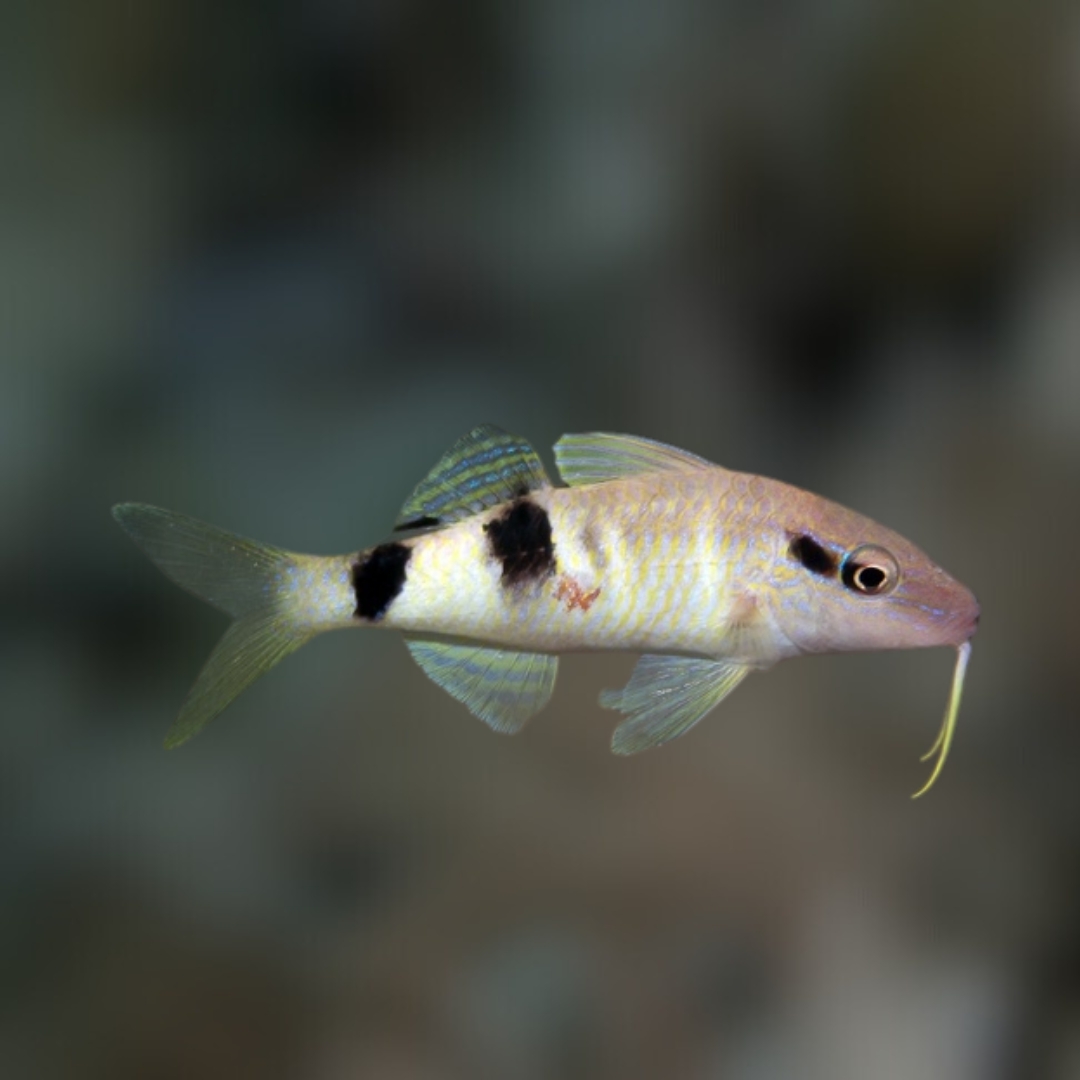
オジサンは、下あごから伸びる2本のヒゲが印象的なヒメジ科の海水魚です。サンゴ礁や岩礁の周辺にある砂底・砂礫底を歩くように探り、ヒゲに集まった感覚器を使って砂の中の小さな甲殻類や多毛類などを見つけます。名前のインパクトが強いため話題になりやすい魚ですが、実際には行動観察の面白さ、環境に合わせて変わる体色、美しい白身魚としての利用価値をあわせ持つ、知れば知るほど奥深い種類です。 The manybar goatfish is a marine goatfish known for the two sensory barbels that extend from its lower jaw. It searches sandy and rubble bottoms around reefs, using these barbels to detect small crustaceans, worms, and other benthic prey. Although its Japanese name, Ojisan, attracts attention because it literally sounds like “middle-aged man,” the fish is also fascinating for its foraging behavior, variable coloration, and value as a fine white-fleshed food fish.
基本情報 / Basic Information
| 学名 / Scientific Name | Parupeneus multifasciatus (Quoy & Gaimard, 1825) |
|---|---|
| 通称 / Common Name | オジサン、地域によってカタカシ、カタヤス、メンドリ、ヒゲイチなど。なお、ヒメジ科の近縁種もまとめて「オジサン」と呼ばれることがあるため、種名の確認が大切です。Ojisan in Japanese; regional Japanese names include Katakashi, Katayasu, Mendori, and Higeichi. In casual use, several goatfish species may be called “Ojisan,” so species-level identification is important. |
| 分類 / Family | 条鰭類・ヒメジ科・ウミヒゴイ属。日本語資料では伝統的にスズキ目として扱われることが多く、FishBaseなどではMulliformesに置かれます。Ray-finned fish, family Mullidae, genus Parupeneus. Traditional Japanese references often place goatfishes in Perciformes, while FishBase and some modern databases place them in Mulliformes. |
| 英名 / English Name | Manybar goatfish, Five-barred goatfish |
| 分布 / Distribution | インド洋東部から太平洋の熱帯・亜熱帯域に広く分布し、日本では千葉県以南の太平洋岸、八丈島、小笠原諸島、九州南岸、南西諸島などで記録されます。サンゴ礁域、岩礁域、その周辺の砂底・砂礫底に多く見られます。Widely distributed from the eastern Indian Ocean across tropical and subtropical parts of the Pacific. In Japan it is recorded from the Pacific coast south of Chiba, Hachijō-jima, the Ogasawara Islands, southern Kyushu, and the Ryukyu Islands, mainly around reefs, rocky areas, and nearby sandy or rubble bottoms. |
| 最大体長 / Max Size | 一般に全長30cm前後まで成長し、海外データでは最大35cm程度の記録があります。水槽内でも大型化するため、小型魚として扱わない方が安全です。Commonly grows to around 30 cm total length, with overseas records reaching about 35 cm. It should not be treated as a small aquarium fish. |
| 寿命 / Lifespan | 本種単独の飼育下寿命データは多くありません。適切な海水環境と広い底面積を確保できれば数年以上の長期飼育が期待できますが、明確な年数は「情報なし」とするのが安全です。Reliable aquarium lifespan data for this species are limited. With stable marine conditions and enough bottom space, multi-year care is possible, but a precise lifespan should be treated as unavailable. |
飼育環境 / Aquarium Environment
| 水槽サイズ / Tank Size | 幼魚の一時飼育でも最低90cm規格水槽以上、終生飼育を考えるなら120cm規格水槽または120cmワイド水槽以上が望ましいです。よく泳ぎ、底面を広く使う魚なので、水量だけでなく底面積を重視します。A 90 cm standard aquarium should be considered the bare minimum for juveniles or temporary care. For long-term keeping, a 120 cm standard or 120 cm wide aquarium is preferable. Bottom area is as important as water volume because the fish actively searches the substrate. |
|---|---|
| 水温 / Temperature | 24〜26℃を目安に安定させます。急な水温変化や高水温はストレスと飛び出しの誘因になるため、夏場は冷却ファンやクーラーも検討します。 Keep the temperature stable at about 24–26°C. Sudden changes and excessively warm water can increase stress and jumping risk, so cooling equipment may be needed in summer. |
| 水質 / Water Quality | 一般的な海水魚水槽の水質を維持します。比重は1.023〜1.025前後、pHは8.0〜8.4を目安にし、アンモニアと亜硝酸は検出されない状態を保ちます。肉食性で水を汚しやすいため、強めのろ過、プロテインスキマー、定期的な換水が役立ちます。Maintain standard marine aquarium water quality: specific gravity around 1.023–1.025, pH about 8.0–8.4, and undetectable ammonia and nitrite. Because it is a carnivorous fish that can produce considerable waste, strong filtration, a protein skimmer, and regular water changes are recommended. |
| レイアウト / Layout | 角の丸い細かなサンゴ砂を敷き、ヒゲで砂を探れる環境を作ります。ライブロックや隠れ家は有効ですが、サンゴを砂で覆ってしまうことがあるため、本格的なリーフタンクよりも魚中心の水槽に向きます。底砂なしのベアタンクでは本来の索餌行動を出しにくく、ストレスにつながる可能性があります。Use fine, rounded coral sand so the fish can perform its natural barbel-based foraging. Rockwork and shelters are useful, but the species may scatter sand onto corals, making it better suited to fish-focused marine aquaria than delicate reef tanks. Bare-bottom setups may reduce natural foraging opportunities and can be stressful. |
| 注意点 / Precautions | 驚いた時や水質・水温の変化がある時に跳ねやすいため、フタは必須です。砂を掘る行動が強いため、レイアウトは崩れにくく固定し、吸い込まれやすい小型甲殻類や小魚との同居は避けます。A tight lid is essential because the fish can jump when startled or stressed by changes in water quality or temperature. Secure rockwork against digging, and avoid keeping it with small ornamental crustaceans or very small fish that may be eaten. |
餌と給餌 / Feeding
| 餌の種類 / Diet | 冷凍イサザアミ、冷凍ブラインシュリンプ、アサリ、エビ、白身魚の切り身、沈下性の海水魚用ペレットなどを与えます。自然下では多毛類、甲殻類、小魚、軟体動物などを食べる動物食性です。Offer frozen mysid-type foods sold in Japan as isaza-ami, frozen brine shrimp, clam, shrimp, white fish meat, and sinking marine pellets. In nature it feeds on benthic animals such as worms, crustaceans, small fishes, and mollusks. |
|---|---|
| 給餌のポイント / Feeding Tips | 底で餌を探す魚なので、沈む餌を中心に与えます。導入初期は冷凍餌や細かい生餌に反応しやすく、慣れてから人工飼料へ移行させると管理しやすくなります。食べ残しは底砂の中で水質悪化を招くため、与えすぎには注意します。Because it feeds near the bottom, use sinking foods as the main diet. Newly introduced individuals often respond well to frozen or finely chopped meaty foods, then can be trained onto prepared pellets. Avoid overfeeding, as leftovers trapped in the substrate can quickly degrade water quality. |
性格と混泳 / Temperament and Tank Mates
| 性格 / Temperament | 基本的には温和で、同サイズ以上の魚に対して激しく攻撃するタイプではありません。単独または小さな群れで行動することが多く、底面を広く使って餌を探します。Generally peaceful and not strongly aggressive toward similarly sized or larger fishes. It often lives singly or in small groups and spends much of its time searching the bottom. |
|---|---|
| 混泳の相性 / Compatibility | 同程度の大きさで攻撃性の強すぎない海水魚と相性がよいです。大型肉食魚や気の強いスズメダイ類には追われる場合があります。一方で、小型魚、観賞用エビ、カニ、ヤドカリなどは捕食対象になる可能性が高く、混泳には向きません。Best kept with similarly sized, non-aggressive marine fishes. Large predators or very territorial damselfishes may harass it. Small fishes, ornamental shrimps, crabs, and hermit crabs may be eaten and are poor tank mates. |
病気と対策 / Diseases and Prevention
| かかりやすい病気 / Common Diseases | 海水魚で一般的に問題になりやすい白点病、外部寄生虫、細菌性のヒレ傷みなどに注意します。砂を探る性質があるため、底砂の汚れや尖った底材によるヒゲの傷みにも気を配ります。Watch for common marine fish problems such as marine ich, external parasites, and bacterial fin damage. Because it uses its barbels constantly, dirty or sharp substrate can also damage the barbels. |
|---|---|
| 対策と予防 / Prevention | 導入前の検疫、安定した水温、強いろ過、底砂の清掃、栄養の偏らない給餌を心がけます。薬浴が必要な場合は、無脊椎動物やライブロックのある本水槽ではなく、隔離水槽で行うのが安全です。Use quarantine before introduction, maintain stable temperature, provide strong filtration, keep the substrate clean, and feed a varied diet. If medication is needed, treat in a separate hospital tank rather than in a display tank containing live rock or invertebrates. |
増やし方(繁殖) / Breeding
| 雌雄の判別 / Sexing | 外見だけでの判別は難しいです。成熟した個体では体サイズや繁殖期の体色・行動に差が出ることがありますが、家庭水槽で確実に見分ける方法は確立していません。Sexing by appearance is difficult. Mature individuals may differ in size, breeding coloration, or behavior, but there is no simple reliable method for home aquaria. |
|---|---|
| 繁殖形態 / Reproduction | 野外ではペアまたは小集団で水中へ泳ぎ上がり、浮遊性の卵を放つタイプの産卵を行うと考えられます。卵や仔魚は海流に乗る生活史を持つため、一般家庭での繁殖は非常に困難です。In the wild, it is considered a pelagic spawner, with pairs or small groups rising into the water column and releasing floating eggs. Because the eggs and larvae develop in the plankton, breeding in home aquaria is extremely difficult. |
| 繁殖のポイント / Breeding Tips | 観賞魚としては繁殖を狙うより、健康な個体を長期飼育することを目標にします。十分な水量、広い底面、安定した水質、落ち着ける環境を整えることが最も大切です。For aquarium keeping, the practical goal is long-term maintenance rather than breeding. Large water volume, broad bottom space, stable water quality, and a calm environment are the key points. |
雑学と豆知識 / Trivia and Fun Facts
| 1. 「オジサン」は正式な標準和名 / 1. “Ojisan” is an official Japanese name | オジサンという名前は冗談のように聞こえますが、下あごの2本のヒゲに由来する正式な標準和名です。小笠原諸島での呼び名に由来するとされ、魚類図鑑や博物学系の資料でもこの名前で扱われます。ただし、日常会話や市場ではヒメジ科の別種まで「オジサン」と呼ばれることがあるため、図鑑記事では学名の確認が重要です。The Japanese name Ojisan may sound humorous, but it is an official standard name derived from the two barbels on the lower jaw. It is said to come from a local name used in the Ogasawara Islands. However, in markets and casual conversation, several goatfish species may be called “Ojisan,” so scientific identification is important. |
|---|---|
| 2. ヒゲは飾りではなく高性能なセンサー / 2. The barbels are sensory tools, not decoration | ヒメジ科の魚が砂をなでるように泳ぐ姿は、見ていてとても愛嬌があります。しかしそのヒゲは単なる飾りではなく、餌を探すための感覚器です。砂の中や石のすき間に隠れた小さな生き物を探るため、飼育下でも細かく角の丸い底砂を用意すると、この魚らしい行動を観察しやすくなります。The way goatfishes sweep the sand with their barbels is charming, but the barbels are not decorative. They are sensory tools used to find hidden prey in sand and rubble. In aquaria, fine rounded sand helps the fish express this natural behavior. |
| 3. 体色変化は魅力だが、過度な断定は避けたい特徴 / 3. Color change is fascinating, but should be described carefully | 本種は赤っぽい個体、白っぽい個体、紫がかった個体など、体色の変化が大きい魚として知られます。環境、照明、興奮、休息などによって見え方が変わることがありますが、どの条件でどの程度変化するかは個体差も大きいため、記事では「必ず赤くなる」といった表現は避け、「変化することがある」と表現するのが適切です。This species is known for variable coloration, including reddish, pale, and purplish appearances. Color may change with environment, light, excitement, or rest, but the degree varies among individuals. It is safer to say that it “may change color” rather than claiming a fixed pattern. |
| 4. 古代ローマの高級魚は本種そのものではない / 4. The famous Roman luxury fish was not this species itself | 古代ローマで珍重されたレッドマレットは、地中海産のMullus属を中心とするヒメジ科魚類で、オジサンそのものではありません。ただし、同じヒメジ科の仲間が「美しい色」と「食味」によって強く評価された歴史として紹介すると、読者にとって非常に面白い背景になります。ローマの文献には高額取引や死に際の色変化を眺める美食趣味が記録されており、ヒメジ科魚類が文化史の中でも特別な存在だったことがうかがえます。The red mullets prized in ancient Rome were Mediterranean goatfishes, mainly in the genus Mullus, not Parupeneus multifasciatus itself. Still, the Roman fascination with goatfishes provides valuable cultural context: members of the family Mullidae were admired for both their colors and their flavor, and ancient sources record extraordinary prices and interest in their color changes. |
| 5. ハワイのモアノとクムは分けて理解する / 5. Moano and kūmū should be distinguished | ハワイではオジサンにあたる本種がモアノと呼ばれます。一方、儀式や供物の文脈で有名なクムは、主にハワイ固有の別種Parupeneus porphyreusを指します。どちらもヒメジ科の重要な魚ですが、記事では「モアノは本種、クムは近縁の別種」と分けて書くことで、文化的な話題を魅力的に紹介しながら誤同定を避けられます。In Hawaiʻi, this species is known as moano. The culturally famous kūmū, however, usually refers to a different Hawaiian goatfish, Parupeneus porphyreus. Both are important goatfishes, but distinguishing moano from kūmū prevents confusion while still allowing the cultural story to be told accurately. |
| 6. 食材としての評価は高いが、価格は地域差が大きい / 6. It is highly regarded as food, but prices vary | オジサンは白身でクセが少なく、刺身、湯霜造り、煮付け、唐揚げ、ポワレなどに向く魚です。皮下のうま味を活かす調理と相性がよい一方、流通量や鮮度処理、地域の需要によって価格は大きく変わります。そのため、記事では「高値で扱われることがある」「未利用魚として扱われてきた地域もある」と表現し、常に一定価格の高級魚であるかのような断定は避けるのが安全です。The fish has mild white flesh and can be used for sashimi, hot-water-seared sashimi, simmered dishes, deep-frying, and pan-roasting. Cooking methods that preserve the flavor under the skin work especially well. However, market price varies greatly with supply, handling, freshness, and local demand, so it is better to say that it “may fetch high prices” rather than presenting a fixed premium value. |
まとめ / Conclusion
オジサンは、名前の面白さだけでなく、ヒゲを使った索餌行動、変化に富む体色、ヒメジ科らしい食材価値を持つ魅力的な海水魚です。飼育では、広い底面、細かく角の丸い底砂、強いろ過、確実なフタが重要になります。小さなエビやカニを食べる可能性があるため、リーフタンクの「お掃除役」としてではなく、魚中心の海水水槽でじっくり観察する魚として迎えるのがおすすめです。 The manybar goatfish is appealing not only because of its unusual Japanese name, but also because of its barbel-based foraging, variable coloration, and value as a goatfish food species. In aquaria, broad bottom space, fine rounded sand, strong filtration, and a secure lid are essential. Because it may eat small shrimps and crabs, it is better kept as a featured fish in a fish-focused marine aquarium rather than as a reef cleanup animal.
ヒメジの仲間には、古代ローマやハワイの食文化に登場する魚もいます。ただし、それらがすべてオジサンと同じ種というわけではありません。近縁魚との違いも知ると、目の前の一匹を眺める楽しみが広がります。 Goatfishes also appear in the food cultures of ancient Rome and Hawaii, but those accounts do not all concern the manybar goatfish itself. Recognizing the differences between related species adds depth to the enjoyment of this fish.

気になる道具や飼い方を見つけてみませんか?
 アイのアクアグッズ案内ラスボラ・ボララスの群泳を楽しむ飼育用品|水槽・ろ過・ヒーター・餌・水草道具の特徴や使い方、選ぶときのポイントをアイが紹介します。記事はコチラ →
 アイのアクアグッズ案内水草トリミングの道具とやり方|ハサミ・ピンセットを水草に合わせて選ぼう伸びすぎた水草は切っていい? 有茎草の差し戻し、前景草の絨毯、流木のモスを整える場面から、水草用ハサミ・ピンセット・ゴミ取りネットの選び方と片付けを紹介します。記事はコチラ →
 アイのアクアグッズ案内水草用ライトの選び方|緑の絨毯と赤い水草を楽しむ照明・植栽用品道具の特徴や使い方、選ぶときのポイントをアイが紹介します。記事はコチラ →
 アイのアクアグッズ案内アカヒレの仲間に合わせる飼育用品|無加温・混泳・繁殖の水槽とろ過道具の特徴や使い方、選ぶときのポイントをアイが紹介します。記事はコチラ →
さまざまな飼育テーマをご紹介。リンク先の記事には広告・商品紹介が含まれます。
案内・紹介記事一覧へ →参考文献・参照資料
この記事では、分類、分布、生息環境、最大体長、食性、観賞魚としての扱い、飼育時の健康管理、病気予防に関わる記述を確認するため、下記の資料を参照しました。店舗、通販ページ、個人ブログ、まとめサイトは参考文献から除外しています。
- FishBase. Parupeneus multifasciatus, Manybar goatfish
分類、英名、分布、深度範囲、最大体長、サンゴ礁周辺の砂底・礫底に生息すること、甲殻類や軟体動物などを食べる食性、IUCN評価、観賞魚としての利用区分を確認するために参照。 - World Register of Marine Species. Parupeneus multifasciatus (Quoy & Gaimard, 1825)
学名の受容状況、原記載名、シノニム、MullidaeおよびParupeneusに関する分類上の位置づけを確認するために参照。 - Fishes of Australia. Banded Goatfish, Parupeneus multifasciatus
体色、横帯、眼後方の暗色帯など、外部形態と識別上の特徴を確認するために参照。 - IUCN Red List — Parupeneus multifasciatus
保全状況を確認するための一次的な参照先。FishBaseおよびWoRMS上でも本種のIUCN評価へのリンクが示されているため、資源・保全に触れる箇所の確認用として参照。 - Merck Veterinary Manual. Management of Aquarium Fish
観賞魚の健康管理、診断、外部寄生虫や細菌感染などの疾病対応、水質・処置時の注意点を支える獣医療系資料として参照。 - MSD Veterinary Manual. Routine Health Care of Fish
新規導入魚や病魚の隔離、検疫水槽の意義、感染症を水槽内へ持ち込まないための基本的な予防策を確認するために参照。 - University of Florida IFAS Extension. Fish Health Management Considerations in Recirculating Aquaculture Systems—Part 1: Introduction and General Principles
飼育魚の健康を左右する要素として、種の生物学、栄養、水質、検疫、衛生、消毒が重要であることを確認するために参照。 - Randall, J. E. 2004. Revision of the goatfish genus Parupeneus (Perciformes: Mullidae), with descriptions of two new species. Indo-Pacific Fishes, 36: 1–64.
FishBaseが本種ページの主参考文献として掲げる分類・形態・属レベル整理の基礎資料。記事中の分類、形態、ヒメジ科ウミヒゴイ属としての扱いを裏づける資料として選定。
注記:水槽サイズやレイアウトの具体的な推奨は、本種の最大体長、底生性、砂底・礫底での採餌生態、一般的な観賞魚の健康管理原則を組み合わせた編集上の判断です。種専用の長期飼育試験データが限られるため、本文では過度な断定を避けています。




コメント