

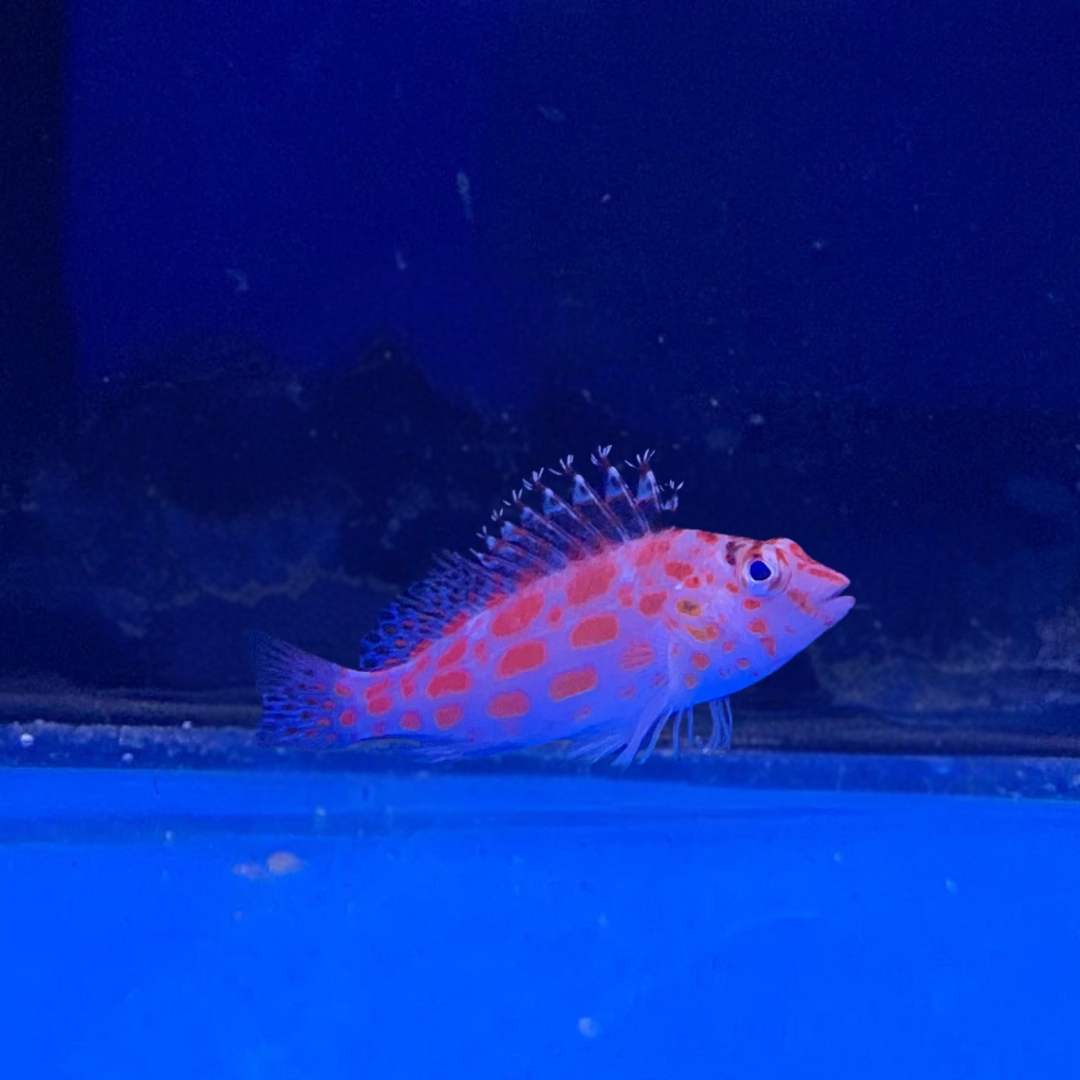
解説 / Description
ヒメゴンベは、サンゴや岩の上にちょこんと止まり、周囲を見渡しながら獲物を待つ姿が印象的な小型の海水魚です。白から淡い桃色の体に赤褐色の斑紋が入り、背鰭の棘条先端にはゴンベ科らしい房状の皮弁が見られます。丈夫で餌付きやすく、日本のマリンアクアリウムでも比較的親しまれている種ですが、口に入る小型魚や小型甲殻類を捕食する性質、同種や近縁種への縄張り意識、そして驚いた時の飛び出し事故には注意が必要です。 The coral hawkfish is a small marine fish known for perching on coral or rock and watching its surroundings for prey. Its body is white to pale pink with reddish-brown markings, and the tips of the dorsal spines bear the tassel-like cirri typical of hawkfishes. It is hardy and usually adapts readily to aquarium foods, so it is a familiar species in marine aquariums in Japan. Even so, keepers should be mindful of its tendency to prey on tiny fishes and crustaceans, its territorial behavior toward conspecifics and related hawkfishes, and its habit of jumping when startled.
基本情報 / Basic Information
| 学名 / Scientific Name | Cirrhitichthys oxycephalus (Bleeker, 1855) |
|---|---|
| 通称 / Common Name | ヒメゴンベ、コーラルホークフィッシュCoral hawkfish, pixy hawkfish |
| 分類 / Family | 硬骨魚綱 Centrarchiformes目 ゴンベ科 オキゴンベ属。旧来の文献や一部の資料ではスズキ目として扱われることもあります。Class Teleostei, order Centrarchiformes, family Cirrhitidae, genus Cirrhitichthys. Some older or alternative references may place the family within Perciformes. |
| 英名 / English Name | Coral hawkfish |
| 分布 / Distribution | 紅海、東アフリカ沿岸、インド洋から中・西部太平洋に広く分布し、東部太平洋ではカリフォルニア湾からコロンビア、ガラパゴス諸島周辺にも記録があります。日本では相模湾以南、小笠原諸島、琉球列島などの温暖な岩礁・サンゴ礁域で見られます。Widely distributed from the Red Sea and East Africa across the Indian Ocean and central to western Pacific, with records in the eastern Pacific from the Gulf of California to Colombia and the Galapagos Islands. In Japan, it is found in warm rocky and coral reef areas from Sagami Bay southward, including the Ogasawara and Ryukyu Islands. |
| 最大体長 / Max Size | 自然下の最大記録は標準体長で約15.2cmです。観賞魚として流通する個体は4〜8cm前後が多く、水槽内では10cm前後を目安に考えると扱いやすいです。The recorded maximum is about 15.2 cm standard length. Aquarium specimens are often around 4 to 8 cm, and about 10 cm is a practical size expectation in home aquaria. |
| 寿命 / Lifespan | 本種単独の寿命データは限られます。飼育下では数年以上の維持が期待でき、安定した水質、適切な餌、飛び出し防止が長期飼育の鍵になります。Species-specific lifespan data are limited. In aquaria, maintenance for several years or more can be expected when water quality, diet, and jump prevention are managed well. |
飼育環境 / Aquarium Environment
| 水槽サイズ / Tank Size | 単独または落ち着いた混泳なら60cm規格水槽前後から飼育可能です。ただし、縄張りの確保と水質安定を考えると、60cmワイド水槽から90cm規格水槽程度、100L以上の水量があるとより管理しやすくなります。A standard 60 cm aquarium can work for a single specimen or a calm community, but a 60 cm wide tank to a standard 90 cm tank, ideally over 100 liters, provides better territorial space and water stability. |
|---|---|
| 水温 / Temperature | 23〜26℃前後を中心に管理します。自然分布の情報では24〜28℃の熱帯域に対応しますが、家庭水槽では急変を避け、24〜25℃前後で安定させると扱いやすいです。 Maintain around 23 to 26°C. Natural records correspond to tropical waters around 24 to 28°C, but in home aquaria it is best to avoid rapid changes and keep the temperature stable around 24 to 25°C. |
| 水質 / Water Quality | 一般的な海水魚水槽の範囲に合わせます。比重は1.020〜1.025、リーフタンクでは1.023〜1.025程度、pHは8.0〜8.4前後を目安にします。アンモニアと亜硝酸は検出されない状態を維持し、硝酸塩も過度に蓄積させないよう定期換水と濾過を行います。Use standard marine aquarium parameters: specific gravity around 1.020 to 1.025, or about 1.023 to 1.025 in reef aquaria, with pH around 8.0 to 8.4. Ammonia and nitrite should remain undetectable, and nitrate should be controlled through filtration and regular water changes. |
| レイアウト / Layout | ライブロックやサンゴ骨格を組み、止まり木のように使える高台、隠れ家、見晴らしのよい場所を複数作ります。強い水流を直接当て続ける必要はありませんが、淀みを避け、酸素が十分に行き渡るレイアウトが向いています。Arrange live rock or coral skeletons to provide several perches, shelters, and lookout points. Strong direct flow is not required, but the layout should avoid stagnant areas and maintain good oxygenation. |
| 注意点 / Precautions | 最大の注意点は飛び出しです。驚いた時や餌に反応した時に勢いよく上方へ飛ぶことがあるため、隙間の少ないフタやジャンプガードを必ず用意します。また、同種・近縁のゴンベ類とは争いやすいため、一般家庭の水槽では基本的に1匹飼育が安全です。The most important precaution is jumping. It may dart upward when startled or when reacting to food, so a tight-fitting lid or jump guard is essential. It can also fight with conspecifics and related hawkfishes, so keeping one specimen is the safest approach in most home aquaria. |
餌と給餌 / Feeding
| 餌の種類 / Diet | 肉食性で、自然下では小型甲殻類や小魚を捕食します。飼育下では海水魚用の動物質ペレット、冷凍ブラインシュリンプ、イサザアミ、クリル、細かく刻んだエビや貝類などを与えられます。人工飼料に餌付きやすい個体が多いですが、導入直後は冷凍餌から慣らすと安心です。It is carnivorous and feeds on small crustaceans and fishes in nature. In aquaria it can be offered marine carnivore pellets, frozen brine shrimp, mysid shrimp, krill, and finely chopped shrimp or shellfish. Many individuals accept prepared foods readily, but frozen foods are useful during acclimation. |
|---|---|
| 給餌のポイント / Feeding Tips | 1日1〜2回、食べ切れる量を与えます。止まり場から素早く飛び出して餌を取るため、泳ぎの速い混泳魚がいる場合は、ヒメゴンベの近くにも餌が届くようにします。単一の餌に偏らせず、粒餌と冷凍餌を組み合わせると体色とコンディションを保ちやすくなります。Feed once or twice daily in portions that are consumed quickly. Because it darts from its perch to take food, make sure some food reaches the hawkfish when faster tank mates are present. A combination of pellets and frozen foods helps maintain color and condition. |
性格と混泳 / Temperament and Tank Mates
| 性格 / Temperament | 普段はお気に入りの場所に止まって周囲を観察する、落ち着いた印象の魚です。ただし、ゴンベ科らしい縄張り意識と捕食本能を持ち、生活圏が重なる小型魚や同じような底生・岩上性の魚には強く出ることがあります。It often appears calm, spending much of its time perched and watching its surroundings. However, it has the territorial nature and predatory instincts typical of hawkfishes, and may behave aggressively toward small fishes or species that share similar bottom or rock-perching habits. |
|---|---|
| 混泳の相性 / Compatibility | ヤッコ類、ハギ類、比較的大きめで遊泳層の異なる魚とは相性がよいことがあります。サンゴを直接食害する魚ではありませんが、ポリプの上に乗ることで一部の繊細なサンゴが閉じる場合があります。小型ハゼ、ネズッポ類、小型ギンポ、口に入るサイズの魚、スカンクシュリンプや小型ヤドカリなどの小型甲殻類との混泳は避けるか、捕食リスクを前提に判断します。It can be compatible with angelfishes, tangs, and other larger fishes that use different swimming zones. It does not normally eat corals directly, but perching on polyps may cause some delicate corals to close. Avoid or carefully evaluate housing it with tiny gobies, dragonets, small blennies, fishes small enough to be swallowed, cleaner shrimps, small hermit crabs, and other small crustaceans. |
病気と対策 / Diseases and Prevention
| かかりやすい病気 / Common Diseases | 特定の病気に極端に弱い魚ではありませんが、海水魚に一般的な白点病、ウーディニウム症、細菌感染、外傷に注意します。輸送直後や導入直後は体力が落ちていることがあるため、数日間は呼吸、体表、餌食いをよく観察します。It is not known as an unusually delicate species, but it can suffer from common marine fish problems such as marine ich, velvet disease, bacterial infections, and injuries. After transport or introduction, observe breathing, body surface condition, and feeding response carefully for several days. |
|---|---|
| 対策と予防 / Prevention | 予防の基本は、検疫、ゆっくりした水合わせ、安定した水温とpH、過密を避けた混泳です。サンゴや無脊椎動物の入った水槽では銅系薬剤を使えないため、治療が必要な場合は隔離水槽で行います。外傷を防ぐため、狭すぎるレイアウトや過度に攻撃的な混泳相手も避けます。Prevention relies on quarantine, careful acclimation, stable temperature and pH, and avoiding overcrowding. Copper-based medications cannot be used in aquaria containing corals or invertebrates, so treatment should be performed in a separate hospital tank when necessary. Avoid overly cramped layouts and aggressive tank mates to reduce injuries. |
増やし方(繁殖) / Breeding
| 雌雄の判別 / Sexing | 外見だけで確実に雌雄を判別するのは難しい魚です。ゴンベ科では雌性先熟型の性転換が知られ、ヒメゴンベでも雄が縄張りを持ちハーレム的に雌を含む行動が報告されています。一般的には大型で優位な個体が雄として機能する可能性がありますが、家庭水槽での判定は慎重に行います。Reliable sexing by appearance alone is difficult. Protogynous sex change is known in hawkfishes, and territorial haremic males are reported for this species. A large dominant individual may function as a male, but sexing in home aquaria should be treated cautiously. |
|---|---|
| 繁殖形態 / Reproduction | 浮遊性産卵を行う海水魚です。産卵時にはペアが水柱へ上昇し、卵と精子を放出するとされます。卵や仔魚は水中を漂うため、親魚が巣を守るタイプの繁殖ではありません。It is a pelagic spawner. During spawning, a pair rises into the water column and releases eggs and sperm. The eggs and larvae drift in the water, and the parents do not guard a nest. |
| 繁殖のポイント / Breeding Tips | 水槽内で求愛や産卵行動が観察される可能性はありますが、商業的な安定生産は容易ではありません。仔魚が非常に小さく、初期餌料、水流、光量、水質を細かく管理する必要があるため、一般家庭での繁殖は上級者向けの課題です。複数飼育を試みる場合も、広い水槽と十分な隠れ家が必要で、同種間闘争のリスクがあります。Courtship or spawning may be observed in aquaria, but reliable commercial production is difficult. The larvae are tiny and require careful control of first foods, water movement, light, and water quality, making breeding a challenge for advanced aquarists. Attempts to keep multiple individuals require a large aquarium, many shelters, and acceptance of the risk of conspecific fighting. |
雑学と豆知識 / Trivia and Fun Facts
| 1. 「ゴンベ」という名前に残る日本の観察眼 / 1. The Japanese eye behind the name “gonbe” | 和名の「ゴンベ」は、背鰭の棘条先端にある房状の皮弁を、昔の幼児の髪型になぞらえた名と説明されることがあります。学術的なラテン語名とは異なり、日本の和名には、魚を見た人の印象や生活文化が映り込むことがあります。ヒメゴンベの場合も、単なる赤い小魚ではなく、背鰭の小さな房にまで目を留めた観察の積み重ねが、名前の中にそっと残っているといえるでしょう。The Japanese name “gonbe” is often explained as a reference to the tassel-like cirri on the dorsal spines, likened to an old hairstyle of young children. Unlike a formal Latin scientific name, a Japanese vernacular name can preserve the impressions and cultural background of the people who observed the fish. In this species, the name reminds us that someone noticed not only the red-and-white pattern, but also the tiny tufts on the dorsal fin. |
|---|---|
| 2. 学名が語る「尖った頭」 / 2. A scientific name that points to the head shape | 種小名の oxycephalus は、「鋭い」や「尖った」を意味する語と「頭」を意味する語に由来するとされます。ヒメゴンベを横から見ると、吻から頭部にかけての輪郭がすっと伸び、止まり場から獲物を見据える姿に小さな猛禽のような雰囲気があります。英名の hawkfish も、この待ち伏せる姿と素早い捕食行動をよく表しています。The specific name oxycephalus is generally interpreted as referring to a sharp or pointed head. Seen from the side, the snout and head profile give the fish a watchful, raptor-like appearance as it looks out from its perch. The English name “hawkfish” also captures this sit-and-wait posture and sudden predatory strike. |
| 3. 鰾を持たないことと、止まり木生活 / 3. No swim bladder and a life of perching | ゴンベ科魚類は一般に鰾を欠くとされ、海中をゆったり浮き続けるよりも、サンゴや岩に体を預ける生活に適応しています。下部の胸鰭軟条は太く、止まり場に体を支えるのに役立ちます。ヒメゴンベが中層を泳ぎ回る魚というより、点から点へ飛び移るように移動するのは、この体の作りと深く関係しています。Hawkfishes generally lack a swim bladder and are adapted more for resting on coral and rock than for hovering continuously in open water. Their lower pectoral-fin rays are thickened and help support the body on perches. The coral hawkfish’s habit of moving from point to point rather than cruising constantly is closely tied to this anatomy. |
| 4. リーフセーフだが「完全に安心」ではない / 4. Reef safe, but not risk-free | ヒメゴンベはサンゴそのものを食べる魚ではないため、リーフタンクで候補に挙がります。ただし、自然下で小型甲殻類や小魚を食べる捕食者であることは忘れられません。サンゴには安全でも、小さなエビやハゼにとっては安全とは限らないため、「リーフセーフ」という言葉は、サンゴと小型生体を分けて考えるのが大切です。The coral hawkfish does not normally eat corals, so it is often considered for reef aquaria. However, it remains a predator of small crustaceans and fishes. It may be safe for corals but not necessarily safe for tiny shrimps or gobies, so the phrase “reef safe” should be understood separately for corals and for small mobile animals. |
まとめ / Conclusion
ヒメゴンベは、サンゴ礁の上で獲物を待つ小さな捕食者として、形態、行動、名前の由来まで魅力に満ちた海水魚です。丈夫で餌付きやすく、ライブロックの上に止まる姿も愛らしいため、海水魚飼育の入門種として紹介されることがあります。 The coral hawkfish is a small reef predator with appeal in its form, behavior, and even the origin of its names. It is hardy, usually adapts readily to foods, and its habit of perching on live rock makes it a charming candidate that is sometimes recommended to marine aquarium beginners.
一方で、本種は「かわいい小魚」であると同時に、明確な縄張りと捕食本能を持つゴンベ科魚類です。フタによる飛び出し防止、口に入る小型生体との混泳回避、同種・近縁種との争いへの配慮を行えば、ヒメゴンベ本来の止まり木行動とサンゴ礁のハンターらしい表情を長く楽しめるでしょう。 At the same time, it is not merely a cute little fish; it is a hawkfish with clear territorial and predatory instincts. With a secure lid, careful avoidance of tiny tank mates that could be swallowed, and attention to aggression toward conspecifics and related species, aquarists can enjoy its natural perching behavior and the watchful expression of a reef hunter for a long time.

気になる道具や飼い方を見つけてみませんか?
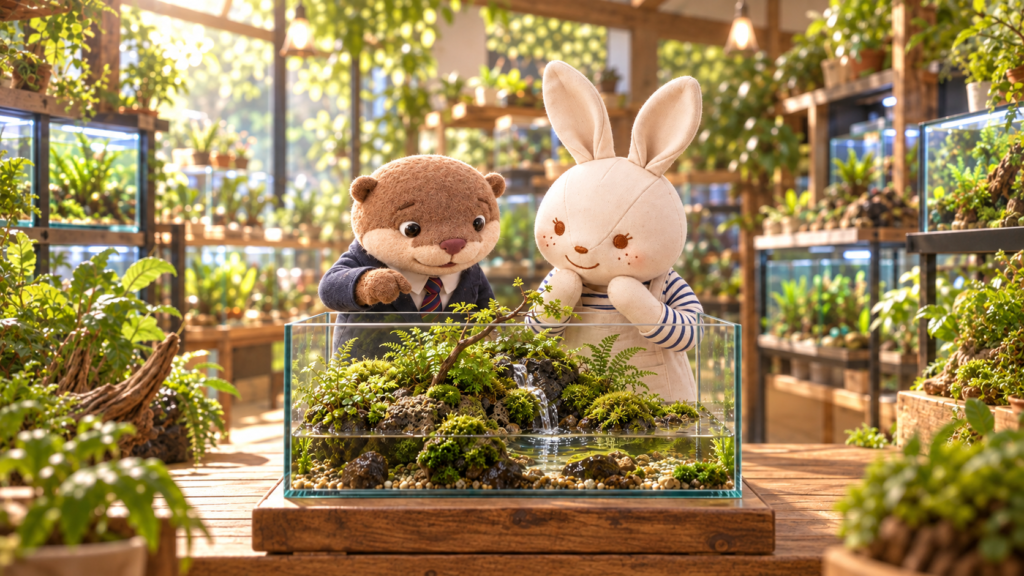 アイのアクアグッズ案内水槽の中に陸地がある!? コタロウと探るアクアテラリウムのメカニズム滝の水はどこから来るの? 白い霧の正体は? アイとコタロウが、水の循環、隠れたポンプ、霧の装置、陸上の植物と水草の葉の変化から、アクアテラリウムのメカニズムを探ります。記事はコチラ →
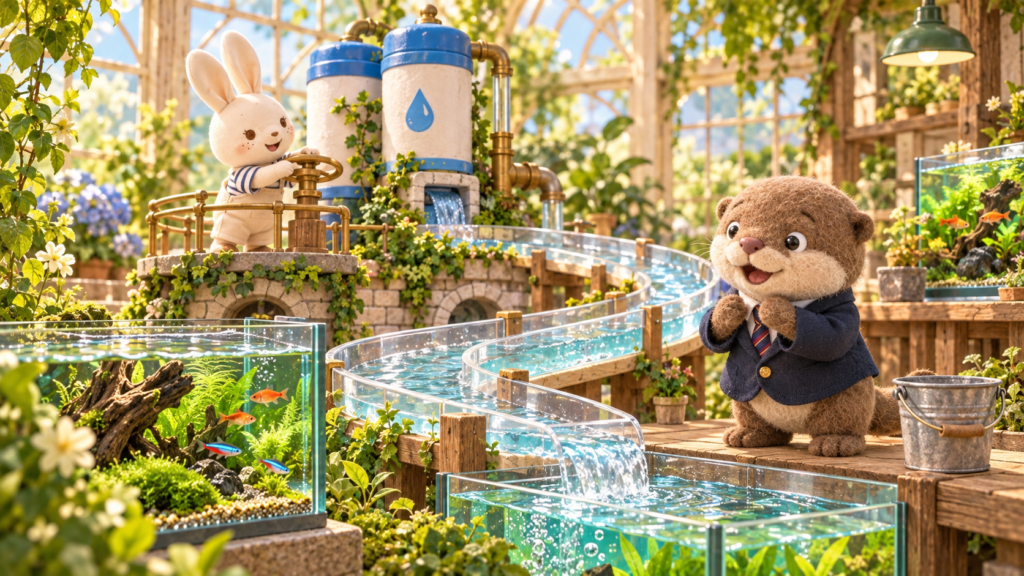 アイのアクアグッズ案内水槽用浄水器の選び方|水換えを楽にするタイプとROの違い道具の特徴や使い方、選ぶときのポイントをアイが紹介します。記事はコチラ →
さまざまな飼育テーマをご紹介。リンク先の記事には広告・商品紹介が含まれます。
案内・紹介記事一覧へ →参考文献・参照資料
この記事では、ヒメゴンベの分類、分布、生息環境、形態、食性、繁殖、飼育管理、病気予防に関する記述を確認するため、店舗、通販サイト、個人ブログ、まとめサイトを除外し、魚類分類データベース、博物館・研究機関の種情報、査読論文、大学拡張資料を中心に参照しました。
-
WoRMS Editorial Board. World Register of Marine Species: Cirrhitichthys oxycephalus (Bleeker, 1855).
現在有効な学名、分類階級、原記載名、同物異名の確認に使用しました。WoRMSでは本種をCentrarchiformes目、Cirrhitidae科、Cirrhitichthys属の有効種として扱っています。
https://www.marinespecies.org/aphia.php?p=taxdetails&id=218853 -
Fricke, R., Eschmeyer, W. N. & Van der Laan, R. Eschmeyer’s Catalog of Fishes: Cirrhitichthys oxycephalus.
分類上の有効性、原記載、分布域、保全状況、海産魚であることの確認に使用しました。分類史や同物異名に触れる本文の基礎資料です。
https://researcharchive.calacademy.org/research/ichthyology/catalog/fishcatget.asp?spid=21362 -
Froese, R. & Pauly, D. FishBase: Cirrhitichthys oxycephalus, Coral hawkfish.
水深1〜40m、通常10〜25m、熱帯性海水魚としての水温目安、最大サイズ、サンゴの多い礁域で休む生態、甲殻類や小魚を食べる食性、雄の縄張り性とハーレム性、浮遊性産卵の確認に使用しました。
https://www.fishbase.se/summary/Cirrhitichthys_oxycephalus.html -
Bray, D. J. Fishes of Australia: Cirrhitichthys oxycephalus.
体色、斑紋、英名、オーストラリア周辺を含む分布、生息環境、博物館系データベースによる形態情報の照合に使用しました。
https://fishesofaustralia.net.au/home/species/437 -
Smithsonian Tropical Research Institute. Shorefishes of the Eastern Pacific: Cirrhitichthys oxycephalus.
東部太平洋側の分布、岩礁・サンゴ礁への依存、底生寄りの生活位置、観察水深、体色・識別形質の補助確認に使用しました。
https://biogeodb.stri.si.edu/sftep/en/thefishes/species/1590 -
U.S. Geological Survey. Nonindigenous Aquatic Species Database: Cirrhitichthys oxycephalus.
背鰭棘条先端の皮弁、発達した胸鰭によるパーチング、体色、ハワイでの非在来記録、食性や底生性中位捕食者としての位置づけの照合に使用しました。
https://nas.er.usgs.gov/queries/factsheet.aspx?SpeciesID=2607 -
Palacios-Narváez, S., Valencia, B. & Giraldo, A. 2020. Diet of the coral hawkfish Cirrhitichthys oxycephalus in a fringing coral reef of the Eastern Tropical Pacific. Coral Reefs 39: 1503–1509.
胃内容物解析に基づく食性の根拠として使用しました。甲殻類が主要な餌であること、小型魚や微小貝類も餌項目に含まれることを支える資料です。
https://doi.org/10.1007/s00338-020-02007-4 -
Coker, D. J. et al. 2015. Habitat Selectivity and Reliance on Live Corals for Indo-Pacific Hawkfishes (Family: Cirrhitidae). PLOS ONE 10(11): e0138136.
ゴンベ科魚類がサンゴ上や枝間を利用する生態の背景資料として使用しました。なお、この論文では種ごとの差も示されるため、ヒメゴンベを常に強い生サンゴ依存種と断定しないための確認資料としても扱いました。
https://doi.org/10.1371/journal.pone.0138136 -
Torres-García, R. Q. et al. 2024. Geographic genetic variation in the Coral Hawkfish Cirrhitichthys oxycephalus across the Eastern Tropical Pacific. Ecology and Evolution.
広域分布、東部熱帯太平洋個体群、浮遊幼生期、分散能力に関する近年の遺伝的研究として参照しました。
https://pmc.ncbi.nlm.nih.gov/articles/PMC11438443/ -
Yanong, R. P. E. University of Florida IFAS Extension: Cryptocaryon irritans Infections (Marine White Spot Disease) in Fish.
海水魚の白点病、検疫期間、温度条件、治療時の注意点、魚だけを隔離して処置する考え方の根拠として使用しました。
https://ask.ifas.ufl.edu/publication/FA164 -
Yanong, R. P. E. University of Florida IFAS Extension: Use of Copper in Marine Aquaculture and Aquarium Systems.
銅を用いた海水魚の外部寄生虫対策、銅濃度が水質条件に左右されること、無脊椎動物への影響を考慮して隔離水槽で扱うべきことの補助根拠として使用しました。
https://ask.ifas.ufl.edu/publication/FA165 -
University of Florida IFAS Extension: The Ornamental Fish Trade: An Introduction with Perspectives for Responsible Aquarium Fish Ownership.
観賞魚導入前の検疫、水質・濾過・給餌管理、飛び出し防止のため水槽を覆うこと、不要生体を野外放流しないことなど、飼育上の一般的な注意点の根拠として使用しました。
https://ask.ifas.ufl.edu/publication/FA124
補足:水槽サイズや混泳可否などの飼育実務上の推奨は、ヒメゴンベの最大体長、底生・縄張り性、甲殻類および小型魚への捕食性、海水魚一般の水質・検疫管理資料を合わせて編集したものです。本種だけを対象に必要な水槽サイズを検証した研究は限られています。推奨サイズは目安であり、縄張り争いや捕食の危険がなくなるわけではありません。




コメント