

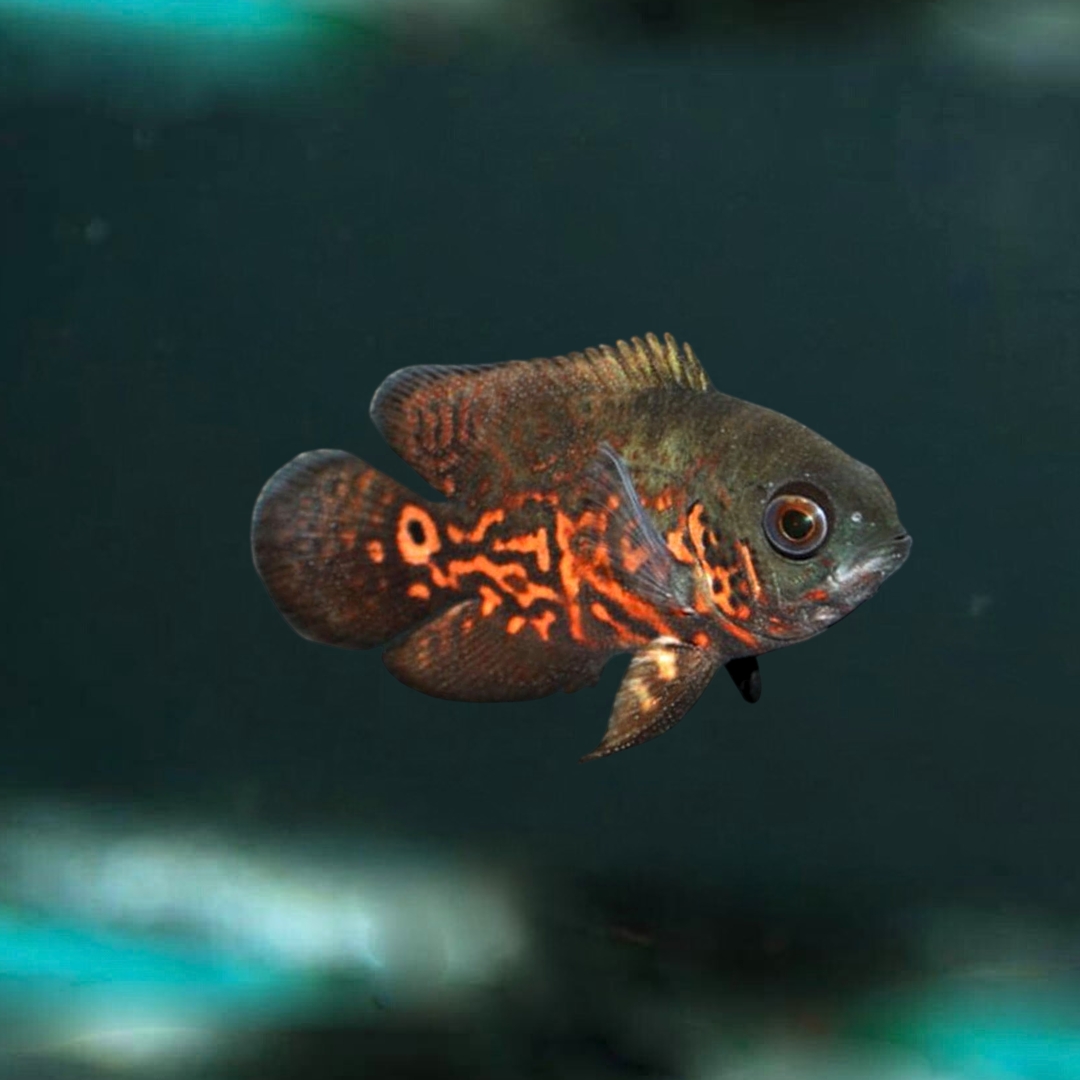
解説 / Description
レッドタイガーオスカーは、南米原産の大型シクリッドであるオスカーをもとに作出された代表的な改良品種です。黒褐色の体色をベースに、赤から橙色の不規則な斑紋が虎の縞模様のように入ることから、この名で親しまれています。幼魚期は小さく愛らしい姿で流通しますが、成長すると体高のある迫力ある魚になり、飼育者の動きや給餌の気配に反応する個体も多く見られます。 The Red Tiger Oscar is a well-known selectively bred strain of the Oscar, a large cichlid native to South America. It is admired for irregular red to orange markings on a dark brown to black base, creating a pattern reminiscent of tiger stripes. Although it is often sold as a small and charming juvenile, it grows into a deep-bodied, powerful fish, and many individuals respond noticeably to their keeper’s movements and feeding routines.
基本情報 / Basic Information
| 学名 / Scientific Name | Astronotus ocellatus |
|---|---|
| 通称 / Common Name | レッドタイガーオスカー、タイガーオスカー、オスカーRed Tiger Oscar, Tiger Oscar, Oscar |
| 分類 / Family | 条鰭綱・スズキ目・シクリッド科・アストロノータス属Actinopterygii, Perciformes, Cichlidae, genus Astronotus |
| 英名 / English Name | Red Tiger Oscar |
| 分布 / Distribution | 原種のオスカーは南米のアマゾン川流域やオリノコ川水系に分布し、泥底や砂底の流れが緩やかな浅い水域、池、運河などを好みます。レッドタイガーオスカーは自然分布を持つ別種ではなく、観賞魚として選択交配された改良品種です。The wild Oscar occurs in South America, especially in the Amazon basin and Orinoco drainage, where it favors quiet, shallow waters with muddy or sandy bottoms, ponds, and canals. The Red Tiger Oscar is not a separate naturally distributed species, but a selectively bred ornamental strain. |
| 最大体長 / Max Size | 飼育下では30cm前後がよく見られる目安で、十分な水量と給餌環境が整うと35cm以上に育つこともあります。野外記録や文献では40cm前後に達する個体も知られています。In aquariums, around 30 cm is a common adult size, and well-kept individuals may exceed 35 cm. Wild and literature records include individuals reaching around 40 cm. |
| 寿命 / Lifespan | 適切な水槽サイズ、ろ過、栄養管理が整えば10年以上の長期飼育が可能です。状態のよい環境では15年近く、まれにそれ以上生きる例もあります。With adequate tank size, filtration, and nutrition, long-term care of more than 10 years is possible. In excellent conditions, some individuals may approach 15 years or occasionally live longer. |
飼育環境 / Aquarium Environment
| 水槽サイズ / Tank Size | 単独飼育でも最低限として90cm規格水槽を用意し、可能であれば90cmワイド水槽以上を選びます。長期飼育では120cm規格水槽以上、余裕を持たせるなら120cmワイド水槽やそれ以上の大型水槽が理想です。幼魚は小さく販売されますが、成魚の旋回スペースと水質安定を最初から見込んで準備します。For a single adult, a standard 90 cm tank should be treated as the minimum, with a wider 90 cm tank or larger preferred. For long-term care, a standard 120 cm tank or larger is recommended, and a 120 cm wide tank or larger is ideal. Although juveniles are sold small, the adult’s turning space and water stability should be planned from the beginning. |
|---|---|
| 水温 / Temperature | 24から26℃前後を基本に、できるだけ安定させて管理します。個体の状態や病気予防を重視する飼育では、27から28℃前後で維持する例もあります。急な低温や大きな水温変化は消化不良や白点病のきっかけになりやすいため避けます。 Maintain a stable temperature around 24 to 26°C. Some keepers maintain 27 to 28°C for health management, depending on the fish’s condition. Sudden chilling or major temperature swings should be avoided because they can trigger digestive problems or ich. |
| 水質 / Water Quality | pH6.5から7.5前後の弱酸性から中性、軟水から中程度の硬度が扱いやすい範囲です。オスカーは比較的適応力がありますが、排泄量が多いため、アンモニアと亜硝酸を検出させないこと、硝酸塩を蓄積させないことが重要です。大型の上部式フィルター、外部式フィルター、オーバーフローなど、ろ材容量に余裕のあるシステムを組みます。A slightly acidic to neutral range around pH 6.5 to 7.5, with soft to moderately hard water, is suitable. Oscars are fairly adaptable, but they produce a heavy waste load. Ammonia and nitrite should remain undetectable, and nitrate accumulation should be minimized. Use filtration with generous media capacity, such as a large overhead filter, canister filter, sump, or a combination of systems. |
| レイアウト / Layout | 底砂を掘り返したり、小物をくわえて動かしたりするため、レイアウトはシンプルにします。管理性を優先するならベアタンクも有効です。流木や岩を入れる場合は、成魚が動かしにくい大きさのものを安定して配置し、崩落や擦り傷の原因にならないようにします。根を張る水草は掘り起こされやすく、基本的には不向きです。Keep the layout simple because Oscars dig substrate and move small decorations. A bare-bottom tank is effective when easy maintenance is the priority. If driftwood or rocks are used, choose pieces large enough that an adult cannot easily move them and place them securely to avoid collapse or abrasions. Rooted plants are usually unsuitable because they are easily uprooted. |
| 注意点 / Precautions | 購入時は4から5cmほどの幼魚でも、成長は早く、1年ほどで15から20cmを超えることがあります。生体価格は手頃でも、成魚を健康に維持するには大型水槽、丈夫な水槽台、強力なろ過、ヒーター、継続的な水換えが必要です。小型水槽で長く飼うと、成長不良、外傷、水質悪化、頭部穴あき病などのリスクが高まります。Even juveniles of 4 to 5 cm can grow quickly and may exceed 15 to 20 cm within about a year. Although the fish itself is often inexpensive, healthy adult care requires a large tank, sturdy stand, powerful filtration, heater, and regular water changes. Keeping it long-term in a small tank increases the risk of poor growth, injuries, water deterioration, and hole-in-the-head disease. |
餌と給餌 / Feeding
| 餌の種類 / Diet | 大型シクリッド用の人工飼料を主食にし、補助的に冷凍アカムシ、クリル、昆虫系の餌などを与えます。自然下では小魚、甲殻類、ミミズ、昆虫の幼虫などを食べるため、飼育下でも動物質を含む栄養価の高い餌を中心にします。生餌の小魚は嗜好性が高い一方で、寄生虫や病原菌を持ち込むリスクがあるため、与える場合は別水槽で十分にトリートメントした個体に限ります。Use high-quality pellets for large cichlids as the staple diet, supplemented with frozen bloodworms, krill, and insect-based foods. In nature, Oscars feed on small fish, crustaceans, worms, and insect larvae, so captive diets should be rich in suitable animal-based nutrition. Live feeder fish are readily accepted but can introduce parasites or pathogens; if used, they should be quarantined and conditioned in a separate tank. |
|---|---|
| 給餌のポイント / Feeding Tips | 食欲が強いため、与えすぎに注意します。幼魚期は少量を複数回、成長後は体型と水質を見ながら量を調整します。食べ残しは水質悪化の大きな原因になるため、速やかに取り除きます。単一の餌に偏らせず、主食の人工飼料を軸に、ビタミンやミネラル不足を起こしにくい内容に整えます。Because Oscars are enthusiastic eaters, avoid overfeeding. Juveniles can be fed small portions several times a day, while adults should be fed according to body condition and water quality. Uneaten food quickly worsens water quality and should be removed. Avoid relying on a single food; keep pellets as the staple and build a diet that helps prevent vitamin and mineral deficiencies. |
性格と混泳 / Temperament and Tank Mates
| 性格 / Temperament | 大型シクリッドらしい存在感があり、飼育者の動きや給餌に反応しやすい魚です。一般に「獰猛」と表現されることもありますが、常に攻撃的というより、口に入る魚を捕食し、縄張りや相性によって攻撃性が出るタイプです。個体差が大きく、若魚期に同種や似た体型の魚へ強く当たることがあります。This fish has the presence expected of a large cichlid and often responds strongly to the keeper’s movements and feeding. It is sometimes described as aggressive, but it is better understood as a predatory, territorial fish that will eat tank mates small enough to fit in its mouth and may show aggression depending on compatibility. Individual variation is large, and juveniles or subadults may be especially rough with other Oscars or similarly shaped fish. |
|---|---|
| 混泳の相性 / Compatibility | 混泳は大型水槽と強力なろ過を前提に、口に入らない大きさで、体型や遊泳層が異なる魚を選びます。候補としては大型プレコ、ポリプテルス、ダトニオ、セベラム、パロットファイヤーなどが挙げられますが、成功は水槽サイズ、個体差、給餌管理に左右されます。底層魚には餌が回りにくいことがあるため、消灯後に沈下性の餌を与えるなどの工夫が有効です。Community keeping requires a large tank and strong filtration. Tank mates must be too large to swallow and preferably differ in body shape or swimming layer. Possible examples include large plecos, Polypterus, Datnioides, Severums, and Blood Parrot cichlids, but success depends on tank size, individual temperament, and feeding management. Bottom dwellers may lose the feeding competition, so sinking foods after lights-out can be useful. |
病気と対策 / Diseases and Prevention
| かかりやすい病気 / Common Diseases | 特に注意したいのは頭部穴あき病、または頭部・側線びらん症と呼ばれる症状です。頭部や側線に小さな穴や白い点が現れ、悪化するとびらん状に広がることがあります。原因は一つに限定されず、水質悪化、過密、栄養の偏り、ストレス、ヘキサミタやスピロヌクレウスなどの腸管寄生性原虫が関係する場合があります。活性炭については、海水魚の一部で関連を示す研究がありますが、オスカーで同じように断定できるものではないため、常用時は粉じんや使用目的を見直す程度に留めます。そのほか、エロモナス感染症、白点病、擦り傷からの二次感染にも注意します。The main condition to watch for is hole-in-the-head disease, also called head and lateral line erosion. Small pits or pale spots may appear on the head or lateral line and can progress into erosive lesions. The cause is not limited to a single factor; poor water quality, crowding, nutritional imbalance, stress, and intestinal flagellates such as Hexamita or Spironucleus may be involved. Activated carbon has been associated with HLLE in some marine fish studies, but this should not be stated as a proven cause in Oscars; if carbon is used continuously, consider dust control and whether it is truly needed. Aeromonas infections, ich, and secondary infections from abrasions also require attention. |
|---|---|
| 対策と予防 / Prevention | もっとも重要なのは、強力な生物ろ過と定期的な水換えにより、有機物と硝酸塩をため込まないことです。過密飼育と過給餌を避け、底にたまる糞や食べ残しをこまめに取り除きます。人工飼料を中心にビタミンやミネラルを補える食事を与え、生餌は必ず検疫します。白い糸状の糞、食欲低下、痩せ、頭部の小さな穴などが見られた場合は、まず水質と飼育密度を見直し、必要に応じて魚病薬や獣医師、魚病に詳しい専門店の助言を利用します。The most important prevention is strong biological filtration combined with regular water changes to prevent organic buildup and excessive nitrate. Avoid crowding and overfeeding, and remove feces and uneaten food promptly. Provide a pellet-centered diet with adequate vitamins and minerals, and quarantine any live foods. If white stringy feces, loss of appetite, weight loss, or small pits on the head appear, first review water quality and stocking density, then use appropriate fish medications or seek advice from a veterinarian or a specialist aquarium shop when needed. |
増やし方(繁殖) / Breeding
| 雌雄の判別 / Sexing | 外見での雌雄判別は非常に難しく、成熟した個体でも確実に見分けるのは困難です。繁殖を狙う場合は、複数の幼魚を育てて自然にペアができるのを待つ方法が一般的です。Sexing by appearance is very difficult, even in mature fish. The usual approach is to raise a group of juveniles and allow a pair to form naturally. |
|---|---|
| 繁殖形態 / Reproduction | ペアを形成し、平らな石、流木、ガラス面などを掃除して粘着性の卵を産み付けるオープンスポウナーです。産卵後は雌雄が卵に水流を送り、孵化後の稚魚を守るなど、シクリッドらしい強い両親保護を見せます。Oscars form pairs and are open spawners, depositing adhesive eggs on cleaned flat stones, driftwood, or glass surfaces. After spawning, both parents fan the eggs and protect the fry, showing the strong biparental care typical of many cichlids. |
| 繁殖のポイント / Breeding Tips | 繁殖には十分な広さと安定した水質、相性の良いペアが必要です。自然ペアを得るために5から6匹ほどの若魚を育てる方法がありますが、成長後は水槽の負荷が大きくなるため、分離先や大型水槽を事前に準備します。産卵中の親は防衛本能が強くなり、水槽に手を入れた飼育者に向かってくることもあります。Breeding requires ample space, stable water quality, and a compatible pair. Raising five or six juveniles can help obtain a natural pair, but the bioload becomes heavy as they grow, so spare tanks or larger quarters should be prepared in advance. During spawning, the parents become highly defensive and may attack the keeper’s hand. |
雑学と豆知識 / Trivia and Fun Facts
| 1. 学名に刻まれた「目玉模様」 / 1. The eye-spot in its scientific name | オスカーの学名であるAstronotus ocellatusのうち、ocellatusは眼状斑を連想させる語です。尾びれの付け根にある黒く縁取られた斑紋は、自然界では捕食者の攻撃を頭部からそらす役割を持つ可能性があると説明されることがあります。レッドタイガーオスカーの赤い模様は人の手で選ばれたものですが、この眼状斑は原種から受け継がれた、オスカーらしさを象徴するサインです。In the scientific name Astronotus ocellatus, ocellatus evokes the eye-like marking seen on the fish. The dark ocellus near the base of the tail is sometimes explained as a feature that may help divert predator attacks away from the head in the wild. The Red Tiger Oscar’s red pattern is a product of selective breeding, but this eye-spot remains a defining feature inherited from the wild form. |
|---|---|
| 2. 観賞魚であり、南米では食用魚でもある / 2. Both ornamental fish and food fish | 日本では主に観賞魚として親しまれるオスカーですが、原産地の南米では水産資源として扱われる地域もあります。水槽の中で人懐っこく振る舞う姿を見ると意外に感じられますが、現地では人々の暮らしにも結びついた魚です。観賞魚としての魅力と、地域の食文化に関わる魚としての側面を併せ持つ点が、オスカーという魚の背景をより立体的にしてくれます。In Japan, Oscars are mainly known as aquarium fish, but in parts of their native South America they are also treated as a fishery resource. This may seem surprising when watching a tame Oscar beg at the front glass, yet locally the fish can also be connected to daily life and food culture. Its dual identity as an ornamental fish and a regional resource gives the Oscar a richer background. |
| 3. 選択交配が作った赤いタイガー模様 / 3. Selective breeding created the red tiger pattern | 野生のオスカーは周囲に溶け込みやすい暗色が中心ですが、観賞魚としての長い選択交配の中で赤い色素が目立つ個体が選ばれてきました。レッドタイガー、アルビノ、ベールテールなどの品種は、別種ではなく同じオスカーの改良タイプとして流通しています。日本のショップで見かける小さな幼魚も、こうした国際的な観賞魚流通を通じて届くことが多い魚です。Wild Oscars are generally dark and camouflaged, but selective breeding for the aquarium trade favored individuals with more visible red pigmentation. Strains such as Red Tiger, Albino, and Veiltail Oscars are not separate species, but ornamental varieties of the Oscar. Many juveniles seen in Japanese shops arrive through this international ornamental fish trade. |
| 4. 外来種としての顔と、水温という限界 / 4. An introduced species with a thermal limit | オスカーは観賞魚の放流や養殖場からの逸出により、フロリダなど一部の温暖地域で定着した例があります。一方で、低温には弱く、分布の広がりは冬の寒さに大きく左右されます。この性質は日本の多くの地域で野外定着を阻む要因になりますが、飼いきれなくなった個体を放流してよい理由には決してなりません。どの地域でも、飼育を始めた魚は最後まで責任を持って管理することが大切です。Oscars have established introduced populations in some warm regions, such as parts of Florida, through releases or escapes from fish farms. However, they are vulnerable to low temperatures, and their spread is strongly influenced by winter cold. This limits establishment in many parts of Japan, but it never justifies releasing unwanted fish into the wild. In every region, a fish that has been acquired for an aquarium should be cared for responsibly throughout its life. |
| 5. 安価な幼魚と高い生涯コスト / 5. Cheap juveniles and high lifetime costs | レッドタイガーオスカーは幼魚なら手頃な価格で販売されることが多く、愛嬌のある動きもあって衝動的に迎えたくなる魚です。しかし、成魚の体格、10年以上の寿命、強力なろ過設備、定期的な水換えを考えると、実際には大型魚飼育として相応の準備が必要です。小さな水槽で一時的に楽しむ魚ではなく、長い時間を共に過ごす大型のコンパニオンフィッシュとして考えることが、健康な飼育への第一歩になります。Red Tiger Oscars are often inexpensive as juveniles, and their charming behavior can encourage impulse purchases. Yet their adult size, lifespan of more than a decade, need for strong filtration, and regular water changes mean they require the commitment expected for a large fish. They should not be viewed as temporary residents of a small tank, but as large companion fish to be cared for over many years. |
まとめ / Conclusion
レッドタイガーオスカーは、赤い虎模様の美しさ、成魚になったときの迫力、飼育者に反応するような親しみやすさを兼ね備えた、大型シクリッドの代表的な存在です。見た目は華やかですが、飼育の本質は「大きくなり、よく食べ、よく汚す魚」を安定した環境で長く支えることにあります。 The Red Tiger Oscar is a classic large cichlid, combining the beauty of red tiger-like markings, the impressive presence of an adult fish, and a personable response to its keeper. Although it is visually striking, successful care ultimately means supporting a fish that grows large, eats heavily, and produces a heavy waste load in a stable environment.
迎えるなら、幼魚のサイズではなく成魚の姿を基準に、水槽、水槽台、ろ過、水換えの計画を立てておきたい魚です。十分な水量、余裕あるろ過、栄養バランスの取れた餌、そして放流しない責任を守ることができれば、レッドタイガーオスカーは10年以上にわたり、水槽の主役として力強く、表情豊かな魅力を見せてくれます。大型魚飼育の楽しさと責任を、もっとも分かりやすく教えてくれる一匹といえるでしょう。 Anyone who keeps one should plan around the adult fish rather than the juvenile size, preparing the tank, stand, filtration, and water-change routine in advance. With enough water volume, generous filtration, a balanced diet, and the responsibility never to release it, a Red Tiger Oscar can remain the centerpiece of an aquarium for more than a decade, showing both power and character. It is one of the clearest examples of both the joy and responsibility of keeping large aquarium fish.

気になる道具や飼い方を見つけてみませんか?
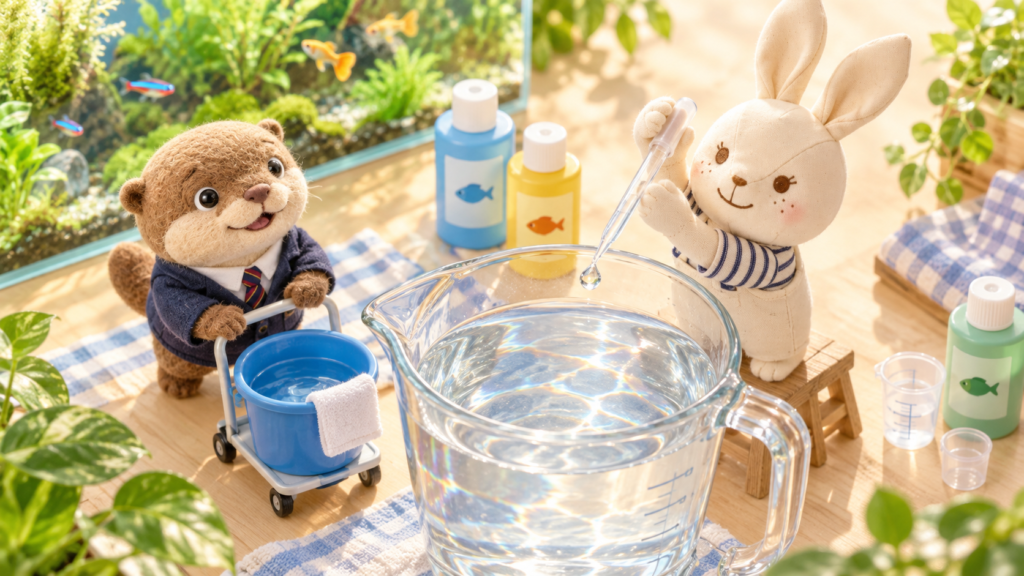 アイのアクアグッズ案内カルキ抜き・水質調整剤の選び方|水換えと水槽の種類に合わせて選ぶ道具の特徴や使い方、選ぶときのポイントをアイが紹介します。記事はコチラ →
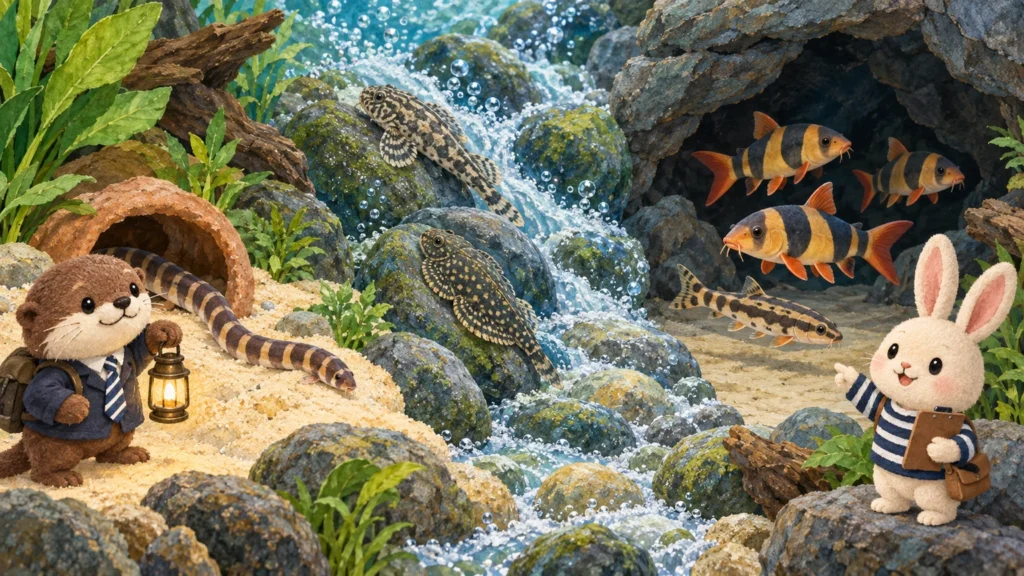 アイのアクアグッズ案内ローチの仲間に合わせる飼育用品|クーリー・流水性・ボーシャの水槽と底砂道具の特徴や使い方、選ぶときのポイントをアイが紹介します。記事はコチラ →
さまざまな飼育テーマをご紹介。リンク先の記事には広告・商品紹介が含まれます。
案内・紹介記事一覧へ →参考文献・根拠資料
本記事の参考文献は、レッドタイガーオスカーを Astronotus ocellatus の改良品種として扱うために、分類、分布、生息環境、飼育条件、繁殖、病気、放流に関する注意点を検証できる資料を選定しました。店舗、通販ページ、個人ブログ、まとめサイトは除外し、学術データベース、公的機関、大学博物館、獣医学資料、査読論文または専門誌掲載資料を中心にしています。
-
Fricke, R., Eschmeyer, W. N. & Van der Laan, R. eds. Eschmeyer’s Catalog of Fishes. California Academy of Sciences.
分類、原記載、シノニム、Astronotus ocellatus の有効名、Cichlidae内での位置づけを確認するための基礎資料です。 出典を見る -
Froese, R. & Pauly, D. eds. FishBase: Astronotus ocellatus, Oscar.
学名、分類、最大体長、水温・pH・硬度、分布、生息環境、食性、繁殖行動、IUCN評価など、図鑑本文の基本情報を支える主要データベースです。 出典を見る -
Nico, L., Fuller, P. & Neilson, M. USGS Nonindigenous Aquatic Species Database: Oscar (Astronotus ocellatus) Species Profile.
原産地、米国内での外来個体群、導入記録、同定上の注意点、放流リスクの説明を補強する公的データベースです。 出典を見る -
U.S. Fish and Wildlife Service. Ecological Risk Screening Summary: Oscar (Astronotus ocellatus). 2025.
低温耐性、自然環境での水温範囲、繁殖温度、産卵基質、両親保護、食性、外来化の経路、疾病報告を横断的に確認するための公的リスク評価資料です。 出典を見る -
Florida Museum of Natural History. Discover Fishes: Oscar.
学名の由来、分類史、形態的特徴、オスカー類の分類上の注意を読者向けに補足する大学博物館の解説資料です。 出典を見る -
Merck Veterinary Manual. Disorders and Diseases of Fish.
シクリッド類で問題となる Hexamita・Spironucleus、白点病、細菌感染、過密・水質悪化・栄養不良と疾病の関係を整理するための獣医学資料です。 出典を見る -
Peyghan, R., Boloki, A. & Ghorbanpour, M. 2010. Case Report and Treatment of Hole in the Head in Oscar, Astronotus ocellatus. Iranian Journal of Veterinary Science and Technology, 2(1), 39–44.
オスカーでの頭部穴あき症状、鞭毛虫、二次的な細菌感染、治療例に関する種特異的なケースレポートです。病気欄の記述を断定しすぎないための確認資料として採用しています。 出典を見る -
Sreedharan, K., Philip, R. & Singh, I. S. B. 2011. Isolation and characterization of virulent Aeromonas veronii from ascitic fluid of oscar Astronotus ocellatus showing signs of infectious dropsy. Diseases of Aquatic Organisms, 94(1), 29–39.
オスカーの腹水・細菌性疾患に関する査読論文です。エロモナス類を含む細菌感染への注意、隔離・診断・水質管理の重要性を支える資料として採用しています。 出典を見る
補足:水槽サイズやろ過能力の推奨は、成魚サイズ、食性、排泄量、行動特性、水質悪化が疾病リスクを高めるという知見から導いた飼育上の安全側の目安です。上記資料はその前提となる生物学・水質・疾病・外来化リスクを支えるために選定しています。




コメント