

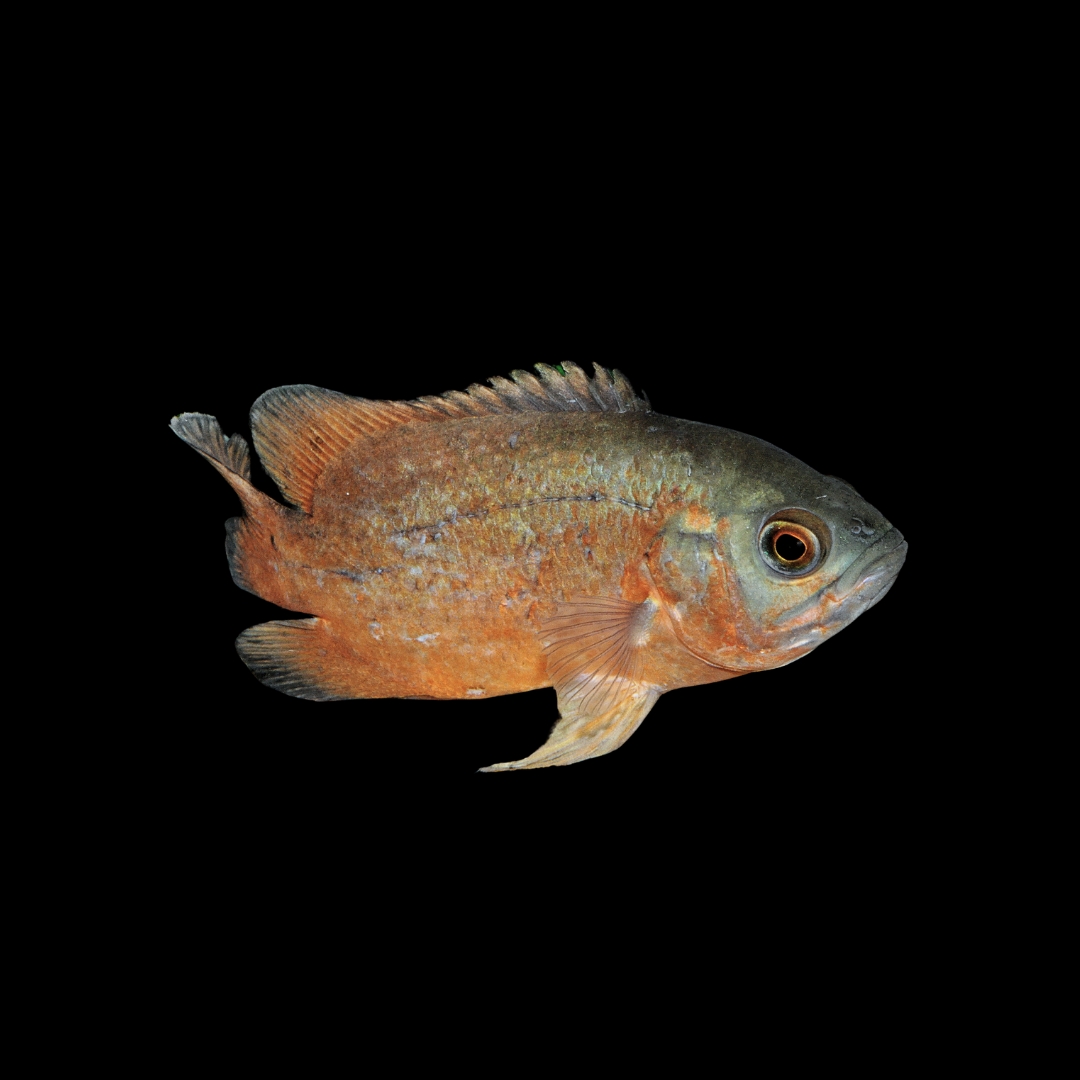
解説 / Description
レッド・オスカーは、南米原産の大型シクリッドとして知られるオスカーをもとに、赤い発色を楽しむために選択繁殖されてきた観賞魚品種です。厚みのある楕円形の体、存在感のある顔つき、赤と黒の強いコントラストが魅力で、水槽の前に立つ飼い主へ反応する個体も多いことから、長く付き合う「水中のペット」として親しまれています。 The Red Oscar is an ornamental strain developed from the Oscar, a large South American cichlid, through selective breeding for stronger red coloration. Its deep oval body, expressive face, and bold red-and-dark contrast give it a strong presence. Many individuals respond noticeably to their keeper, which is why Oscars are often kept as long-term aquatic companions.
ただし、販売時の幼魚が小さく見えても、成魚は30cmを超える大型魚です。日本の室内で終生飼育するには、最低でも90cm規格水槽、理想的には120cm規格水槽以上の水量、強力な濾過、定期的な換水、ヒーター保護などが必要になります。入手しやすい魚ですが、飼育設備は本格的な大型魚飼育として考えるのが安全です。 Even when sold as a small juvenile, this fish grows into a large adult that commonly exceeds 30 cm. In a typical indoor Japanese home, lifelong care requires at least a 90 cm standard aquarium, ideally a 120 cm standard aquarium or larger, along with powerful filtration, regular water changes, and heater protection. The fish itself is easy to obtain, but the setup should be planned as a true large-fish aquarium.
基本情報 / Basic Information
| 学名 / Scientific Name | Astronotus ocellatus |
|---|---|
| 通称 / Common Name | レッド・オスカー、オスカー、レッドタイガー・オスカー、アルビノ・レッド・オスカーRed Oscar, Oscar, Red Tiger Oscar, Albino Red Oscar |
| 分類 / Family | シクリッド科アストロノータス属Family Cichlidae, genus Astronotus |
| 英名 / English Name | Red Oscar, Oscar, Velvet Cichlid, Marble Cichlid |
| 分布 / Distribution | 原種として扱われるオスカーは南米のアマゾン川流域を中心に記録され、古い資料や広義の扱いではオリノコ川流域、ギアナ地方、パラグアイ川上流域なども含めて語られることがあります。ただし、近年はオリノコ産の一部が別種として扱われるなど分類の見直しが進んでいます。日本で流通するレッド・オスカーは、主に養殖由来の改良品種です。The wild Oscar has been recorded mainly from the Amazon basin in South America. Older or broader treatments may also include the Orinoco basin, the Guianas, and the upper Paraguay drainage, although recent taxonomy has separated some Orinoco Oscars as a distinct species. Red Oscars sold in Japan are mainly captive-bred ornamental strains. |
| 最大体長 / Max Size | 飼育下では30〜35cmほどが目安です。資料によっては40cm前後、最大で45cm級の記録も示されますが、家庭水槽では十分な水量と餌、長期管理があってこそのサイズです。In aquariums, 30 to 35 cm is a practical adult size range. Some references list around 40 cm, with records in the 45 cm class, but reaching such size in a home aquarium depends on long-term space, diet, and water quality. |
| 寿命 / Lifespan | 10〜15年ほどを目安に考えます。水質、餌、設備、ストレス管理が良ければさらに長く飼育される例もあり、短期的に楽しむ魚ではなく長期計画で迎えたい種類です。A typical expectation is about 10 to 15 years. With excellent water quality, diet, equipment, and stress management, some individuals may live longer, so this is a fish to keep with a long-term plan. |
飼育環境 / Aquarium Environment
| 水槽サイズ / Tank Size | 単独飼育でも最低90cm規格水槽を目安にし、余裕を持たせるなら120cm規格水槽以上を推奨します。幼魚は60cm規格水槽で一時的に管理できる場合もありますが、成長後の旋回スペースと水量を考えると終生飼育には不向きです。ペア繁殖や複数飼育では150cm以上、またはそれに相当する大型水槽を検討してください。For a single adult, a 90 cm standard aquarium should be considered the practical minimum, while a 120 cm standard aquarium or larger is recommended for more comfort. Juveniles may be kept temporarily in a 60 cm tank, but it is unsuitable for lifelong care once turning space and water volume are considered. Pair breeding or multiple Oscars require a 150 cm-class aquarium or equivalent volume. |
|---|---|
| 水温 / Temperature | 日常管理では24〜28℃を目安にします。高めの水温にもある程度は適応しますが、長期飼育では急変を避け、安定を優先してください。日本の冬は室温が大きく下がるため、信頼性の高いヒーターとヒーターガードを必ず使用します。 For daily care, 24 to 28°C is a practical target range. Oscars can tolerate somewhat warmer conditions, but long-term care should prioritize stability and avoid sudden changes. In Japan, winter room temperatures can drop significantly, so a reliable heater and heater guard are essential. |
| 水質 / Water Quality | pH6.5〜7.5前後の中性付近を目安にし、硬度は軟水から中硬水まで比較的幅広く適応します。大切なのは数値を無理に動かすことより、アンモニアと亜硝酸を0に保ち、硝酸塩を低めに抑えることです。大型魚らしく排泄量が多いため、濾過能力と換水量に余裕を持たせます。Aim for near-neutral water around pH 6.5 to 7.5, with a relatively broad tolerance from soft to moderately hard water. Rather than chasing exact numbers, it is more important to keep ammonia and nitrite at 0 and nitrate low. Because Oscars produce heavy waste, filtration capacity and water-change volume should have plenty of margin. |
| レイアウト / Layout | 太めの流木や大きな石で落ち着ける場所を作りつつ、成魚がゆったり旋回できる空間を残します。オスカーは底砂を掘ったり、軽い飾りを動かしたりすることがあるため、不安定な石組みや尖った装飾は避けます。黒い背面や底面は赤色を引き締めて見せやすく、鑑賞面で相性の良い選択です。Use sturdy driftwood or large stones to create calm resting areas while leaving enough open space for an adult to turn comfortably. Oscars may dig in the substrate and move lightweight decorations, so unstable rockwork and sharp ornaments should be avoided. A black background or base can enhance the contrast of the red coloration and works well visually. |
| 注意点 / Precautions | 外部式フィルターを複数使う、上部フィルターを強化する、オーバーフロー式を採用するなど、大容量の生物濾過を前提にします。120cm規格水槽以上では水槽本体、水、台、濾過槽を合わせた重量が大きくなるため、床の耐荷重と設置場所を確認してください。ヒーターの破損や火傷を防ぐため、ガード付きヒーターまたはヒーターガードは必須です。Plan for high-capacity biological filtration, such as multiple canister filters, reinforced overhead filtration, or a sump system. For tanks of 120 cm or larger, the combined weight of the tank, water, stand, and filtration becomes substantial, so floor load and placement must be checked. A guarded heater or heater guard is essential to prevent breakage and burns. |
餌と給餌 / Feeding
| 餌の種類 / Diet | 大型シクリッド用の高品質な人工飼料を主食にし、クリル、冷凍アカムシ、エビ、昆虫系フード、少量の植物質を補助的に与えると管理しやすくなります。小赤、メダカ、ドジョウなどの活餌は嗜好性が高い一方、寄生虫や細菌を持ち込む可能性があるため、常用は避け、使う場合は隔離とトリートメントを行ったものに限るのが安全です。A high-quality large-cichlid pellet should be the staple. Krill, frozen bloodworms, shrimp, insect-based foods, and small amounts of plant matter can be used as supplements. Feeder fish such as small goldfish, medaka, or loaches are readily accepted, but they can introduce parasites or bacteria, so routine use should be avoided unless they are quarantined and treated first. |
|---|---|
| 給餌のポイント / Feeding Tips | 幼魚期は少量を複数回、成魚は食べ残しが出ない量を1日1回程度から調整します。餌をねだる姿が魅力的でも、与えすぎは肥満と水質悪化につながります。牛ハツなど哺乳類由来の餌は水を汚しやすく、現在の家庭飼育では主食にしない方が無難です。Juveniles can be fed small portions several times a day, while adults are often managed with one appropriately sized feeding per day, adjusted to avoid leftovers. Begging behavior is charming, but overfeeding leads to obesity and water deterioration. Mammalian meats such as beef heart tend to pollute the water and are best avoided as a staple in modern home aquariums. |
性格と混泳 / Temperament and Tank Mates
| 性格 / Temperament | 個体差はありますが、飼い主を覚えて水槽前へ寄ってくるような反応を見せることがあります。環境変化には敏感で、大きな水換えやレイアウト変更の後に体色を暗くして底でじっとすることもあります。繁殖期や縄張りを意識した時期には攻撃性が強くなるため、普段おとなしい個体でも油断はできません。Individual differences exist, but many Oscars learn to associate their keeper with food and may approach the front of the tank. They can be sensitive to environmental changes and may darken or rest on the bottom after large water changes or layout changes. Aggression can increase during breeding or territorial periods, even in individuals that are usually calm. |
|---|---|
| 混泳の相性 / Compatibility | 口に入る魚は食べられる可能性が高いため、小型魚との混泳はできません。混泳する場合は同程度以上の大きさで丈夫な大型魚が候補になりますが、水槽サイズ、隠れ場所、個体同士の相性に左右されます。管理のしやすさと観察の楽しさを重視するなら、単独飼育がもっとも安定します。Small fish are likely to be eaten if they fit in the Oscar’s mouth, so community setups with small species are unsuitable. Potential tank mates must be similarly sized, robust large fish, but success depends on tank size, cover, and individual compatibility. For ease of management and observation, single-specimen care is usually the most stable option. |
病気と対策 / Diseases and Prevention
| かかりやすい病気 / Common Diseases | 特に注意したいのは頭部穿孔病、または頭部および側線系びらんです。顔や頭部、側線付近に小さな穴やくぼみが現れ、悪化すると見た目だけでなく二次感染の入口になることがあります。そのほか、白点病、外部寄生虫、細菌感染、輸入直後や導入直後のストレス性の不調にも注意します。The condition to watch most carefully is hole-in-the-head disease, also called head and lateral line erosion. Small pits or depressions appear around the head, face, or lateral line, and worsening lesions can allow secondary infections. Ich, external parasites, bacterial infections, and stress-related problems after import or introduction should also be monitored. |
|---|---|
| 対策と予防 / Prevention | 予防の中心は、清潔な水、過密を避けた水量、強力な濾過、栄養バランスのよい餌、新しく入れる魚や活餌の隔離です。頭部穿孔病は原因が一つに限定されないため、水質悪化、ストレス、栄養不足、活性炭の長期使用などを総合的に見直します。症状が出た場合は換水頻度を上げ、餌と濾過を整え、寄生虫や細菌感染が疑われる時は適切な魚病薬や専門家への相談を検討してください。Prevention centers on clean water, adequate volume without overcrowding, strong filtration, balanced nutrition, and quarantine for new fish or live foods. Hole-in-the-head disease is multifactorial, so water quality, stress, nutritional deficiencies, and long-term activated carbon use should be reviewed together. If symptoms appear, increase water-change frequency, improve feeding and filtration, and consider appropriate fish medication or expert advice when parasites or bacterial infection are suspected. |
増やし方(繁殖) / Breeding
| 雌雄の判別 / Sexing | 外見だけで雌雄を見分けるのは非常に困難です。もっとも確実なのは、産卵期に見える繁殖管の形で、一般にメスは太く丸みがあり、オスは細く尖り気味とされます。若魚の時点で確実にペアを選ぶのは難しいため、複数匹から自然にペアを形成させる方法が現実的です。Sexing by external appearance alone is very difficult. The most reliable indicator is the breeding tube visible during spawning; females generally show a broader, rounder tube, while males tend to have a narrower, more pointed one. Since choosing a pair from juveniles is difficult, allowing a group to form pairs naturally is the most practical method. |
|---|---|
| 繁殖形態 / Reproduction | 平らな石、スレート板、流木、浅く掘った場所などに粘着卵を産む基質産卵型です。ペアは産卵床を掃除し、産卵後は雌雄で卵と稚魚を守る双親性保護を行います。繁殖期は縄張り意識が強く、飼育者の手や同居魚に対しても攻撃的になることがあります。Oscars are substrate spawners that lay adhesive eggs on flat stones, slate, wood, or a shallow pit. The pair cleans the site and then both parents guard the eggs and fry. During breeding, territorial behavior becomes strong, and they may show aggression toward tank mates or even the keeper’s hand. |
| 繁殖のポイント / Breeding Tips | 安定したペア、十分な水量、清浄な水質、広い縄張りが条件です。産卵床として平らな石やスレートを置き、強い照明や頻繁なレイアウト変更を避けます。水換えやわずかな水温変化がきっかけになることもありますが、急激な変化はストレスになるため慎重に行います。卵は数日で孵化し、その後もしばらく親魚が稚魚を守ります。A stable pair, sufficient water volume, clean water, and a large territory are essential. Provide a flat stone or slate as a spawning site and avoid harsh lighting or frequent layout changes. Water changes and slight temperature shifts may act as triggers, but sudden changes should be avoided. Eggs hatch after several days, and the parents continue guarding the fry for a period afterward. |
雑学と豆知識 / Trivia and Fun Facts
| 1. 「オスカー」という名前の余白 / 1. The uncertain origin of the name “Oscar” | 学名のAstronotus ocellatusだけを見ると、人名のような「オスカー」という通称は少し不思議です。愛好家が飼っていた個体名から広まったという説、南米の現地語に由来するという説などが語られますが、決定的な単一の由来として扱えるものではありません。だからこそ、この名前には観賞魚が人の暮らしの中で親しまれ、呼びやすい名へ変わっていった歴史の温度が残っています。From the scientific name Astronotus ocellatus alone, the common name “Oscar” feels unusually human. Stories connect it to a hobbyist’s pet name or to South American local terms, but none can be treated as a single proven origin. That uncertainty gives the name a warm sense of aquarium history, as a fish gradually became familiar enough to be called by an easy, personal name. |
|---|---|
| 2. 分類は今も見直されている / 2. Taxonomy is still being revised | オスカーは古くからAstronotus ocellatusとして流通してきましたが、アストロノータス属には地域ごとの差が大きく、近年はオリノコ川流域などの個体群が別種として記載される動きもあります。レッド・オスカーはAstronotus ocellatusの改良品種として流通していますが、野生個体群の分布や分類については、今後も研究によって理解が変わる可能性があります。Oscars have long circulated in the aquarium trade under Astronotus ocellatus, but regional variation within the genus is substantial. In recent years, some populations from the Orinoco drainage have been described as separate species. Red Oscar is traded as a cultivated strain of Astronotus ocellatus, while knowledge of wild populations and their taxonomy may continue to develop. |
| 3. 尾びれの眼状斑が語る野生の暮らし / 3. What the tail eyespot suggests | 野生型のオスカーには、尾びれの付け根に黒と橙色の目玉模様が見られます。これは単なる飾りではなく、尾を頭のように見せて捕食者やヒレをかじる魚の攻撃をそらす役割があると考えられています。改良品種では模様が薄れたり見えにくくなったりすることもありますが、その名残を探すと、赤い観賞魚の奥に南米の水辺で暮らしてきた魚としての姿が見えてきます。Wild Oscars often show a black-and-orange eyespot near the base of the tail. This is not just decoration; it is thought to help distract predators or fin-nipping fish by making the tail look like the head. In ornamental strains the marking may be reduced or less visible, but looking for its traces reveals the wild South American fish behind the red aquarium form. |
| 4. 「水中の犬」と呼ばれる理由 / 4. Why keepers call it a “water dog” | オスカーは餌の時間や飼い主の動きをよく覚え、水槽前に寄ってくることがあります。手やピンセットから餌を受け取る個体も多く、魚でありながら距離の近さを感じさせる代表的な存在です。一方で、驚いた時や環境を大きく変えた後には、体色を暗くしてじっとすることもあります。こうした反応が、犬のように感情が見える魚という印象につながっています。Oscars often learn feeding routines and may approach the front of the tank when their keeper appears. Many individuals take food from fingers or tweezers, giving an unusually close impression for a fish. They may also darken and remain still when startled or after major environmental changes. These responses help explain why keepers affectionately compare them to dogs. |
| 5. 赤さは選択繁殖の積み重ね / 5. The red color comes from generations of selection | レッド・オスカーの赤は、野生個体をそのまま切り取った色ではなく、赤い斑紋や銅赤色を好んで選び、世代を重ねて固定してきた観賞魚文化の成果です。レッドタイガー、アルビノ・レッド、レッド・チリなど、名前の違いは体色の出方や系統の違いを表します。美しい個体を選ぶ時は発色だけでなく、体型、泳ぎ、目の濁り、ヒレの傷、餌食いも合わせて確認すると安心です。The red coloration of the Red Oscar is not simply a wild color copied into the aquarium. It is the result of generations of selective breeding that favored broader red or copper-red markings. Names such as Red Tiger, Albino Red, and Red Chili reflect differences in appearance and lineage. When choosing a fish, color should be considered together with body shape, swimming, clear eyes, fin condition, and feeding response. |
| 6. 外へ逃がしてはいけない魚 / 6. A fish that must never be released | オスカーは低温に弱い熱帯魚ですが、暖かい地域では放流個体が定着する可能性があります。海外では観賞魚由来の放流や養殖場からの逸出が問題視される例もあり、地域によっては在来魚や水生生物との競合が懸念されます。飼いきれなくなった個体を川や池に放すことは、自然にも魚自身にも良い結果をもたらしません。迎える前に成魚サイズと寿命を見据えることが、いちばん大切な飼育マナーです。Oscars are tropical fish with poor cold tolerance, but released individuals can establish in warm regions. In some countries, aquarium releases or escapes from culture facilities are a concern, and competition with native aquatic life may occur depending on the region. Releasing an unwanted fish into a river or pond is harmful both to nature and to the fish itself. Planning for adult size and lifespan before purchase is the most important part of responsible keeping. |
まとめ / Conclusion
レッド・オスカーは、鮮やかな赤い発色と飼い主へ反応するような行動で、水槽の主役になれる大型シクリッドです。丈夫で餌付きやすい一方、成長後の体格、排泄量、縄張り意識を考えると、小型水槽で気軽に飼い続ける魚ではありません。購入しやすさと飼育の責任の大きさに差がある種類だと理解しておきましょう。 The Red Oscar is a large cichlid that can become the centerpiece of an aquarium thanks to its vivid red coloration and keeper-responsive behavior. It is hardy and usually easy to feed, but its adult size, waste production, and territorial nature mean it is not a fish to keep casually in a small tank. Its availability should not be confused with low responsibility.
十分な水槽サイズ、強力な濾過、安定した水温、栄養バランスのよい餌、そして長く付き合う覚悟がそろえば、レッド・オスカーは10年以上にわたって存在感を放ち続けます。赤い体色を楽しむだけでなく、日々の反応や成長を観察しながら向き合えることこそ、この魚を図鑑の中でも特別な一種にしている魅力です。 With adequate tank size, powerful filtration, stable temperature, balanced nutrition, and a long-term commitment, a Red Oscar can remain an impressive companion for more than a decade. Its appeal is not only the red body color, but also the daily responses and growth that keepers can observe over time. That combination makes it a particularly memorable species in the aquarium guide.

気になる道具や飼い方を見つけてみませんか?
 アイのアクアグッズ案内エビのおうち、食べちゃっていいの!? コタロウと探る、不思議なエビのごはん道具の特徴や使い方、選ぶときのポイントをアイが紹介します。記事はコチラ →
 アイのアクアグッズ案内金魚を長く楽しむ飼育用品|水槽・フィルター・エアレーション・水換え道具の特徴や使い方、選ぶときのポイントをアイが紹介します。記事はコチラ →
さまざまな飼育テーマをご紹介。リンク先の記事には広告・商品紹介が含まれます。
案内・紹介記事一覧へ →参考文献・根拠資料
この記事では、レッド・オスカー(オスカー、Astronotus ocellatus)の分類、分布、生息環境、飼育条件、繁殖、病気や注意点を確認するため、下記の資料を参照しています。店舗・通販ページ、個人ブログ、まとめサイトは除外し、公的機関、学術データベース、査読論文、獣医学系資料を中心に選定しました。
分類・学名・分類見直し
- Fricke, R., Eschmeyer, W. N. & van der Laan, R. (eds.). Eschmeyer’s Catalog of Fishes. California Academy of Sciences.
https://researcharchive.calacademy.org/research/ichthyology/catalog/fishcatmain.asp
用途:学名、命名者、シノニム、分類学的な扱いを確認するための基礎資料。 - Froese, R. & Pauly, D. (eds.). FishBase: Astronotus ocellatus (Oscar).
https://www.fishbase.se/summary/3612
用途:分類、最大体長、生息環境、食性、水温・pHなどの基礎データ確認。 - Perez Lozano, A., Lasso-Alcalá, O. M., Bittencourt, P. S., Taphorn, D. C., Perez, N. & Farias, I. P. (2022). A new species of Astronotus (Teleostei, Cichlidae) from the Orinoco River and Gulf of Paria basins, northern South America. ZooKeys, 1113, 111–152.
https://doi.org/10.3897/zookeys.1113.81240
用途:オリノコ川流域産の一部を Astronotus mikoljii として扱う近年の分類見直しを確認するため。
分布・生息環境・外来定着
- U.S. Geological Survey, Nonindigenous Aquatic Species Database. Species Profile: Oscar (Astronotus ocellatus).
https://nas.er.usgs.gov/queries/factsheet.aspx?SpeciesID=436
用途:原産域、導入・定着記録、外来魚としての扱い、サイズ情報の確認。 - U.S. Fish and Wildlife Service. (2025). Ecological Risk Screening Summary: Oscar (Astronotus ocellatus).
https://www.fws.gov/sites/default/files/documents/2025-06/ecological-risk-screening-summary-oscar-june-2025.pdf
用途:分布、外来定着、低温制限、観賞用品種、食性、繁殖生態を横断的に確認するため。 - Florida Museum of Natural History. Discover Fishes: Oscar.
https://www.floridamuseum.ufl.edu/discover-fish/species-profiles/oscar/
用途:学名の語源、シノニム、近年の分類見直しに関する補足確認。
飼育条件・水質管理
- Merck Veterinary Manual. Environmental Diseases of Aquatic Animals in Aquatic Systems.
https://www.merckvetmanual.com/exotic-and-laboratory-animals/aquatic-systems/environmental-diseases-of-aquatic-animals-in-aquatic-systems
用途:アンモニア、亜硝酸、硝酸塩、pH、溶存酸素など、水質悪化が魚の健康に与える影響を確認するため。 - MSD Veterinary Manual. “Normal” Reference Ranges for Routine Water Quality Analysis.
https://www.msdvetmanual.com/multimedia/table/normal-reference-ranges-for-routine-water-quality-analysis
用途:淡水水槽でアンモニア・亜硝酸をゼロ管理する説明、水質検査項目の根拠確認。 - University of Florida IFAS Extension. Ammonia in Aquatic Systems.
https://ask.ifas.ufl.edu/publication/FA031
用途:アンモニアが魚類に与えるストレス、鰓障害、成長不良、感染症リスクの補足確認。
繁殖・行動
- Animal Diversity Web. Astronotus ocellatus (Marble cichlid).
https://animaldiversity.org/accounts/Astronotus_ocellatus/
用途:一夫一婦的なペア形成、基質産卵、雌雄の繁殖管、卵と稚魚の保護、縄張り行動の確認。
病気・注意点
- MSD Veterinary Manual. Disorders and Diseases of Fish.
https://www.msdvetmanual.com/all-other-pets/fish/disorders-and-diseases-of-fish
用途:シクリッド類で問題になり得る Hexamita・Spironucleus などの原虫、ストレスや過密が発症に関わる点の確認。 - Paull, G. C. & Matthews, R. A. (2001). Spironucleus vortens, a possible cause of hole-in-the-head disease in cichlids. Diseases of Aquatic Organisms, 45, 197–202.
https://pubmed.ncbi.nlm.nih.gov/11558728/
用途:シクリッドの頭部穿孔病と Spironucleus vortens の関連を扱う学術資料として参照。 - Amesberger-Freitag, A., Lewisch, E. & El-Matbouli, M. (2016). Fish hole-in-the-head disease – an overview. Wiener Tierärztliche Monatsschrift – Veterinary Medicine Austria, 103, 23–31.
https://vetdoc.vetmeduni.ac.at/vivo/display/publ_77302
用途:頭部穿孔病の原因が単一ではなく、病原体、水質、栄養、活性炭、ストレスなど複数要因として論じられている点の確認。 - Stamper, M. A., Kittell, M. M., Patel, E. E. & Corwin, A. L. (2011). Effects of full-stream carbon filtration on the development of head and lateral line erosion syndrome in ocean surgeon. Journal of Aquatic Animal Health, 23(3), 111–116.
https://pubmed.ncbi.nlm.nih.gov/22216709/
用途:活性炭とHLLE様病変の関連について、記事中の注意喚起を慎重に補強する資料。
注:飼育水槽サイズや日本国内の流通価格など、地域性の強い実務情報は、学術資料だけでは十分に裏付けにくいため、一般的な飼育上の目安であり、上記資料では主に生物学的・獣医学的な根拠を確認しています。確認日:2026年6月15日。




コメント