
解説 / Description
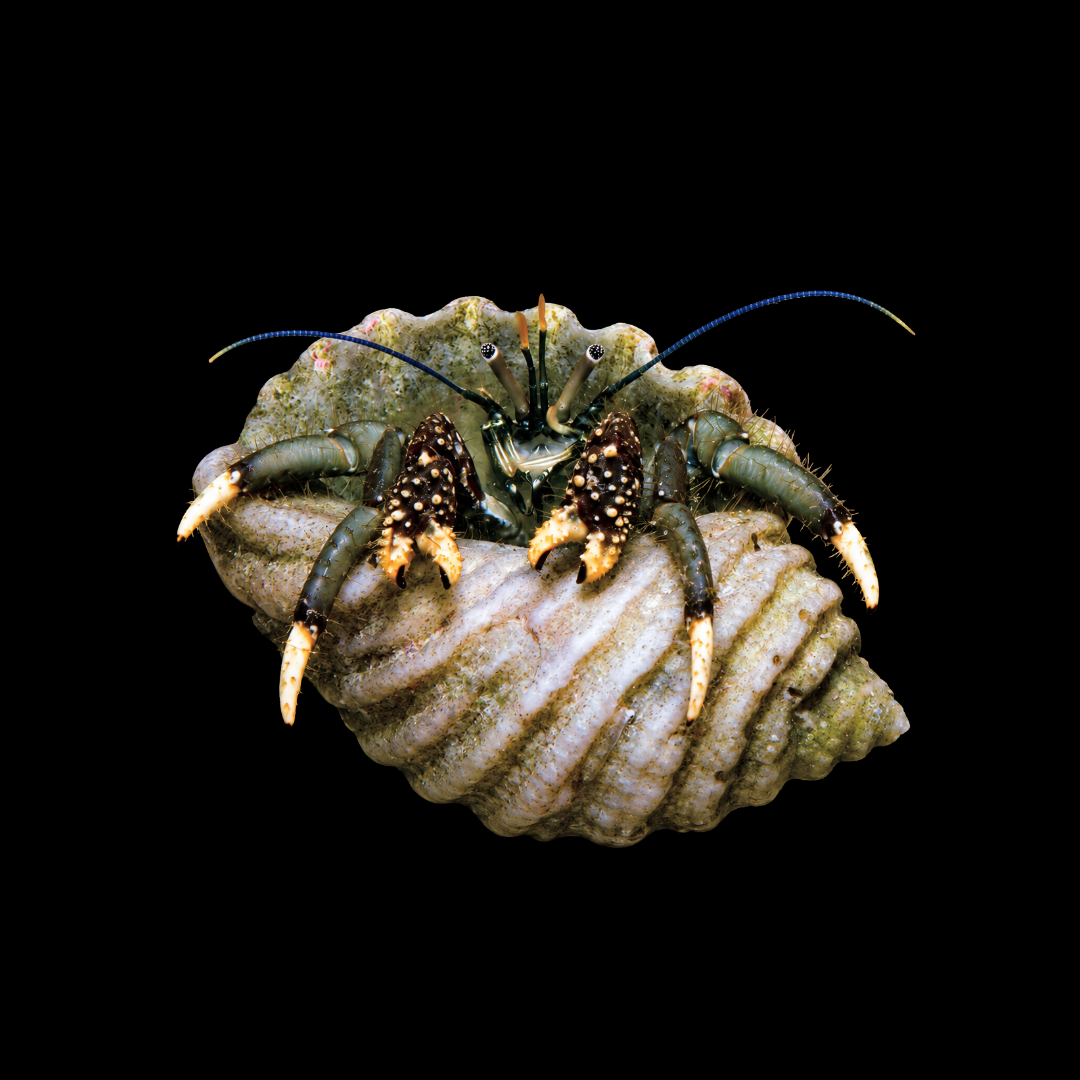
イソヨコバサミは、日本の暖かい海岸でも見られる小型の海生ヤドカリです。通常は緑褐色の体に青みのある第2触角、ほぼ同じ大きさの左右のハサミを持ち、巻貝の空き殻を背負って岩や砂の上を歩きます。海水水槽では付着藻類や残餌をついばみますが、お掃除役としての働きだけを期待せず、十分な餌と体に合う貝殻を用意することが大切です。触角で周囲を探り、小さなハサミで餌を口へ運ぶ姿には、磯の暮らしを間近に観察する楽しさがあります。 Clibanarius virescens is a small marine hermit crab found along warm Japanese shores. It typically has a greenish-brown body, bluish second antennae, and claws of nearly equal size. Carrying an empty snail shell, it explores rocks and sand. It may graze on surface algae and leftover food in an aquarium, but it still needs adequate food and suitable shells. Watching its antennae explore the surroundings and its small claws carry food to its mouth brings a little of the rocky shore into the aquarium.
基本情報 / Basic Information
| 学名 / Scientific Name | Clibanarius virescens (Krauss, 1843) |
|---|---|
| 通称 / Common Name | イソヨコバサミ。「海水ヤドカリ」という販売名だけでは、種類を特定できません。Iso-yokobasami in Japanese. A retail label such as “marine hermit crab” does not identify the species. |
| 分類 / Family | 節足動物門・甲殻亜門・軟甲綱・十脚目・異尾下目(ヤドカリ下目)・ヤドカリ科(Diogenidae)・ヨコバサミ属。ホンヤドカリ科(Paguridae)とは別の科に属します。Phylum Arthropoda; subphylum Crustacea; class Malacostraca; order Decapoda; infraorder Anomura; family Diogenidae; genus Clibanarius. Diogenidae is distinct from Paguridae. |
| 英名 / English Name | Yellow-footed hermit crab など。英名は資料によって異なるため、種類を正確に示す場合は学名も確認します。Yellow-footed hermit crab, among other names. English common names vary between sources; check the scientific name for precise identification. |
| 分布 / Distribution | インド西太平洋の熱帯から暖温帯。日本では本州の暖かい沿岸域、四国、九州、南西諸島などに分布し、岩礁海岸の潮間帯や潮だまり、サンゴ礁周辺の浅場などで見られます。Tropical to warm-temperate parts of the Indo–West Pacific. In Japan, it occurs along warm coasts of Honshu, Shikoku, Kyushu, and the Nansei Islands, including rocky intertidal shores, tide pools, and shallow reef habitats. |
| 最大体長 / Max Size | 販売時には体長約1~2cmと表示される例がありますが、これは本種の最大体長を示す数値ではありません。厳密な最大値は不明です。ヤドカリの大きさには、体全体の長さ、貝殻の寸法、頭胸甲の前方にある硬い部分の長さである「前甲長」などの表し方があるため、数値を比較するときは測定部位を確認してください。Some retail listings describe specimens as approximately 1–2 cm in body length, but this is not a species maximum. A reliable maximum is not established here. Total body length, shell dimensions, and shield length—the length of the hardened anterior carapace—are different measurements. Check what was measured before comparing figures. |
| 寿命 / Lifespan | 飼育下での平均寿命について、確かな情報は限られています。購入時の年齢も分かりにくいため、飼育できる年数を一律に示すことはできません。安定した水質と十分な餌、体に合う空き殻を継続して用意することが大切です。Reliable information on its average aquarium lifespan is limited, and its age at purchase is usually unknown. A fixed expected lifespan cannot be given. Maintain stable water quality, adequate food, and suitable spare shells throughout its care. |
飼育環境 / Aquarium Environment
| 水槽サイズ / Tank Size | 少数を飼育する場合も、45cm規格水槽(約30~35L)以上を目安にすると、水質を安定させやすくなります。魚やサンゴとの混泳では、60cm規格水槽(約60L)以上が管理しやすいでしょう。これらは飼育管理上の目安で、本種の最低必要水量を示すものではありません。岩や底砂を入れると実際の水量は減るため、同居する生体の数も考慮してください。For a small number, a standard 45 cm aquarium of approximately 30–35 L or larger is a practical starting point for stability. A standard 60 cm aquarium of approximately 60 L or more is easier to manage with fish or corals. These are husbandry guidelines, not established minimum requirements. Rocks and substrate reduce the actual water volume, and stocking levels also matter. |
|---|---|
| 水温 / Temperature | 一般的な海水水槽では、24~26℃前後を管理の目安にします。ただし、本種の最適温度として厳密に確定した範囲ではありません。産地や導入前の管理温度も考慮し、急な温度変化や夏場の高温を避けてください。Around 24–26°C is a practical target in a typical marine aquarium, rather than a rigorously established optimum for this species. Consider its origin and previous holding temperature, and avoid abrupt changes and summer overheating. |
| 水質 / Water Quality | 海水で飼育し、塩分32~35‰、pH8.1~8.4を一般的な管理目安にします。比重は25℃でおおむね1.024~1.026に相当しますが、測定器の基準や水温によって読み方が異なるため、使用する測定器の説明に従ってください。アンモニアと亜硝酸は検出されない状態を保ち、蒸発で減った水は真水で補います。適切な人工海水と定期的な換水を基本に、カルシウムやマグネシウムも海水水槽として適正な範囲に維持します。Keep it in seawater, with salinity of 32–35‰ and pH 8.1–8.4 as general husbandry targets. This salinity corresponds roughly to a specific gravity of 1.024–1.026 at 25°C, but readings depend on instrument calibration and temperature. Follow the instrument instructions. Keep ammonia and nitrite undetectable, replace evaporation with fresh water, and maintain appropriate calcium and magnesium levels through suitable marine salt and regular water changes. |
| レイアウト / Layout | 崩れないように組んだライブロックや海水用の岩、歩き回れる底床、脱皮時に隠れられる隙間を用意します。現在使っている殻と同程度から少し大きいものまで、殻口の形や内部の広さが異なる巻貝の空き殻を複数置いてください。空き殻に生体が入っていないことを確認し、塗装されたものや洗剤の残ったものは避けます。通常の飼育では陸場は必須ではなく、水中の隠れ家と脱走対策を優先します。Provide securely arranged live rock or marine-safe rocks, accessible substrate, and crevices for molting. Offer several empty snail shells ranging from its current size to slightly larger, with different openings and internal spaces. Confirm that shells are unoccupied, and avoid painted shells or detergent residues. A land area is not normally essential; prioritize underwater shelter and escape prevention. |
| 注意点 / Precautions | 導入時は水温と塩分の差を確認し、水合わせを行います。銅を含む魚病薬など、甲殻類に有害な薬剤は使用しないでください。脱皮を促す目的でヨウ素などを自己判断で添加することも避けます。脱皮中は殻から引き出したり、隠れ家を動かしたりせず、静かに見守ります。空き殻の不足や過密飼育に注意し、配管や水槽の縁からの脱走、吸水口への巻き込みも防いでください。Check temperature and salinity differences before acclimation. Do not use medications harmful to crustaceans, including copper-based fish treatments. Avoid adding iodine or other supplements simply to induce molting. Never pull the crab from its shell or disturb its shelter during a molt. Prevent shell shortages, overcrowding, escape along pipes or tank edges, and entrapment at intakes. |
餌と給餌 / Feeding
| 餌の種類 / Diet | 付着藻類や有機物の細かなかけら、動物質などを食べる雑食性です。飼育下では、海水の甲殻類に適した沈下性の人工飼料を基本に、植物質を含む餌、味付けのない海苔、細かくした魚介類などを少量ずつ組み合わせます。コケや残餌を食べることはありますが、あらゆる藻類を除去できるわけではありません。It is an omnivore that consumes surface algae, organic particles, and animal material. Offer sinking foods suitable for marine crustaceans, supplemented with plant-based foods, small pieces of unseasoned nori, and finely chopped seafood. It may eat algae and leftovers, but it will not remove every type of nuisance algae. |
|---|---|
| 給餌のポイント / Feeding Tips | 水槽内に自然に生じる餌だけで足りていると決めつけず、実際に食べているかを観察します。新しい水槽や個体数の多い水槽では、少量の餌を週に数回与えることから始め、食べ具合に応じて量と頻度を調整してください。魚に横取りされる場合は、岩陰やヤドカリが活動する時間帯を選んで与えます。食べ残しは回収し、脱皮前後に食欲が落ちても無理に食べさせないようにします。Do not assume that naturally occurring aquarium food is sufficient; observe actual feeding. In new or heavily stocked tanks, begin with small supplemental portions several times a week and adjust to consumption. If fish steal the food, offer it in sheltered areas or when the crab is active. Remove leftovers, and do not force feeding when appetite declines around a molt. |
性格と混泳 / Temperament and Tank Mates
| 性格 / Temperament | 普段は底や岩の表面を歩きながら餌を探します。ただし、餌や貝殻をめぐって他個体と争うことがあり、いつも穏やかに過ごすとは限りません。小さな体でも殻を背負って岩を登るため、固定されていないサンゴ片や小物を動かしてしまうことがあります。It usually explores the bottom and rock surfaces in search of food. Disputes over food or shells can occur, so peaceful behavior is not guaranteed. Even a small crab carrying a shell may dislodge unsecured coral fragments or decorations as it climbs. |
|---|---|
| 混泳の相性 / Compatibility | 甲殻類を捕食しない小型の海水魚とは混泳を検討できます。フグ類、モンガラカワハギ類、大型のベラ類、タコ類など、ヤドカリを捕食するおそれのある生体との同居は避けるのが無難です。サンゴ水槽にも導入されますが、すべてのサンゴや無脊椎動物との相性がよいとは限りません。生きた巻貝や小型のエビ、脱皮直後の甲殻類との関係を観察し、十分な餌と空き殻を用意しても追い回しや攻撃が続く場合は、分けて飼育します。Small marine fish that do not prey on crustaceans may be suitable companions. Avoid animals that might eat hermit crabs, including puffers, triggerfish, large wrasses, and octopuses. Although kept in reef aquariums, compatibility with every coral or invertebrate is not guaranteed. Watch interactions with living snails, small shrimp, and newly molted crustaceans. Separate animals if pursuit or attacks continue despite adequate food and spare shells. |
病気と対策 / Diseases and Prevention
| かかりやすい病気 / Common Diseases | 本種が飼育下でかかりやすい病気について、詳しい情報は限られています。飼育では、塩分や水温の急変、アンモニアの発生、酸素不足、栄養不足による衰弱に注意し、脱皮が正常に進んでいるかも見守ります。野外個体には寄生性の等脚類が見られることがあります。動かない、殻の奥にこもるといった様子だけでは、病気と脱皮前の休止を区別できません。Detailed information on diseases common to this species in captivity is limited. Watch for poor condition associated with abrupt temperature or salinity changes, ammonia, low oxygen, and inadequate nutrition, and observe whether molting proceeds normally. Wild individuals may carry parasitic isopods. Inactivity or retreat into the shell alone cannot distinguish illness from preparation for molting. |
|---|---|
| 対策と予防 / Prevention | 導入前に歩脚の動き、殻の破損、異常な膨らみや付着物を確認し、可能であれば別の水槽で状態を観察します。不調が見られたら、まず水温、塩分、pH、アンモニア、亜硝酸、酸素の供給状態を確認してください。十分な餌と隠れ家を用意し、換水による急な水質変化を避けます。寄生虫が疑われても無理に取り外さず、海水の無脊椎動物に詳しい販売店や専門家に相談します。Before introduction, check leg movement, shell damage, unusual swelling, and attached organisms; observe in a separate tank when possible. If problems arise, first check temperature, salinity, pH, ammonia, nitrite, and oxygen supply. Provide adequate food and shelter, and avoid abrupt water-quality changes during water changes. Do not forcibly remove suspected parasites; consult a knowledgeable marine-invertebrate retailer or specialist. |
増やし方(繁殖) / Breeding
| 雌雄の判別 / Sexing | ヤドカリ類では一般に、メスの生殖孔は第3胸脚の付け根、オスの生殖孔は第5胸脚の付け根にあり、腹肢の形や抱卵の有無も判別の手がかりになります。ただし、殻に入ったまま外から確実に見分けるのは難しく、体の大きさや色だけでは判断できません。性別を確認するために殻から引き出すことは避けてください。In hermit crabs, female gonopores are generally located at the bases of the third pereopods and male gonopores at the bases of the fifth. Pleopod structure and carried eggs also provide clues. Reliable identification is difficult while the crab remains in its shell; size and color alone are insufficient. Never pull it out merely to determine its sex. |
|---|---|
| 繁殖形態 / Reproduction | 卵生です。メスは腹部の腹肢に卵を付け、殻の中で保護します。孵化すると、海水中を漂って生活するゾエア幼生が放出されます。幼生は脱皮と変態を経て底生生活へ移り、小さな貝殻を使うようになります。抱卵や孵化が水槽内で起きても、そのまま稚ヤドカリまで育つとは限りません。It reproduces by eggs. Females carry eggs on abdominal pleopods inside the shell and release planktonic zoeal larvae at hatching. After molts and metamorphosis, the young settle and begin using tiny shells. Egg carrying or hatching in an aquarium does not ensure successful development into juvenile hermit crabs. |
| 繁殖のポイント / Breeding Tips | 家庭での繁殖は難しく、通常の混泳水槽では幼生が捕食されたり、ろ過装置に吸い込まれたりします。育成に挑戦する場合は、幼生用の別水槽、発育段階に合った微小な餌、穏やかな水流、こまめな水質管理が必要です。底生生活へ移る時期には、使える大きさの極小の空き殻も用意します。本種に適した育成日数や給餌条件については確かな情報が限られているため、他種の飼育例をそのまま当てはめることはできません。Home breeding is difficult. In a community aquarium, larvae may be eaten or drawn into filtration. Rearing attempts require a separate larval tank, appropriately sized foods for each developmental stage, gentle water movement, and careful water-quality management. Tiny suitable shells are needed around settlement. Reliable information on species-specific rearing times and feeding conditions is limited, so methods for other species cannot simply be assumed suitable. |
雑学と豆知識 / Trivia and Fun Facts
| 1. 南アフリカから始まった名前の歴史 / 1. A name with South African beginnings | 日本の磯で出会えるイソヨコバサミですが、学名の歴史は南アフリカから始まります。1843年、クラウスはナタール沿岸で採集された標本をもとに、このヤドカリを記載しました。当初の学名は Pagurus virescens で、現在はヨコバサミ属に分類されています。学名に添えられた著者名と年が括弧に入っているのは、最初に記載されたときとは属が変わったことを表しています。種小名の virescens は「緑がかる」という意味を持ち、緑褐色の体を思い浮かべると覚えやすい名前です。Although familiar on Japanese shores, this species was described by Krauss in 1843 from specimens collected on the coast of Natal, South Africa. Its original name was Pagurus virescens; it is now placed in Clibanarius. Parentheses around the author and year indicate that the genus has changed since the original description. The epithet virescens means “becoming green” or “greenish,” a memorable connection with its usual body color. |
|---|---|
| 2. 同じ種類でも、成長すると装いが変わる / 2. Changing colors as it grows | イソヨコバサミの脚は、どの個体も同じ色をしているわけではありません。小さな個体には白っぽい歩脚を持つものがあり、成長すると緑色や青色へ変化することが報告されています。脚の先端にある暗い帯や斑点の出方にも違いがあります。色彩とミトコンドリアDNAを調べた研究では、調査した色の違いに対応する遺伝的な区別は見られませんでした。つまり、脚の色が違うだけで、別の種類とは判断できないということです。青みのある触角やハサミ、歩脚の形も合わせて観察すると、似たヤドカリを見分ける手がかりが増えていきます。Individuals do not all have the same leg colors. Some juveniles have whitish walking legs that become green or blue as they grow, while dark bands and patches on the leg tips also vary. A study of coloration and mitochondrial DNA found no genetic separation corresponding to the color variants examined. In other words, different leg colors alone do not indicate different species. Antennae, claws, and leg structure provide additional identification clues. |
| 3. 貝殻選びは、暮らしそのものを選ぶこと / 3. Choosing a shell means choosing a home | ヤドカリにとって貝殻は、柔らかな腹部を守る持ち運びのできる住まいです。大きければよいわけではなく、殻口の形、内部の広さ、重さなどが使いやすさに関わります。イソヨコバサミでも、体の大きさによって利用する貝殻が変わることが調べられており、日本ではホソウミニナやイソニナ、レイシガイ類などの殻を使うことが知られています。ただし、どの種類の殻を利用するかは、その場所にある空き殻にも左右されます。水槽に複数の空き殻を置くと、触って調べたり、別の殻へ移ったりする姿を観察できることがあります。見た目の立派さよりも、体に合う殻を選べることが大切です。A shell is a portable home protecting the soft abdomen. Bigger is not automatically better: opening shape, internal space, and weight affect suitability. Studies of this species show size-related shell use, including shells of Batillaria, Pisania, and whelks in Japan, although local availability also matters. Offering several suitable shells may reveal careful inspection and occasional moves. What matters is allowing the crab to select a shell that fits comfortably. |
| 4. 干潮時に水から出る理由は、まだ探究の途中 / 4. Why leave the water at low tide? | 野外では、干潮時にイソヨコバサミが自ら潮だまりを出て、岩の上へ移動することがあります。この行動を調べた研究では、水から出る個体の割合が体の大きさや性別によって異なり、殻をめぐる競争が起こりやすい大きさの個体で多く見られました。そこから、体に合う殻を持つ個体が、水中での争いを避けている可能性が示されています。一方、調べた寄生性の等脚類の有無との関連は認められませんでした。水から出る理由が確定したわけではありませんが、ほかのヤドカリとの関係が行動に関わるかもしれないという、興味深い手がかりです。飼育でこの行動を再現するために、乾燥させたり直射日光にさらしたりする必要はありません。In the wild, this crab may actively leave tide pools at low tide. A study found that the frequency varied with body size and sex and peaked at sizes thought to face strong shell competition. This suggests that crabs with suitable shells might leave to avoid disputes. No association was found with the parasitic isopods examined. The explanation remains a hypothesis, and aquarium keepers need not reproduce the behavior through drying or direct sunlight. |
| 5. 小さな口の奥にも、食べ物を砕く仕組みがある / 5. Food processing beyond the mouth | イソヨコバサミはハサミで餌をつまみ、口の周囲にある付属肢で扱いながら食べます。しかし、食べ物を細かくする働きは、口元だけで終わりません。胃の内部には「胃臼」と呼ばれる硬い構造があり、取り込んだ食べ物をさらに砕いたり、すりつぶしたりします。口器と胃が連携することで、底にある有機物のかけらや付着物など、さまざまな食べ物を利用できます。岩の表面をついばむ何気ない動きの奥にも、雑食性の暮らしを支える体の仕組みが隠れています。The crab gathers food with its claws and handles it with appendages around the mouth, but processing continues internally. Hardened structures called the gastric mill crush and grind food inside the stomach. Together, the mouthparts and stomach help it use organic particles and material found on the bottom. These structures support the varied diet behind its seemingly simple grazing movements. |
| 6. 空き殻を残すことも、磯の暮らしを守ること / 6. Empty shells are part of the habitat | 海岸にある空き殻は、ヤドカリにとって大切な資源です。生きた個体だけでなく、使えそうな空き殻を大量に持ち帰ることも、住まいの選択肢を減らすことにつながります。採集を考えるときは、その場所の採捕規制や自然保護上の決まりを、自治体の水産担当部署や公園管理者などに確認してください。ヤドカリであれば、どこでも自由に採れるとは限りません。購入時には種類や産地、管理状態を確認し、飼育した個体を海へ放さず、最後まで世話をすることも、身近な海を大切にする行動の一つです。Empty shells on the shore are valuable resources for hermit crabs. Removing large numbers can reduce available homes, even without collecting live animals. Before collecting, confirm local harvesting and conservation rules with the relevant fisheries authority or park manager. Hermit crabs are not automatically unrestricted everywhere. When buying, check identification, origin, and condition, and care for aquarium animals without releasing them into the sea. |
まとめ / Conclusion
イソヨコバサミは、青みのある触角と小さなハサミを動かしながら、海水水槽に磯の暮らしを感じさせてくれる生き物です。藻類や残餌をついばむ姿に加え、周囲を探る動きや貝殻を確かめる仕草にも、観察する楽しさがあります。 With bluish antennae and busy little claws, Clibanarius virescens brings a sense of rocky-shore life to a marine aquarium. Alongside its grazing on algae and leftovers, its exploration and shell inspections offer rewarding opportunities for observation.
安定した海水、十分な餌、安心して隠れられる場所、そして体に合う空き殻が、健やかな暮らしを支えます。脱皮のときは静かに見守り、同居する生体との関係にも気を配ることで、小さな住人が落ち着いて歩き回れる環境を整えられます。 Stable seawater, adequate food, secure shelter, and suitable empty shells support its well-being. Giving it privacy during molting and watching its relationships with tank mates help create an environment where this small resident can explore comfortably.
気になる道具や飼い方を見つけてみませんか?
 アイのアクアグッズ案内バルブの仲間に合わせる飼育用品|チェリーバルブ・スマトラ・中型種の水槽とろ過道具の特徴や使い方、選ぶときのポイントをアイが紹介します。記事はコチラ →
 アイのアクアグッズ案内エンゼルフィッシュの飼育用品|高さのある水槽・ろ過・水草・餌の選び方道具の特徴や使い方、選ぶときのポイントをアイが紹介します。記事はコチラ →
さまざまな飼育テーマをご紹介。リンク先の記事には広告・商品紹介が含まれます。
案内・紹介記事一覧へ →分布マップ
イソヨコバサミ(Clibanarius virescens)は、インド西太平洋の熱帯から暖温帯に分布します。日本では本州の暖かい沿岸域、四国、九州、南西諸島などで見られます。
地図は分布地域全体を見渡すための概略表示です。表示範囲内のすべての海域に生息することを示すものではありません。マーカーは地理的な目安として設定した沖縄本島付近の代表地点で、実際の採集地点ではありません。Google Earthのリンクも同じ代表地点を示します。
参考文献
-
海洋研究開発機構(JAMSTEC).BISMaL「イソヨコバサミ(Clibanarius virescens)」
学名、和名、分類体系、旧学名および国内の生物出現記録。
-
Yoshikawa, A. ほか(2020).イソヨコバサミの成長段階・地理的分布・分子系統を踏まえた体色変異の研究
Journal of the Marine Biological Association of the United Kingdom, 100(7), 1107–1121.インド西太平洋の分布と生息環境、原記載の背景、成長に伴う歩脚の色彩変化、色彩とミトコンドリアDNAの関係。
-
村田憲要・渡辺精一・高木和徳(1988).外房産のヤドカリ類の一種イソヨコバサミ Clibanarius virescens の宿貝選択
La mer, 26(1), 29–35.日本の岩礁性潮間帯における宿貝利用と、体の大きさや貝殻の形状に関わる選択。
-
Kunze, J. & Anderson, D. T.(1979).イソヨコバサミを含むヤドカリ4種の口器と胃臼の機能形態
Australian Journal of Marine and Freshwater Research, 30(5), 683–722.食物の取り扱い、胃臼による粉砕・すりつぶし、食性と消化器官の関係。
-
Wait, M. & Schoeman, D. S.(2012).南アフリカ・ケープレシフェにおけるイソヨコバサミの宿貝利用・個体群構造・繁殖
Journal of Crustacean Biology, 32(2), 203–214.野外個体群の抱卵、繁殖期、雌雄による宿貝利用の違い、体の大きさや殻の容積と抱卵数の関係。
-
Tirmizi, N. M. & Siddiqui, F. A.(1979).実験室条件下における Clibanarius signatus とイソヨコバサミの幼生発生
Pakistan Journal of Zoology, 11(2), 239–261.ゾエア期からグラウコトエ期へ至る幼生発生。リンク先はパキスタン科学技術情報センター(PASTIC)の書誌・抄録。
-
Yoshikawa, A., Goto, R., Yasuda, C. I. & Asakura, A.(2020).イソヨコバサミの干潮時の水外露出行動にみられる体サイズと性別の偏り
Journal of Crustacean Biology, 40(2), 152–155.水外露出行動と体サイズ・性別・寄生性等脚類との関係、および宿貝をめぐる競争を回避するという仮説。
-
Ornamental Aquatic Trade Association(OATA).How to look after marine crustaceans
海生甲殻類全般の飼育指針。水温・水質の管理、水合わせ、給餌、混泳、脱皮時の隠れ家、隔離観察、浮遊幼生の育成に必要な設備。
-
Yanong, R. P. E..Use of Copper in Marine Aquaculture and Aquarium Systems
University of Florida, IFAS Extension, FA165.海水飼育系における銅の作用と、無脊椎動物に対する毒性。
オンライン資料閲覧日:2026年10月9日



コメント