

解説 / Description
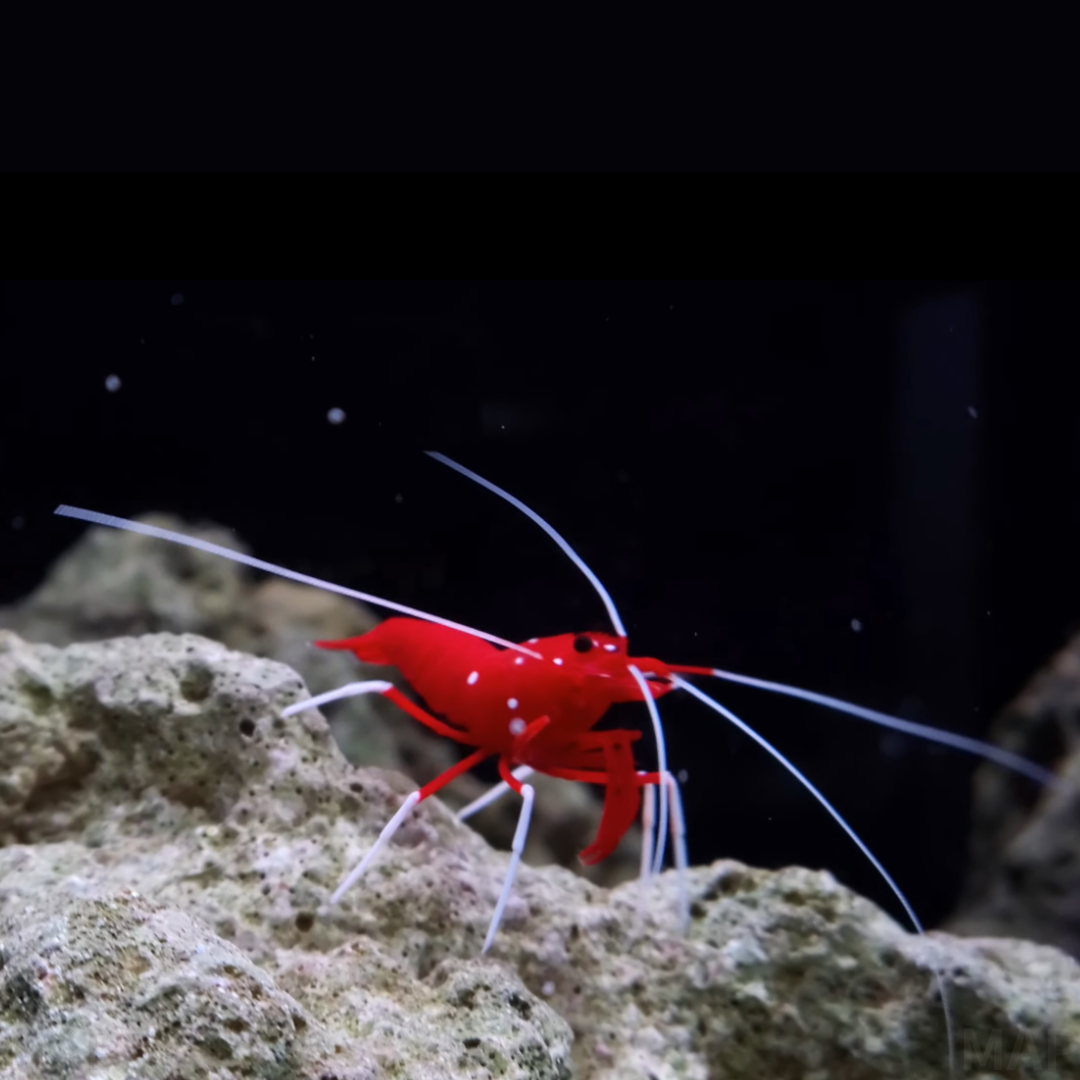
シロボシアカモエビは、鮮やかな赤い体に白い斑点が入り、長い白色の触角と白い脚先を持つ海産エビです。日本のマリンアクアリウムでは、特徴的な脚先の色から「ホワイトソックス」の通称で広く親しまれています。自然界では岩穴や岩陰を生活の拠点とし、魚の体表を掃除するクリーナーシュリンプとして知られています。強い色彩のコントラストと独特の生活様式を併せ持ち、観賞性だけでなく生態の面でも興味深い種類です。 Lysmata debelius is a marine shrimp distinguished by its vivid red body, contrasting white spots, long white antennae, and white-tipped legs. In the Japanese marine aquarium hobby, it is widely known as “White Socks.” In nature, it occupies sheltered rocky areas and is known as a cleaner shrimp that interacts with fishes. Its striking coloration and unusual biology make it interesting not only as an ornamental species but also from an ecological perspective.
基本情報 / Basic Information
| 学名 / Scientific Name | Lysmata debelius Bruce, 1983 |
|---|---|
| 通称 / Common Name | ホワイトソックスWhite Socks |
| 分類 / Family | 節足動物門・甲殻亜門・軟甲綱・十脚目・コエビ下目・ヒゲナガモエビ科・ヒゲナガモエビ属Phylum Arthropoda, Subphylum Crustacea, Class Malacostraca, Order Decapoda, Infraorder Caridea, Family Lysmatidae, Genus Lysmata |
| 英名 / English Name | Fire Shrimp / Blood Red Fire Shrimp / Scarlet Cleaner Shrimp |
| 分布 / Distribution | インド太平洋域に分布します。原記載ではフィリピンのポリロ島のほか、スリランカやインドネシアのバリ島などからも知られています。岩穴や岩陰など、身を隠せる場所を利用して生活します。Distributed in the Indo-Pacific region. The original description records the species from Polillo Island in the Philippines and also notes records from Sri Lanka and Bali, Indonesia. It makes use of sheltered rocky habitats such as caves and crevices. |
| 最大体長 / Max Size | 全長およそ3〜5cm程度。測定方法や個体によって差があります。Approximately 3–5 cm in total length, with some variation depending on the individual and measurement method. |
| 寿命 / Lifespan | 飼育下の標準的な寿命を示す十分なデータは確認されていません。Reliable data establishing a standard lifespan in captivity are limited. |
飼育環境 / Aquarium Environment
| 水槽サイズ / Tank Size | 単独飼育では、安定した水質を維持しやすい60cm規格水槽程度をひとつの目安にすると管理しやすくなります。ペアや複数個体を飼育する場合は、単純な水量だけでなく、それぞれが退避できる岩穴と十分な距離を確保できる、より余裕のある環境が適しています。For a single shrimp, an aquarium around the size of a standard Japanese 60 cm tank provides a practical starting point because stable water conditions are easier to maintain. When keeping a pair or multiple individuals, additional space and separate shelters are more important than tank volume alone. |
|---|---|
| 水温 / Temperature | 飼育では22〜26℃程度を目安に、急激な温度変化を避けて安定させます。特定の温度を超えると直ちに危険になるという単純な境界ではなく、高温化や急変を長時間続けないことが重要です。 A practical aquarium range is approximately 22–26°C. Stability is more important than treating a particular temperature as an absolute biological limit, and prolonged overheating or sudden temperature changes should be avoided. |
| 水質 / Water Quality | 一般的なリーフ水槽と同様、安定した海水環境を維持します。比重は1.023〜1.026前後、pHは8.0〜8.4程度を目安とし、数値そのもの以上に急激な変化を起こさないことが大切です。特に比重の急変は甲殻類に大きな負担を与えるため注意してください。Maintain stable marine aquarium conditions similar to those used in reef systems. A specific gravity around 1.023–1.026 and a pH of approximately 8.0–8.4 are practical targets. Avoiding sudden changes is more important than pursuing an exact number, particularly with salinity. |
| レイアウト / Layout | ライブロックなどを組み、暗い岩穴や隙間を複数用意します。導入直後や脱皮直後には物陰へ退避するため、体全体を隠せる場所を確保してください。同種を複数飼育する場合は、ひとつの隠れ家を共有させるのではなく、離れた位置にも退避場所を設けるとトラブルを抑えやすくなります。Provide several shaded caves and crevices using live rock or similar structures. Secure shelters are especially important immediately after introduction and after molting. When more than one shrimp is kept, shelters should be distributed around the aquarium rather than concentrated in a single location. |
| 注意点 / Precautions | 水質の急変、輸送直後のストレス、脱皮時の無防備な状態に注意します。長時間輸送された袋の水では、呼吸や排泄によって二酸化炭素やアンモニアが蓄積している場合があります。アンモニアはpHが上昇するほど毒性の高い非イオン型の割合が増えるため、袋を開封した後の劣化した輸送水に必要以上に長時間とどめることは避け、温度や塩分差を確認しながら慎重に順化します。また、銅を含む治療薬は多くの海産無脊椎動物に強い毒性を示すため、本種を収容した水槽では使用しないでください。Avoid sudden changes in water chemistry and minimize stress after transport and during vulnerable molting periods. Shipping water may accumulate carbon dioxide and ammonia. Because the proportion of the more toxic un-ionized form of ammonia increases as pH rises, shrimp should not remain unnecessarily long in severely degraded shipping water after the bag is opened. Acclimation should therefore be performed carefully while checking temperature and salinity differences. Copper-based medications are highly toxic to many marine invertebrates and should not be used in an aquarium containing this species. |
餌と給餌 / Feeding
| 餌の種類 / Diet | 雑食性で、自然界ではクリーナーとして魚の体表に付着する生物などを利用するほか、さまざまな有機物を食べます。飼育下では、海水魚・甲殻類向けの人工飼料や、エビ・イカなどを原料とした餌にも慣れます。This is an omnivorous shrimp. In nature it obtains food through cleaning interactions with fishes and also consumes a variety of organic material. In captivity, it can adapt to prepared marine foods and foods based on shrimp, squid, and similar marine ingredients. |
|---|---|
| 給餌のポイント / Feeding Tips | 導入直後は岩陰に隠れ、餌を入れてもすぐに出てこないことがあります。環境に慣れると給餌時に姿を見せる個体も多いため、最初は隠れ場所の近くまで餌が届いているか確認してください。魚を掃除する行動だけで十分な栄養を得られるとは限らないため、水槽内でも定期的な給餌が必要です。Newly introduced shrimp may remain hidden and may not immediately emerge when food is offered. Many individuals become more visible at feeding time once acclimated, so initially make sure food reaches the vicinity of their shelter. Cleaning interactions with fishes should not be assumed to provide sufficient nutrition in captivity, and regular feeding is necessary. |
性格と混泳 / Temperament and Tank Mates
| 性格 / Temperament | 導入直後は物陰に隠れることが多い一方、環境に慣れると給餌時などに前へ出てくるようになります。同種に対しては常に穏やかとは限らず、縄張り性を示します。本種では長期的なペア関係と個体識別能力が研究されており、既存のペアへ見知らぬ個体を加えるなど、組み合わせを急に変えた場合には強い争いが起こることがあります。The shrimp is often secretive after introduction but may become increasingly visible, particularly at feeding time, as it acclimates. It is not always peaceful toward members of its own species and can be territorial. Research on this species has demonstrated long-term pair bonds and recognition between partners, and serious aggression may occur when unfamiliar individuals are introduced into an established social arrangement. |
|---|---|
| 混泳の相性 / Compatibility | 一般的なリーフ水槽で飼育できますが、エビなどの甲殻類を捕食する魚との混泳は避けます。大型のベラ類、ハタ類、モンガラカワハギ類などは種類や個体によって捕食者となる可能性があります。同種を複数飼育する場合は、単純に匹数を増やすのではなく、相性、隠れ場所、個体間の距離を十分に確保してください。It can be maintained in a typical reef aquarium but should not be housed with fishes likely to prey on shrimps and other crustaceans. Large wrasses, groupers, triggerfishes, and similar species may present a risk depending on species and individual behavior. When keeping more than one Lysmata debelius, compatibility, shelter, and spacing between individuals require careful attention. |
病気と対策 / Diseases and Prevention
| かかりやすい病気 / Common Diseases | 一般的な家庭飼育において、本種特有の代表的な感染症として確立した情報は多くありません。実際の飼育では、病名のある感染症だけでなく、水質の急変、輸送ストレス、脱皮時のトラブル、アンモニアや銅など有害物質への曝露を重要なリスクとして考える必要があります。There is limited well-established information identifying a particular infectious disease as characteristically common in this species in home aquariums. In practice, major health risks also include sudden changes in water quality, shipping stress, problems around molting, ammonia exposure, and toxic substances such as copper. |
|---|---|
| 対策と予防 / Prevention | 水温、塩分、pHを安定させ、定期的な換水と十分な隠れ場所を確保することが基本です。魚に海水白点病などが発生した場合、銅は有効な治療法のひとつですが、本種を含む多くの無脊椎動物には有害です。そのため、エビやサンゴがいる本水槽へ安易に銅系治療薬を投与せず、治療が必要な魚は専用の治療水槽へ移す方法が適しています。また、クリーナーシュリンプの存在そのものを魚病治療の代わりと考えないことも重要です。Stable temperature, salinity, and pH, regular water changes, and adequate shelter form the basis of prevention. Copper is one established treatment for marine white spot disease in fishes, but it is hazardous to many invertebrates, including shrimp. Copper medication therefore should not be casually added to a display aquarium containing shrimp or corals; fishes requiring treatment are better managed in a separate hospital aquarium. The presence of a cleaner shrimp should not be regarded as a substitute for appropriate disease treatment. |
増やし方(繁殖) / Breeding
| 雌雄の判別 / Sexing | 一般的な「オスとメスが生涯固定されている種類」と同じ方法では判別できません。ヒゲナガモエビ属では雄性先熟同時的雌雄同体という繁殖様式が知られており、若い個体はまず雄として成熟し、成長すると雄としての生殖機能を残したまま卵も作れる同時的雌雄同体の段階へ移行します。そのため、成体の外見だけから単純にオス・メスへ分ける考え方は適していません。This species cannot be sexed in the same way as animals in which individuals remain permanently male or female. Members of Lysmata exhibit protandric simultaneous hermaphroditism: young individuals first mature functionally as males and later develop female reproductive function while retaining the ability to function as males. Mature individuals therefore cannot be interpreted simply as fixed males and females based on external appearance alone. |
|---|---|
| 繁殖形態 / Reproduction | 成熟した同時的雌雄同体の個体は、相手との交尾で雄役と雌役のどちらの機能も担うことができます。ただし自家受精を行うわけではなく、繁殖には別個体が必要です。交尾は卵を産む側の個体が脱皮した直後に行われ、受精後の卵は腹部の腹肢に抱えられます。飼育研究では、およそ10日余りで幼生が放出される周期が観察されています。Mature simultaneous hermaphrodites can function as either the male or female partner during mating. They do not reproduce by self-fertilization, so another individual is required. Mating occurs shortly after the individual taking the female role molts, and the developing embryos are carried beneath the abdomen on the pleopods. Captive studies have observed larval release after an incubation period of roughly ten days or more. |
| 繁殖のポイント / Breeding Tips | 繁殖で最も難しいのは、親エビに産卵させることより、孵化した浮遊幼生を稚エビまで育てることです。本種の幼生期は長く、飼育研究では稚エビへの変態まで50〜90日で成功した例がある一方、別の条件では100日を超える例も報告されています。孵化後の給餌を遅らせないことが重要で、初期には微細藻類やワムシ、成長に伴ってアルテミア幼生やカイアシ類などを利用した飼育法が研究されています。長期間にわたって餌の量と水質を維持する必要があるため、家庭での幼生飼育は難度が高いと考えてください。The most difficult part of breeding is not obtaining eggs from the adults but raising the planktonic larvae to the juvenile stage. Larval development is unusually long. One captive study achieved metamorphosis in 50–90 days, while other rearing conditions have produced development lasting more than 100 days. Early feeding should not be unnecessarily delayed. Research protocols have used microalgae and rotifers during early development, followed by Artemia nauplii and copepods as the larvae grow. Because appropriate feeding and water quality must be maintained over a long period, larval rearing remains challenging in the home aquarium. |
雑学と豆知識 / Trivia and Fun Facts
| 雑学・豆知識 / Trivia & Fun Facts |
シロボシアカモエビが科学的に新種として記載されたのは1983年です。A. J. Bruceによる原記載では、フィリピンのポリロ島で1981年に採集された標本が基準となりました。種小名の「debelius」は、このエビを研究者に知らせ、標本や生体写真、生態に関する情報を提供したHelmut Debeliusにちなみます。現在では世界中のマリンアクアリウムで知られている種類ですが、正式に学名が付けられた歴史は比較的新しいのです。
本種の繁殖を理解するうえで重要なのが「雄性先熟同時的雌雄同体」という仕組みです。名前だけを見ると難しく感じますが、簡単にいえば「最初は雄として成熟し、成長すると雄の能力を残したまま卵も作れるようになる」ということです。つまり、大きくなった個体が完全にメスへ変わって雄の機能を失うわけではありません。一方で、自分自身だけで受精して増えるわけでもないため、繁殖には別の個体との交尾が必要になります。 そして、人工繁殖を難しくしている最大の要因のひとつが長い幼生期です。親と同じエビらしい姿で生まれるのではなく、孵化直後は小さな浮遊幼生として水中を漂います。飼育研究では50〜90日で稚エビへ変態した例がある一方、過去には75〜158日を要した例も報告されており、同じ種類でも飼育条件によって幼生期間に大きな差が生じます。この長期間に餌切れや水質悪化を防ぎ続けなければならないことが、シロボシアカモエビの種苗生産を難しくしている理由です。 同種同士の関係も単純ではありません。本種はただ集団で暮らすエビではなく、ペアを形成し、相手を見分ける能力を持つことが実験で示されています。確立したペアの関係が乱れると強い争いが起こる場合があり、水槽内で複数匹を飼う際に「同じ種類だから仲良くできる」とは限りません。繁殖を考える場合にも、単に2匹を入れるだけではなく、個体同士の相性や十分な退避場所を考える必要があります。 Lysmata debelius was formally described as a new species in 1983 by A. J. Bruce. The original description was based on a specimen collected at Polillo Island in the Philippines in 1981. The specific name “debelius” honors Helmut Debelius, who brought the shrimp to scientific attention and supplied the specimen, photographs of the living animal, and biological information. Although the species is now well known in marine aquariums around the world, its formal scientific history is comparatively recent. One of the most important concepts for understanding its reproduction is protandric simultaneous hermaphroditism. In simple terms, an individual first matures as a male and later develops the ability to produce eggs while retaining male reproductive function. It therefore does not simply transform into a permanent female and lose all male function. At the same time, an individual does not reproduce alone through self-fertilization, so mating with another shrimp is still necessary. One of the greatest obstacles to captive propagation is the unusually long larval period. The young do not hatch as miniature adults; instead, they enter the water as small planktonic larvae. Captive studies have achieved metamorphosis in 50–90 days, while earlier work reported larval periods ranging from approximately 75 to 158 days. This large variation shows how strongly development can depend on rearing conditions. Maintaining appropriate food and water quality throughout such a prolonged period is one of the main reasons production of juvenile Lysmata debelius is technically difficult. Relationships between members of the same species are also more complex than simply living in groups. Experiments have shown that Lysmata debelius can form pair bonds and distinguish an established partner from an unfamiliar individual. Disruption of an established pairing may result in serious aggression. Consequently, keeping several individuals together requires attention not only to the number of shrimp but also to compatibility and the availability of separate shelters. |
|---|
まとめ / Conclusion
シロボシアカモエビは、深紅の体と白い斑点、長い白色の触角が印象的なだけでなく、魚とのクリーナー行動や、成長に伴って生殖機能が変化する独特の繁殖様式を持つ海産エビです。環境に慣れた個体は給餌時に岩陰から姿を現すこともあり、鮮やかな体色と落ち着いた岩場の組み合わせは海水水槽の中でもよく映えます。 Lysmata debelius is notable not only for its deep red body, white spots, and long white antennae but also for its cleaning interactions with fishes and its unusual reproductive system, in which reproductive function changes as the shrimp matures. Once acclimated, individuals often emerge from their shelters at feeding time, making their vivid coloration particularly striking against reef rockwork.
長期飼育では、特別な添加剤に頼ることよりも、水温や塩分を安定させ、脱皮時にも安心して隠れられる場所を用意し、銅など無脊椎動物に有害な薬剤を避けることが重要です。同種同士にも相性があり、繁殖ではさらに長期間の幼生飼育が必要になります。美しい外見の奥に複雑な社会行動と繁殖生態を備えており、その性質を理解しながら飼育することで、より長く興味深い観察を楽しめる生き物です。 Successful long-term care depends less on special additives than on stable temperature and salinity, secure shelters during vulnerable molting periods, and avoidance of substances such as copper that are dangerous to invertebrates. Compatibility between individuals also matters, while breeding requires the additional challenge of a prolonged larval phase. Behind its striking appearance lies complex social and reproductive biology, making this species especially rewarding to observe when its natural characteristics are respected.

気になる道具や飼い方を見つけてみませんか?
 アイのアクアグッズ案内アカヒレの仲間に合わせる飼育用品|無加温・混泳・繁殖の水槽とろ過道具の特徴や使い方、選ぶときのポイントをアイが紹介します。記事はコチラ →
 アイのアクアグッズ案内水槽用ヒーターの選び方|固定式・温度調節式と、水量に合うW数の考え方水槽の魚は冬に寒くない? アイとコタロウが水温計から固定式・温度調節式・分離式ヒーターまで比較。水量と室温に合うW数、設置場所、水換えや交換の注意点を、国内メーカーの商品とともに紹介します。記事はコチラ →
 アイのアクアグッズ案内水槽フィルターの選び方|外掛け・外部・上部から小型オーバーフローまで道具の特徴や使い方、選ぶときのポイントをアイが紹介します。記事はコチラ →
 アイのアクアグッズ案内ローチの仲間に合わせる飼育用品|クーリー・流水性・ボーシャの水槽と底砂道具の特徴や使い方、選ぶときのポイントをアイが紹介します。記事はコチラ →
さまざまな飼育テーマをご紹介。リンク先の記事には広告・商品紹介が含まれます。
案内・紹介記事一覧へ →分布マップ
シロボシアカモエビ(Lysmata debelius)はインド太平洋域に分布し、フィリピンのポリロ島、スリランカ、インドネシアのバリ島などから知られています。
この地図は記事に記載されたインド太平洋域の分布を大まかに示した概略図です。表示範囲は厳密な分布境界を示すものではありません。また、マーカーは分布域を把握しやすくするために設定した代表地点であり、実際の採集地点や生息確認地点を示すものではありません。
参考文献
-
DecaNet editors. Lysmata debelius Bruce, 1983. World Register of Marine Species (WoRMS).
分類、学名、原記載、海産種としての位置づけ。
World Register of Marine Species -
Bruce, A. J. (1983). Lysmata debelius new species, a new hippolytid shrimp from the Philippines. Revue française d’Aquariologie, 9, 115–120.
原記載、形態、タイプ産地など分類学的背景。
WoRMS Source Record -
Chace, F. A., Jr. (1997). The Caridean Shrimps (Crustacea: Decapoda) of the Albatross Philippine Expedition, 1907–1910, Part 7. Smithsonian Contributions to Zoology, 587, 1–106.
分布記録、ヒゲナガモエビ類の分類・地理情報。
Smithsonian Research Online -
Rufino, M. M. & Jones, D. A. (2001). Binary Individual Recognition in Lysmata debelius (Decapoda: Hippolytidae) under Laboratory Conditions. Journal of Crustacean Biology, 21(2), 388–392.
サンゴ礁性の生息環境、縄張り性、長期的なペア形成、同種個体の識別。
DOI: 10.1163/20021975-99990139 -
Calado, R., Lin, J., Lecaillon, G. & Rhyne, A. L. (2017). Shrimp. In R. Calado, I. Olivotto, M. P. Planas & G. J. Holt (Eds.), Marine Ornamental Species Aquaculture. Wiley-Blackwell.
海産観賞エビの飼育・養殖、生物学、幼生飼育に関する総説。
DOI: 10.1002/9781119169147.ch22a -
Baeza, J. A. (2009). Protandric Simultaneous Hermaphroditism Is a Conserved Trait in Lysmata (Caridea: Lysmatidae): Implications for the Evolution of Hermaphroditism in the Genus. In Proceedings of the Smithsonian Marine Science Symposium, 95–110.
ヒゲナガモエビ属における雄性先熟同時的雌雄同体の生殖様式。
Smithsonian Research Online -
Simões, F., Ribeiro, F. & Jones, D. A. (2002). Feeding early larval stages of fire shrimp Lysmata debelius (Caridea, Hippolytidae). Aquaculture International, 10(5), 349–360.
孵化直後の摂餌、初期給餌、微細藻類とアルテミアを用いた幼生飼育。
DOI: 10.1023/A:1023366423144 -
Palmtag, M. R. & Holt, G. J. (2007). Experimental Studies to Evaluate Larval Survival of the Fire Shrimp, Lysmata debelius, to the Juvenile Stage. Journal of the World Aquaculture Society, 38(1), 102–113.
幼生から稚エビへの変態、生残率、餌料条件と長期幼生飼育。
DOI: 10.1111/j.1749-7345.2006.00078.x -
Hettiarachchi, H. A. S. U. & Edirisinghe, U. (2016). Captive breeding of fire shrimp (Lysmata debelius) under Sri Lankan conditions. Tropical Agricultural Research, 28(1), 88–99.
親エビの飼育、繁殖周期、幼生飼育、変態までの飼育試験。
DOI: 10.4038/tar.v28i1.8185 -
Yanong, R. P. E. Use of Copper in Marine Aquaculture and Aquarium Systems. University of Florida IFAS Extension, FA165.
海水水槽での銅治療、無脊椎動物への銅毒性、底質などへの吸着と再溶出。
University of Florida IFAS Extension -
Yanong, R. P. E. Cryptocaryon irritans Infections (Marine White Spot Disease) in Fish. University of Florida IFAS Extension, FA164.
海水白点病の生活環、銅を含む治療法、本水槽と治療水槽を分ける際の基礎資料。
University of Florida IFAS Extension -
Food and Agriculture Organization of the United Nations (FAO). Aquaculture water-quality guidance on ammonia toxicity and the pH-dependent balance between NH3 and NH4+.
輸送水や飼育水におけるアンモニア毒性とpHの関係。
Food and Agriculture Organization of the United Nations




コメント