

解説 / Description
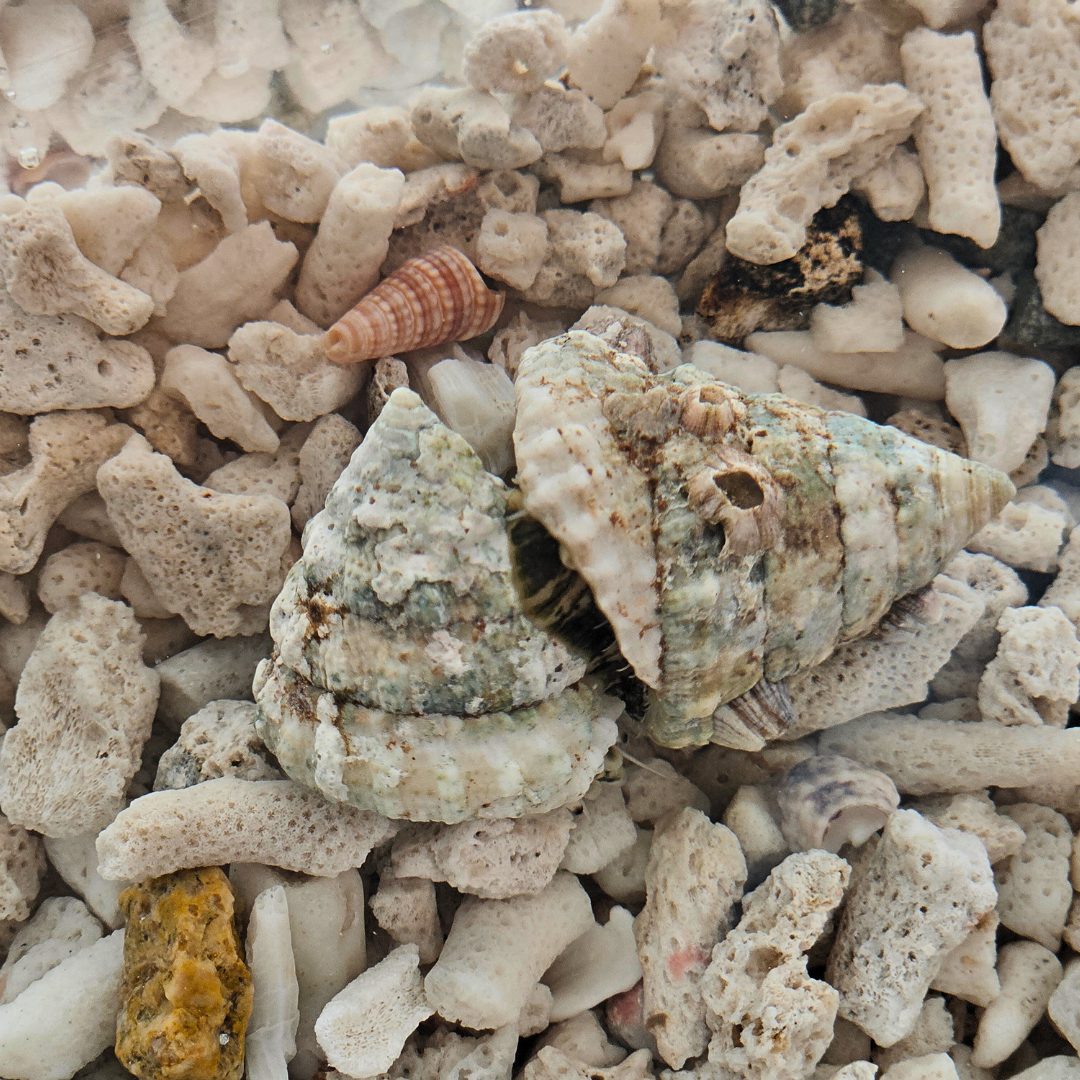
三角シッタカ貝は、標準和名をマツカサウズという海産巻貝で、海水水槽ではガラス面やライブロックに付く薄いコケを食べるクリーナースネールとして親しまれています。円錐形の殻は小さなピラミッドのように見え、表面の凹凸は松かさを思わせる独特の質感を持ちます。見た目は素朴ですが、微細藻類を少しずつ削り取る働きは水槽の美観維持にとても役立ちます。一方で、丈夫そうに見えても水合わせ不足、銅イオン、餌不足、平坦な場所での転倒には弱い面があります。導入後は入れっぱなしにせず、コケの残量と動き方を観察しながら管理することで、長く頼れる掃除役になってくれます。 The Sankaku Shittaka snail, whose Japanese standard name is Matsukasa-uzu, is a marine gastropod commonly kept as a cleaner snail in saltwater aquariums. It grazes on thin algal films growing on glass and live rock. Its conical shell resembles a small pyramid, while the textured surface gives it a pinecone-like appearance. Although modest in color, its steady grazing is useful for maintaining a clean-looking aquarium. However, it can be vulnerable to poor acclimation, copper, lack of food, and being overturned on flat surfaces. Rather than simply adding it and forgetting about it, observe its activity and the amount of available algae so it can remain a reliable member of the cleanup crew.
基本情報 / Basic Information
| 学名 / Scientific Name | Tectus fenestratus |
|---|---|
| 通称 / Common Name | 三角シッタカ貝、シッタカ、マツカサウズSankaku Shittaka snail, Matsukasa-uzu, fenestrate top shell, latticed top shell |
| 分類 / Family | 軟体動物門 腹足綱 古腹足亜綱 トロキダ目 ニシキウズガイ上科 バテイラ科。古い資料や流通表現ではニシキウズガイ科やターバンスネール類として広く扱われることもありますが、現行の海産種データベースではバテイラ科Tegulidaeに置かれます。Phylum Mollusca, class Gastropoda, subclass Vetigastropoda, order Trochida, superfamily Trochoidea, family Tegulidae. Older references and trade descriptions may treat it broadly among top shells or turban-like snails, but current marine species databases place it in the family Tegulidae. |
| 英名 / English Name | Fenestrate top shell, Latticed top shell |
| 分布 / Distribution | 中央・西太平洋から東南アジア、パプアニューギニア、ニューカレドニア、オーストラリア北部・東部・西部沿岸周辺にかけて記録があります。主に浅いサンゴ礁や岩礁域にすむ海産巻貝です。Recorded from the Central and Western Pacific, Southeast Asian waters, Papua New Guinea, New Caledonia, and northern, eastern, and western Australia. It is a marine snail mainly associated with shallow reef and rocky habitats. |
| 最大体長 / Max Size | 巻貝のため、体長というより殻高で見るとおよそ1.7〜5cm程度が目安です。水槽用として流通する個体は2〜4cm前後が多いです。For this snail, size is best described by shell height rather than body length. A typical range is about 1.7 to 5 cm, while aquarium specimens are often around 2 to 4 cm. |
| 寿命 / Lifespan | 水槽内ではおよそ2〜3年が目安として語られますが、野外での正確な寿命や輸入後の個体差には幅があります。実際の寿命は、採集・輸送時のダメージ、水合わせ、餌の残量、水質の安定度に大きく左右されます。In aquariums, it is often treated as a snail that may live around 2 to 3 years, although exact lifespan and individual condition after collection and shipping can vary. Actual longevity depends strongly on collection and transport stress, acclimation, food availability, and water stability. |
飼育環境 / Aquarium Environment
| 水槽サイズ / Tank Size | 小型水槽にも入れられますが、長期飼育では水質と餌となる微細藻類が安定した成熟水槽が向いています。目安として60cm規格水槽、約60L前後以上が扱いやすく、90cm規格水槽、約160L前後以上では複数匹をより管理しやすくなります。導入数は固定ではなく、60cm規格水槽ならまず1〜3匹程度から始め、コケの量を見て調整すると安全です。It can be kept in smaller saltwater aquariums, but long-term care is easier in a mature system with stable water quality and enough microalgae. A standard 60 cm tank of around 60 L or larger is a practical starting point, while a standard 90 cm tank of around 160 L or larger is easier for keeping multiple individuals. Stocking should not be fixed by volume alone; in a standard 60 cm tank, starting with about 1 to 3 snails and adjusting according to algae availability is safer. |
|---|---|
| 水温 / Temperature | 24〜27℃を目安に、25℃前後で安定させると管理しやすいです。28℃を超える高水温が続くと体力を落としやすいため、夏場は水槽用クーラーや冷却ファンを使って急な上昇を防ぎます。 Aim for 24 to 27°C, with around 25°C being easy to manage. Prolonged temperatures above 28°C may cause stress, so use an aquarium chiller or cooling fan during hot seasons to prevent sudden rises. |
| 水質 / Water Quality | リーフタンクに近い安定した海水環境を好みます。比重は1.023〜1.026を中心に、許容目安として1.020〜1.026、pHは8.0〜8.4、炭酸塩硬度は7〜12dKH、硝酸塩は低めに保つと安心です。急な比重変化に弱いため、蒸発による塩分上昇に注意し、導入時は点滴法でゆっくり水合わせします。銅を含む薬品は非常に危険なため、同じ水槽では使用しません。It does best in stable seawater conditions similar to a reef tank. Keep specific gravity mainly around 1.023 to 1.026, with 1.020 to 1.026 as a broader practical range, pH 8.0 to 8.4, alkalinity 7 to 12 dKH, and nitrate on the low side. It is sensitive to sudden salinity changes, so watch evaporation and use slow drip acclimation when introducing it. Copper-containing medications are highly dangerous and should not be used in the same aquarium. |
| レイアウト / Layout | ライブロックや岩組みを十分に配置し、表面に薄い藻類が育つ環境を用意します。砂面だけの平坦な場所やベアタンクのガラス底では、転倒時に起き上がりにくいことがあります。足を掛けられる岩、粗めのサンゴ礫、複雑なライブロックがあると復帰しやすくなります。小さなフラグサンゴや不安定な岩は、移動中に押されることがあるため固定しておきます。Provide plenty of live rock and rocky structure where thin algal films can develop. On flat sand or bare glass, overturned snails may struggle to right themselves. Rocks, coarse coral rubble, and complex live rock surfaces can provide grip and improve the chance of recovery. Small coral frags and unstable rocks should be secured because the snail may push them while moving. |
| 注意点 / Precautions | 主なリスクは、水合わせ不足、急な比重変化、転倒、餌不足、銅イオン、捕食者との同居です。砂の上やガラス底で仰向けになっている個体を見つけたら、早めに殻口を下にして戻してください。コケがほとんど出ない水槽では、元気に働いている個体ほど後から餌不足になることがあります。The main risks are poor acclimation, sudden salinity changes, being overturned, lack of food, copper exposure, and predatory tank mates. If an individual is upside down on sand or bare glass, gently return it with the shell opening facing downward. In very clean aquariums, even active and useful grazers may later run short of food. |
餌と給餌 / Feeding
| 餌の種類 / Diet | 主食はガラス面、ライブロック、サンゴ骨格などに付く珪藻、薄い緑藻、フィルム状の微細藻類です。水槽内の藻類が不足する場合は、スピルリナ配合の植物食性魚用沈下性フード、海苔、乾燥ワカメなどを少量与えます。魚用の高タンパク質フードばかりではなく、植物質中心に補うのが向いています。Its main foods are diatoms, thin green algae, and microalgal films growing on glass, live rock, and coral skeletons. If algae becomes scarce, offer small amounts of sinking herbivore food containing spirulina, dried nori, or dried wakame. Plant-based supplements are more suitable than relying only on protein-rich fish foods. |
|---|---|
| 給餌のポイント / Feeding Tips | 消灯後に少量を貝の近くへ置くと、魚に先に食べられにくくなります。補助餌は食べ残しが出るほど与えず、数時間で残る場合は取り出して水質悪化を防ぎます。ガラス面に薄くコケが残るくらいの環境の方が、完全に磨き上げた水槽より長期維持しやすい場合があります。Place a small amount of food near the snail after lights out so fish are less likely to eat it first. Do not feed so much that leftovers remain; remove uneaten food after a few hours to protect water quality. A tank with a light film of algae may support this snail better than a completely polished system. |
性格と混泳 / Temperament and Tank Mates
| 性格 / Temperament | 非常に温和で、魚やサンゴを攻撃することはありません。活動は夜間や薄暗い時間に目立つことがありますが、捕食者が少ない水槽では日中もガラス面や岩を移動してコケを食べます。It is very peaceful and does not attack fish or corals. Activity may be most noticeable at night or in dim light, but in aquariums with few predators it may graze on glass and rock even during the day. |
|---|---|
| 混泳の相性 / Compatibility | 小型で温和な海水魚、サンゴ、小型エビ、他の草食性巻貝とはおおむね混泳できます。フグ類、大型のベラ類、貝を襲う大型ヤドカリ、肉食性のヒラムシなどは危険です。ヤドカリが多い水槽では、転倒した個体が襲われることがあるため、貝の状態をこまめに確認します。It is generally compatible with small peaceful marine fish, corals, small shrimps, and other herbivorous snails. Avoid puffers, large wrasses, large hermit crabs that attack snails, and predatory flatworms. In tanks with many hermit crabs, check the snail regularly because overturned individuals may be attacked. |
病気と対策 / Diseases and Prevention
| かかりやすい病気 / Common Diseases | 魚の白点病のような分かりやすい病気よりも、順化不全、餌不足、殻の脱灰、銅中毒、転倒による衰弱が問題になりやすい生き物です。急に動かなくなる、足が十分に伸びない、殻口を閉じたまま長時間反応しない、殻表面が荒れるといった変化は不調のサインになります。Rather than obvious fish-like diseases such as marine ich, the main problems are acclimation failure, lack of food, shell erosion, copper poisoning, and weakness after being overturned. Warning signs include sudden inactivity, poor extension of the foot, remaining sealed in the shell for an unusually long time, or visible deterioration of the shell surface. |
|---|---|
| 対策と予防 / Prevention | 導入時は温度合わせだけで済ませず、点滴法で比重とpHにゆっくり慣らします。銅を含む薬品や金属由来の混入を避け、カルシウムと炭酸塩硬度を安定させます。転倒個体は早めに戻し、コケが不足する水槽では植物質の補助餌を与えます。死亡個体は水質悪化を防ぐため、気づいたら早めに取り出します。Do not rely on temperature matching alone; use slow drip acclimation so the snail can adjust to salinity and pH. Avoid copper-containing medications and possible metal contamination, and keep calcium and alkalinity stable. Right overturned individuals promptly, provide plant-based supplemental foods when algae is scarce, and remove dead individuals quickly to protect water quality. |
増やし方(繁殖) / Breeding
| 雌雄の判別 / Sexing | 外見からの雌雄判別は困難です。殻の形、色、模様、サイズだけでオスとメスを見分けることはできません。Sexes cannot be distinguished reliably from external appearance. Shell shape, color, pattern, and size are not dependable indicators. |
|---|---|
| 繁殖形態 / Reproduction | 交尾ではなく、オスとメスが水中へ精子と卵を放出する放卵放精型です。安定した成熟水槽では、夜間に白く煙るような産卵行動が見られることがあります。It reproduces by broadcast spawning rather than mating, with males and females releasing sperm and eggs into the water. In mature, stable aquariums, cloudy spawning may occasionally be observed at night. |
| 繁殖のポイント / Breeding Tips | 産卵が見られても、家庭水槽で稚貝まで育てるのは非常に困難です。幼生はしばらく水中を漂う生活を送り、適切なサイズの微細な餌を必要としますが、プロテインスキマーや物理ろ過に取り込まれたり、魚やサンゴに食べられたりします。そのため、一般的なリーフタンクで計画的に殖やす対象というより、状態よく維持することを目標にしたい貝です。Even if spawning occurs, raising larvae to juvenile snails in a home aquarium is extremely difficult. The larvae spend time drifting in the water column and require suitable tiny foods, but they are often removed by protein skimmers or mechanical filtration, or eaten by fish and corals. Therefore, in a typical reef tank, the goal should be successful maintenance rather than planned breeding. |
雑学と豆知識 / Trivia and Fun Facts
| 1. 学名と和名が語る、殻のかたち / 1. A name shaped by the shell | 属名Tectusはラテン語のtectus、つまり覆われたものという語と結び付けて説明されることがあり、硬い殻と蓋で身を守る巻貝の姿とよく重なります。種小名のfenestratusは窓のあるという意味を持ち、殻表面の格子状の凹凸を窓のように見立てた名前です。日本名のマツカサウズも、三角形に盛り上がる殻と松かさのような質感をよく表しています。水槽でよく使われる三角シッタカ貝という呼び名は、食用巻貝の地方名として親しまれてきたシッタカという言葉と、三角形のシルエット、そしてコケ取り役としての用途が結び付いて広まった流通名と考えると理解しやすいでしょう。The genus name Tectus is often connected with the Latin tectus, meaning covered, which suits a snail protected by a hard shell and operculum. The species name fenestratus means windowed, referring to the lattice-like texture of the shell surface. The Japanese name Matsukasa-uzu also captures the raised triangular shell and pinecone-like texture. The aquarium trade name Sankaku Shittaka is best understood as a commercial name that connects the familiar Japanese word Shittaka with the snail’s triangular outline and its role as an algae grazer. |
|---|---|
| 2. サンゴ礁では小さなメンテナンス係 / 2. A small maintenance worker on the reef | マツカサウズのような草食性巻貝は、岩肌やサンゴ骨格に生える薄い藻類を歯舌で削り取ります。水槽ではそれがガラス面をきれいにする行動として見えますが、自然界では岩礁表面を少しずつ更新し、ほかの生き物が利用できる場所をつくる働きにもつながります。大きな魚のように目立つ存在ではありませんが、毎晩少しずつ動きながら表面を磨いていく姿は、サンゴ礁の細やかな清掃係そのものです。Herbivorous snails such as Tectus fenestratus scrape thin algae from rock and coral skeletons with their radula. In aquariums, this appears as glass and rock cleaning, but on natural reefs it also helps renew surfaces that other organisms can use. It may not be as conspicuous as a large fish, but its slow nightly grazing makes it a quiet maintenance worker of the reef. |
| 3. 転倒復帰は、できるかどうかより助ける前提で / 3. Treat self-righting as uncertain | 三角シッタカ貝は、自力で起き上がれると紹介される場合もあれば、起き上がれないと注意される場合もあります。この違いは、落ちた場所の形状で説明できます。岩の隙間や粗いサンゴ礫の上なら、足を周囲に掛けて体勢を戻せることがあります。しかし平らな砂面やガラス底では、背の高い円錐形の殻が邪魔になり、うまく体を返せないことがあります。飼育上は、転倒に強い貝と考えず、見つけたら戻すという管理が安全です。This snail may be described either as able to right itself or as unable to do so reliably. The difference often comes from the surface it lands on. Among rock crevices or coarse coral rubble, it may grip nearby surfaces and recover. On flat sand or bare glass, its tall conical shell can prevent it from turning over. For aquarium care, it is safer to assume that human assistance may be needed. |
| 4. きれいな水槽ほど餌不足に注意 / 4. Very clean tanks can create a food problem | コケ取り貝には、水槽をきれいにするほど自分の餌を減らしてしまうという矛盾があります。三角シッタカ貝も例外ではなく、導入直後はよく動いていても、数週間から数か月後にコケが減りすぎて弱ることがあります。ガラス面にコケがほとんど出ない状態は、管理がうまくいっているサインであると同時に、貝には植物質の補助餌が必要かもしれないサインでもあります。Cleaner snails face a paradox: the better they clean, the less food remains for them. Sankaku Shittaka snails may be very active after introduction, then weaken weeks or months later if algae becomes too scarce. Glass that stays almost completely free of algae can be a sign of good maintenance, but it may also mean the snail needs plant-based supplemental food. |
| 5. 産卵しても増えにくい理由 / 5. Why spawning rarely leads to baby snails | 成熟した海水水槽では、まれに水中が白く煙るような産卵が見られることがあります。しかし、そこから稚貝が自然に増えることは多くありません。幼生はしばらく水中を漂って成長するため、ろ過装置に取り込まれたり、サンゴや魚に食べられたりしやすいからです。この貝を図鑑で紹介するときは、殖やしやすい貝ではなく、野外の浅い海で生まれ、水槽では掃除役として活躍する海の小さな草食動物として捉えると、その性質が分かりやすくなります。In a mature marine aquarium, cloudy spawning may occasionally be seen. However, it rarely results in juvenile snails appearing on their own. The larvae drift in the water column for a time and are easily removed by filtration or eaten by corals and fish. This species is best presented not as an easy breeding snail, but as a small marine herbivore born on shallow reefs and valued in aquariums as a steady cleaner. |
| 6. まれに話題になる「貝を食べるヒラムシ」 / 6. The rarely discussed snail-eating flatworm | リーフアクアリウムでは、ライブロックなどに紛れてヒラムシ類が持ち込まれることがあります。2019年には、海水水槽内でマツカサウズを捕食する行動が観察されたヒラムシがPericelis tectivorumとして記載されました。これは日常的に必ず起こるトラブルではありませんが、夜間に貝が急に減る、空の殻が目立つ、見慣れない大型のヒラムシが出るといった場合は、単なる寿命や水質不良だけでなく捕食者の可能性も疑う手がかりになります。In reef aquariums, flatworms may occasionally enter hidden in live rock or other materials. In 2019, a flatworm observed preying on Tectus fenestratus in marine aquaria was described as Pericelis tectivorum. This is not an everyday problem, but if snails disappear at night, empty shells increase, or a large unfamiliar flatworm appears, predation should be considered along with water quality or natural mortality. |
まとめ / Conclusion
三角シッタカ貝、つまりマツカサウズは、浅い海の岩肌で藻類を削り取って暮らす小さな草食性巻貝です。水槽ではその性質がそのままガラス面やライブロックのコケ取りとして役立ち、リーフタンクの景観を支える静かな掃除役になります。現在の分類ではバテイラ科に置かれ、中央・西太平洋を中心とする浅いサンゴ礁や岩礁域に記録される海産種です。温和でサンゴを食害しにくい一方、導入時の水質変化、銅、餌不足、転倒には注意が必要です。 The Sankaku Shittaka snail, or Matsukasa-uzu, is a small marine herbivorous gastropod that lives by scraping algae from shallow rocky reef surfaces. In aquariums, that same habit makes it a quiet cleaner that helps keep glass and live rock looking tidy. It is currently placed in the family Tegulidae and is recorded mainly from shallow reef and rocky habitats of the Central and Western Pacific region. It is peaceful and unlikely to damage corals, but acclimation stress, copper, food shortage, and being overturned all require attention.
図鑑としてこの貝を一言でまとめるなら、「よく働くが、放置向きではないコケ取り貝」です。ゆっくり水合わせを行い、転倒を見つけたら戻し、コケが尽きる前に植物質の餌を少し補う。こうした基本を守れば、三角シッタカ貝は水槽の中でサンゴ礁の小さな循環を感じさせてくれる、控えめながら頼もしい存在として楽しめます。 In a field-guide style summary, this snail is best described as a hardworking algae grazer that should not be treated as maintenance-free. Acclimate it slowly, right it when it falls, and supplement plant-based food before natural algae runs out. With these basics in place, the Sankaku Shittaka snail becomes a modest but dependable reminder of the small grazing cycles that help shape reef environments.

気になる道具や飼い方を見つけてみませんか?
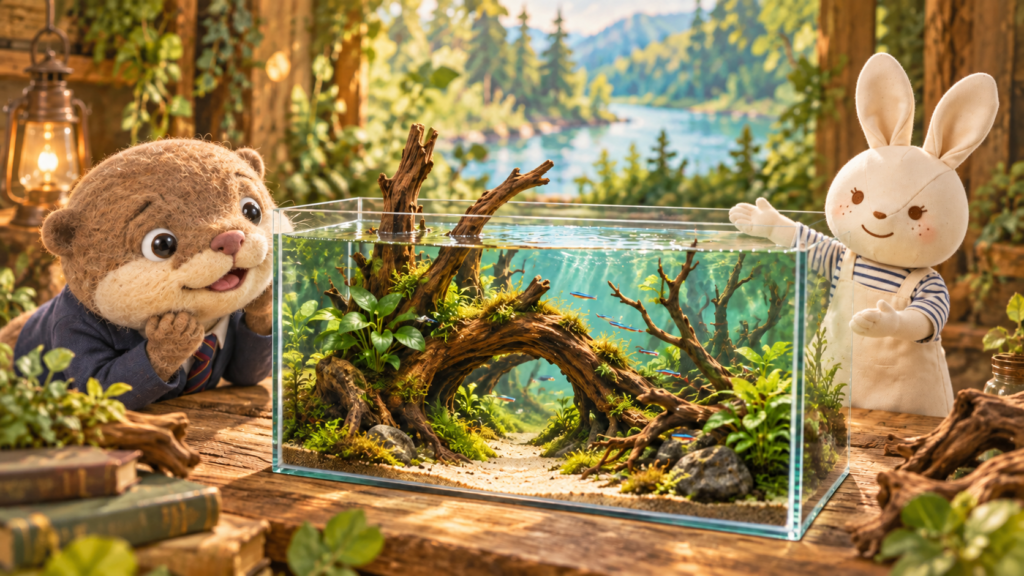 アイのアクアグッズ案内水槽の流木の選び方|枝・マングローブ・アク抜きとおすすめ商品水槽に小さな森を作る流木。枝流木やマングローブという名前の違いから、魚の隠れ家、水草の取り付け、浮く・水が茶色くなるときの準備まで、アイとコタロウが商品とともに案内します。記事はコチラ →
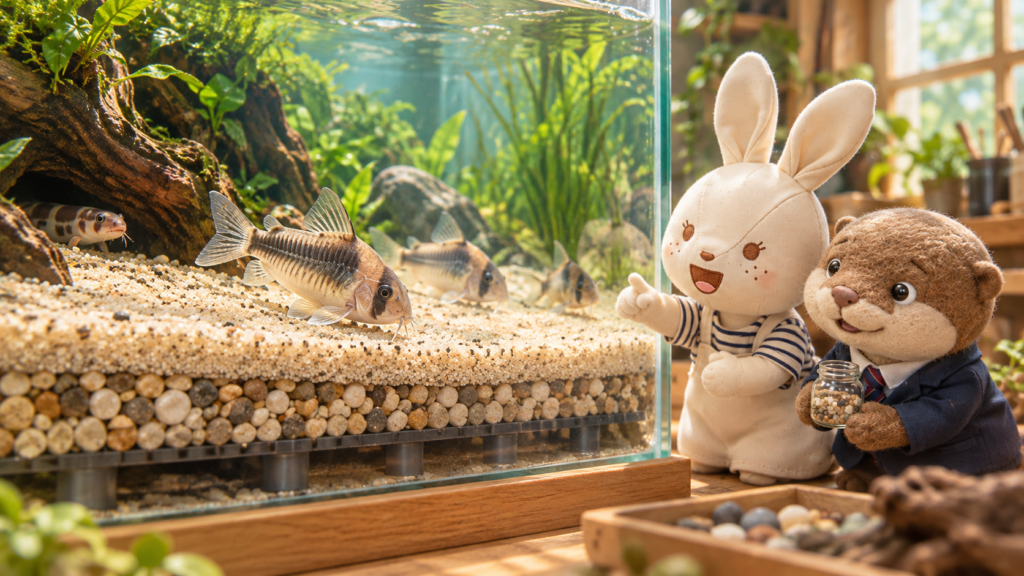 アイのアクアグッズ案内水槽の底砂の選び方|砂・砂利の違いとおすすめ商品道具の特徴や使い方、選ぶときのポイントをアイが紹介します。記事はコチラ →
さまざまな飼育テーマをご紹介。リンク先の記事には広告・商品紹介が含まれます。
案内・紹介記事一覧へ →参考文献・根拠資料
この記事では、店舗・通販ページ、個人ブログ、まとめサイトを根拠資料から除外し、分類、分布、生息環境、飼育条件、繁殖、注意点を支える公的データベース、学術論文、研究機関・国際機関系資料を中心に参照しました。マツカサウズそのものの飼育・繁殖研究は限られるため、繁殖や注意点の一部は同属または近縁のトップシェル類・海産巻貝・海産無脊椎動物の研究を補助資料として扱っています。
選定方針:種名・分類は現行の分類データベースを優先し、分布は国際的な出現記録データベース、飼育上の注意は査読論文・国際機関資料を優先しました。導入数や転倒時の対応などの実用的な助言は、種固有の実験データとは区別して参考にしてください。
-
MolluscaBase eds. 2026. Tectus fenestratus (Gmelin, 1791). World Register of Marine Species.
採用理由:学名、原記載名、シノニム、バテイラ科 Tegulidae を含む分類体系、海産種であることの根拠として使用。
https://www.marinespecies.org/aphia.php?p=taxdetails&id=567234
-
Williams, S. T., Karube, S. and Ozawa, T. 2008. Molecular systematics of Vetigastropoda: Trochidae, Turbinidae and Trochoidea redefined. Zoologica Scripta, 37: 483–506.
採用理由:ニシキウズガイ上科周辺の分子系統学的再検討、Trochidae・Turbinidae・Trochoidea の分類整理を説明する背景資料として使用。
-
Ocean Biodiversity Information System. Tectus fenestratus (Gmelin, 1791).
採用理由:国際的な海洋生物多様性データベースとして、分類IDと出現記録ベースの分布確認に使用。
-
SeaLifeBase. Tectus fenestratus, Fenestrate top.
採用理由:殻形、一般名、分布・生息環境に関する生物データベースとして使用。生息環境の記述は、他の分布データと合わせて過度に断定しない形で本文へ反映。
-
Watson, G., Davies, J., Wood, H. and Cocks, A. 2018. A comparison of survivourship and function (grazing and behaviour) of three gastropod species used as clean-up crew for the marine aquarium trade. PLOS ONE, 13(6): e0199516.
採用理由:マツカサウズを含む海産巻貝のコケ取り能力、生存率、活動性、アクアリウム環境への適性を検討した査読論文。水合わせ、長期維持、過信しない導入表現の根拠として使用。
-
Webb, A. E. et al. 2021. Synchronized broadcast spawning by six invertebrates (Echinodermata and Mollusca) in the north-western Red Sea. Marine Biology, 168, 68.
採用理由:同属の Tectus dentatus を含む海産無脊椎動物の放卵放精、夜間・月齢・水温との関係を示す資料。マツカサウズの繁殖解説では、同属・近縁群の補助資料として扱う。
-
FAO. Hatchery production of trochus (Trochus niloticus) in Vanuatu: A review of the existing facilities and a manual of rearing techniques appropriate for a small-scale hatchery. Appendix I: Manual of trochus rearing techniques.
採用理由:近縁のトップシェル類における採卵、幼生管理、稚貝育成の難しさを説明する補助資料として使用。一般水槽での繁殖成功を安易に期待しない本文表現を支える。
-
LaDouceur, E. E. B., Wynne, J., Garner, M. M., Nyaoke, A. and Keel, M. K. 2016. Lesions of copper toxicosis in captive marine invertebrates with comparisons to normal histology. Veterinary Pathology, 53(3): 648–658.
採用理由:飼育下の海産無脊椎動物における銅中毒の病理学的資料。マツカサウズを含む無脊椎動物水槽で銅系薬剤を避ける注意喚起の根拠として使用。
-
Dittmann, I. L., Dibiasi, W., Noreña, C. and Egger, B. 2019. Description of the snail-eating flatworm in marine aquaria, Pericelis tectivorum sp. nov. (Polycladida, Platyhelminthes). Zootaxa, 4565(3): 383–397.
採用理由:海水水槽内でマツカサウズ(Tectus fenestratus)を捕食するヒラムシの記載と飼育下観察。雑学6の捕食者に関する説明を支える原資料。




コメント