

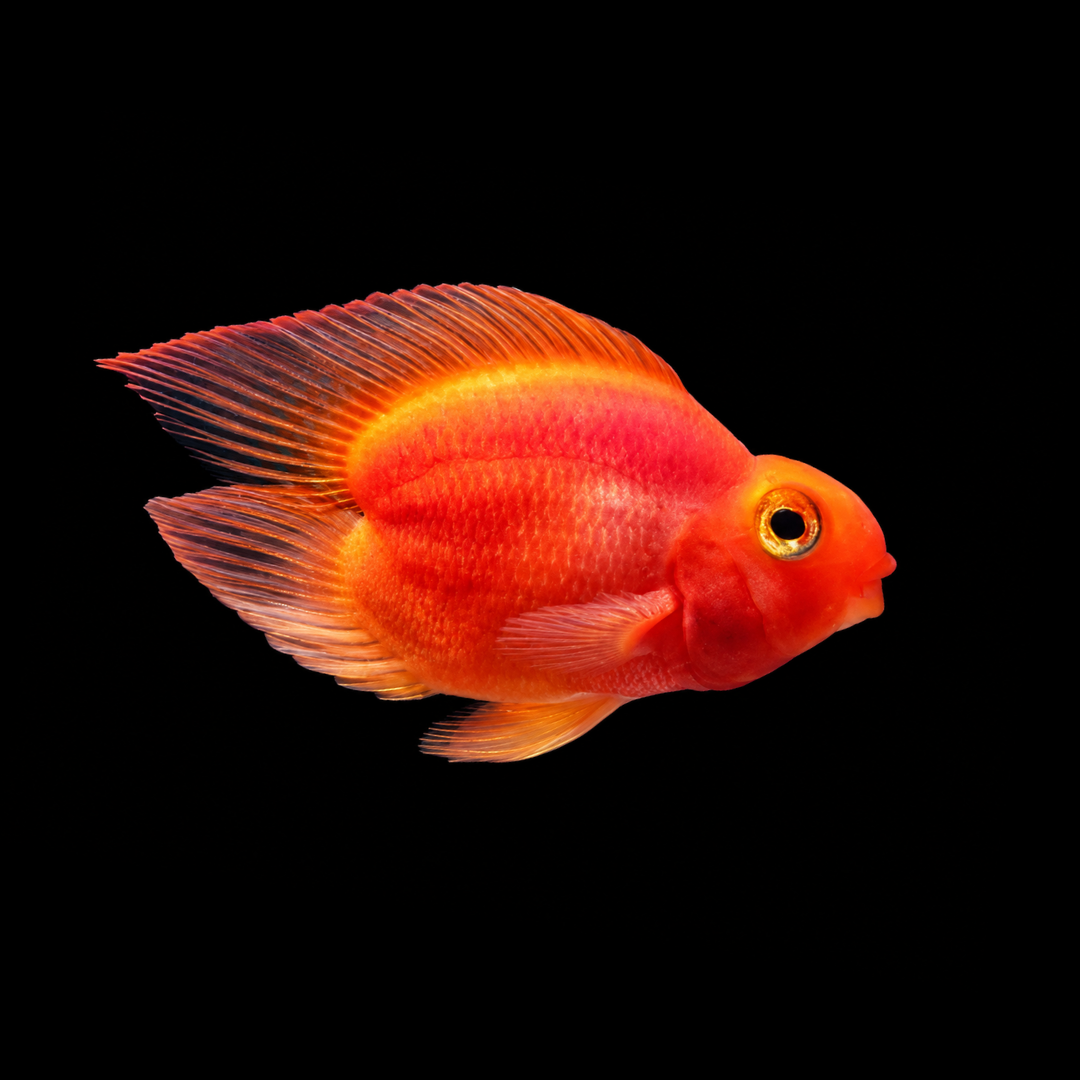
解説 / Description
パープルパロット ハートボディは、パロットシクリッド系統をもとに流通する人工交雑の観賞魚で、自然界に独立した野生種として分布する魚ではありません。丸く体高のある体型と、オウムのくちばしを思わせる閉じにくい口元、そして尾部が切れ込んだハート型のシルエットが大きな特徴です。「パープル」は必ずしも純粋な紫色だけを指す名称ではなく、赤紫から濃い赤、紫がかった赤までを含む流通名として使われます。また、不自然に鮮烈な色彩を持つ個体には人工着色が施された例があり、「ハート」型の個体では尾部を切除して形を作る加工が知られています。こうした背景を理解し、個体の泳ぎ方や体表の状態に配慮して飼育することが大切です。中型シクリッドらしい存在感があり、環境に慣れると餌の時間に前面へ寄ってくるなど、飼育者に反応する行動も見せます。 The Purple Heart Parrot Cichlid is an ornamental hybrid derived from parrot cichlid lines and does not exist as an independent wild species in nature. It is characterized by a deep, rounded body, a mouth that resembles a parrot’s beak and does not close completely, and a distinctive heart-shaped rear profile. The trade name “Purple” does not necessarily indicate a purely violet body color; it is also used for reddish-purple, deep red, and red tones with a purplish cast. Artificial coloration has additionally been documented in unusually vivid specimens, while heart-shaped forms are known to be produced by removing the tail area. Understanding this background helps the keeper pay closer attention to swimming ability and the condition of the body surface. Once accustomed to the aquarium, these conspicuous mid-sized cichlids often respond to their keeper and approach the front at feeding time.
基本情報 / Basic Information
| 学名 / Scientific Name | 正式な学名なし(人工交雑品種)No valid scientific name; an ornamental hybrid |
|---|---|
| 通称 / Common Name | ハートパロット、パープルハートパロットHeart Parrot, Love Heart Parrot, Purple Heart Parrot |
| 分類 / Family | シクリッド科。原型となるブラッドパロットは、研究文献ではレッドヘッドシクリッドの一種 Vieja melanurus とフラミンゴシクリッド Amphilophus citrinellus の交雑魚として扱われる例があります。ただし、「パープルパロット ハートボディ」は流通上の改良・加工名であり、個々の商業系統の血統まで一律に断定することはできません。Family Cichlidae. In research literature, the blood parrot foundation has been treated as a hybrid involving the redhead cichlid Vieja melanurus and the Midas cichlid Amphilophus citrinellus. However, Purple Heart Parrot is a commercial modified form, and the precise pedigree of every traded line cannot be assumed to be identical. |
| 英名 / English Name | Purple Heart Parrot Cichlid / Heart Parrot Cichlid |
| 分布 / Distribution | 自然分布はありません。人工交雑系統をもとに養殖され、観賞魚として流通しています。There is no natural distribution. It is a captive-bred ornamental fish derived from an artificial hybrid lineage. |
| 最大体長 / Max Size | およそ15〜20cm。体長だけでなく体高と厚みも増すため、成魚は数値以上に大きく見えます。Approximately 15–20 cm. Adults also develop considerable body depth and thickness, making them appear larger than their length alone suggests. |
| 寿命 / Lifespan | ハートボディに限った信頼できる統一的な寿命データはありません。個体差が大きいため、長期飼育では安定した水質と水温、適切な給餌、無理のない混泳環境を維持することが重要です。No reliable, standardized lifespan figure is available specifically for the heart-body form. Individual variation is substantial, so long-term care depends on stable water quality and temperature, appropriate feeding, and avoiding stressful tank mate combinations. |
飼育環境 / Aquarium Environment
| 水槽サイズ / Tank Size | 幼魚の一時的な飼育では60cm規格水槽(約60L)も使えますが、15〜20cmほどに成長する成魚を長期飼育するなら、90cm規格水槽(約180L)以上を基本の目安にすると管理しやすくなります。複数飼育や大型魚との混泳では、120cm規格水槽以上を検討してください。体高と厚みがあり排泄量も多いため、水量とろ過能力には余裕を持たせます。A standard 60 cm aquarium of about 60 L can be used temporarily for juveniles, but for long-term care of adults reaching around 15–20 cm, a standard 90 cm aquarium of roughly 180 L or larger is a more practical baseline. For groups or housing with large tank mates, consider a standard 120 cm aquarium or larger. Because these fish are deep-bodied and produce substantial waste, allow generous water volume and filtration capacity. |
|---|---|
| 水温 / Temperature | 24〜28℃を目安にし、急変させず安定させます。冬季の急な水温低下は食欲低下や体調不良につながるため、ヒーターとサーモスタットで一定の範囲を保つことが重要です。 Aim for 24–28°C and avoid sudden temperature changes. A rapid winter temperature drop can reduce feeding activity and overall condition, so dependable heater and thermostat control is important. |
| 水質 / Water Quality | 弱酸性〜弱アルカリ性のpH 6.0〜8.0に適応しやすく、中性付近のpH 6.5〜7.5を目安にすると安定させやすい魚です。ろ過能力に余裕を持たせ、週1〜2回を目安に全水量の20〜30%程度を換水し、硝酸塩や底部の汚れを蓄積させないようにします。They generally tolerate slightly acidic to slightly alkaline water around pH 6.0–8.0, with near-neutral pH 6.5–7.5 being a practical target. Use ample filtration and perform water changes of roughly 20–30% once or twice per week while preventing nitrate and detritus from accumulating. |
| レイアウト / Layout | 掃除のしやすいベアタンク、または薄く砂を敷いたシンプルな構成が向きます。流木や土管などで落ち着ける場所を作るとよいでしょう。底砂を掘り返す習性があるため、水草を細かく植え込むレイアウトには不向きです。ハートボディは尾ビレを欠くぶん遊泳力が低いため、強すぎる水流や鋭い石・装飾物は避けてください。A bare-bottom aquarium or a simple layout with a thin layer of sand is easy to maintain. Driftwood, pipes, or similar shelters can provide resting areas. Because parrot cichlids often dig in the substrate, delicate planted layouts are poorly suited to them. Heart-body specimens lack a functional tail fin and have reduced swimming power, so avoid excessive current and sharp rocks or decorations. |
| 注意点 / Precautions | 購入直後は本水槽へ直接入れず、別水槽で状態を観察してから導入するのが安全です。呼吸の速さ、白点、充血、ヒレや体表の傷、餌への反応、姿勢の乱れを確認してください。人工着色や尾部切除は身体への侵襲を伴うため、とくに体表や尾部の状態をよく観察します。導入後は安定した水温と水質を保ち、過密を避けます。New fish are best observed in a separate aquarium before being introduced to the main tank. Check breathing rate, white spots, redness, fin or skin damage, feeding response, and abnormal posture. Because artificial coloration and tail removal are invasive procedures, pay particular attention to the condition of the skin and tail area. After introduction, maintain stable temperature and water quality and avoid overcrowding. |
餌と給餌 / Feeding
| 餌の種類 / Diet | シクリッド用またはパロットシクリッド用の小粒〜中粒の沈下性ペレットを主食にします。口が閉じにくいため、大きすぎる粒や薄いフレークは食べにくいことがあります。冷凍アカムシやクリルなどは補助的に与え、植物性原料も含むバランスのよい人工飼料を中心にします。退色後の本来の赤〜オレンジ系の発色を整える目的では、アスタキサンチンやカロテノイドを含む色揚げ飼料も利用できます。Use small- to medium-sized sinking pellets formulated for cichlids or parrot cichlids as the staple diet. Because the mouth does not close normally, oversized pellets and thin floating flakes can be difficult to handle. Frozen bloodworms or krill can be offered as supplements, but a balanced prepared food containing some plant ingredients should remain the main diet. After artificial coloration fades, foods containing astaxanthin or other carotenoids may help support the fish’s natural red to orange coloration. |
|---|---|
| 給餌のポイント / Feeding Tips | 1日2回を目安に、数分で食べ切れる量だけ与えます。ハートボディは急な加速が得意ではないため、混泳水槽では確実に餌を取れているかを観察してください。腹部の異常な膨らみや、食後に浮き方・姿勢の異常が見られた場合は給餌量を見直し、必要に応じて短期間給餌を控えながら水温と水質も確認します。Feed about twice daily, offering only what can be consumed within a few minutes. Heart-body fish are poor at sudden acceleration, so in a community tank confirm that each individual is actually getting food. If the abdomen becomes unusually swollen or abnormal floating or posture appears after feeding, review the feeding amount and, when appropriate, withhold food briefly while also checking temperature and water quality. |
性格と混泳 / Temperament and Tank Mates
| 性格 / Temperament | シクリッドらしい縄張り意識と気の強さを見せます。変形した口のため、噛み方や餌の取り方は一般的な大型シクリッドとは異なりますが、攻撃性がないわけではありません。環境に慣れると給餌時に飼育者へ寄ってくる個体も見られます。ハートボディは尾ビレを欠くため、通常体型のパロットより急な加速や方向転換が不得手です。They retain the territorial and assertive temperament typical of cichlids. Their deformed mouth changes the way they bite and take food compared with many large cichlids, but it does not make them non-aggressive. Some individuals become accustomed to their keeper and approach during feeding. Heart-body fish lack a tail fin, so sudden acceleration and rapid turns are more difficult than for normally shaped parrot cichlids. |
|---|---|
| 混泳の相性 / Compatibility | 極端に攻撃的ではなく、パープルパロットが捕食されない大きさの中・大型魚との混泳が基本です。十分な水槽サイズと個体差への配慮があれば、アロワナ、ポリプテルス、ダトニオ、セベラム、ゲオファーガス、プレコなどが候補になります。ただし、ネオンテトラ、グッピー、小型エビなど口に入る大きさの生体は捕食される可能性があります。反対に、強く追い回す大型シクリッドとの組み合わせでは、泳ぎの遅いハートボディ側が消耗しやすいため慎重な観察が必要です。Tank mates should generally be medium to large fish that are not excessively aggressive and are too large for the parrot to be viewed as prey. With sufficient space and attention to individual temperament, possible companions include arowanas, bichirs, datnoids, severums, Geophagus species, and plecos. Small fish such as neon tetras or guppies, as well as small shrimp, may be eaten if they fit in the mouth. Conversely, persistent harassment by powerful large cichlids can exhaust the slower heart-body form, so close observation is necessary. |
病気と対策 / Diseases and Prevention
| かかりやすい病気 / Common Diseases | パープルパロット ハートボディだけに特定の病気が多いと断定できる十分なデータはありません。一般的な熱帯魚と同様に、白点病やヒレ・口周辺の細菌性感染、エラの不調などに注意します。また、個体によっては食後の腹部膨満や浮き方・姿勢の異常が見られることがあります。人工着色や尾部切除を受けた個体では、購入時に体表や加工部位の状態も確認してください。There is not enough evidence to state that Purple Heart Parrots are uniquely prone to one specific disease. As with other tropical fish, watch for white spot disease, bacterial problems around the fins or mouth, and gill trouble. Some individuals may also show abdominal swelling or abnormal buoyancy and posture after feeding. In artificially colored or tail-removed fish, inspect the skin and modified area carefully at purchase. |
|---|---|
| 対策と予防 / Prevention | 過食を避け、水温を急変させず、底部の汚れをためないことが基本です。姿勢の異常が食後に出る場合は、いったん給餌を控えて水温と水質を確認します。症状が続く場合は隔離し、白点、外傷、感染症など実際の原因に合わせて対処してください。新規導入魚の状態観察、定期的な換水、過密回避を継続することが予防の基本です。The fundamentals are to avoid overfeeding, prevent sudden temperature changes, and keep detritus from accumulating. If abnormal posture appears after feeding, withhold food temporarily and check temperature and water quality. If the problem persists, isolate the fish and respond to the actual cause, such as white spot disease, injury, or bacterial infection. Observation of new arrivals, regular water changes, and avoiding overcrowding remain the core preventive measures. |
増やし方(繁殖) / Breeding
| 雌雄の判別 / Sexing | 外見だけでの確実な判別は難しく、成魚の繁殖期に総排出腔の形や産卵行動を観察して判断する方法が現実的です。体格やヒレの形に傾向が見られることはありますが、人工交雑系統で個体差が大きいため決め手にはなりません。Reliable sexing by external appearance alone is difficult. In mature fish, examination of the genital papilla and observation of spawning behavior provide more useful clues. Body size or fin shape may show tendencies, but variation within this hybrid lineage is too great for those traits to be definitive. |
|---|---|
| 繁殖形態 / Reproduction | 基質産卵型で、ペアになると平らな石や水槽底などに産卵する行動を見せます。ブラッドパロットではオスの不稔が報告されており、同系統同士の産卵では無精卵になる例が多く見られます。ただし、すべてのオスが必ず不妊であるとまでは断定できません。一方、メスには繁殖能力を持つ個体があり、近縁シクリッドとの交雑が成立した報告があります。They are substrate spawners and paired fish may lay eggs on flat stones or the aquarium floor. Male infertility has been reported in blood parrot cichlids, and same-line spawnings often result in unfertilized eggs. However, it cannot be assumed that every male is invariably sterile. Some females are fertile, and successful crosses with related cichlids have been reported. |
| 繁殖のポイント / Breeding Tips | 一般家庭で同系統のパープルパロット ハートボディを増やすのは極めて難しく、観賞飼育を前提にするのが現実的です。産卵しても無精卵であれば数日で白濁し、水カビが広がるため早めに除去します。なお、人工的に加えられた赤紫・紫系の色彩や、尾部処理によるハート型の体型は遺伝形質としてそのまま子に受け継がれるものではありません。Breeding Purple Heart Parrot Cichlids of the same line in a home aquarium is extremely difficult, so they are most realistically kept as display fish. Unfertilized eggs usually turn white within several days and can develop fungus, so they should be removed promptly. Artificially added reddish-purple or purple coloration and the heart-shaped body created by tail-area modification are not traits that are inherited directly by offspring. |
雑学と豆知識 / Trivia and Fun Facts
| 1. 正式な学名を持たない「デザインフィッシュ」 / 1. An Ornamental Hybrid Without a Formal Scientific Name | パープルパロット ハートボディを理解するうえで最初に押さえておきたいのは、この魚が自然界で発見された独立種ではないという点です。原型となるブラッドパロットは1980年代後半の台湾で作出されたとされ、近年の研究ではレッドヘッドシクリッド Vieja melanurus とフラミンゴシクリッド Amphilophus citrinellus の交雑魚として扱われる例があります。一方、「パープル」は赤紫から濃い赤、紫がかった赤までを含んで使われる流通上の色彩名で、「ハートボディ」は体型を示す呼称です。これらの名称は商業上の区分であり、個々の流通系統の詳細な血統がすべて公開されているわけではありません。野生種の来歴とは異なり、養殖と流通の過程そのものが外見に強く表れている魚です。The first point to understand is that the Purple Heart Parrot is not an independent species discovered in nature. The blood parrot foundation is associated with Taiwanese breeding in the late 1980s, and recent research has treated it as a hybrid involving the redhead cichlid Vieja melanurus and the Midas cichlid Amphilophus citrinellus. “Purple” is a commercial color term that can cover reddish-purple, deep red, and purplish-red fish, while “heart body” describes the body form. These are trade designations, and the detailed pedigree of every commercial line is not publicly documented. Its appearance therefore reflects captive breeding and trade practices rather than the history of a wild species. |
|---|---|
| 2. 閉じにくい口でも餌をすり潰せる理由 / 2. How It Processes Food Despite Its Deformed Mouth | パロットシクリッドの口は、一般的なシクリッドのように大きく開閉して獲物をしっかり噛む形とは異なります。それでも餌を食べられるのは、シクリッドが喉の奥に咽頭歯と咽頭顎を持ち、取り込んだ餌をそこで処理できるためです。ただし、口の変形そのものがなくなるわけではないので、飼育下では口に入りやすい粒径の餌を選ぶほうが確実です。特徴的な口元を眺めるときは、見た目だけでなく、その奥で別の咀嚼器官が働いていることまで知ると、シクリッドという魚の体の仕組みがより立体的に見えてきます。The mouth of a parrot cichlid does not open and close like that of many other cichlids, yet the fish can still process food because cichlids possess pharyngeal teeth and jaws deep in the throat. Food taken into the mouth can be processed there before swallowing. This does not remove the limitations of the deformed mouth, so foods that are easy to take in remain the most practical choice in captivity. Knowing that a second feeding apparatus works behind the characteristic mouth makes the anatomy of this cichlid easier to understand. |
| 3. ハート型のシルエットは遺伝だけで生まれるものではない / 3. The Heart Shape Is Not Simply an Inherited Trait | ハートボディという名前から、生まれつき尾が短い品種を想像しやすいのですが、ハートパロットでは幼魚期に尾部を切除して形を作る加工が知られています。尾ビレを欠く個体は、背ビレ、尻ビレ、胸ビレを使って姿勢や前進を補います。水槽内で日常的に泳ぐことはできますが、急加速や強い水流への対応では通常体型より不利になります。外見上の「ハート」を特徴として楽しむ場合でも、その形に合わせて流れを穏やかにし、追われ続けない混泳相手を選ぶことが重要です。The name heart-body can sound like a naturally short-tailed variety, but heart parrots are known to be produced by removing the tail area while young. Without a tail fin, the fish relies more heavily on the dorsal, anal, and pectoral fins for balance and movement. It can still swim in an aquarium, but sudden acceleration and coping with strong current are more difficult than for normally shaped fish. If the heart-shaped outline is part of the appeal, husbandry should still compensate for the altered swimming ability with moderate flow and carefully chosen tank mates. |
| 4. 「パープル」は紫一色を意味しない / 4. “Purple” Does Not Mean Violet Alone | 「パープルパロット」のパープルは、純粋な紫色だけを意味する名称ではありません。実際の流通個体では、赤紫、濃い赤、マゼンタに近い色、紫がかった赤など幅のある色調がこの名称に含まれます。そのうえで、不自然に鮮烈な色彩を持つ個体には人工的な着色が施された例もあり、そうした人工色は時間の経過とともに薄れて基礎となる体色が目立つことがあります。アスタキサンチンなどを含む色揚げ飼料は、魚自身が表現する赤やオレンジ系の発色を支える用途には使えますが、人工的に加えられた色をそのまま維持するものではありません。購入時と成長後で色合いが変わる可能性を前提に見守ると、この魚の色彩をより実態に即して理解できます。In the trade name Purple Parrot, “purple” does not refer only to a purely violet body color. Fish sold under this name may range through reddish-purple, deep red, magenta-like, and purplish-red tones. Unusually vivid specimens have also been documented with artificial coloration, and such added color may fade over time, allowing the underlying body color to become more apparent. Foods containing astaxanthin or other carotenoids can support red and orange coloration produced by the fish itself, but they do not preserve artificially added color unchanged. It is therefore more realistic to expect some variation and change in coloration after purchase. |
| 5. 大型魚水槽で選ばれてきた独特の立ち位置 / 5. A Distinctive Role in Large-Fish Aquariums | パロットシクリッドは中型魚として存在感があり、アロワナやポリプテルスなどを飼う大型水槽で、中層を泳ぐ同居魚として選ばれることがあります。ただし、口の形が変形しているからといって「おとなしい魚」とは限らず、シクリッドらしい縄張り争いや個体差があります。とくにハートボディは急な逃避が得意ではないため、相手との力関係を慎重に観察し、追い回しが続く場合は分けられるようにしておくことが大切です。大型魚水槽での使いやすさは、攻撃性がないことではなく、サイズ、遊泳層、個体同士の相性が合ったときに成り立つものです。Parrot cichlids have a strong presence as medium-sized fish and are sometimes chosen as mid-water companions in large aquariums containing fish such as arowanas and bichirs. A deformed mouth does not make them automatically peaceful; territorial behavior and individual variation remain important. Heart-body fish are especially poor at sudden escape, so keepers should monitor social dynamics closely and be prepared to separate fish if persistent chasing occurs. Their usefulness in a large-fish aquarium depends on compatible size, swimming zone, and individual temperament rather than an assumption that they cannot be aggressive. |
| 6. 観賞価値と動物福祉を同時に考えさせる魚 / 6. A Fish That Raises Questions About Beauty and Welfare | パープルパロット ハートボディは、観賞魚の品種改良がどこまで人の好みに合わせて生き物の姿を変えてよいのか、という問いを非常に分かりやすい形で示します。人工交雑そのものは金魚や多くの改良品種にも見られる長い文化の一部ですが、色素の注入や尾部の切除のように身体へ直接介入する加工は、国や地域によって強い批判の対象となっています。飼育者にできることは、背景を知ったうえで個体の状態をよく観察し、泳ぎにくさや感染リスクを補える環境を整えることです。そして購入という行為が、どのような生産方法を支持することにつながるのかまで考える視点を持つことも、この魚と向き合ううえでは避けて通れません。The Purple Heart Parrot presents a clear example of a broader question in ornamental-fish culture: how far should selective breeding and artificial modification go in reshaping an animal to suit human preferences? Hybrid breeding itself has a long history in aquarium fish, including goldfish and many other domestic strains, but procedures that directly alter the body, such as pigment injection or tail removal, have drawn strong welfare criticism in some regions. A keeper can respond by understanding that background, closely monitoring each fish, and providing conditions that compensate for reduced swimming ability and possible health vulnerability. It is also worth recognizing that purchasing decisions influence which production practices continue to receive market support. |
まとめ / Conclusion
パープルパロット ハートボディは、丸い体型と鮮やかな色彩、飼育者に反応する行動が目を引く中型シクリッドです。その一方で、人工交雑を基礎に、赤紫や紫系を含む人工着色や、ハート形状を作る尾部加工が行われる個体もあります。成魚の長期飼育では90cm規格水槽以上を基本に、水温を24〜28℃で安定させ、十分なろ過と食べやすい餌を用意すると管理しやすくなります。 The Purple Heart Parrot is a conspicuous mid-sized cichlid whose rounded body, vivid coloration, and responsiveness to its keeper attract attention. At the same time, it is based on an artificial hybrid lineage, and some reddish-purple or purple-toned forms involve artificial coloration, while heart-shaped forms may involve tail modification. For long-term adult care, a standard 90 cm aquarium or larger, stable water around 24–28°C, ample filtration, and easy-to-handle foods provide a practical foundation.
尾ビレを欠く個体では泳ぎやすさを優先し、混泳では追われ続けていないか、給餌ではきちんと食べられているかを日々確認することが大切です。外見の成り立ちも含めて個体の特徴を理解し、清潔で安定した環境を保つことで、パープルパロット ハートボディらしい存在感と飼育者への反応を落ち着いて楽しめます。 For tail-less individuals, prioritize easy swimming and check daily that tank mates are not persistently chasing them and that they can obtain food reliably. By understanding the background of the fish’s appearance and maintaining a clean, stable environment, the keeper can appreciate the distinctive presence and interactive behavior of a Purple Heart Parrot without asking the fish to overcome avoidable husbandry stress.

気になる道具や飼い方を見つけてみませんか?
 アイのアクアグッズ案内水草の肥料の選び方|底床用・液肥・メネデールの使い分け道具の特徴や使い方、選ぶときのポイントをアイが紹介します。記事はコチラ →
 アイのアクアグッズ案内水槽の底砂の選び方|砂・砂利の違いとおすすめ商品道具の特徴や使い方、選ぶときのポイントをアイが紹介します。記事はコチラ →
 アイのアクアグッズ案内コケを食べるコイの仲間に合わせる飼育用品|フライングフォックス・アルジイーター・ガラ道具の特徴や使い方、選ぶときのポイントをアイが紹介します。記事はコチラ →
 アイのアクアグッズ案内水槽のエアーポンプの選び方|水深・音・泡で選ぶおすすめ用品道具の特徴や使い方、選ぶときのポイントをアイが紹介します。記事はコチラ →
さまざまな飼育テーマをご紹介。リンク先の記事には広告・商品紹介が含まれます。
案内・紹介記事一覧へ →分布マップ
パープルパロット ハートボディは正式な学名を持たない人工交雑品種で、自然界に野生分布はありません。下の地図では、原型となるパロットシクリッドの作出背景に関連する台湾周辺を参考範囲として概略表示しています。
※この魚には自然分布がないため、地図は野生での生息域や採集地点を示すものではありません。表示範囲および台湾中部付近の代表地点は、人工交雑魚としての背景を把握するための概略的な参考表示です。代表地点は実際の採集地点ではありません。
参考文献・根拠資料
分類、分布、生息環境、飼育条件、繁殖、疾病および飼育上の注意点について、査読論文、専門データベース、大学・獣医学資料、観賞魚業界団体の資料を中心に確認しています。
-
Fisher, K. J., Miller, M. E., Delomas, T. A., Oldfield, R. G. & Dabrowski, K. (2025). Response to salinity challenge in hybrid blood parrot cichlids (Vieja melanura × Amphilophus citrinellus). Environmental Biology of Fishes, 108, 923–936.対応項目:人工交雑魚としての位置づけ、親魚の組み合わせ、繁殖行動、オスの不稔とメスの稔性に関する研究結果。
-
Aqmal-Naser, M. & Ahmad, A. B. (2020). First report of the hybrid blood parrot cichlid from a rice agroecosystem in Seberang Perai Tengah, Penang, Peninsular Malaysia, with notes on syntopic Midas cichlid, Amphilophus citrinellus (Günther, 1864). BioInvasions Records, 9(3), 588–598.対応項目:人工交雑魚としての分類上の扱い、野外で確認された非在来個体、特徴的な体型と閉じにくい口、ハート型個体の尾部処理に関する記載。
-
Froese, R. & Pauly, D. (eds.). FishBase: Amphilophus citrinellus (Günther, 1864).対応項目:シクリッド科としての分類、親種の中央アメリカにおける自然分布、淡水性、生息環境、水温域、最大体長、食性の基礎情報。
-
Froese, R. & Pauly, D. (eds.). FishBase: Vieja melanurus (Günther, 1862).対応項目:シクリッド科としての分類、親種の中央アメリカにおける自然分布、湖沼・河川下流域の生息環境、水温・pHの基礎情報。
-
Micah, A. D., Wen, B., Wang, Q., Zhang, Y., Yusuf, A., Thierry, N. N. B., Tokpanou, O. S., Onimisi, M. M., Adeyemi, S. O., Gao, J.-Z. & Chen, Z.-Z. (2022). Effect of dietary astaxanthin on growth, body color, biochemical parameters and transcriptome profiling of juvenile blood parrotfish (Vieja melanurus ♀ × Amphilophus citrinellus ♂). Aquaculture Reports, 24, 101142.対応項目:人工飼料による飼育、アスタキサンチン摂取と赤・黄系体色の変化、ブラッドパロットの養殖研究における親魚表記。
-
Zhou, J.-Y., Xu, L.-W., Bi, Y.-X., Zhang, J.-Y., Hide, G., Lai, D.-H. & Lun, Z.-R. (2024). First outbreak of trypanosomiasis in farmed blood parrot cichlids (Vieja melanura ♀ × Amphilophus citrinellus ♂) from southern China. Aquaculture, 588, 740944.対応項目:養殖ブラッドパロットで確認された疾病事例、食欲低下、活動性低下、水面付近での遊泳など、体調異常を観察する際の参考となる臨床所見。
-
Petty, B. D., Francis-Floyd, R. & Yanong, R. P. E. Management of Aquarium Fish. MSD Veterinary Manual.対応項目:新規導入魚の隔離、バイオセキュリティ、皮膚・ヒレ・エラの観察、水質管理、過密や環境悪化を避けるための一般的な観賞魚管理。
-
MSD Veterinary Manual. Parasitic Diseases of Fish.対応項目:淡水魚の白点病(Ichthyophthirius multifiliis)、皮膚・ヒレ・エラに現れる症状、感染魚や器具を介した伝播、診断と疾病管理の基礎。
-
Ornamental Aquatic Trade Association (OATA). Updated position statements: Dyed and tattooed fish.対応項目:観賞魚への人工着色、注入・レーザー・薬品などによる着色処理と、こうした処理に対する動物福祉上の注意。




コメント