
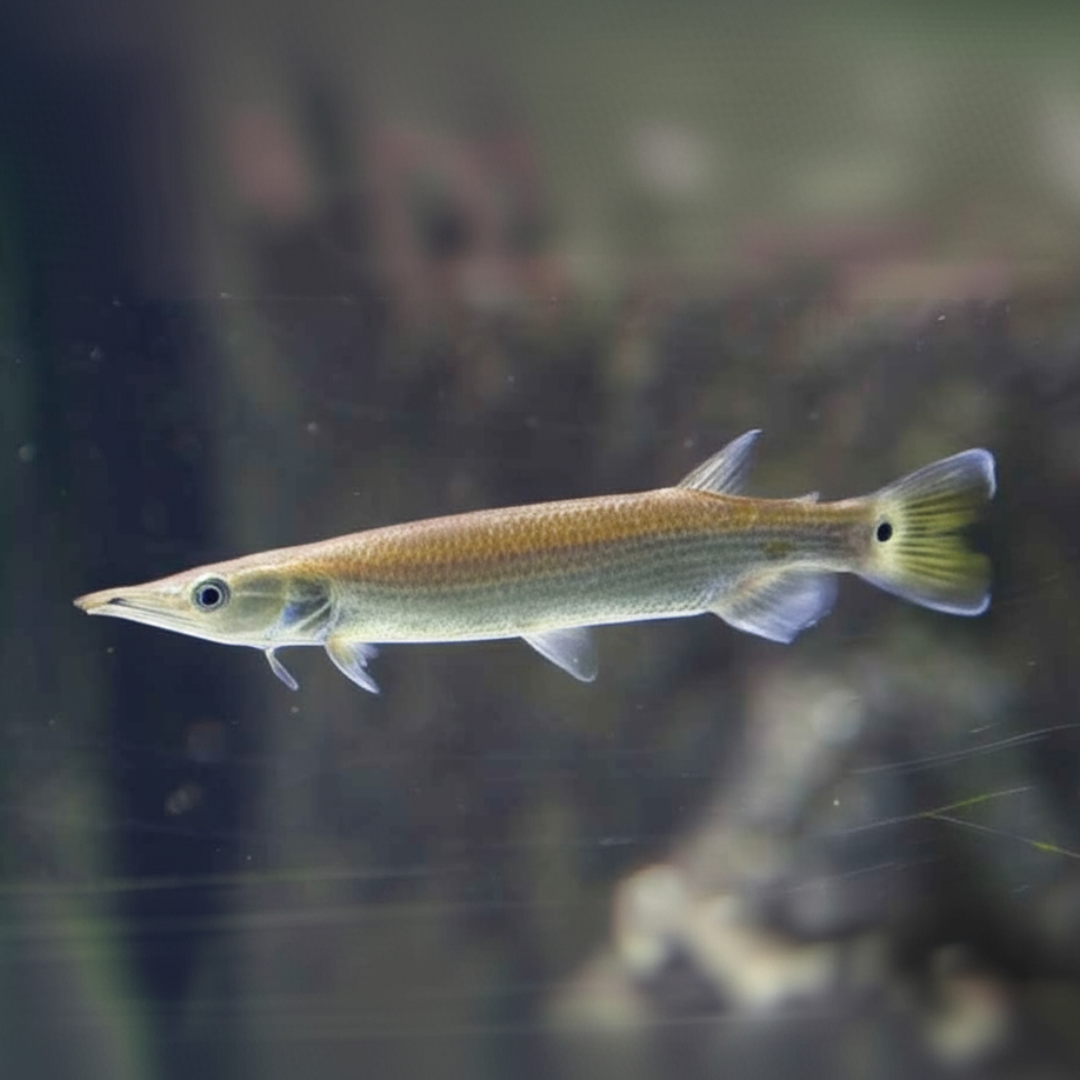

解説 / Description
ブラントノーズガーは、南米大陸北部に生息するカラシン目の肉食魚です。その名前の通り、北米産のガーパイクを彷彿とさせる細長く流線型のシルエットが最大の特徴ですが、分類学的にはネオンテトラなどと同じカラシンの一種です。これは、異なる系統の生物が似た環境で同様の進化を遂げる「収斂進化」の代表例として知られています。日本では2018年の特定外来生物法改正により、本物のガー類が飼育禁止となったことで、その代わりとなる「ポスト・ガーパイク」として急速に注目を集めるようになりました。家庭での90cmから120cm規格水槽に適合する手頃なサイズ感と、銀青色に輝く美しい体色が、多くの古代魚・肉食魚ファンを魅了し続けています。 The Bluntnose Gar is a carnivorous characin native to northern South America. As its name suggests, its most striking feature is its long, streamlined silhouette, reminiscent of the North American Gar, yet taxonomically it is a member of the Characiformes, just like Neon Tetras. This is a classic example of “convergent evolution,” where unrelated species evolve similar traits due to inhabiting similar environments. In Japan, following the 2018 amendment of the Invasive Alien Species Act which banned true gars, this species gained rapid attention as a “post-gar” alternative. Its manageable size, suitable for standard 90cm to 120cm aquariums, and its beautiful silvery-blue iridescent body continue to fascinate fans of primitive and carnivorous fish.
基本情報 / Basic Information
| 学名 / Scientific Name | Ctenolucius hujeta |
|---|---|
| 通称 / Common Name | ブラントノーズガー、ハイドロシナスガーBluntnose Gar, Hydrocinus Gar |
| 分類 / Family | カラシン目 クテノルキウス科Characiformes, Ctenoluciidae |
| 英名 / English Name | Gar Characin, Rocket Gar, Freshwater Barracuda |
| 分布 / Distribution | ベネズエラ(マラカイボ湖盆地)、コロンビア(マグダレナ川、カウカ川など)の低地水域Lowland waters of the Lake Maracaibo basin (Venezuela) and the Magdalena and Cauca rivers (Colombia). |
| 最大体長 / Max Size | 約20cm ~ 30cm(飼育下では20cm前後で成長が止まることが多い)Approx. 20cm – 30cm (Growth often stops around 20cm in captivity). |
| 寿命 / Lifespan | 約5年 ~ 8年以上(飼育下)Approx. 5 – 8 years or more in captivity. |
飼育環境 / Aquarium Environment
| 水槽サイズ / Tank Size | 90cm規格水槽(約157リットル)以上推奨、120cm規格水槽(約243リットル)あれば理想的。※混泳を含めると90cm以上が望ましいですが、単独飼育では60cm規格水槽でも終生飼育の実績があります。Standard 90cm tank (157L) or larger recommended; 120cm is ideal. While 90cm+ is preferred for community tanks, lifelong single specimens have been successfully kept in standard 60cm tanks. |
|---|---|
| 水温 / Temperature | 22℃ ~ 28℃(25℃前後を維持するのが望ましい) 22°C – 28°C (72°F – 82°F), 25°C is optimal. |
| 水質 / Water Quality | pH 6.0 ~ 7.5(弱酸性から中性)、軟水から中硬水pH 6.0 – 7.5 (slightly acidic to neutral), soft to moderately hard water. |
| レイアウト / Layout | 表層付近を泳ぐため、水面を広く空ける。パニック防止に浮草(アマゾンフロッグビット等)を浮かべるのが有効。Maintain open space near the surface. Floating plants like Amazon Frogbit are effective in preventing panic. |
| 注意点 / Precautions | 極めてジャンプ力が高いため、隙間のない蓋が必須。神経質なので人通りの多い場所は避け、激突防止に配慮する。Strong jumping ability requires a secure, gapless lid. Being skittish, avoid high-traffic areas to prevent collisions. |
餌と給餌 / Feeding
| 餌の種類 / Diet | 肉食性。小型の活餌、クリル、冷凍アカムシ、浮上性の人工飼料(カーニバル等)Carnivorous. Small live fish, krill, frozen bloodworms, and floating pellets. |
|---|---|
| 給餌のポイント / Feeding Tips | 浮上性の餌を好む。成魚は人工飼料に餌付きやすいが、底に落ちた餌は食べないことが多いため、食べ残しに注意する。Prefers surface-floating food. Adults easily adapt to pellets, but often ignore food that sinks to the bottom. |
性格と混泳 / Temperament and Tank Mates
| 性格 / Temperament | 温和。同種間では群れを作る性質がある。肉食だが他種に対して攻撃を仕掛けることは少ない。Peaceful. They tend to school with their own kind. Despite being carnivorous, they rarely attack other species. |
|---|---|
| 混泳の相性 / Compatibility | 口に入るサイズの小魚は獲物となるため不可。中型シクリッドやポリプテルスなどの底棲魚、体高のある中型カラシンとは相性が良いですが、相手の種や個体差によるリスクも考慮する必要があります。Small fish that fit in their mouth will be eaten. Good matches include medium cichlids, bottom-dwellers like Polypterus, or tall-bodied characins, though individual temperament of tank mates must be considered. |
病気と対策 / Diseases and Prevention
| かかりやすい病気 / Common Diseases | パニックによる吻部(鼻先)の損傷、それに伴う水カビ病。白点病。Snout damage from panicking, subsequent fungal infections, and Ich. |
|---|---|
| 対策と予防 / Prevention | 水槽の蓋をしっかり閉め、驚かせない環境を作る。吻部を傷めた際は、塩浴や抗菌剤で二次感染を防ぐ。Secure the lid and create a calm environment. Use salt baths or antibacterial treatments if the snout is injured. |
増やし方(繁殖) / Breeding
| 雌雄の判別 / Sexing | オスは臀鰭(しりびれ)が大きく外側に膨らんだ形(凸状)をしており、メスは腹部が丸く、臀鰭の後縁が窪んでいる(凹状)。Males have larger, convex-shaped anal fins. Females have rounder bellies and concave-shaped anal fins. |
|---|---|
| 繁殖形態 / Reproduction | 水中受精。水面近くでペアが体を浮かせ、一斉に大量の卵と精子を放出する。Underwater fertilization. Pairs float near the surface and release a large quantity of eggs and sperm simultaneously. |
| 繁殖のポイント / Breeding Tips | 孵化が20時間前後と極めて早いため、産卵後は親を隔離する。稚魚期の共食いが非常に激しいため、徹底した選別と頻回な給餌が必要。Hatching is very fast (approx. 20h), so isolate parents after spawning. Intense cannibalism among fry requires strict size grading and frequent feeding. |
雑学と豆知識 / Trivia and Fun Facts
| 1. ガーパイクと類似の適応「リップ・フラップ」 / 1. Evolutionary Parallelism: The “Lip Flaps” | ブラントノーズガーの最も興味深い生理的特徴は、唇にあるヒダ状のリップ・フラップです。これは、酸素が少ない水域において酸素が豊富な最表層の水を選択的にエラへ送るための器官であり、水生表面呼吸を可能にします。この機能は、収斂進化したガーパイクなどと比較されることも多い高度な適応です。水槽内でこの行動が頻繁に見られるときは酸素不足のサインですので、速やかにエアレーションを強化しましょう。Their most fascinating physiological feature is the “lip flaps.” These organs allow them to selectively draw oxygen-rich surface water into their gills during hypoxic conditions, a process known as Aquatic Surface Respiration. This adaptation is often compared to those of the convergently evolved Gar Pike. If seen frequently in a tank, it indicates oxygen depletion, and aeration should be increased immediately. |
|---|---|
| 2. アガシとヴァランシエンヌ:学名の歴史 / 2. Agassiz and Valenciennes: A History of Scientific Names | 本種の学名には、19世紀の博物学者の情熱と紆余曲折が刻まれています。1850年にフランスのヴァランシエンヌが最初にシフォストマ・フジェタと名付けましたが、後に属名が昆虫と重複していたことが判明し、クテノルキウス属へと変更されました。種小名のフジェタは、ベネズエラの現地の漁師が古くから呼んでいた名称がそのまま採用されたものと言われています。当時の学者が現地の言葉を尊重した結果かもしれません。The scientific name reflects 19th-century naturalist history. In 1850, Valenciennes first named it Xiphostoma hujeta, but the genus name was later found to be preoccupied by an insect, leading to its reassignment to Ctenolucius. The species name “hujeta” is said to be derived directly from the local vernacular used by Venezuelan fishermen, suggesting that early taxonomists may have honored local terminology. |
| 3. 日本独自の俗称「ポスト・ガーパイク」 / 3. Japan’s Unique Term: The “Post-Gar” | 2018年の特定外来生物法改正により本物のガー類が規制された際、脚光を浴びたのが本種です。ポスト・ガーパイクとは日本のアクアリウム業界で使われる俗称であり、分類学的にはガーとは全く異なるカラシンの仲間ですが、その荒々しい魅力と、25cmから30cm程度という日本の住宅事情に優しいサイズ感が、多くのファンの心を掴みました。今や日本の大型肉食魚市場を支える、独自の地位を確立した存在です。When true gars were regulated in Japan in 2018, this species took center stage. “Post-Gar” is a trade term used in the Japanese aquarium industry. While taxonomically distinct from true gars, its rugged appeal and manageable size (approx. 25-30cm) perfectly suit Japanese homes. It has since established its own significant niche in the domestic carnivorous fish market. |
まとめ / Conclusion
ブラントノーズガーは、その鋭い外見からは想像できないほどの繊細さと、過酷な環境を生き抜くための知恵を併せ持つ素晴らしい魚です。かつては北米産ガーパイクの影に隠れた存在でしたが、現在ではその飼いやすさと独特の生態により、独立した魅力を持つ観賞魚として不動の地位を築いています。飛び出し防止やパニック対策といった本種特有の配慮さえ怠らなければ、あなたの水槽で長く、美しく輝き続けてくれることでしょう。 The Bluntnose Gar is a wonderful fish that combines a delicacy unexpected from its sharp appearance with wisdom for surviving harsh environments. Once hidden in the shadows of North American Gars, it has now established a firm position as an ornamental fish with its own unique charm and relative ease of care. As long as specific precautions like jump prevention and panic management are taken, it will continue to shine beautifully in your aquarium for a long time.
もしあなたが、古代魚のような雰囲気と、中型水槽での群泳の美しさを同時に手に入れたいのであれば、ブラントノーズガーはまさに最高の選択肢となります。そのロケットのような突進力と、穏やかな群れが織りなすダイナミズムを、ぜひご自身の目でお確かめください。 If you wish to enjoy both a primitive atmosphere and the beauty of a schooling medium-sized fish, the Bluntnose Gar is truly the best choice. Experience for yourself the dynamism woven by its “rocket-like” lunges and its peaceful social behavior.


 ポチップ
ポチップ


▶ 記事の生体をAMAZONで買う ▶ 記事の生体をYahooで買う
この記事の参考文献・出典
【学術論文・分類学】
- Vari, R. P. (1995). The Neotropical Fish Family Ctenoluciidae (Teleostei: Ostariophysi: Characiformes): A Phylogenetic Study. Smithsonian Contributions to Zoology, No. 564.
- Valenciennes, A. (1850). Histoire naturelle des poissons. Tome vingt-deuxième. Suite du livre vingt-deuxième. Suite de la famille des Salmonoïdes.
- Gill, T. N. (1861). Catalogue of the fishes of the eastern coast of North America, from Greenland to Georgia. Proceedings of the Academy of Natural Sciences of Philadelphia.
【生態・生理学】
- FishBase: Ctenolucius hujeta (Valenciennes, 1850) – Bluntnose pike-characin.
- Brauner, C. J., et al. (1995). Aquatic surface respiration, hypoxia and the evolution of neotropical characiform fishes. Journal of Experimental Biology.
【法規制・国内市場】
- 環境省:特定外来生物による生態系等に係る被害の防止に関する法律(外来生物法) – ガー科の指定に関する告示(2018年施行)。
- キョーリン フード工業株式会社:ひかりクレスト ビッグカーニバル / キャット 製品給餌データ。
※本リストは記事作成時に参照した主要なデータソースおよび分類学的根拠に基づいています。


コメント