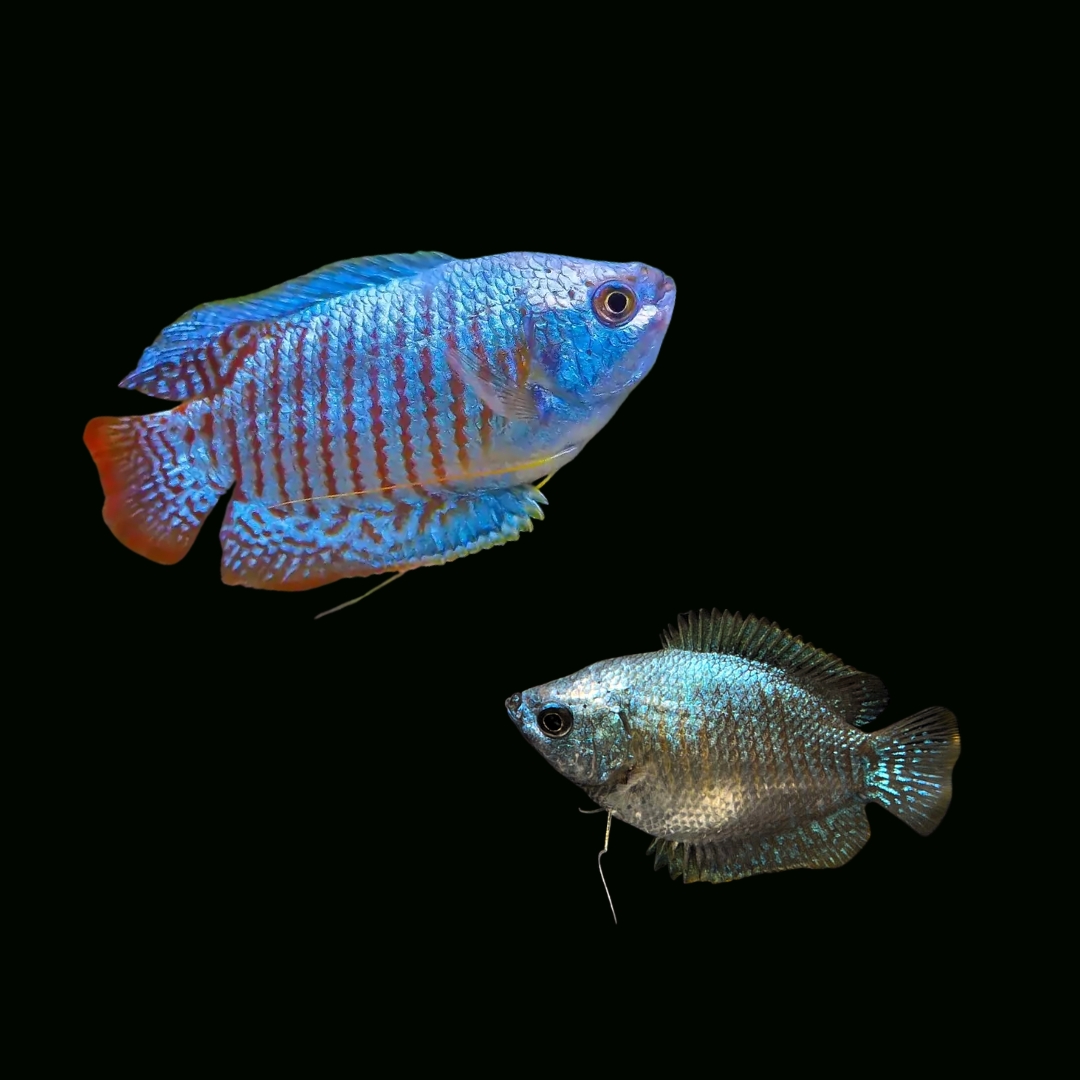
ネオンドワーフグラミーは、ドワーフグラミーをもとに作出・流通している青色系の改良タイプです。メタリックな青を中心とした体色が水草水槽によく映え、小型で比較的おとなしいことから、古くから人気の高い小型ラビリンスフィッシュとして親しまれています。ただし、派手な見た目に反して、強い水流、急な水質変化、輸送後のストレスには注意が必要です。水面から空気を取り込むラビリンス器官、泡巣を作る繁殖行動、さらに水面上の小さな獲物に水を吹きかける行動が研究されているなど、観賞価値だけでなく生態面でも非常に興味深い魚です。The Neon Dwarf Gourami is a blue aquarium strain derived from the dwarf gourami. Its metallic coloration stands out beautifully in planted aquariums, and its small size and generally peaceful nature have made it a long-standing favorite among labyrinth fishes. Despite its attractive appearance, it should not be treated as completely trouble-free: strong current, sudden water-quality changes, and post-transport stress can all be problematic. With its labyrinth organ for air breathing, bubble-nest breeding behavior, and scientifically studied ability to spit water at small prey above the surface, this fish is fascinating both as an aquarium species and as a biological subject.
基本情報 / Basic Information
学名 / Scientific Name
Trichogaster lalius
通称 / Common Name
ネオンドワーフグラミー、ネオンブルー・ドワーフグラミー、ドワーフグラミーNeon Dwarf Gourami, Neon Blue Dwarf Gourami, Dwarf Gourami
分類 / Family
キノボリウオ目、オスフロネムス科、Trichogaster属。古い資料や流通表記ではColisa laliaとされることがあります。また、近年の分類学的再検討ではTrichogaster fasciataとの関係について議論があり、データベースによって扱いが異なる場合があります。Order Anabantiformes, family Osphronemidae, genus Trichogaster. The older name Colisa lalia may still appear in trade and older references. Recent taxonomic reassessments have also discussed its relationship with Trichogaster fasciata, so treatment may differ among databases.
英名 / English Name
Dwarf Gourami, Neon Dwarf Gourami
分布 / Distribution
原種の自然分布は、パキスタン、インド、バングラデシュを中心とする南アジアとされます。植生の多い流れの緩やかな小川、湖沼、湿地、水田、用水路などにすみます。観賞魚として流通するネオンドワーフグラミーは、主に養殖由来の改良タイプです。The wild form is native mainly to South Asia, especially Pakistan, India, and Bangladesh. It inhabits slow-moving streams, lakes, wetlands, rice fields, and irrigation channels with abundant vegetation. Neon Dwarf Gouramis in the aquarium trade are primarily farm-bred color strains.
最大体長 / Max Size
約5〜8cm。データベース上では全長9cm前後までの記録もありますが、水槽内では6cm前後で落ち着く個体が多いです。About 5–8 cm. Some database records approach around 9 cm total length, but aquarium specimens are often around 6 cm.
寿命 / Lifespan
一般的には2〜4年ほどが目安です。購入時の年齢、輸送状態、遺伝的背景、病原体リスクによって大きく変わります。Usually about 2–4 years, depending strongly on age at purchase, transport condition, genetic background, and disease risk.
飼育環境 / Aquarium Environment
水槽サイズ / Tank Size
単独またはペア飼育でも、45cm水槽以上が実用的です。安定飼育や混泳を考えるなら60cm規格水槽、約57L以上を推奨します。複数のオスを入れる場合は、90cm規格水槽以上で水草や流木による視線切りを十分に作ると安全です。For a single fish or a pair, a 45 cm tank or larger can be workable, but a standard 60 cm tank of about 57 L or more is recommended for stable maintenance and community setups. If keeping multiple males, use a 90 cm tank or larger with dense plants and driftwood to break lines of sight.
水温 / Temperature
22〜28℃。日常管理では24〜26℃前後が扱いやすく、急な温度変化を避けます。繁殖を狙う場合だけ一時的に高めの水温に調整することがあります。22–28°C. Around 24–26°C is practical for routine care, and sudden temperature changes should be avoided. Slightly warmer water may be used temporarily for breeding attempts.
水質 / Water Quality
弱酸性〜中性付近、目安としてpH 6.0〜7.5。養殖個体は比較的幅広い水質に慣れますが、急変には弱いため、少量の定期換水で清浄な水を維持します。軟水〜中硬水程度で管理しやすく、流木やマジックリーフを使った穏やかなブラックウォーター風の環境も相性が良いです。Slightly acidic to near-neutral water, roughly pH 6.0–7.5. Farm-bred specimens adapt to a fairly broad range, but they dislike sudden shifts, so maintain clean water with modest regular changes. Soft to moderately hard water is usually suitable, and a gentle blackwater-style setup using driftwood or Indian almond leaves can work well.
レイアウト / Layout
水草を多めに植え、浮き草を一部に浮かべるレイアウトが適しています。水面に出て空気を吸えることが重要なので、水面を完全にふさがないようにします。フィルターの排水は弱め、スポンジフィルターやシャワーパイプの向き調整などで穏やかな水流にします。A planted layout with some floating plants is ideal. Access to the surface is essential because the fish breathes air, so the surface should never be completely blocked. Keep water flow gentle by using a sponge filter or adjusting filter outlets and spray bars.
注意点 / Precautions
ラビリンスフィッシュは水面呼吸を行うため、密閉しすぎた環境や油膜の発生、水面へのアクセス遮断は避けます。導入直後は特にストレスを受けやすいため、点滴法などで慎重に水合わせし、購入後は可能であれば隔離水槽で2〜4週間ほど観察すると安心です。オス同士は小競り合いを起こすことがあります。Because labyrinth fishes breathe air at the surface, avoid overly sealed setups, surface films, or anything that blocks surface access. Newly purchased fish are particularly stress-sensitive, so acclimate carefully and, if possible, observe them in quarantine for 2–4 weeks before adding them to the main aquarium. Males may quarrel with one another.
餌と給餌 / Feeding
餌の種類 / Diet
人工飼料を中心に、冷凍赤虫、ブラインシュリンプ、イトメ、ミジンコ類などを補助的に与えます。自然下では小型の水生無脊椎動物や昆虫、微細な有機物なども利用する雑食性です。Use quality prepared foods as the staple, supplemented with frozen bloodworms, brine shrimp, tubifex, and small water fleas. In nature it is omnivorous, feeding on small aquatic invertebrates, insects, and fine organic matter.
給餌のポイント / Feeding Tips
1日1〜2回、数分で食べ切れる量を与えます。食べ残しは水質悪化につながるため控えめが基本です。浮上性やゆっくり沈む餌を使うと食べやすく、繁殖前のコンディション作りには冷凍餌や生餌を少量ずつ組み合わせると効果的です。Feed once or twice daily, only as much as the fish can consume within a few minutes. Uneaten food quickly reduces water quality, so moderate feeding is best. Floating or slow-sinking foods are easy for them to take, and small amounts of frozen or live foods can help condition adults before breeding.
性格と混泳 / Temperament and Tank Mates
性格 / Temperament
基本的にはおとなしい小型魚ですが、オスは縄張り意識を見せることがあります。繁殖期や狭い水槽では、同種のオスや姿形の似た魚に対して追い払う行動が強くなる場合があります。Generally a peaceful small fish, but males can become territorial. During breeding or in cramped tanks, they may chase other males or fish with a similar shape and behavior.
混泳の相性 / Compatibility
小型テトラ、ラスボラ、コリドラス、小型ローチ、穏やかな小型魚との混泳に向きます。ヒレをかじる魚、活発すぎる魚、大型魚、攻撃的なシクリッド類との混泳は避けます。ベタや他のグラミー類とは、個体差や水槽サイズによってトラブルになることがあるため慎重に判断します。Good tank mates include small tetras, rasboras, Corydoras, small loaches, and other calm community fish. Avoid fin-nippers, overly active species, large fish, and aggressive cichlids. Bettas and other gouramis require caution because compatibility depends on individual temperament and tank size.
病気と対策 / Diseases and Prevention
かかりやすい病気 / Common Diseases
白点病、尾ぐされ病、水カビ、エロモナス症など一般的な淡水魚の病気に加え、ドワーフグラミーではDGIV、ドワーフグラミー・イリドウイルスに注意が必要です。DGIVはイリドウイルス科メガロサイトウイルスに関連する感染症として報告され、発症個体では食欲低下、退色、元気消失、腹部膨満、潰瘍や出血などが見られることがあります。ただし、外見だけでDGIVと断定することはできず、細菌感染や水質悪化による症状と似る場合があります。In addition to common freshwater fish diseases such as ich, fin rot, fungal infections, and bacterial infections, dwarf gouramis require special attention for DGIV, dwarf gourami iridovirus. DGIV is reported as an infection related to megalocytiviruses in the family Iridoviridae. Affected fish may show appetite loss, fading color, lethargy, abdominal swelling, ulcers, or bleeding. However, it cannot be diagnosed with certainty by appearance alone, because symptoms can resemble bacterial disease or water-quality problems.
対策と予防 / Prevention
最も大切なのは、状態の良い個体を選び、導入時に隔離観察を行い、ストレスの少ない環境で飼うことです。痩せている、体色が極端に悪い、腹部が膨れている、傷や出血がある、同じ販売水槽で死魚が出ている個体は避けます。ウイルス性疾患が疑われる場合、一般的な薬で原因ウイルスを直接治療することは期待できないため、早期隔離、器具の使い分け、必要に応じた水槽・器具の消毒が重要です。細菌感染の可能性がある場合は、隔離水槽で水質を整え、症状に応じた観賞魚用薬を使用します。The most important steps are choosing healthy fish, quarantining new arrivals, and maintaining a low-stress environment. Avoid fish that are thin, badly faded, bloated, wounded, bleeding, or kept in a shop tank with dead fish. If a viral disease is suspected, ordinary aquarium medications are not expected to directly cure the virus, so early isolation, separate equipment, and disinfection when needed are essential. If bacterial disease is possible, treat in a hospital tank with excellent water quality and appropriate aquarium medication.
増やし方(繁殖) / Breeding
雌雄の判別 / Sexing
オスは発色が強く、背ビレと尻ビレの先がやや尖り、体つきも引き締まる傾向があります。メスは銀灰色から淡い色合いで、ヒレが丸く、抱卵時には腹部がふっくらします。ネオン系改良品種では雌雄ともに発色に個体差があるため、ヒレ形状と体型も合わせて確認します。Males are usually more colorful, with somewhat pointed dorsal and anal fins and a slimmer body. Females are often silvery-gray to paler, with rounder fins and a fuller belly when carrying eggs. In neon color strains, coloration can vary, so fin shape and body form should also be checked.
繁殖形態 / Reproduction
泡巣を作るタイプです。オスが水面に粘液を含む泡を集めて巣を作り、産卵後は卵や仔魚を巣に戻しながら保護します。卵は浮きやすく、ふ化後しばらくはオスが世話をします。A bubble-nesting species. The male builds a nest of mucus-coated bubbles at the surface and tends the eggs and larvae after spawning, returning them to the nest when they fall. The eggs are buoyant, and the male guards them for a short period after hatching.
繁殖のポイント / Breeding Tips
繁殖には浅めの水位、弱い水流、浮き草、落ち着いた環境が役立ちます。親魚には事前に冷凍餌や生餌を与えてコンディションを整えます。産卵後、メスがオスに追われる場合は速やかに隔離します。稚魚は非常に小さいため、初期飼料にはインフゾリア、ゾウリムシ、微細な粉餌などを用意し、その後ブラインシュリンプ幼生へ移行します。A shallow water level, gentle flow, floating plants, and a calm environment are helpful. Condition the adults beforehand with frozen or live foods. After spawning, remove the female if the male begins to chase her. The fry are very small, so prepare infusoria, paramecia, or very fine powdered food at first, then transition to newly hatched brine shrimp.
雑学と豆知識 / Trivia and Fun Facts
1. 学名と分類の少し複雑な物語 / 1. A slightly complicated taxonomic story
ドワーフグラミーは1822年にハミルトンによって記載された、観賞魚としてはとても長い歴史を持つ魚です。ところが、長く親しまれてきた魚ほど名前の履歴も複雑になりがちです。かつてはColisa laliaという学名で広く紹介され、日本の古い飼育書やショップ表記にもその名残が見られます。現在の観賞魚流通ではTrichogaster laliusとして扱われることが多い一方、近年の研究ではバンデッドグラミーとの関係を再検討する見解も出ています。図鑑では、読者が流通名で探しやすいようにしつつ、分類が固定的なものではなく研究によって更新される世界であることも伝えるのが大切です。The dwarf gourami was described by Hamilton in 1822, giving it a long history in both science and the aquarium hobby. Long-familiar fish often carry complicated naming histories. The name Colisa lalia was widely used in the past and still appears in older aquarium books and trade labels. Today the fish is commonly treated in the hobby as Trichogaster lalius, while recent studies have reopened discussion about its relationship with the banded gourami. A good encyclopedia entry should therefore help readers find the fish by its familiar trade name while also showing that taxonomy can change as research advances.
2. ラビリンス器官は万能ではない / 2. The labyrinth organ is not a magic solution
ネオンドワーフグラミーの仲間は、水面で空気を吸うことができます。この能力だけを見ると、酸素不足に強く、丈夫な魚だと思われがちです。しかし実際には、水面に上がれない環境では大きな負担になります。水面を油膜で覆ってしまう、浮き草を詰め込みすぎる、フタと水面の空間が極端に悪い状態にする、といった管理は避けたいところです。ラビリンス器官は、過酷な湿地環境を生き抜くための見事な適応ですが、飼育者にとっては「水面をきれいに保ち、空気を吸える余白を残す」という合図でもあります。Relatives of the Neon Dwarf Gourami can gulp air at the surface. This can make them seem almost immune to low oxygen, but the reality is more delicate. If they cannot reach the surface, they can be placed under serious stress. Surface films, excessive floating-plant cover, or a poorly ventilated air space under a tight lid should be avoided. The labyrinth organ is a remarkable adaptation to difficult wetland habitats, but for aquarists it is also a reminder to keep the surface clean and accessible.
3. 小さな水鉄砲ハンター / 3. A tiny water-shooting hunter
テッポウウオほど有名ではありませんが、ドワーフグラミーにも水面上の小さな獲物へ水を吹きかける行動が研究されています。この行動は、泡巣を作るオスだけの特殊行動ではなく、採餌と関係する可能性が示されています。水槽内でいつも見られるわけではありませんが、水面、空気、浮き草、そして上方の小さな獲物という自然環境のつながりを考えると、この魚の視線が水中だけに向いていないことが分かります。小さな体の中に、湿地の水面を立体的に利用する知恵が詰まっているのです。Although far less famous than archerfish, dwarf gouramis have been studied for their ability to shoot water at small prey above the surface. This behavior is not simply a male bubble-nest behavior; it appears to be related to foraging. It may not be seen routinely in aquaria, but it reveals how strongly this fish is connected to the boundary between water, air, floating vegetation, and tiny prey above the surface. In a small body, it carries a surprisingly three-dimensional way of using its wetland habitat.
4. 美しさと病気リスクのバランス / 4. Beauty and disease risk
ネオンドワーフグラミーの青い輝きは、観賞魚としての大きな魅力です。一方で、ドワーフグラミー系の改良品種では、国際流通の中でDGIVが問題視されてきました。元資料にあるような「必ず感染している」「必ず短命」といった強い断定は避けるべきですが、リスクが知られている魚であることは飼育者に伝える必要があります。健康な個体を選び、導入直後に隔離観察を行い、強い水流や急変を避けることは、この魚の美しさを長く楽しむための現実的な防衛策です。The blue shine of the Neon Dwarf Gourami is a major part of its appeal. At the same time, DGIV has been a recognized concern in the international trade of dwarf gourami strains. It would be too strong to say that every fish is infected or that every fish will die early, but the risk is real enough that aquarists should be informed. Choosing healthy stock, quarantining new arrivals, and avoiding strong current or sudden environmental change are practical ways to enjoy this fish more safely.
まとめ / Conclusion
ネオンドワーフグラミーは、美しい青い体色と小型水槽でも楽しみやすいサイズ感を持つ、魅力的なラビリンスフィッシュです。60cm規格水槽前後の安定した環境、弱い水流、水草や浮き草による落ち着ける空間を用意すれば、混泳水槽の主役としてよく映えます。The Neon Dwarf Gourami is an attractive labyrinth fish with brilliant blue coloration and a manageable size. In a stable setup around a standard 60 cm tank, with gentle flow and a calm planted layout including some floating plants, it can become a beautiful centerpiece in a peaceful community aquarium.
一方で、導入時のストレスやDGIVを含む病気リスクには注意が必要です。状態の良い個体を選び、隔離観察を行い、水面呼吸を妨げないレイアウトと清浄な水質を保つことが、長期飼育の鍵になります。派手な色だけで選ぶのではなく、この魚が本来持つ湿地性の暮らしを意識して飼うことで、ネオンドワーフグラミーの奥深い魅力をより安心して楽しめます。At the same time, stress after purchase and disease risks including DGIV deserve attention. Selecting healthy individuals, observing them in quarantine, maintaining clean water, and ensuring access to the air-water surface are key points for long-term care. Rather than choosing it only for its color, keeping its wetland origins in mind allows aquarists to appreciate the deeper charm of the Neon Dwarf Gourami more safely.


 ポチップ
ポチップ




コメント