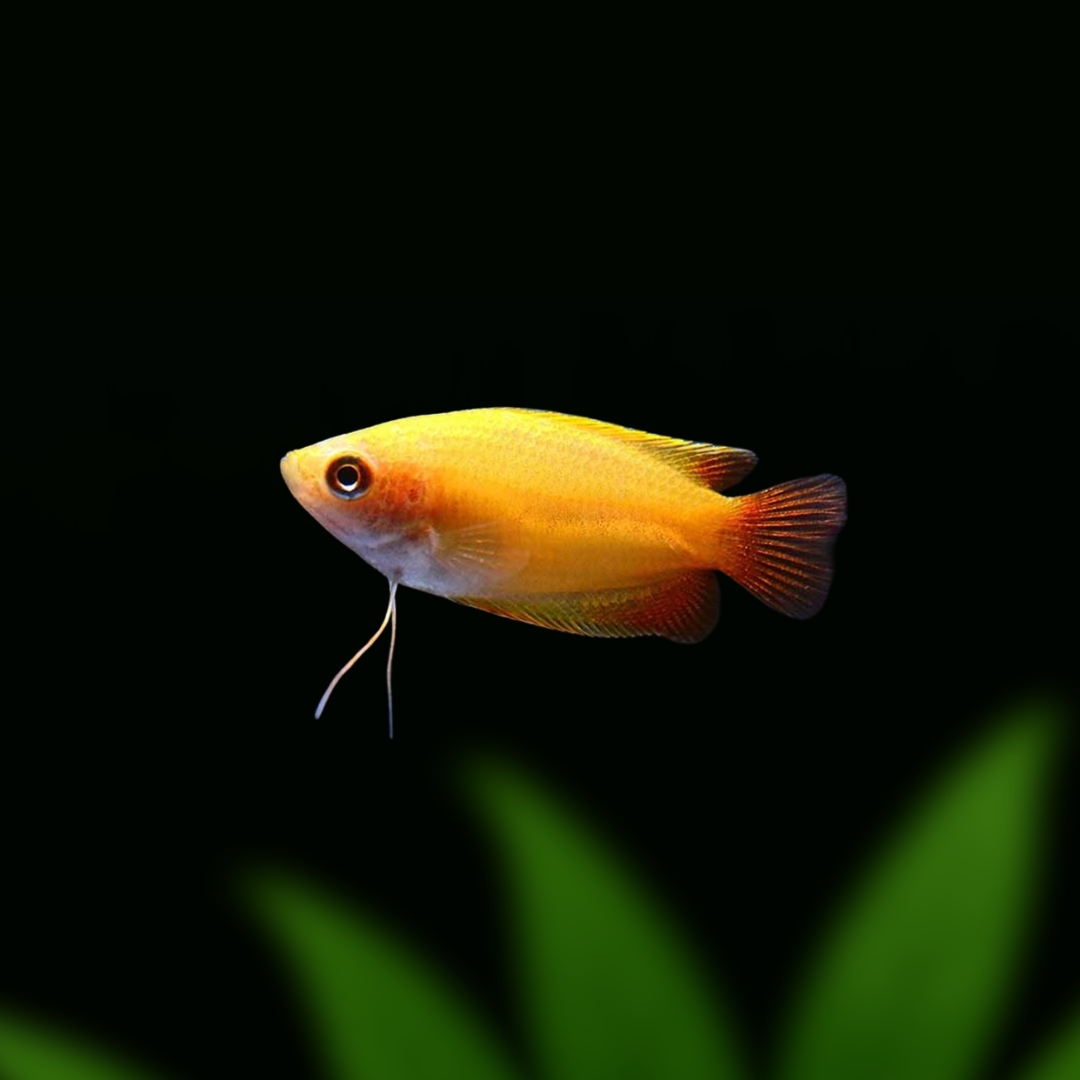
ゴールデンハニードワーフグラミーは、ハニードワーフグラミーをもとに黄色からオレンジ色の発色が強くなるよう作出された、人気の小型淡水魚です。成魚でも5cm前後と扱いやすく、ふわりと水草の間を泳ぐ姿と、腹ビレを触角のように動かすしぐさが魅力です。性格はとても温和で、ネオンテトラやラスボラ、コリドラスなどの穏やかな魚と合わせやすく、初めての水草水槽にも取り入れやすい主役級のアクセントフィッシュです。一方で、止水域に適応した魚なので、強い水流や導入直後の急な水質変化には注意が必要です。The Golden Honey Dwarf Gourami is a selectively bred form of the Honey Gourami, developed for its stronger yellow to orange coloration. It stays small, usually around 5 cm as an adult, and is loved for its gentle hovering movement among aquatic plants and its thread-like pelvic fins, which it uses like sensitive feelers. Its peaceful temperament makes it suitable for community aquariums with small, calm fish such as neon tetras, rasboras, and Corydoras. However, because it is adapted to still or slow-moving waters, strong currents and sudden water-quality changes should be avoided.
キノボリウオ目、オスフロネムス科、トリコガスター属Order Anabantiformes, family Osphronemidae, genus Trichogaster
英名 / English Name
Golden Honey Dwarf Gourami / Golden Honey Gourami
分布 / Distribution
原種のハニードワーフグラミーは、インド北東部からバングラデシュにかけてのガンジス川・ブラマプトラ川水系を中心に分布します。ゴールデンタイプは野生型そのものではなく、観賞魚として固定・流通している黄色系の改良品種です。The wild Honey Gourami is native mainly to the Ganges and Brahmaputra river systems from northeastern India to Bangladesh. The golden form is not the wild type itself, but a yellow ornamental strain selectively bred and distributed in the aquarium trade.
最大体長 / Max Size
約4.5〜5.5cm。大きく育っても6cm前後です。About 4.5–5.5 cm, occasionally around 6 cm.
寿命 / Lifespan
一般的には3〜5年ほど。水流を抑え、清潔で安定した環境を保てれば、より長く楽しめることがあります。Usually around 3–5 years. With gentle flow and stable, clean water, some individuals may live longer.
飼育環境 / Aquarium Environment
水槽サイズ / Tank Size
ペアや少数飼育なら30cmキューブ水槽、水量約25Lから飼育可能です。混泳を楽しむ場合は45cm規格水槽以上、余裕を持つなら60cm規格水槽がおすすめです。A pair or small group can be kept from a 30 cm cube aquarium, about 25 L. For community setups, a standard 45 cm tank or larger is recommended, with a standard 60 cm tank offering more stability.
水温 / Temperature
22〜28℃に対応しますが、日常管理では24〜26℃前後が扱いやすいです。繁殖を狙う場合は27〜28℃程度に少し上げると刺激になります。It tolerates about 22–28°C, but 24–26°C is a practical daily range. For breeding attempts, raising the temperature slightly to around 27–28°C can help stimulate spawning.
水質 / Water Quality
弱酸性〜中性、目安はpH6.0〜7.5。軟水〜中硬水を好みます。急変に弱い面があるため、購入直後は点滴法などでゆっくり水合わせを行うと安心です。Soft to moderately hard water, slightly acidic to neutral, around pH 6.0–7.5. Because it can be sensitive to sudden changes, slow acclimation, such as the drip method, is recommended when introducing new fish.
レイアウト / Layout
水草を多めに植え、流木や浮草で落ち着ける場所を作ると本来の行動が出やすくなります。水面呼吸を行うため、水面を完全にふさがず、ガラスフタなどで水面上に暖かく湿った空気の層を保つと安心です。Dense planting, driftwood, and some floating plants help the fish feel secure and display natural behavior. Because it breathes atmospheric air, do not completely cover the surface with plants. A lid can help keep the air above the water warm and humid.
注意点 / Precautions
最重要ポイントは水流を弱くすることです。強い排水に押され続けると疲労しやすいため、スポンジフィルター、底面フィルター、または排水を散らすパイプを使い、穏やかな水面を保ちましょう。The most important point is to keep the current gentle. Constantly fighting strong filter outflow can exhaust the fish, so sponge filters, undergravel filters, or flow-diffusing outlets are good choices.
餌と給餌 / Feeding
餌の種類 / Diet
人工飼料、細かいフレーク、小粒ペレット、冷凍アカムシ、ブラインシュリンプ、ミジンコなどを食べます。口が小さいため、粒は細かく、浮くかゆっくり沈む餌が向いています。It accepts prepared foods, fine flakes, micro pellets, frozen bloodworms, brine shrimp, and daphnia. Because its mouth is small, fine foods that float or sink slowly are best.
給餌のポイント / Feeding Tips
1日1〜2回、数分で食べきれる量を与えます。食べ残しは水質悪化につながるため控えめにし、痩せる個体がいる場合は他魚に餌を取られていないか観察しましょう。Feed once or twice daily, only as much as the fish can finish within a few minutes. Avoid overfeeding, and check that shy individuals are not being outcompeted by faster tank mates.
性格と混泳 / Temperament and Tank Mates
性格 / Temperament
非常に温和で、やや臆病な性格です。水槽に慣れると人を覚え、餌の時間に水面近くへ寄ってくるような愛らしい行動も見られます。It is very peaceful and somewhat shy. Once settled, it may recognize its keeper and gather near the surface at feeding time.
混泳の相性 / Compatibility
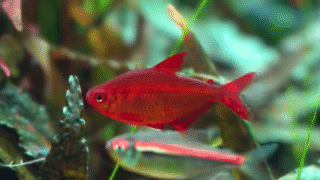
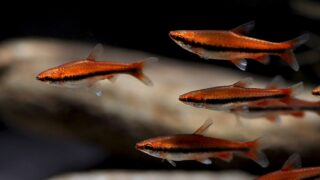
ネオンテトラ、カージナルテトラ、ラスボラ、コリドラス、オトシンクルスなど、同じく温和な小型魚と好相性です。スマトラやサーペテトラのようにヒレをかじりやすい魚、攻撃的なシクリッド、大型魚との混泳は避けましょう。ミナミヌマエビの稚エビは食べられることがあるため、エビ繁殖水槽では注意が必要です。ヤマトヌマエビの成体なら比較的安全です。Good tank mates include peaceful small fish such as neon tetras, cardinal tetras, rasboras, Corydoras, and Otocinclus. Avoid fin-nipping fish such as tiger barbs or serpae tetras, aggressive cichlids, and larger predatory fish. Baby dwarf shrimp may be eaten, so shrimp-breeding tanks require caution. Adult Amano shrimp are generally safer.
病気と対策 / Diseases and Prevention
かかりやすい病気 / Common Diseases
導入直後のストレスや低水温、急な水質変化により、白点病、コショウ病、ヒレの傷からの細菌感染などが起こることがあります。ドワーフグラミーで問題視されるDGIVについては、本種で同じように高リスクとする確かな根拠は見つかりにくい一方、観賞魚のウイルス病は流通経路や混泳魚の状態にも左右されます。そのため、記事では「完全に感染しない」と断定せず、購入直後の観察と隔離を重視する表現にしています。Stress after introduction, low temperature, or sudden water changes may lead to ich, velvet disease, or bacterial infection from fin injuries. For DGIV, a major concern in Dwarf Gouramis, clear evidence that Honey Gouramis carry the same high level of risk is difficult to find; however, viral disease risk in ornamental fish can vary with supply chains and tankmates. For that reason, this guide avoids saying that the fish can never be infected and instead emphasizes observation and quarantine after purchase.
対策と予防 / Prevention
購入後は水温合わせと点滴法で丁寧に導入し、強い水流を避け、24〜26℃を安定させます。週1回を目安に少量換水を行い、底床に残餌をためないことも大切です。新規導入魚は可能であれば隔離観察を行い、異常がある個体を本水槽へ入れないようにしましょう。Acclimate new fish carefully by matching temperature and using slow drip acclimation. Keep the current gentle and the temperature stable around 24–26°C. Small weekly water changes and removing leftover food help prevent problems. Quarantine new fish when possible before adding them to the main aquarium.
増やし方(繁殖) / Breeding
雌雄の判別 / Sexing
オスは成熟すると体色が濃い黄金色からオレンジ色になり、背ビレや尻ビレの先端がやや尖ります。繁殖期には喉元から腹部が黒っぽく染まる婚姻色が出ます。メスは体色が淡く、腹部が丸みを帯び、ヒレ先も丸い傾向があります。Mature males tend to show stronger golden to orange coloration and slightly pointed dorsal and anal fins. During breeding, the throat and belly may darken. Females are usually paler, rounder in the abdomen, and have more rounded fin tips.
繁殖形態 / Reproduction
オスが水面に泡巣を作るバブルネストビルダーです。交尾抱擁のあと、オスが受精卵を泡巣へ運び、孵化まで保護します。It is a bubble-nest builder. After the spawning embrace, the male collects the fertilized eggs and places them in the bubble nest, guarding them until hatching.
繁殖のポイント / Breeding Tips
繁殖水槽は水位を15〜20cmほどに下げ、浮草を入れて泡巣の土台を作ると成功しやすくなります。産卵後はメスを隔離し、稚魚が自由遊泳を始めたらオスも戻します。稚魚は非常に小さいため、最初はインフゾリアやPSBなど微細な初期飼料が必要で、成長後にブラインシュリンプ幼生へ移行します。For breeding, lower the water level to about 15–20 cm and provide floating plants to anchor the nest. Remove the female after spawning, and remove the male once the fry become free-swimming. The fry are extremely small and require microscopic first foods such as infusoria or liquid microbial foods before they can take newly hatched brine shrimp.
雑学と豆知識 / Trivia and Fun Facts
1. 学名に隠された「糸のお腹」 / 1. The “thread-belly” hidden in the scientific name
属名のTrichogasterは、古代ギリシャ語で「髪」や「糸」を意味する言葉と、「腹部」を意味する言葉に由来するとされています。これは、グラミーの仲間が持つ糸状の腹ビレをよく表した名前です。水槽内でこの腹ビレを前へ伸ばし、流木や水草、仲間の体をそっと探る姿は、単なる飾りではなく、環境を知るための大切な感覚器官であることを教えてくれます。The genus name Trichogaster is understood to come from ancient Greek roots meaning “hair” or “thread” and “belly.” This neatly describes the thread-like pelvic fins of gouramis. When the fish gently touches plants, driftwood, or tank mates with these fins, it is not merely decorative behavior; the fins function as important sensory organs.
2. 空気も呼吸できるラビリンスフィッシュ / 2. A labyrinth fish that can breathe air
ゴールデンハニードワーフグラミーは、エラだけでなくラビリンス器官を使って空気中の酸素も取り込めます。この仕組みは、酸素が少なくなりやすい南アジアの止水域で生きるための適応です。水槽でも時々水面へ上がって空気を吸うため、水面を完全にふさがないこと、冬場やエアコンの風で水面上の空気を冷やしすぎないことが大切です。The Golden Honey Dwarf Gourami can absorb oxygen from the air using its labyrinth organ as well as its gills. This is an adaptation for slow, oxygen-poor waters in South Asia. In the aquarium, it will regularly rise to the surface to breathe, so the surface should not be completely blocked, and the air above the water should not become too cold or dry.
3. 水草水槽の「黄色い主役」 / 3. The golden centerpiece of planted aquariums
緑の水草の中で、淡い黄金色の体はとてもよく映えます。ネオンテトラやカージナルテトラの青赤の群泳とは違う、やわらかな暖色のアクセントを加えられるため、日本の小型水草水槽でも人気があります。小さく、温和で、派手すぎない存在感を持つところが、この魚の大きな魅力です。Its soft golden body stands out beautifully against green aquatic plants. Unlike the blue and red flash of neon or cardinal tetras, it adds a warm, gentle focal point to planted aquariums. Its small size, peaceful nature, and modest but clear presence make it especially appealing.
4. ヒドラ対策として語られることもある魚 / 4. Sometimes discussed as a natural control for hydra
水槽内に発生するヒドラをつついて食べることがあるため、薬品を使いにくい水槽で話題になることがあります。ただし、人工飼料を十分にもらっている個体が必ずヒドラを積極的に食べるとは限りません。あくまで環境管理の一部として期待する程度にとどめ、発生原因となる過剰給餌や水質悪化を改善することが本筋です。It is sometimes mentioned as a fish that may peck at and eat hydra in aquariums where chemical treatment is undesirable. However, well-fed individuals do not always actively consume hydra. It should be viewed as a possible part of environmental control, while the main approach should be reducing overfeeding and improving water quality.
5. ドワーフグラミーとの違い / 5. How it differs from the Dwarf Gourami
名前が似ているため混同されがちですが、ドワーフグラミーはTrichogaster lalius、ゴールデンハニードワーフグラミーはTrichogaster chuna系統の黄色系改良品種です。ドワーフグラミーではDGIVが問題として扱われることがありますが、ハニーグラミー類については同じリスクをそのまま当てはめるよりも、別種として慎重に区別して考えるのが安全です。見た目の華やかさだけでなく、穏やかで扱いやすい小型グラミーとして選ばれている点も覚えておきたいところです。Despite the similar names, the Dwarf Gourami is Trichogaster lalius, while the Golden Honey Dwarf Gourami is a yellow strain of the Trichogaster chuna lineage. DGIV is often discussed as a concern in Dwarf Gouramis, but it is safer to treat Honey Gouramis as a different species rather than assuming the same risk profile. This fish is valued not only for its appearance but also as a gentle, manageable small gourami.
まとめ / Conclusion
ゴールデンハニードワーフグラミーは、小型で温和、そして水草水槽に映える美しい体色を持つ、とても魅力的な熱帯魚です。強い水流を避け、安定した水温と清潔な水を保てば、初心者にも十分楽しめる種類です。The Golden Honey Dwarf Gourami is a charming tropical fish: small, peaceful, and beautifully colored for planted aquariums. By avoiding strong currents and maintaining stable temperature and clean water, even beginners can enjoy keeping it successfully.
導入時の丁寧な水合わせ、穏やかな混泳相手の選定、浮草や水草を活かした安心できるレイアウトが長期飼育の鍵になります。水槽の前に立つと寄ってくるような人懐っこい一面もあり、日々の観察が楽しくなる一匹です。Careful acclimation, peaceful tank mates, and a secure layout with plants and floating cover are the keys to long-term success. Its tendency to approach the keeper at feeding time adds a pet-like charm that makes daily observation especially enjoyable.
Tate, M., McGoran, R. E., White, C. R. & Portugal, S. J. “Life in a bubble: the role of the labyrinth organ in determining territory, mating and aggressive behaviours in anabantoids.” Journal of Fish Biology. キノボリウオ亜目に共通するラビリンス器官と、泡巣・縄張り・繁殖行動の関係を補足する学術資料として参照。 https://pubmed.ncbi.nlm.nih.gov/28868750/
Go, J., Whittington, R. & colleagues. “Mass mortality in fresh water ornamental fish, dwarf gourami Colisa lalia, associated with iridovirus infection.” Journal of Fish Diseases. ドワーフグラミー・イリドウイルスに関する注意喚起を、ハニーグラミー類へ過度に断定しない形で整理するために参照。 https://doi.org/10.1046/j.1365-2761.2003.00487.x
Rimmer, A. E. et al. “Detection of dwarf gourami iridovirus infectious spleen and kidney necrosis virus in ornamental fish.” Diseases of Aquatic Organisms. 観賞魚流通におけるメガロサイトウイルス検出事例の確認に参照。ゴールデンハニードワーフグラミーの安全性を断定するためではなく、新規導入魚の隔離観察を推奨する補助根拠として使用。 https://doi.org/10.3354/dao02463
コメント