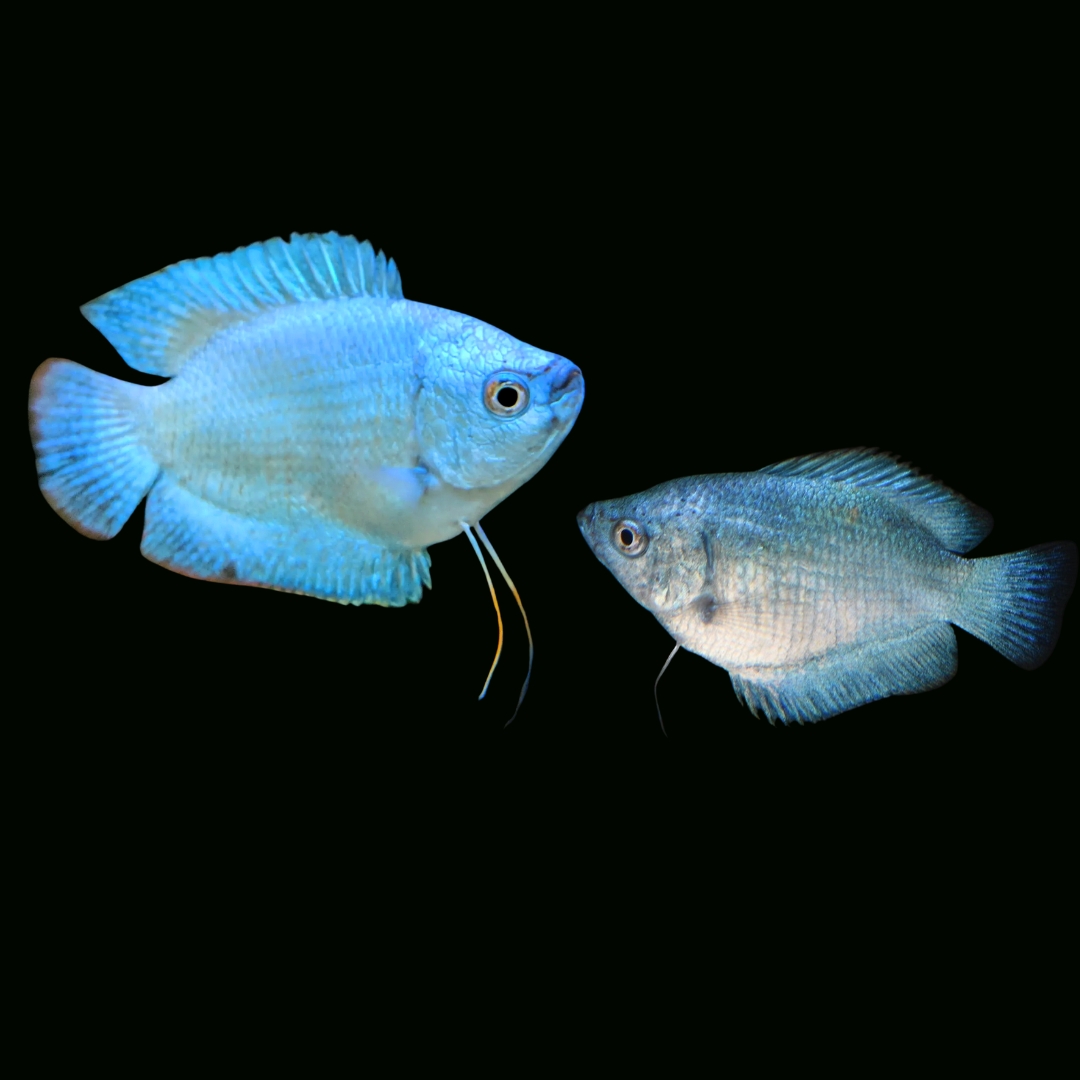
コバルトドワーフグラミーは、ドワーフグラミーから作出された青色系の改良品種として流通する小型の淡水魚です。水草の間をゆっくり泳ぎ、糸状に伸びた腹ビレで周囲を探るようなしぐさを見せるため、落ち着いた水草水槽の主役として人気があります。原種は南アジアの植物が多い流れの緩やかな水域にすむ魚で、空気呼吸を補助するラビリンス器官を持つことでも知られます。飼育自体は難しすぎる魚ではありませんが、近年はドワーフグラミー・イリドウイルス病として知られるメガロサイティウイルス関連の問題が報告されているため、購入時の状態確認と導入後の隔離観察を重視したい魚です。The Cobalt Dwarf Gourami is a blue ornamental strain derived from the dwarf gourami. It moves gracefully among aquatic plants and uses its thread-like pelvic fins to explore its surroundings, making it a popular centerpiece for calm planted aquariums. The wild form inhabits slow-moving, heavily vegetated waters in South Asia and is known for its labyrinth organ, which helps it breathe atmospheric air. It is not an excessively difficult fish to keep, but reports of megalocytivirus-related disease known as Dwarf Gourami Iridovirus make careful selection at purchase and quarantine after introduction especially important.
コバルトドワーフグラミー、コバルトブルー・ドワーフグラミー、ドワーフグラミー青色改良品種Cobalt Dwarf Gourami, Cobalt Blue Dwarf Gourami, blue ornamental strain of the dwarf gourami
分類 / Family
キノボリウオ目、オスフロネムス科、トリコガスター亜科。古い資料ではスズキ目やColisa属として扱われる場合があります。Order Anabantiformes, family Osphronemidae, subfamily Trichogastrinae. Older aquarium literature may place it in Perciformes or the genus Colisa.
英名 / English Name
Powder Blue Dwarf Gourami, Neon Blue Dwarf Gourami, Cobalt Dwarf Gourami
分布 / Distribution
原種のドワーフグラミーはパキスタン、インド、バングラデシュなど南アジアに分布し、植物の多い流れの緩やかな小川、湖沼、水田周辺などに生息します。コバルトタイプは自然分布する野生型ではなく、観賞魚として選択交配された改良品種です。The wild dwarf gourami occurs in South Asia, including Pakistan, India, and Bangladesh, where it inhabits slow-moving streams, lakes, and vegetated waters around wetlands and rice-field habitats. The cobalt form is not a naturally distributed wild form, but a selectively bred ornamental strain.
最大体長 / Max Size
流通個体は5〜6cm前後で落ち着くことが多く、記録上は全長9cm前後に達する場合があります。Most aquarium specimens remain around 5–6 cm, although records indicate that the species can reach roughly 9 cm in total length.
寿命 / Lifespan
おおむね2〜4年程度です。導入時の健康状態、感染症の有無、水質の安定度、過密や混泳ストレスの少なさによって大きく変わります。Generally about 2–4 years, depending greatly on initial health, disease status, water stability, and the level of crowding or social stress.
飼育環境 / Aquarium Environment
水槽サイズ / Tank Size
長期飼育では60cm規格水槽、または同等以上の容量を基本にすると安定します。単独飼育や短期的な管理では45cm水槽でも扱われることがありますが、混泳やペア飼育では水量に余裕を持たせます。オスを複数入れる場合は90cm規格水槽以上を目安にし、水草や流木で視線を遮ります。For long-term keeping, a standard 60 cm aquarium or an equivalent volume is a stable baseline. A 45 cm aquarium may be used for a single fish or temporary management, but community or pair setups should have more water volume. If keeping more than one male, use a standard 90 cm aquarium or larger and break sight lines with plants and driftwood.
水温 / Temperature
25〜28℃前後が基本です。一般的な飼育では25〜26℃前後が扱いやすく、繁殖を狙う場合は28℃前後に調整することがあります。急な温度変化は避けます。A range around 25–28°C is appropriate. For everyday keeping, about 25–26°C is easy to manage, while breeding setups are often adjusted to around 28°C. Avoid sudden temperature changes.
水質 / Water Quality
pH6.0〜8.0前後、軟水〜中硬水で飼育できますが、弱酸性〜中性の安定した水が扱いやすいです。アンモニアや亜硝酸が検出される環境は避け、立ち上がった水槽に導入して、少量換水を継続します。It can be kept around pH 6.0–8.0 in soft to moderately hard water, but stable slightly acidic to neutral water is easiest to manage. Avoid detectable ammonia or nitrite, introduce the fish to a mature aquarium, and maintain regular partial water changes.
レイアウト / Layout
水流は弱めにし、水草、流木、浮き草を組み合わせた落ち着いたレイアウトが向いています。バリスネリア、クリプトコリネ、ミクロソリウム、マツモ、アマゾンフロッグピットなどを使うと、隠れ家と泡巣の足場を作りやすくなります。ただし、水面を完全に覆うと空気呼吸を妨げるため、必ず開いた水面を残します。Gentle flow and a calm layout with plants, driftwood, and some floating cover are ideal. Vallisneria, Cryptocoryne, Microsorum, hornwort, and Amazon frogbit can provide cover and support for bubble nesting. Do not cover the entire surface, because the fish must be able to reach air.
注意点 / Precautions
ラビリンス器官で空気呼吸を行うため、水面へのアクセスを確保してください。冬場やエアコン使用時は、水面上の冷たい乾燥空気が負担になることがあるため、ガラス蓋などで保温・保湿すると安心です。導入直後はDGIVを含む病気の可能性を考え、できれば4週間ほど別水槽で隔離観察します。Ensure constant access to the surface because this fish breathes atmospheric air with its labyrinth organ. In winter or air-conditioned rooms, a glass lid helps keep the air above the water warm and humid. Because diseases including DGIV may not be obvious at purchase, quarantine new arrivals in a separate tank for about four weeks whenever possible.
餌と給餌 / Feeding
餌の種類 / Diet
雑食性です。小型熱帯魚用のフレーク、細かい顆粒フードを主食にし、冷凍アカムシ、ブラインシュリンプ、イサザアミ、細かい昆虫系原料を含むフードなどを補助的に与えます。赤みが残る個体では、アスタキサンチンなどを含む色揚げフードがヒレの色調維持に役立つ場合があります。It is omnivorous. Use fine flakes or small granules for tropical fish as the staple diet, and supplement with frozen bloodworms, brine shrimp, mysid shrimp, or foods containing finely processed insect-based ingredients. In individuals with reddish fin tones, color-enhancing foods containing astaxanthin may help maintain those pigments.
給餌のポイント / Feeding Tips
口が小さいため、大粒の餌は細かくしてから与えます。1日1〜2回、2〜3分で食べ切れる量を目安にし、食べ残しを出さないことが大切です。水質悪化は体色低下や病気の引き金になりやすいため、よく食べるからといって与えすぎないようにします。Because the mouth is small, crush large foods before feeding. Offer food once or twice daily in amounts that are eaten within 2–3 minutes, and avoid leftovers. Poor water quality can contribute to fading and disease, so do not overfeed even when the fish appears eager.
性格と混泳 / Temperament and Tank Mates
性格 / Temperament
基本的には温和で、強い水流や騒がしい混泳相手を好みません。一方で、成熟したオスは縄張り意識を示すことがあり、泡巣を作る時期には同種や似た体形の魚を追うことがあります。It is generally peaceful and dislikes strong currents or overly boisterous tank mates. Mature males can become territorial, especially during bubble-nesting periods, and may chase conspecifics or similarly shaped fish.
混泳の相性 / Compatibility
ネオンテトラなどの小型カラシン、ラスボラ、コリドラス、オトシンクルス、クーリーローチなど、温和でサイズの近い魚と相性が良いです。スマトラのようにヒレをかじる魚、活発すぎる魚、大型魚や攻撃的なシクリッドとの混泳は避けます。小型エビの稚エビは食べられることがありますが、成長したヤマトヌマエビなどは隠れ家が多い水槽では同居できる場合があります。Good tank mates include peaceful, similarly sized fish such as small characins, rasboras, Corydoras, Otocinclus, and kuhli loaches. Avoid fin-nippers such as tiger barbs, overly active species, large fish, and aggressive cichlids. Tiny shrimp or shrimplets may be eaten, although larger Amano shrimp may coexist in well-planted tanks with sufficient cover.
病気と対策 / Diseases and Prevention
かかりやすい病気 / Common Diseases
白点病、尾ぐされ、細菌性の体表炎、消化不良に加え、ドワーフグラミーではDGIVとして知られるメガロサイティウイルス関連の感染症が重要な懸念点です。DGIVでは食欲不振、活動低下、体色の黒化または褪色、腹部膨張、出血斑、潰瘍などが見られることがあります。ただし、これらの症状だけでDGIVと断定することはできず、似た症状を示す細菌感染や水質悪化もあります。Possible problems include ich, fin rot, bacterial skin infections, digestive issues, and megalocytivirus-related disease known as DGIV, which is a major concern in dwarf gouramis. Signs may include appetite loss, lethargy, darkening or fading, abdominal swelling, hemorrhagic spots, and ulcers. However, these signs alone do not prove DGIV, because bacterial infections and poor water conditions can produce similar symptoms.
対策と予防 / Prevention
購入時は、痩せ、腹部膨張、ただれ、呼吸の荒さ、泳ぎの異常がない個体を選びます。導入後はメイン水槽にすぐ入れず、別水槽で隔離観察します。水温と水質を安定させ、過密を避け、隠れ家を多く用意することが予防の基本です。DGIVを治す一般的な観賞魚用薬は確立されていないため、疑わしい個体は早めに隔離し、二次感染が疑われる場合のみ症状に応じた対処を行います。At purchase, choose specimens without emaciation, abdominal swelling, sores, labored breathing, or abnormal swimming. After purchase, quarantine them instead of adding them directly to the main aquarium. Stable temperature and water quality, low crowding, and ample cover are the foundation of prevention. No standard aquarium medication reliably cures DGIV itself, so suspicious fish should be isolated promptly, and secondary infections should be treated only as appropriate for the observed symptoms.
増やし方(繁殖) / Breeding
雌雄の判別 / Sexing
オスは体色が鮮やかで、背ビレや尻ビレの先端が伸びて尖ります。メスは銀灰色から淡い青色で、体つきが丸みを帯び、背ビレや尻ビレの先端も丸い傾向があります。改良品種の流通ではオスの比率が高く、メスの入手が難しいことがあります。Males are usually more colorful and have extended, pointed dorsal and anal fins. Females are more silvery-gray to pale blue, rounder in body shape, and tend to have rounded fin tips. In the ornamental trade, males are often more common, and females may be harder to obtain.
繁殖形態 / Reproduction
泡巣を作るバブルネストビルダーです。オスが水面に粘液で補強した泡を集め、浮き草や水草の切れ端の近くに巣を作ります。産卵ではオスがメスを抱き込むようにして放卵・放精し、浮上した卵を泡巣へ集めて保護します。It is a bubble-nest builder. The male gathers mucus-coated bubbles at the surface and builds a nest near floating plants or plant fragments. During spawning, the male embraces the female, eggs and sperm are released, and the floating eggs are gathered into the nest and guarded.
繁殖のポイント / Breeding Tips
繁殖水槽は水位を10〜15cm程度に下げ、水温を28℃前後、水流を極弱めにします。泡巣の土台にはマツモ、サンショウモ、アマゾンフロッグピットなど、国内で適法に扱える水草を使います。海外資料で見かけるボタンウキクサは、日本では特定外来生物に指定され、飼育・栽培・保管・運搬・販売・輸入などが原則禁止されているため使用してはいけません。産卵後はメスを隔離し、稚魚が泳ぎ出したらオスも取り出します。初期飼料はインフゾリアを中心にし、成長後にブラインシュリンプへ移行します。稚魚のラビリンス器官が形成される時期は、水面上の空気を暖かく湿った状態に保ちます。For breeding, lower the water level to about 10–15 cm, keep the temperature around 28°C, and reduce water movement to a minimum. Use legally manageable plants in Japan such as hornwort, Salvinia, or Amazon frogbit as nest support. Water lettuce, sometimes recommended in overseas sources, is designated as an invasive alien species in Japan, and keeping, cultivating, storing, transporting, selling, and importing it are generally prohibited, so it must not be used. Remove the female after spawning, and remove the male once the fry become free-swimming. Start fry on infusoria, then transition to newly hatched brine shrimp as they grow. During labyrinth organ development, keep the air above the water warm and humid.
雑学と豆知識 / Trivia and Fun Facts
1. 名前に残る分類学の物語 / 1. A Taxonomic Story Hidden in the Name
ドワーフグラミーは、観賞魚の世界でColisa laliaという名前に親しんだ人も多い魚です。現在はTrichogaster laliusとして扱われることが多い一方、近年の研究ではTrichogaster fasciataとの関係を見直す注記も見られます。流通名は長く使われ続けても、学名は研究の進展によって変わることがあります。小さな魚の名前ひとつにも、古い記載、標本、属の再編、研究者の解釈が積み重なっているのです。Many aquarists first knew the dwarf gourami under the name Colisa lalia. Today it is often treated as Trichogaster lalius, while recent taxonomic notes have revisited its relationship with Trichogaster fasciata. Familiar trade names can persist even as scientific names change with further research. Even one small fish name carries a history of old descriptions, specimens, genus revisions, and scientific interpretation.
2. コバルトブルーは「塗られた青」ではない / 2. The Cobalt Blue Is Not Simply “Painted On”
コバルトドワーフグラミーの青は、単純な青い色素だけでできているわけではありません。体表の虹色素胞にあるグアニン結晶が光を反射・干渉させることで、金属的な青として見えます。そのため、水が白濁していたり、照明が合っていなかったり、魚がストレスで体色を落としていたりすると、本来の輝きは鈍ります。美しい青を保つことは、色揚げだけの問題ではなく、澄んだ水、落ち着いた環境、安定した健康状態を整えることでもあります。The cobalt blue is not produced simply by blue pigment. It is largely a structural color created when guanine crystals in iridophores reflect and interfere with light. Cloudy water, unsuitable lighting, or stress-related fading can therefore dull the fish’s brilliance. Maintaining the blue is not just about color-enhancing food; it also depends on clear water, a calm environment, and stable health.
3. 水面の空気を吸うラビリンスフィッシュ / 3. A Labyrinth Fish That Breathes Air
本種はエラの上部にラビリンス器官と呼ばれる呼吸補助器官を持ち、水面から直接空気を吸うことができます。これは、植物が多く酸素が少なくなりやすい水域で生きるための適応です。ただし、空気呼吸ができることは、水質悪化に強いという意味ではありません。水槽では、清浄な水、穏やかな水面、水面上の温かく湿った空気を整えることで、この魚の特徴を無理なく支えられます。This species has a labyrinth organ above the gills and can take atmospheric air directly from the surface. This is an adaptation to waters rich in plants and sometimes low in dissolved oxygen. However, the ability to breathe air does not mean it tolerates poor water quality. In captivity, clean water, a calm surface, and warm, humid air above the water help support this physiology safely.
4. 小さな体に宿る「水鉄砲」の才能 / 4. A Tiny Fish with a Water-Shooting Talent
水面上の昆虫を水で撃ち落とす行動といえばテッポウウオが有名ですが、ドワーフグラミーにも水を吐き出して近い位置の獲物を落とす能力があることが研究で示されています。射程は長くないとされますが、草が低く垂れ下がる湿地環境では、短い距離でも十分に役立つ採餌行動になりえます。泡巣作りの副産物ではなく、オスもメスも行える行動として報告されている点も、この魚の生態をより魅力的にしています。Archerfish are famous for shooting down insects with water, but studies have shown that dwarf gouramis can also spit water to dislodge nearby prey. Their range is considered short, yet in wetland habitats where grasses hang low, even a short shot may be useful. Reports that both males and females can perform the behavior, rather than it being merely a by-product of nest building, make this fish’s ecology even more fascinating.
5. 美しさの裏側にある品種改良の課題 / 5. The Challenge Behind Selective Beauty
コバルトドワーフグラミーの均一な青は、観賞魚の品種改良が生み出した魅力です。一方で、特定の色彩を固定する過程では血統が狭くなりやすく、病気への弱さにつながった可能性が語られてきました。DGIVの問題は、観賞魚の美しさと健康をどう両立するかを私たちに問いかけます。購入する側も、色だけで選ぶのではなく、呼吸、泳ぎ、体つき、食欲を見て、導入後に隔離するという一手間を大切にしたいところです。The uniform blue of the cobalt dwarf gourami is one of the achievements of ornamental fish breeding. At the same time, fixing a specific color can narrow breeding lines, and reduced genetic diversity has often been discussed as a possible contributor to disease susceptibility. DGIV reminds us that beauty and biological health must be considered together. Keepers should choose not only by color, but also by breathing, swimming, body condition, appetite, and should value the extra step of quarantine.
まとめ / Conclusion
コバルトドワーフグラミーは、小型水草水槽の主役になれる美しさと、ラビリンスフィッシュならではの興味深い行動を併せ持つ魅力的な熱帯魚です。60cm規格水槽を基本に、弱い水流、水草の茂み、安定した弱酸性〜中性寄りの水質を整えると、落ち着いた姿と青い輝きを楽しみやすくなります。The Cobalt Dwarf Gourami is an attractive tropical fish that combines centerpiece beauty with the fascinating behavior of a labyrinth fish. A standard 60 cm aquarium, gentle flow, dense plant cover, and stable slightly acidic to neutral water make it easier to enjoy its calm behavior and blue brilliance.
一方で、改良品種としての背景から、健康状態の見極めと病気への配慮は欠かせません。購入時によく観察し、導入時は隔離し、過密を避け、清潔で透明度の高い水を保つことで、この魚の美しさだけでなく、生き物としての自然なふるまいも長く観察できるでしょう。At the same time, because this is a selectively bred form, careful attention to health and disease prevention is essential. Observe fish carefully before purchase, quarantine them at introduction, avoid crowding, and maintain clean, clear water so that you can enjoy not only their beauty but also their natural behavior for a long time.



 アイのアクアグッズ案内海水魚初心者の必需品|水槽・人工海水・比重計・水質検査道具の特徴や使い方、選ぶときのポイントをアイが紹介します。記事はコチラ →
 アイのアクアグッズ案内水草トリミングの道具とやり方|ハサミ・ピンセットを水草に合わせて選ぼう伸びすぎた水草は切っていい? 有茎草の差し戻し、前景草の絨毯、流木のモスを整える場面から、水草用ハサミ・ピンセット・ゴミ取りネットの選び方と片付けを紹介します。記事はコチラ →



コメント