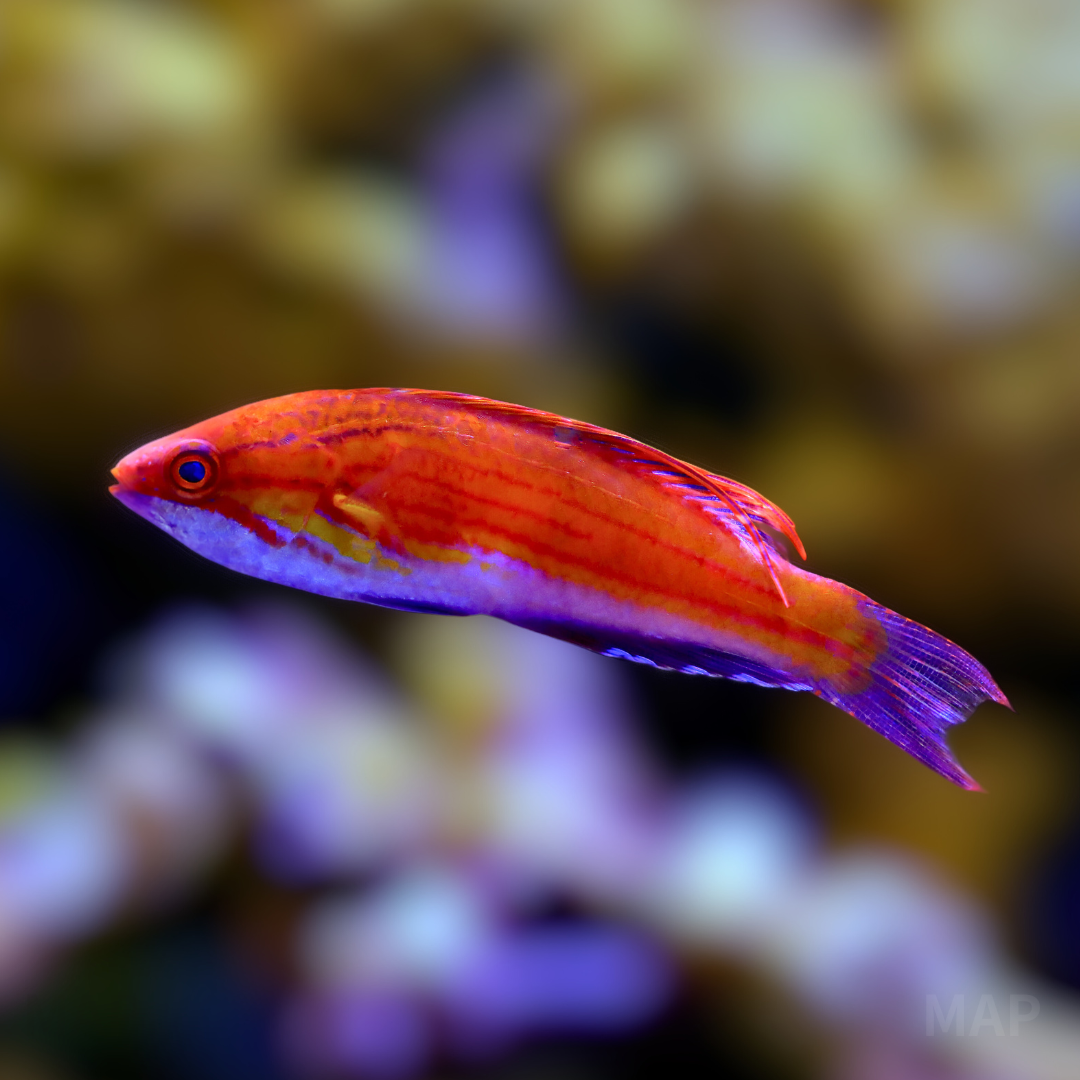
カーペンターズラスは、インド太平洋のサンゴ礁に息づく、小型ながらも圧倒的な存在感を放つベラの仲間です。和名のクジャクベラという名の通り、成熟したオスがヒレを全開にして体色をネオンのように輝かせるフラッシングは、まさに孔雀の求愛を彷彿とさせる美しさです。サンゴに害を及ぼさないお掃除役(リーフセーフ)な性格と、環境への適応力の高さから、日本国内のマリンアクアリウム界でも非常に高い人気を誇ります。水槽内を活発に泳ぎ回るその姿は、リーフタンクに動的な色彩と生命感を吹き込んでくれるでしょう。Carpenter’s Flasher Wrasse is a small but strikingly vibrant fish inhabiting the coral reefs of the Indo-Pacific. True to its Japanese name Kujaku-bera (Peacock Wrasse), the terminal male’s flashing display—where it fully extends its fins and radiates neon-like colors—is as magnificent as a peacock’s courtship. Known for being reef-safe and relatively hardy, it is highly popular among marine aquarists in Japan. Its active swimming adds dynamic color and vitality to any reef tank.
基本情報 / Basic Information
学名 / Scientific Name
Paracheilinus carpenteri
通称 / Common Name
クジャクベラCarpenter’s Flasher Wrasse
分類 / Family
スズキ目ベラ科クジャクベラ亜科クジャクベラ属Order Perciformes, Family Labridae, Subfamily Cirrhilabrinae, Genus Paracheilinus
英名 / English Name
Carpenter’s Flasher Wrasse
分布 / Distribution
西太平洋:日本南部(伊豆諸島、琉球列島など)、フィリピン、インドネシア、台湾Western Pacific: Southern Japan (Izu Islands, Ryukyu Islands), Philippines, Indonesia, and Taiwan.
最大体長 / Max Size
約 8cmApproximately 8cm (3 inches)
寿命 / Lifespan
約 3 〜 5 年(飼育環境による)Approximately 3 to 5 years (depending on the environment).
飼育環境 / Aquarium Environment
水槽サイズ / Tank Size
114L 以上(60cm ワイド水槽以上を推奨)。ハーレムでの飼育なら 190L 程度(90cm 規格水槽)が理想的です。Over 114L (30 gallons), with a 60cm wide tank recommended. For a harem, a 190L (90cm standard) tank is ideal.
水温 / Temperature
22 〜 26 ℃(日本のリーフタンクでは 24 ℃前後が安定します)22 to 26 °C (72 – 78 °F). Around 24 °C is standard in Japan.
活発に泳ぐための広い遊泳スペースと、夜間に休息するための複雑なライブロックの隠れ家を組み合わせてください。Combine ample open swimming space with intricate live rock caves for nighttime rest.
注意点 / Precautions
飛び出し事故が非常に多い魚です。わずかな隙間からも跳ねるため、水槽の蓋やネットで完全に密閉することが必須条件です。Jumping is the leading cause of death. A tightly fitted lid or mesh screen is mandatory to prevent escapes.
餌と給餌 / Feeding
餌の種類 / Diet
動物プランクトン食性。冷凍のイサザアミ(マイシスシュリンプ)、ブラインシュリンプ、高品質な海産魚用人工飼料。Zooplanktivore. Frozen mysis shrimp, brine shrimp, and high-quality marine pellets or flakes.
給餌のポイント / Feeding Tips
代謝が激しく、消化管が短いため、1日 3 〜 4 回に分けて少量ずつ与えるのが健康的です。餌付けは比較的容易です。Due to high metabolism and short digestive tracts, feeding small amounts 3-4 times daily is recommended. They are generally easy to train on prepared foods.
性格と混泳 / Temperament and Tank Mates
性格 / Temperament
非常に温和で臆病な面があります。環境に慣れるまでは岩陰に隠れがちです。Very peaceful and can be timid. They often hide in rocks until they feel secure in the environment.
混泳の相性 / Compatibility
攻撃的な魚との混泳は避けてください。新しく導入する際は、隔離ケース(アクリメーションボックス)を使用して安全にヒエラルキーを確立させることが定石です。Avoid aggressive tank mates. Using an acclimation box when introducing new fish is standard practice to safely establish social hierarchy.
病気と対策 / Diseases and Prevention
かかりやすい病気 / Common Diseases
白点病、ハダムシなどの外部寄生虫。輸送ストレス後の導入初期に注意が必要です。Cryptocaryon irritans (marine ich) and external parasites like flukes, especially during the initial introduction.
対策と予防 / Prevention
導入前の約 6 週間の検疫が推奨されます。落ち着ける環境で体力を回復させ、必要に応じて薬浴を行ってください。A 6-week quarantine is highly recommended. Allow them to recover in a quiet environment and perform medicated baths if necessary.
増やし方(繁殖) / Breeding
雌雄の判別 / Sexing
オスは鮮やかな色彩と背ビレの伸長したフィラメントを持ち、メスは淡い赤色で地味な外見をしています。Males have vibrant colors and elongated dorsal filaments, while females are more subtly colored in pale red.
繁殖形態 / Reproduction
雌性先熟の性転換を行います。群れの中で最も大きなメスがオスへと変化します。卵は水中に放出される放卵放精型です。Protogynous hermaphrodites. The dominant female in a group changes into a male. They are broadcast spawners.
繁殖のポイント / Breeding Tips
家庭用アクアリウムでの完全な繁殖例は稀ですが、適切なハーレムを構築することで夕暮れ時に求愛行動を観察できる可能性があります。Complete captive breeding is rare in home aquaria, but establishing a proper harem may allow you to observe courtship rituals at dusk.
雑学と豆知識 / Trivia and Fun Facts
1. 名前に刻まれた大工の歴史1. History Carved in the Name
種小名の carpenteri は魚類学者ケント・E・カーペンター博士への献名ですが、その Carpenter(大工)という言葉自体、古代の馬車職人を指すラテン語に由来しています。深海に近いサンゴ礁を泳ぐ魚の名前に、古代の車や職人の歴史が息づいているのは、科学と歴史の不思議な交差点と言えるでしょう。The species name carpenteri honors Dr. Kent E. Carpenter. Interestingly, the word Carpenter itself stems from Latin terms for chariot builders. It’s a fascinating intersection of science and history to find traces of ancient craftsmanship in the name of a reef fish.
2. 輝きの秘密:ブラッグ反射2. Secret of the Glow: Bragg Reflection
オスが見せる瞬間的な体色変化(フラッシング)は、皮膚にある虹色素胞によるものです。細胞内のグアニン結晶の間隔をナノメートル単位で変化させることで、特定の波長の光を強調して反射させるブラッグ反射を利用しています。これは最新の光学技術でも注目される、生物が生み出したナノテクノロジーなのです。The flashing display is caused by iridophores in the skin. By adjusting the nanometer-scale spacing of guanine crystals, they utilize Bragg reflection to highlight specific light wavelengths. This biological nanotechnology is even studied for modern optical device applications.
3. 砂に潜らないベラの安眠術3. Sleeping Secrets of a Non-Burrower
多くのベラが夜間に砂に潜るのに対し、本種は砂に潜りません。代わりに、岩の隙間で自ら分泌した粘液の繭に包まれて眠ります。この繭は、夜行性の捕食者から自分の匂いを隠すための防臭テントのような役割を果たしており、過酷な自然界を生き抜くための知恵なのです。Unlike many wrasses that bury themselves in sand, this species sleeps in rock crevices encased in a mucus cocoon. This cocoon acts like a scent-masking tent, hiding them from nocturnal predators through the night.
4. レンベ海峡の交雑ミステリー4. The Hybrid Mystery of Lembeh Strait
インドネシアのレンベ海峡などでは、複数のクジャクベラ属が混在して生息しています。夕暮れ時に一斉に繁殖行動を行うため、水中では異種間での受精が起こりやすく、親種双方の特徴を持ったハイブリッド個体がしばしば発見されます。これが分類学者を悩ませる一方で、自然の多様性の奥深さを物語っています。In places like the Lembeh Strait, multiple flasher wrasse species co-occur. Because they spawn simultaneously at dusk, natural hybridization is common, resulting in individuals with mixed traits that challenge taxonomists but showcase the depth of natural biodiversity.
まとめ / Conclusion
カーペンターズラスは、その鮮烈なフラッシングと愛らしい姿で、アクアリストに尽きることのない感動を与えてくれる魚です。彼らを迎える際は、何よりもまず飛び出し対策を万全にし、そして彼らの高い代謝を支えるためのこまめな給餌を心がけてください。Carpenter’s Flasher Wrasse offers endless wonder with its intense flashing displays and charming presence. When welcoming them, prioritize absolute jump-proofing and ensure frequent feeding to support their high metabolism.
温和なコミュニティタンクにおいて、この孔雀の舞を再現できたとき、あなたの水槽は真の意味でサンゴ礁の一角を切り取ったような、魔法のような空間へと進化するはずです。When you successfully recreate the Dance of the Peacock in a peaceful community tank, your aquarium will truly evolve into a magical slice of the coral reef.
Randall, J. E., and Lubbock, R. (1981). Labrid fishes of the genus Paracheilinus, with descriptions of three new species from the Philippines. Japanese Journal of Ichthyology, 28(1), 19-30.
Randall, J. E. (1999). Revision of the Indo-Pacific labrid fishes of the genus Paracheilinus, with descriptions of eight new species. Indo-Pacific Fishes, (28), 1-48.
Allen, G. R., and Erdmann, M. V. (2012). Reef Fishes of the East Indies. Tropical Reef Research.
Kuiter, R. H. (2010). Labridae Fishes: Wrasses. TMC Publishing.


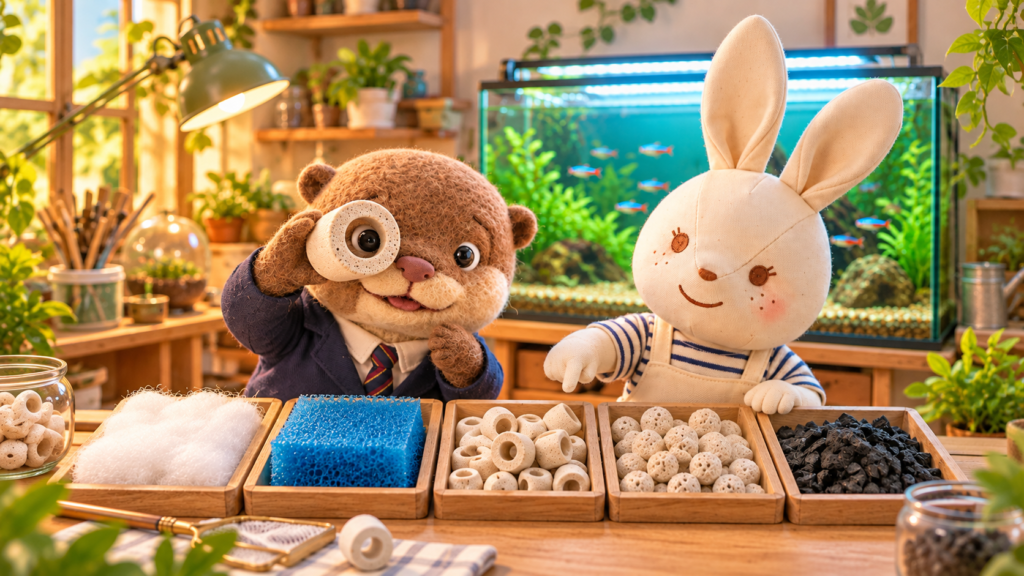 アイのアクアグッズ案内水槽のろ材の選び方|ウール・リング・活性炭の違いとおすすめ商品フィルターの中の綿や石は何をしている? アイとコタロウが、ウール・スポンジ・セラミック・焼結ガラス・活性炭・ゼオライトを比較。機種との相性、入れ方、洗い方と交換まで商品とともに紹介します。記事はコチラ →
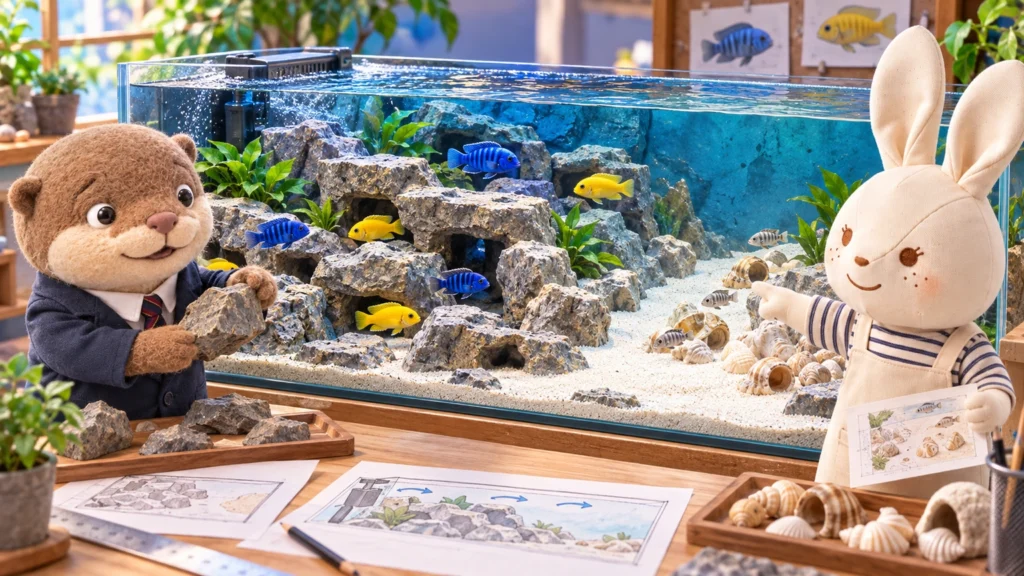 アイのアクアグッズ案内アフリカンシクリッドの飼育用品|水槽・ろ過・底砂・岩組み・餌の選び方道具の特徴や使い方、選ぶときのポイントをアイが紹介します。記事はコチラ →
 アイのアクアグッズ案内海水魚の底砂の選び方|サンゴ砂・ライブサンドとおすすめ商品道具の特徴や使い方、選ぶときのポイントをアイが紹介します。記事はコチラ →
 アイのアクアグッズ案内水槽フィルターの選び方|外掛け・外部・上部から小型オーバーフローまで道具の特徴や使い方、選ぶときのポイントをアイが紹介します。記事はコチラ →



コメント