

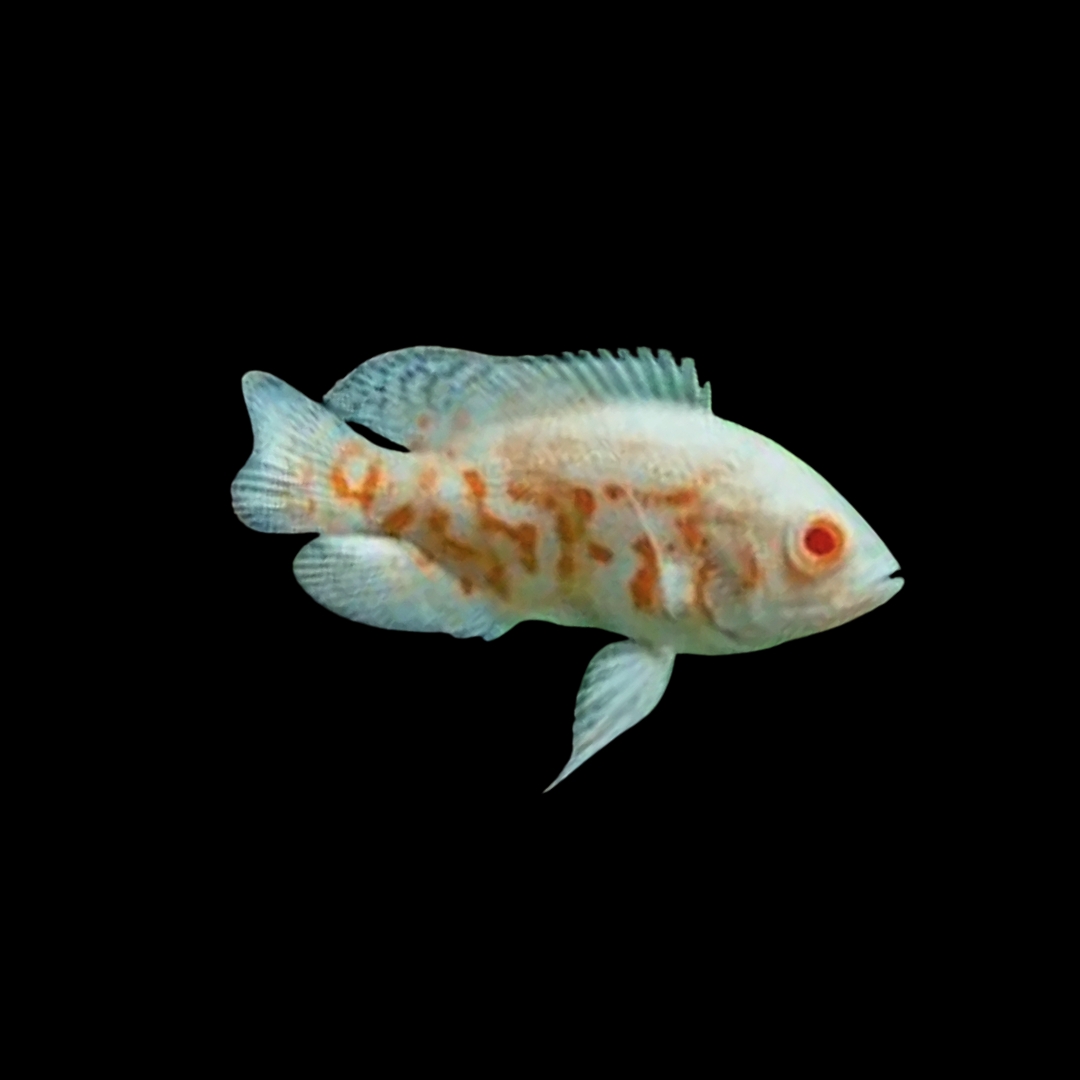
解説 / Description
アルビノ・タイガーオスカーは、南米原産の大型シクリッドであるオスカーをもとに作出された観賞魚の流通名です。白から淡黄色の地色に赤橙色のタイガー模様が入る個体が多く、店頭ではアルビノと呼ばれていても、厳密にはルチノーに近い個体が含まれることがあります。飼い主を覚えて水槽前面に寄ってくるような反応を見せる一方、成魚は30cm前後に育ち、排泄量も多いため、大型水槽と強力なろ過を前提にした終生飼育が必要です。 Albino Tiger Oscar is a trade name for an ornamental strain derived from the Oscar, a large South American cichlid. Many individuals show a white to pale yellow base with red-orange tiger markings, and some fish sold as albino may be closer to lutino forms in the strict sense. Oscars are famous for recognizing their keepers and approaching the front glass, but adults commonly reach around 30 cm and produce a heavy bioload, so lifelong care requires a large aquarium and powerful filtration.
基本情報 / Basic Information
| 学名 / Scientific Name | Astronotus ocellatus |
|---|---|
| 通称 / Common Name | アルビノ・タイガーオスカー、オスカーAlbino Tiger Oscar, Oscar |
| 分類 / Family | シクリッド科 アストロノトゥス属。分類体系により上位分類の扱いが異なるため、図鑑では科と属を中心に確認すると分かりやすいです。Family Cichlidae, genus Astronotus. Higher-level placement can vary by classification system, so family and genus are the most practical references for this guide. |
| 英名 / English Name | Albino Tiger Oscar |
| 分布 / Distribution | 原種のオスカーは南米のアマゾン水系とオリノコ水系を中心に記録される淡水魚です。アルビノ・タイガーオスカー自体は野生個体群ではなく、商業的な人工繁殖で流通する改良品種です。The wild Oscar is a freshwater fish recorded mainly from the Amazon and Orinoco basins of South America. Albino Tiger Oscar itself is not a wild population but a commercially bred ornamental strain. |
| 最大体長 / Max Size | 飼育下では20から35cm前後で見られることが多く、記録上は45cm前後までの大型個体も知られます。水槽では30cm級になる前提で設備を準備します。In aquaria, adults are often around 20 to 35 cm, while recorded maximum sizes approach about 45 cm. Tank planning should assume a fish in the 30 cm class. |
| 寿命 / Lifespan | 適切な飼育下で10から15年ほどが目安です。良好な環境では20年近く生きる可能性もあるため、購入前に長期飼育を想定する必要があります。A typical expectation under proper care is around 10 to 15 years. In excellent conditions they may approach 20 years, so long-term commitment should be considered before purchase. |
飼育環境 / Aquarium Environment
| 水槽サイズ / Tank Size | 幼魚は一時的に60cm規格水槽から始められますが、成長は早く、終生飼育には余裕が必要です。成魚の単独飼育では90cm規格水槽を下限目安とし、できれば120cm規格水槽以上を推奨します。より余裕を重視するなら150×60cm程度の底面積を確保できる水槽が安心です。混泳やペア飼育では120cmワイド水槽以上を基本に考えます。Juveniles may be started temporarily in a standard 60 cm tank, but they grow quickly and need generous long-term space. For one adult, a standard 90 cm tank should be treated as a lower-limit guideline, while a standard 120 cm tank or larger is recommended. For a more comfortable setup, a footprint around 150 by 60 cm is preferable. Pairs or community setups should be planned around a 120 cm wide-style aquarium or larger. |
|---|---|
| 水温 / Temperature | 23から27℃を目安に安定させます。低温や急な水温変化は体調不良や白点病の引き金になりやすいため、ヒーターとサーモスタットで管理します。繁殖を狙う場合は25℃以上を保つと状態を作りやすくなります。 Keep the water stable at about 23 to 27°C. Chilling and sudden temperature swings can trigger stress and ich, so use a reliable heater and thermostat. When breeding is intended, temperatures above 25°C tend to be more suitable. |
| 水質 / Water Quality | 弱酸性から中性を中心に、pH 6.5から7.5前後を目安にすると扱いやすいです。種としてはpH 6.0から8.0、硬度5から19dH程度の幅に耐えるとされますが、大型魚で水を汚しやすいため、数値の広さよりも安定と清潔さを優先します。Slightly acidic to neutral water, around pH 6.5 to 7.5, is easy to manage. The species is reported to tolerate roughly pH 6.0 to 8.0 and 5 to 19 dH, but because Oscars are large, messy fish, stability and cleanliness are more important than chasing a wide parameter range. |
| レイアウト / Layout | 流木や沈んだ枝のある穏やかな水域を好む性質を意識しつつ、水槽内ではシンプルで安全な構成にします。口で砂利を動かす力が強いため、石や流木は倒れないように固定し、角の鋭い素材は避けます。水草は掘り返されやすいため、活着系や丈夫な種類でも破壊される可能性があります。Reflect their preference for calm waters with wood and cover, but keep the aquarium layout simple and safe. Oscars are strong diggers and can move gravel with their mouths, so rocks and driftwood must be stable and sharp materials should be avoided. Plants, even hardy attached types, may be uprooted or damaged. |
| 注意点 / Precautions | 飛び出し防止のフタ、強力なろ過、定期的な水換え、食べ残しの除去を基本にします。真性アルビノに近い個体は強い光に敏感な可能性があるため、直射日光や強すぎる照明は避け、落ち着ける暗めの場所を用意すると安心です。体格が大きくなるほど水質悪化も早くなるため、幼魚のうちから成魚時の設備計画を立てます。Use a secure lid, strong filtration, regular water changes, and prompt removal of uneaten food. Individuals close to true albino may be sensitive to intense light, so avoid direct sunlight and overly harsh lighting, and provide calmer shaded areas. As body mass increases, water quality can decline quickly, so plan adult housing while the fish is still young. |
餌と給餌 / Feeding
| 餌の種類 / Diet | 大型シクリッド用の高品質な人工飼料を主食にします。補助的にクリル、冷凍アカムシ、ブラインシュリンプ、昆虫系フード、ミミズ、軽く茹でたズッキーニやホウレンソウなどを少量与えると、栄養の幅を持たせやすくなります。野生では小魚、甲殻類、ワーム類、水生昆虫などを食べる日和見的な捕食者です。Use a high-quality pellet formulated for large cichlids as the staple food. Small amounts of krill, frozen bloodworms, brine shrimp, insect-based foods, earthworms, or lightly blanched zucchini and spinach can add dietary variety. In the wild, Oscars are opportunistic predators that feed on small fish, crustaceans, worms, aquatic insects, and similar prey. |
|---|---|
| 給餌のポイント / Feeding Tips | 幼魚は少量を複数回、成魚は食べ残しが出ない量を1日1から2回程度に調整します。よく食べる魚ですが、食べ過ぎは肥満と水質悪化につながります。メダカや小赤などの生餌は寄生虫や病原菌の持ち込み、栄養の偏りにつながるため常食にはせず、与える場合も管理された範囲にとどめます。Feed juveniles small portions several times a day, and adults once or twice daily in amounts they can finish cleanly. Oscars eat eagerly, but overfeeding leads to obesity and poor water quality. Live feeder fish should not be a staple because they can introduce parasites or pathogens and may create nutritional imbalance. |
性格と混泳 / Temperament and Tank Mates
| 性格 / Temperament | 知能が高く、飼い主を覚えて前面に寄ってくるような反応を見せます。大型シクリッドとしては比較的扱いやすい部類ですが、縄張り意識と捕食性は強く、個体差も大きい魚です。慣れた個体でも急な環境変更や狭い水槽では攻撃性が出やすくなります。Oscars are intelligent and often learn to recognize their keeper, approaching the front of the tank for food and interaction. They are relatively manageable for a large cichlid, but they still have territorial instincts, predatory behavior, and strong individual variation. Even a tame individual can become aggressive after abrupt environmental changes or in cramped quarters. |
|---|---|
| 混泳の相性 / Compatibility | 口に入る小型魚との混泳はできません。大型プレコ、ナマズ類、ポリプテルスなど生活層が異なる魚とは比較的成功しやすいものの、底棲魚に餌が行き渡る工夫が必要です。オスカー同士や他の大型シクリッドとの混泳は、サイズ差、個体の気性、水槽の広さに左右されるため、セパレーターや予備水槽を準備してから行います。Small fish that fit in the mouth are not suitable tank mates. Large plecos, catfish, or bichirs that occupy different zones may work relatively well, but feeding must be managed so bottom dwellers receive enough food. Mixing Oscars with each other or with other large cichlids depends on size, temperament, and tank space, so a divider or backup tank should be ready. |
病気と対策 / Diseases and Prevention
| かかりやすい病気 / Common Diseases | 水質悪化や栄養の偏りが続くと、頭部穴あき病が問題になりやすい魚です。原因は単純ではありませんが、硝酸塩の蓄積、ミネラルやビタミン不足、ストレスが関係すると考えられます。水温低下や導入時のストレスでは白点病も発生します。レイアウトや争いによる外傷からの二次感染にも注意が必要です。Hole-in-the-head disease can become a problem when water quality is poor or nutrition is unbalanced. Its causes are not simple, but nitrate accumulation, mineral or vitamin deficiency, and stress are thought to contribute. Ich may occur after chilling or introduction stress. Secondary infections from injuries caused by decor or aggression should also be watched for. |
|---|---|
| 対策と予防 / Prevention | 強力なろ過と定期的な水換え、底砂の掃除、食べ残しの除去を徹底します。人工飼料を主軸に多様な補助餌を組み合わせ、栄養が偏らないようにします。白点病が疑われる場合は水温を急変させずに少しずつ調整し、症状に応じて観賞魚用の薬剤で治療します。Prevention depends on strong filtration, regular water changes, substrate cleaning, and prompt removal of uneaten food. A staple pellet with varied supplements helps avoid nutritional imbalance. If ich is suspected, adjust temperature gradually and treat with appropriate aquarium medications according to symptoms. |
増やし方(繁殖) / Breeding
| 雌雄の判別 / Sexing | 外見での雌雄判別は非常に困難です。確実性を高めるには、成熟個体の産卵管の形状や実際の産卵行動を確認する必要があります。Sexing by appearance is very difficult. Greater certainty requires observing mature breeding tubes or actual spawning behavior. |
|---|---|
| 繁殖形態 / Reproduction | 平らな石や水槽底面を掃除して産卵する基質産卵型です。産卵後は雌雄で卵や稚魚を守る、シクリッドらしい両親保護を行います。They are substrate spawners that clean a flat stone or tank surface before laying eggs. After spawning, both parents typically guard the eggs and fry, showing classic cichlid biparental care. |
| 繁殖のポイント / Breeding Tips | 幼魚を複数匹育てて自然にペアができるのを待つ方法が一般的です。成魚同士を突然合わせると激しく争うことがあります。産卵床となる平らな石を用意し、清潔な水質を保ち、多めの水換えで雨季の刺激を再現すると産卵が促されることがあります。ペアの力関係が崩れたときは、早めに隔離できる体制を整えておきます。A common method is to raise a group of juveniles and wait for a natural pair to form. Introducing two unrelated adults suddenly can lead to severe fighting. Provide a flat spawning stone, maintain very clean water, and use larger water changes to simulate rainy-season cues that may encourage spawning. Be ready to separate the pair if aggression becomes one-sided. |
雑学と豆知識 / Trivia and Fun Facts
| 1. アルビノとルチノーの見分け方 / 1. Albino and Lutino Differences | 店頭でアルビノ・タイガーオスカーとして売られる個体の中には、厳密にはルチノーに近い個体も含まれます。真性アルビノはメラニンをほぼ欠くため眼が赤からピンク色に見えますが、ルチノーでは黒色や暗い赤色の眼、鰭や模様の縁に残る暗色素が見られます。観賞魚の流通名は美しさや分かりやすさを優先することがあるため、繁殖や血統を重視する場合は眼の色と暗色素の残り方を確認するとよいでしょう。Some fish sold as Albino Tiger Oscars are, in a strict sense, closer to lutino forms. True albinos largely lack melanin and therefore show red to pink eyes, while lutino fish often have black or dark reddish eyes and some remaining dark pigment on fin edges or pattern boundaries. Trade names often prioritize visual appeal and simplicity, so eye color and residual dark pigment are important clues when breeding or lineage accuracy matters. |
|---|---|
| 2. 水中の犬と呼ばれる理由 / 2. Why Oscars Are Called Water Dogs | オスカーは単に餌に反応するだけでなく、日常的に世話をする人を覚え、近づいたり餌をねだったりするような行動を見せます。この人懐こさは、複雑な社会関係を持つシクリッドの認知能力と結びついていると考えられています。水槽の前でこちらを見つめ返すような姿は、大型魚飼育の大きな魅力のひとつです。Oscars do more than simply react to food; they often learn who regularly cares for them and may approach, beg, or interact at the front glass. This friendliness is thought to relate to the cognitive abilities of cichlids, which naturally navigate complex social relationships. The way an Oscar seems to look back at its keeper is one of the great appeals of keeping large aquarium fish. |
| 3. 尾柄の眼状斑に残る自然史 / 3. Natural History in the Eyespot | オスカーの尾柄部には、原種の名残として眼のような模様が見られることがあります。この眼状斑は、捕食者の攻撃を頭部ではなく尾側へそらす役割があると考えられています。観賞魚として眺めると装飾的な模様ですが、野生では生き残るための工夫でもあったと考えると、体のデザインに自然史の物語が隠れていることが分かります。Oscars may show an eye-like marking near the base of the tail, inherited from the wild form. This ocellus is thought to help divert predator attacks away from the head and toward the less fatal tail region. What looks like a decorative aquarium pattern may therefore carry a natural-history story about survival in the wild. |
| 4. 学名に残る眼状斑の記憶 / 4. The Eyespot Remembered in the Name | 種小名の ocellatus は、眼のような斑点を意味する言葉に由来します。アルビノ・タイガーオスカーでは改良品種ならではの明るい体色に目を奪われがちですが、学名をたどると、原種が持つ尾柄の眼状斑という特徴に行き着きます。名前を知ることで、派手な改良品種の背後にある野生魚としての姿も見えてきます。The species name ocellatus refers to an eye-like spot. In Albino Tiger Oscars, the bright captive-bred coloration often draws attention first, but the scientific name leads back to the eyespot on the caudal peduncle of the wild form. Knowing the name helps reveal the wild fish behind the ornamental strain. |
| 5. 放流してはいけない魚 / 5. A Fish That Must Never Be Released | オスカーは丈夫で大型化し、温暖な地域では外来魚として定着した例があります。飼いきれなくなった個体を川や池に放すことは、生態系に負担をかける危険な行為です。購入時には、成魚サイズ、水槽の置き場所、寿命まで含めて、最後まで飼えるかを考えることが大切です。Oscars are hardy, grow large, and have become established as non-native fish in some warm regions. Releasing an unwanted individual into rivers or ponds can burden local ecosystems. Before purchase, it is important to consider adult size, tank space, and the commitment required for the fish’s full lifespan. |
まとめ / Conclusion
アルビノ・タイガーオスカーは、明るい体色と赤橙色の模様、そして飼い主に反応する知的な振る舞いによって、多くのアクアリストを惹きつけてきた大型シクリッドです。単なる派手な改良品種ではなく、オスカーという魚が持つ自然史、行動の豊かさ、シクリッドらしい子育ての魅力を水槽の中で感じられる存在です。 The Albino Tiger Oscar is a large cichlid that has attracted many aquarists with its pale coloration, red-orange markings, and intelligent keeper-responsive behavior. It is more than a colorful ornamental strain; it brings the natural history, behavioral richness, and parental care typical of Oscars and cichlids into the aquarium.
一方で、この魚を迎えることは、30cm級に育つ魚と10年以上向き合うという選択でもあります。広い水槽、強いろ過、安定した水質、慎重な混泳管理、そして放流しない責任まで整えてこそ、アルビノ・タイガーオスカーは図鑑の一項目を越え、長く付き合える一尾のパートナーになります。 At the same time, keeping this fish means committing to a 30 cm-class animal for more than a decade. With a spacious aquarium, strong filtration, stable water quality, careful tank-mate management, and the responsibility never to release it, the Albino Tiger Oscar becomes more than an entry in a guidebook: it becomes a long-term aquatic companion.

気になる道具や飼い方を見つけてみませんか?
 アイのアクアグッズ案内エンゼルフィッシュの飼育用品|高さのある水槽・ろ過・水草・餌の選び方道具の特徴や使い方、選ぶときのポイントをアイが紹介します。記事はコチラ →
 アイのアクアグッズ案内金魚を長く楽しむ飼育用品|水槽・フィルター・エアレーション・水換え道具の特徴や使い方、選ぶときのポイントをアイが紹介します。記事はコチラ →
さまざまな飼育テーマをご紹介。リンク先の記事には広告・商品紹介が含まれます。
案内・紹介記事一覧へ →参考文献
この記事の分類、分布、生息環境、飼育条件、繁殖、病気、放流に関する注意点を支えるため、学術データベース、公的機関、大学・獣医系資料を中心に選定しました。店舗、通販ページ、個人ブログ、まとめサイト、価格相場だけを示す情報源は除外しています。
最終確認日:2026年6月15日
-
FishBase. Astronotus ocellatus, Oscar
分類、最大体長、水質範囲、分布、生息環境、食性、繁殖行動の基礎情報を確認するための主要データベース。分類 分布 水質 繁殖
-
GBIF Backbone Taxonomy. Astronotus ocellatus (Agassiz, 1831)
学名、シクリッド科、アストロノトゥス属など、分類体系とシノニム確認のための国際的な生物多様性データ基盤。分類 学名
-
U.S. Geological Survey, Nonindigenous Aquatic Species Database. Oscar (Astronotus ocellatus) – Species Profile
原産範囲、米国内外での非在来記録、放流や逸出に関する注意点を補強する公的機関資料。分布 外来種 注意点
-
U.S. Fish & Wildlife Service. Ecological Risk Screening Summary – Oscar (Astronotus ocellatus) – Uncertain Risk
観賞魚としての流通、成長サイズ、国外での導入・定着、リスク評価を確認するための公的な生態リスク資料。外来種 放流注意 リスク評価
-
CABI Digital Library. Astronotus ocellatus (oscar)
大型で捕食性の強いシクリッドとしての概要、観賞魚流通、侵入リスク、生態情報を横断的に確認するための国際的なコンペンディウム。生態 外来種 注意点
-
Animal Diversity Web, University of Michigan Museum of Zoology. Astronotus ocellatus
雌雄判別の難しさ、産卵床の清掃、基質産卵、卵数、孵化日数、雌雄による保護行動など、繁殖項目の根拠として使用。繁殖 行動 両親保護
-
Merck Veterinary Manual. Parasitic Diseases of Fish
白点病の原因生物、感染経路、症状、治療に温度や生活環が関係することを確認するための獣医系資料。病気 白点病 予防
-
University of Florida IFAS Extension. Ichthyophthirius multifiliis (White Spot) Infections in Fish
白点病が淡水魚全般に感染し得ること、急速に広がること、導入魚や水温変化が問題になりやすいことを補強する大学拡張資料。病気 白点病 導入時の注意
-
Amesberger-Freitag, A. et al. Hole-in-the-head disease in discus fish, Symphysodon Heckel, 1840: Is it a consequence of a dietary Ca/P imbalance? PubMed
頭部穴あき病が頭部や体幹の感覚孔周辺に病変を作ること、栄養バランスとの関連を検討した研究として、オスカーと近いシクリッド類の疾病説明を補強するために参照。病気 頭部穴あき病 栄養管理
補足:アルビノとルチノーの流通名、国内価格、個別店舗での販売状況は、時期や販売者によって変動し、店舗・通販情報への依存度が高いため、この参考文献リストには含めていません。




コメント