

解説 / Description
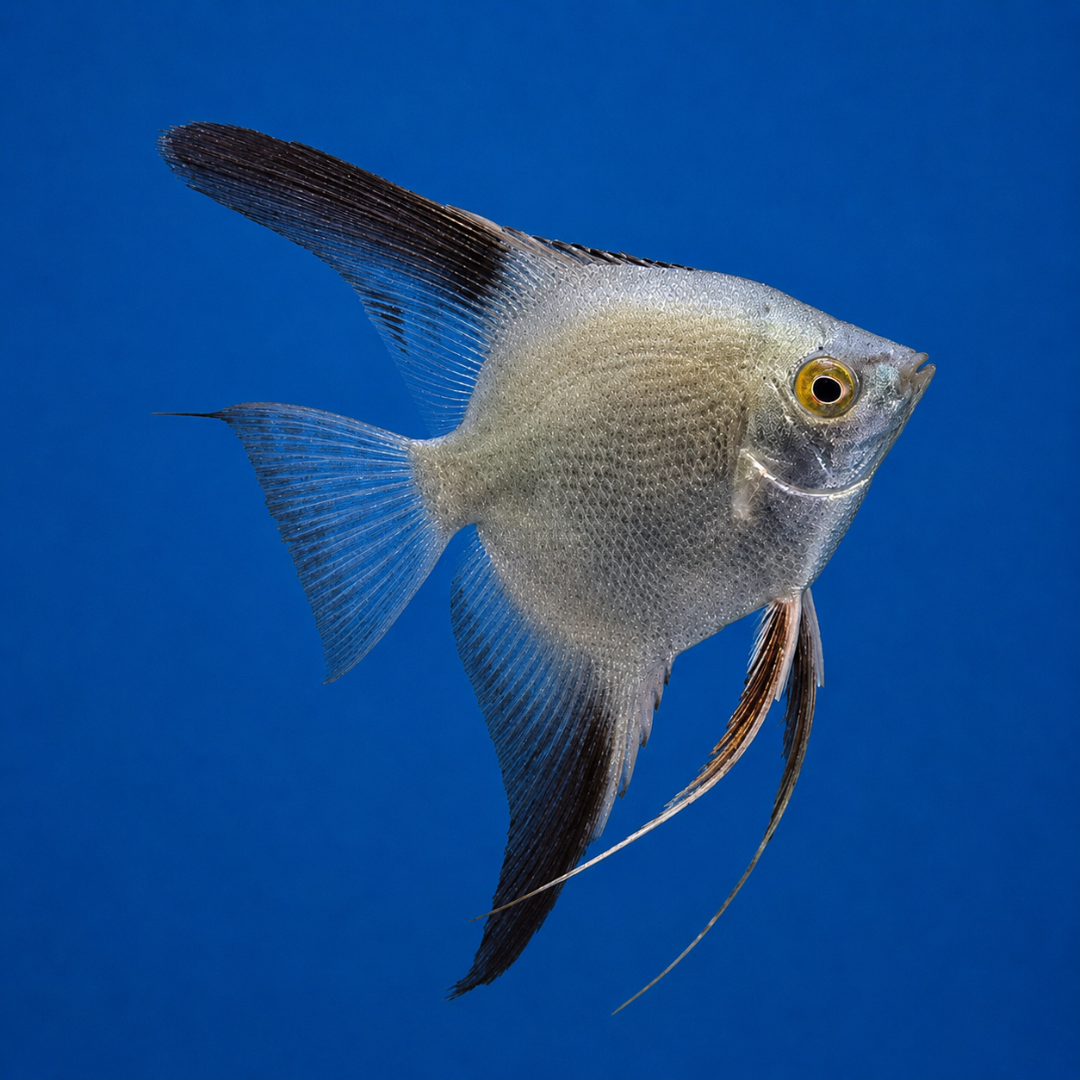
ブルガリアンシールポイントエンゼルフィッシュは、淡水エンゼルフィッシュ Pterophyllum scalare から作出された改良品種です。クリームホワイトから銀白色、淡い青灰色に見える明るい体色と、背ビレ・尻ビレ・尾ビレなどの末端に残る濃い暗色のコントラストが最大の魅力です。この配色は猫の「シールポイント」と呼ばれる毛色パターンを思わせることから、その名で親しまれています。見た目は繊細ですが、基本的な飼育性は一般的な改良エンゼルフィッシュに準じます。十分な水深と穏やかな水流を用意し、急激な水質変化を避けて育てることで、長く伸びたヒレと落ち着いた色彩を美しく楽しめます。 The Bulgarian Seal Point Angelfish is a selectively bred variety of the freshwater angelfish, Pterophyllum scalare. Its most distinctive feature is the strong contrast between a pale cream-white, silvery, or light blue-gray body and the dark pigmentation retained on the dorsal, anal, caudal, and other distal fin areas. The pattern is reminiscent of the “seal point” coloration seen in certain cat breeds, which inspired the variety’s name. Despite its refined appearance, its basic husbandry is similar to that of other domesticated angelfish. A tall aquarium, gentle water movement, stable water chemistry, and protection from sudden environmental changes help the fish develop its elegant finnage and characteristic coloration.
基本情報 / Basic Information
| 学名 / Scientific Name | Pterophyllum scalare (Schultze, 1823) |
|---|---|
| 通称 / Common Name | ブルガリアンシールポイント、シールポイントエンゼル、BSPBulgarian Seal Point, Seal Point Angelfish, BSP |
| 分類 / Family | カワスズメ目・カワスズメ科・Pterophyllum属Order Cichliformes, Family Cichlidae, Genus Pterophyllum |
| 英名 / English Name | Bulgarian Seal Point Angelfish |
| 分布 / Distribution | 原種 Pterophyllum scalare は南米アマゾン川水系を中心に、ペルー、コロンビア、ブラジル、ガイアナ、フランス領ギアナなどに分布します。ブルガリアンシールポイントは野生個体群ではなく、ブルガリアのブリーダーによって確立された改良品種です。The wild species Pterophyllum scalare occurs mainly in the Amazon River basin and adjacent drainages in South America, including areas of Peru, Colombia, Brazil, Guyana, and French Guiana. The Bulgarian Seal Point is not a wild population but a domesticated color variety established through selective breeding in Bulgaria. |
| 最大体長 / Max Size | 体長はおおむね10〜15cmほど。発達した背ビレと尻ビレを含む体高は20cmを超えることがあります。Usually about 10–15 cm in body length. Including the extended dorsal and anal fins, total body height can exceed 20 cm. |
| 寿命 / Lifespan | 目安は8〜10年ほど。安定した水質、適切な給餌、十分な遊泳空間を維持できれば10年以上生きる個体もいます。Typically around 8–10 years. With stable water quality, appropriate feeding, and adequate swimming space, some individuals may live for more than 10 years. |
飼育環境 / Aquarium Environment
| 水槽サイズ / Tank Size | 成魚では最低でも60cmワイド水槽(約120L級)を目安とし、複数飼育や余裕のある長期飼育には90cm規格水槽(約180L級)以上がおすすめです。エンゼルフィッシュは横幅だけでなく体高が大きくなるため、水深も十分に確保します。For adults, a 60 cm wide aquarium of roughly 120 L is a practical minimum, while a standard 90 cm aquarium of roughly 180 L or larger is preferable for groups and long-term maintenance. Because angelfish become very tall rather than merely long, sufficient water depth is especially important. |
|---|---|
| 水温 / Temperature | 24〜30℃。日常飼育では25〜28℃前後を安定して維持し、短時間で大きく変動させないことが大切です。 24–30°C. For routine maintenance, a stable temperature around 25–28°C is comfortable, and rapid fluctuations should be avoided. |
| 水質 / Water Quality | pH6.0〜8.0、軟水〜中程度の硬度が目安です。日本の多くの地域の軟水は相性がよく、通常はカルキ抜きした水道水で飼育できます。数値を追い込むことよりも、アンモニアと亜硝酸を検出させず、硝酸塩をため過ぎない安定した環境を維持することが重要です。A pH of 6.0–8.0 with soft to moderately hard water is suitable. The relatively soft tap water common in many parts of Japan is generally compatible after dechlorination. Stability is more important than chasing exact numbers: ammonia and nitrite should remain undetectable, and nitrate should be controlled through regular maintenance. |
| レイアウト / Layout | 背の高い水草、アマゾンソードのような幅広い葉を持つ水草、流木などを使い、視線を遮れる場所と開けた遊泳空間を両立させます。ヒレを傷つける鋭利な石や枝は避け、フィルターの吐出口はガラス面へ向けるなどして水流を穏やかにします。銀白色の体と黒いヒレは、緑の水草や褐色の流木を背景にすると特に際立ちます。Use tall plants, broad-leaved plants such as Amazon swords, and driftwood to create visual barriers while preserving open swimming areas. Avoid sharp rocks or branches that may tear the fins, and soften the filter outflow by directing it toward the glass or otherwise diffusing the current. The pale body and dark fins stand out especially well against green plants and brown driftwood. |
| 注意点 / Precautions | 導入直後の急激なpH・水温・浸透圧の変化、強すぎる水流、過密飼育に注意します。購入個体の飼育水と自宅の水質差が大きい場合は、時間をかけて慎重に水合わせを行います。また、成長するとペア形成に伴って縄張り性が強くなるため、逃げ場を設け、必要に応じて隔離できる準備をしておくと安心です。Avoid abrupt changes in pH, temperature, and osmotic conditions, as well as excessive current and overcrowding. If the water at the source differs greatly from the home aquarium, acclimate the fish gradually. Territorial behavior often increases when pairs form, so provide visual refuges and be prepared to separate aggressive individuals if necessary. |
餌と給餌 / Feeding
| 餌の種類 / Diet | 雑食性です。品質の良いエンゼルフィッシュ・シクリッド用のフレークや小粒ペレットを主食とし、冷凍アカムシ、ブラインシュリンプなどの動物性餌を補助的に与えます。植物質やスピルリナを含む人工飼料も組み合わせると栄養の偏りを抑えやすくなります。Omnivorous. Use a high-quality angelfish or cichlid flake or small pellet as the staple diet, supplemented with foods such as frozen bloodworms and brine shrimp. Including prepared foods containing plant material or spirulina can help provide a more balanced nutritional profile. |
|---|---|
| 給餌のポイント / Feeding Tips | 成魚は1日1〜2回、数分で食べ切れる量を目安にします。幼魚は成長のため少量を複数回に分けると効果的です。高タンパク質の餌は体づくりに役立ちますが、一種類だけに偏らせず、残餌を出さないことが水質維持の基本です。繁殖を狙う場合は、人工飼料と冷凍・活餌を無理のない範囲で組み合わせて親魚のコンディションを整えます。Feed adults once or twice daily, offering only what they can consume within a few minutes. Juveniles benefit from smaller meals given several times a day. Protein-rich foods support growth, but dietary variety is preferable to relying on a single food, and uneaten food should be minimized to protect water quality. For conditioning breeding pairs, combine quality prepared foods with frozen or live foods as appropriate. |
性格と混泳 / Temperament and Tank Mates
| 性格 / Temperament | 普段は比較的落ち着いていますが、シクリッドらしい社会性と縄張り性を持ちます。幼魚期は複数で行動しやすい一方、成長してペアができると産卵場所の周囲を強く防衛することがあります。個体差も大きく、同じ品種でも気の強さには幅があります。Generally calm, but it retains the social and territorial behavior typical of cichlids. Juveniles often live comfortably in groups, while mature pairs may strongly defend a spawning site. Individual temperament varies considerably, even among fish of the same variety. |
|---|---|
| 混泳の相性 / Compatibility | 同程度の水温と水質を好み、極端に攻撃的でない中小型魚との混泳に向きます。ヒレをかじる習性のある魚、非常に小さく口に入る魚、稚エビ類は避けたほうが安全です。複数のエンゼルフィッシュを飼う場合は、成長後のペア形成と縄張り争いを見越して広めの水槽と退避場所を用意します。It can be kept with peaceful to moderately assertive fish that prefer similar temperature and water chemistry. Avoid persistent fin-nippers, very small fish that may be swallowed, and small shrimp. When keeping multiple angelfish, provide a spacious aquarium and retreat areas in anticipation of pair formation and territorial disputes. |
病気と対策 / Diseases and Prevention
| かかりやすい病気 / Common Diseases | ブルガリアンシールポイントだけに特有の病気が知られているわけではありません。一般的なエンゼルフィッシュと同様に、白点病、ヒレ腐れや体表の細菌性感染、外部・内部寄生虫、ストレスや不適切な給餌に伴う消化器トラブルなどに注意します。食欲低下、ヒレをたたむ、体を物にこすりつける、呼吸が速い、白い便が続くといった変化は早めに観察します。No disease is known to be unique to the Bulgarian Seal Point variety. As with other angelfish, watch for ich, bacterial fin or skin infections, external and internal parasites, and digestive problems associated with stress or inappropriate feeding. Early warning signs include loss of appetite, clamped fins, flashing against objects, rapid breathing, and persistent abnormal feces. |
|---|---|
| 対策と予防 / Prevention | 予防の中心は、水温と水質を急変させないこと、定期的な換水、過密と過剰給餌を避けること、新規導入魚を可能なら隔離観察することです。病気が疑われる場合は、症状だけで薬を決めつけず、水温、アンモニア、亜硝酸、pHなどを確認して環境要因を切り分けます。治療薬を使用する際は対象となる病原体と製品の用法を確認し、必要に応じて治療用水槽を使います。Prevention depends mainly on avoiding sudden changes in temperature and water chemistry, performing regular water changes, preventing overcrowding and overfeeding, and quarantining new fish when possible. If illness is suspected, first check environmental factors such as temperature, ammonia, nitrite, and pH rather than choosing medication from symptoms alone. When treatment is necessary, identify the likely cause, follow the product directions, and use a separate hospital tank when appropriate. |
増やし方(繁殖) / Breeding
| 雌雄の判別 / Sexing | 外見だけでの確実な判別は難しく、若魚では特に困難です。繁殖期には雌の産卵管が比較的太く丸みを帯び、雄の生殖突起はより細く尖って見える傾向があります。額の張りや体型だけで判断する方法は個体差が大きいため、決め手にはなりません。Reliable sexing by external appearance is difficult, especially in juveniles. During spawning condition, the female’s ovipositor is usually broader and blunter, while the male’s genital papilla tends to appear smaller and more pointed. Head shape and body profile vary too much among individuals to be dependable on their own. |
|---|---|
| 繁殖形態 / Reproduction | 一度形成されたペアが、幅広い水草の葉、流木、ガラス面、産卵筒などの垂直面を掃除して粘着性の卵を並べて産む基質産卵型です。雌が産卵し、雄が続いて放精します。親魚は卵や仔魚を守る行動を示しますが、飼育下では初産や強いストレスによって食卵することもあります。This is a substrate-spawning cichlid. A bonded pair cleans a vertical surface such as a broad plant leaf, driftwood, aquarium glass, or a spawning cone, and the female deposits adhesive eggs that are fertilized by the male. Both parents may guard the eggs and fry, although inexperienced or stressed pairs sometimes eat their spawn in captivity. |
| 繁殖のポイント / Breeding Tips | 健康な若魚を複数育てて自然にペアを作らせる方法が確実です。繁殖水槽では26〜28℃前後、清潔で軟らかい弱酸性〜中性の水を安定させ、産卵面を用意します。孵化率を重視する場合は低めのTDSと弱酸性寄りの水が利用されますが、急激な水質調整は逆効果です。親に任せる方法と卵を別容器で人工孵化させる方法の両方があります。自由遊泳を始めた稚魚には、孵化直後のブラインシュリンプ幼生などを少量ずつ複数回与えます。品種としてシールポイントの表現を狙う場合は、ブルガリアングリーン遺伝子をホモ接合の bg/bg とし、さらにダーク系遺伝子との組み合わせを管理する必要があります。A reliable approach is to raise several healthy juveniles and allow compatible pairs to form naturally. For breeding, maintain clean, stable water around 26–28°C, generally soft and slightly acidic to neutral, and provide a suitable spawning surface. Lower TDS and mildly acidic water are often used when maximizing hatch rate, but abrupt water manipulation is counterproductive. Eggs may be left with the parents or transferred for artificial incubation. Once the fry become free-swimming, offer newly hatched brine shrimp in small, frequent meals. To reproduce the Seal Point phenotype genetically, the Bulgarian Green trait must be homozygous bg/bg, with the appropriate Dark-locus combination also managed in the breeding program. |
雑学と豆知識 / Trivia and Fun Facts
| 1. 「シールポイント」は猫の毛色から来た名前 / 1. The Name “Seal Point” Comes from Cat Coloration | この品種を初めて見たとき、まず目に入るのは明るい胴体と、先端だけが濃く染まったヒレの対比です。その配置はシャム猫やラグドールなどで知られるポイントカラーを思わせ、なかでも濃い茶黒色の末端部を持つ「シールポイント」という呼び名が魚にも受け継がれました。魚の品種名では産地や色そのものを示す名称が多いなか、別の愛玩動物の毛色を連想させるネーミングは印象的です。姿を知らない人にも「明るい体に暗いポイントが入る魚」とイメージを伝えやすく、この品種の個性をよく表しています。The first thing most people notice is the contrast between the pale body and the dark coloration concentrated toward the fins and other extremities. This arrangement resembles the point coloration seen in cats such as Siamese and Ragdolls, particularly the dark brown-black pattern known as “seal point.” Aquarium fish varieties are often named for a locality or a simple color, so borrowing the visual language of a companion animal is especially memorable. Even before seeing the fish, the name suggests a pale-bodied animal with dramatically darker points, which captures the strain’s appearance remarkably well. |
|---|---|
| 2. ブルガリアで積み重ねられた長期選抜から生まれた / 2. A Variety Shaped by Long-Term Selective Breeding in Bulgaria | ブルガリアンシールポイントの背景には、ブルガリアの観賞魚施設「Malavi」でライコ・スラヴコフ氏とイリア・スラヴコフ氏が続けた長期の交配があります。ダークゴールドマーブルやハイブリッドダークなどの系統を長年選抜する過程で、それまでのエンゼルフィッシュとは異なる「胴体の黒色が大きく抑えられ、ヒレ側に暗色が残る」個体が現れました。2011年ごろには映像を通して愛好家の間で知られるようになり、2014年にはブルガリアングリーン系統が米国へ輸入され、国際的なブリーダーコミュニティへ広がっていきました。現代の観賞魚育種らしく、その過程がオンライン上で共有され、世界各地の飼育者が交配結果を持ち寄って理解を深めていった点も興味深いところです。The Bulgarian Seal Point traces back to long-term breeding work by Raiko and Ilia Slavkov at the Malavi ornamental-fish facility in Bulgaria. Through years of selection involving lines such as Dark Gold Marble and Hybrid Dark, fish appeared in which black pigmentation was strongly reduced across the body while remaining much more evident in the fins. The phenotype became known among hobbyists through online material around 2011, and Bulgarian Green stock reached the United States in 2014, accelerating its spread among international angelfish breeders. An especially modern part of the story is that much of the breeding discussion unfolded online, allowing aquarists in different countries to compare crosses and collectively refine their understanding of the trait. |
| 3. bg遺伝子は「独立した劣性遺伝子」として扱われている / 3. The bg Trait Is Treated as an Independent Recessive Gene | ブルガリアングリーンは bg と略記され、愛好家の遺伝学ではホモ接合の bg/bg で表現が現れる劣性形質として扱われています。作出者によるテストクロスでは、既知のダーク遺伝子座とは別に存在するという解釈を支持する結果が得られ、現在のブリーディングでもその前提で遺伝子型が組み立てられています。ただし、ここでいう「遺伝子」は観賞魚育種で使われる遺伝記号としての意味合いが強く、原因となるDNA変異や遺伝子産物まで分子生物学的に特定されたという意味ではありません。交配記録から見える遺伝現象と、分子レベルの解明は別の段階にあると考えると理解しやすいでしょう。Bulgarian Green is abbreviated bg and is treated in hobby genetics as a recessive trait expressed in homozygous bg/bg fish. Test crosses carried out by the developers supported the interpretation that it is separate from the established Dark locus, and breeders continue to plan crosses using that model. However, the word “gene” here primarily reflects a breeding-genetics symbol based on inheritance patterns; it does not mean that the exact causal DNA mutation or molecular gene product has been identified. The inheritance pattern is therefore much better characterized than the underlying molecular mechanism. |
| 4. 「体は明るく、ヒレは暗い」を生む仕組みにはまだ謎が残る / 4. Why the Body Lightens While the Fins Stay Dark Is Still Not Fully Resolved | 魚の黒色はメラノフォアと呼ばれる色素細胞の働きによって見え方が変化しますが、ブルガリアングリーンがなぜ体幹部の暗色を強く抑えながらヒレでは暗色を残しやすいのか、その部位特異的な仕組みは分子レベルではまだ十分に解明されていません。ブリーダーの観察では bg/bg が既存の黒い縞や暗色を体側で弱める一方、ダーク系遺伝子を持つ個体ではヒレの色が残りやすいことが繰り返し報告されています。つまり、この魚の美しさは「すべてが分かっている遺伝形質」ではなく、育種の経験則と生物学的な問いが同居しているところにもあります。水槽の中の一匹が、色素細胞や発生の研究テーマを連想させる存在でもあるのです。Black coloration in fishes is produced by pigment cells known as melanophores, yet the reason Bulgarian Green suppresses dark coloration so strongly on the body while allowing much of it to remain in the fins has not been resolved at the molecular level. Breeder observations repeatedly report that homozygous bg/bg reduces pre-existing dark bars and body pigment, while fish carrying Dark-locus genes can retain pronounced fin pigmentation. The appeal of the strain therefore lies partly in the fact that it is not a completely solved genetic story: practical breeding observations and unanswered biological questions still coexist. A fish in an aquarium can thus become a window into broader questions about pigment cells, development, and pattern formation. |
| 5. フィリピンブルーとの組み合わせから「ライラックポイント」へ / 5. Crossing with Philippine Blue Led to “Lilac Point” Forms | bg は単独で完結する形質ではなく、他のエンゼルフィッシュの色彩遺伝子と組み合わせることで印象が大きく変わります。代表的なのがフィリピンブルー pb との組み合わせで、愛好家の間では青紫色や淡いライラック調のニュアンスを見せる個体群が「ライラックポイント」と呼ばれています。シールポイントの白と黒という明快なコントラストに、光の角度で青みが重なるため、同じ bg/bg を土台にしていても別の魚のような雰囲気になります。エンゼルフィッシュ育種の面白さは、単一の色を足すというより、複数の遺伝形質が互いの見え方を変え、予想以上に多様な表現型を生み出すところにあります。The bg trait does not exist in isolation; its appearance changes dramatically when combined with other angelfish color genes. A notable example involves Philippine Blue, pb, producing fish that breeders and hobbyists commonly refer to as “Lilac Point” forms because of their bluish to lilac-toned sheen. The clear pale-and-dark contrast of the Seal Point can acquire a cool blue cast that changes with lighting, giving fish based on the same bg/bg foundation a very different visual character. This illustrates one of the great attractions of angelfish breeding: color genes do not merely add colors independently, but interact to reshape the entire phenotype in unexpectedly varied ways. |
| 6. Pterophyllum は「ヒレ」と「葉」を意味する名前 / 6. Pterophyllum Literally Refers to “Fin” and “Leaf” | 属名 Pterophyllum は、ギリシャ語で「翼・ヒレ」を意味する pteron と「葉」を意味する phyllon に由来するとされます。横から見ると薄く、背ビレと尻ビレが上下へ大きく伸びるエンゼルフィッシュの姿は、確かに水中を漂う一枚の葉のようです。野生の Pterophyllum scalare は水草や水辺植生の密な環境に暮らし、この高い体型は複雑な植生の間をすり抜ける生活ともよく調和しています。ブルガリアンシールポイントでは、その独特の輪郭に白銀と黒の配色が重なるため、属名が示す「葉のようなヒレ」の印象がいっそう強く感じられます。The genus name Pterophyllum is derived from Greek roots commonly interpreted as pteron, meaning wing or fin, and phyllon, meaning leaf. Seen from the side, an angelfish is thin-bodied with tall dorsal and anal fins, giving it the appearance of a leaf gliding through water. Wild Pterophyllum scalare lives in habitats rich in aquatic and marginal vegetation, where its deep, laterally compressed shape fits naturally among stems and roots. In the Bulgarian Seal Point, the pale body and dark fin margins emphasize this distinctive silhouette even more strongly, making the “leaf-like fin” imagery behind the genus name especially easy to appreciate. |
まとめ / Conclusion
ブルガリアンシールポイントエンゼルフィッシュは、エンゼルフィッシュ本来の優雅な体型に、明るい胴体と暗いヒレという独特のコントラストが重なった改良品種です。色彩だけを見れば特別な魚ですが、飼育の基本は決して奇抜ではありません。十分な水深、穏やかな水流、安定した水質、栄養の偏らない給餌を丁寧に続けることが、美しいヒレと落ち着いた発色につながります。 The Bulgarian Seal Point Angelfish combines the classic elegance of angelfish form with a distinctive contrast between a pale body and dark fins. Its coloration is unusual, but its care does not require exotic techniques. Adequate water depth, gentle flow, stable water quality, and a varied, balanced diet are the foundations for developing strong finnage and refined coloration.
また、bgという育種遺伝学上の特徴は、単なる見た目の違いだけでなく、エンゼルフィッシュの色彩遺伝を考える面白さも与えてくれます。成長とともに輪郭が整い、ヒレの暗色が存在感を増していく姿は、日々の管理そのものを楽しませてくれるでしょう。水草と流木の落ち着いた景観にもよくなじみながら、静かに主役になれる存在です。 The bg trait also gives the variety an appeal that goes beyond appearance by inviting aquarists to explore the fascinating genetics of angelfish coloration. As the fish matures, its proportions become more refined and the dark fins gain visual presence, making the process of raising it part of the enjoyment. It blends naturally into planted layouts with driftwood while still becoming a quiet focal point of the aquarium.

気になる道具や飼い方を見つけてみませんか?
 アイのアクアグッズ案内ダニオの仲間に合わせる飼育用品|ゼブラダニオから超小型種まで水槽・ろ過・餌を選ぶ道具の特徴や使い方、選ぶときのポイントをアイが紹介します。記事はコチラ →
 アイのアクアグッズ案内水草水槽のCO₂添加|3つの方式の選び方とおすすめ用品道具の特徴や使い方、選ぶときのポイントをアイが紹介します。記事はコチラ →
 アイのアクアグッズ案内水草用ライトの選び方|緑の絨毯と赤い水草を楽しむ照明・植栽用品道具の特徴や使い方、選ぶときのポイントをアイが紹介します。記事はコチラ →
 アイのアクアグッズ案内テトラミンって、こんなにあるの? アイとコタロウのごはん探究旅道具の特徴や使い方、選ぶときのポイントをアイが紹介します。記事はコチラ →
さまざまな飼育テーマをご紹介。リンク先の記事には広告・商品紹介が含まれます。
案内・紹介記事一覧へ →分布マップ
原種の Pterophyllum scalare は、南米のアマゾン川水系を中心に、ペルー、コロンビア、ブラジル、ガイアナ、フランス領ギアナなどに分布します。ブルガリアンシールポイントは野生個体群ではなく、ブルガリアで確立された改良品種です。
※この地図は記事に記載された分布地域をもとにした概略表示です。表示範囲は厳密な分布境界を示すものではありません。また、マーカーはアマゾン川水系を把握しやすくするために設定した代表地点であり、実際の採集地点・生息確認地点を示すものではありません。
参考文献
-
Fricke, R., Eschmeyer, W. N. & Van der Laan, R. (eds.). Eschmeyer’s Catalog of Fishes: Pterophyllum scalare.California Academy of Sciences, Institute for Biodiversity Science and Sustainability.分類分布淡水性https://researcharchive.calacademy.org/research/ichthyology/catalog/fishcatget.asp?spid=38425
-
FishBase. Pterophyllum scalare (Schultze, 1823) species summary.Froese, R. & Pauly, D. (eds.). FishBase.分類分布生息環境水温・pH・硬度繁殖行動https://www.fishbase.se/summary/Pterophyllum-scalare.html
-
Cacho, M. S. R. F., Yamamoto, M. E. & Chellappa, S. (1999). Comportamento reprodutivo do acará bandeira, Pterophyllum scalare Cuvier & Valenciennes (Osteichthyes, Cichlidae).Revista Brasileira de Zoologia, 16(3), 653–664. DOI: 10.1590/S0101-81751999000300006縄張り行動産卵基質親魚の保護行動https://doi.org/10.1590/S0101-81751999000300006
-
Korzelecka-Orkisz, A., Szalast, Z., Pawlos, D., Smaruj, I., Tański, A., Szulc, J. & Formicki, K. (2012). Early ontogenesis of the angelfish, Pterophyllum scalare Schultze, 1823 (Cichlidae).Neotropical Ichthyology, 10(3), 567–576. DOI: 10.1590/S1679-62252012005000017繁殖水温・pH卵・仔魚人工孵化親魚の保護行動https://doi.org/10.1590/S1679-62252012005000017
-
Francis-Floyd, R., Stilwell, N. K. & Yanong, R. P. E. (2025). Introduction to Fish Health Management.UF/IFAS Extension, University of Florida, CIR921.病気の予防水質悪化とストレスアンモニア・亜硝酸症状観察https://edis.ifas.ufl.edu/publication/FA004
-
Francis-Floyd, R., Yanong, R. P. E. & Pouder, D. B. Ichthyophthirius multifiliis (White Spot) Infections in Fish.UF/IFAS Extension, University of Florida, CIR920.白点病体をこする行動食欲低下水温変化・過密への注意https://edis.ifas.ufl.edu/publication/FA006
-
Livengood, E. J. & Chapman, F. A. The Ornamental Fish Trade: An Introduction with Perspectives for Responsible Aquarium Fish Ownership.UF/IFAS Extension, University of Florida, FA124.水質管理ろ過隔離・検疫水合わせ疾病予防https://edis.ifas.ufl.edu/publication/FA124





コメント