

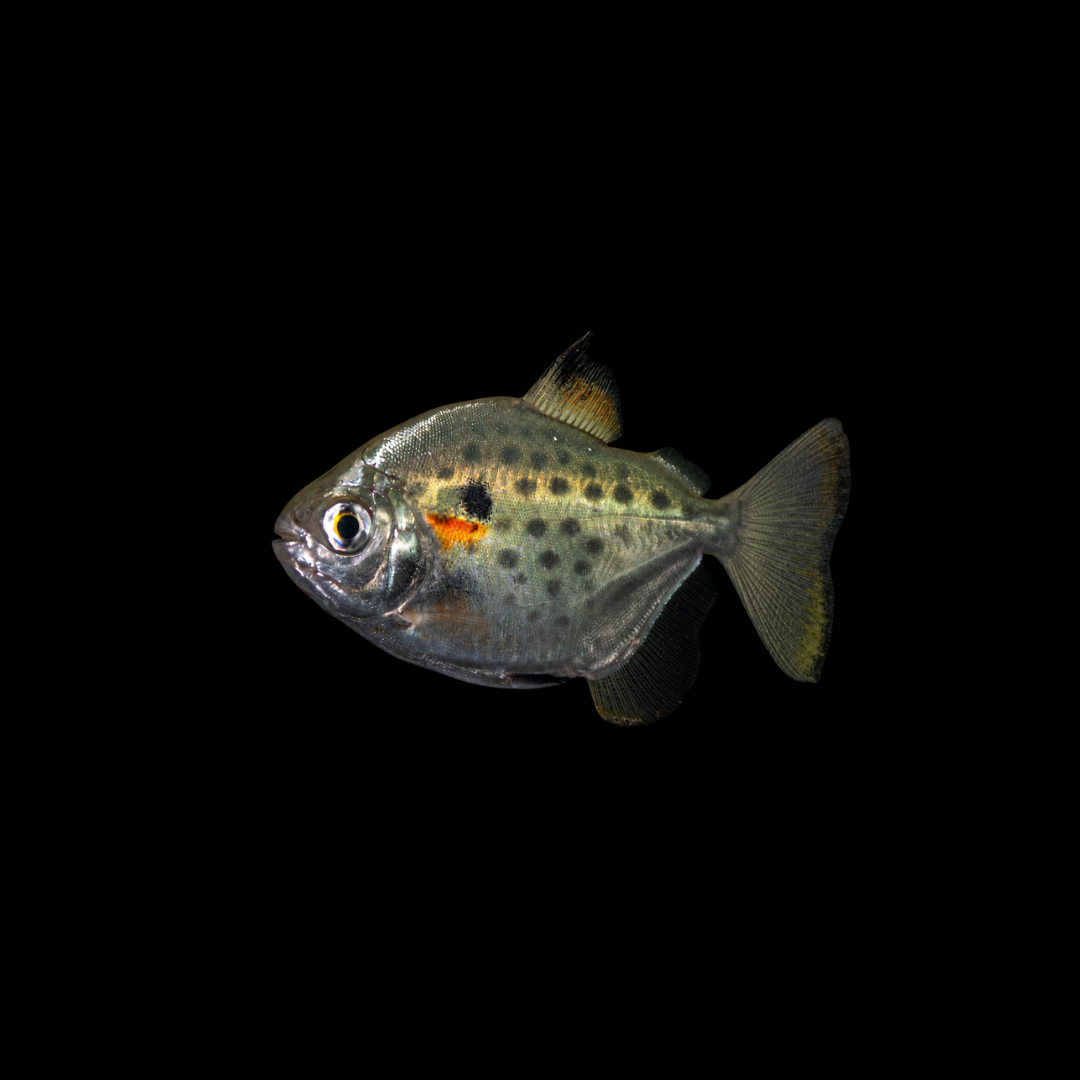
解説 / Description
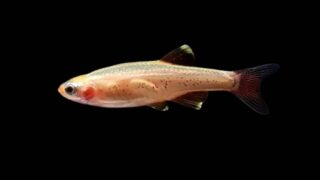
ロイヤルスポッテッドメチニスは、銀色に輝く円盤状の体と、体側に散る黒いスポットが美しい南米産の中型カラシンです。日本の観賞魚市場では、主にMetynnis maculatusやMetynnis lippincottianus、またはそれらに近い地域個体群を含む流通名として使われます。丈夫で温和な一方、成魚は15cm前後になり、活発に群泳するため、ゆとりある水槽と強いろ過が欠かせません。草食傾向が強く、水草を食べやすい点は注意が必要ですが、大型水槽で群れをつくって泳ぐ姿は、南米水系の雰囲気を水槽内に引き込んでくれる存在感があります。 The Royal Spotted Metynnis is a medium-sized South American characin admired for its shining silver, disk-shaped body and dark spots scattered along the flanks. In the Japanese aquarium trade, the name is used as a commercial umbrella for fish such as Metynnis maculatus, Metynnis lippincottianus, and closely related regional forms. It is hardy and peaceful, but adults reach around 15 cm and swim actively in groups, so a spacious aquarium and strong filtration are essential. Because it is strongly herbivorous, it may eat aquarium plants, but a well-kept group in a large tank brings an unmistakable South American river atmosphere.
基本情報 / Basic Information
| 学名 / Scientific Name | Metynnis maculatus / Metynnis lippincottianus 流通名として複数種または近縁個体群を含む場合があります。The trade name may include multiple species or closely related regional forms. |
|---|---|
| 通称 / Common Name | ロイヤルスポッテッドメチニス、スポッテッドメチニス、スポッテッドシルバーダラーRoyal Spotted Metynnis, Spotted Metynnis, Spotted Silver Dollar |
| 分類 / Family | カラシン目 セラサルムス科 メチニス属Order Characiformes, family Serrasalmidae, genus Metynnis |
| 英名 / English Name | Spotted Silver Dollar, Spotted Metynnis |
| 分布 / Distribution | 南米。Metynnis maculatusは主にアマゾン川流域およびパラグアイ川流域、Metynnis lippincottianusはブラジルのアマゾン地域やギアナ地方の河川に分布するとされています。観賞魚としてはブラジル、スリナム、ペルー、パラグアイ水系などのロカリティ名で流通することがあります。South America. Metynnis maculatus is generally associated with the Amazon and Paraguay river basins, while Metynnis lippincottianus is reported from the Brazilian Amazon and Guianan river systems. In the aquarium trade, locality names from Brazil, Suriname, Peru, and the Paraguay drainage may be used. |
| 最大体長 / Max Size | 一般に約13〜18cm。個体群や飼育条件によっては20cm近くに見える大型個体もあります。Generally about 13-18 cm. Large individuals may appear close to 20 cm depending on population and care conditions. |
| 寿命 / Lifespan | 目安として8〜10年以上。大型水槽で水質を安定させ、群れで落ち着かせると長期飼育が期待できます。Approximately 8-10 years or more. Long-term care is more likely in a large, stable aquarium with a proper group. |
飼育環境 / Aquarium Environment
| 水槽サイズ / Tank Size | 最低でも90cm規格水槽が目安です。ただし本種は群泳魚で遊泳力が高いため、5〜6匹以上を落ち着かせて飼うなら120cm規格水槽、できれば120cmワイド水槽〜150cm水槽以上が理想的です。リットル数では最低150〜200L、余裕を持つなら300L以上を推奨します。A standard 90 cm aquarium is the practical minimum. Because this is an active schooling fish, a standard 120 cm tank, or ideally a 120 cm wide to 150 cm or larger aquarium, is recommended for a calm group of five or more. In volume, 150-200 L is the minimum guideline, while 300 L or more is preferable. |
|---|---|
| 水温 / Temperature | 22〜28℃を目安にします。繁殖を狙う時期は、状態を見ながら27〜29℃付近までやや高めに維持することがあります。 Keep the temperature around 22-28°C. For breeding attempts, experienced keepers may raise it slightly to around 27-29°C while watching the fish carefully. |
| 水質 / Water Quality | 弱酸性〜中性付近、pH 5.5〜7.5程度、軟水〜中硬水を目安にします。急変には弱いため、数値そのものよりも安定を重視してください。大食漢で排泄量も多いため、硝酸塩が蓄積しないよう強力な外部式フィルターやオーバーフローろ過、定期的な換水が有効です。Aim for slightly acidic to neutral water, around pH 5.5-7.5, from soft to moderately hard. Stability is more important than chasing exact numbers. Because these fish eat heavily and produce substantial waste, strong canister or sump filtration and regular water changes help prevent nitrate buildup. |
| レイアウト / Layout | 広い遊泳スペースを中央に残し、流木や丸みのある石で落ち着ける場所を作ります。照明はやや控えめにすると驚きにくくなります。生きた水草は食害されやすいため、植栽水槽には不向きです。緑を入れる場合は、アヌビアスやミクロソリウムなど硬めの水草を活着させるか、人工水草を利用します。Leave open swimming space in the center and use driftwood or smooth stones to provide secure areas. Subdued lighting helps reduce skittishness. Planted aquariums are not ideal because the fish readily eat many live plants. If greenery is desired, attach tougher plants such as Anubias or Microsorum to wood, or use artificial plants. |
| 注意点 / Precautions | 驚くと勢いよく突進したり飛び出したりすることがあるため、隙間のないフタを必ず用意します。導入直後は暗めの環境で静かに慣らし、急な点灯や水槽前の大きな動きは避けてください。大型化する魚なので、購入前に終生飼育できる水槽を準備しておくことが大切です。When startled, they may dash suddenly or jump, so a tight-fitting cover is essential. After introduction, allow them to settle in a quieter, dimly lit environment and avoid sudden lighting or abrupt movement near the tank. Since they grow into medium-sized fish, prepare a tank suitable for lifelong care before purchase. |
餌と給餌 / Feeding
| 餌の種類 / Diet | 植物質を主軸にした雑食性です。スピルリナ配合フレーク、植物性ペレット、プレコ用タブレット、アルジーウェハーを中心に、ゆでたホウレン草、レタス、ズッキーニ、キュウリなどを少量与えます。状態を上げたい時は、冷凍赤虫、ブラインシュリンプ、細かく刻んだエビなどの動物性飼料を補助的に使えます。They are omnivores with a strong herbivorous tendency. Use spirulina flakes, vegetable-based pellets, pleco tablets, and algae wafers as staples, with small portions of blanched spinach, lettuce, zucchini, or cucumber. Frozen bloodworms, brine shrimp, or finely chopped shrimp can be offered occasionally to improve condition. |
|---|---|
| 給餌のポイント / Feeding Tips | 一度に大量に与えるより、食べ切れる量を1日1〜2回に分けます。野菜は水を汚しやすいため、食べ残しは早めに取り出してください。植物質が不足すると、水草だけでなく混泳魚のヒレをかじる行動につながることがあるため、日常的に繊維質の多い餌を組み込むと安定します。Feed only what they can finish, once or twice per day, rather than offering a large amount at once. Fresh vegetables can foul the water, so remove leftovers promptly. If plant-based foods are lacking, the fish may chew plants or occasionally nip tank mates’ fins, so fiber-rich foods should be part of the regular diet. |
性格と混泳 / Temperament and Tank Mates
| 性格 / Temperament | 基本的には温和で臆病な群泳魚です。単独や少数では落ち着かず、物陰に隠れたり急に暴れたりしやすくなります。最低5〜6匹、可能なら8匹以上で飼うと、群れとして泳ぎやすくなり、体色や行動も安定します。They are generally peaceful, timid schooling fish. When kept singly or in very small numbers, they often hide or panic more easily. A group of at least five or six, and preferably eight or more, encourages more natural schooling behavior and steadier coloration. |
|---|---|
| 混泳の相性 / Compatibility | 口に入らない大きさで、攻撃性の強くない魚と相性が良いです。プレコ、ドラス類、コリドラスの大型種、セベラム、ゲオファーガス、エンゼルフィッシュ、大型テトラ類などが候補になります。ネオンテトラのような小型魚は成魚に捕食される可能性があり、オスカー、ピラニア、大型パイクシクリッドなど強い捕食魚や攻撃的な魚との混泳は避けます。They do well with non-aggressive fish too large to be swallowed. Suitable candidates include plecos, doradid catfish, larger Corydoras species, severums, Geophagus, angelfish, and larger tetras. Very small fish such as neon tetras may be eaten by adults, while aggressive predators such as Oscars, piranhas, and large pike cichlids should be avoided. |
病気と対策 / Diseases and Prevention
| かかりやすい病気 / Common Diseases | 丈夫な魚ですが、水質悪化や導入時のストレスが重なると、白点病、エロモナス症、ヒレの傷み、穴あき病に似た症状が出ることがあります。突進による擦り傷も二次感染の原因になります。They are hardy fish, but poor water quality and stress after introduction can lead to ich, Aeromonas-related infections, fin damage, or symptoms resembling hole-in-the-head disease. Injuries from sudden dashing can also become sites for secondary infection. |
|---|---|
| 対策と予防 / Prevention | 予防の基本は、過密を避けること、ろ過能力を十分に確保すること、週1回を目安に25〜50%程度の換水を行うことです。新規導入魚は可能であればトリートメント期間を設け、外傷や白点の有無を確認します。病気が疑われる場合は、まず水質と水温を確認し、症状に応じて隔離と薬浴を検討します。Prevention begins with avoiding overcrowding, providing ample filtration, and changing about 25-50% of the water weekly as a guideline. New arrivals should be quarantined when possible to check for wounds or ich. If disease is suspected, first verify water quality and temperature, then consider isolation and medication according to symptoms. |
増やし方(繁殖) / Breeding
| 雌雄の判別 / Sexing | 成熟したオスは尻ビレが伸び、赤みや黒斑が強く出ることがあります。メスは抱卵すると腹部が丸くふくらみ、体つきがよりふっくら見えます。ただし若魚では判別が難しく、群れで育てて自然にペアや産卵行動を待つ方法が現実的です。Mature males may develop a longer anal fin with stronger red coloration and dark markings. Females become rounder in the belly when carrying eggs. Juveniles are difficult to sex, so raising a group and waiting for natural pairing or spawning behavior is the most practical approach. |
|---|---|
| 繁殖形態 / Reproduction | 卵を保護しないばらまき型の産卵魚です。卵は非粘着性または粘着性が弱いとされ、底面や産卵床の周囲に散ります。親魚が卵を食べることがあるため、産卵後は親を戻す、または産卵床ごと卵を別容器へ移す管理が必要です。They are egg scatterers and do not guard their eggs. The eggs are reported to be non-adhesive or only weakly adhesive and are scattered around the bottom or spawning medium. Adults may eat eggs, so the parents should be removed after spawning or the eggs should be transferred with the spawning medium. |
| 繁殖のポイント / Breeding Tips | 繁殖を狙う場合は、200L以上の別水槽に成熟個体を移し、植物性の餌を中心に冷凍赤虫などを補助して2〜4週間コンディションを整えます。雨季を模した刺激として、やや低めの新しい水で大きめの換水を行い、その後27〜29℃付近まで安定させる方法があります。産卵床にはスポーニングモップや細かい人工水草を使い、孵化後はインフゾリアや市販の液体稚魚用飼料から始め、成長に合わせて孵化したてのブラインシュリンプへ移行します。産卵数は種や個体条件で大きく変わるため、数値は幅を持って考えてください。For breeding attempts, move mature fish to a separate aquarium of 200 L or more and condition them for two to four weeks with a vegetable-rich diet supported by foods such as frozen bloodworms. A rain-season trigger can be imitated with a large water change using slightly cooler fresh water, followed by stable warmth around 27-29°C. Spawning mops or fine artificial plants can be used as spawning media. After hatching, begin with infusoria or commercial liquid fry food, then move to newly hatched brine shrimp as the fry grow. Egg counts vary widely by species and condition, so any number should be treated as approximate. |
雑学と豆知識 / Trivia and Fun Facts
| 1. 流通名としての「ロイヤルスポッテッドメチニス」 / 1. Royal Spotted Metynnis as a Trade Name | 日本で使われるロイヤルスポッテッドメチニスという名前は、厳密な学名というより、黒いスポットを持つメチニス類を魅力的に示す流通名として扱われることが多い呼び方です。特にMetynnis maculatusとMetynnis lippincottianusは外見がよく似ており、幼魚や輸入直後の個体では判別が難しいことがあります。そのため、愛好家の間では学名だけでなく、サンフランシスコ川産、アラグアイア川産、タパジョス水系産など、採集地に基づくロカリティ名が個体の魅力を語る大切な手がかりになっています。In Japan, the name Royal Spotted Metynnis is often used less as a strict scientific name and more as an attractive trade name for spotted members of the genus Metynnis. Metynnis maculatus and Metynnis lippincottianus can look very similar, especially as juveniles or shortly after import. For this reason, locality names such as Sao Francisco, Araguaia, or Tapajos drainage are important clues among enthusiasts, adding both visual and biogeographic appeal. |
|---|---|
| 2. ピラニアに近い、草食寄りの親戚 / 2. A Plant-Eating Relative of Piranhas | メチニス類はピラニアやパクーと同じセラサルムス科に属します。鋭い肉食魚という印象の強い仲間を持ちながら、メチニスは植物の葉、果実、種子などをよく食べる方向へ進化しました。銀色の穏やかな群泳魚に見えても、口の中には植物を切り取るための歯がしっかり備わっています。この「近縁なのに食性が大きく違う」という点が、メチニス類を進化の物語としても面白い魚にしています。Metynnis belongs to the family Serrasalmidae, the same family as piranhas and pacus. Although many relatives have a reputation as sharp-toothed carnivores, Metynnis evolved toward feeding heavily on leaves, fruits, and seeds. Even though they look like peaceful silver schooling fish, their mouths contain teeth well suited for cutting plant material. This contrast between close relationship and different diet makes them fascinating from an evolutionary perspective. |
| 3. 属名Metynnisに隠れた背中の棘 / 3. The Hidden Spine Behind the Name Metynnis | 属名Metynnisは、背ビレの前にある特徴的な棘に関係すると説明されることがあります。メチニス類の体は丸く柔らかそうに見えますが、背中や腹部には捕食者から身を守るための構造が発達しています。南米の濁った水域や浸水林では、見た目の美しさだけでなく、飲み込まれにくくする形、群れで光を散らす銀色の体、素早く方向転換できる側扁した体型が、生き残るための装備として働いていると考えられます。The genus name Metynnis is often explained in connection with the distinctive spine before the dorsal fin. Although these fish look round and delicate, the back and belly carry defensive structures that may help deter predators. In the turbid waters and flooded forests of South America, their beauty is also functional: a body that is difficult to swallow, silver flanks that scatter light in a school, and a laterally compressed shape that allows quick turns. |
| 4. アマゾンの森とつながる食性 / 4. A Diet Linked to Flooded Forests | 雨季の南米では、川の水位が上がり、森の中まで水が入り込む浸水林が広がります。メチニス類はそのような場所に入り、落下した果実や植物片を食べる魚として知られています。大型のパクーほど有名ではありませんが、未消化の種子を移動先で排出することで、魚が森の植物の分布に関わる可能性が示唆されています。水槽内で野菜をよく食べる姿は、単なる好みではなく、南米の季節的な水辺に根ざした性質の名残と見ることもできます。During the rainy season in South America, rising rivers flood the forest, creating vast flooded habitats. Metynnis species are known to enter such areas and feed on fallen fruits and plant matter. While they are less famous than large pacus, their movement and possible passage of undigested seeds suggest a connection between fish and forest plant dispersal. In the aquarium, their fondness for vegetables reflects more than preference; it hints at a lifestyle shaped by seasonal flooded forests. |
| 5. 水槽で映える理由は「派手さ」だけではない / 5. Why They Stand Out in the Aquarium | ロイヤルスポッテッドメチニスの魅力は、黒いスポットや赤みを帯びるヒレだけではありません。数匹が同じ方向へ滑るように泳ぎ、ふとした瞬間に銀色の体が一斉に光を返す群泳の美しさにあります。単独飼育ではその魅力が出にくく、落ち着きも失われがちです。大きな水槽で余裕を持って群れを泳がせるほど、この魚が本来持つ上品な存在感が引き出されます。The appeal of the Royal Spotted Metynnis is not limited to dark spots or reddish fins. Its true charm appears when several individuals glide together and their silver bodies flash at the same moment. A single fish rarely shows this beauty fully and is more likely to be nervous. The larger and calmer the aquarium, the more clearly its elegant schooling presence emerges. |
まとめ / Conclusion
ロイヤルスポッテッドメチニスは、丈夫で温和な性格を持ちながら、十分な水量、群れでの飼育、植物質中心の餌、そして強いろ過を必要とする本格派の中型魚です。水草を楽しむ水槽には向きませんが、流木や石を使った南米風の大型水槽では、銀色の体と黒いスポットがよく映えます。 The Royal Spotted Metynnis is hardy and peaceful, yet it is a serious medium-sized fish that needs ample water volume, group keeping, a plant-rich diet, and strong filtration. It is not well suited to planted aquariums, but in a large South American-style layout with driftwood and stones, its silver body and dark spots show beautifully.
ゆとりある環境で群れを落ち着かせると、普段は控えめな銀色の魚が、水槽全体の雰囲気を大きく変える主役になります。南米の川と森のつながりを感じさせるその泳ぎは、飼育者に長く付き合う楽しさを与えてくれます。 When kept as a calm group in a spacious aquarium, this seemingly modest silver fish can transform the entire impression of the tank. Its movement evokes the connection between South American rivers and forests, offering long-lasting enjoyment to the aquarist.
気になる道具や飼い方を見つけてみませんか?
 アイのアクアグッズ案内おとひめ物語|養殖生まれの餌を、わが家の魚に合う一粒へ道具の特徴や使い方、選ぶときのポイントをアイが紹介します。記事はコチラ →
 アイのアクアグッズ案内旅行中、お魚のごはんはどうする? 自動給餌器・使える餌・スマート水槽の選び方旅行中の魚の餌やりを助ける自動給餌器を、アイとコタロウが紹介。時間指定、おかわり給餌、対応するフレークや顆粒、設置台、スマホ管理、一体型水槽、留守番フードまで、使いどころと選び方を案内します。記事はコチラ →
 アイのアクアグッズ案内バルブの仲間に合わせる飼育用品|チェリーバルブ・スマトラ・中型種の水槽とろ過道具の特徴や使い方、選ぶときのポイントをアイが紹介します。記事はコチラ →
 アイのアクアグッズ案内お魚を撮ったのに、ボクが写ってる! スマホで楽しむ水槽撮影と便利な道具道具の特徴や使い方、選ぶときのポイントをアイが紹介します。記事はコチラ →
さまざまな飼育テーマをご紹介。リンク先の記事には広告・商品紹介が含まれます。
案内・紹介記事一覧へ →分布マップ
ロイヤルスポッテッドメチニスは、南米のアマゾン川流域、パラグアイ川流域、ブラジルのアマゾン地域、ギアナ地方の河川などに分布するとされます。地図では、記事中の分布情報をもとに南米北部から中央部の広域分布イメージを概略で示しています。
この地図のマーカーと円は、分布イメージを示すための概略プロットです。実際の採集地点や厳密な生息範囲を示すものではありません。
参考文献・根拠資料
ロイヤルスポッテッドメチニスは流通名として使われることがあり、記事ではMetynnis maculatusおよびMetynnis lippincottianusを中心に、分類・分布・水質条件・繁殖・健康管理・外来種リスクを確認しました。店舗、通販サイト、個人ブログ、まとめサイトは参考文献から除外しています。
-
分類・有効名・分布
Fricke, R., Eschmeyer, W. N. & Van der Laan, R. (eds.). Eschmeyer’s Catalog of Fishes, California Academy of Sciences: Metynnis maculatus (Kner, 1858). https://researcharchive.calacademy.org/research/ichthyology/catalog/fishcatget.asp?spid=4070 -
分類・有効名・分布
Fricke, R., Eschmeyer, W. N. & Van der Laan, R. (eds.). Eschmeyer’s Catalog of Fishes, California Academy of Sciences: Metynnis lippincottianus (Cope, 1870). https://researcharchive.calacademy.org/research/ichthyology/catalog/fishcatget.asp?spid=29734 -
分布・水質・体長・食性・繁殖
Froese, R. & Pauly, D. (eds.). FishBase: Metynnis maculatus, Spotted metynnis. https://www.fishbase.se/summary/Metynnis-maculatus.html -
分布・水質・体長
Froese, R. & Pauly, D. (eds.). FishBase: Metynnis lippincottianus. https://www.fishbase.se/summary/Metynnis-lippincottianus.html -
分類整理・種同定の背景
Zarske, A. & Géry, J. (1999). Revision der neotropischen Gattung Metynnis Cope, 1878. 1. Evaluation der Typusexemplare der nominellen Arten (Teleostei: Characiformes: Serrasalmidae). Zoologische Abhandlungen Staatliches Museum für Tierkunde Dresden, 50(13), 169-216. FishBase reference summary -
系統分類・生態的役割
Kolmann, M. A. et al. (2021). Phylogenomics of Piranhas and Pacus (Serrasalmidae) Uncovers How Dietary Convergence and Parallelism Obfuscate Traditional Morphological Taxonomy. Systematic Biology, 70(3), 576-592. https://pubmed.ncbi.nlm.nih.gov/32785670/ -
繁殖・産卵特性
Pereira, T. S. B., Moreira, R. G. & Batlouni, S. R. (2013). Dynamics of ovarian maturation during the reproductive cycle of Metynnis maculatus, a reservoir invasive fish species (Teleostei: Characiformes). Neotropical Ichthyology, 11(4), 821-830. https://www.scielo.br/j/ni/a/zLxSvNB46tV4qnS7JJcLzGR/?lang=en -
繁殖戦略・外来個体群
Gomes, I. D. et al. (2012). Opportunistic reproductive strategy of a non-native fish, the spotted metynnis Metynnis maculatus (Kner, 1858), in a tropical reservoir in south-eastern Brazil. Italian Journal of Zoology, 79(4), 506-516. https://www.tandfonline.com/doi/full/10.1080/03946975.2012.679390 -
病気・水質管理・検疫
Petty, B. D., Francis-Floyd, R. & Yanong, R. P. E. Management of Aquarium Fish. Merck Veterinary Manual. https://www.merckvetmanual.com/exotic-and-laboratory-animals/aquarium-fish/management-of-aquarium-fish -
病気・水質由来のトラブル
Environmental Diseases of Aquatic Animals in Aquatic Systems. MSD Veterinary Manual. https://www.msdvetmanual.com/exotic-and-laboratory-animals/aquatic-systems/environmental-diseases-of-aquatic-animals-in-aquatic-systems -
放流禁止・外来種注意
U.S. Geological Survey. Nonindigenous Aquatic Species Database: Metynnis sp. species profile. https://nas.er.usgs.gov/queries/factsheet.aspx?SpeciesID=423
閲覧日: 2026年7月2日。学名・分類・分布は将来の分類整理で変更される可能性があるため、最新の分類データベースも併せて確認してください。




コメント