

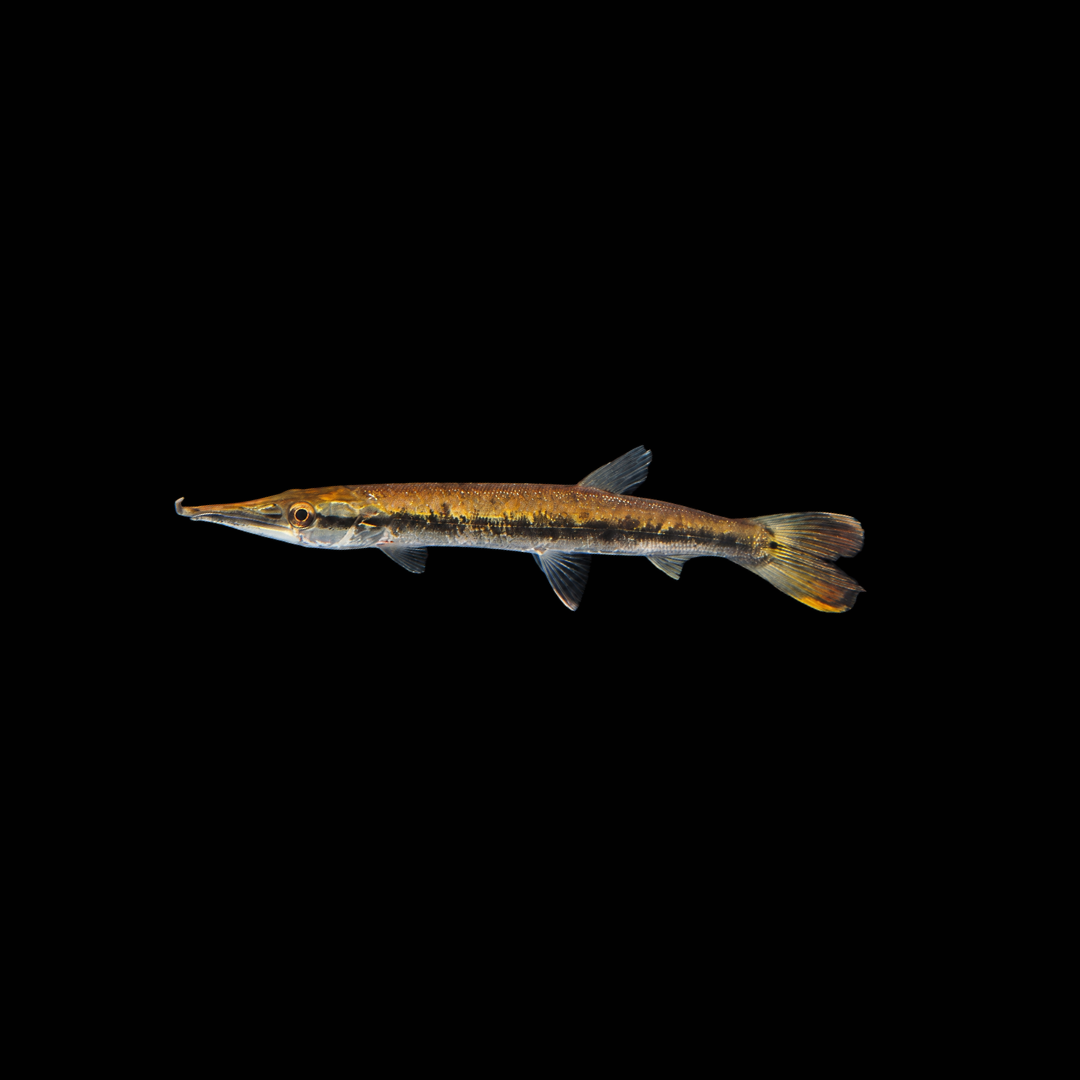
解説 / Description
ゴールデンパイクカラシンは、南米のアマゾン川流域とオリノコ川流域に分布する、細長い体と鋭く伸びた吻部が特徴の肉食性カラシンです。水面直下を静かに遊泳し、小魚などの獲物を見つけると一瞬で間合いを詰める姿には、一般的な中小型カラシンとはまったく異なる迫力があります。体側を走る暗色のラインと、光の角度によって変化する金属的な光沢も魅力で、野性味のある大型魚を好む飼育者に向いた存在です。 The Golden Pike Characin is a predatory characin from the Amazon and Orinoco river basins of South America, known for its slender body and sharply elongated snout. It swims quietly just below the surface, then closes the distance to prey such as small fish with sudden speed. Its dark lateral stripe and metallic sheen give it a very different presence from smaller community characins, making it especially appealing to keepers who enjoy wild-looking predatory fish.
ただし、見た目の鋭さに反して性質は繊細です。驚いたときに水槽壁面へ突進し、吻部を傷める事故が起こりやすいため、終生飼育では水槽の広さだけでなく、奥行き、反射対策、上部の遮蔽物、フタの固定まで含めて環境を整える必要があります。落ち着いた環境で状態が上がると、水面付近を滑るように泳ぐ姿が際立ち、水槽全体に静かな緊張感を与えてくれます。 Despite its sharp appearance, this fish is delicate in temperament. When startled, it may dart into the aquarium glass and injure its snout, so long-term care requires not only a large tank, but also adequate depth, reflection control, overhead cover, and a tightly secured lid. In a calm and well-prepared aquarium, its smooth surface-level swimming creates a quiet but unmistakable sense of tension throughout the tank.
基本情報 / Basic Information
| 学名 / Scientific Name | Boulengerella lucius |
|---|---|
| 通称 / Common Name | ゴールデンパイクカラシン、パイクカラシン、ゴールデンハイドロシナスガーGolden Pike Characin, Golden Pike-characin |
| 分類 / Family | カラシン目 クテノルキウス科 ボーレンゲレラ属Order Characiformes, Family Ctenoluciidae, Genus Boulengerella |
| 英名 / English Name | Golden Pike Characin |
| 分布 / Distribution | 南アメリカのアマゾン川流域およびオリノコ川流域。観賞魚としては、南米からのワイルド個体が中心に流通します。Amazon and Orinoco river basins in South America. In the aquarium trade, specimens are mainly wild-caught imports from South America. |
| 最大体長 / Max Size | 標準体長で最大約43cm。水槽内では全長40cm前後の中〜大型魚として考え、余裕のある飼育計画を立てます。Up to about 43 cm standard length. In aquaria, it should be planned for as a medium-to-large predatory fish reaching around 40 cm total length. |
| 寿命 / Lifespan | 本種単独の標準的な飼育寿命は情報が限られます。長期維持では5年以上を目標に、導入時のストレス、吻部損傷、水質悪化を避ける管理が重要です。Reliable species-specific lifespan data in aquaria is limited. For long-term care, aim for five years or more by minimizing acclimation stress, snout injuries, and water quality problems. |
飼育環境 / Aquarium Environment
| 水槽サイズ / Tank Size | 終生飼育では150cm以上の大型水槽を推奨します。特に奥行きが重要で、150cm×60cm×60cmクラスを最低ラインとし、可能であれば150cmワイド水槽や180cm水槽のように奥行き60〜80cm以上を確保できる環境が理想です。導入直後の若魚は90cm水槽でも一時飼育できますが、成長後の遊泳力と突進事故を考えると、早めに大型水槽へ移行した方が安全です。For lifelong care, a tank of at least 150 cm in length is recommended. Depth is especially important; a 150 x 60 x 60 cm tank should be considered a practical minimum, while a wide 150 cm or 180 cm aquarium with 60 to 80 cm of depth is preferable. Juveniles can be kept temporarily in a 90 cm tank, but an early upgrade is safer due to their growth, swimming ability, and risk of sudden collisions. |
|---|---|
| 水温 / Temperature | 23〜27℃を目安にします。急な温度変化に弱いため、導入時や換水時は温度差を小さくし、安定した管理を心がけます。 Keep the water around 23 to 27°C. Avoid sudden temperature changes, especially during acclimation and water changes. |
| 水質 / Water Quality | 弱酸性〜中性の軟水から中硬水寄りまでに適応し、pH 6.0〜7.2、硬度は15dH以下を目安にします。流木、落ち葉系素材、ピートモスなどでタンニンを含む落ち着いた水にすると、神経質さを和らげやすくなります。アンモニアと亜硝酸は常に0ppmを維持し、硝酸塩も低く抑えます。Aim for slightly acidic to neutral water, around pH 6.0 to 7.2, with hardness up to about 15 dH. Driftwood, botanical materials, and peat can create calmer tannin-stained water that may help reduce stress. Ammonia and nitrite must remain at 0 ppm, and nitrate should be kept low. |
| レイアウト / Layout | 水面付近を主な生活層とするため、浮き草、枝状流木、観葉植物の根などで上部にゆるやかな遮蔽物を作ると落ち着きやすくなります。背面や側面にはバックスクリーンを貼り、ガラスの反射を抑えます。立体的なバックグラウンドを使える場合は、壁面への認識がしやすくなり、突進事故の軽減に役立つことがあります。遊泳スペースを広く残し、強すぎる水流は避けます。Because this species primarily occupies the upper water layer, provide gentle overhead cover with floating plants, branching driftwood, or plant roots. Add backgrounds to the rear and side panels to reduce reflections. A three-dimensional background can make the tank boundaries easier for the fish to recognize and may help reduce collision injuries. Keep open swimming space and avoid overly strong current. |
| 注意点 / Precautions | 最も注意したいのは吻部の損傷です。驚くと一直線に突進するため、急な点灯、強い振動、手や網の素早い動きは避けます。またジャンプ力があるため、フタは隙間なく設置し、重りや固定具で確実に押さえます。肉食魚で水を汚しやすいため、強力な濾過設備を用意し、週1回20〜30%程度の換水を基本に、食べ残しはすぐに取り除きます。The most important precaution is preventing snout injury. Avoid sudden lighting, strong vibrations, and quick movements with hands or nets, as the fish may dart straight into the glass. It can also jump, so the lid must be gap-free and firmly secured. As a carnivorous fish, it can quickly degrade water quality; use strong filtration, perform weekly water changes of around 20 to 30%, and remove uneaten food promptly. |
餌と給餌 / Feeding
| 餌の種類 / Diet | 小魚を中心に食べる肉食性の強い魚です。導入直後はメダカ、小赤、スジエビなどの生き餌に反応しやすい一方、長期飼育では冷凍ワカサギ、冷凍エビ、クリル、浮上性の大型肉食魚用ペレットなどへ段階的に慣らしていきます。生き餌は病気や寄生虫の持ち込みを防ぐため、状態のよいものを清潔に管理して使います。This is a strongly carnivorous fish that mainly feeds on smaller fish. Newly imported specimens often respond best to live foods such as small feeder fish and freshwater shrimp, but for long-term care they should be gradually trained onto thawed smelt, shrimp, krill, and floating pellets for large carnivores. Live foods should be healthy and cleanly maintained to reduce the risk of disease or parasites. |
|---|---|
| 給餌のポイント / Feeding Tips | 臆病な個体には、水面を大きく叩くような給餌よりも、水槽の陰からそっと落として自分で狩らせる方法が向いています。冷凍餌へ移行する際は、ピンセットで水面付近をゆっくり動かし、生きた獲物のように見せると反応を引き出しやすくなります。成長期は少量をこまめに、成魚は2〜3日に1回程度を目安にし、腹部が大きく膨れるほどの過給餌は避けます。For nervous individuals, quietly dropping food from a sheltered position is usually better than splashing food onto the surface. When switching to frozen foods, move the food gently near the surface with tweezers to imitate live prey. Feed juveniles small amounts more often, and adults roughly every two to three days. Avoid overfeeding to the point that the abdomen becomes excessively swollen. |
性格と混泳 / Temperament and Tank Mates
| 性格 / Temperament | 口に入る魚には強い捕食性を示しますが、自分と同程度以上の大きさの魚に対しては比較的おとなしい傾向があります。ただし、攻撃的というよりも神経質な魚で、急な刺激によるパニックが問題になりやすいです。単独飼育も可能ですが、十分に広い水槽で複数匹を飼うと、個体によっては落ち着きやすくなる場合があります。It is strongly predatory toward fish small enough to swallow, but tends to be relatively peaceful toward fish of similar or larger size. Its main issue is not aggression, but nervousness and panic caused by sudden stimuli. It can be kept singly, though in a very spacious tank a small group may help some individuals settle more comfortably. |
|---|---|
| 混泳の相性 / Compatibility | 小型テトラ、稚魚、小型エビなどは捕食対象になるため混泳できません。相性がよいのは、生活層が重なりにくいポリプテルス類などの底層魚や、口に入らないサイズで体高のある中型シクリッド、落ち着いたナマズ類などです。逆に、気が荒い魚、本種を追い回す魚、ヒレをかじる魚はストレスや衝突事故の原因になるため避けます。Small tetras, fry, and small shrimp will be treated as prey and are not suitable tank mates. Better choices include bottom-dwelling fish such as Polypterus, medium-sized deep-bodied cichlids that cannot be swallowed, and calm catfish. Avoid aggressive fish, species that chase it, and fin-nippers, as these can cause stress and collision injuries. |
病気と対策 / Diseases and Prevention
| かかりやすい病気 / Common Diseases | 輸入直後のワイルド個体では、輸送ストレスによる白点病、食欲不振、水質悪化に伴う細菌感染に注意します。本種で特に多いトラブルは、病気そのものよりもパニック時の激突による吻部の擦過傷や変形です。傷口から細菌感染を起こすと、口周りのただれ、白濁、食欲低下につながることがあります。Recently imported wild specimens require attention for white spot disease, appetite loss, and bacterial infections related to transport stress and poor water quality. For this species, one of the most common problems is not a specific disease but abrasions or deformation of the snout caused by panic collisions. If wounds become infected, irritation around the mouth, cloudiness, and loss of appetite may follow. |
|---|---|
| 対策と予防 / Prevention | 導入時は検疫水槽で数週間観察し、水温と水質を急変させずに落ち着かせます。日常管理では、アンモニアと亜硝酸を検出させない濾過能力、定期換水、食べ残しの回収、急な照明変化を避ける工夫が重要です。吻部に傷が見られる場合は清潔な隔離環境で様子を見て、軽度なら塩水浴、悪化する場合は観賞魚用薬品の説明に従った薬浴を検討します。New arrivals should be observed in a quarantine tank for several weeks while temperature and water quality are kept stable. Daily prevention depends on filtration strong enough to keep ammonia and nitrite undetectable, regular water changes, removal of uneaten food, and avoidance of sudden lighting changes. If the snout is injured, move the fish to a clean isolation setup; mild cases may benefit from a salt bath, while worsening cases may require treatment with aquarium medications according to the product instructions. |
増やし方(繁殖) / Breeding
| 雌雄の判別 / Sexing | 外見からの雌雄判別は実用的な情報が少なく、一般的な飼育環境で確実に見分けるのは難しい魚です。近年の細胞遺伝学的研究では、ボーレンゲレラ属で性染色体分化の初期過程を示唆する報告がありますが、これは飼育現場で使える判別法とは別の学術的知見として扱うのが適切です。Reliable external sexing is not practical in ordinary aquarium care. Recent cytogenetic studies suggest an early process of sex chromosome differentiation in Boulengerella, but this should be understood as scientific information rather than a usable hobbyist sexing method. |
|---|---|
| 繁殖形態 / Reproduction | 同科の魚は卵生で、親が卵や稚魚を積極的に守らないタイプとされます。ただし、本種単独の飼育下繁殖については一般向けに確立した方法が少なく、流通個体はワイルド採集個体が中心です。Members of this family are egg-laying fish and are generally regarded as non-guarders. However, established captive breeding information for this species is limited, and aquarium trade specimens are mainly wild-caught. |
| 繁殖のポイント / Breeding Tips | 家庭水槽では、繁殖を狙う魚というよりも長期維持を楽しむ魚です。繁殖に挑戦する場合は、成熟した複数個体を非常に広い水槽で安定して育て、季節的な水位変化、水質変化、餌環境などを慎重に再現する必要があると考えられます。現時点では、無理に繁殖を狙うよりも、落ち着いた環境で健康に飼い込むことを優先します。In home aquaria, this species is better regarded as a long-term maintenance fish than a routine breeding project. Any breeding attempt would likely require a mature group in a very spacious aquarium, along with careful simulation of seasonal water level changes, water chemistry shifts, and feeding conditions. For most keepers, maintaining the fish in good condition should be the priority. |
雑学と豆知識 / Trivia and Fun Facts
| 1. パイクに似た姿は、暮らし方が作った形 / 1. A pike-like form shaped by lifestyle | 種小名のluciusは、ラテン語でパイクを意味する言葉に由来します。ゴールデンパイクカラシンは北半球のパイクとは系統的に別の魚ですが、細長い体、伸びた吻部、水面付近で獲物を狙う習性がよく似ています。遠い系統の魚が似た環境で似た役割を担うことで、結果として似た姿へ近づいた例として見ると、本種のシルエットには進化の面白さが詰まっています。The species name lucius comes from the Latin word for pike. The Golden Pike Characin is not closely related to Northern Hemisphere pikes, yet its slender body, elongated snout, and surface-oriented predatory habits are strikingly similar. Its silhouette becomes even more interesting when viewed as an example of unrelated fishes approaching a similar shape through similar ecological roles. |
|---|---|
| 2. 名前に残る分類学の歴史 / 2. A name with taxonomic history | ボーレンゲレラ属の名前は、動物学者ジョージ・アルバート・ブーレンジャーにちなみます。本種は1816年に記載された歴史の古い魚で、その後の分類学的整理を経て現在の位置づけで扱われています。観賞魚店では細長い肉食魚として紹介されることが多い魚ですが、学名をたどると、南米淡水魚の分類研究の積み重ねが見えてきます。The genus name Boulengerella honors the zoologist George Albert Boulenger. This species has a long taxonomic history dating back to its description in 1816 and has since been placed in its current taxonomic position through later revision. In aquarium shops it may simply appear as a slender predatory fish, but its scientific name reflects a long history of research on South American freshwater fishes. |
| 3. ガーに似ていても、ガーではない / 3. Similar to a gar, but not a gar | 日本では2018年4月1日からガー科魚類全種とその交雑個体が特定外来生物として規制対象になりました。ゴールデンパイクカラシンは流通名に「ガー」と付くことがありますが、分類上はカラシン目の魚で、ガー科ではありません。見た目の雰囲気が似ていても、性質はずっと繊細で、ガーの代用品のように扱うよりも、パイクカラシンとしての習性に合わせて飼うことが大切です。In Japan, all gars and their hybrids became regulated as invasive alien species from April 1, 2018. The Golden Pike Characin may sometimes be sold under trade names containing “gar,” but taxonomically it is a characiform fish, not a member of the gar family. Even if the silhouette is reminiscent of a gar, its temperament is much more delicate, so it should be cared for according to the needs of a pike characin rather than treated as a gar substitute. |
| 4. ゲノムにも残るボーレンゲレラらしさ / 4. Boulengerella identity in the genome | 近年の研究では、クテノルキウス科の魚で染色体数が36本に保たれる傾向や、反復DNA、Rexレトロエレメント、リボソームDNA領域の分布が調べられています。特にボーレンゲレラ属では、反復配列の集まり方が性染色体分化の初期過程を示唆する可能性が示されています。外見は古代魚を思わせるほど完成された姿に見えても、ゲノムの中では進化の手がかりが静かに残されているのです。Recent studies have examined the conserved diploid chromosome number of 36 in Ctenoluciidae, along with the distribution of repetitive DNA, Rex retroelements, and ribosomal DNA regions. In Boulengerella, the accumulation pattern of repetitive sequences may indicate an early process of sex chromosome differentiation. Although the fish looks almost ancient in form, its genome still preserves clues to evolutionary change. |
| 5. 魅力は「速さ」よりも「間合い」にある / 5. Its appeal lies in timing, not only speed | 本種の観察で面白いのは、常に泳ぎ回る派手さではなく、動かない時間と一瞬の加速の差です。水面下で静かに姿勢を保ち、獲物や餌が射程に入った瞬間だけ鋭く動く様子には、待ち伏せ型の捕食者らしい緊張感があります。落ち着いた水槽で飼い込むほど、この「静かな迫力」が見えやすくなります。One of the most interesting aspects of this species is not constant activity, but the contrast between stillness and sudden acceleration. It holds position quietly beneath the surface, then moves sharply only when prey or food comes within range. The more calmly it is kept, the easier it becomes to appreciate this quiet predatory tension. |
まとめ / Conclusion
ゴールデンパイクカラシンは、南米の水面直下に適応した細身の捕食魚であり、鋭いシルエットと静かな遊泳が強い存在感を生み出します。一般的な大型魚のように頑丈さに任せて飼う魚ではなく、広い水槽、反射を抑えた環境、上部の遮蔽物、清潔で安定した水質をそろえることで、本来の魅力が引き出されます。 The Golden Pike Characin is a slender predator adapted to life just beneath the South American water surface, and its sharp silhouette and quiet swimming give it a strong presence. It is not a fish to be kept by relying on toughness alone; its true appeal appears when it is given a spacious aquarium, reduced reflections, overhead cover, and clean, stable water.
飼育には大型水槽と慎重な管理が必要ですが、その分、水槽上層に他の魚では得がたい緊張感と美しさをもたらします。吻部を守り、驚かせず、落ち着いて餌を追える環境を整えられる飼育者にとって、ゴールデンパイクカラシンは南米淡水魚の奥深さを感じさせてくれる魅力的な一種です。 It requires a large tank and careful management, but in return it brings a rare combination of tension and beauty to the upper layer of the aquarium. For aquarists who can protect its snout, avoid startling it, and provide a calm feeding environment, the Golden Pike Characin is a fascinating species that conveys the depth and character of South American freshwater fishes.

気になる道具や飼い方を見つけてみませんか?
 アイのアクアグッズ案内テトラミンって、こんなにあるの? アイとコタロウのごはん探究旅道具の特徴や使い方、選ぶときのポイントをアイが紹介します。記事はコチラ →
 アイのアクアグッズ案内バルブの仲間に合わせる飼育用品|チェリーバルブ・スマトラ・中型種の水槽とろ過道具の特徴や使い方、選ぶときのポイントをアイが紹介します。記事はコチラ →
 アイのアクアグッズ案内水槽のコケ掃除|道具の選び方とお掃除生体の得意・不得意道具の特徴や使い方、選ぶときのポイントをアイが紹介します。記事はコチラ →
 アイのアクアグッズ案内水草トリミングの道具とやり方|ハサミ・ピンセットを水草に合わせて選ぼう伸びすぎた水草は切っていい? 有茎草の差し戻し、前景草の絨毯、流木のモスを整える場面から、水草用ハサミ・ピンセット・ゴミ取りネットの選び方と片付けを紹介します。記事はコチラ →
さまざまな飼育テーマをご紹介。リンク先の記事には広告・商品紹介が含まれます。
案内・紹介記事一覧へ →分布マップ
ゴールデンパイクカラシンは、南アメリカのアマゾン川流域およびオリノコ川流域に分布するとされます。この地図では、分布イメージを示すために南米北部の流域周辺を概略代表地点として表示しています。
地図を読み込んでいます。
このマップのプロットは、記事内の分布情報から作成した概略イメージです。実際の採集地点や厳密な生息範囲を示すものではありません。
参考文献・根拠資料
本種の分類、分布、生息環境、飼育条件、繁殖、病気や注意点を確認するために参照した資料です。店舗、通販ページ、個人ブログ、まとめサイトは除外し、学術データベース、査読論文、公的機関、大学拡張機関、獣医学系マニュアルに絞っています。飼育上の注意点は、本種の生態情報と魚類健康管理の一般資料を組み合わせて判断しています。
-
分類・学名・分布
Fricke, R., Eschmeyer, W. N. & Van der Laan, R. (eds.). Eschmeyer’s Catalog of Fishes: Boulengerella lucius (Cuvier, 1816). California Academy of Sciences.
Eschmeyer’s Catalog of Fishesで確認する
学名の有効性、Ctenoluciidaeへの所属、アマゾン川・オリノコ川流域を中心とする分布、淡水魚であること、IUCN評価の確認に使用。 -
分類・形態識別
Vari, R. P. (1995). The Neotropical fish family Ctenoluciidae (Teleostei: Ostariophysi: Characiformes): supra and intrafamilial phylogenetic relationships, with a revisionary study. Smithsonian Contributions to Zoology, 564. Smithsonian Institution Press.
Smithsonian Repositoryで確認する
クテノルキウス科とボーレンゲレラ属の分類、同属種との識別、形態的特徴の基礎資料として使用。 -
分布・水質・サイズ
Froese, R. & Pauly, D. (eds.). FishBase: Boulengerella lucius, Golden pike-characin.
FishBaseで確認する
淡水・表層性、pH 6.0〜7.2、硬度15dH以下、水温23〜27℃、アマゾン川・オリノコ川流域、最大43.0cm SL、形態的識別点の確認に使用。 -
食性・生態
Montaña, C. G., Layman, C. A. & Winemiller, K. O. (2011). Gape size influences seasonal patterns of piscivore diets in three Neotropical rivers. Neotropical Ichthyology, 9(3), 647–655.
DOIで確認する
Boulengerella luciusを含む南米産魚食魚の食性、口の大きさによる獲物サイズの制約、雨季・乾季の水位変化と捕食動態の説明に使用。 -
遺伝・染色体
de Sousa e Souza, J. F., Guimarães, E. M. C., Figliuolo, V. S. P. et al. (2024). Chromosomal mapping of repetitive DNA and retroelement sequences and its implications for the chromosomal evolution process in Ctenoluciidae (Characiformes). BMC Ecology and Evolution, 24, 72.
DOIで確認する
クテノルキウス科における染色体数、反復DNA、Rexレトロエレメント、性染色体分化の初期過程に関する豆知識の根拠として使用。 -
飼育水質・日常管理
Yanong, R. P. E. Fish Health Management Considerations in Recirculating Aquaculture Systems—Part 3: General Recommendations and Problem-Solving Approaches. UF/IFAS Extension.
UF/IFAS Extensionで確認する
アンモニア・亜硝酸を検出させない管理、pH・硬度・水温などの記録、安定した水質管理、給餌や行動観察の重要性の根拠として使用。 -
病気・外傷・二次感染
Francis-Floyd, R. Introduction to Fish Health Management. UF/IFAS Extension.
UF/IFAS Extensionで確認する
水質悪化、過密、栄養不良などのストレスが疾病につながること、外部寄生虫・細菌感染・外傷後に水カビなどが二次的に発生しやすいことの根拠として使用。 -
白点病・検疫
Yanong, R. P. E. Ichthyophthirius multifiliis (White Spot) Infections in Fish. UF/IFAS Extension.
UF/IFAS Extensionで確認する
白点病の原因、導入経路、新規導入魚の検疫、器具や装飾品を介した感染予防、早期対応の重要性の根拠として使用。 -
魚病・寄生虫
Merck Veterinary Manual. Parasitic Diseases of Fish.
Merck Veterinary Manualで確認する
淡水魚の白点病、Ichthyophthirius multifiliis、感染経路、魚病を獣医学的に扱う際の補助資料として使用。 -
国内制度・混同防止
環境省. 外来生物法に基づき特定外来生物に指定されたシリアカヒヨドリ等16種類に係る特定飼養等施設の基準の細目等の告示の一部改正について. 2018年1月15日.
環境省の報道発表で確認する
ガー科およびその交雑種の規制開始時期を確認し、本種が「ガー」ではなくカラシン目の魚であることを説明する文脈で使用。




コメント