

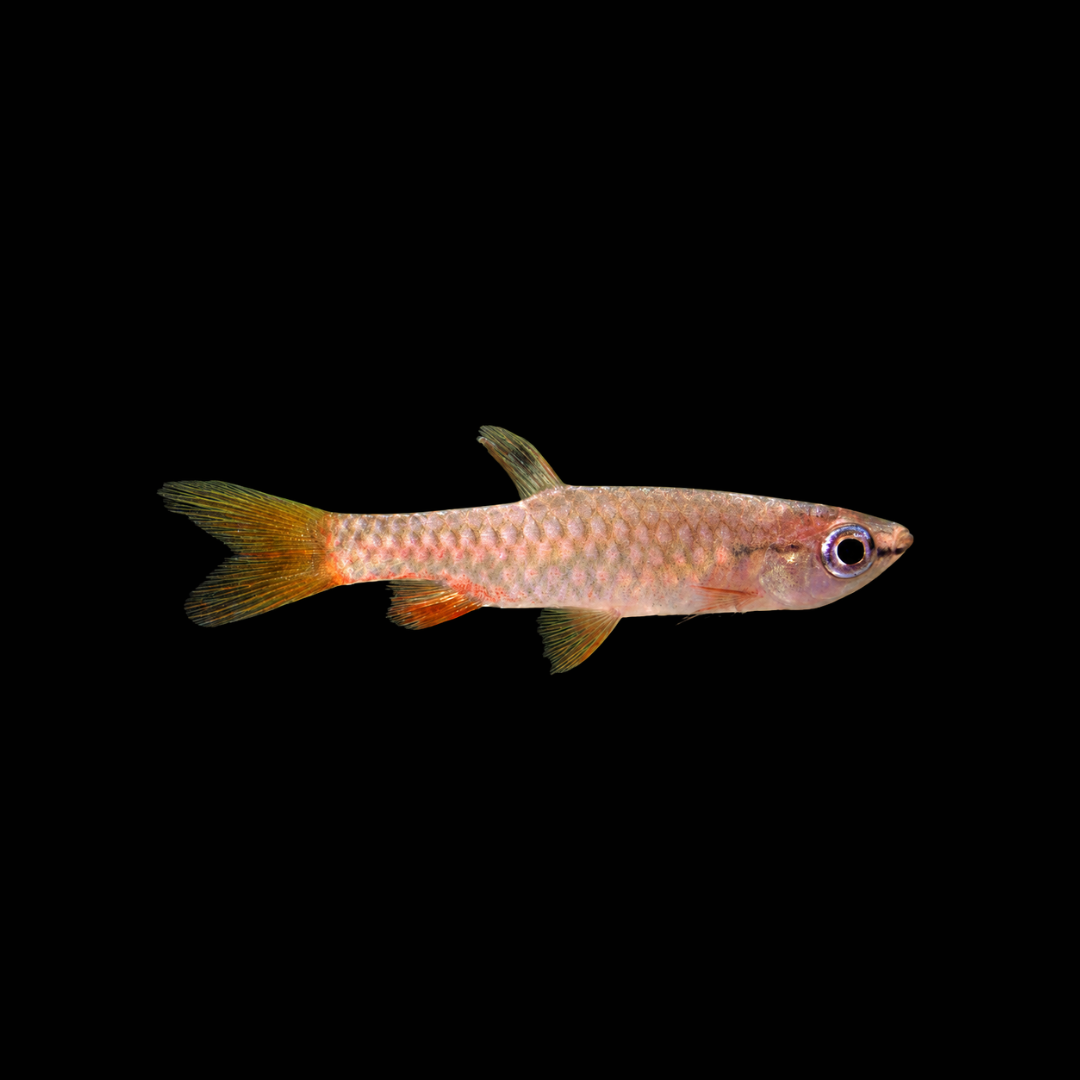
解説 / Description
ピリュリナ・ブレビスは、南米アマゾン川流域に知られるレビアシナ科の小型カラシンです。一般的なテトラ類と同じカラシン目に含まれますが、背鰭と尾鰭の間に見られる脂鰭はありません。普段はオリーブグレーを基調とした落ち着いた姿ですが、成熟した雄は状態が上がるとヒレにオレンジから赤の色味が入り、体側に赤いスポットを見せることがあります。派手なだけの魚ではなく、ゆるやかな群れ、繁殖期の縄張り、基質への産卵など、行動を観察する楽しみが大きい「珍カラ」として魅力のある種類です。 Pyrrhulina brevis is a small lebiasinid characin known from the Amazon River basin of South America. Although it belongs to the order Characiformes like many familiar tetras, it lacks an adipose fin between the dorsal and caudal fins. In everyday condition it has a subdued olive-gray appearance, but well-conditioned mature males may develop orange to red tones in the fins and red spots along the flanks. Its appeal is not limited to color; it is a rewarding oddball characin for observing behavior such as loose schooling, breeding-season territoriality, and substrate spawning.
飼育では、軟水から中程度までの水を急変させずに管理し、繁殖を狙う場合は弱酸性寄りの軟水に整えると扱いやすくなります。水草、流木、落ち葉、浮草を使った落ち着いた環境と、飛び出しを防ぐフタを用意すると、本来の美しさと行動を引き出しやすくなります。 In the aquarium, stable water conditions are more important than chasing numbers, while breeding attempts are easier in soft, slightly acidic water. A calm setup with plants, driftwood, leaf litter, floating cover, and a secure lid helps bring out both its natural beauty and behavior.
基本情報 / Basic Information
| 学名 / Scientific Name | Pyrrhulina brevis |
|---|---|
| 通称 / Common Name | ピリュリナ・ブレビス、ショートラインド・ピリュリナ、レッドフィン・ピリュリナPyrrhulina brevis, Short-lined Pyrrhulina, Red-fin Pyrrhulina |
| 分類 / Family | カラシン目 レビアシナ科 ピリュリナ亜科Order Characiformes, family Lebiasinidae, subfamily Pyrrhulininae |
| 英名 / English Name | Short-lined Pyrrhulina, Red-fin Pyrrhulina |
| 分布 / Distribution | 南米アマゾン川流域。ブラジル、ペルーなどの小川、支流、浸水林周辺で見られる魚として扱われます。古い文献や流通名では分布情報が混乱することがあるため、アルゼンチン産としての記録は別種との混同として扱うのが安全です。South America, mainly the Amazon River basin. It is associated with small streams, tributaries, and flooded forest habitats in areas such as Brazil and Peru. Because older literature and trade names can be confusing, Argentine records are best treated cautiously as involving confusion with other species. |
| 最大体長 / Max Size | 標準体長で約7cm。流通個体は3.5〜4cm前後の若い個体が見られることがあります。About 7 cm standard length. Imported or traded individuals may often be seen at around 3.5 to 4 cm. |
| 寿命 / Lifespan | 本種単独の明確な飼育下寿命データは多くありません。安定した環境では、近縁の小型カラシン類と同じく3〜5年程度を一つの目安にできます。Clear species-specific aquarium lifespan data are limited. Under stable conditions, a rough expectation of 3 to 5 years is a practical guide, similar to many related small characins. |
飼育環境 / Aquarium Environment
| 水槽サイズ / Tank Size | ペアや少数飼育なら45cm規格水槽以上、複数匹の群れや混泳を楽しむなら60cm規格水槽、約57L以上が扱いやすいです。繁殖期の雄は小さな縄張りを持つことがあるため、底面積と隠れ場所には余裕を持たせます。A 45 cm standard tank or larger can work for a pair or small group, while a 60 cm standard tank of about 57 L or more is easier for groups and community setups. Breeding males may hold small territories, so provide enough floor space and cover. |
|---|---|
| 水温 / Temperature | 24〜28℃を中心に管理します。導入直後や繁殖を狙う時期は、急な温度変化を避けて安定を重視します。 Keep mainly around 24 to 28°C. Avoid sudden temperature changes, especially immediately after introduction or when conditioning fish for breeding. |
| 水質 / Water Quality | 弱酸性から中性寄りの軟水が基本です。目安としてpH5.5〜6.8前後、低めの硬度を意識します。繁殖を狙う場合は、RO水を一部または全量使い、マジックリーフ、ヤシャブシの実、ピートモスなどでタンニンを含むブラックウォーター寄りに整える方法が向きます。Soft water from slightly acidic to near-neutral is preferred. A practical target is around pH 5.5 to 6.8 with low hardness. For breeding, partial or full RO water adjusted with catappa leaves, alder cones, or peat can help create tannin-rich, blackwater-like conditions. |
| レイアウト / Layout | 水草、流木、落ち葉、浮草を使った落ち着いたレイアウトが向きます。広めの葉、水草の茂み、平たい石や流木の周辺は産卵場所や縄張りの目印になりやすいため、観察しやすい位置にも配置すると楽しめます。水流は強くしすぎず、止水域に近い穏やかな環境を意識します。A calm layout with aquatic plants, driftwood, leaf litter, and floating plants is ideal. Broad leaves, plant thickets, flat stones, and areas around driftwood can act as spawning sites or territory markers, so placing some within view makes behavior easier to observe. Keep water movement gentle rather than strong. |
| 注意点 / Precautions | 細身の南米小型魚らしく、驚いた時に飛び出す可能性があります。フタと配管周りの隙間対策は必須です。ワイルド個体は輸送後に体力を落としていることがあるため、導入時は水合わせを丁寧に行い、隔離水槽で数週間状態を確認すると安心です。Like many slender South American small fishes, it may jump when startled, so a tight lid and covered gaps around pipes are essential. Wild imports may be weakened after transport, so careful acclimation and several weeks of observation in a quarantine tank are recommended. |
餌と給餌 / Feeding
| 餌の種類 / Diet | 雑食性寄りの微小捕食者として扱います。慣れれば細かな顆粒フードやフレークも食べますが、発色や繁殖を狙うなら、冷凍アカムシ、ブラインシュリンプ、ミジンコ、小型の昆虫由来フードなどを組み合わせるとよいでしょう。Treat it as an omnivorous micro-predator. Once acclimated, it may accept fine granules and flakes, but for color and breeding condition, combine these with frozen bloodworms, brine shrimp, daphnia, and small insect-based foods. |
|---|---|
| 給餌のポイント / Feeding Tips | 成魚には1日1〜2回、数分で食べ切る量を与えます。水面付近の餌にも反応しやすいため、沈みすぎる餌だけに偏らせないようにします。痩せやすい個体や導入直後の個体には、冷凍餌やブラインシュリンプで食いを確認し、人工飼料へ少しずつ慣らします。Feed adults once or twice daily, offering only what they can finish within a few minutes. They often respond well near the surface, so avoid relying only on fast-sinking foods. For thin or newly imported fish, first confirm feeding with frozen foods or brine shrimp, then gradually transition them to prepared foods. |
性格と混泳 / Temperament and Tank Mates
| 性格 / Temperament | 非繁殖期は比較的温和で、ゆるやかな群れを作ります。繁殖期の雄は小さな縄張りを持ち、同種や近づく魚を追うことがありますが、強い捕食性や水草を荒らす性質は目立ちません。Outside breeding condition it is relatively peaceful and forms loose groups. Breeding males may hold small territories and chase conspecifics or fish that come too close, but it is not strongly predatory toward suitable tank mates and does not usually damage plants. |
|---|---|
| 混泳の相性 / Compatibility | 同じような水質を好む小型カラシン、ペンシルフィッシュ、小型コリドラス、オトシンクルス、小型アピストグラマなどと相性を見ながら混泳できます。ヒレをかじる魚、動きが激しすぎる魚、大型魚、口に入るサイズの稚魚や小型エビとの混泳は避けます。繁殖観察を重視する場合は、同種のみ、または捕食圧の低い落ち着いた混泳に絞るとよいでしょう。It can be kept with similarly sized fish that enjoy comparable water conditions, such as small characins, pencilfish, small Corydoras, Otocinclus, and dwarf Apistogramma, while observing compatibility. Avoid fin-nippers, overly boisterous fish, large fish, and very small fry or shrimp that may be eaten. For breeding observation, a species-focused setup or a calm community with low predation pressure is best. |
病気と対策 / Diseases and Prevention
| かかりやすい病気 / Common Diseases | 本種だけに特有といえる病気の情報は多くありません。ワイルド個体では、白点病、細菌性の肌荒れ、痩せ、外部寄生虫に注意します。水質の急変や導入直後のストレスが重なると、食欲不振や色抜けが起こりやすくなります。There is little information suggesting a disease unique to this species. In wild imports, watch for ich, bacterial skin problems, emaciation, and external parasites. Sudden water changes and post-import stress can lead to poor appetite and faded coloration. |
|---|---|
| 対策と予防 / Prevention | 導入時は隔離水槽で状態を観察し、急激なpHや水温の変化を避けながら水合わせを行います。過密飼育、食べ残し、強すぎる水流を避け、定期的な換水で水質を清潔に保ちます。軽い塩分添加が導入時や初期育成で役立つ場面はありますが、水草や同居生体への影響を考え、長期使用や高濃度使用は避けます。Observe new arrivals in a quarantine tank and acclimate them while avoiding sudden pH or temperature shifts. Avoid crowding, leftover food, and excessive flow, and keep water quality clean with regular water changes. Mild salt addition can be useful in some acclimation or early-rearing contexts, but consider the tolerance of plants and tank mates, and avoid long-term or high-concentration use. |
増やし方(繁殖) / Breeding
| 雌雄の判別 / Sexing | 成熟した雄は背鰭、腹鰭、尻鰭が伸びやすく、繁殖状態ではオレンジから赤の発色が強くなり、体側の赤い斑点も目立ちます。雌は腹部が丸く見えやすく、色彩は比較的控えめなことが多いです。Mature males tend to develop longer dorsal, pelvic, and anal fins, with stronger orange to red coloration in breeding condition and more conspicuous red spots on the body. Females often appear rounder around the abdomen and are usually more subdued in color. |
|---|---|
| 繁殖形態 / Reproduction | 飼育下の観察報告では、水草の葉、底床、石、流木などの基質に粘着性の卵を産み付ける基質産卵型として扱われます。雄が縄張りを持ち、卵の周辺を守る行動も報告されています。一方で、データベース上では親の保護を伴わない産卵型として整理される例もあるため、繁殖行動は「観察例に基づく情報」として理解すると安全です。Aquarium observations treat it as a substrate spawner that lays adhesive eggs on plant leaves, the substrate, stones, or driftwood. Males are also reported to hold territories and guard the area around the eggs. However, some databases list the species as having no parental care, so its breeding behavior is safest to present as information based on aquarium observations rather than as universally documented biology. |
| 繁殖のポイント / Breeding Tips | 繁殖を狙う場合は、低硬度でpH5.5〜6.5程度の落ち着いた水質を用意し、マジックリーフや広い葉を産卵基質として入れます。親魚には栄養価の高い冷凍餌や生餌を与え、ペアが落ち着ける空間を確保します。仔魚は開口後の給餌遅れに弱いと報告されているため、ブラインシュリンプの幼生を1日3回前後、少量ずつ確実に与える計画を立てておくことが重要です。低濃度の塩分添加が初期育成を助ける可能性もありますが、実践時は水草や他生体への影響を確認します。For breeding, prepare calm, low-hardness water around pH 5.5 to 6.5 and provide catappa leaves or broad plant leaves as spawning surfaces. Condition the adults with nutritious frozen and live foods, and give the pair enough quiet space. Larvae are reported to be highly sensitive to delayed first feeding after mouth opening, so prepare a plan to offer newly hatched brine shrimp reliably in small amounts around three times daily. Low-level salt addition may support early rearing, but check the effects on plants and other livestock before applying it. |
雑学と豆知識 / Trivia and Fun Facts
| 1. 名前に込められた赤い色 / 1. The red color behind the name | 属名のPyrrhulinaは、赤や炎の色を連想させる語源説明で知られます。状態の上がった雄が赤みを帯びたヒレや赤いスポットを見せる姿を思うと、この名前の印象はとてもよく合います。種小名brevisは「短い」を意味し、同属内で比較的まとまりのある体型を示す名前として説明されることがあります。The genus name Pyrrhulina is commonly explained as being associated with red or flame-like color. When a well-conditioned male shows reddish fins and red body spots, that impression feels fitting. The species name brevis means short and is often explained as referring to a relatively compact body form within the genus. |
|---|---|
| 2. 分布情報は慎重に読む / 2. Distribution should be read carefully | 古い文献や観賞魚流通では、ピリュリナ類の産地名や近縁種名が混乱することがあります。ピリュリナ・ブレビスについても、現在はアマゾン川流域の魚として整理するのが無難です。アルゼンチンに関する古い記録は、別種との混同として扱われることがあり、学名だけでなく「どの地域の、どの特徴を持つ魚なのか」を確かめる大切さを教えてくれます。Older literature and aquarium trade usage can confuse locality names and related Pyrrhulina species. For Pyrrhulina brevis, it is safest to treat it as an Amazon River basin species. Older Argentine records are often handled as confusion with another species, reminding us that scientific names should be considered together with locality and morphology. |
| 3. テトラらしさとテトラらしくなさ / 3. Tetra-like and not-so-tetra-like | カラシンの仲間でありながら、ピリュリナ属は一般的な小型テトラとは少し違う姿と行動の面白さを持っています。背鰭と尾鰭の間に小さな脂鰭が見えるテトラ類も多い一方、ピリュリナでは脂鰭を欠くため、横から見た背中のラインがすっきりして見えます。繁殖期の雄が小さな縄張りを作り、色づいて相手を追う様子は、単に群泳する小魚とは異なる存在感があります。卵の保護については資料によって扱いに差があるため、確実な学術的断定ではなく、飼育下で観察されることのある魅力的な行動として紹介するのが誠実です。Although it is a characin, Pyrrhulina has a look and behavior that differ from many familiar small tetras. Many tetras show a small adipose fin between the dorsal and caudal fins, but Pyrrhulina lacks this fin, giving the back line a cleaner profile when viewed from the side. A breeding male may color up, hold a small territory, and chase rivals, giving it a presence beyond simple schooling behavior. Because sources differ on egg guarding, it is most responsible to present that behavior as an attractive aquarium observation rather than an overconfident universal statement. |
| 4. 稚魚育成では最初の給餌が勝負 / 4. First feeding is decisive for fry | ピリュリナ・ブレビスの初期育成では、ブラインシュリンプ幼生の給餌開始が遅れると生存率が大きく下がることが研究で示されています。研究で使われる「帰還不能点」という考え方は、繁殖に成功してからの数日間がいかに重要かをよく表しています。親魚を産ませることだけでなく、孵化後すぐに小さな餌を安定して用意できるかどうかが、繁殖成功の分かれ道になります。Studies on Pyrrhulina brevis early rearing show that delayed provision of brine shrimp nauplii can sharply reduce survival. The point-of-no-return concept used in larviculture research highlights how decisive the few days after hatching can be. Breeding success depends not only on spawning the adults but also on having tiny live food ready immediately after the fry begin external feeding. |
| 5. 染色体にも残るピリュリナの個性 / 5. Pyrrhulina individuality also appears in chromosomes | 細胞遺伝学の研究では、ピリュリナ・ブレビスは雌雄ともに2n=42の染色体数を示すと報告されています。同属には異なる染色体構成や特異な性染色体システムを持つ種も知られており、小さな観賞魚の背後に、レビアシナ科の複雑な進化史が重なっています。水槽の中の一匹にも、分類や進化の物語が静かに息づいているのです。Cytogenetic research reports Pyrrhulina brevis as having 2n=42 chromosomes in both sexes. Related species in the genus may show different chromosomal arrangements or unusual sex chromosome systems, suggesting a complex evolutionary history within Lebiasinidae. Even a small aquarium fish quietly carries a story of taxonomy and evolution. |
まとめ / Conclusion
ピリュリナ・ブレビスは、強い色彩だけで一瞬に目を奪う魚というより、落ち着いた水景の中で少しずつ表情を見せてくれる南米小型カラシンです。環境に慣れ、餌をよく食べ、雄が赤みを帯びてくるにつれて、普段の姿の奥に隠れていた魅力がゆっくり立ち上がってきます。 Pyrrhulina brevis is not simply a fish that dazzles at first glance; it is a small South American characin that reveals its character gradually in a calm aquarium. As it settles in, feeds well, and the males begin to take on reddish tones, the charm hidden beneath its modest everyday appearance slowly comes forward.
軟水寄りの安定した水、穏やかな水流、安心できる隠れ場所、そして飛び出しを防ぐフタを整えることで、この魚は水槽の中で自然な行動を見せやすくなります。赤く染まる雄の姿や、葉の周りで見せる繁殖期の緊張感は、静かな水草水槽に小さな物語を添えてくれるでしょう。 With stable, softer water, gentle flow, secure cover, and a tight lid, this fish is more likely to show natural behavior in the aquarium. The sight of a red-toned male and the quiet tension around a favored leaf or spawning site can add a small but memorable story to a peaceful planted tank.

気になる道具や飼い方を見つけてみませんか?
 アイのアクアグッズ案内水槽の底砂の選び方|砂・砂利の違いとおすすめ商品道具の特徴や使い方、選ぶときのポイントをアイが紹介します。記事はコチラ →
 アイのアクアグッズ案内水草用ソイルの選び方|土・砂の違いとおすすめ商品道具の特徴や使い方、選ぶときのポイントをアイが紹介します。記事はコチラ →
 アイのアクアグッズ案内海水魚初心者の必需品|水槽・人工海水・比重計・水質検査道具の特徴や使い方、選ぶときのポイントをアイが紹介します。記事はコチラ →
 アイのアクアグッズ案内そのごはん、泳いでる! 卵から始めるブラインシュリンプの孵化と道具選び道具の特徴や使い方、選ぶときのポイントをアイが紹介します。記事はコチラ →
さまざまな飼育テーマをご紹介。リンク先の記事には広告・商品紹介が含まれます。
案内・紹介記事一覧へ →分布マップ
ピリュリナ・ブレビスは、南米アマゾン川流域のブラジル、ペルー周辺の小川、支流、浸水林周辺に分布するとされます。この地図では、分布イメージを示すためにアマゾン川流域の概略代表地点を表示しています。
このマーカーは分布欄の内容をもとにした概略代表地点です。実際の採集地点や厳密な生息範囲を示すものではありません。
ピリュリナ・ブレビスを、分類、分布、生息環境、飼育条件、繁殖、初期育成、健康管理の面から確認するための資料です。店舗、通販、個人ブログ、一般的なまとめサイトは含めず、魚類データベース、学術論文、獣医学資料を中心に選定しました。
-
Fricke, R., Eschmeyer, W. N. & Van der Laan, R. Eschmeyer's Catalog of Fishes: Pyrrhulina brevis Steindachner 1876. California Academy of Sciences.学名の有効性、原記載、タイプ産地、レビアシナ科ピリュリナ亜科としての分類、分布情報を確認する基礎資料として使用。
-
GBIF Secretariat / Catalogue of Life. Pyrrhulina brevis Steindachner, 1876.受け入れられている学名、分類階層、英名、原記載文献の確認に使用。
-
Froese, R. & Pauly, D. FishBase. Pyrrhulina brevis: Species Summary.アマゾン川流域の分布、淡水・底中層性、pH5.2〜6.8、水温24〜28℃、最大体長約7.0cm SLなど、記事内の分布、生息環境、飼育水質の目安を支える資料として使用。
-
FishBase. Reproduction Summary: Pyrrhulina brevis.雌雄異体、体外受精、基質または開放水域への産卵、親の保護なしとして整理される繁殖情報を確認。飼育下観察で語られる卵保護行動を断定しすぎないための比較資料として使用。
-
Abe, H. A. et al. 2015. Pyrrhulina brevis (Steindachner, 1876) as a new option for the national ornamental fish farm: larviculture. Boletim do Instituto de Pesca, 41(1): 113-122.本種を観賞魚養殖対象として扱った初期育成研究。アルテミア給餌、給餌頻度、収容密度、低濃度塩分への反応に関する記述の裏付けとして使用。
-
Pinheiro-Junior, A. S. et al. 2023. Effect of feeding frequency and water salinization on early development of Pyrrhulina brevis, an Amazonian ornamental fish. Acta Amazonica, 53: 107-113.仔魚・後期仔魚の給餌頻度、1g/L程度の低濃度塩分、初期育成のストレス感受性に関する実験的根拠として使用。
-
Oliveira, L. C. C. et al. 2026. Critical feeding window: Influence of delayed Artemia nauplii provision on Pyrrhulina brevis larviculture. Boletim do Instituto de Pesca, 52: e940.開口後の給餌遅れが生存率に大きく影響する点、帰還不能点の考え方、ブラインシュリンプ幼生を早期に用意する重要性の根拠として使用。
-
Moraes, R. L. R. et al. 2019. Comparative cytogenetics and Neo-Y formation in small-sized fish species of the genus Pyrrhulina (Characiformes, Lebiasinidae). Frontiers in Genetics, 10: 678.ピリュリナ属の細胞遺伝学、P. brevisの雌雄における2n=42、同属内の核型進化に関する豆知識の根拠として使用。
-
MSD Veterinary Manual. Disorders and Diseases of Fish / Routine Health Care of Fish.水質悪化、ストレス、過密、隔離不足が魚病リスクを高めること、新規導入魚の隔離観察が感染症拡大の予防に役立つことを支える一般獣医学資料として使用。
資料について:繁殖行動は資料によって記述に違いがあります。個別の観察報告を、すべての個体に共通する行動と決めつけないようにしましょう。水槽サイズや飛び出し対策は、成魚の大きさと実際の行動も見ながら調整してください。




コメント