

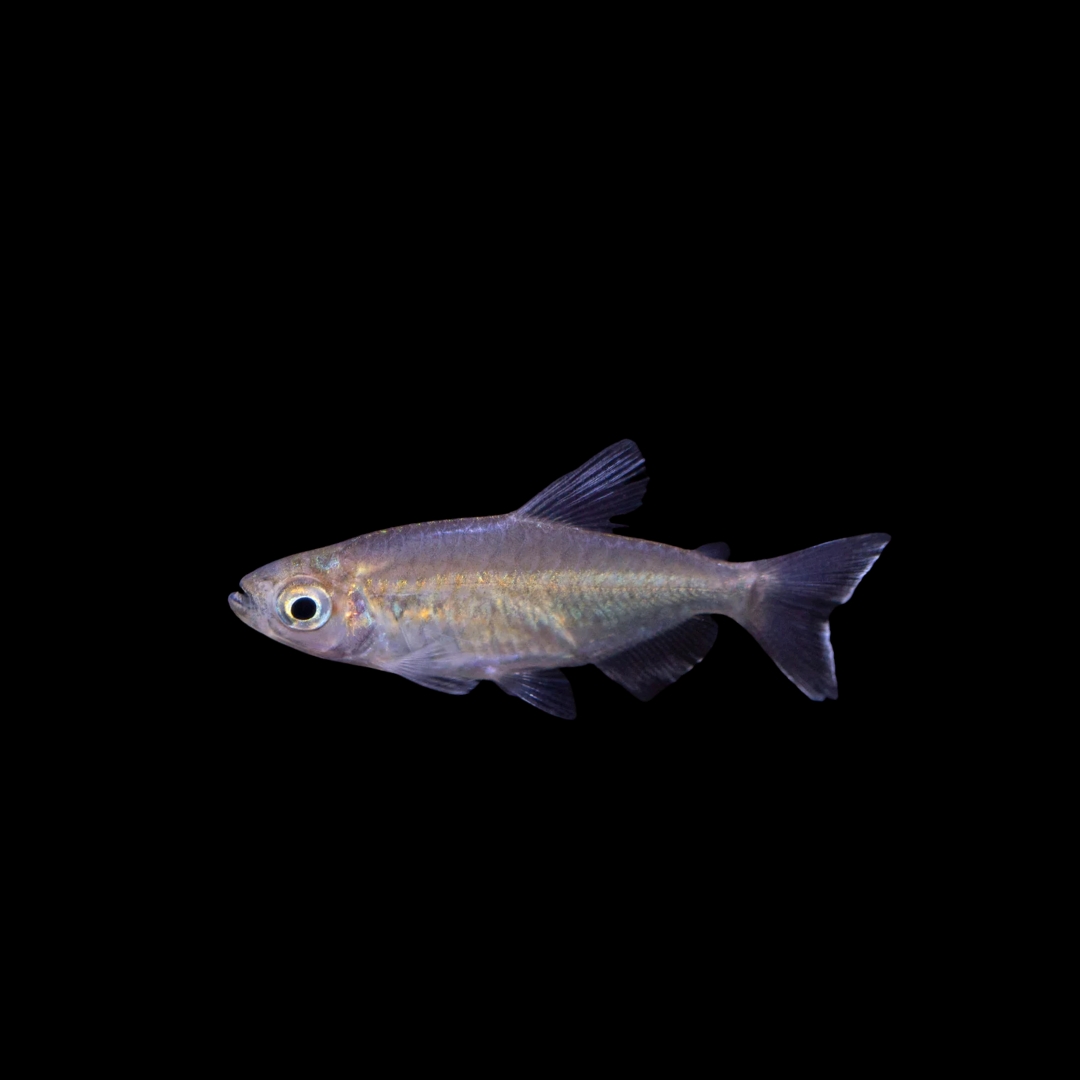
解説 / Description
コンゴテトラは、アフリカのコンゴ川流域に分布する中型のテトラです。成熟したオスは体側に青、赤、金、緑を帯びた虹色の輝きを見せ、背ビレや尾ビレの中央部が伸びるため、水槽内でも非常に存在感があります。南米産の小型テトラとは雰囲気が異なり、ゆったりした体つきと力強い遊泳、そして角度によって変化する金属光沢が大きな魅力です。 The Congo tetra is a medium-sized tetra native to the Congo River basin in Africa. Mature males show an iridescent sheen of blue, red, gold, and green along the body, together with elongated dorsal and central caudal fin rays. Unlike many small South American tetras, it has a robust body, powerful swimming behavior, and a metallic glow that changes with the viewing angle.
飼育そのものは極端に難しい魚ではありませんが、よく泳ぐ群泳魚であるため、狭い水槽や少数飼育では本来の美しさを出しにくくなります。きれいな水、十分な遊泳スペース、同種同士のまとまった数を用意すると、オスのヒレと発色がゆっくり整い、水草水槽や中型コミュニティタンクの主役になってくれます。 It is not an especially difficult fish to keep, but as an active shoaling species it does not show its full beauty in cramped tanks or very small groups. With clean water, ample swimming space, and a proper group of its own kind, the males gradually develop their fins and coloration, becoming a centerpiece in planted aquaria and peaceful medium-sized community tanks.
基本情報 / Basic Information
| 学名 / Scientific Name | Phenacogrammus interruptus |
|---|---|
| 通称 / Common Name | コンゴテトラCongo tetra |
| 分類 / Family | カラシン目 アレステス科 フェナコグラムス属。近年の分類では、コンゴテトラ類を含む系統として Clupeocharacinae が扱われることがあります。Order Characiformes, family Alestidae, genus Phenacogrammus. In recent taxonomic treatments, the Congo tetra lineage may be placed within Clupeocharacinae. |
| 英名 / English Name | Congo tetra |
| 分布 / Distribution | アフリカ中央部のコンゴ川中・下流域。主にコンゴ民主共和国とコンゴ共和国の水系に分布するとされています。Lower and middle Congo River basin in Central Africa, mainly in the Democratic Republic of the Congo and the Republic of Congo. |
| 最大体長 / Max Size | オスで約8cm、メスで約6cmが基本的な目安です。飼育情報では9cm前後とされる場合もありますが、終生飼育では中型テトラとして扱います。About 8 cm for males and about 6 cm for females. Some aquarium sources list around 9 cm, so it should be treated as a medium-sized tetra in long-term care. |
| 寿命 / Lifespan | 目安は3〜5年ほどです。水質が安定し、ストレスの少ない環境では長く美しい姿を保ちやすくなります。Usually around 3 to 5 years. Stable water quality and low-stress conditions help maintain good coloration and condition for longer. |
飼育環境 / Aquarium Environment
| 水槽サイズ / Tank Size | 6匹以上の群れで飼うことを前提に、90cm規格水槽を下限の目安とし、できれば100cm以上、余裕を見るなら120cm規格水槽が理想的です。幼魚の一時飼育なら60cm水槽でも管理できますが、成魚の遊泳力とオスのヒレの伸長を考えると、長期飼育には横幅のある水槽が向いています。For a group of six or more, a 90 cm standard tank can be considered the lower practical limit, while 100 cm or larger is better, and a 120 cm tank is ideal. Juveniles can be raised temporarily in a 60 cm tank, but adults need horizontal swimming space and room for the males’ fins to develop properly. |
|---|---|
| 水温 / Temperature | 23〜26℃前後。一般的な熱帯魚用ヒーターで安定させ、急な水温変化を避けます。 Around 23-26°C. Keep the temperature stable with a standard aquarium heater and avoid sudden changes. |
| 水質 / Water Quality | 弱酸性〜中性を中心に、pH 6.0〜8.0、軟水〜中硬水が目安です。適応力はありますが、古い水や硝酸塩の蓄積には弱いため、週1回を目安に25〜30%程度の換水を行い、ろ過をしっかり効かせます。Aim for slightly acidic to neutral water, roughly pH 6.0-8.0, with soft to moderately hard water. The species is adaptable, but it does not thrive in stale water or high nitrate conditions, so perform regular partial water changes of about 25-30% weekly and maintain strong filtration. |
| レイアウト / Layout | 中央から前面に泳ぐ空間を残し、後景や側面に水草、流木、陰になる場所を作ると落ち着きます。水草はアヌビアス、ボルビティス、ミクロソリウムなど葉の硬い種類が扱いやすく、浮草や弱めの照明を組み合わせると体色の見え方も自然になります。Leave open swimming space in the middle and front of the aquarium, with plants, driftwood, and shaded areas along the back and sides. Tough-leaved plants such as Anubias, Bolbitis, and Java fern are especially practical, and floating plants or subdued lighting help the fish appear more natural. |
| 注意点 / Precautions | 導入直後や照明点灯時に驚いて飛び出すことがあるため、フタは必ず用意します。少数飼育では警戒心が強くなり、色が出にくくなることがあります。また、オスの長いヒレを傷めないよう、とがった流木や粗い装飾、ヒレをかじる魚との同居は避けます。Use a secure lid, as newly introduced fish or startled individuals may jump. Very small groups can become shy and show poor coloration. Avoid sharp hardscape and fin-nipping tank mates, as the males’ extended fins are easily damaged. |
餌と給餌 / Feeding
| 餌の種類 / Diet | 雑食性で、人工飼料、冷凍アカムシ、イトメ、ブラインシュリンプ、ミジンコ、植物質を含むフレークや顆粒飼料などをよく食べます。野生下では小型の昆虫、甲殻類、ワーム類、植物質などを利用するとされています。Omnivorous. It accepts quality flakes and granules, frozen bloodworms, tubifex-type foods, brine shrimp, daphnia, and plant-containing prepared foods. In the wild, it feeds on small insects, crustaceans, worms, and plant material. |
|---|---|
| 給餌のポイント / Feeding Tips | 1日1〜2回、数分で食べきる量を与えます。食欲が強いため与えすぎに注意しつつ、痩せやすい個体や底層魚に餌が届いているかも確認します。植物質を含む餌を混ぜると、水草の柔らかい新芽をかじる行動を抑えやすくなります。Feed once or twice daily, only as much as the fish can finish within a few minutes. They are eager feeders, so avoid overfeeding while checking that shy individuals and bottom-dwelling tank mates are not missing out. Including some plant matter in the diet may reduce nibbling on tender plant shoots. |
性格と混泳 / Temperament and Tank Mates
| 性格 / Temperament | 基本的には温和で、同種同士でまとまって泳ぐ群泳性の強い魚です。単独や少数では臆病になりやすいため、最低でも5〜6匹以上、可能ならそれ以上の群れで飼うと落ち着きます。Generally peaceful and strongly shoaling. It can become timid when kept alone or in very small numbers, so keep at least five to six individuals, and more if space allows. |
|---|---|
| 混泳の相性 / Compatibility | 同程度の大きさで温和なレインボーフィッシュ、中型ラスボラ、コリドラス、ローチ、小型〜中型プレコ、穏やかなドワーフシクリッドなどと相性がよいです。スマトラ、サーペテトラのようにヒレをかじりやすい魚や、極端に小さい稚魚・小型エビとの混泳は避けます。Good tank mates include similarly sized peaceful rainbowfish, medium rasboras, Corydoras, loaches, small to medium plecos, and peaceful dwarf cichlids. Avoid fin-nippers such as tiger barbs or serpae tetras, as well as tiny fry and very small shrimp that may be eaten. |
病気と対策 / Diseases and Prevention
| かかりやすい病気 / Common Diseases | 導入時のストレス、水温変化、水質悪化が重なると、白点病、尾ぐされ病、口ぐされ病など一般的な熱帯魚の病気が出ることがあります。体色が急にくすむ、群れから離れる、ヒレをたたむ、呼吸が荒いといった変化は早めに確認します。Under stress from transport, temperature swings, or poor water quality, it may develop common aquarium diseases such as ich, fin rot, and mouth rot. Sudden loss of color, isolation from the group, clamped fins, or rapid breathing should be checked promptly. |
|---|---|
| 対策と予防 / Prevention | もっとも大切なのは予防です。新規導入魚は可能であればトリートメントタンクで数週間観察し、本水槽では水温、水質、ろ過、換水を安定させます。発病時は原因を水質から確認し、症状に合った市販薬を隔離水槽で使用します。薬剤は魚種、濃度、水草やエビへの影響があるため、必ず製品表示に従ってください。Prevention is the priority. Quarantine new fish for several weeks when possible, and keep temperature, filtration, water quality, and maintenance routines stable in the main aquarium. If disease appears, first check water quality and treat in a separate hospital tank with an appropriate commercial medication, always following the product label because dosage and safety vary by medication and tank inhabitants. |
増やし方(繁殖) / Breeding
| 雌雄の判別 / Sexing | 成熟したオスはメスより大きく、発色が強く、背ビレと尾ビレ中央部が長く伸びます。メスはやや小型で体色が控えめ、ヒレの伸長も少なめです。若魚では判別が難しいため、成長を待って判断します。Mature males are larger, more colorful, and have longer dorsal and central caudal fin extensions. Females are smaller, more subdued in color, and have shorter fins. Juveniles can be difficult to sex accurately. |
|---|---|
| 繁殖形態 / Reproduction | ばらまき型の産卵を行う卵生魚です。親は卵や稚魚を保護せず、産卵後に卵を食べることがあるため、繁殖を狙う場合は専用水槽を使います。An egg-scattering species. The adults do not guard eggs or fry and may eat the eggs after spawning, so a dedicated breeding tank is recommended. |
| 繁殖のポイント / Breeding Tips | 弱酸性〜中性寄りの清潔な軟水、暗めの環境、ウィローモスや産卵モップなどを用意します。オスがメスを追うようにして産卵し、卵は底へ沈み、約6日で孵化するとされています。産卵後は親魚を取り出し、稚魚の初期飼料としてインフゾリアや市販の稚魚用液体飼料を準備し、成長に合わせてブラインシュリンプ幼生へ切り替えます。Use clean, soft water on the slightly acidic to neutral side, dim lighting, and fine plants or spawning mops. After vigorous chasing by the male, the eggs sink to the bottom and are reported to hatch after about six days. Remove the adults after spawning and prepare infusoria or liquid fry food for the first stage, then move the fry onto newly hatched brine shrimp as they grow. |
雑学と豆知識 / Trivia and Fun Facts
| 1. 「南米のテトラ」とは別のアフリカの系統 / 1. An African lineage, not a South American tetra | コンゴテトラは見た目こそテトラらしい魚ですが、分類上はアフリカのアレステス科に属します。ネオンテトラやカージナルテトラのような南米産の小型テトラとは大陸も系統も異なり、アフリカの大河川で独自に発展してきたテトラの仲間です。そのため、同じ「テトラ」という呼び名でも、体の厚み、遊泳力、オスのヒレの伸び方にアフリカ産ならではの力強さが感じられます。Although it looks like a typical tetra, the Congo tetra belongs to the African family Alestidae. It is not closely equivalent in aquarium character to small South American tetras such as neon or cardinal tetras. Its deeper body, active swimming, and elaborate male fin extensions reflect the distinctive character of African tetras. |
|---|---|
| 2. 虹色の輝きは「塗られた色」だけではない / 2. Its rainbow sheen is not simply pigment | コンゴテトラの金属光沢は、見る角度や照明で印象が大きく変わります。これは色素だけでなく、魚類の虹色素胞に含まれるグアニン結晶などによる構造色が関わるためと考えられます。特にネオンテトラなどの研究では、細胞内の反射板のような構造が光の干渉を生み、色の見え方を変える仕組みが詳しく調べられています。コンゴテトラを水草の陰から眺めると、同じ魚が一瞬ごとに違う色を見せる理由がよく分かります。The metallic sheen of the Congo tetra changes greatly with lighting and viewing angle. This is understood as structural coloration involving iridophores and guanine crystals, not pigment alone. Studies on species such as the neon tetra have shown how reflective structures inside cells can create interference colors and alter the perceived hue. Watching a Congo tetra move in and out of plant shadows reveals this effect beautifully. |
| 3. 流通個体はブリードが中心 / 3. Most trade specimens are captive-bred | 日本のショップで見かけるコンゴテトラの多くは、海外で商業的に繁殖されたブリード個体です。ブリード個体は人工飼料に慣れやすく、導入もしやすい一方で、若い販売サイズではまだオスのヒレや発色が完成していないことが珍しくありません。迎えた直後より、半年、1年と安定した環境で育てた後に本領を見せる魚です。Many Congo tetras seen in the aquarium trade are commercially bred. Captive-bred fish usually adapt well to prepared foods and aquarium life, but young store-sized males often have not yet fully developed their fins or coloration. This is a fish that often looks better after months of stable care than it does on the day of purchase. |
| 4. 色は水質と安心感のサインにもなる / 4. Color reflects both water quality and comfort | コンゴテトラは、落ち着いた群れと清潔な水の中でよく色が上がります。反対に、古い水、過密、急な照明、少数飼育などが重なると、体色がくすんで物陰に隠れがちになります。発色は単なる鑑賞ポイントではなく、水槽環境がその魚に合っているかを知らせる小さなサインでもあります。Congo tetras color up best when they feel secure in a group and live in clean, stable water. Stale water, crowding, sudden lighting, or keeping too few individuals can make them appear dull and shy. Their coloration is therefore not just decorative; it is also a useful sign of how well the aquarium suits them. |
まとめ / Conclusion
コンゴテトラは、アフリカの大河川が育んだ力強さと、繊細な虹色の輝きを併せ持つ中型テトラです。十分な水槽サイズ、まとまった群れ、清潔で安定した水を用意することで、幼魚の控えめな姿から、長いヒレを広げて泳ぐ成魚の姿へとゆっくり変化していきます。 The Congo tetra combines the strength of an African river fish with a delicate iridescent glow. With adequate tank size, a proper group, and clean stable water, it gradually transforms from a modest young fish into an adult with extended fins and shimmering color.
群れが水槽の中層を横切るたび、青、金、緑の光がふっと移ろい、水草の緑や流木の陰に奥行きを与えてくれます。派手さだけでなく、時間をかけて仕上がっていく美しさを楽しめることこそ、コンゴテトラと暮らす大きな魅力です。 As the group crosses the middle of the aquarium, flashes of blue, gold, and green add depth to plants and driftwood shadows. Its appeal lies not only in brilliance, but also in the way its beauty develops slowly through careful, steady care.

気になる道具や飼い方を見つけてみませんか?
 アイのアクアグッズ案内エーハイム、安いのと高いのは何が違う? コタロウと見比べる外部フィルター道具の特徴や使い方、選ぶときのポイントをアイが紹介します。記事はコチラ →
 アイのアクアグッズ案内エーハイムはおもちゃから始まった? 小さな噴水から水槽へ、アイとコタロウの探訪道具の特徴や使い方、選ぶときのポイントをアイが紹介します。記事はコチラ →
 アイのアクアグッズ案内水槽用浄水器の選び方|水換えを楽にするタイプとROの違い道具の特徴や使い方、選ぶときのポイントをアイが紹介します。記事はコチラ →
 アイのアクアグッズ案内カルキ抜き・水質調整剤の選び方|水換えと水槽の種類に合わせて選ぶ道具の特徴や使い方、選ぶときのポイントをアイが紹介します。記事はコチラ →
さまざまな飼育テーマをご紹介。リンク先の記事には広告・商品紹介が含まれます。
案内・紹介記事一覧へ →▶ 記事の生体をAMAZONで買う ▶ 記事の生体をYahooで買う
参考文献・根拠資料
この記事の分類、分布、生息環境、飼育条件、繁殖、病気や注意点を確認するために参照した資料です。店舗、通販、個人ブログ、まとめサイトは除外し、学術データベース、公的機関、研究機関、大学・獣医学系資料を中心に選定しています。
-
分類・分布・生息環境・飼育条件・繁殖
FishBase: Phenacogrammus interruptus, Congo tetra
Froese, R. and Pauly, D. Editors. FishBase. コンゴテトラの分類、最大体長、コンゴ川中・下流域の分布、淡水・底中層性、pH・硬度・水温、食性、群れでの飼育、水槽サイズの目安、産卵数と孵化日数を確認する基礎資料として使用。
-
分類・学名・シノニム
GBIF Backbone Taxonomy: Phenacogrammus interruptus (Boulenger, 1899)
GBIF Secretariat. 学名、分類階級、アレステス科への所属、Micralestes interruptus などのシノニム、英名 Congo tetra の確認に使用。分類表記の整合性を確認するための補助資料。
-
タイプ産地・形態・分布・生態
Le portail des poissons de l’Afrique: Phenacogrammus
Royal Museum for Central Africa / IRD 系のアフリカ魚類ポータル。タイプ産地 Stanley Pool、原記載名、シノニム、形態記載、最大サイズ、生息型、食性、繁殖、コンゴ民主共和国・コンゴ共和国を含むコンゴ川中・下流域の分布確認に使用。
-
原記載・分類史
Boulenger, G. A. 1899. Matériaux pour la faune du Congo. Fascicule 4.
Biodiversity Heritage Library 収録の原記載文献。Micralestes interruptus として記載された当初の分類史、記載年、記載者、原記載に関する確認に使用。
-
生態・繁殖・注意点
U.S. Geological Survey, Nonindigenous Aquatic Species Database: Congo tetra
米国地質調査所の外来水生生物データベース。中層から底層を利用する生態、pH、食性、産卵数、約6日での孵化、未定着・導入個体に関する注意点、観賞魚放流リスクの確認に使用。
-
白点病・予防と治療上の注意
UF/IFAS Extension: Ichthyophthirius multifiliis (White Spot) Infections in Fish
フロリダ大学 IFAS Extension の魚病資料。白点病の病原体、治療が生活環の影響を受けること、薬剤・塩分・水質条件への注意、隔離や清掃を含む再感染防止の考え方を確認するために使用。
-
カラムナリス・尾ぐされ/口ぐされ系の注意
MSD Veterinary Manual: Bacterial Diseases of Fish
MSD Veterinary Manual の魚類細菌病資料。Flavobacterium columnare がカラムナリス病に関与すること、温水性魚類で問題になりやすいこと、水質やストレスが発症リスクに関わることを確認するために使用。
-
イカリムシ・寄生虫対策
UF/IFAS Extension: Lernaea (Anchorworm) Infestations in Fish
フロリダ大学 IFAS Extension の寄生虫資料。イカリムシが淡水魚に寄生する甲殻類寄生虫であること、生活環、野外採集魚・池養殖魚でのリスク、隔離やライフサイクルを断つ管理の重要性を確認するために使用。
注記:病気の治療薬や用量は国、製品、魚種、水草・甲殻類の有無によって安全域が変わります。予防と隔離、安定した水質管理を心がけ、実際の投薬は製品表示と魚病に詳しい専門家の助言を優先してください。参照確認日:2026年6月18日。




コメント