

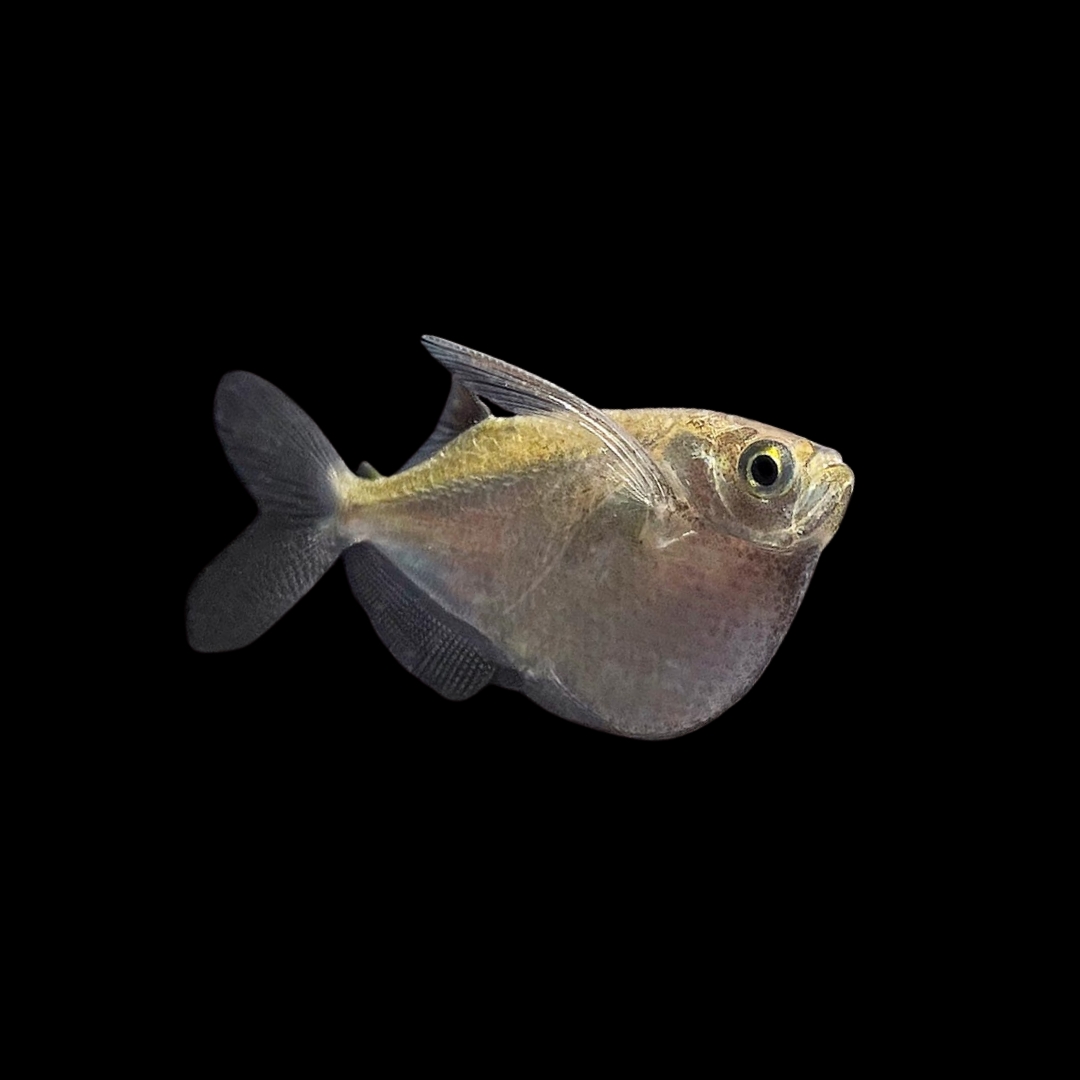
解説 / Description
シルバーハチェットフィッシュは、南米の流れの穏やかな水域にすむ小型の淡水魚です。大きく張り出した胸部と強く側扁した体型が手斧のように見えることから、ハチェットフィッシュの仲間として親しまれています。水槽内では主に水面直下を泳ぎ、白銀の体が光を受けると、上層にすっとした静かな存在感を添えてくれます。 The Silver Hatchetfish is a small freshwater fish from calm waters of South America. Its deep, laterally compressed body and strongly expanded chest resemble a small hatchet, giving this group its familiar name. In the aquarium it usually swims just beneath the surface, where its silvery body adds a quiet, elegant presence to the upper water layer.
本種の飼育で最も大切なのは、群れで落ち着ける環境と、確実な飛び出し対策です。水面近くで暮らす性質が強く、驚いたときには水面から跳ね上がることがあります。十分な水面面積、穏やかな水流、浮草による安心できる陰、そして隙間のないフタを用意することで、本来の落ち着いた群泳を観察しやすくなります。 The most important points in keeping this species are providing a calm group environment and preventing escapes. It is strongly surface-oriented and can leap from the water when startled. A broad surface area, gentle current, floating plants for shade and security, and a tightly fitted lid with no gaps will help it show its natural, calm schooling behavior.
基本情報 / Basic Information
| 学名 / Scientific Name | Gasteropelecus sternicla |
|---|---|
| 通称 / Common Name | シルバーハチェットフィッシュ、シルバーハチェット、コモンハチェットフィッシュ、リバーハチェットフィッシュCommon Hatchetfish, River Hatchetfish, Silver Hatchetfish |
| 分類 / Family | カラシン目 トラコカラックス科Order Characiformes, family Gasteropelecidae |
| 英名 / English Name | Common Hatchetfish / River Hatchetfish / Silver Hatchetfish |
| 分布 / Distribution | 南米のペルーアマゾン、中部アマゾン、ギアナ地方、ベネズエラなどに分布し、ブラジルやパラグアイ水系にも記録があります。流れの緩やかな小川、支流、沼地、水面植物の多い場所で見られる水面性の魚です。Distributed in South America, including the Peruvian Amazon, middle Amazon, the Guianas, and Venezuela, with records also associated with Brazil and the Paraguay basin. It is a surface-dwelling fish found in slow-moving creeks, tributaries, swamps, and areas rich in surface vegetation. |
| 最大体長 / Max Size | 標準体長で約4cm、観賞魚としては全長5〜6.5cm前後が目安です。水槽内では4〜5cmほどの個体が多く見られます。About 4 cm standard length, with aquarium specimens often reaching around 5 to 6.5 cm total length. Many individuals in aquaria are around 4 to 5 cm. |
| 寿命 / Lifespan | 適切な環境ではおおむね3〜5年ほどが目安です。Usually around 3 to 5 years under suitable aquarium conditions. |
飼育環境 / Aquarium Environment
| 水槽サイズ / Tank Size | 小型魚ですが、水面直下を群れで泳ぐため、水量よりも水面面積が重要です。少なくとも60cm規格水槽を目安にし、余裕を持たせるなら80cm以上または90cm規格水槽が扱いやすいです。6匹以上の群れで飼うほど落ち着きやすくなります。Although small, this species swims in groups just beneath the surface, so surface area is especially important. A standard 60 cm tank should be considered a practical minimum, while an 80 cm or larger tank, or a standard 90 cm tank, gives more comfortable space. Groups of six or more tend to settle better. |
|---|---|
| 水温 / Temperature | 23〜27℃前後が目安です。急な水温変化は体調不良や白点病のきっかけになりやすいため、冬はヒーター、夏は冷却ファンや水槽用クーラーで安定させます。 Around 23 to 27°C is suitable. Sudden temperature changes can lead to stress or white spot disease, so use a heater in winter and cooling equipment in summer when needed. |
| 水質 / Water Quality | 弱酸性〜中性の軟水から中硬水が向き、pH5.5〜7.0前後を目安にします。日本の水道水にも順応することがありますが、流木、マジックリーフ、ピートモスなどで弱酸性寄りに整えると、原産地の雰囲気に近い落ち着いた環境を作りやすいです。アンモニアと亜硝酸は0ppmを維持し、硝酸塩の蓄積にも注意します。Slightly acidic to neutral soft to moderately hard water is suitable, with a target around pH 5.5 to 7.0. It may adapt to many tap water conditions, but driftwood, Indian almond leaves, or peat can help create a calmer, more natural, slightly acidic environment. Ammonia and nitrite should remain at 0 ppm, and nitrate accumulation should be kept low. |
| レイアウト / Layout | 浮草を入れて水面に陰と安心できる場所を作ると、強い照明や人影への警戒を和らげられます。流木や暗色の底床を合わせると、ブラックウォーター風の雰囲気になり、本種の銀色の体もよく映えます。フィルターの排水は水面を激しく波立てないように分散させ、泳ぎ続ける負担を減らします。Floating plants provide shade and a secure surface zone, helping reduce stress from bright light and shadows. Driftwood and a darker substrate can create a blackwater-like atmosphere and enhance the fish’s silvery body. Filter outflow should be diffused so the surface is not strongly disturbed, reducing the burden of constant swimming. |
| 注意点 / Precautions | フタは必須です。ガラスブタやアクリルブタで水槽上面を覆うだけでなく、フィルターの配管、コード、自動給餌器まわりの隙間もスポンジやネットで塞ぎます。わずかな隙間から飛び出すことがあるため、導入後しばらくは特に点検をこまめに行います。A tight lid is essential. Cover the entire top with glass or acrylic panels, and block gaps around filter pipes, cords, and automatic feeders with sponge or mesh. Because the fish can escape through surprisingly small openings, check the cover especially carefully after introduction. |
餌と給餌 / Feeding
| 餌の種類 / Diet | 浮上性のフレークフード、浮上性の微粒子ペレット、フリーズドライのイトミミズ、冷凍赤虫、冷凍ブラインシュリンプ、ミジンコ、ボウフラなどが使えます。導入初期や痩せた個体には、自然下の昆虫食に近い小さな生き餌や冷凍餌を少量ずつ与えると反応しやすいです。Floating flakes, floating micro-pellets, freeze-dried tubifex, frozen bloodworms, frozen brine shrimp, daphnia, and mosquito larvae can be offered. Newly imported or thin individuals often respond better to small live or frozen foods that resemble their natural insect-based diet. |
|---|---|
| 給餌のポイント / Feeding Tips | 水面の餌を食べることに特化しており、沈んだ餌を追って潜ることはあまり得意ではありません。餌は長く浮くものを選び、1日1〜2回、数分で食べ切れる量を水面に広がるように与えます。中層魚との混泳では、餌を先に奪われないように投入位置や餌の種類を工夫します。This species is specialized for taking food from the surface and rarely dives after sinking food. Choose foods that float well and feed once or twice daily in amounts eaten within a few minutes. In community tanks with active midwater fish, adjust feeding position and food type so the hatchetfish are not outcompeted. |
性格と混泳 / Temperament and Tank Mates
| 性格 / Temperament | 基本的には温和で、他魚を積極的に攻撃することはほとんどありません。ただし臆病で驚きやすいため、単独や少数では落ち着きにくく、飛び出しや拒食につながることがあります。最低でも6匹前後、可能なら10匹以上の群れで飼うと安定しやすいです。It is generally peaceful and rarely attacks other fish. However, it is shy and easily startled. Keeping only one or a few individuals can lead to stress, jumping, or poor feeding. A group of around six or more, ideally ten or more, is recommended. |
|---|---|
| 混泳の相性 / Compatibility | 底層のコリドラス、オトシンクルス、小型プレコ、クーリーローチなどとは生活圏が重なりにくく相性が良いです。ネオンテトラやラミーノーズテトラなど温和な小型カラシン、ペンシルフィッシュ、アピストグラマなどのドワーフシクリッドとも組み合わせやすいですが、給餌時の競争には注意します。ヒレをかじる魚、動きが激しすぎる魚、口に入るサイズの肉食魚、同じ水面を縄張りにする魚は避けます。Bottom-dwelling fish such as Corydoras, Otocinclus, small plecos, and kuhli loaches are good companions because they use different water layers. Peaceful small tetras, pencilfish, and dwarf cichlids such as Apistogramma can also work, although feeding competition should be watched. Avoid fin-nippers, overly fast or boisterous fish, predatory species large enough to eat them, and territorial surface-dwelling fish. |
病気と対策 / Diseases and Prevention
| かかりやすい病気 / Common Diseases | 輸入直後や水温変化が大きい時期には白点病が出やすく、擦れ傷や水質悪化があるとカラムナリス病、尾腐れ、口腐れのリスクも高まります。ワイルド個体として入荷することが多いため、導入時には体力低下、痩せ、寄生虫の可能性にも注意します。White spot disease is common after import or during periods of unstable temperature. Injuries and poor water quality can increase the risk of columnaris disease, fin rot, and mouth rot. Because many specimens are wild-caught, weakness, thinness, and possible parasites should also be considered when introducing new fish. |
|---|---|
| 対策と予防 / Prevention | 導入時は可能であれば隔離水槽で数週間様子を見ます。白点病では水温を急にではなく段階的に調整し、日本で一般的なメチレンブルー水溶液、グリーンFリキッド、アグテンなどを状態に合わせて使用します。カラシン類は薬に敏感な場合があるため、製品説明を確認しながら慎重に投薬します。細菌性の症状ではグリーンFゴールド顆粒、エルバージュエース、観パラDなどを隔離薬浴で検討します。最も多い事故は病気ではなく飛び出しであるため、日常的なフタの点検も重要な予防策です。Quarantine new arrivals for several weeks when possible. For white spot disease, adjust the temperature gradually rather than suddenly, and use common Japanese aquarium medications such as methylene blue solution, Green F Liquid, or Agten according to the fish’s condition. Since characins can be sensitive to medication, follow product directions carefully and dose cautiously. For bacterial symptoms, medications such as Green F Gold granules, Elbagin Ace, or Kanpara D may be considered in a hospital tank. Since jumping is often a greater everyday risk than disease, regular lid checks are an important part of prevention. |
増やし方(繁殖) / Breeding
| 雌雄の判別 / Sexing | 雌雄差ははっきりしません。成熟したメスは腹部にやや丸みが出ることがありますが、外見だけで確実に判別するのは難しいです。Sexual differences are subtle. Mature females may appear slightly rounder in the belly, but reliable sexing by appearance alone is difficult. |
|---|---|
| 繁殖形態 / Reproduction | 卵生で、親が卵や稚魚を保護しないばらまき型と考えられます。浮草や水面付近の植物に卵を産み付ける可能性が語られますが、本種そのものの家庭水槽での繁殖情報は少なく、確実な方法が広く確立している魚ではありません。It is an egg-laying species and is generally treated as an egg scatterer with no parental care. Eggs may be laid among floating or near-surface plants, but reliable information on breeding this exact species in home aquaria is limited, and a widely established method is not available. |
| 繁殖のポイント / Breeding Tips | 繁殖を狙う場合は、近縁のハチェットフィッシュ類の考え方に沿って、pH5.5〜6.5前後の軟らかい酸性寄りの水、浮草、落ち着いた単独飼育水槽、昆虫系の栄養価の高い餌によるコンディショニングを用意します。産卵が確認できた場合は親に卵や稚魚を食べられないよう隔離します。稚魚の初期飼料にはインフゾリアやゾウリムシなどの微細な餌が必要になると考えられます。If breeding is attempted, use approaches similar to related hatchetfish: soft, slightly acidic water around pH 5.5 to 6.5, floating plants, a calm species-only breeding tank, and conditioning with nutritious insect-based foods. If eggs are observed, separate the parents or eggs to prevent predation. Very small first foods such as infusoria or paramecium would likely be required for the fry. |
雑学と豆知識 / Trivia and Fun Facts
| 1. 名前に刻まれた「手斧」のかたち / 1. The Hatchet Shape in Its Name | 属名のGasteropelecusは、腹部を意味する言葉と、手斧を意味する言葉に由来します。横から見ると胸部が大きく下へ張り出し、薄い背中側との対比で、小さな銀色の斧の刃のように見えます。この姿は単なる見た目の個性ではなく、水面近くで暮らす魚としての進化の方向性をよく表しています。The genus name Gasteropelecus is derived from words meaning belly and hatchet. Viewed from the side, the expanded chest and thin upper body resemble a small silver hatchet blade. This form is not merely a visual curiosity; it reflects an evolutionary path shaped by life near the water surface. |
|---|---|
| 2. 英名はひとつに決まらない / 2. More Than One English Name | 英語圏ではRiver HatchetfishやCommon Hatchetfishという呼び名がよく使われ、観賞魚の文脈ではSilver Hatchetfishとも呼ばれます。ただし、シルバー系のハチェットフィッシュという呼び方は近縁種にも使われることがあるため、販売名だけで判断せず、学名のGasteropelecus sterniclaまで確認すると安心です。In English, the names River Hatchetfish and Common Hatchetfish are common, while Silver Hatchetfish is also used in the aquarium trade. Because silver-colored hatchetfish names can also be applied to related species, checking the scientific name Gasteropelecus sternicla is the safest way to identify it. |
| 3. 水面という狭い世界に特化した魚 / 3. Specialized for the Narrow World of the Surface | 本種は水槽の上層をただ漂っているだけの魚ではありません。自然下では水面に落ちた昆虫や小さな無脊椎動物を利用し、下から迫る危険には素早い跳躍で反応します。水面の餌に強く反応し、沈む餌を追いにくい性質も、この生活様式を知ると自然に理解できます。This species is not simply a fish that happens to stay near the top of the aquarium. In nature it feeds on insects and small invertebrates at the surface and can respond to danger from below with a sudden leap. Its strong response to floating food and reluctance to chase sinking food make sense once its surface-oriented life is understood. |
| 4. 「飛ぶ魚」と呼ばれても、飼育ではジャンプ対策が本題 / 4. Even If Called a Flying Fish, Jump Prevention Comes First | ハチェットフィッシュ類は、胸ビレや胸部の筋肉が発達した魚として古くから注目されてきました。空中で鳥のように飛び続ける魚として見るよりも、水面から瞬間的に逃げる能力に優れた魚として理解すると、飼育上のポイントがはっきりします。水槽では、その能力が美しさであると同時に最大の事故要因にもなるため、フタの精度が飼育成否を左右します。Hatchetfish have long attracted attention for their enlarged pectoral region and associated muscles. Rather than viewing them as birds of the aquarium, it is more useful to understand them as fish with a highly developed ability to leap from the surface. In captivity, that ability is both part of their fascination and the greatest accident risk, so the quality of the lid can determine success. |
まとめ / Conclusion
シルバーハチェットフィッシュは、水面直下という限られた層に美しさと個性を添えてくれる魚です。白銀の体、手斧のような輪郭、群れで静かに並ぶ姿は、派手な色彩とは違う落ち着いた魅力を持っています。 The Silver Hatchetfish brings beauty and character to the narrow layer just beneath the water surface. Its silvery body, hatchet-like outline, and quiet schooling posture offer a calm appeal that is different from brightly colored aquarium fish.
十分な水面面積、穏やかな水流、浮草の陰、そして隙間のないフタがそろうと、本種は水槽の上層で自然な表情を見せてくれます。水面に寄り添うように泳ぐ白銀の群れは、南米の静かな水辺を小さく切り取ったような余韻を残してくれます。 When given broad surface area, gentle current, floating plant cover, and a secure lid with no gaps, this species reveals its natural expression in the upper layer of the aquarium. A silvery group gliding along the surface leaves the impression of a quiet South American waterside captured in miniature.

気になる道具や飼い方を見つけてみませんか?
 アイのアクアグッズ案内水換え・底砂掃除の道具の選び方|砂利・砂・ソイルに合うクリーナーとポンプ道具の特徴や使い方、選ぶときのポイントをアイが紹介します。記事はコチラ →
 アイのアクアグッズ案内水草用ライトの選び方|緑の絨毯と赤い水草を楽しむ照明・植栽用品道具の特徴や使い方、選ぶときのポイントをアイが紹介します。記事はコチラ →
さまざまな飼育テーマをご紹介。リンク先の記事には広告・商品紹介が含まれます。
案内・紹介記事一覧へ →分布マップ
シルバーハチェットフィッシュは、南米のペルーアマゾン、中部アマゾン、ギアナ地方、ベネズエラなどに分布し、ブラジルやパラグアイ水系にも記録があります。この地図では、分布イメージを示すため、中部アマゾン周辺を概略代表地点として表示しています。
Google Earthで開く※このマップは分布欄の内容をもとにした概略プロットです。実際の採集地点や厳密な生息範囲を示すものではありません。
参考文献・参照資料
本記事では、店舗・通販サイト、個人ブログ、まとめサイトを参考文献から除外し、分類、分布、生息環境、飼育条件、繁殖、病気や飛び出し注意を支える公的データベース、学術系データベース、査読論文、獣医学・大学系資料を中心に選定しています。
-
Fricke, R., Eschmeyer, W. N. & Van der Laan, R. (eds.). Eschmeyer’s Catalog of Fishes, California Academy of Sciences: Gasteropelecus sternicla.
https://researcharchive.calacademy.org/research/ichthyology/catalog/fishcatget.asp?spid=4138
学名の有効性、原記載、分類上の位置づけ、南米における分布、淡水魚であること、IUCN評価の確認に使用。 -
GBIF Secretariat. Gasteropelecus sternicla (Linnaeus, 1758), GBIF Backbone Taxonomy.
https://www.gbif.org/species/2355737
分類階級、シノニム、英名・各国語名、分布記録を確認するための補助資料として使用。 -
Froese, R. and Pauly, D. (eds.). FishBase: Gasteropelecus sternicla, River hatchetfish.
https://www.fishbase.se/summary/Gasteropelecus-sternicla
水温、pH、硬度、体長、群泳性、水面生活、餌、生息環境、飛び出し注意、最低水槽サイズ、飼育下繁殖情報の確認に使用。 -
Weitzman, S. H. and Palmer, L. (2003). Family Gasteropelecidae. In: Reis, R. E., Kullander, S. O. and Ferraris, C. J. Jr. (eds.), Check List of the Freshwater Fishes of South and Central America, pp. 101–103. EDIPUCRS.
https://naturalhistory.si.edu/staff/lisa-palmer
トラコカラックス科、淡水ハチェットフィッシュ類の分類・地域チェックリストを支える文献として使用。 -
Wiest, F. C. (1995). The specialized locomotory apparatus of the freshwater hatchetfish family Gasteropelecidae. Journal of Zoology, 236, 571–592.
https://doi.org/10.1111/j.1469-7998.1995.tb02733.x
胸部・胸ビレを用いた跳躍機構、能動的飛行ではなく跳躍として理解するための学術的根拠として使用。 -
Francis-Floyd, R. and Floyd, M. R. Ichthyophthirius multifiliis (White Spot) Infections in Fish. University of Florida IFAS Extension, EDIS FA006.
https://ask.ifas.ufl.edu/publication/FA006
白点病の原因、生活環、治療時に複数回処置が必要になる理由、薬剤使用時の注意点を支える資料として使用。 -
MSD Veterinary Manual. Bacterial Diseases of Fish.
https://www.msdvetmanual.com/exotic-and-laboratory-animals/aquarium-fish/bacterial-diseases-of-fish
カラムナリス病の原因菌であるFlavobacterium columnare、症状、魚病としての注意点を支える獣医学資料として使用。 -
Merck Veterinary Manual. Management of Aquarium Fish.
https://www.merckvetmanual.com/exotic-and-laboratory-animals/aquarium-fish/management-of-aquarium-fish
観賞魚の健康管理、薬剤・抗菌薬使用時の慎重さ、魚病管理の一般的注意点を補強する資料として使用。




コメント