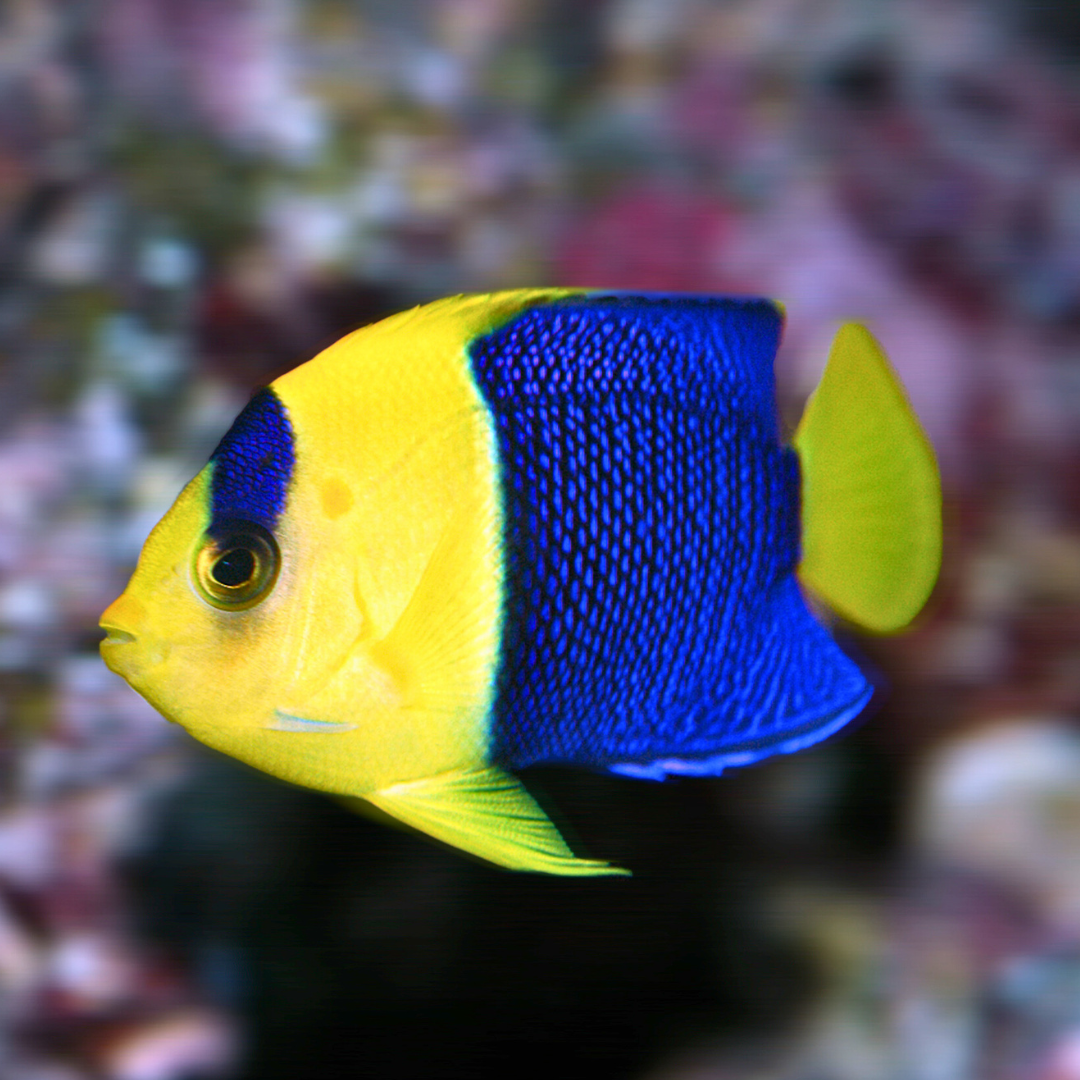
ソメワケヤッコは、鮮やかな黄色と深い青色のコントラストが非常に美しい小型のキンチャクダイの仲間です。その名の通り、体の前後で色が「染め分け」られたような姿は、サンゴ礁の中でもひときわ目を引きます。日本のマリンアクアリウム黎明期から多くのファンに愛されてきた歴史があり、現在でも「小型ヤッコの入門種」的な立ち位置として非常に人気があります。しかし、その美しい色彩は単なる飾りではなく、自然界で生き抜くための高度な生存戦略が隠されています。飼育においては環境への適応や餌付けがポイントとなりますが、適切に管理された水槽ではその鮮烈な色彩を長く楽しむことができます。The Bicolor Angelfish (Centropyge bicolor) is a strikingly beautiful dwarf angelfish characterized by its vibrant yellow and deep blue contrast. As the name suggests, its body appears to be divided into two distinct colors, making it stand out even among the diverse life of a coral reef. It has a long history of being loved by hobbyists since the early days of marine aquariums in Japan and remains a popular “introductory” species for dwarf angelfish. However, its brilliant coloration is more than just decoration; it conceals a sophisticated survival strategy for the wild. While acclimatization and feeding are key points in captivity, a well-managed aquarium allows its vivid colors to be enjoyed for a long time.
基本情報 / Basic Information
学名 / Scientific Name
Centropyge bicolor
通称 / Common Name
ソメワケヤッコBicolor Angelfish
分類 / Family
キンチャクダイ科アブラヤッコ属Pomacanthidae, Centropyge genus
英名 / English Name
Bicolor Angelfish / Oriole Angelfish
分布 / Distribution
インド太平洋(アフリカ東岸からサモア、日本南部からグレートバリアリーフなど)Indo-Pacific (East Africa to Samoa, southern Japan to the Great Barrier Reef)
最大体長 / Max Size
約15cmApproximately 15 cm (6 inches)
寿命 / Lifespan
約10〜14年(飼育下では環境に依存)Approximately 10 to 14 years (depending on the environment in captivity)
飼育環境 / Aquarium Environment
水槽サイズ / Tank Size
200リットル以上(90cm規格水槽から120cmワイド水槽を推奨)200 liters or more (Recommended: 90cm standard to 120cm wide tank)
水温 / Temperature
22〜26℃(安定した温度管理が重要)22 to 26°C (72 to 78°F). Consistent temperature control is vital.
導入初期は餌付きにくいことが多いため、冷凍イサザアミやアサリで摂餌を促し、徐々に人工飼料に慣らします。Often difficult to feed initially; encourage feeding with frozen mysis or clams, then transition to pellets.
性格と混泳 / Temperament and Tank Mates
性格 / Temperament
やや気が強く、同種や似た体型の魚に対しては攻撃的になることがあります。Slightly semi-aggressive; can be territorial toward conspecifics or similar-looking fish.
混泳の相性 / Compatibility
他種との混泳は概ね良好ですが、サンゴやシャコガイを突くことがあるため慎重に判断してください。Generally compatible with other species, but evaluate carefully as they may pick at corals or clams.
病気と対策 / Diseases and Prevention
かかりやすい病気 / Common Diseases
白点病、ウーディニウム病(特に導入初期のストレス下で発生しやすい)。Marine Ich (White Spot) and Marine Velvet (Oodinium), especially under initial stress.
対策と予防 / Prevention
徹底した検疫を行い、殺菌灯の設置や水質の安定化で免疫力を維持させることが予防に繋がります。Conduct thorough quarantine; using UV sterilizers and maintaining stable water quality helps prevent outbreaks.
増やし方(繁殖) / Breeding
雌雄の判別 / Sexing
外見での判別は困難ですが、最大体長に近い個体がオス、それより小さい個体がメスである可能性が高いです。Hard to tell by appearance; typically the largest individual is male, while smaller ones are female.
繁殖形態 / Reproduction
雌性先熟の雌雄同体。一夫多妻制のハレムを形成し、夕暮れ時に中層で産卵する浮遊性卵です。Protogynous hermaphrodites. Form harems and release pelagic eggs into the water column at dusk.
繁殖のポイント / Breeding Tips
家庭での繁殖は仔魚の初期餌料確保が極めて困難ですが、近年は専門施設での完全養殖(CB)に成功しています。Home breeding is extremely difficult due to larval feeding requirements; however, captive breeding (CB) has succeeded in specialized facilities.
雑学と豆知識 / Trivia and Fun Facts
1. 名前を彩る江戸の「奴さん」 / 1. The Edo Period Origins of the Name “Yakko”
日本の海水魚ファンには馴染み深い「ヤッコ」という言葉。この語源は、江戸時代の大名行列で先頭を歩いた「奴(ヤッコ)さん」に由来します。彼らの顔に描かれた特徴的な跳ね上がった髭が、この仲間のエラにある鋭い棘に似ていたことから名付けられました。本種はさらに、前後で色が鮮明に分かれているため「ソメワケ(染め分け)」の名を冠しており、日本の伝統文化と魚の姿が見事に融合した美しい名前なのです。The term “Yakko,” familiar to Japanese hobbyists, originates from “Yakko-san,” servants who led daimyo processions in the Edo period. Their distinctive, upward-curling facial hair resembled the sharp opercular spines on these fish. This species is called “Somewake” (divided dyeing) due to its two-tone body, creating a beautiful name that blends Japanese culture with biology.
2. 捕食者を惑わす「分断色」の魔法 / 2. The Magic of Disruptive Coloration
黄色と青色のあまりにも鮮烈なコントラストは、目立つためにあると思われがちですが、実はその逆です。これは「分断色」と呼ばれ、動物学者のヒュー・コットらが提唱した視覚的擬態の一種です。強烈なコントラストが魚の輪郭をバラバラに壊して見せることで、捕食者に「それが魚であること」を認識させにくくしています。さらに目の周りにある青い筋は、急所である「眼」を模様の一部に溶け込ませる高度な隠蔽工作として機能しています。The intense contrast of yellow and blue might seem designed to stand out, but it’s actually the opposite. This is “Disruptive Coloration,” a type of camouflage proposed by zoologist Hugh Cott. The strong contrast breaks up the fish’s silhouette, making it harder for predators to recognize it as prey. Furthermore, the blue stripes near the eyes help blend the vulnerable eye into the overall pattern as a form of concealment.
3. ダイナミックな性転換システム / 3. Dynamic Sex Change System
ソメワケヤッコの社会は「ハレム」という一夫多妻制で成り立っています。面白いのは、彼らがすべてメスとして生まれ、その中の一番大きく強い個体がオスへと性転換する「雌性先熟」という生態を持つことです。もしリーダーであるオスがいなくなると、次に優位なメスがわずか20日ほどでオスへと姿を変え、新たなリーダーとしてハレムを引き継ぎます。この柔軟なシステムが、厳しいサンゴ礁での種の存続を支えているのです。Bicolor Angelfish societies are based on a polygynous harem system. Fascinatingly, they exhibit protogynous hermaphroditism; all are born female, and the largest, strongest individual transforms into a male. If the alpha male disappears, the next dominant female changes sex in just about 20 days to lead the harem, a flexible system that ensures species survival on the reef.
4. 未来へ繋ぐ完全養殖(CB)個体の登場 / 4. The Arrival of Captive-Bred (CB) Individuals
かつてソメワケヤッコは野生採取個体しか流通していませんでしたが、現在は「Bali Aquarich」などの施設で完全養殖(CB)された個体が日本でも手に入るようになりました。養殖個体は生まれながらに水槽環境に慣れており、最大の難関である「人工飼料への餌付け」が済んだ状態で届くため、初心者の方でも安心して飼育を始められるようになっています。これは、サンゴ礁の自然保護と趣味の持続可能性を両立させる、大きな一歩となっています。In the past, only wild-caught Bicolor Angelfish were available, but now captive-bred (CB) individuals from facilities like “Bali Aquarich” are appearing in Japan. Since CB fish are acclimated to aquariums from birth and are already trained to eat pellets, they are much easier for beginners. This represents a major step toward balancing coral reef conservation with the sustainability of the hobby.
まとめ / Conclusion
ソメワケヤッコは、その卓越した色彩と豊かな生態で、私たちアクアリストに海の深淵な神秘を教えてくれる存在です。飼育には水質の安定や餌付けへの忍耐が必要な場面もありますが、それらを乗り越えて彼らが元気に泳ぐ姿は、日々の暮らしに大きな感動と癒やしを与えてくれるでしょう。江戸の文化を感じさせる名前や、進化が導き出した色彩の秘密に思いを馳せながら、この美しいヤッコとの生活を始めてみてはいかがでしょうか。The Bicolor Angelfish, with its extraordinary colors and rich ecology, teaches us about the profound mysteries of the ocean. While keeping them requires stability and patience during the feeding phase, the sight of them swimming vigorously provides immense inspiration and healing. Consider starting your life with this beautiful angelfish while reflecting on its Edo-influenced name and the evolutionary secrets hidden in its colors.
最近では養殖個体の流通も増え、より健康的で飼いやすい個体に出会えるチャンスも広がっています。ショップで元気な個体を見かけたら、ぜひその鮮やかな「染め分け」をじっくりと観察してみてください。きっと、サンゴ礁の宝石と呼ばれる理由が納得できるはずです。With the increasing availability of captive-bred specimens, there are more chances to encounter healthy and hardy fish. If you see a lively one at your local shop, take a close look at its vibrant “divided dyeing.” You will surely understand why they are called the jewels of the coral reef.



 アイのアクアグッズ案内水槽ライトの選び方|魚の見え方・水草・海水で選ぶおすすめ照明道具の特徴や使い方、選ぶときのポイントをアイが紹介します。記事はコチラ →
 アイのアクアグッズ案内海水魚初心者の必需品|水槽・人工海水・比重計・水質検査道具の特徴や使い方、選ぶときのポイントをアイが紹介します。記事はコチラ →
 アイのアクアグッズ案内コケを食べるコイの仲間に合わせる飼育用品|フライングフォックス・アルジイーター・ガラ道具の特徴や使い方、選ぶときのポイントをアイが紹介します。記事はコチラ →
 アイのアクアグッズ案内テトラミンって、こんなにあるの? アイとコタロウのごはん探究旅道具の特徴や使い方、選ぶときのポイントをアイが紹介します。記事はコチラ →



コメント