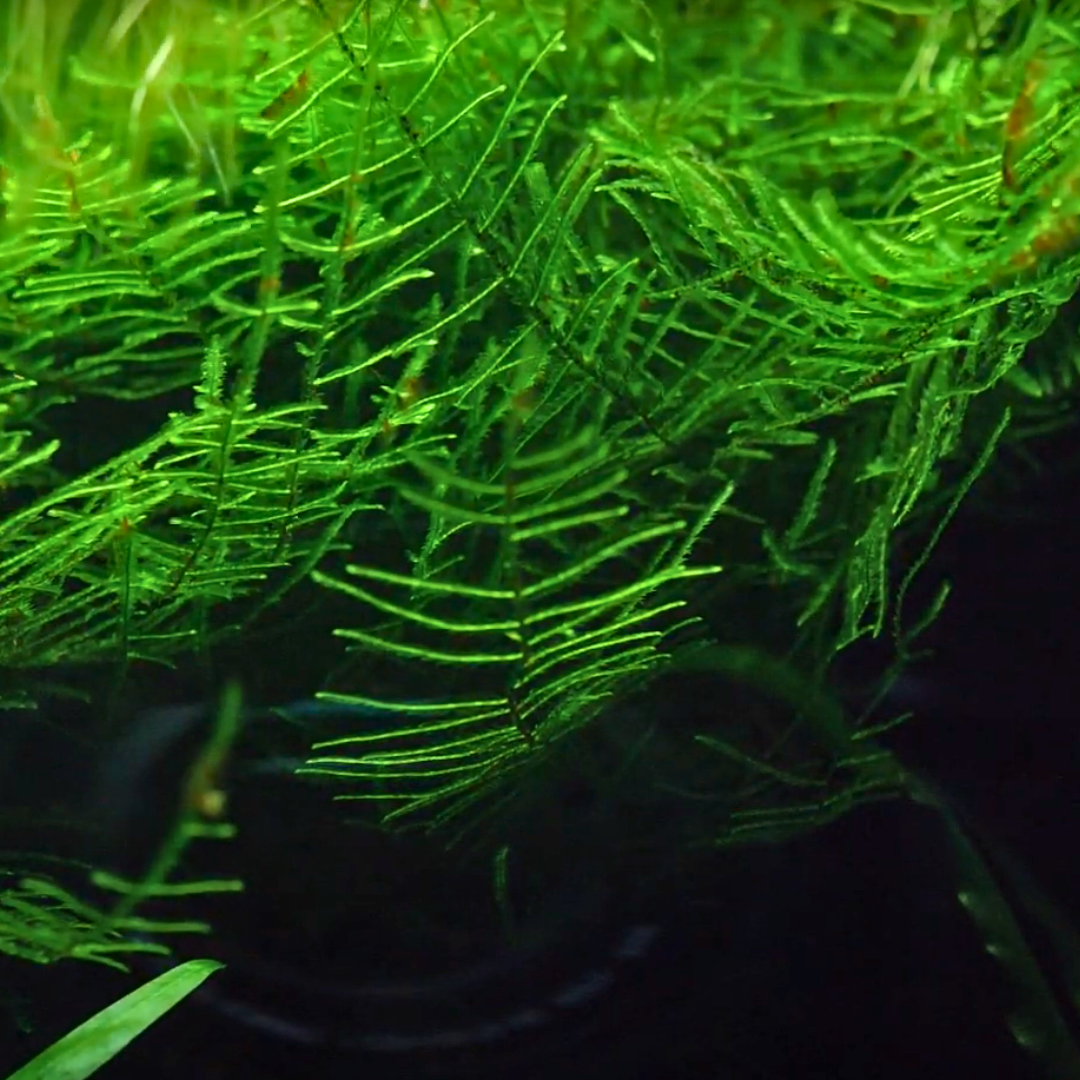
ジャワモスは、世界中で最も普及している水生コケ植物であり、アクアリウムにおける「生きたインフラ」とも呼べる存在です。その不規則に分岐する繊細な葉は、稚魚やシュリンプにとって最高の隠れ家となり、また微生物が繁殖するための豊かな場を提供します。驚異的な適応力を持ち、低光量や幅広い水質に対応できることから、初心者から上級者まで幅広く愛されています。流木や石に活着させることで、自然観あふれる景観を作り出し、アクアスケープにおいて欠かせない素材となっています。Java moss is the most widely distributed aquatic moss in the world, often described as a living infrastructure for aquariums. Its irregularly branched, delicate leaves provide ideal hiding spots for fry and shrimp while supporting a rich film of microorganisms. Known for its incredible adaptability, it can thrive in low light and various water conditions, making it a favorite for both beginners and professionals. By attaching it to driftwood or stones, it creates a naturalistic appearance essential for aquascaping.
基本情報 / Basic Information
学名 / Scientific Name
Taxiphyllum barbieri
通称 / Common Name
ジャワモスJava Moss
分類 / Family
ハイゴケ科 タキシフィルム属Hypnaceae, Taxiphyllum
分布 / Distribution
東南アジア(ベトナムなど)Southeast Asia (Vietnam, etc.)
育成難易度 / Difficulty
容易Easy
育成環境 / Cultivation Environment
光量 / Light
低光量から強光まで対応可能(推奨:60cm規格水槽で20W 1灯程度から)Adaptable from low to high light. Recommended: from 20W for a 60cm standard tank.
CO2添加 / CO2 Injection
無くても育成可能だが、添加することでより美しく健康的に繁茂するNot strictly required, but CO2 injection promotes healthier and more lush growth.
水質 / Water Quality
弱酸性から中性、20度から28度(適応範囲は12度から34度と広い)Weakly acidic to neutral, 20 to 28 degrees Celsius (Adaptable range: 12 to 34 degrees).
底床 / Substrate
ソイル、砂利、砂(基本は流木や石への活着)Soil, gravel, sand (typically attached to driftwood or rocks).
レイアウト / Layout
配置 / Positioning
前景、中景、後景、流木や石への活着Foreground, midground, background, or attached to hardscape.
注意点 / Precautions
あまり厚く重なりすぎると下層が光不足で枯れて剥離するため、適度な厚さを維持するIf layers become too thick, the bottom may rot due to lack of light, causing it to detach.
増やし方(トリミング) / Propagation & Trimming
増やし方 / Propagation
茎葉をハサミで細かく切り分け、再び流木などに固定することで容易に増殖するEasily propagated by cutting the stems and re-attaching them to new substrates.
トリミング / Trimming
伸びすぎた部分をハサミでカットする。カットした破片が水槽内に散らばらないよう注意Trim excess growth with scissors. Be careful not to let loose fragments scatter in the tank.
病気と対策(コケなど) / Pests & Algae
かかりやすい病気 / Common Issues
アオミドロなどの糸状コケが絡みやすいProne to entanglement with hair algae or filamentous algae.
対策と予防 / Prevention
ヤマトヌマエビなどのお掃除役を導入し、定期的なトリミングで通水性を保つIntroduce cleanup crews like Yamato Numa shrimp and maintain water flow by trimming.
雑学と豆知識 / Trivia and Fun Facts
1. ジャワモスの名前を巡るミステリー1. The Mystery of the Name
「ジャワモス」という通称とは裏腹に、実際にはジャワ島には自生していないという驚きの事実があります。もともとはベトナム原産のTaxiphyllum barbieriが主流ですが、かつては別種のVesicularia dubyanaと混同されていました。1960年代にヨーロッパへ導入された際、成長の早い本種がいつの間にか市場を占拠し、名前だけが「ジャワモス」として残ったのです。Despite its name, Java moss is not actually native to the island of Java. While Taxiphyllum barbieri from Vietnam is the most common variety today, it was long confused with Vesicularia dubyana. When introduced to Europe in the 1960s, the faster-growing T. barbieri eventually dominated the market, but the common name Java moss stuck.
2. 日本の学者が解き明かした正体2. Identity Revealed by a Japanese Scholar
この半世紀にわたる分類の混乱を解決した一人が、日本の高名な学者である岩月善之助氏です。1982年、彼は流通しているジャワモスが実はTaxiphyllum属であることを証明しました。私たちが今、正確な学名を知ることができるのは、こうした日本人研究者の緻密な功績のおかげでもあります。The confusion lasted for decades until Japanese bryologist Zennosuke Iwatsuki proved in 1982 that the common Java moss actually belongs to the genus Taxiphyllum. We owe our current taxonomic clarity to the meticulous work of such Japanese researchers.
3. 日本独自の「組織培養」文化とエビへの愛情3. Tissue Culture and the Japanese Shrimp Hobby
日本で組織培養カップの水草がこれほど普及した背景には、シュリンプ(エビ)への深い愛情があります。従来の水草に付着している残留農薬は、エビにとって致命的です。無菌室で育てられた組織培養のジャワモスは「完全無農薬」であり、大切なエビを安心して飼育したいという日本のアクアリストのニーズに完璧に応えた結果、業界標準となりました。The popularity of tissue-cultured plants in Japan is rooted in the passion for dwarf shrimp. Residual pesticides found on traditional plants can be fatal to shrimp. Tissue-cultured Java moss is guaranteed pesticide-free, perfectly meeting the needs of Japanese aquarists who prioritize the safety of their livestock.
4. 未来を救うコケ?驚異の浄化能力4. A Moss That Saves the Future?
最新の研究では、ジャワモスが水中からカドミウムや鉛、銅などの重金属を効率的に吸収し、無毒化する能力を持つことが示されています。低濃度の汚染であれば、むしろ成長が刺激されるという驚きの特性(ホルミシス効果)も確認されており、将来的な環境浄化技術への応用が期待されています。Recent studies show that Java moss can efficiently absorb and neutralize heavy metals like cadmium, lead, and copper from water. Interestingly, low-level pollution can even stimulate its growth, a phenomenon known as hormesis, suggesting a future in environmental phytoremediation.
まとめ / Conclusion
ジャワモスは、その育てやすさと多機能性から、アクアリウムの歴史の中で欠かせない地位を確立してきました。名前や分類を巡る数多くのドラマを経て、現在では組織培養という安全な形で私たちの手元に届いています。Java moss has established an essential place in aquarium history due to its ease of care and versatility. After a complex history regarding its name and classification, it is now readily available to us in the safe, modern form of tissue culture.
初心者の方には失敗の少ない最初の一歩として、ベテランの方には緻密なレイアウトや環境浄化のパートナーとして。ジャワモスは、これからも日本の、そして世界中の水槽を彩り続けていくことでしょう。For beginners, it offers a foolproof first step into the hobby; for experts, it serves as a partner in intricate aquascaping and environmental care. Java moss will surely continue to grace aquariums in Japan and across the globe for years to come.
Taxonomy岩月善之助 (1982). 「日本および隣接地域のタキシフィルム属の分類学的研究」, 財団法人服部植物研究所報告. (ジャワモスの学名再定義に関する基本文献)Iwatsuki, Z. (1982). “A Taxonomic Study of the Moss Genus Taxiphyllum in Japan and Adjacent Regions.” Journal of the Hattori Botanical Laboratory.
ScienceYamaguchi, T., et al. (2011). 「水生コケ植物 Taxiphyllum barbieri による重金属吸着特性」. (重金属除去と成長刺激に関する研究)Yamaguchi, T., et al. (2011). “Adsorption characteristics of heavy metals by the aquatic moss Taxiphyllum barbieri.” Environmental Science and Pollution Research.
Industry日本観賞魚振興事業協同組合 刊行物. 「水草の残留農薬と甲殻類への影響について」.Japan Ornamental Fish Association Publications. “Residual Pesticides in Water Plants and Their Impact on Crustaceans.”



 アイのアクアグッズ案内おとひめ物語|養殖生まれの餌を、わが家の魚に合う一粒へ道具の特徴や使い方、選ぶときのポイントをアイが紹介します。記事はコチラ →
 アイのアクアグッズ案内水槽ライトの選び方|魚の見え方・水草・海水で選ぶおすすめ照明道具の特徴や使い方、選ぶときのポイントをアイが紹介します。記事はコチラ →
 アイのアクアグッズ案内エーハイムはおもちゃから始まった? 小さな噴水から水槽へ、アイとコタロウの探訪道具の特徴や使い方、選ぶときのポイントをアイが紹介します。記事はコチラ →
 アイのアクアグッズ案内ダニオの仲間に合わせる飼育用品|ゼブラダニオから超小型種まで水槽・ろ過・餌を選ぶ道具の特徴や使い方、選ぶときのポイントをアイが紹介します。記事はコチラ →




コメント