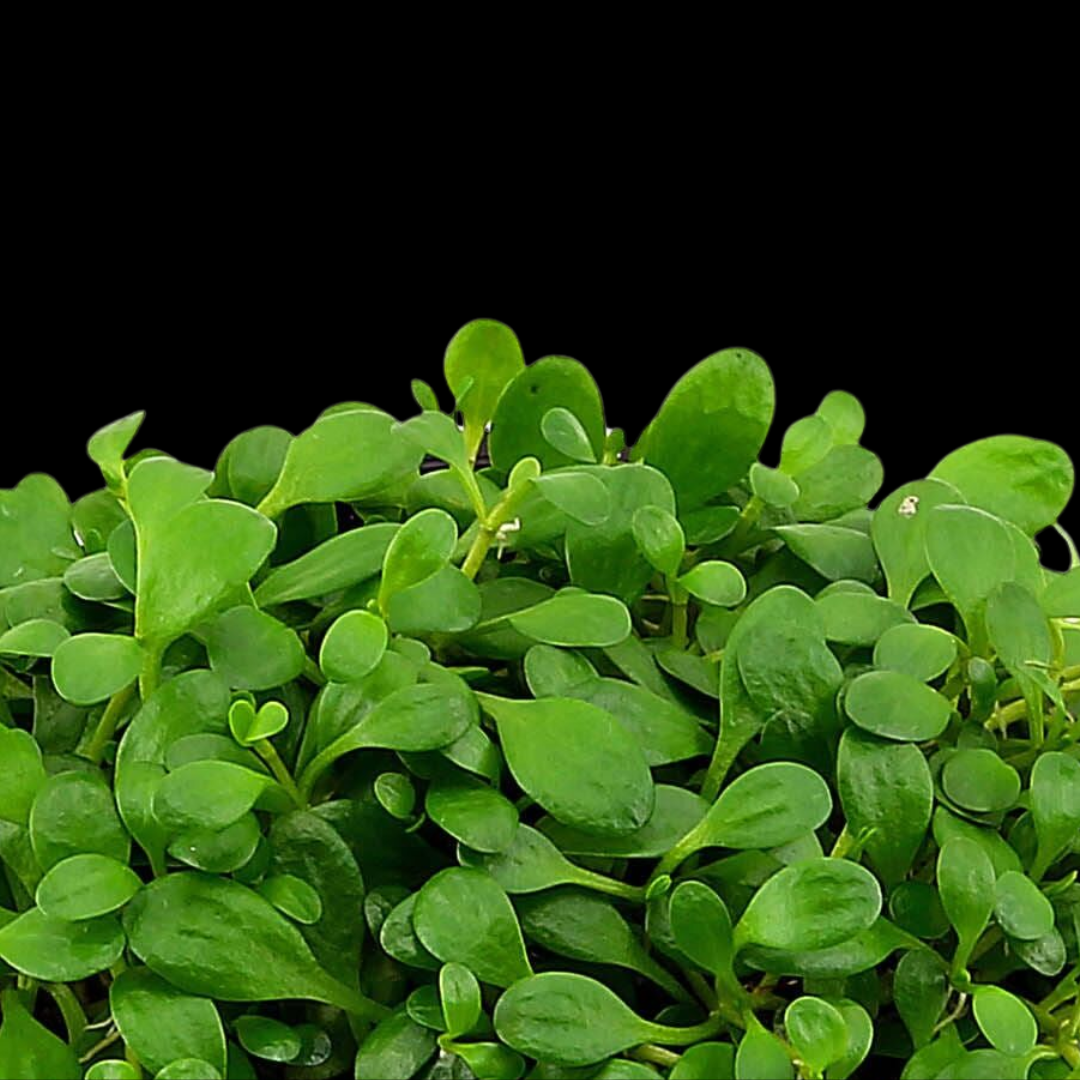
グロッソスティグマは、水槽の底に美しい緑のカーペットを広げる前景草の代表格です。オセアニアを原産とするこの小型の水生植物は、這うように伸びるランナー(匍匐茎)によって密生する性質を持ちます。1980年代に天野尚氏が提案したネイチャーアクアリウムにおいてその魅力が再発見され、それまでの水草レイアウトの常識を覆しました。明るい緑色の小さな葉が重なり合い、光合成によって酸素の気泡を輝かせる姿は、まさに水中の草原と呼ぶにふさわしい美しさを持っています。育成には強い光と二酸化炭素の添加が不可欠ですが、環境さえ整えば爆発的な成長を見せてくれる、非常にやりがいのある水草です。Glossostigma elatinoides is the quintessential foreground plant, creating a beautiful green carpet across the aquarium floor. Native to Oceania, this small aquatic plant spreads via creeping runners. Its potential was rediscovered in the 1980s by Takashi Amano in Nature Aquarium layouts, revolutionizing aquascaping. The sight of small, bright green leaves overlapping and glistening with oxygen bubbles under strong light is truly reminiscent of an underwater meadow. While it requires intense light and CO2 injection, it rewards the aquarist with explosive growth once its needs are met.
基本情報 / Basic Information
学名 / Scientific Name
Glossostigma elatinoides
通称 / Common Name
グロッソスティグマGlossostigma
分類 / Family
ハエドクソウ科(旧ゴマノハグサ科)グロッソスティグマ属Phrymaceae (formerly Scrophulariaceae), Glossostigma genus
分布 / Distribution
オーストラリア、ニュージーランドAustralia and New Zealand
育成難易度 / Difficulty
中級(光量とCO2の管理が鍵となります)Intermediate (Success depends on light and CO2 management)
育成環境 / Cultivation Environment
光量 / Light
高照度が必須です。60cm規格水槽であれば、強力なLED照明を複数灯用意し、底床付近まで十分な光が届くようにしてください。光が不足すると、光源を求めて垂直に伸びる「徒長」が始まってしまいます。High light is essential. For a standard 60cm tank, use multiple high-power LEDs to ensure light reaches the bottom. Insufficient light causes vertical, leggy growth.
CO2添加 / CO2 Injection
強制添加が強く推奨されます。1秒間に2〜3滴(60cm水槽目安)を目安に添加し、水中の溶存濃度を高めることで、匍匐(ほふく)を促進し、密度の高いマットを形成します。CO2 injection is highly recommended. Target 2-3 bubbles per second for a 60cm tank to promote horizontal spreading and dense mat formation.
水質 / Water Quality
弱酸性の軟水を好みます(pH 5.5〜7.0、GH 4〜8 dGH)。日本の水道水は適していますが、硬度が高すぎる地域では成長障害が出る可能性があるため、必要に応じて軟水化処理を行ってください。Prefers soft, slightly acidic water (pH 5.5-7.0, GH 4-8 dGH). While most Japanese tap water is suitable, very hard water can inhibit growth.
底床 / Substrate
栄養系ソイル(例:アマゾニアなど)が最適です。根を深く、広範囲に張る性質があるため、粒が細かく栄養豊富な底床を5cm以上敷くことが望ましいです。Nutrient-rich aquatic soils (like Amazonia) are ideal. Since it develops an extensive root system, use a fine-grained, nutrient-dense substrate at least 5cm deep.
レイアウト / Layout
配置 / Positioning
水槽の最も手前、前景エリアに配置します。石組み(イワグミ)レイアウトでは、岩の足元を埋め尽くすように配置することで、自然な遠近感と安定感を演出できます。Used primarily in the foreground. In Iwagumi layouts, planting it around the base of rocks creates a natural sense of perspective and stability.
注意点 / Precautions
流木や背の高い有茎草の影になる場所では、光不足から上に伸びやすくなります。レイアウトを設計する際は、グロッソスティグマのエリアに光を遮る障害物がないよう配慮が必要です。Avoid shading from driftwood or tall stem plants, as this causes leggy growth. Ensure the foreground area has an unobstructed light path.
増やし方(トリミング) / Propagation & Trimming
増やし方 / Propagation
ランナーを伸ばして自ら増殖します。導入時は、数節ごとに小分けにした株をピンセットで2〜3cm間隔で植えていくと、数週間で隙間が埋まっていきます。ミスト式(DSM)での立ち上げも非常に有効です。It spreads via runners. When planting, separate the pot into small portions and plant them 2-3cm apart. They will fill the gaps within weeks. The Dry Start Method (DSM) is also highly effective.
トリミング / Trimming
厚みが出てきたら、ハサミで芝刈りのように水平にカットします。放置して層が厚くなると、下層が腐敗してマットごと浮上してしまうため、定期的に1cm程度の厚さまで刈り込むことが長期維持の秘訣です。Once the carpet thickens, trim it horizontally like mowing a lawn. If left too thick, the lower layers will rot and the entire mat may float up. Regular trimming to a 1cm thickness is key for long-term health.
病気と対策(コケなど) / Pests & Algae
かかりやすい病気 / Common Issues
肥料不足(特に鉄分)による白化現象(クロロシス)や、成長停滞時の藍藻、糸状藻の付着が見られます。また、マット下層の腐敗による突然の浮上は、本種特有のトラブルです。Iron deficiency causes chlorosis (whitening). Stagnant growth can lead to Blue-Green Algae or filamentous algae. Sudden mat lifting due to root rot in thick layers is a species-specific issue.
対策と予防 / Prevention
底床への追肥(固形肥料)で栄養を維持し、ヤマトヌマエビなどのお掃除役の生体を導入してコケを予防します。浮上防止には、とにかく「早め、かつ大胆なトリミング」が最も効果的な予防策となります。Maintain nutrition with root tabs and introduce utility animals like Amano shrimp. The most effective way to prevent mat lifting is early and bold trimming.
雑学と豆知識 / Trivia and Fun Facts
1. 分類学の進歩:ゴマノハグサ科からハエドクソウ科へ / 1. Taxonomic Shift: From Scrophulariaceae to Phrymaceae
かつてグロッソスティグマはゴマノハグサ科に分類されていましたが、近年のDNA解析による系統分類の見直しにより、現在はハエドクソウ科に属するとされています。この変更は、外見だけでなく分子レベルでの進化の歴史が解明された結果であり、植物学的な興味深さを添えています。Glossostigma was traditionally placed in the Scrophulariaceae family, but molecular DNA analysis has reclassified it into Phrymaceae. This shift reflects a deeper understanding of its evolutionary lineage at the molecular level.
学名の「Glossostigma」は、ギリシャ語で「舌の形をした柱頭」を意味します。その名の通り、花の中央にある柱頭は昆虫が接触すると瞬時に動く「接触傾性」というメカニズムを持っています。これは自家受粉を避け、他家受粉を促進するための高度な生存戦略であり、水草という静かな存在の中に秘められた動的な生命力を感じさせます。The name Glossostigma means “tongue-shaped stigma.” Its stigma exhibits “thigmonasty”—moving instantly upon contact with an insect. This sophisticated strategy avoids self-pollination, showcasing the dynamic biological mechanisms hidden within this small aquatic plant.
水上では美しい花を咲かせますが、水没環境や過酷な条件下では、花を開かずに蕾の中で自家受粉を完結させる「閉鎖花」を形成することがあります。この戦略により、どのような環境下でも確実に種子を残すことができ、オセアニアの激しい環境変動を生き抜いてきた強靭さがうかがえます。While it blooms above water, it can form “cleistogamous flowers” underwater—buds that self-pollinate without opening. This ensures seed production regardless of environmental stress, reflecting its resilience in the fluctuating habitats of Oceania.
その驚異的な適応力と成長力は、自然界では脅威にもなり得ます。北米の一部では、流出したグロッソスティグマが在来の生態系を脅かす外来種として問題になっています。日本でも、トリミングで出たクズを絶対に自然の河川へ流さず、天日干しして完全に枯らすか、燃えるゴミとして適切に処分することが、美しいアクアリウムを長く楽しむための倫理的責任です。In North America, escaped Glossostigma has become an invasive species threatening local ecosystems. In Japan, it is our ethical responsibility to never release trimmings into natural waterways. Always dry them completely or dispose of them as burnable waste to protect our local environment.
まとめ / Conclusion
グロッソスティグマは、アクアリストに多くの学びと感動を与えてくれる特別な水草です。強光、CO2、そして丁寧なトリミングという基本を忠実に守ることで、あなたの水槽内にどこまでも続く鮮やかな草原を再現することができるでしょう。その小さな葉の一枚一枚が、自然界の知恵と進化の歴史を今に伝えています。Glossostigma is a special aquatic plant that offers both challenges and rewards. By adhering to the basics of strong light, CO2, and careful trimming, you can recreate an endless, vibrant meadow within your aquarium. Each tiny leaf is a testament to the wisdom of nature and its long evolutionary history.
今日では組織培養株の普及により、農薬や害虫の心配をせずに安全に導入できる環境が整っています。この「前景草の王道」に挑戦し、緑の絨毯が完成した時の達成感をぜひ味わってみてください。美しい水景を維持するための努力は、必ずや魚たちの健康的な姿と、見る人の心の安らぎとして報われるはずです。With the availability of tissue-cultured cups, it is now easier and safer than ever to start. We encourage you to take on the challenge of this “King of Foregrounds” and experience the immense satisfaction of a completed green carpet. Your efforts will surely be rewarded with a healthy environment for your fish and a soothing view for all.
分類学 Barker, W. R. (1982).Taxonomic studies in Australian Scrophulariaceae. Journal of the Adelaide Botanic Gardens. (グロッソスティグマ属の分類学的基盤)
生態学・外来種 Les, D. H., et al. (2006).Glossostigma cleistanthum (Scrophulariaceae) in North America: a new record for the flora of the northern hemisphere. Rhodora. (北米における侵入と閉鎖花の記述)
植物生理学 New South Wales Flora Online (PlantNET).Glossostigma elatinoides (Benth.) Benth. – Royal Botanic Gardens and Domain Trust, Sydney. (オーストラリア自生地の形態学的特性)



 アイのアクアグッズ案内お魚を撮ったのに、ボクが写ってる! スマホで楽しむ水槽撮影と便利な道具道具の特徴や使い方、選ぶときのポイントをアイが紹介します。記事はコチラ →
 アイのアクアグッズ案内水槽のエアーポンプの選び方|水深・音・泡で選ぶおすすめ用品道具の特徴や使い方、選ぶときのポイントをアイが紹介します。記事はコチラ →
 アイのアクアグッズ案内水槽のろ材の選び方|ウール・リング・活性炭の違いとおすすめ商品フィルターの中の綿や石は何をしている? アイとコタロウが、ウール・スポンジ・セラミック・焼結ガラス・活性炭・ゼオライトを比較。機種との相性、入れ方、洗い方と交換まで商品とともに紹介します。記事はコチラ →
 アイのアクアグッズ案内そのごはん、泳いでる! 卵から始めるブラインシュリンプの孵化と道具選び道具の特徴や使い方、選ぶときのポイントをアイが紹介します。記事はコチラ →




コメント