
解説 / Description
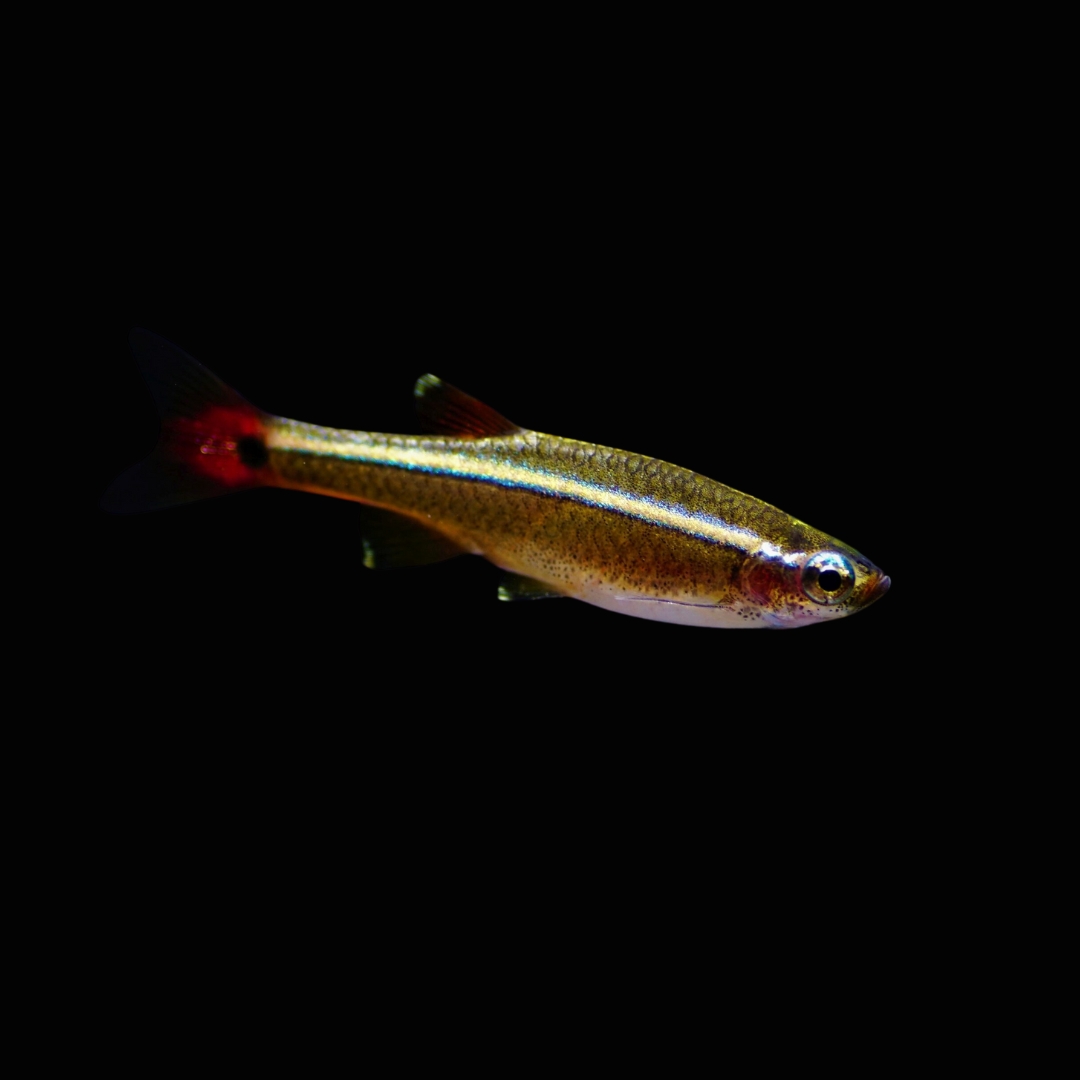
アカヒレは、中国南部を原産とする小型の淡水魚です。成魚でも全長4cmほどという愛らしい体に、青白く輝く体側のラインと鮮やかな赤いヒレを備えています。光の当たり方によって体側のラインが金属的な輝きを放ち、水草の緑を背景に群れで泳ぐ姿は、小さな魚とは思えないほど華やかです。日本では「コッピー」という愛称でも親しまれ、初心者から熟練のアクアリストまで幅広い人気を集めています。 The White Cloud Mountain Minnow is a small freshwater fish native to southern China. Reaching approximately 4 cm in total length, it has an attractive bluish-white iridescent stripe along its body and vivid red markings on its fins. Under suitable lighting, its lateral stripe produces a beautiful metallic sheen. A group swimming against a background of green aquatic plants creates a particularly striking display. In Japan, this species is also popularly known as “Coppy” and is appreciated by beginners and experienced aquarists alike.
最大の特徴は、幅広い水温に適応できる丈夫さです。一般的な熱帯魚より低い水温を好む温帯性の魚で、室内環境によってはヒーターを使わずに飼育することもできます。ただし、丈夫だからといって小さな容器に閉じ込めたり、水質管理を省略したりしてよいわけではありません。本来は群れで活発に泳ぐ魚なので、十分な遊泳スペースと安定した水質を確保することが大切です。 One of its greatest advantages is its hardiness and ability to tolerate a relatively wide temperature range. Unlike many tropical aquarium fish, this temperate species prefers cooler water and can sometimes be kept without a heater in suitable indoor conditions. However, hardiness does not justify keeping it in a tiny container or neglecting water quality. White Cloud Mountain Minnows are active, social fish that need adequate swimming space and a stable, well-maintained aquarium.
また、アカヒレは観賞魚としての魅力だけでなく、興味深い歴史と生態を持っています。1932年に中国の白雲山周辺で発見され、世界中へ普及しましたが、その一方で野生個体群は生息環境の悪化によって深刻な危機に直面しました。現在では分類学や遺伝学、環境毒性学の研究対象としても注目されています。飼いやすさと奥深い生物学的背景を兼ね備えた、魅力の尽きない魚です。 Beyond its appeal as an ornamental fish, this species has a fascinating natural and scientific history. First described in 1932 from the White Cloud Mountain area of China, it subsequently became popular worldwide. Meanwhile, wild populations suffered severe declines as their habitats deteriorated. Today, the species is also of considerable interest in taxonomy, genetics, and environmental toxicology. Its accessibility to aquarists is matched by a remarkable biological background.
基本情報 / Basic Information
| 学名 / Scientific Name | Tanichthys albonubes Lin, 1932 |
|---|---|
| 通称 / Common Name | アカヒレ、コッピー、ホワイトクラウドマウンテンミノーWhite Cloud Mountain Minnow, White Cloud Minnow, White Cloud |
| 分類 / Family | コイ目・タニクチス科(Tanichthyidae)・タニクチス属。従来はコイ科に分類されており、資料によって科の扱いが異なる場合があります。Order Cypriniformes, family Tanichthyidae, genus Tanichthys. Historically classified within Cyprinidae, which is still used in some taxonomic references. |
| 英名 / English Name | White Cloud Mountain Minnow |
| 分布 / Distribution | 中国南部の広東省を中心とする地域。主に水草の多い、流れが比較的穏やかな清流に生息します。中国の他地域やベトナムからもアカヒレとして扱われてきた個体群が報告されていますが、近年の分類学的研究によって一部が別種として区別されており、分布範囲の見直しが進められています。Native primarily to Guangdong Province in southern China, where it inhabits relatively slow-flowing, clear streams with aquatic vegetation. Populations historically identified as this species have also been reported from other parts of China and Vietnam. However, recent taxonomic research has distinguished some of these populations as separate species, and the precise distribution of T. albonubes is being reassessed. |
| 最大体長 / Max Size | 全長約4cm。飼育個体では大きさに多少の個体差があります。Approximately 4 cm in total length, with some variation among individuals. |
| 寿命 / Lifespan | 一般的に3〜5年程度。飼育環境や個体の状態によって異なります。Generally around 3–5 years, depending on husbandry conditions and individual health. |
飼育環境 / Aquarium Environment
| 水槽サイズ / Tank Size | 60cm規格水槽(約60L)以上を推奨します。アカヒレは群れで生活する魚なので、最低でも6匹程度、できれば8〜10匹以上のまとまった数で飼育するのが理想的です。十分な横幅のある水槽では、自然な遊泳行動やオス同士の美しいヒレのディスプレイを観察しやすくなります。小型の瓶やコップは水温や水質が変化しやすく、長期飼育には適しません。 A standard 60 cm aquarium (approximately 60 L) or larger is recommended. White Cloud Mountain Minnows are social fish and should be kept in groups of at least six, preferably eight to ten or more. Adequate horizontal swimming space encourages natural behavior and allows the attractive fin displays of males to be observed. Tiny bottles and drinking glasses are unsuitable for long-term housing because temperature and water quality can fluctuate rapidly. |
|---|---|
| 水温 / Temperature | 推奨水温は18〜22℃前後で、14〜22℃程度の比較的涼しい環境に適しています。これより低い水温にも一定の耐性がありますが、急激な温度変化を避けることが重要です。室温が適切であれば無加温飼育も可能ですが、日本の冬に水温が大きく変動する環境では、ヒーターによる補助的な温度管理が有効です。一方、夏季は高水温に注意し、特に26℃以上の状態が長く続かないよう冷却や換気を行いましょう。 The recommended temperature is approximately 18–22°C, with a relatively cool range of 14–22°C generally suitable. The species can tolerate somewhat lower temperatures, but sudden fluctuations should be avoided. Unheated aquariums are possible when room temperatures remain suitable and stable. During Japanese winters, a heater may help prevent excessive fluctuations. In summer, avoid prolonged exposure to temperatures above 26°C by providing appropriate cooling and ventilation. |
| 水質 / Water Quality | 弱酸性〜弱アルカリ性(pH6.0〜8.0程度)、軟水〜中硬水を中心とした幅広い水質に適応します。硬度はおおむね5〜19dGHが目安です。日本の一般的な水道水も、適切にカルキ抜き(塩素中和)をすれば、多くの場合そのまま飼育水として利用できます。水質への適応力は高いものの、アンモニアや亜硝酸の蓄積には注意が必要です。ろ過が安定した水槽で、定期的な部分換水を行いましょう。 This species tolerates a broad range of water conditions, from slightly acidic to mildly alkaline (approximately pH 6.0–8.0), with soft to moderately hard water generally suitable. A hardness of around 5–19 dGH is a useful guideline. Properly dechlorinated tap water is usually acceptable. Despite its adaptability, accumulated ammonia and nitrite are harmful. Maintain an established biological filter and perform regular partial water changes. |
| レイアウト / Layout | 水草を豊富に配置しながら、水槽中央から前面には十分な遊泳スペースを確保するレイアウトが適しています。ウィローモス、ミクロソリウム、アヌビアスなどは扱いやすく、特にウィローモスの茂みは産卵床や稚魚の隠れ家にもなります。暗めの底砂を使用すると体側の光沢や赤いヒレが引き立ちます。水流は弱めから中程度とし、緩やかな流れのある場所と静かな場所の両方を用意するとよいでしょう。浮き草や流木で部分的に陰を作るのも効果的です。 A planted aquarium with generous open swimming space across the middle and front is ideal. Java moss, Java fern, and Anubias are suitable plants, with dense moss providing useful spawning sites and shelter for fry. Dark substrate enhances the fish’s metallic stripe and red fins. Gentle to moderate water movement is appropriate, ideally with both flowing and sheltered areas. Floating plants and driftwood can provide shaded retreats. |
| 注意点 / Precautions | アカヒレは丈夫な魚ですが、適切な水槽環境を整えることが長期飼育の基本です。単独飼育や過密飼育を避け、十分な数の仲間と一緒に泳げる環境を用意しましょう。水槽の立ち上げ直後は有害なアンモニアや亜硝酸が蓄積しやすいため、ろ過環境が安定してから導入してください。高水温時には酸素不足を防ぐため、エアレーションや冷却対策も有効です。また、屋外で飼育する場合は、冬季の凍結や夏季の高水温に加え、豪雨などによる魚の流出にも注意が必要です。 Although hardy, White Cloud Mountain Minnows still require proper aquarium conditions for long-term health. Avoid solitary housing and overcrowding, and provide an environment where they can swim with an adequate group. Introduce fish only after the biological filtration system is established, since new aquariums may accumulate harmful ammonia and nitrite. During hot weather, additional aeration and cooling can help prevent oxygen deficiency. Outdoor setups must also be protected against winter freezing, summer overheating, and accidental escapes during heavy rain. |
餌と給餌 / Feeding
| 餌の種類 / Diet | 雑食性で、自然界では小型の水生昆虫やその幼虫、動物プランクトン、小型甲殻類などを食べています。飼育下では小型魚用のフレークフードやマイクロペレットを主食にし、冷凍アカムシ、ミジンコ、ブラインシュリンプなどを補助的に与えるとよいでしょう。植物質を含むバランスのよい人工飼料も利用できます。 An omnivorous species that feeds on small aquatic insects, larvae, zooplankton, and tiny crustaceans in nature. In aquariums, high-quality flakes or micro-pellets for small fish make suitable staple foods. Frozen bloodworms, Daphnia, and brine shrimp can be offered as supplementary foods. A balanced prepared diet containing some plant-derived ingredients is also beneficial. |
|---|---|
| 給餌のポイント / Feeding Tips | 1日1〜2回、2〜3分程度で食べきれる量を目安に与えます。口が小さいため、大粒の餌は細かく砕いてから与えましょう。水面付近から中層で活発に餌を食べますが、沈んだ餌を拾うこともあります。栄養が偏らないよう複数の餌を組み合わせると、健康維持や発色の向上が期待できます。低水温で活動が鈍くなる時期は食欲に合わせて給餌量を減らし、ほとんど活動しない場合は無理に与えないことが大切です。食べ残しは水質悪化につながるため、速やかに取り除きましょう。 Feed once or twice daily, offering only what the fish can consume within approximately 2–3 minutes. Crush large food particles to suit their small mouths. They feed actively near the surface and in midwater but may also pick up sinking food. A varied diet supports good health and coloration. During colder periods, reduce feeding according to appetite and activity, and avoid offering food when the fish are largely inactive. Remove uneaten food promptly to prevent water deterioration. |
性格と混泳 / Temperament and Tank Mates
| 性格 / Temperament | 非常に温和で、同種や他種を執拗に攻撃することはほとんどありません。群れを作って生活する性質があり、まとまった数で飼育すると落ち着いた様子を見せます。オス同士はヒレを大きく広げて体色を誇示する「フィンスプレッディング」を行うことがありますが、通常は激しい争いには発展しません。活発に泳ぎ回るため、狭い環境よりも横幅のある水槽で飼育することで、本来の魅力を楽しめます。 A very peaceful, social species that rarely shows persistent aggression toward its own kind or other fish. Individuals behave more confidently in groups. Males occasionally spread their fins and display their colors in a behavior known as fin spreading, but serious fighting is uncommon. Because they are active swimmers, a tank with adequate horizontal space allows their natural behavior to be appreciated. |
|---|---|
| 混泳の相性 / Compatibility | 同程度の大きさで温和な魚との混泳に向いています。特に、アカヒレに適した比較的低い水温を共有できる小型魚が好相性です。低水温に対応できるコリドラス類なども候補になりますが、種類ごとの適温を確認してください。ネオンテトラやオトシンクルスなどの熱帯魚とは適温が完全には一致しないことがあるため、混泳には慎重な検討が必要です。ヤマトヌマエビや成体のミナミヌマエビとは比較的混泳しやすいものの、小さな稚エビは捕食される場合があります。大型魚や肉食魚、ヒレをかじる性質の強い魚との混泳は避けましょう。 Suitable companions include similarly sized, peaceful fish that share the species’ preference for relatively cool water. Some cool-tolerant Corydoras species may also be compatible, depending on their individual temperature requirements. Tropical species such as Neon Tetras and Otocinclus may have different preferred temperature ranges, so such combinations require careful consideration. Amano shrimp and adult Neocaridina shrimp are generally compatible, although very small shrimplets may be eaten. Avoid large predatory fish and persistent fin-nippers. |
病気と対策 / Diseases and Prevention
| かかりやすい病気 / Common Diseases | 比較的病気に強い魚ですが、急激な水温変化や水質悪化、輸送によるストレスなどが重なると、白点病、水カビ病、細菌性の尾ぐされ病などを発症することがあります。白点病では体表やヒレに白い点が現れ、水カビ病では傷口などに綿状の付着物が見られることがあります。また、養殖系統によってはヒレの変形や体形異常が見られる場合もあります。体色の急激な退色、ヒレを閉じる、餌を食べない、群れから離れるといった変化にも注意してください。 Although generally hardy, White Cloud Mountain Minnows can develop ich (white spot disease), fungal infections, or bacterial fin rot when exposed to sudden temperature changes, deteriorating water quality, or transportation stress. Ich may appear as small white spots on the body and fins, while fungal infections may produce cotton-like growths around injured tissue. Some captive-bred strains may also exhibit fin or body deformities. Warning signs include sudden color loss, clamped fins, reduced appetite, or isolation from the group. |
|---|---|
| 対策と予防 / Prevention | 最も重要なのは、安定した水温と良好な水質を維持することです。十分なろ過を確保し、飼育密度や汚れの程度に応じて定期的に部分換水を行います。新しく購入した魚は、可能であれば別水槽で一定期間観察してから導入すると、病気の持ち込みを減らせます。異常が見られた場合は、水温、水質、呼吸状態などを確認し、原因に応じて隔離や適切な治療を検討してください。白点病の治療で行われる高水温管理は、冷涼な水を好むアカヒレに負担となる場合があるため、安易な高温処置は避けましょう。薬剤を使用する際は製品の適用条件を確認することが大切です。 Prevention begins with stable temperatures and clean water. Maintain effective biological filtration and perform regular partial water changes appropriate to the aquarium’s stocking level. Quarantining newly acquired fish when possible can reduce the introduction of disease. If symptoms appear, check temperature, water parameters, and breathing behavior before deciding on isolation or treatment. High-temperature methods sometimes used against ich may stress this cool-water species and should not be applied indiscriminately. Always follow the instructions and suitability requirements of any medication. |
増やし方(繁殖) / Breeding
| 雌雄の判別 / Sexing | 成熟したオスは比較的細身で、体側の輝きや背ビレ、尻ビレの赤い色彩が鮮やかになる傾向があります。ヒレがやや大きく発達し、繁殖期には広げて見せる姿が目立ちます。一方、メスはオスより腹部が丸みを帯び、卵を抱えると特にふっくらした体形になります。若魚や個体差の大きい改良品種では判別が難しいこともありますが、複数匹を比較すると違いが分かりやすくなります。 Mature males tend to have slimmer bodies, brighter lateral coloration, and more vivid red markings on their dorsal and anal fins. Their fins may be somewhat more developed, particularly during courtship displays. Females are usually deeper-bodied, with noticeably rounded abdomens when carrying eggs. Sexing juveniles or selectively bred varieties can be more difficult, but differences become clearer when several mature individuals are compared. |
|---|---|
| 繁殖形態 / Reproduction | 卵生で、水草の茂みなどに小さな卵をばら撒く「ばら撒き型」の産卵を行います。巣を作ったり、親が卵や稚魚を保護したりすることはありません。卵は直径約1.0〜1.2mmの透明な沈性卵で、水草や底床などに付着する性質があります。産卵数は成熟度や飼育条件によって変わりますが、一度に数十個程度を産むことがあります。親魚が卵や稚魚を食べる場合もあるため、確実に増やしたい場合は保護が必要です。 An egg-laying species that scatters small eggs among aquatic plants rather than constructing a nest. Adults provide no parental care. The transparent, sinking eggs measure approximately 1.0–1.2 mm in diameter and can adhere to plants or substrate. Egg numbers vary with the female’s condition and breeding environment, but several dozen may be produced during spawning. Because adults may consume eggs and fry, protective measures improve breeding success. |
| 繁殖のポイント / Breeding Tips |
アカヒレは比較的繁殖させやすい魚で、十分に成熟した親魚を栄養状態よく育てれば、水草が多い水槽で自然に産卵することがあります。計画的に繁殖させる場合は、20〜24℃程度の安定した水温を目安に、ウィローモスや産卵用の人工水草を多めに入れた別水槽を用意します。成熟したオスとメスを入れ、産卵後は親魚を元の水槽に戻すと卵の捕食を防ぎやすくなります。
White Cloud Mountain Minnows are relatively easy to breed. Well-conditioned adults may spawn naturally in a densely planted aquarium. For controlled breeding, prepare a separate aquarium at a stable temperature of approximately 20–24°C, with plenty of Java moss or artificial spawning mops. Introduce mature males and females, then remove the adults after spawning to reduce egg predation.
卵の孵化に要する時間は水温によって大きく異なり、25〜27℃程度では約2日、低水温ではさらに日数がかかります。ただし、孵化を早める目的で通常の飼育適温を大きく超える加温を行う必要はありません。孵化直後の仔魚は体長約2〜3mmと非常に小さく、しばらくは卵黄の栄養で成長します。泳ぎ始めたらゾウリムシなどの微小な生き餌を与え、成長に合わせてブラインシュリンプの幼生や細かく砕いた稚魚用飼料へ切り替えます。稚魚は強い水流に弱いため、スポンジフィルターなどを用いて穏やかな環境を維持しましょう。 Incubation time depends strongly on temperature. Eggs may hatch in roughly two days at 25–27°C, while cooler water substantially slows development. Raising temperatures well beyond normal maintenance conditions solely to accelerate hatching is unnecessary. Newly hatched larvae measure approximately 2–3 mm and initially rely on their yolk reserves. Once free-swimming, they require extremely small foods such as infusoria. As they grow, gradually introduce newly hatched brine shrimp and finely crushed fry foods. Gentle filtration, such as a sponge filter, helps protect the delicate young fish. |
雑学と豆知識 / Trivia and Fun Facts
| 1. ボーイスカウトの青年と白雲山から始まった物語 / 1. A Young Scout and the Discovery at White Cloud Mountain |
アカヒレの学名には、発見に関わった人物と故郷の地名が刻まれています。1932年、中国広東省の広州市近郊に位置する白雲山周辺で、ボーイスカウト活動に携わっていた譚甘飛(Tan Kam Fei)が、美しい小型魚を採集したことが発見のきっかけとなりました。その魚は魚類学者の林書顔によって新種として記載され、現在も使われる学名が与えられました。
The scientific name of the White Cloud Mountain Minnow preserves both the identity of a person associated with its discovery and the place where it was first found. In 1932, Tan Kam Fei, a young man involved in the Boy Scout movement, collected an attractive little fish around White Cloud Mountain near Guangzhou in Guangdong Province, China. The specimen was subsequently described as a new species by the ichthyologist Lin Shu-Yen.
属名の「Tanichthys」は、譚氏の姓である「Tan」と、ギリシャ語で魚を意味する「ichthys」を組み合わせたものです。つまり「譚氏の魚」という意味を持ちます。一方、種小名の「albonubes」は、ラテン語で「白い」を意味する「albus」と「雲」を意味する「nubes」に由来します。これは模式産地である白雲山の地名を表したものです。 The genus name Tanichthys combines Tan’s surname with the Greek word ichthys, meaning fish, effectively honoring him for his role in the discovery. The species name albonubes comes from the Latin words albus, meaning white, and nubes, meaning cloud. It refers directly to White Cloud Mountain, the species’ type locality. 現在では世界中で販売されているアカヒレですが、その名前をたどると、約90年以上前の中国の山あいで一匹の小魚に目を留めた青年の姿が浮かび上がります。身近な自然への関心が、長く受け継がれる学名と世界的な観賞魚文化につながったという、印象的な発見の歴史を持っているのです。 Although the species is now sold around the world, its name still recalls a young naturalist noticing a tiny fish in the streams of southern China more than nine decades ago. It is a memorable example of how curiosity about the natural world can lead to a lasting scientific name and a place in aquarium history. |
|---|---|
| 2. 「貧者のネオンテトラ」と「コッピー」の意外な共通点 / 2. From the “Poor Man’s Neon Tetra” to Japan’s “Coppy” |
アカヒレが世界的に普及した背景には、観賞魚飼育がまだ一般家庭に広く浸透していなかった時代の事情があります。1930年代から1940年代にかけて、ネオンテトラのような南米原産の美しい小型魚は輸送や飼育が難しく、高価な観賞魚として扱われていました。
The international popularity of White Cloud Mountain Minnows is closely connected to the early history of home aquariums. During the 1930s and 1940s, beautiful South American fish such as Neon Tetras were difficult to transport and maintain, making them expensive and relatively inaccessible to many hobbyists.
そんな時代に登場したアカヒレは、ネオンテトラを思わせる光沢のある体側のラインを持ちながら、比較的低い水温でも丈夫に育つという大きな利点がありました。そのため欧米では「Poor man’s neon tetra」、日本語では「貧者のネオンテトラ」と訳される愛称が広まりました。これは魚の美しさが劣るという意味ではなく、高価な設備を用意しなくても、その輝きを楽しめる身近な存在だったことを表しています。 The White Cloud Mountain Minnow offered an attractive alternative. Its shimmering lateral stripe resembled that of a Neon Tetra, but its tolerance of cooler temperatures made it easier and less expensive to maintain. This led to the nickname “Poor man’s neon tetra.” The expression did not imply that the fish was unattractive; rather, it reflected how its beauty was accessible to aquarists with more limited resources. 日本では1990年代後半から2000年代にかけて、小型容器で楽しむアクアリウムが注目されるなかで「コッピー」という呼び名が広まりました。「コップでも飼える魚」という手軽さを強調した販売方法によって、アカヒレは熱帯魚専門店以外でも知られるようになりました。 In Japan, small-container aquariums became fashionable during the late 1990s and 2000s. Around this time, the name “Coppy” became widely associated with the species, emphasizing the idea that it could be kept even in a cup. This marketing helped introduce the fish to people who had never previously considered keeping ornamental fish. ただし、コップで短期間生きられることと、健康的に長く飼えることはまったく別です。アカヒレは本来、群れで泳ぎ、仲間とヒレを広げ合い、広い空間を活発に移動する魚です。十分な水量と遊泳スペースを備えた水槽でこそ、この魚の美しさと自然な行動を存分に楽しめます。 However, surviving temporarily in a cup is very different from thriving over a normal lifespan. White Cloud Mountain Minnows are naturally active, social fish that swim in groups and interact through elaborate fin displays. Their full beauty and behavior are best appreciated in a properly maintained aquarium with adequate water volume and swimming space. |
| 3. 実はコイ科ではない? 分子系統学が明らかにした独自の進化 / 3. Not Simply a Cyprinid: An Evolutionary Lineage of Its Own |
アカヒレは長い間、コイ科に属する小型魚として紹介されてきました。姿がダニオ類などに似ており、体の形やヒレの特徴からも、コイ科の仲間と考えられていたためです。しかし、DNAを用いて魚類の進化的な関係を調べる研究が進むにつれて、従来の分類では十分に説明できない特徴が明らかになりました。
For many years, the White Cloud Mountain Minnow was classified within the carp family, Cyprinidae. Its resemblance to small danios and other cypriniform fishes made this placement seem reasonable. However, molecular studies examining evolutionary relationships through DNA revealed that its lineage was more distinct than traditional classifications suggested.
2010年には、MaydenとChenらによってアカヒレ属を独立したタニクチス科(Tanichthyidae)として扱う分類体系が提案されました。この分類は主要な魚類分類資料にも採用されており、アカヒレ属は従来のコイ科とは区別される独自の進化系統として位置づけられています。ただし、分類体系によっては現在もコイ科として扱われることがあります。 In 2010, Mayden, Chen, and colleagues proposed recognizing the lineage as a separate family, Tanichthyidae. This classification has been adopted by major fish taxonomic resources, reflecting the genus’ distinctive evolutionary position. However, some classification systems still place Tanichthys within Cyprinidae. さらに、アカヒレ属の研究が進むにつれ、見た目がよく似ていても遺伝的には異なる複数の種が存在することが分かってきました。ベトナムアカヒレとして知られる Tanichthys micagemmae のほか、中国からは T. albiventris や T. flavianalis などが新種として記載されています。 Further research has also revealed that the genus contains several species that may look very similar despite being genetically distinct. These include Tanichthys micagemmae, commonly sold as the Vietnamese White Cloud Minnow, as well as more recently described Chinese species such as T. albiventris and T. flavianalis. こうした研究では、外見だけでは判別が難しい「隠蔽種」の存在も注目されています。中国南部からベトナムにかけての小さな河川では、地形の変化や水系の分断によって個体群が隔離され、長い時間をかけて別々の進化を遂げたと考えられています。つまり、アカヒレに似た魚が必ずしもすべて同じ種とは限らず、それぞれの水系に固有の進化の歴史が隠されている可能性があるのです。 Researchers have also identified deeply differentiated populations that are difficult to distinguish by appearance alone, a phenomenon associated with cryptic species. Across southern China and Vietnam, changes in geography and the separation of river systems may have isolated populations for long periods, allowing them to evolve independently. In other words, fish that closely resemble White Cloud Mountain Minnows are not necessarily all members of the same species. Different river systems may preserve their own distinct evolutionary histories. |
| 4. 世界中の水槽では繁栄し、故郷の川では姿を消した魚 / 4. Abundant in Aquariums, Yet Threatened in the Wild |
アカヒレには、観賞魚として世界中に広まった成功の歴史と、野生下で生存を脅かされてきた歴史という、対照的な二つの側面があります。20世紀後半、中国南部では都市化や土地開発が急速に進み、アカヒレが暮らしていた小川や湧水域が減少しました。森林伐採、水質汚染、河川環境の改変などが重なり、野生個体群は大きな影響を受けました。
The White Cloud Mountain Minnow has two contrasting histories: remarkable success as an aquarium fish and serious vulnerability in the wild. During the second half of the twentieth century, rapid urban development in southern China damaged many of the small streams and spring-fed habitats on which the species depended. Deforestation, pollution, and changes to natural waterways contributed to severe population declines.
1980年代以降、長期間にわたって野生個体の確認が途絶えたため、一時は自然界で絶滅したと考えられていました。しかし2003年9月、広州市近郊の山間部にある湧水環境で生息個体群が再発見されました。これは保全生物学上の重要な出来事であり、その後の調査でも中国南部の複数の地域からアカヒレ属の個体群が報告されました。 After wild sightings ceased for many years following the 1980s, the species was widely believed to have disappeared from nature. In September 2003, however, a population was rediscovered in a spring-fed mountain habitat near Guangzhou. This was an important conservation discovery, and subsequent surveys reported additional populations of Tanichthys in several areas of southern China. 一方で、再発見はすべての問題が解決したことを意味しません。生息地ごとに小さく分断された個体群は、環境の変化や遺伝的多様性の低下に影響されやすく、保全には継続的な調査が必要です。さらに、野生個体群と養殖個体群の遺伝的な関係を調べた研究では、白雲山近郊で確認された個体群の一部が、過去に放流された養殖魚に由来する可能性が示されています。 Rediscovery did not mean that the conservation crisis was over. Small, isolated populations remain vulnerable to environmental changes and losses of genetic diversity. Genetic studies have also suggested that some populations found near White Cloud Mountain may have originated from past releases of captive-bred fish, complicating efforts to understand the history of surviving wild populations. 水槽の中では安価でありふれた魚であっても、自然界では限られた環境に依存する貴重な存在です。野生個体を守るためには、単に飼育魚を川へ放すのではなく、その土地に残る固有の遺伝的特徴を理解し、生息環境そのものを保護することが重要です。アカヒレの歴史は、観賞魚として数が増えることと、野生の生物として守られることが、必ずしも同じではないと教えてくれます。 Although common and inexpensive in aquarium shops, the species can be exceptionally vulnerable in its native habitat. Effective conservation requires protecting natural waterways and preserving the genetic identity of local populations, rather than simply releasing aquarium-bred fish into the wild. Its history demonstrates that success in captive breeding does not necessarily mean security for a species in nature. |
| 5. ゴールデンからロングフィンまで、品種改良が生み出した多彩な姿 / 5. Golden, Long-Finned, and Other Ornamental Varieties |
長年にわたって世界中で養殖されてきたアカヒレには、野生型に近いノーマルタイプのほかにも、さまざまな改良品種があります。日本で比較的よく見かけるのが「ゴールデンアカヒレ」です。通常のアカヒレでは体側に暗い色素が目立ちますが、ゴールデンタイプは黒色の発現が弱く、クリーム色から黄金色の体に赤いヒレが映える美しい姿をしています。
After many generations of captive breeding, several ornamental varieties of White Cloud Mountain Minnow have become established. One of the most familiar in Japan is the Golden White Cloud Minnow. Compared with the normal variety, it has much less dark pigmentation, producing a pale cream-to-golden body that contrasts beautifully with its red fins.
この黄金色は、すべての色素が失われた完全なアルビノとは異なり、黒色色素の発現が変化することによって生じています。近年のゲノム研究では、ゴールデン体色に関連する遺伝子の候補も見つかっており、品種改良によって生まれた色彩の違いが、どのような遺伝的仕組みに支えられているのかが調べられています。 This golden coloration differs from complete albinism and involves changes in dark pigmentation. Recent genomic research has identified candidate genes associated with the golden color trait, helping researchers investigate the genetic mechanisms behind the striking differences produced through selective breeding. もう一つの代表的な品種が「ロングフィンアカヒレ」です。背ビレや尻ビレ、尾ビレなどが長く伸び、泳ぐたびに美しくなびきます。特に成熟したオスがヒレを広げると、通常のアカヒレとは一味違った優雅な姿を見せます。遺伝学的な研究では、この長いヒレの形成には複数の遺伝子が関係すると考えられています。つまり、体色の変化とヒレの伸長は、どちらも品種改良によって生まれた特徴でありながら、その遺伝的な仕組みは同じではないのです。 Another well-known variety is the Long-Fin White Cloud Minnow, selectively bred for elongated dorsal, anal, and caudal fins. Mature males are especially impressive when they spread their extended fins during displays. Genetic research indicates that fin elongation involves multiple genes. Thus, although both golden coloration and elongated fins are ornamental traits produced through selective breeding, their underlying genetic mechanisms are different. 赤みを強調したカージナルアカヒレなどの流通名も知られていますが、こうした名称が常に一定の遺伝的系統や分類学的な種を表すとは限りません。購入時には実際の形態と販売情報を確認するとよいでしょう。また、別種のベトナムアカヒレなどは適温や生態に違いがあるため、単に「アカヒレの仲間」という理由だけで同じ環境に入れないようにしましょう。 Red-enhanced forms, sometimes sold under names such as Cardinal White Cloud Minnow, also exist. However, commercial variety names do not always correspond to a clearly defined genetic lineage or taxonomic species, so the actual characteristics and origin of the fish should be checked when purchasing them. Separate species such as the Vietnamese White Cloud Minnow may have different ecological and temperature requirements and should not automatically be kept under identical conditions. |
| 6. 水質汚染を調べる研究対象としてのアカヒレ / 6. A Small Fish with an Important Role in Pollution Research |
丈夫で飼育しやすいアカヒレは、観賞魚としてだけでなく、環境科学の研究でも利用されています。とりわけ、水中に含まれる重金属や化学物質が魚類に与える影響を調べる環境毒性学の分野で、実験対象となってきました。
The White Cloud Mountain Minnow is valued not only as an ornamental species but also as a research organism in environmental science. Its manageable size and relatively straightforward captive maintenance make it useful for studying how heavy metals and other chemicals affect aquatic animals.
例えば、銅やカドミウムなどの金属は、一定の濃度を超えると魚の細胞に悪影響を及ぼすことがあります。アカヒレを用いた研究では、こうした物質への曝露によって細胞にストレスが生じ、体を保護する仕組みに変化が現れることが調べられています。 Metals such as copper and cadmium can damage fish tissues when environmental concentrations become excessive. Research involving White Cloud Mountain Minnows has examined the cellular stress caused by exposure to these substances and the resulting changes in the body’s protective mechanisms. その一つが「熱ショックタンパク質70(HSP70)」と呼ばれるタンパク質です。HSP70は、熱や有害物質などのストレスによって正常な構造を失いかけたタンパク質の働きを支える役割を持っています。アカヒレを銅やカドミウムにさらした実験では、肝臓におけるHSP70の遺伝子発現やタンパク質量が、曝露時間や濃度に応じて変化することが確認されています。 One molecule of particular interest is heat shock protein 70, or HSP70. This protein helps maintain or restore the proper structure of other proteins when cells experience stress from heat or harmful substances. Experiments exposing White Cloud Mountain Minnows to copper and cadmium have demonstrated changes in HSP70 gene expression and protein levels in the liver, depending on exposure time and concentration. つまり、魚の体内で起こるこうした変化を詳しく調べることで、水中の有害物質が生物にどのような負担を与えるのかを理解できるのです。魚類の毒性試験で得られたデータは、化学物質の環境リスクを評価し、水生生物を保護するための水質基準を検討する際にも役立ちます。水槽の中では元気に泳ぐ小さな観賞魚が、水環境の安全性を理解する科学研究にも貢献しているというのは、興味深い一面です。 In other words, examining these physiological changes helps scientists understand how harmful substances in water affect living organisms. Toxicity data obtained from fish can also contribute to ecological risk assessments and the development of water-quality guidelines intended to protect aquatic life. The same small fish that swims in a home aquarium can therefore contribute to a broader scientific understanding of environmental safety. |
| 7. アカヒレの卵から分かる、魚が形を作っていく過程 / 7. What Its Eggs Reveal About Fish Development |
アカヒレは繁殖しやすく、卵や仔魚が比較的小さいことから、魚類の初期発生を調べる研究対象にもなっています。透明な卵の中では、受精直後から細胞分裂が繰り返され、やがて目や心臓、体の基本構造が形成されていきます。
Because White Cloud Mountain Minnows breed readily and produce small, transparent eggs, they have also been used to study early fish development. Following fertilization, repeated cell divisions occur within the egg, gradually forming the eyes, heart, and basic structures of the developing body.
発生形態学の研究では、水温25.5〜26.9℃の条件下で、受精から約45〜53時間後に孵化することが報告されています。一方、水温が低いと発生は遅くなり、孵化までさらに長い時間が必要になります。これは、魚の卵の中で進む体の形成が、周囲の水温に大きく左右されることを示しています。 Developmental studies have reported that eggs hatch approximately 45–53 hours after fertilization at temperatures of 25.5–26.9°C. In cooler water, development proceeds more slowly and hatching takes longer. This demonstrates how strongly the formation of a young fish’s body is influenced by the surrounding water temperature. 孵化した直後の仔魚は、まだ自由に泳ぎ回れる状態ではありません。腹部にある卵黄の栄養を使いながら体の構造を発達させ、やがて水中を泳ぎ始めます。その後、尾ビレをはじめとする各ヒレが整い、鱗が発達し、少しずつ成魚に似た姿へと変化していきます。 Newly hatched larvae are not immediately capable of active swimming. They initially rely on nutrients stored in their yolk sacs while their bodies continue developing. As development proceeds, they begin swimming and feeding independently, their fins take shape, scales appear, and the young gradually acquire the familiar form of adult fish. この発生過程は、魚類が卵から成魚へと成長する仕組みを理解するうえで役立っています。同時に、飼育者にとっても、孵化直後の透明な仔魚が少しずつヒレや体色を発達させていく姿を観察できることは、繁殖の大きな楽しみの一つです。小さな卵から見慣れたアカヒレの姿へと変わっていく過程には、生命の成長を身近に感じられる魅力があります。 Studying this developmental sequence helps researchers understand how fish grow from eggs into recognizable juveniles and adults. For aquarists, observing nearly transparent larvae gradually develop their fins and coloration is also one of the most rewarding aspects of breeding. The transformation from a tiny egg into a familiar White Cloud Mountain Minnow offers a close view of the remarkable process of growth. |
| 8. 丈夫で繁殖しやすいからこそ、自然界へ放してはいけない / 8. Why Hardy Aquarium Fish Must Never Be Released into Nature |
アカヒレの丈夫さは、飼育者にとって大きな魅力です。しかし、その特徴は自然環境への放流を考えると、別の意味を持ちます。幅広い水温に適応し、小さな水生生物を食べ、条件が整えば繁殖できるため、本来分布していない地域で定着する可能性があるからです。
The hardiness of White Cloud Mountain Minnows is a major attraction for aquarists, but it also creates potential ecological concerns. Their tolerance of a broad temperature range, ability to consume small aquatic organisms, and capacity to reproduce under suitable conditions mean that released fish may establish populations outside their native range.
日本では沖縄島で野外への定着が確認されており、2026年に改訂された環境省・農林水産省の「生態系被害防止外来種リスト」では、「防除検討外来種」に分類されています。これは特定外来生物として飼育が一律に禁止されているという意味ではありませんが、生態系への影響が懸念され、対策の検討が必要とされる外来種であることを示しています。 Established populations have been confirmed on Okinawa Island in Japan. In the revised 2026 List of Invasive Alien Species that May Cause Damage to Ecosystems, published by Japan’s Ministry of the Environment and Ministry of Agriculture, Forestry and Fisheries, the species is categorized as one for which control measures should be considered. This does not mean that keeping the species is universally prohibited under the legal category of Specified Invasive Alien Species, but it indicates that its ecological impacts are a concern requiring further evaluation and management consideration. 自然界に持ち込まれたアカヒレは、在来の小型魚と餌を巡って競合したり、水生昆虫などを捕食したりする可能性があります。特に定着が確認された河川では、局所的に生息密度が高くなることが報告されており、在来生物への影響が懸念されています。ただし、影響の程度については、今後も調査と知見の蓄積が必要です。 Introduced White Cloud Mountain Minnows may compete with native small fish for food and prey on aquatic insects and other invertebrates. In some rivers where the species has become established, locally high population densities have been reported, raising concerns about possible effects on native organisms. However, the extent of these ecological impacts requires further investigation. 屋外の睡蓮鉢やビオトープで飼育する際にも注意が必要です。普段は問題なく飼えていても、台風や集中豪雨で容器から水があふれると、魚が排水路や自然の河川へ流出するおそれがあります。屋外容器では水があふれない構造を工夫し、排水口に細かな網を設けるなど、逸出を防ぐ対策が重要です。 Outdoor tubs and garden ponds also require precautions. Heavy rain or typhoons may cause containers to overflow, potentially carrying fish into drainage systems or natural waterways. Outdoor setups should include suitable overflow protection and fine mesh barriers to prevent accidental escapes. また、野生のアカヒレが暮らす地域に養殖魚を放すことも適切ではありません。長年にわたって養殖された系統と、その土地に残る野生個体群では遺伝的な特徴が異なる場合があり、無計画な放流は地域固有の遺伝的多様性を損なうおそれがあります。 Releasing captive-bred fish into areas where wild White Cloud Mountain Minnows occur is equally problematic. Farmed lineages may differ genetically from local wild populations, and uncontrolled introductions can threaten the genetic integrity of naturally occurring populations. アカヒレを飼ううえで大切なのは、最後まで責任を持って飼育し、自然界へ放さないことです。身近で手に入りやすい魚だからこそ、その命と周囲の生態系の両方を大切にする姿勢が求められます。 Responsible ownership means caring for these fish throughout their lives and never releasing them into the wild. Their affordability and availability should not diminish the importance of protecting both the fish themselves and the ecosystems beyond the aquarium. |
まとめ / Conclusion
アカヒレは、丈夫で飼育しやすい性質と、繊細で美しい色彩を併せ持つ小型観賞魚です。比較的低い水温にも適応できるため、日本の室内環境でも飼いやすく、水草を豊富に植えた落ち着いた雰囲気の水槽によく似合います。仲間と一緒に泳ぎ、オスが鮮やかなヒレを広げる姿には、体の小ささからは想像できない豊かな表情があります。適切な水温、清潔な飼育水、十分な遊泳スペースを用意することで、その魅力を長く楽しむことができます。 The White Cloud Mountain Minnow combines exceptional adaptability with delicate, beautiful coloration. Its preference for relatively cool water makes it well suited to many indoor aquariums in Japan, especially peaceful, densely planted layouts. Watching groups swim together and males display their vivid fins reveals a surprisingly rich range of behavior in such a small fish. With appropriate temperatures, clean water, and sufficient swimming space, its beauty can be enjoyed for years.
その小さな体には、中国の山あいで発見された歴史や、進化の過程で育まれた独自の特徴、そして野生個体群の保全という大切な背景もあります。身近な観賞魚として親しまれる一方で、自然界では慎重な保護を必要とする存在でもあります。こうした背景を知り、責任を持って大切に育てながら、水草の間を軽やかに泳ぐ姿を見守る時間は、アクアリウムの奥深い楽しさを感じさせてくれるでしょう。 Behind its small size lies a remarkable history: discovery in the mountains of China, a distinctive evolutionary lineage, and the continuing challenge of protecting wild populations. Although familiar in home aquariums, it remains a species whose natural habitats deserve careful conservation. Understanding that background, providing responsible lifelong care, and watching these little fish glide through aquatic plants can make keeping them an especially rewarding experience.
気になる道具や飼い方を見つけてみませんか?
 アイのアクアグッズ案内あい先生のアクアグッズ深堀り!|泡で汚れを取り出す? プロテインスキマーの歴史と仕組み道具の特徴や使い方、選ぶときのポイントをアイが紹介します。記事はコチラ →
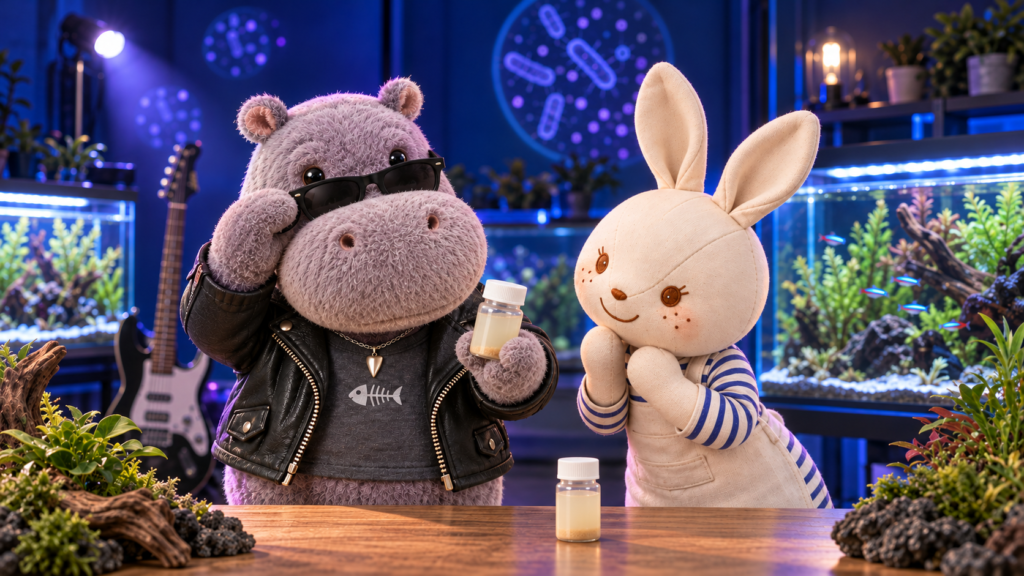 アイのアクアグッズ案内バクテリアって、結局なんなんだ? タマスとアイのボトル探究ロック好きのカバ・タマスが初登場。サイクル、ベストバイオ、バイコムのボトルから、菌の役割と保存の工夫、二本組の歴史をアイと探ります。記事はコチラ →
さまざまな飼育テーマをご紹介。リンク先の記事には広告・商品紹介が含まれます。
案内・紹介記事一覧へ →分布マップ
アカヒレ(Tanichthys albonubes)は、中国南部の広東省を中心とする地域に分布し、水草の多い、流れが比較的穏やかな清流に生息しています。中国の他地域やベトナムからも近縁の個体群が報告されていますが、近年の分類学的研究によって一部が別種として区別されています。この地図では、アカヒレの主な原産地域である広東省周辺を表示しています。
※この地図は原産地域を把握するための概略表示であり、正確な生息範囲や分布境界を示すものではありません。マーカーは広東省広州市付近を示す代表地点であり、実際の採集地点や特定の生息地を示すものではありません。
参考文献
- California Academy of Sciences. Eschmeyer’s Catalog of Fishes: Tanichthys(学名・分類・模式産地)。
- Froese, R. & Pauly, D. (eds.). FishBase: Tanichthys albonubes(体長・分布・生息環境・水温・水質)。
- Yi, Z.-S. et al. (2004). Rediscovering the Wild Population of White Cloud Mountain Minnows (Tanichthys albonubes Lin) on Guangdong Province. Zoological Research, 25(6), 551–555(野生個体群の再発見・生息環境)。
- Li, C. et al. (2020). Cryptic species in White Cloud Mountain minnow, Tanichthys albonubes: Taxonomic and conservation implications. Molecular Phylogenetics and Evolution, 153, 106950(近縁種・隠蔽種・分類の再検討)。
- Zhao, J. et al. (2018). Genetic diversity and population history of Tanichthys albonubes (Teleostei: Cyprinidae): Implications for conservation. Aquatic Conservation: Marine and Freshwater Ecosystems, 28, 422–434(野生・養殖個体群の遺伝的関係と保全)。
- Ornamental Aquatic Trade Association (OATA). How to look after danios and white cloud mountain minnows.(飼育水温・水質・水槽・群れ・餌・混泳・繁殖・日常管理)。
- Sado, T. & Kimura, S. (2005). Developmental morphology of the cyprinid fish Tanichthys albonubes. Ichthyological Research, 52, 386–391(卵の形態・孵化・仔稚魚の成長)。
- Petty, B. D., Francis-Floyd, R. & Yanong, R. P. E. Management of Aquarium Fish. Merck Veterinary Manual(2026年更新、水質管理・検疫・病気の予防)。
- Petty, B. D., Francis-Floyd, R. & Yanong, R. P. E. Parasitic Diseases of Fish. Merck Veterinary Manual(2026年更新、白点病・水カビ病と対策)。
- Li, C. et al. (2026). Chromosome-level genome assembly and resequencing reveal the genomic basis of two ornamental traits in White Cloud Mountain minnow (Tanichthys albonubes). Journal of Systematics and Evolution(ゴールデン体色・ロングフィン形質の遺伝学)。
- Jing, J. et al. (2013). Acute effect of copper and cadmium exposure on the expression of heat shock protein 70 in the Cyprinidae fish Tanichthys albonubes. Chemosphere, 91(8), 1113–1122(重金属曝露・HSP70・環境毒性)。
- 環境省・農林水産省(2026)。「生態系被害防止外来種リスト」第2版・動物(魚類:アカヒレ)(国内での定着・防除検討外来種の区分・放流防止)。



コメント