

解説 / Description
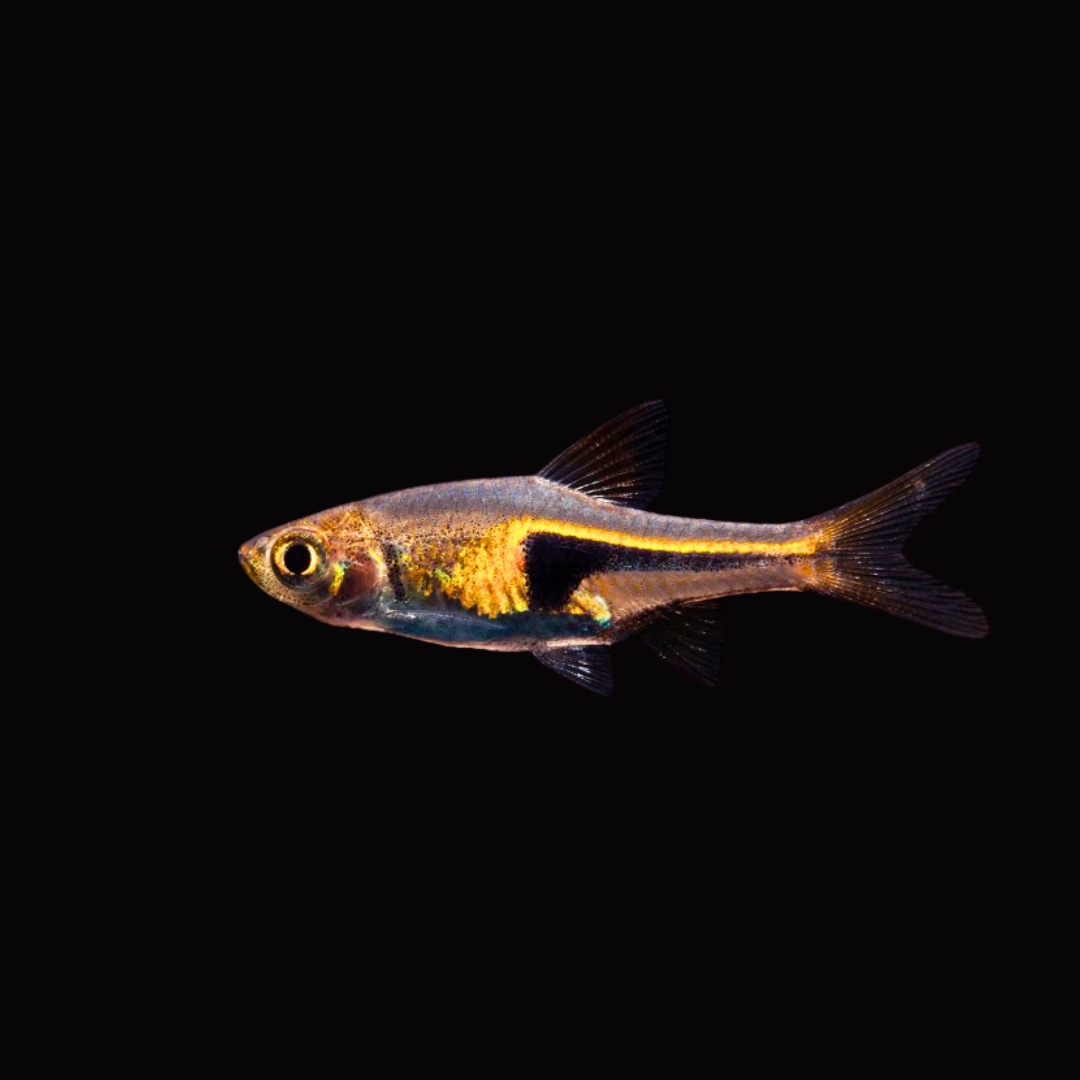
ラスボラ・エスペイは、タイ南部からカンボジア沿岸部、ベトナムのフーコック島周辺にかけて記録される小型のコイ目魚類です。赤銅色からオレンジ色に染まる体と、尾柄部へ向かって細く伸びる黒い楔形の斑紋が特徴で、日本のアクアリウムでは水草水槽に合わせやすい群泳魚として親しまれています。体は小さいものの、まとまった数で泳がせると水景の中に温かい色の流れが生まれ、緑の水草との対比が非常に美しく見えます。 The lambchop rasbora is a small cypriniform fish recorded from southern Thailand to coastal Cambodia and around Phu Quoc Island in Vietnam. It is known for its coppery to orange body color and the black wedge-shaped mark that narrows toward the caudal peduncle. In Japanese aquariums, it is widely appreciated as a peaceful schooling fish that pairs beautifully with planted layouts. Although small, a group of this species adds a warm stream of color to an aquascape and creates a striking contrast against green aquatic plants.
基本情報 / Basic Information
| 学名 / Scientific Name | Trigonostigma espei |
|---|---|
| 通称 / Common Name | ラスボラ・エスペイ、エスペイラスボラ、ラムチョップラスボラLambchop rasbora, Espe’s rasbora |
| 分類 / Family | コイ目・ダニオ科・ラスボラ亜科・トリゴノスティグマ属。旧来はラスボラ属に分類され、Rasbora espei として扱われていました。Order Cypriniformes, family Danionidae, subfamily Rasborinae, genus Trigonostigma. It was formerly placed in the genus Rasbora as Rasbora espei. |
| 英名 / English Name | Lambchop rasbora |
| 分布 / Distribution | 東南アジア。主にタイ南部からカンボジア沿岸部、ベトナムのフーコック島周辺にかけて記録されています。Southeast Asia. It is recorded mainly from southern Thailand to coastal Cambodia and around Phu Quoc Island in Vietnam. |
| 最大体長 / Max Size | 標準体長で約2.5cm。観賞魚としては全長3cm前後の小型魚として扱うとわかりやすいです。About 2.5 cm standard length. In aquarium terms, it is easiest to regard it as a small fish of around 3 cm total length. |
| 寿命 / Lifespan | 一般的には2〜3年ほどが目安です。安定した水質と適切な給餌を保てば、より長く維持できることもあります。Typically around 2 to 3 years. With stable water quality and appropriate feeding, individuals may live longer. |
飼育環境 / Aquarium Environment
| 水槽サイズ / Tank Size | 少数なら30cmキューブ水槽でも飼育は可能ですが、本種の魅力は群泳にあります。5匹以上、できれば10匹前後以上で飼うなら45cm規格水槽以上、より安定して泳がせるなら60cm規格水槽が扱いやすいです。繁殖だけを狙う場合は、ペア用の30cm前後の小型水槽を別に用意する方法もあります。A small group can be kept in a 30 cm cube tank, but the appeal of this species is best seen in a school. For five or more individuals, and ideally around ten or more, a standard 45 cm tank or larger is recommended, while a standard 60 cm tank offers better stability and swimming space. For breeding alone, a separate small tank of around 30 cm for a pair can also be used. |
|---|---|
| 水温 / Temperature | 23〜28℃前後が目安です。日常管理では25〜26℃付近に安定させるとコンディションを保ちやすく、冬はヒーター、夏は冷却ファンなどで急変を避けます。 Around 23 to 28°C is suitable. Keeping the tank stable at about 25 to 26°C helps maintain good condition. Use a heater in winter and cooling equipment such as a fan in summer to avoid sudden changes. |
| 水質 / Water Quality | 弱酸性から中性付近の軟水を基本に考えるとよい魚です。発色や繁殖を意識する場合は、ソイル、流木、マジックリーフ、ピートなどを用いて、やや弱酸性で落ち着いた水に仕上げると相性がよくなります。日常飼育では日本の一般的な水道水にもなじみやすい傾向がありますが、急激なpH変化や全量換水は避けてください。It is best approached as a fish for soft water from slightly acidic to near neutral. For coloration or breeding, aquasoil, driftwood, Indian almond leaves, or peat can help create calm, slightly acidic conditions. In routine care, it often adapts well to dechlorinated tap water in Japan, but sudden pH shifts and complete water changes should be avoided. |
| レイアウト / Layout | 水草がよく茂ったレイアウトと相性がよく、前面や中央に遊泳スペースを残しながら、後景や側面に有茎草、クリプトコリネ類、ミクロソリウム類などを配置すると落ち着きます。暗めの底床や流木を使うと、体色のオレンジがより引き立ちます。繁殖を意識する場合は、クリプトコリネ類やエキノドルス類のような、葉裏を使いやすい幅広の水草を入れると産卵床になります。It suits densely planted layouts. Leave open swimming space in the front or center while placing stem plants, Cryptocoryne, Microsorum, and similar plants toward the back and sides. A darker substrate and driftwood help bring out the orange body color. For breeding, broad-leaved plants such as Cryptocoryne or Echinodorus can provide suitable undersides for egg attachment. |
| 注意点 / Precautions | 小型で俊敏なため、驚いた拍子に飛び出すことがあります。水槽にはフタを用意し、フィルター配管やコード周りの隙間もできるだけ塞いでください。また、導入直後は輸送疲れが出やすいため、水合わせを丁寧に行い、急激な水温・水質変化を避けることが重要です。Because it is small and quick, it may jump when startled. Use a lid and close gaps around filter pipes and cords as much as possible. Newly introduced fish may be stressed from transport, so careful acclimation and avoidance of sudden temperature or water chemistry changes are important. |
餌と給餌 / Feeding
| 餌の種類 / Diet | 自然下では小さな無脊椎動物や微小な餌生物を食べる小型魚と考えられます。飼育下では、小型魚用のフレークフード、細かな顆粒フードを主食にできます。体が小さいため、口に入るサイズへ砕いて与えると食べやすくなります。コンディションを上げたいときは、冷凍ミジンコ、冷凍赤虫の細かいもの、孵化したてのブラインシュリンプなども有効です。In nature, it is considered a small fish that feeds on tiny invertebrates and other small food organisms. In aquariums, fine flake foods and small granules for small fish can be used as staples. Because the fish has a small mouth, crushing food into suitable pieces helps. For improved condition, frozen daphnia, finely sized frozen bloodworms, and newly hatched brine shrimp are also useful. |
|---|---|
| 給餌のポイント / Feeding Tips | 1日1〜2回、数分で食べ切れる量を与えます。食べ残しは水質悪化の原因になるため、底に沈む前に食べ切れる量を意識します。群れの中で弱い個体が餌を取り損ねることもあるため、給餌時は全体に行き渡っているか観察してください。Feed once or twice a day, offering only what the fish can finish within a few minutes. Uneaten food worsens water quality, so avoid overfeeding. Watch the group during feeding to make sure weaker individuals are also getting food. |
性格と混泳 / Temperament and Tank Mates
| 性格 / Temperament | 非常に温和で、同種同士でも強い争いはほとんど見られません。単独や少数では落ち着きにくいことがあるため、まとまった数で飼育すると本来の群泳行動が出やすく、発色や行動も安定しやすくなります。It is very peaceful, and serious aggression among its own kind is rarely seen. Single fish or very small groups may be nervous, so keeping a proper school encourages natural behavior and helps stabilize color and activity. |
|---|---|
| 混泳の相性 / Compatibility | ネオンテトラなど同程度の小型カラシン、コリドラス、オトシンクルス、小型の温和なラスボラ類、ミナミヌマエビなどと相性がよいです。口に入るサイズの稚エビは捕食される可能性があるため、繁殖目的のエビ水槽では注意が必要です。大型魚、気性の荒い魚、動きの激しすぎる魚との混泳は避けた方が安心です。It is compatible with similarly sized small characins such as neon tetras, Corydoras, Otocinclus, peaceful small rasboras, and Neocaridina shrimp. Very small shrimplets may be eaten, so caution is needed in shrimp breeding tanks. Avoid large, aggressive, or overly boisterous tank mates. |
病気と対策 / Diseases and Prevention
| かかりやすい病気 / Common Diseases | 特別に病弱な魚ではありませんが、導入直後のストレス、水温低下、水質悪化が重なると白点病、尾腐れ病、細菌性の体表トラブルが出ることがあります。輸入個体では入荷直後にコンディション差が見られる場合もあります。It is not especially delicate, but stress after introduction, low temperature, and poor water quality can lead to ich, fin rot, or bacterial skin problems. Imported specimens may vary in condition shortly after arrival. |
|---|---|
| 対策と予防 / Prevention | 予防の基本は、安定した水温、過密を避けた飼育、定期的な換水です。新しく迎えた個体は、可能であればトリートメント水槽で様子を見ると安全です。病気が出た場合は症状を見極め、白点病には水温管理と専用薬、尾腐れなどの細菌症には観賞魚用の抗菌性魚病薬を検討します。薬品は必ず使用説明に従い、エビや水草への影響にも注意してください。Prevention is based on stable temperature, avoiding overcrowding, and regular water changes. If possible, observe newly acquired fish in a quarantine tank. If disease occurs, identify the symptoms carefully. Ich may require temperature management and a suitable medication, while bacterial fin rot may require an antibacterial fish medication. Always follow product instructions and consider effects on shrimp and aquatic plants. |
増やし方(繁殖) / Breeding
| 雌雄の判別 / Sexing | 成熟したメスは腹部に丸みが出やすく、全体にふっくらした印象になります。オスはやや細身で、状態が上がると体色や黒い斑紋のコントラストが強く見えることがあります。ただし若い個体では判別が難しいため、複数匹を育てながら見比べるのが現実的です。Mature females tend to have a rounder belly and a fuller appearance. Males are usually slimmer and may show stronger contrast in body color and the black marking when in good condition. Sexing juveniles is difficult, so comparing several mature individuals is the most practical approach. |
|---|---|
| 繁殖形態 / Reproduction | 卵生です。グッピーやプラティのように稚魚を産む卵胎生ではありません。トリゴノスティグマ属らしく、幅の広い水草の葉裏などに粘着性の卵を産み付ける基質産卵型として知られています。It is oviparous. It does not give birth to live young like guppies or platies. Like other members of Trigonostigma, it is known as a substrate spawner that attaches adhesive eggs to the underside of broad aquatic plant leaves. |
| 繁殖のポイント / Breeding Tips | 繁殖を狙う場合は、親魚をよく太らせ、軟水でやや弱酸性の清潔な繁殖用水槽を用意します。クリプトコリネ類やエキノドルス類のような幅広い葉を入れると産卵床になります。産卵後は親が卵を食べることがあるため、卵が付いた葉を別容器へ移すか、親魚を取り出すと成功率が上がります。孵化後の稚魚は非常に小さいため、初期飼料にはゾウリムシなどのインフゾリアを用意し、数日後から孵化したてのブラインシュリンプへ移行します。For breeding, condition the adults well and prepare a clean breeding tank with soft, slightly acidic water. Broad-leaved plants such as Cryptocoryne or Echinodorus can serve as spawning sites. Adults may eat the eggs, so moving the egg-bearing leaf to a separate container or removing the adults improves success. Newly hatched fry are extremely small, so infusoria such as Paramecium are needed at first, followed after a few days by newly hatched brine shrimp. |
雑学と豆知識 / Trivia and Fun Facts
| 1. 学名に残る観賞魚流通の物語 / 1. A Name Linked to the Aquarium Trade | ラスボラ・エスペイは、観賞魚としてバンコクから輸入された個体をもとに、1967年にヘルマン・マインケンによって記載された魚です。種小名の espei は、観賞魚業者ハインリヒ・エスペに由来するとされます。つまり本種の名前には、現地の自然だけでなく、輸入された小さな熱帯魚の違いに気づいた人々の観察眼も刻まれています。図鑑の中ではただの学名に見えますが、その背景には観賞魚文化と魚類学が交わった時代の空気が残っています。The lambchop rasbora was described by Hermann Meinken in 1967 based on aquarium specimens imported from Bangkok. The specific name espei is understood to honor the ornamental fish dealer Heinrich Espe. In other words, the name records not only the fish’s natural origin but also the careful eyes of people who noticed something distinct among imported aquarium fish. What looks like a simple scientific name carries the atmosphere of a period where the aquarium hobby and ichthyology closely intersected. |
|---|---|
| 2. ラスボラ属からトリゴノスティグマ属へ / 2. From Rasbora to Trigonostigma | 本種は長く Rasbora espei として扱われてきましたが、現在は Trigonostigma espei が有効名として用いられます。Trigonostigma という属名は、三角形の標識を意味する言葉に由来し、体側の黒い斑紋をよく表しています。アクアリウムでは今でも「ラスボラ・エスペイ」と呼ばれるのが一般的ですが、分類学的には、いわゆるラスボラ類の中から体側斑や繁殖行動などに特徴のある一群として整理された魚と考えると理解しやすいです。This species was long treated as Rasbora espei, but the valid name now used is Trigonostigma espei. The genus name Trigonostigma refers to a triangular mark, fitting the black marking on the side of the body. In aquariums, the Japanese name still commonly includes “rasbora,” but taxonomically it is better understood as part of a more clearly defined group separated from the broader rasbora assemblage by features such as the side marking and spawning behavior. |
| 3. バチ模様とラムチョップ模様 / 3. The Bachi Mark and the Lambchop Mark | 体側の黒い模様は、英語圏では骨付き肉の形に見立てて「ラムチョップ」と呼ばれます。一方、日本では三味線の撥に似た形として「バチ模様」と表現されることがあります。同じ斑紋でも、文化によって見立てが変わるのは面白いところです。ラスボラ・ヘテロモルファでは黒斑がより太い三角形になり、ラスボラ・ヘンゲリーでは黒斑が細く、上部のオレンジ帯が光るように見えます。エスペイは細長い黒斑と、全身に広がる濃いオレンジ色が魅力です。The black side marking is called a “lambchop” in English because it resembles a small piece of meat on the bone. In Japan, it is sometimes compared to a bachi, the plectrum used for a shamisen. It is fascinating that the same marking can be interpreted through different cultural images. In Trigonostigma heteromorpha the black patch is a broader triangle, while in Trigonostigma hengeli it is narrower and accompanied by a glowing orange band. Trigonostigma espei is attractive for its slender dark mark and rich orange body color. |
| 4. 丈夫さは「急変に強い」という意味ではない / 4. Hardiness Does Not Mean Sudden Changes Are Safe | ラスボラ・エスペイは、池、プール状の水域、湿地、沈水植物が多い水域などに見られる魚とされています。飼育下では比較的丈夫で、日本の水道水を使った水槽にもなじみやすい傾向があります。ただし、これは急な水質変化に強いという意味ではありません。小型魚ほど、pHや水温の急変、換水時の雑な扱いが負担になりやすいものです。安定した環境の中で群れを作らせることが、本来のオレンジ色と落ち着いた泳ぎを引き出す近道です。The lambchop rasbora is associated with ponds, pools, marshes, swamps, and waters rich in submerged plants. In aquariums it is relatively hardy and often adapts well to tanks using Japanese tap water. However, this does not mean that sudden changes are safe. Small fish are easily stressed by abrupt shifts in pH or temperature and by rough handling during water changes. A stable environment and a proper school are the shortest path to natural orange coloration and calm swimming behavior. |
| 5. 水草水槽で選ばれる理由 / 5. Why It Is Loved in Planted Aquariums | ラスボラ・エスペイの魅力は、単に色がきれいなことだけではありません。細身の体でまとまって泳ぐため、水草レイアウトの遠近感を壊しにくく、緑の中に小さなオレンジ色の流れをつくります。存在感が強すぎる魚ではなく、水景の一部としてなじみながら、必要なところでしっかり目を引く魚です。水草水槽においては、主役を奪わずに景色を完成させる名脇役といえるでしょう。The appeal of this species is not only its color. Because it has a slender body and swims as a coordinated group, it does not easily disrupt the sense of scale in a planted layout. Instead, it creates a small stream of orange within the green. It is not a fish that overwhelms the aquascape; it blends into the scenery while still drawing the eye where needed. In planted aquariums, it is a superb supporting actor that helps complete the scene without stealing the stage. |
| 6. 「卵胎生」ではなく卵生 / 6. Egg-Laying, Not Livebearing | 一部の飼育情報では、ラスボラ類がグッピーのように稚魚を産むと説明されることがありますが、ラスボラ・エスペイは卵生です。成熟したペアは水草の葉裏などで体を反転させ、粘着性の卵を産み付けます。親が卵や稚魚を守るタイプではないため、繁殖を成功させるには親から卵を守る工夫が欠かせません。Some care information incorrectly describes rasboras as giving birth to fry like guppies, but Trigonostigma espei is an egg-layer. Mature pairs turn upside down beneath plant leaves and attach adhesive eggs to the underside. The parents do not guard the eggs or fry, so successful breeding requires protecting the eggs from the adults. |
まとめ / Conclusion
ラスボラ・エスペイは、小型で温和、丈夫で美しいという、アクアリウム向きの要素を高いバランスで備えた魚です。とくに水草水槽では、緑に映えるオレンジ色とバチ模様がほどよいアクセントになり、群れで泳ぐ姿が水景に自然な動きを与えてくれます。 The lambchop rasbora is a small, peaceful, hardy, and beautiful fish with an excellent balance of qualities for the aquarium. In planted tanks, its orange color and dark wedge-shaped marking provide a pleasing accent against green plants, while its schooling behavior adds natural movement to the aquascape.
飼育では、5匹以上の群れ、安定した水温、急変の少ない水質、そして飛び出し防止のフタが大切です。繁殖は卵生で、葉裏に産卵する独特の行動を見せます。基本を押さえて丁寧に飼えば、初心者にも扱いやすく、上級者の水草レイアウトにも長く選ばれ続ける魅力的な小型魚です。 For care, keep it in a group of five or more, maintain stable temperature and water quality, and use a lid to prevent jumping. It is an egg-layer with the distinctive habit of spawning on the underside of leaves. With careful basic husbandry, it is approachable for beginners while remaining attractive enough to be chosen for advanced planted aquascapes.

気になる道具や飼い方を見つけてみませんか?
 アイのアクアグッズ案内コードもホースもないのに酸素が出る? アイとコタロウのオキシデーター探訪道具の特徴や使い方、選ぶときのポイントをアイが紹介します。記事はコチラ →
 アイのアクアグッズ案内水換え・底砂掃除の道具の選び方|砂利・砂・ソイルに合うクリーナーとポンプ道具の特徴や使い方、選ぶときのポイントをアイが紹介します。記事はコチラ →
さまざまな飼育テーマをご紹介。リンク先の記事には広告・商品紹介が含まれます。
案内・紹介記事一覧へ →参考文献・参照資料
本記事では、ラスボラ・エスペイの学名、分類、分布、体長、生息環境、飼育および繁殖に関する記述を整理するため、以下の資料を参照しました。
- Fricke, R., Eschmeyer, W. N. & Van der Laan, R. eds. Eschmeyer’s Catalog of Fishes: Trigonostigma espei (Meinken, 1967). California Academy of Sciences. https://researcharchive.calacademy.org/research/ichthyology/catalog/fishcatget.asp?spid=59852
- Froese, R. & Pauly, D. eds. FishBase: Trigonostigma espei, Lambchop rasbora. FishBase. https://www.fishbase.se/summary/Trigonostigma-espei
- Meinken, H. 1967. Aus Thailand kam eine hübsche Unterart der Keilfleckbarbe. Das Aquarium, 1(2): 14–16.
- Kottelat, M. & Witte, K.-E. 1999. Two new species of Microrasbora from Thailand and Myanmar, with two new generic names for small Southeast Asian cyprinid fishes (Teleostei: Cyprinidae). Journal of South Asian Natural History, 4(1): 49–56.
- Tan, H. H. 2020. Trigonostigma truncata, a new species of harlequin rasbora from Malay Peninsula (Teleostei: Danionidae). Raffles Bulletin of Zoology, 68: 421–433. https://lkcnhm.nus.edu.sg/wp-content/uploads/sites/10/app/uploads/2020/01/RBZ-2020-0033.pdf
- Seriously Fish. Trigonostigma espei – Lambchop Rasbora. https://www.seriouslyfish.com/species/trigonostigma-espei/
- sera. Trigonostigma, formerly Rasbora, espei are courting. FAQ. https://www.sera.de/en/service/faq/faq-detail/trigonostigma-formerly-rasbora-espei-are-courting/
販売ページ、店舗ページ、価格情報を主目的としたページは参考文献から除外しています。




コメント